-
-
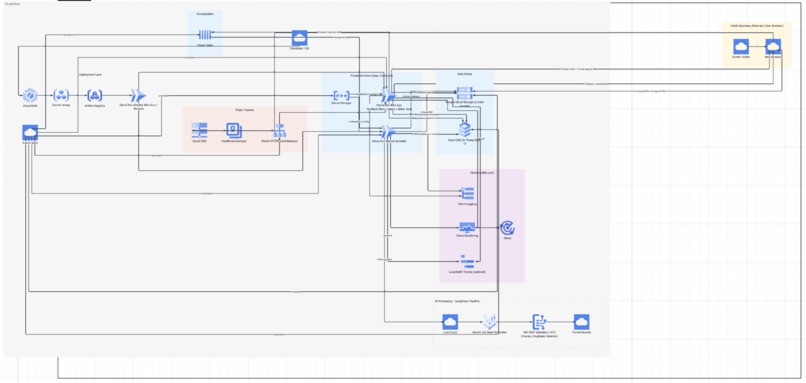
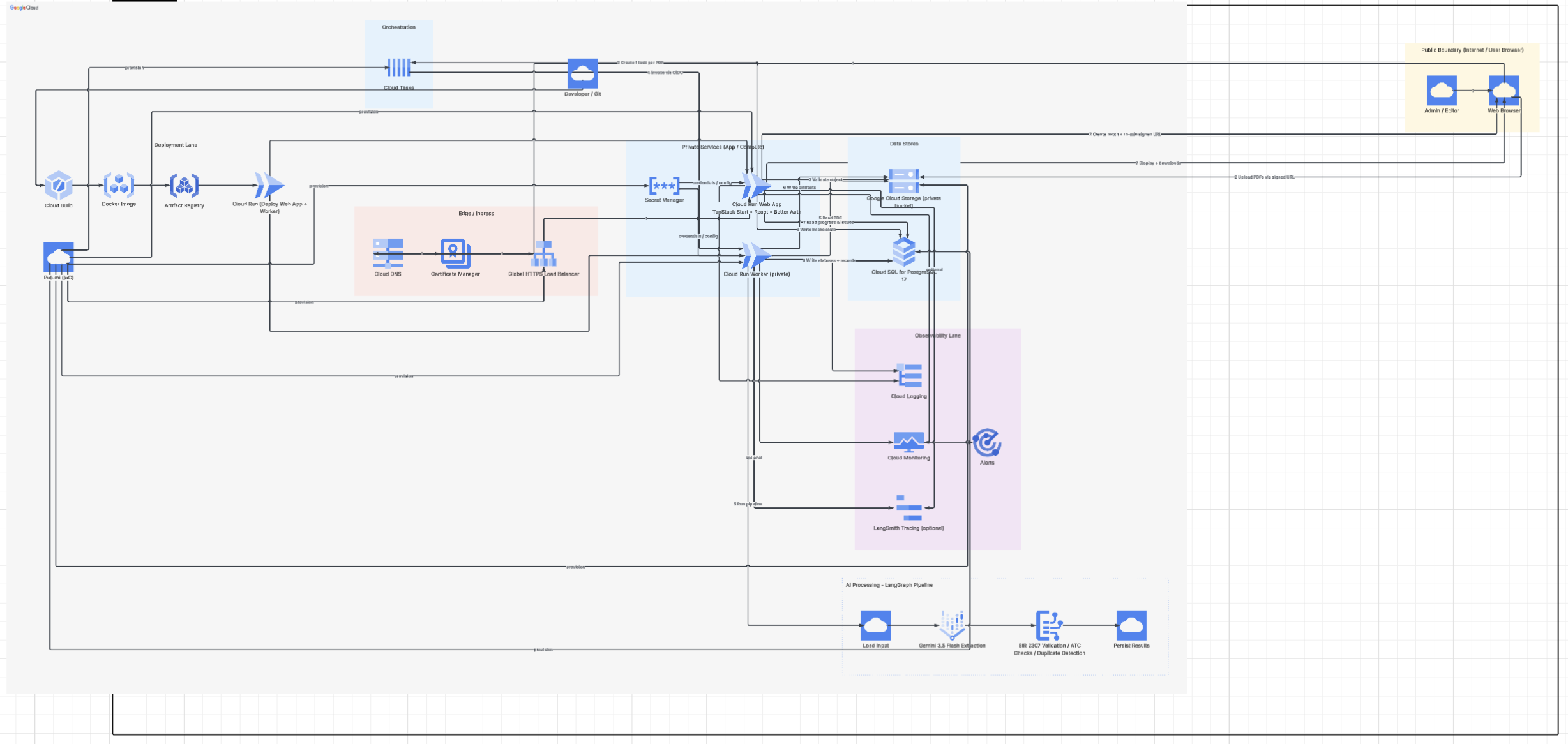
Architecture Diagram
-
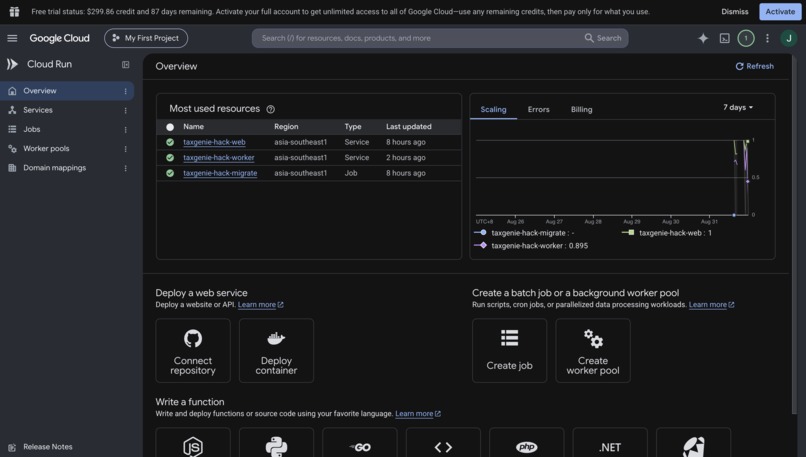
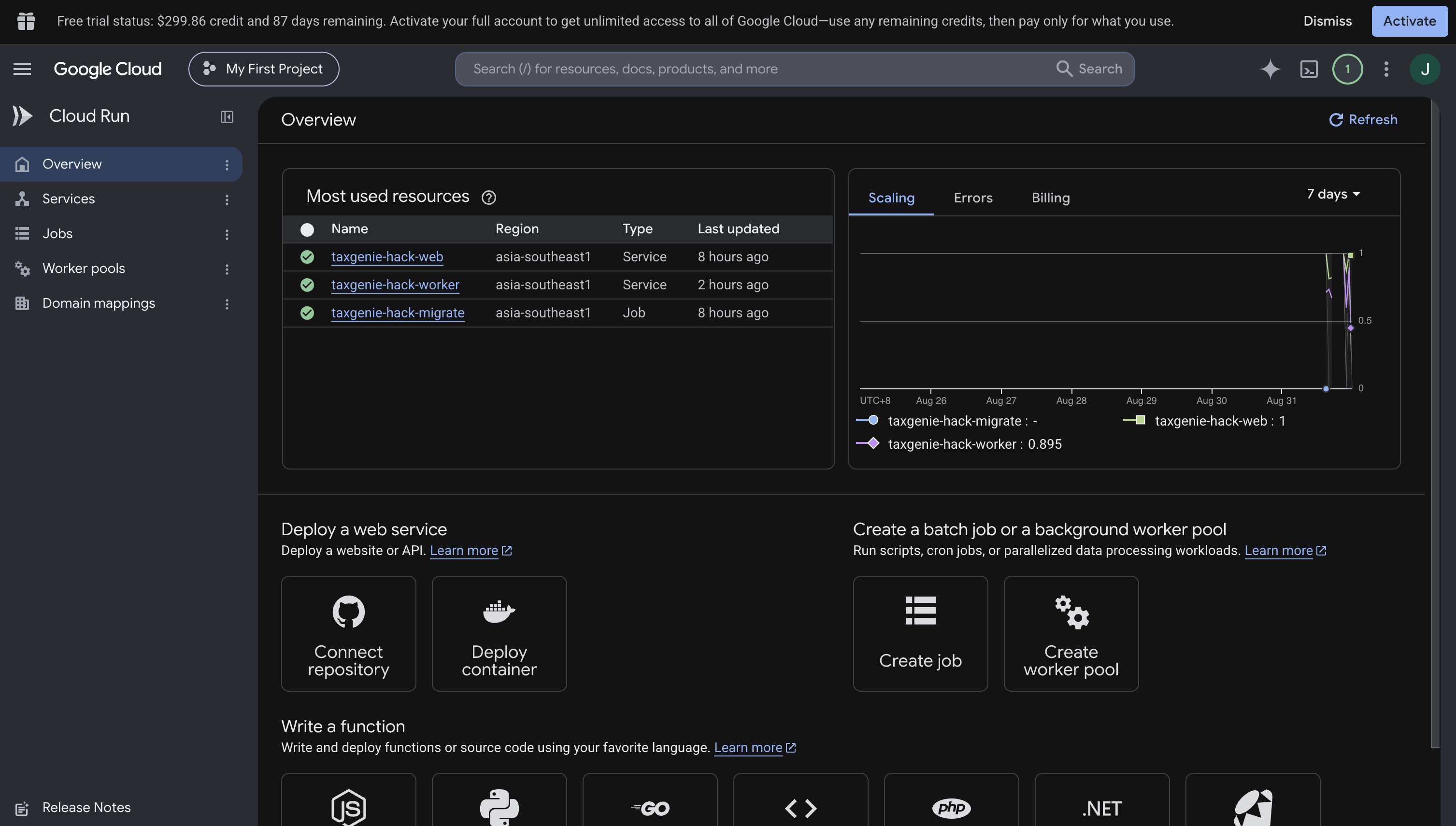
Cloud Run
Inspiration
TaxGenie was inspired by the day-to-day reality of tax, finance, and revenue teams that manage large volumes of BIR Form 2307 certificates under tight compliance deadlines.
For many organizations, the process still depends on manual downloading, folder sorting, spreadsheet encoding, duplicate checking, and reconciliation against book records. The work is repetitive, but the risk is real: one missing TIN, wrong ATC code, duplicate certificate, unsigned form, or unreconciled tax base can delay close activities and create audit issues.
We saw an opportunity to turn this manual tax bottleneck into a structured automation workflow that can be reused by companies, shared service teams, and multi-entity organizations.
What it does
TaxGenie automates the processing, validation, and reconciliation of BIR Form 2307 certificates.
It helps teams ingest native PDFs and scanned/image-based documents, extract key certificate details, detect duplicate forms, validate required payee and payor information, identify ATC codes, calculate tax base, check variance thresholds, and reconcile certificate data against records from the books.
The platform separates documents with errors into an exception workflow, applies standardized file naming conventions, and generates consolidated reports for tax review, finance reconciliation, and filing preparation.
In simple terms: TaxGenie turns messy tax document processing into a cleaner, faster, and more auditable workflow.
How we built it
We built TaxGenie around a document automation pipeline designed for real tax operations, not just file extraction.
The workflow starts with document intake, where BIR Form 2307 files are collected and organized. A document processing layer then extracts required details such as period covered, payee information, payor information, TIN, ATC code, tax base, tax withheld, printed name, designation, and signature indicators.
From there, the validation layer checks whether each certificate is complete and usable. It flags missing or inconsistent data, segregates duplicates, and applies ATC-based tax base calculations using configurable rates and variance thresholds.
The reconciliation layer matches extracted certificate data against book records provided by the finance or revenue team, including customer names, TINs, invoice references, billing periods, GL dates, tax base, and tax withheld values.
Finally, TaxGenie generates reports, exports, exception lists, and processing outputs that users can review before final filing or audit preparation. The solution is designed to support UAT, deployment, user training, hypercare, and ongoing maintenance so organizations can adopt it as an operational system.
Challenges we ran into
The biggest challenge was the variability of tax documents. Some certificates are clean native PDFs, while others are scanned, image-based, incomplete, or inconsistently prepared. A useful solution needed to handle both extraction and validation, because reading a document is not enough if the result cannot be trusted.
Another challenge was reconciliation. Matching certificates against book records is not always straightforward because names, file formats, billing periods, invoice references, and tax amounts may not align perfectly. TaxGenie had to account for exception handling and variance thresholds instead of assuming every document would match cleanly.
We also had to design the platform for repeatability. The goal was not just to automate one company's workflow, but to create a TaxGenie model that other entities and organizations could adopt with their own masterlists, naming conventions, ATC rules, reporting formats, and control requirements.
Accomplishments that we're proud of
We are proud that TaxGenie reframes tax automation as an end-to-end compliance workflow instead of a simple bot.
It addresses the operational pain tax teams actually face: high document volume, repetitive encoding, duplicate files, incomplete certificates, reconciliation gaps, and audit pressure.
We are also proud of the exception-first design. Instead of hiding uncertainty, TaxGenie makes errors visible and routes them for review. This helps teams move faster without losing control.
Most importantly, TaxGenie is built to scale beyond one implementation. It can support organizations with multiple entities, recurring compliance cycles, and shared service models that need consistent tax processes across teams.
What we learned
We learned that tax automation is not only about speed. It is also about confidence, traceability, and operational control.
OCR and extraction are useful, but the real value comes from validating the output, reconciling it against financial records, surfacing exceptions clearly, and giving teams a repeatable process they can trust.
We also learned that a strong automation product must reflect how finance teams actually work. It needs configuration, auditability, reporting, and support processes, not just a technical workflow that works in a demo.
What's next for TaxGenie
Next, TaxGenie can expand into a broader tax operations platform.
Planned enhancements include richer dashboards for processing status and exception monitoring, multi-entity configuration management, improved OCR and AI-assisted document classification, configurable tax rule libraries, stronger audit trails, role-based access, and deeper integrations with accounting, ERP, document storage, and filing preparation workflows.
The long-term vision is for TaxGenie to become a reusable tax automation layer for organizations that want faster compliance cycles, fewer manual errors, and better visibility across their tax operations.

Log in or sign up for Devpost to join the conversation.