-
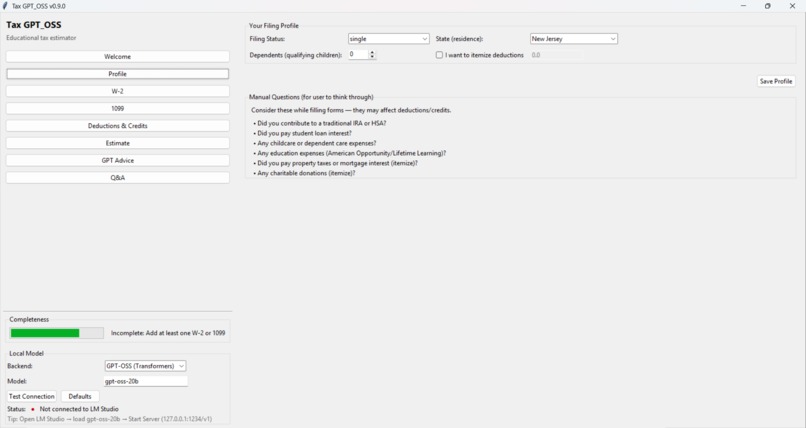
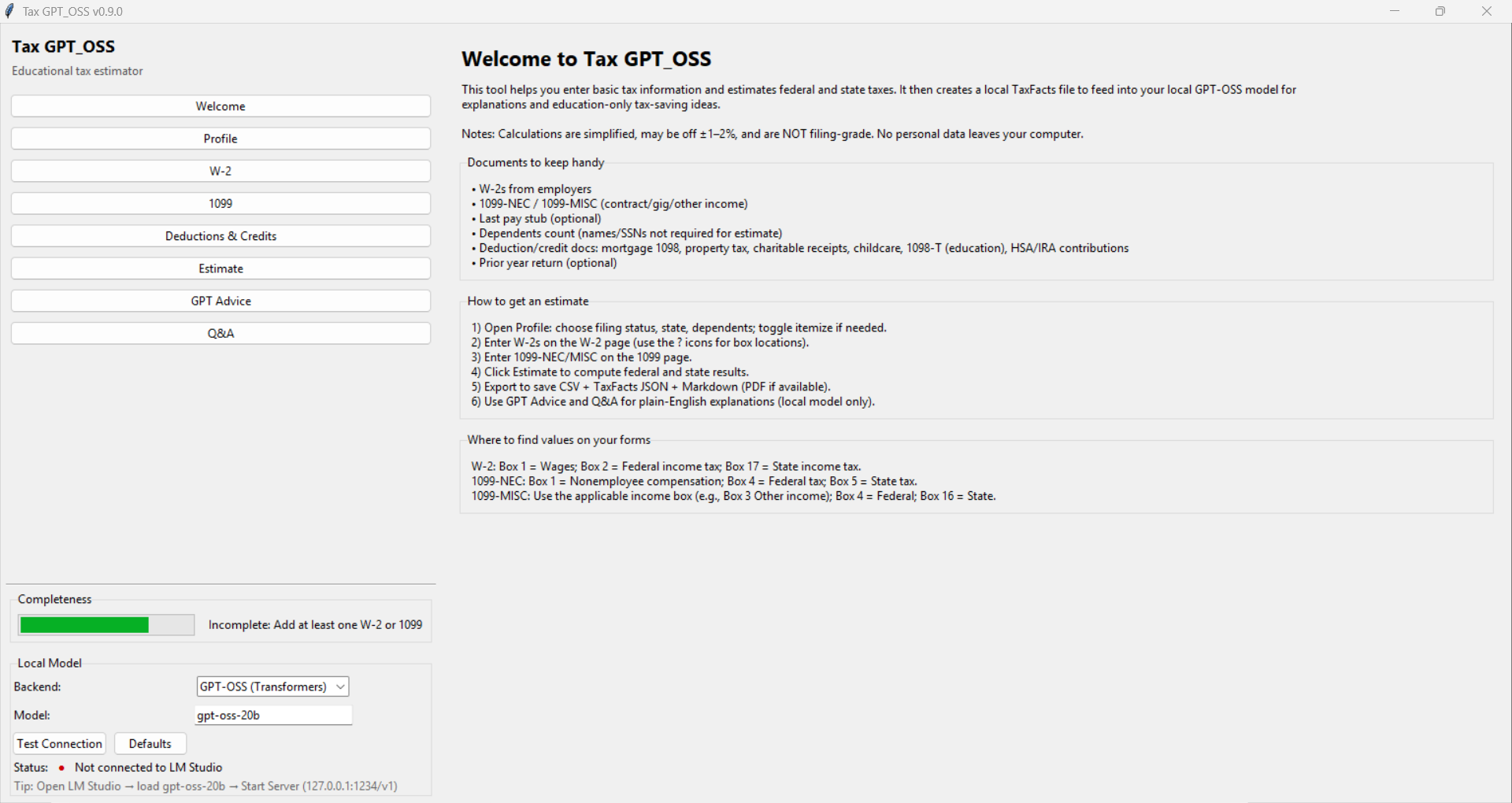
the interface
-
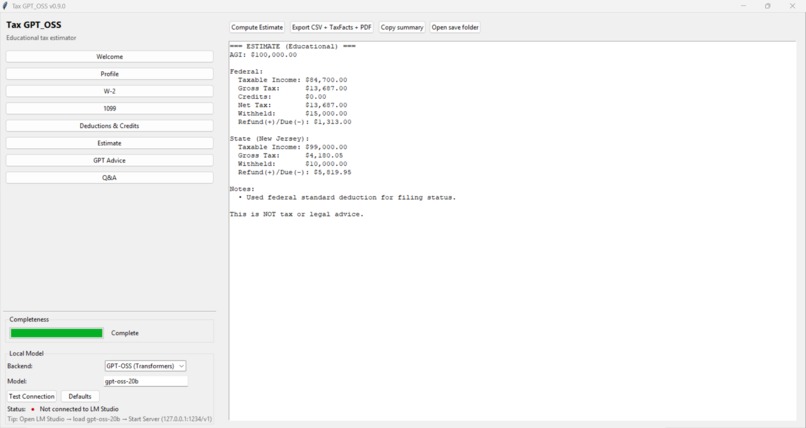
the estimate Calculations
-
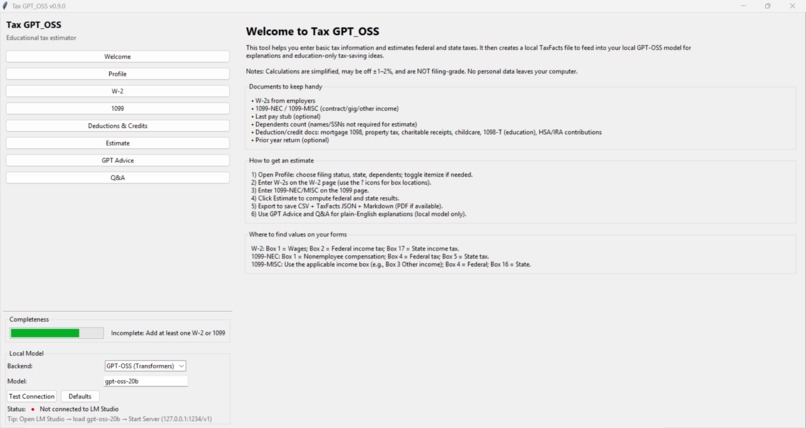
TAX GPT_OSS

Inspiration
I’ve always been uneasy about uploading my most sensitive financial details online just to get a simple tax estimate. Taxes are complicated enough, and trusting third-party servers with W-2s, 1099s, and personal information never felt right. That’s what sparked this project: a safe, local, AI-powered tax assistant that runs entirely on my own machine.
What it does
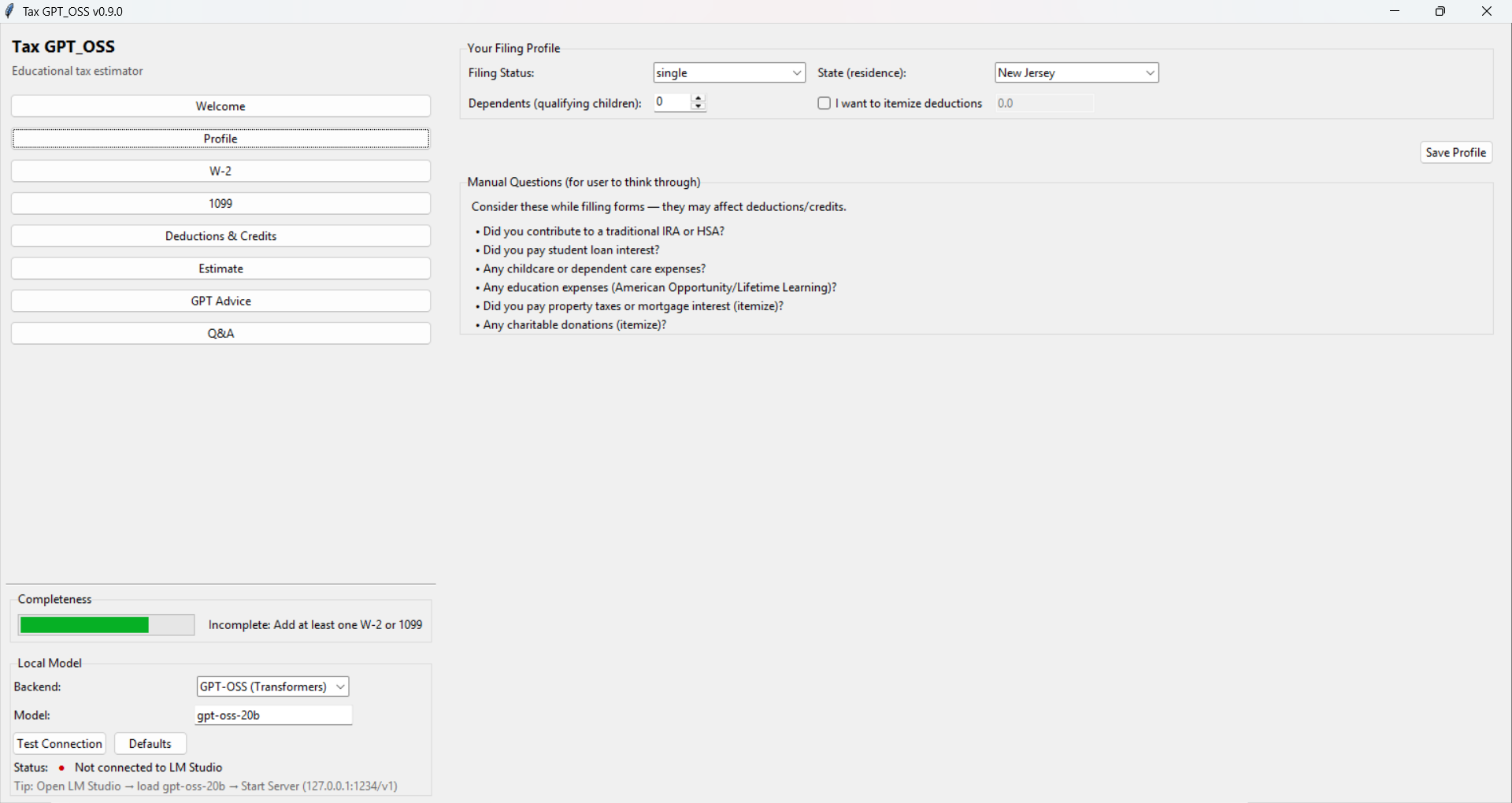
TAX GPT OSS is a desktop application that estimates federal and state taxes through a TurboTax-style interface. It works with GPT-OSS locally to explain filings in plain English, answer manual tax questions, and even suggest educational strategies to save money—all without ever sending data to the cloud.
How I built it
I built the project as a single-file Python app using Tkinter (with a CLI fallback), a simplified tax calculation engine, and integration with open-weight GPT-OSS models (via Ollama / LM Studio / vLLM). The app exports TaxFacts files in JSON/Markdown and feeds them into the local model for Q&A and tax-saving ideas.
Challenges
The biggest challenge was balancing accuracy with simplicity. I had to model federal and multi-state brackets while keeping the system fast and local. I also needed to ensure privacy: no API calls, no cloud dependencies, just local execution.
What I learned
I learned how to combine traditional rule-based tax tables with AI reasoning, how to design for both GUI and CLI environments, and how open-weight models like GPT-OSS can power highly practical, privacy-first applications.
What’s next
Next, I want to expand beyond W-2 and 1099 income, add OCR for direct document import, support more states, and fine-tune GPT-OSS on IRS documentation for richer educational guidance.

Log in or sign up for Devpost to join the conversation.