-
-
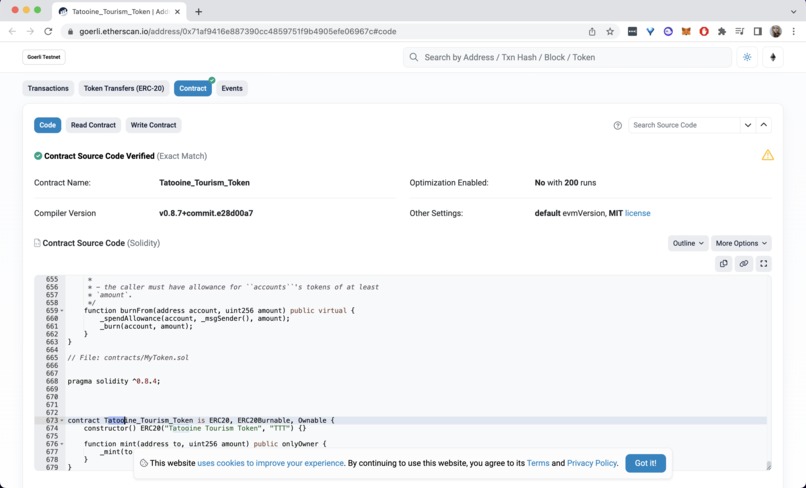
TTT ERC20
-
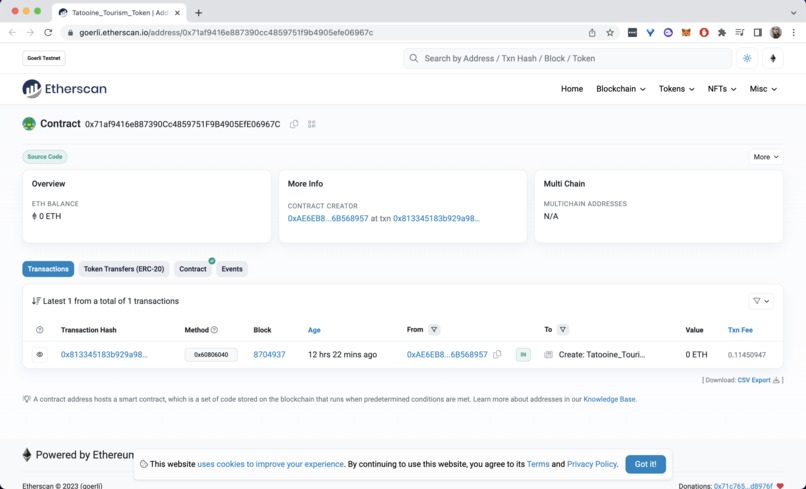
TTT ERC20
-
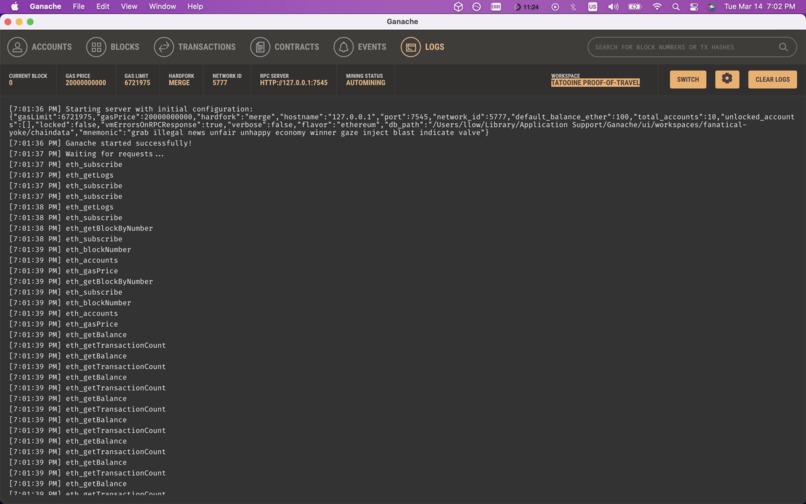
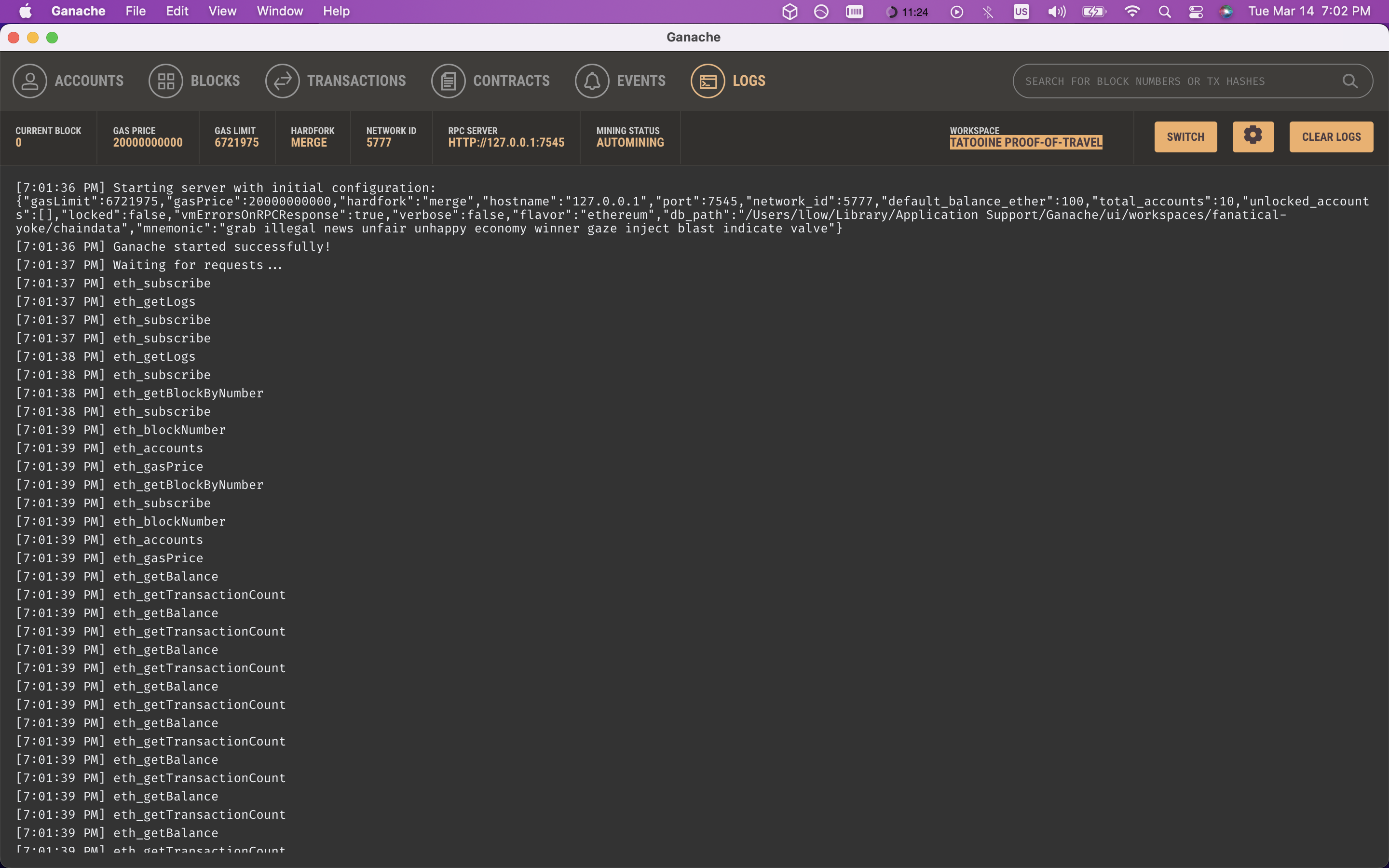
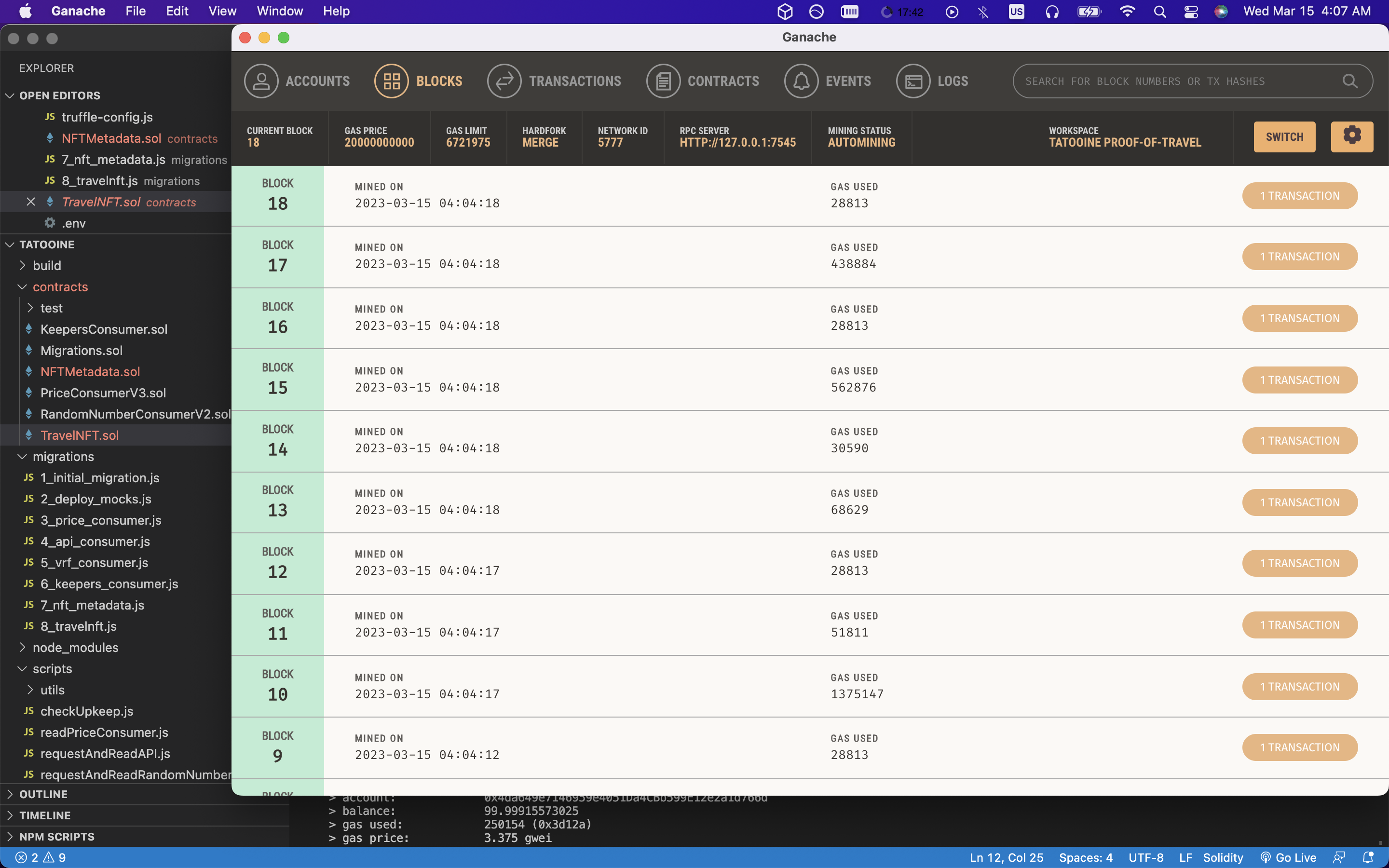
ganache
-
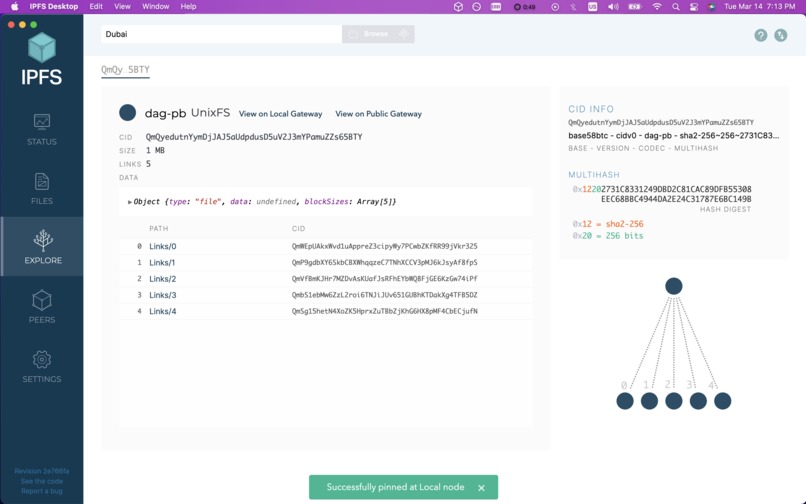
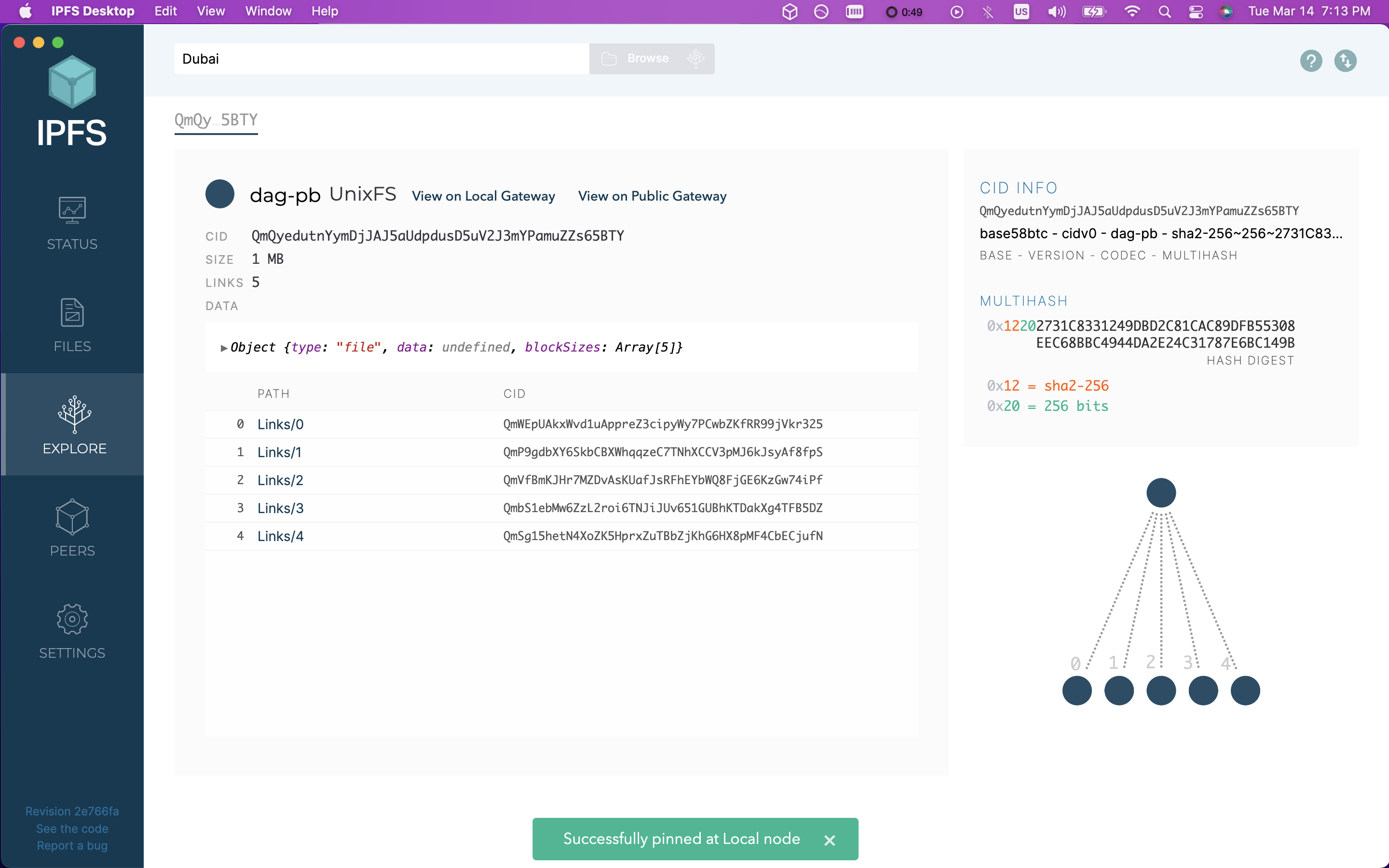
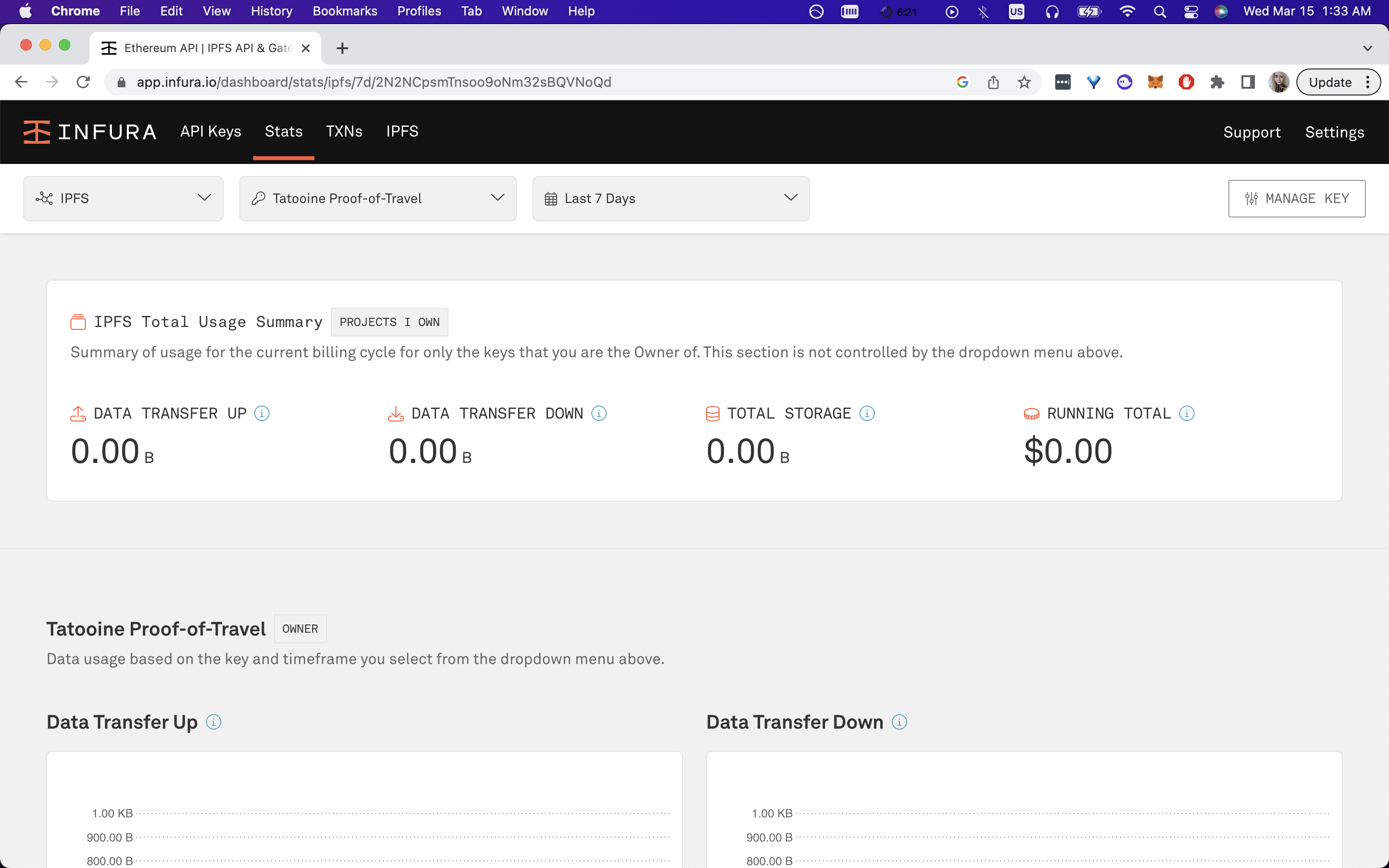
IPFS
-
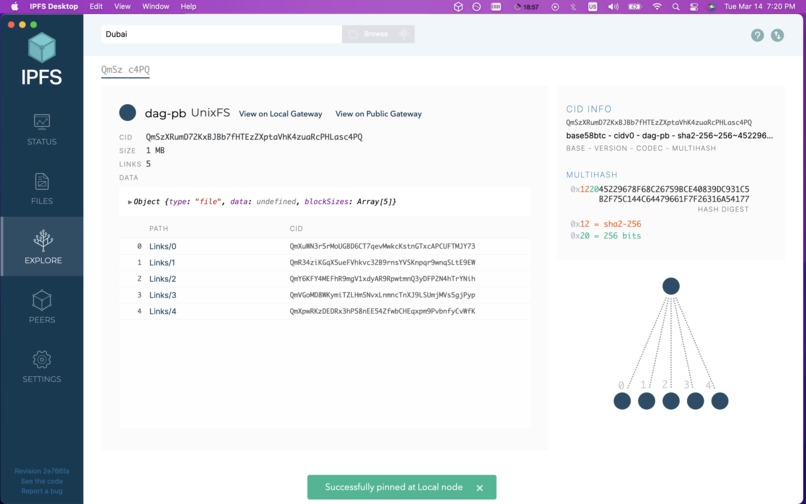
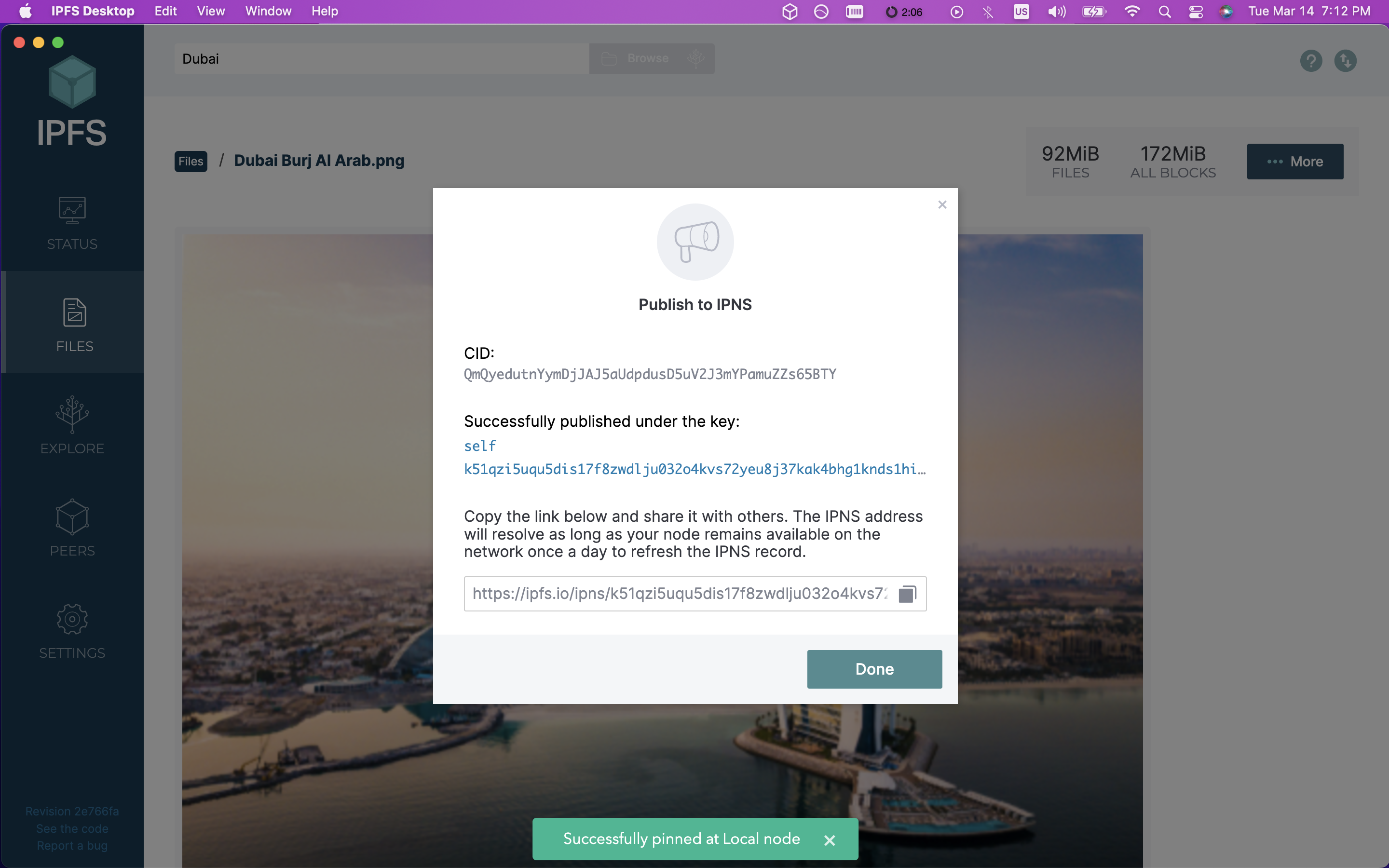
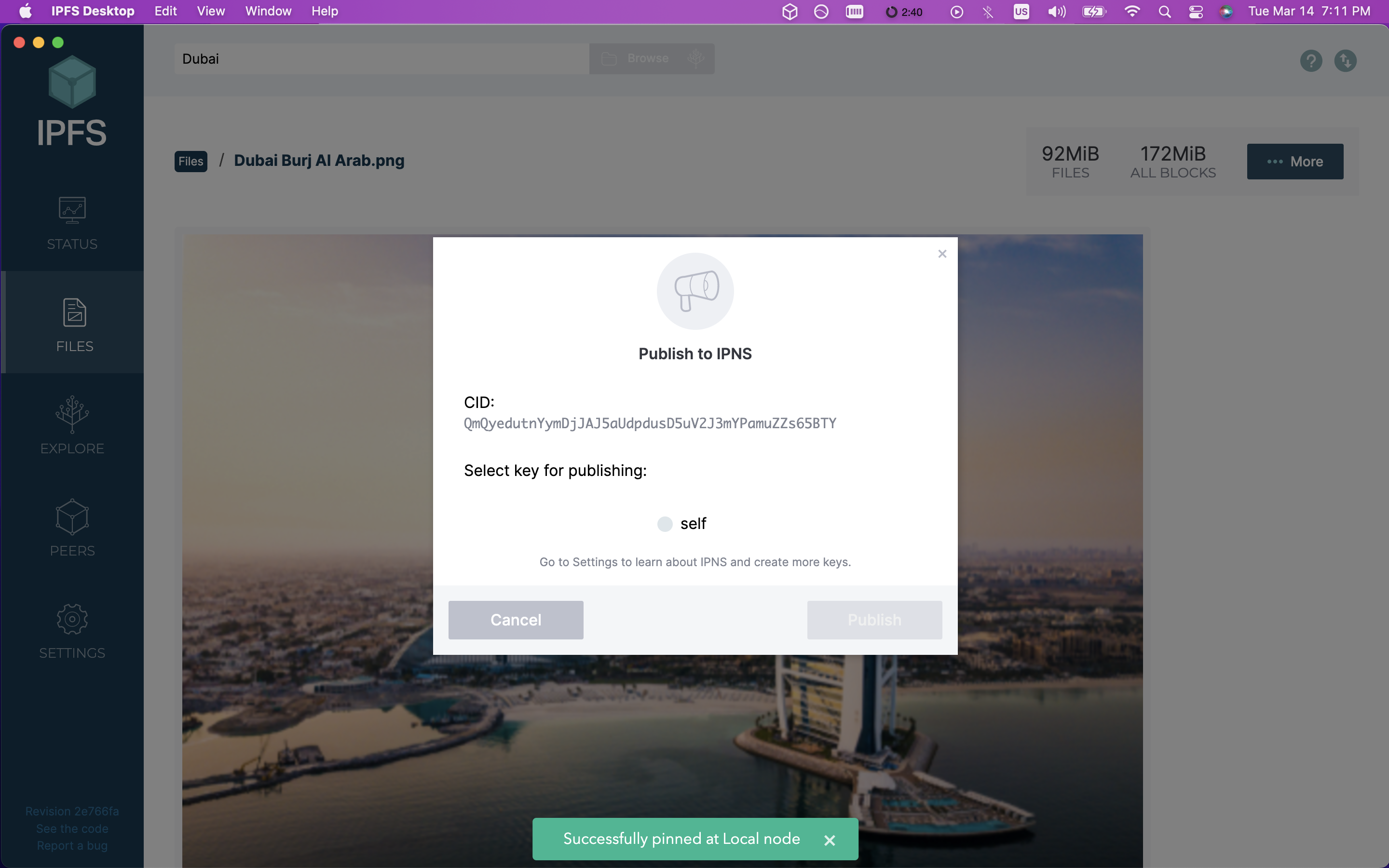
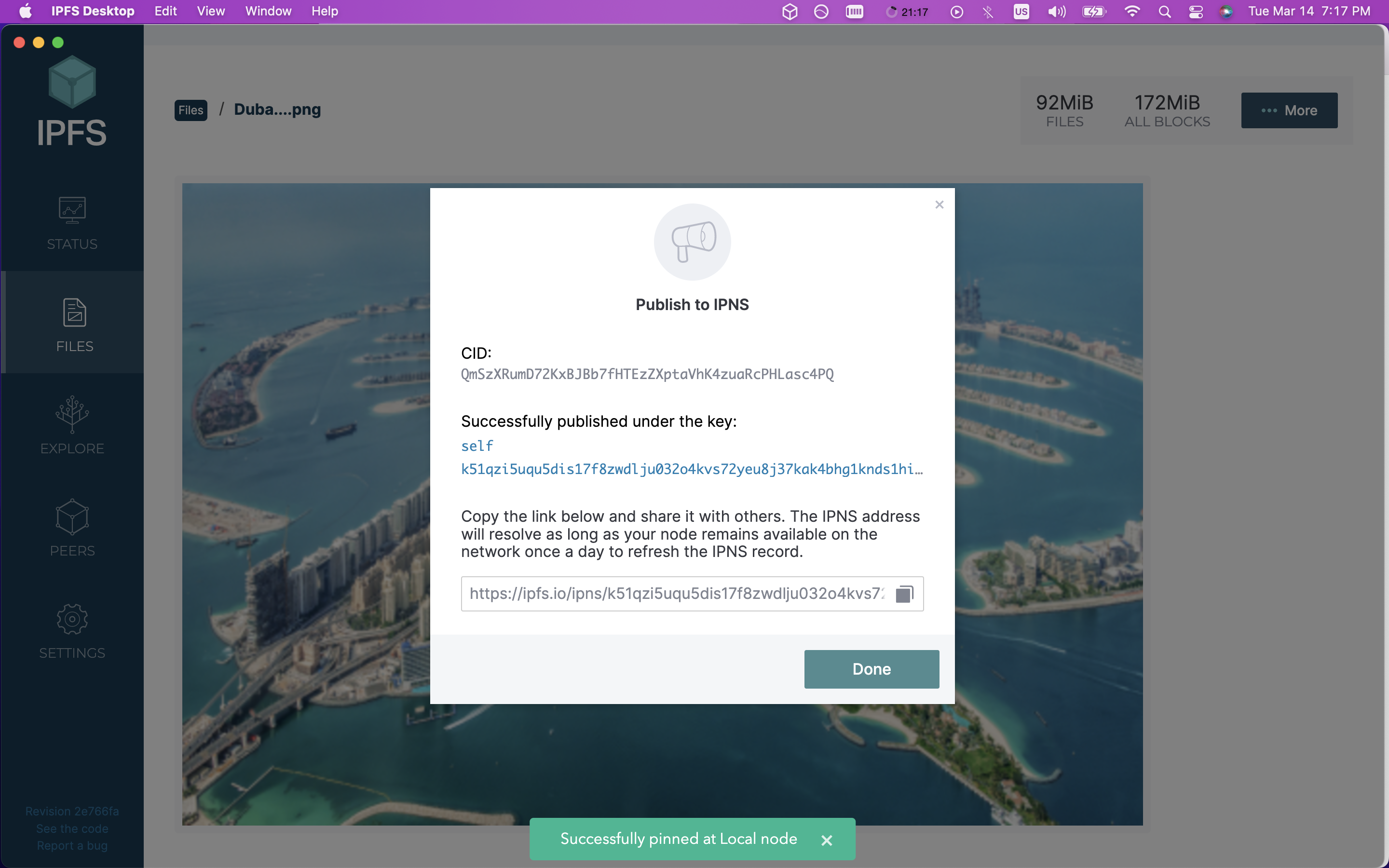
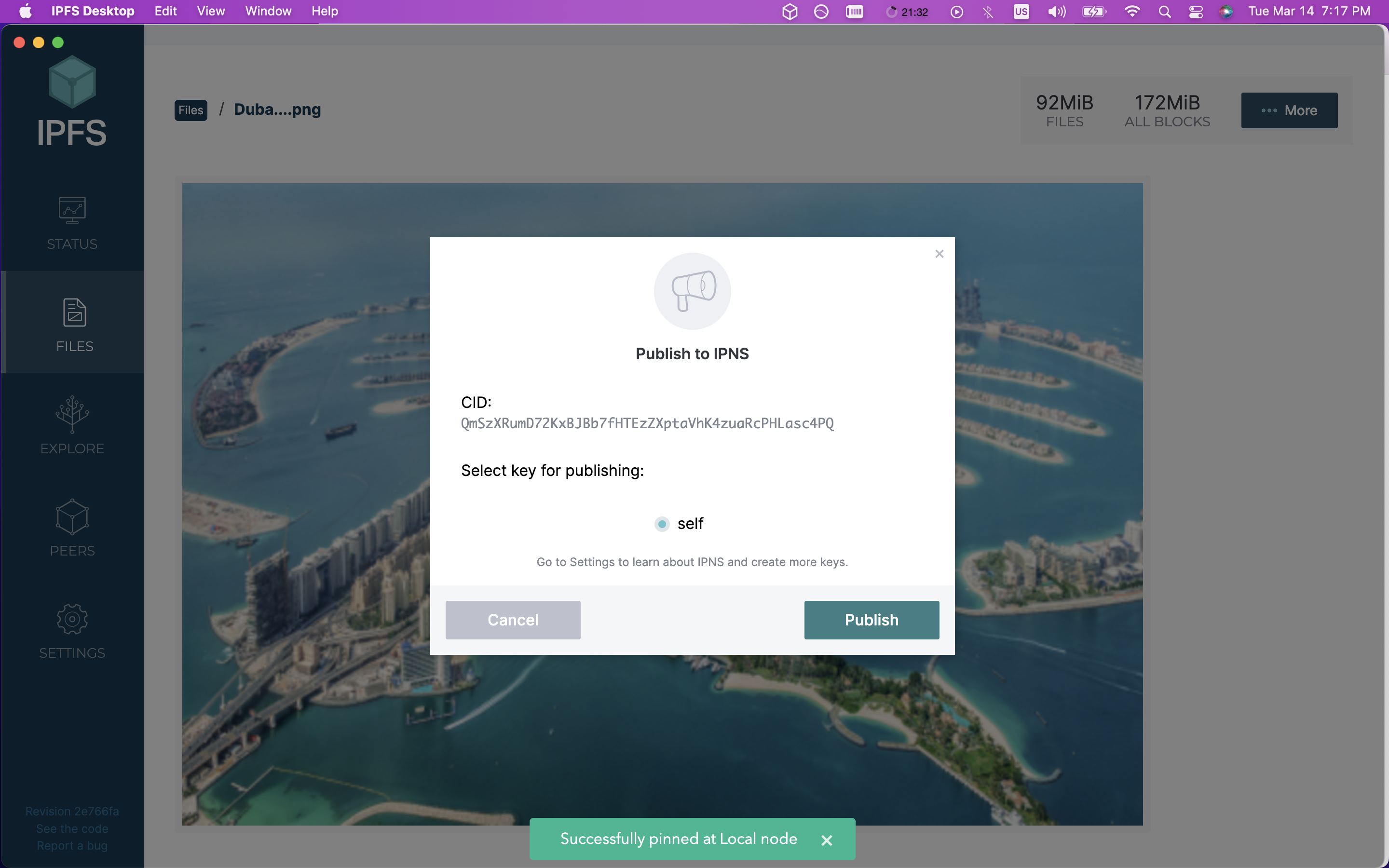
IPFS
-
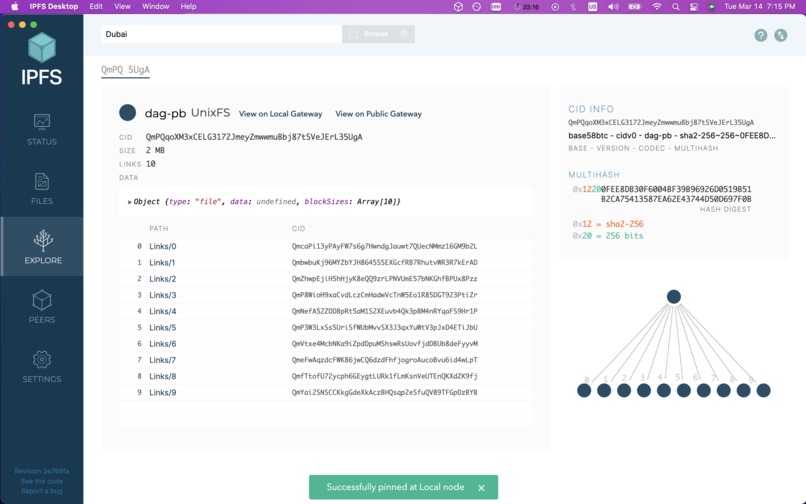
IPFS
-
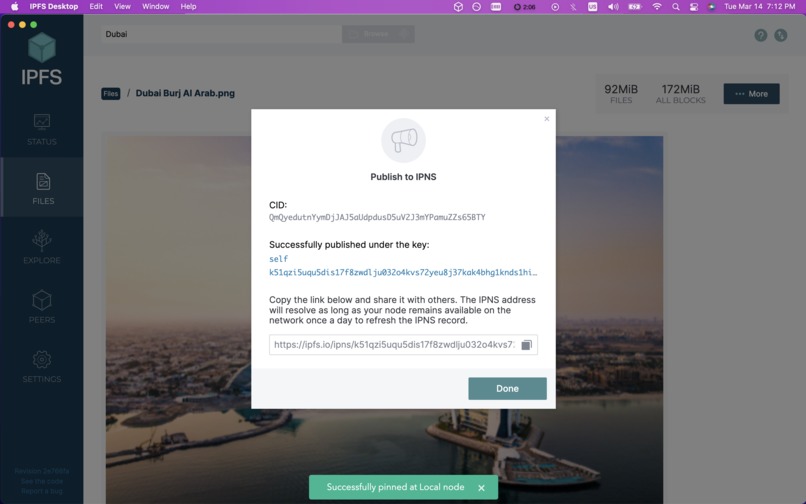
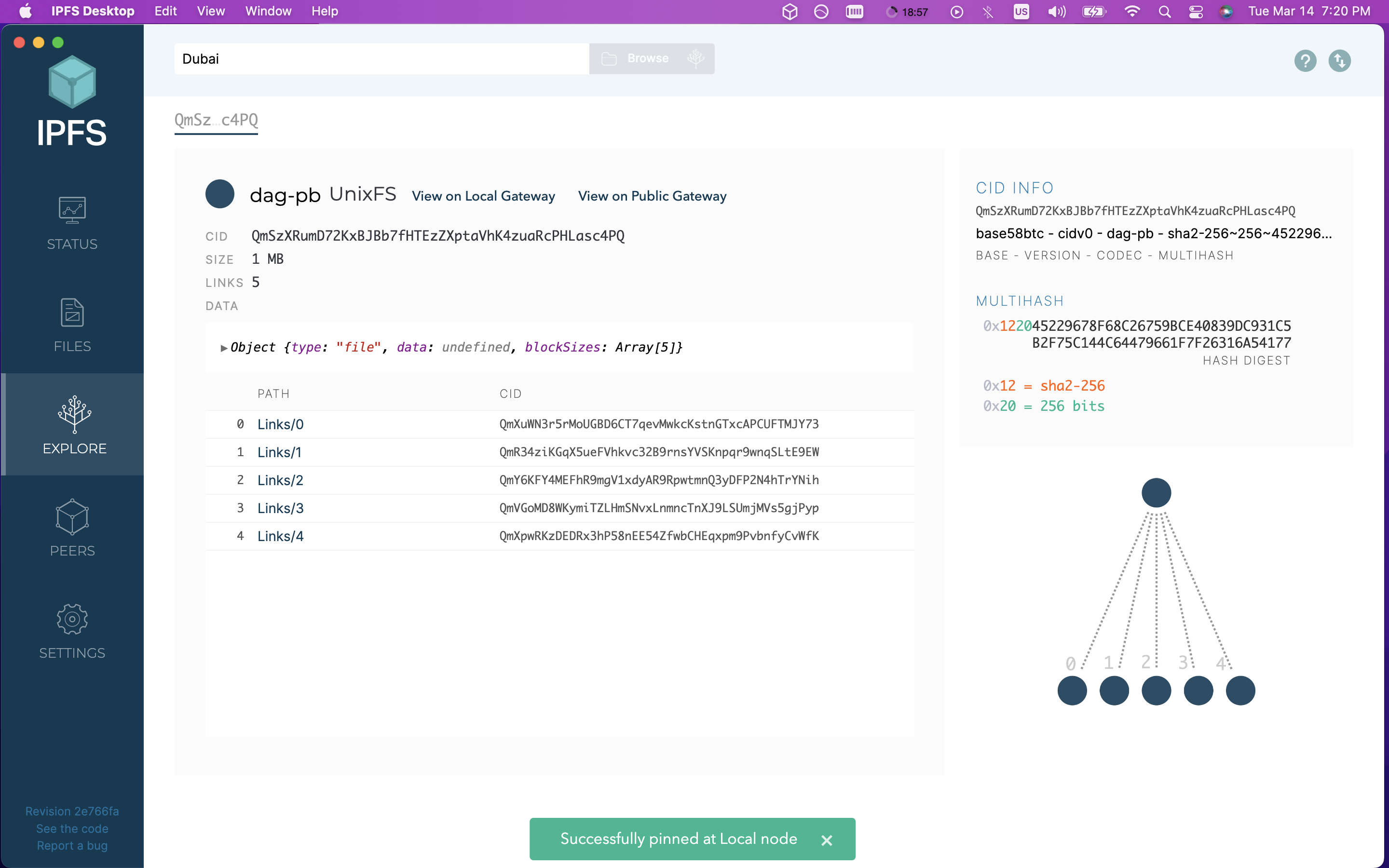
IPFS
-
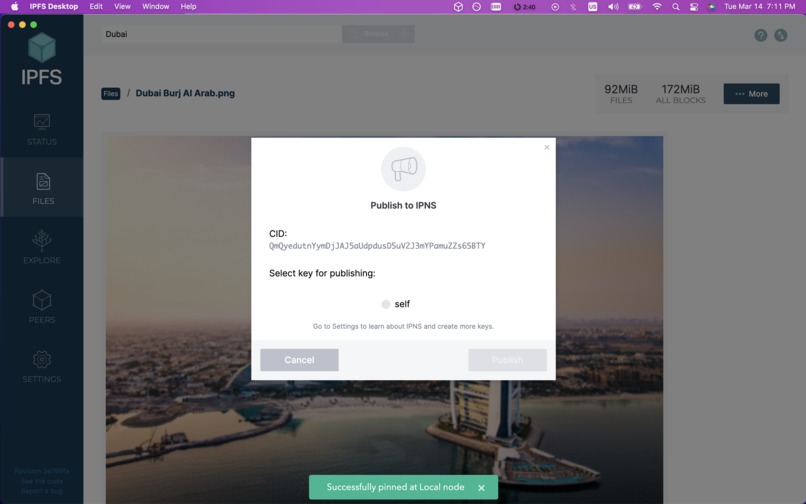
IPFS
-
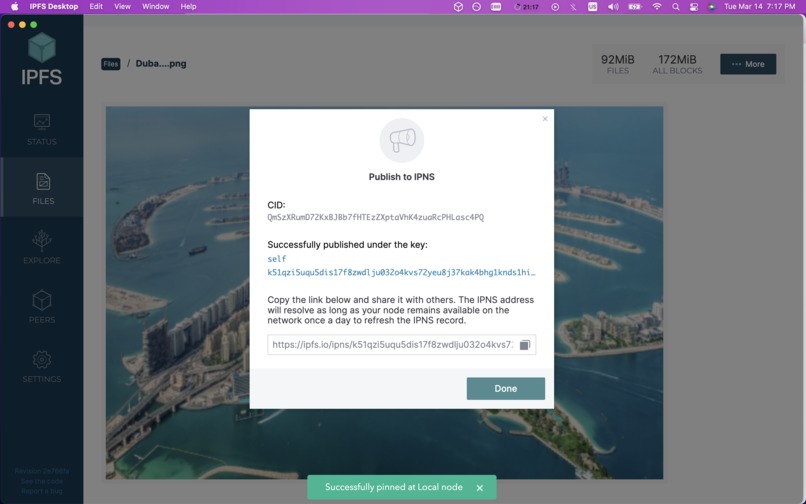
IPFS
-
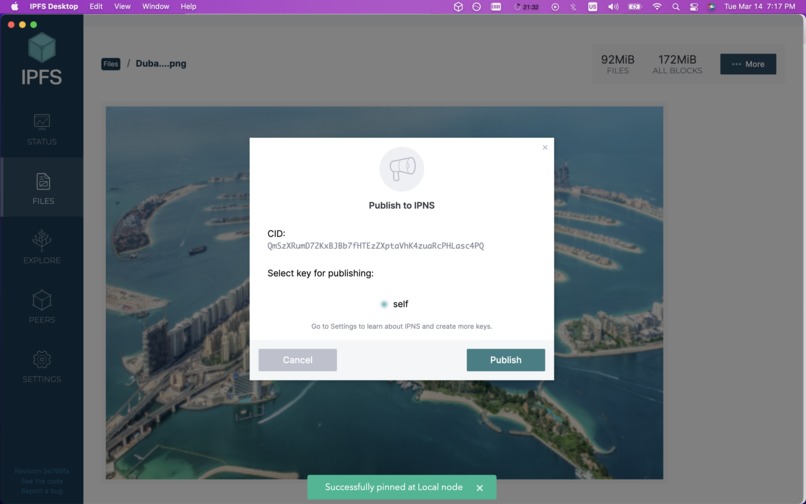
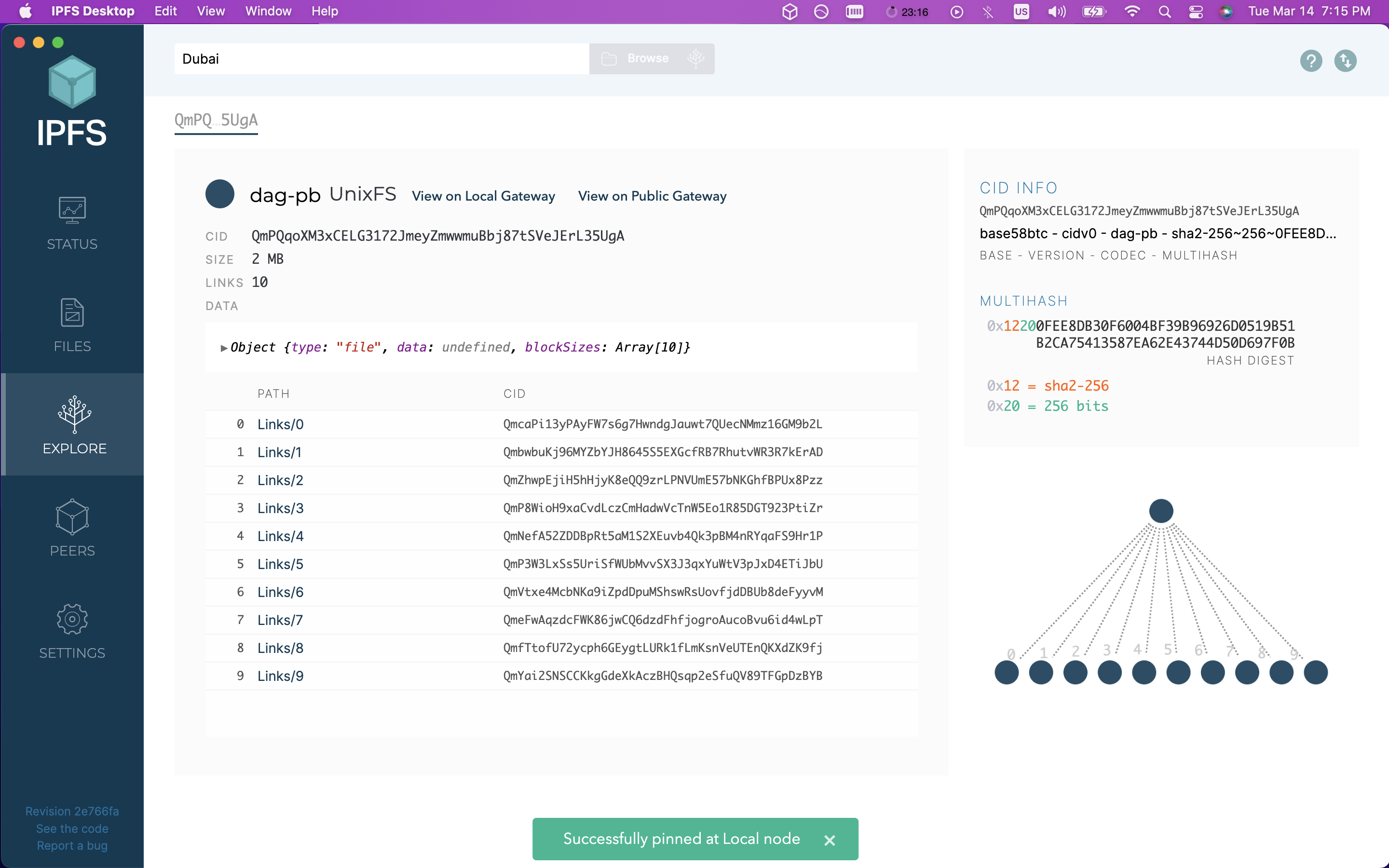
IPFS
-
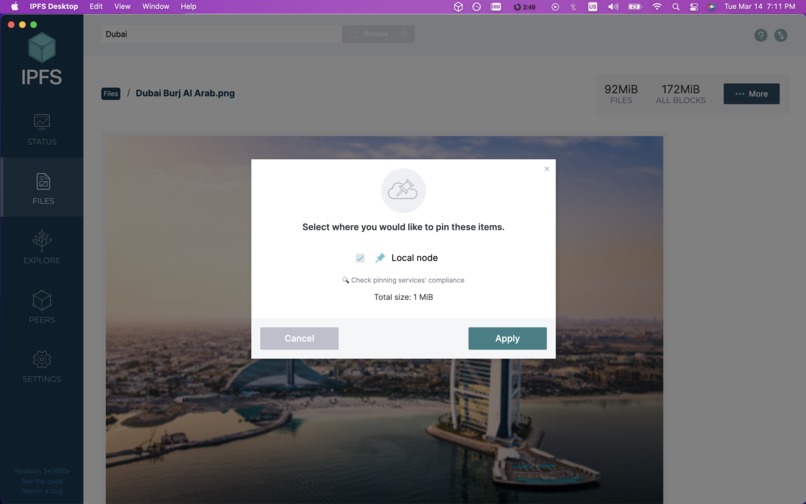
IPFS
-
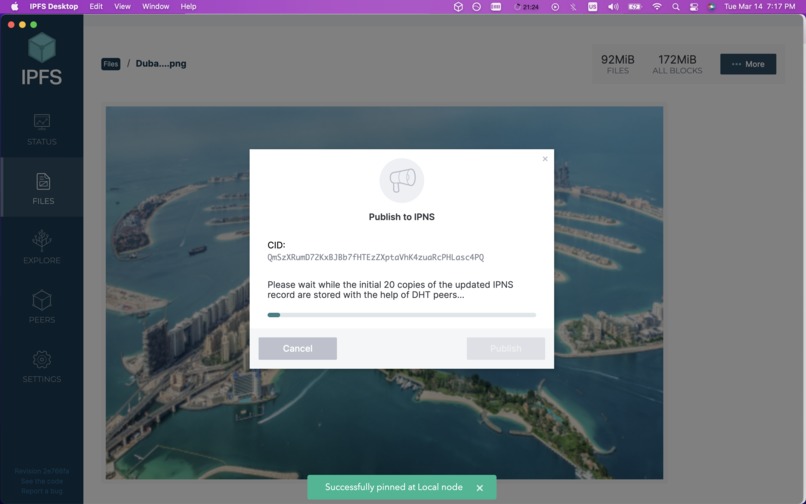
IPFS
-
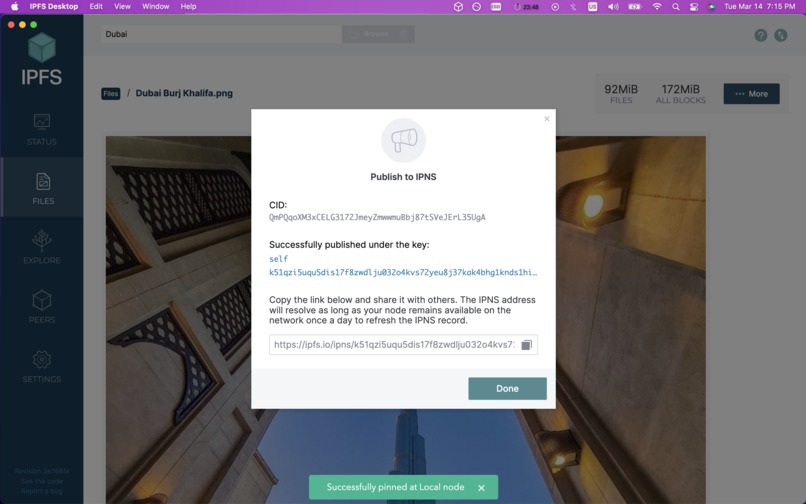
IPFS
-
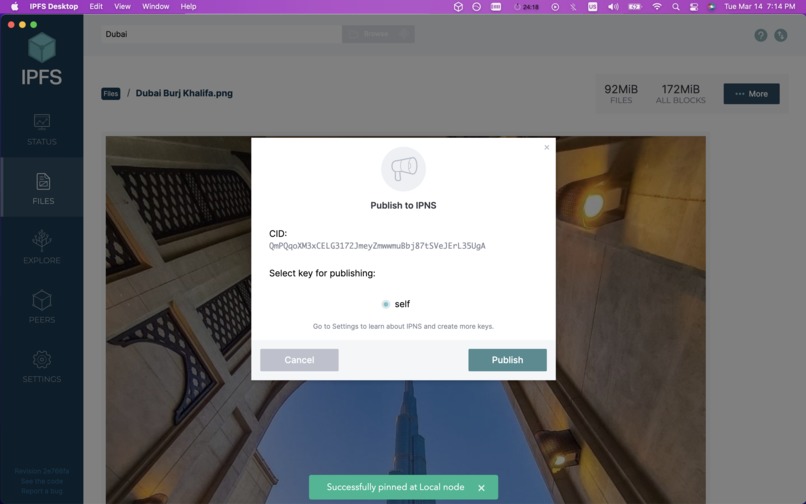
IPFS
-
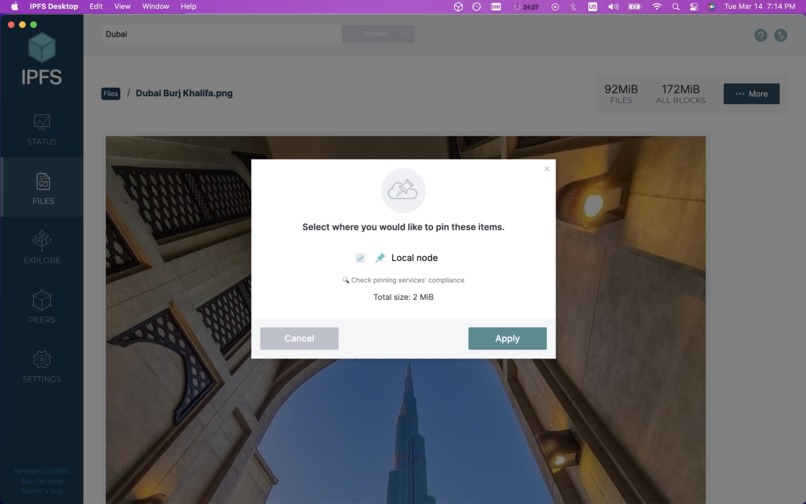
IPFS
-
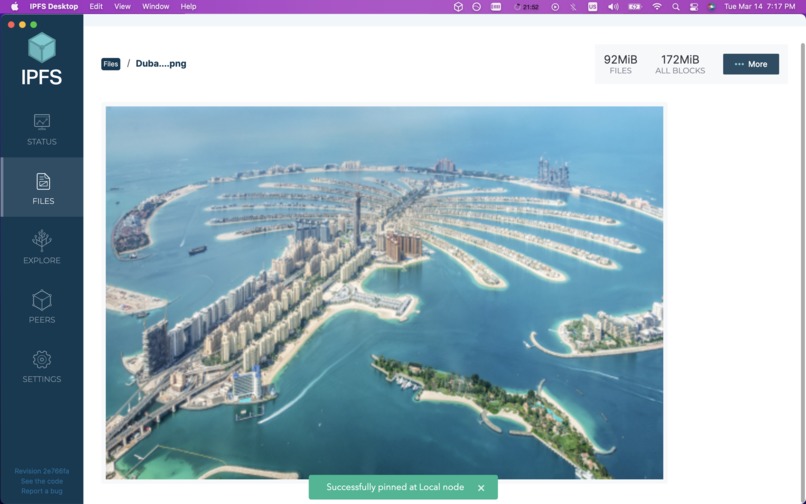
IPFS
-
IPFS
-
IPFS
-
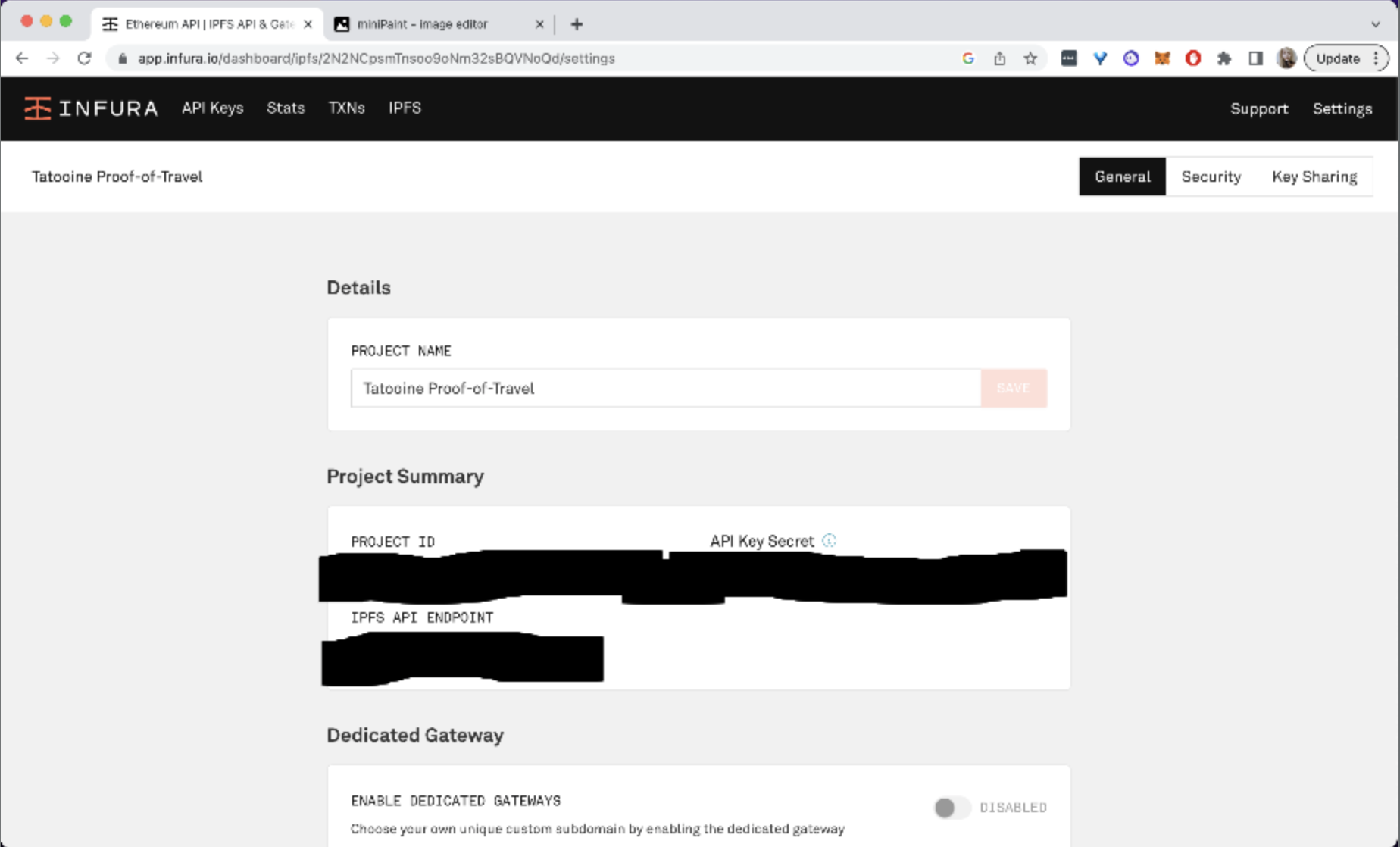
Infura Ethereum keys
-
Infura Ethereum keys
-
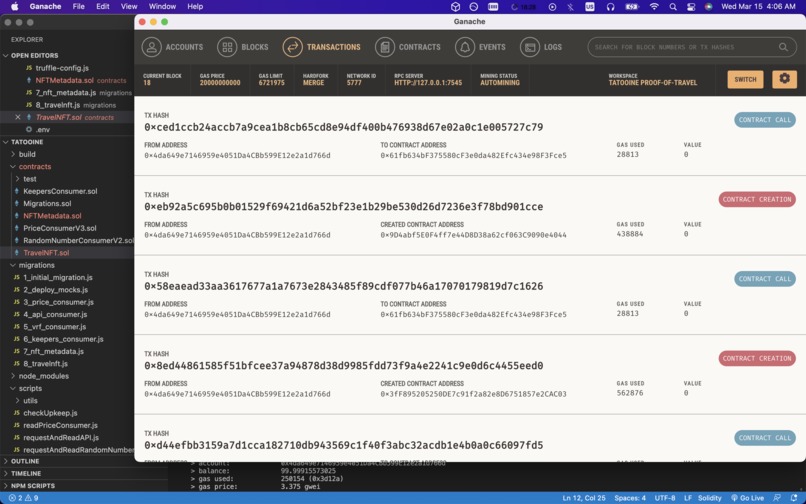
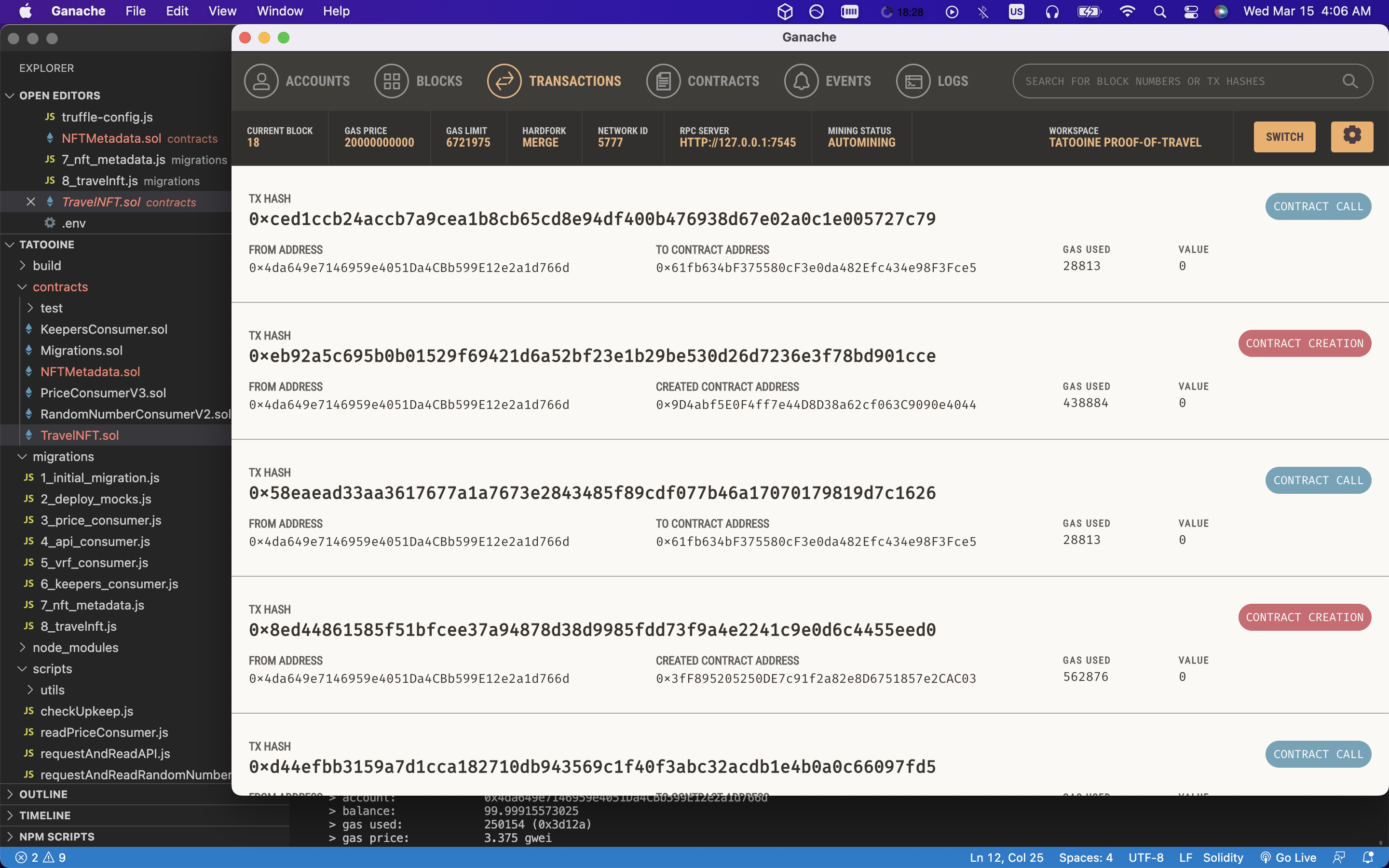
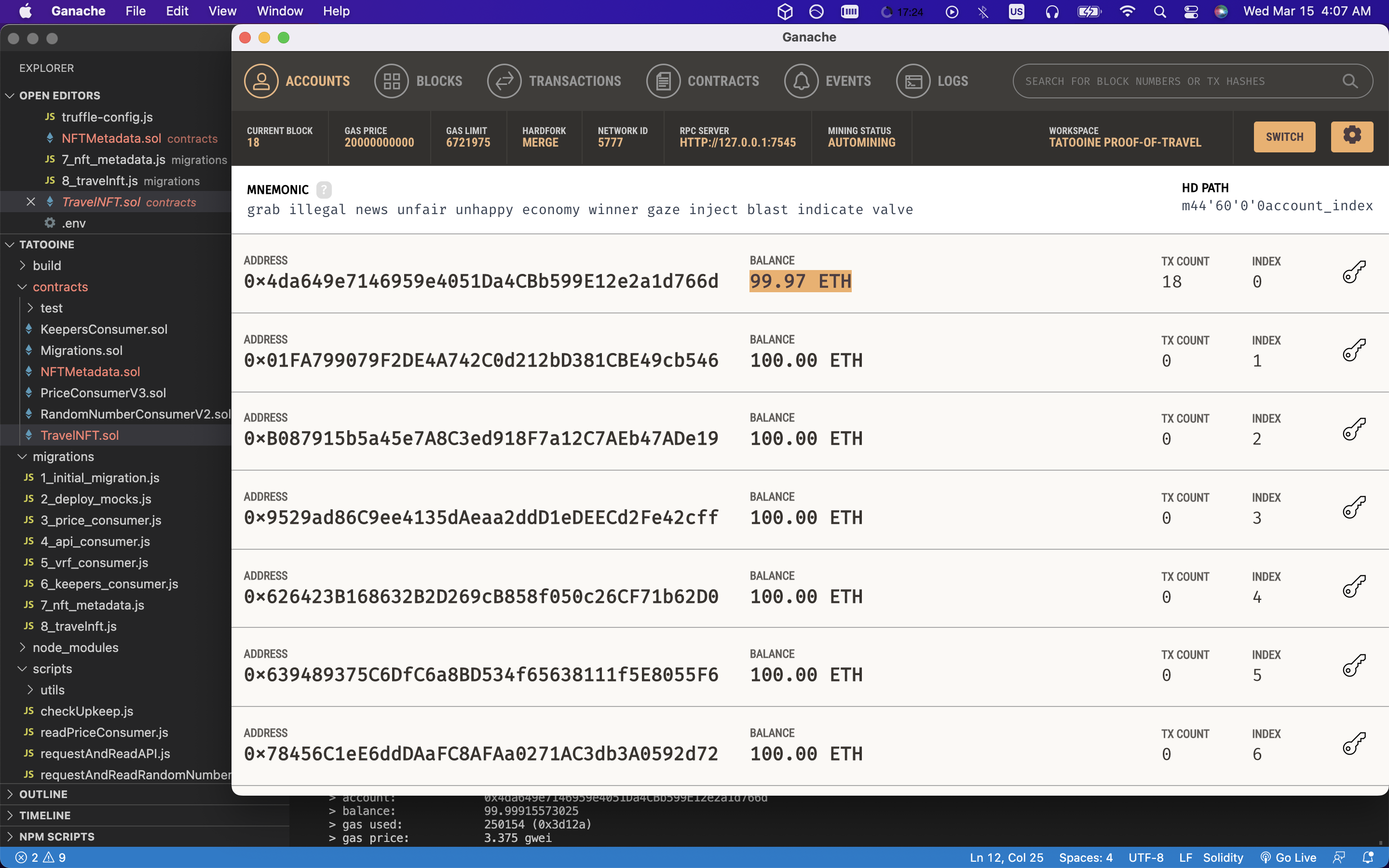
ganache
-
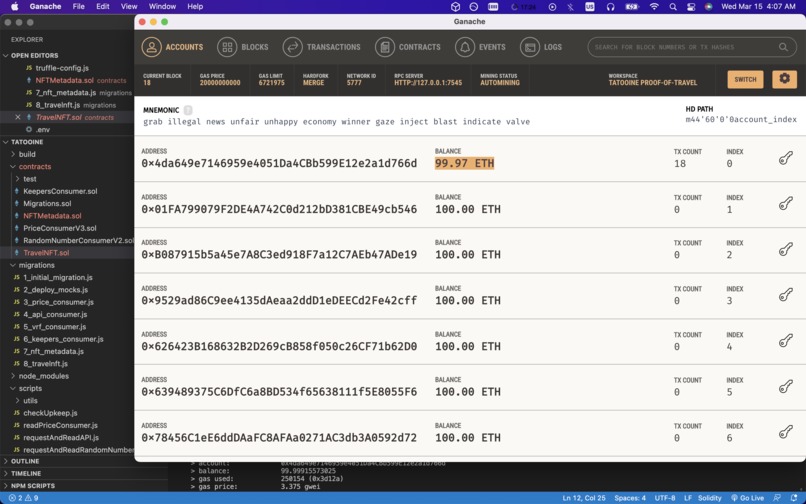
ganache
-
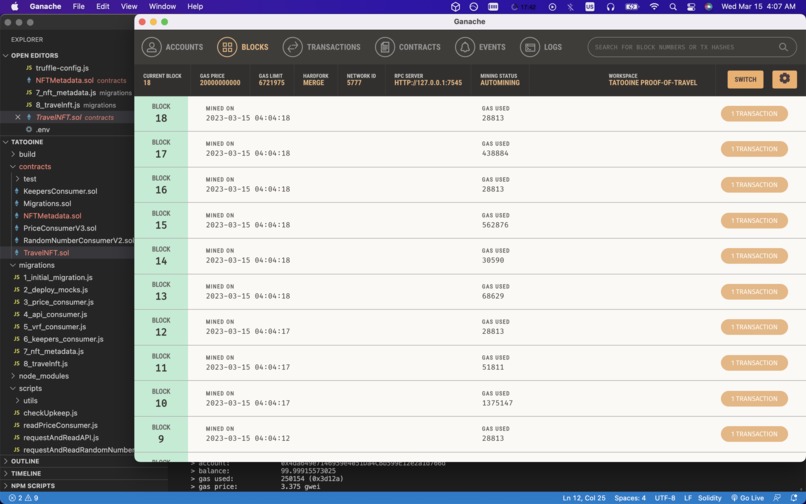
ganache
-
-
-
-
-
-
-
-
-

-
-
-
-
-
-
-

-
-
-
-
-
-

-
-
-
-
-
-
-
-
-
-
-
-
-
-
-
-
-
-
-
-
-
-
-
-
-
-
-
-
Inspiration

COVID'S EFFECTS ON TOURISM IN DUBAI
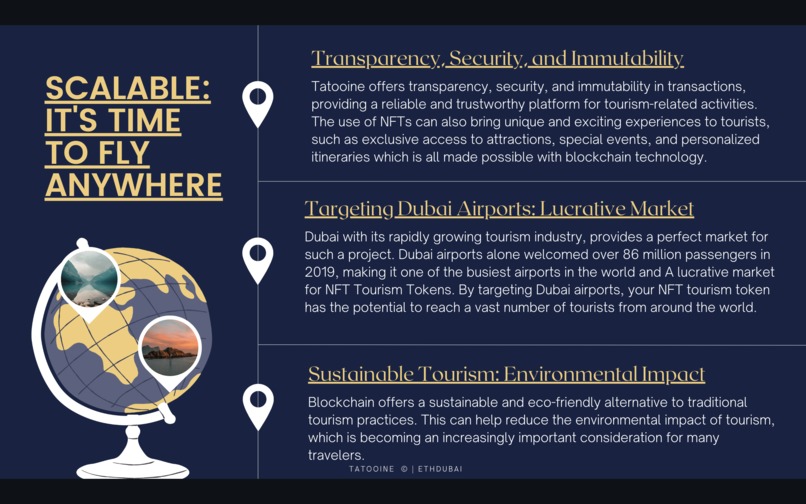
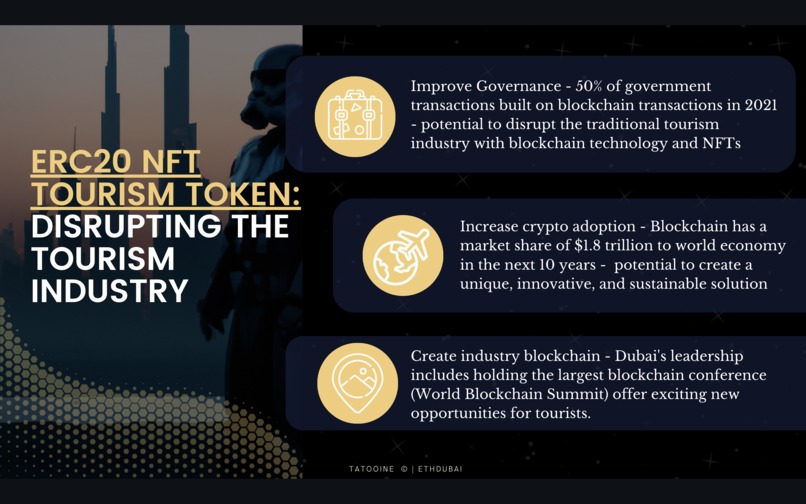
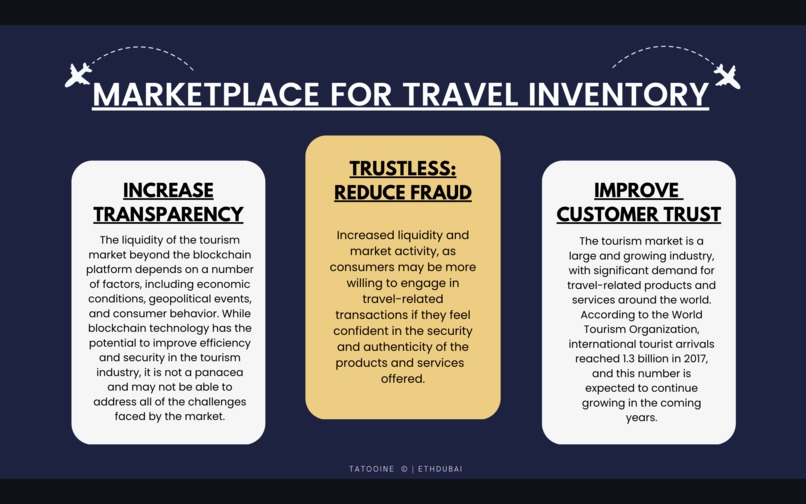
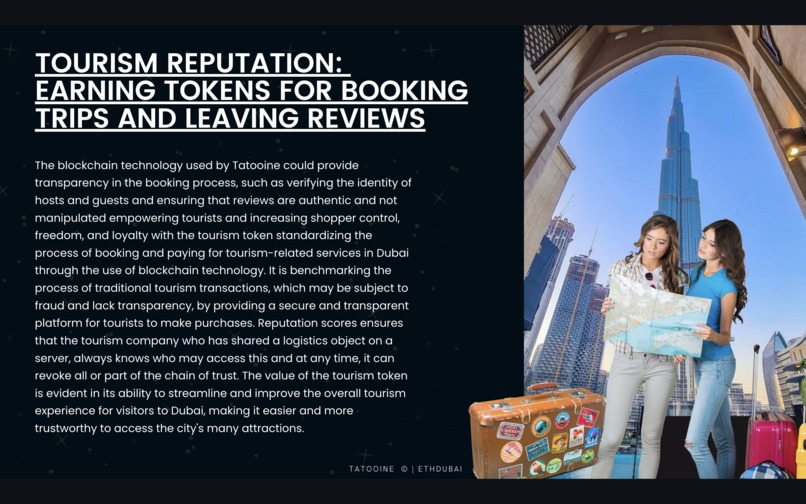
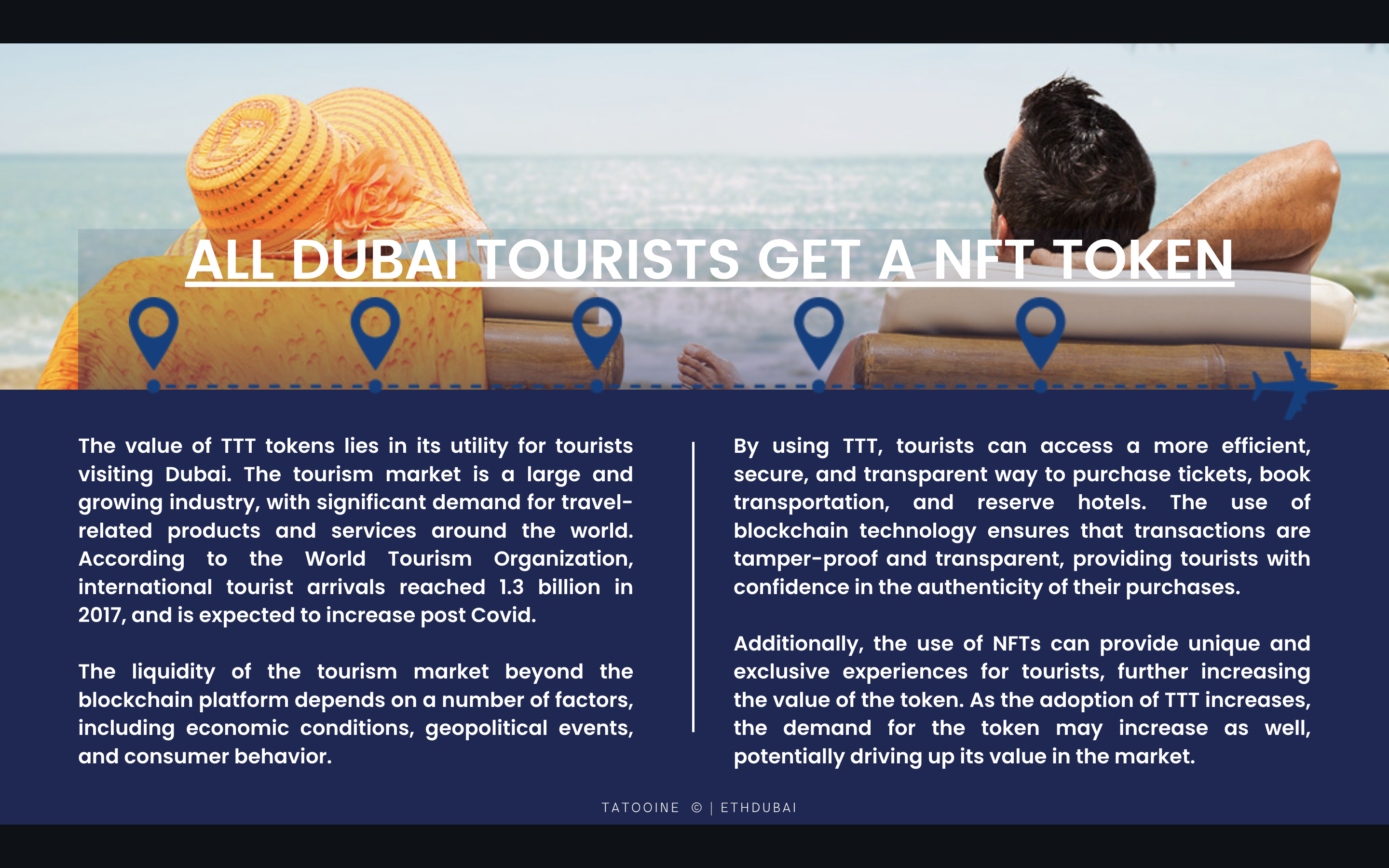
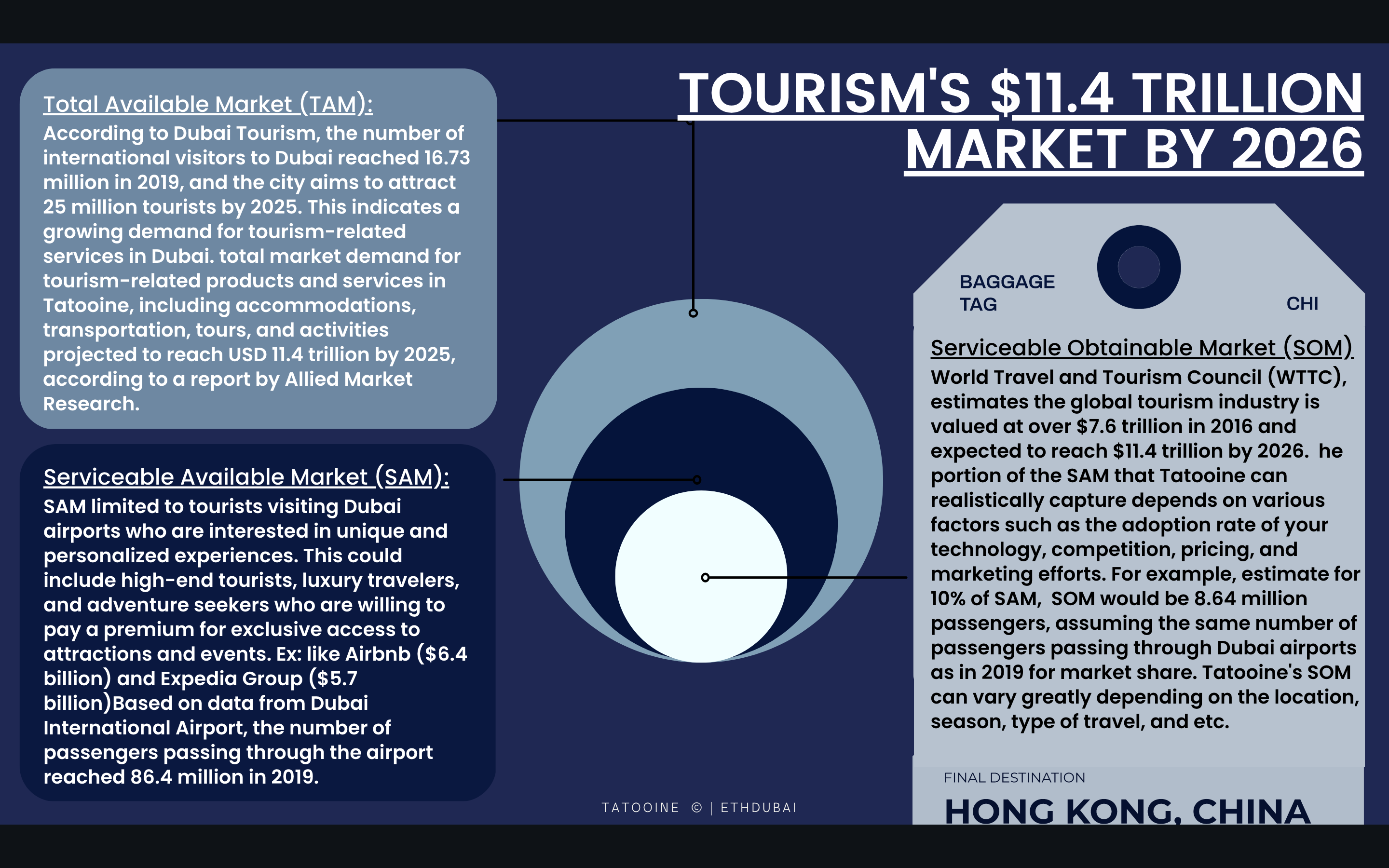
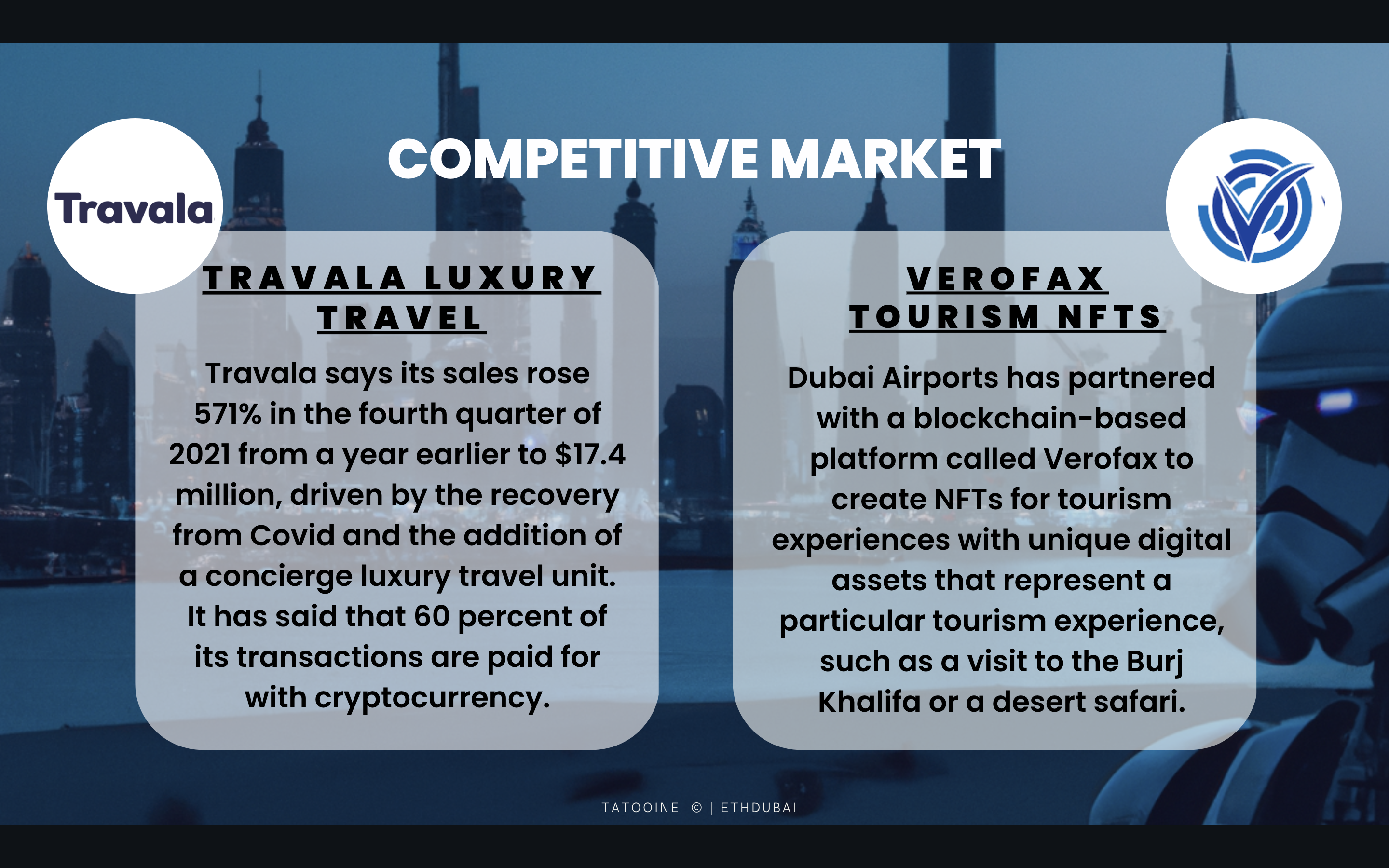
Like many other countries and regions, the COVID-19 pandemic has had a significant impact on tourism in Dubai. Dubai is one of the most popular tourist destinations on the planet. The place is renowned for its opulent shopping, luxury hotels and resorts, vibrant nightlife, awe-inspiring architecture and awesome beaches. The travel industry is currently facing a huge challenge due to the COVID-19 pandemic, with the International Air Transport Association (IATA) estimating that the global aviation industry will lose $252 billion in 2020. This pandemic has created unprecedented complexity for the travel sector, and as a result, passengers, governments, airlines, travel companies, and the tourism sector are seeking technological and global solutions to this crisis.
As countries around the world imposed travel restrictions to control the spread of COVID-19, Dubai saw a sharp decline in the number of tourists visiting the city. The United Arab Emirates (UAE) suspended all tourist visas for several months in 2020, effectively closing its borders to international tourists. Here are 2 specific ways in which COVID-19 has affected tourism in Dubai:
1) Event Cancellations and Hotel Occupancy: Dubai is known for hosting many large-scale events, such as the Dubai Shopping Festival and Dubai Expo. However, many of these events were canceled or postponed due to COVID-19, leading to a significant decline in tourist activity. The hotel industry in Dubai was hit hard by COVID-19, with occupancy rates falling to historic lows. Many hotels were forced to close or reduce their services due to the drop in demand, resulting in job losses and economic hardship.
2) Economic Impact: Tourism is a significant contributor to Dubai's economy, accounting for around 10% of the city's GDP. The decline in tourist activity has had a ripple effect on other industries, such as retail and hospitality, leading to a wider economic impact on the city. To mitigate the impact of COVID-19 on tourism, Dubai has implemented several measures, such as introducing new health and safety protocols, promoting domestic tourism, and offering financial support to businesses in the tourism sector. As the world continues to recover from the pandemic, Dubai is working to attract tourists back to the city and restore its position as a leading tourist destination.
Tourism in Dubai has started to recover gradually in the post-COVID era, although it is still not at pre-pandemic levels. Dubai is working to revive its tourism industry and attract visitors back to the city. While the industry is still recovering from the impact of COVID-19, there are positive signs of a gradual improvement. The city's focus on health and safety measures, domestic tourism, and the revival of events and attractions are likely to contribute to the recovery of the industry in the post-COVID era.

What it does
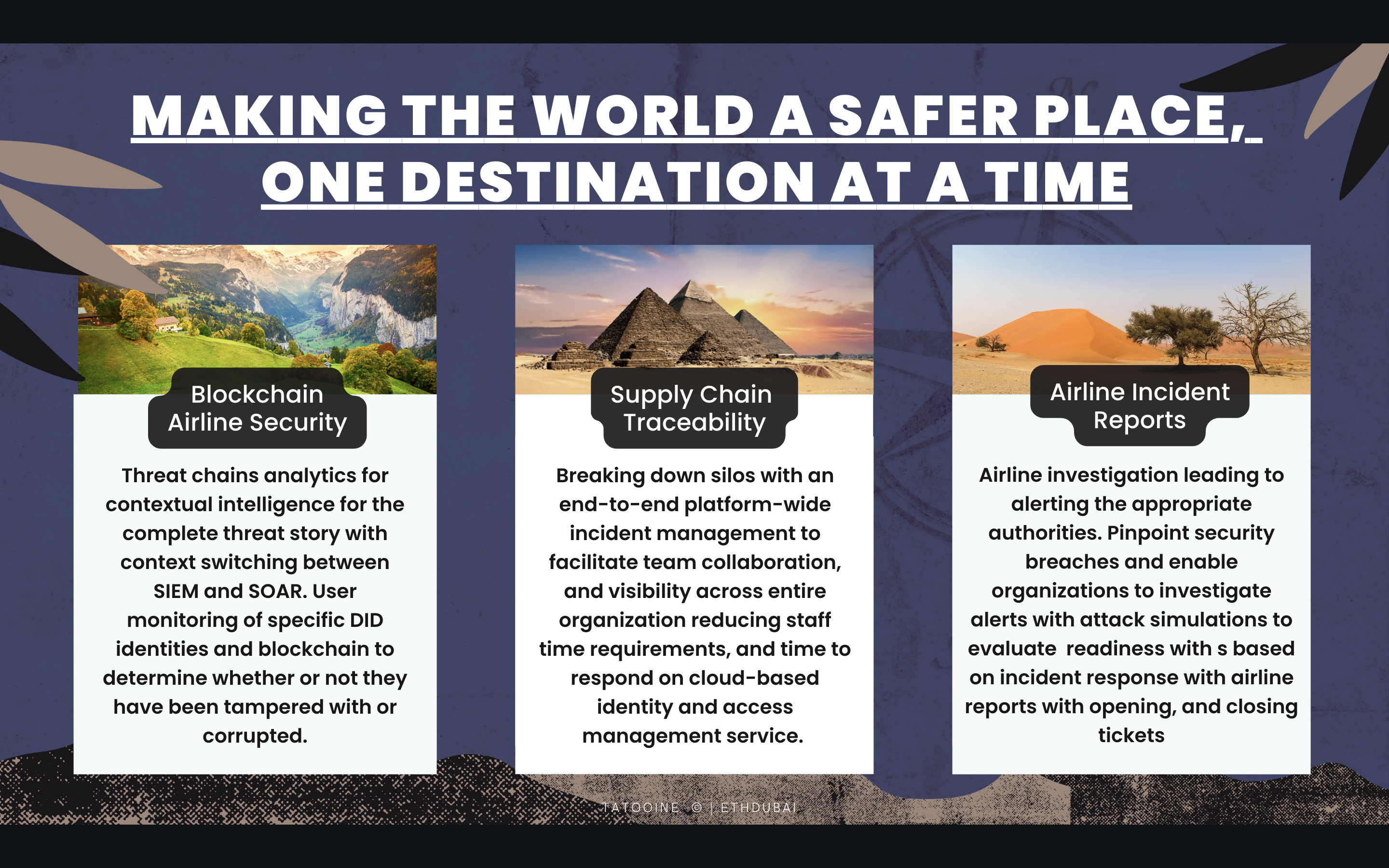
MAKING DUBAI THE SAFEST PLACE IN THE WORLD
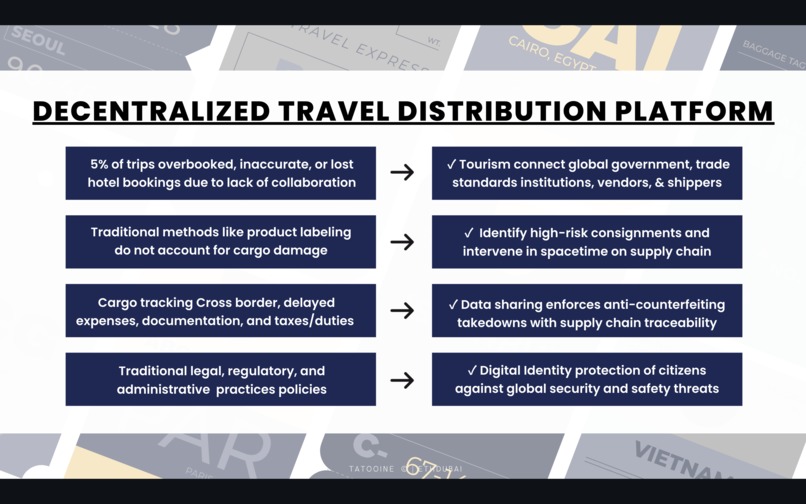
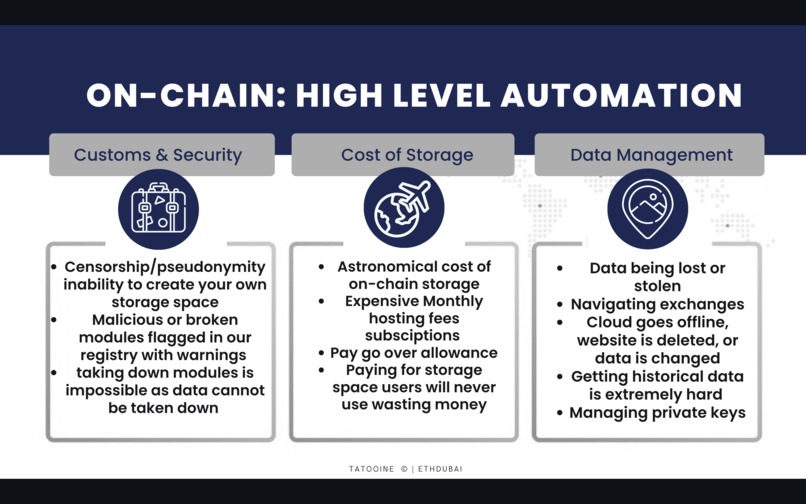
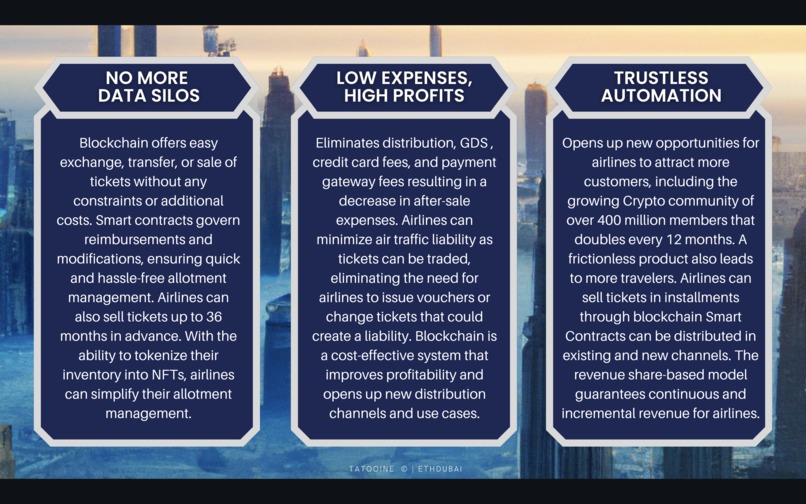
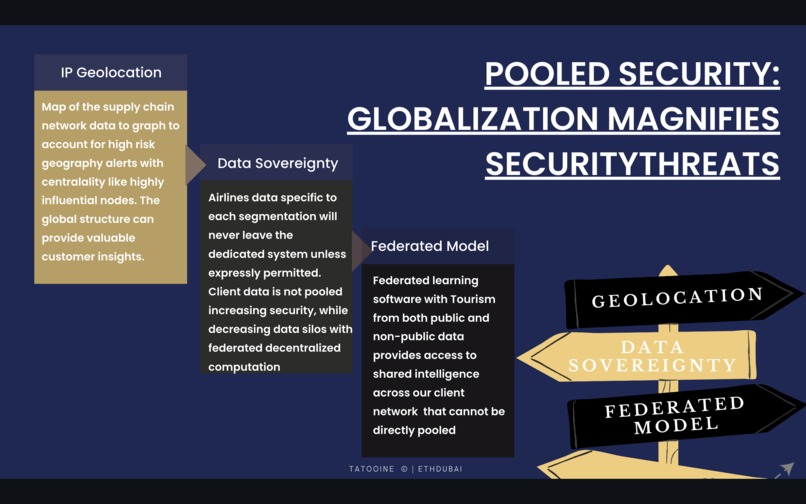
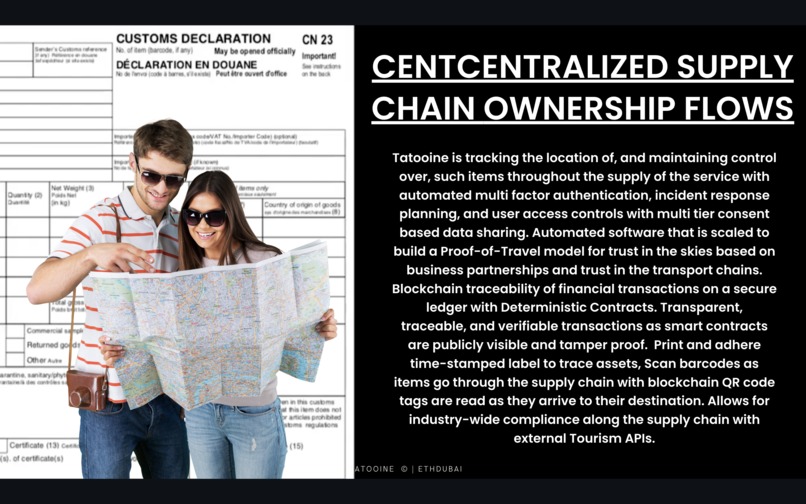
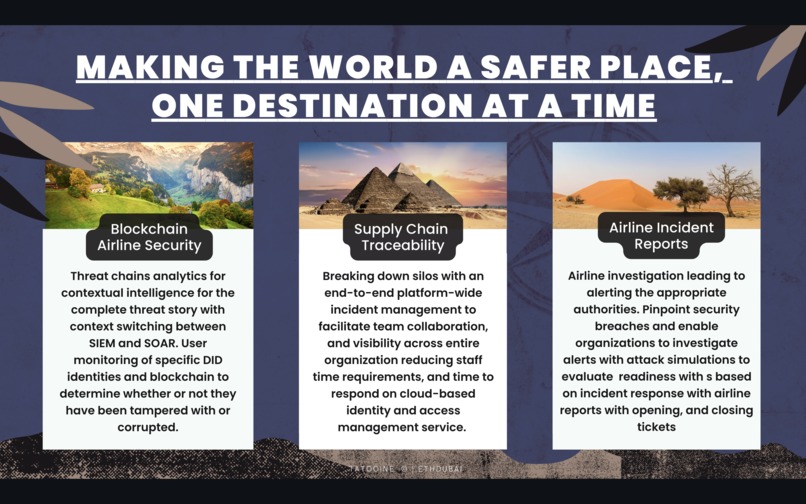
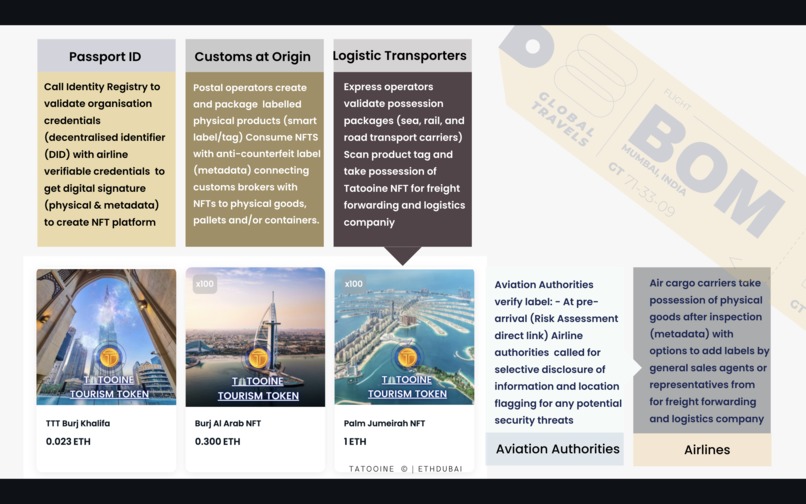
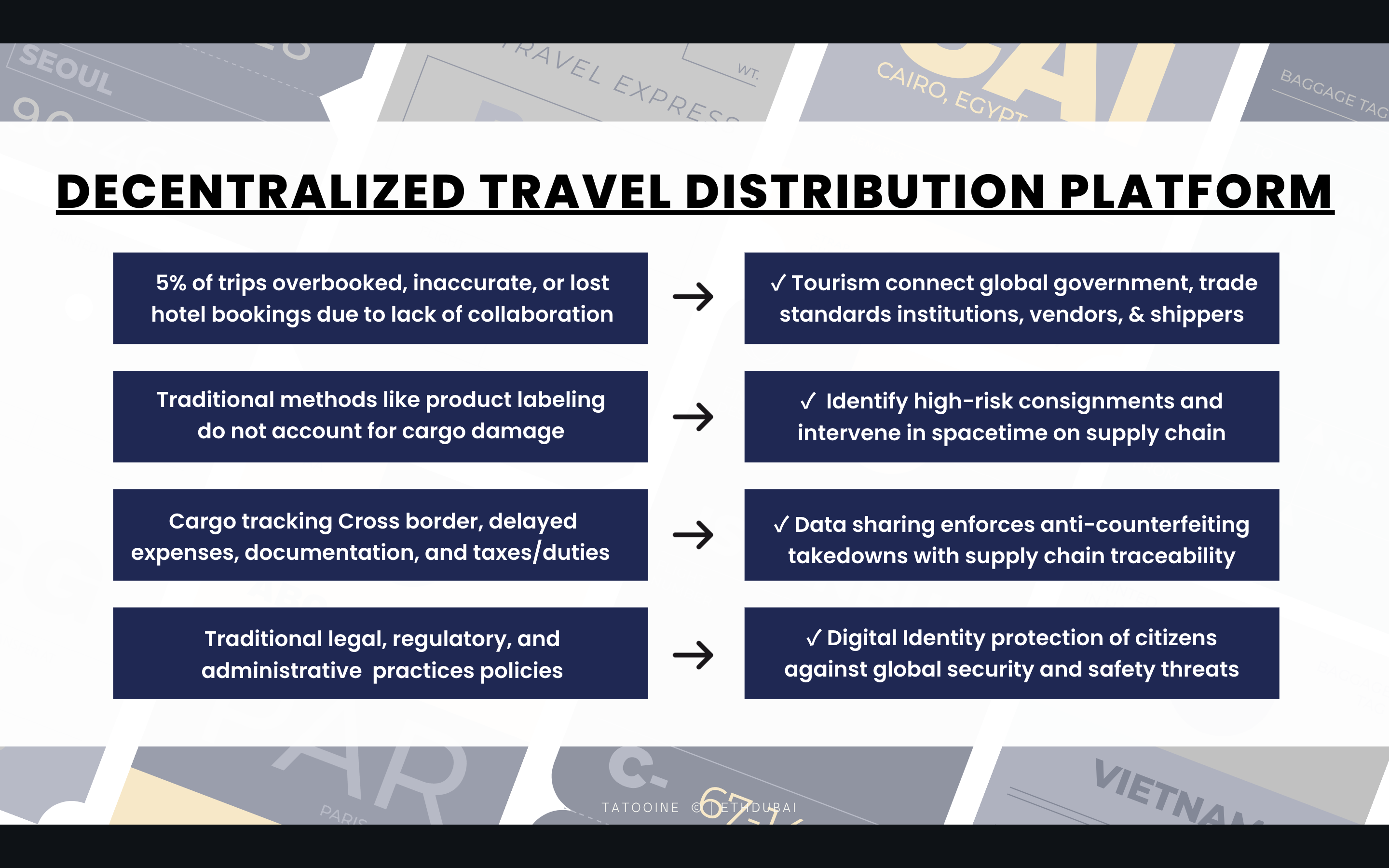
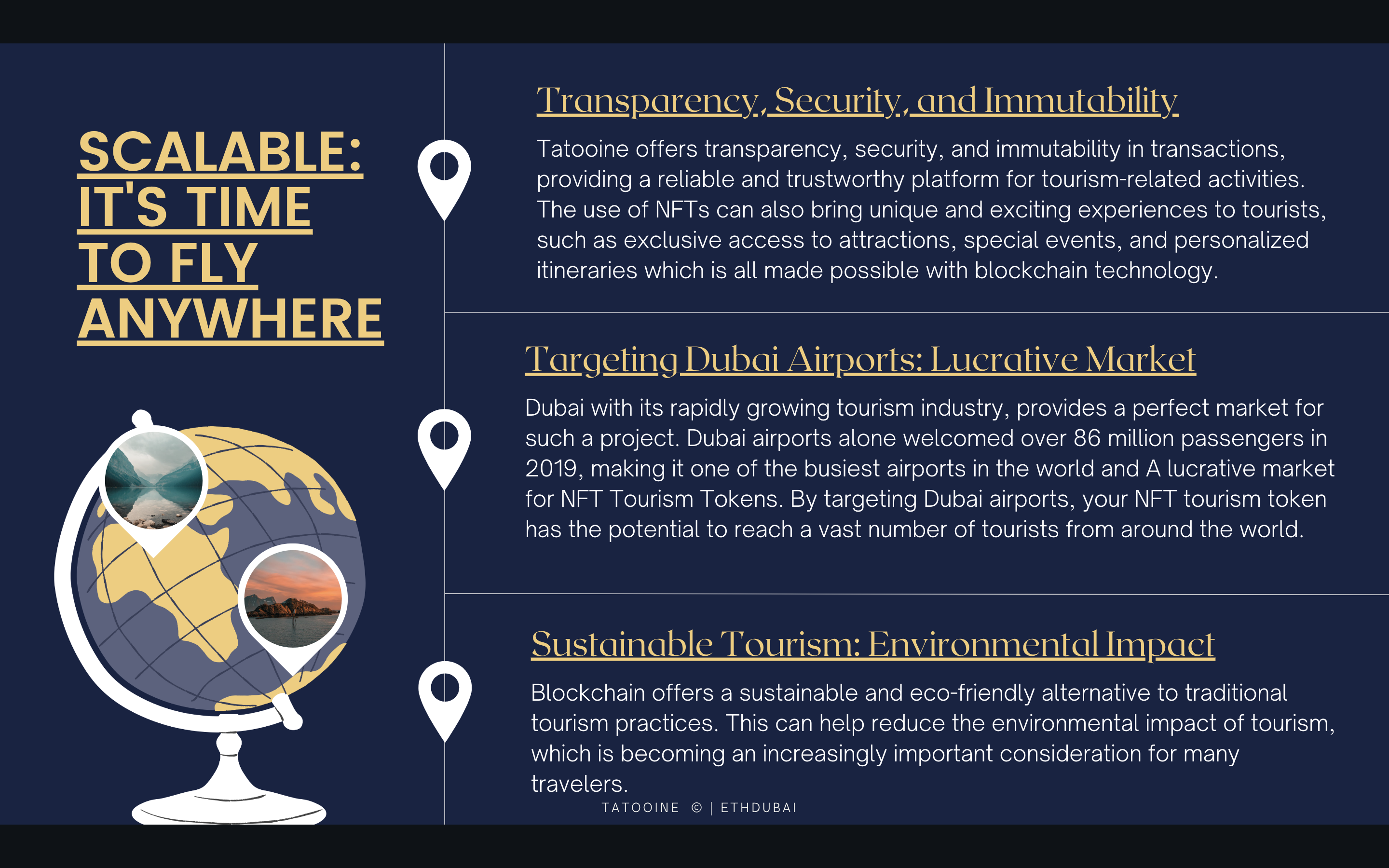
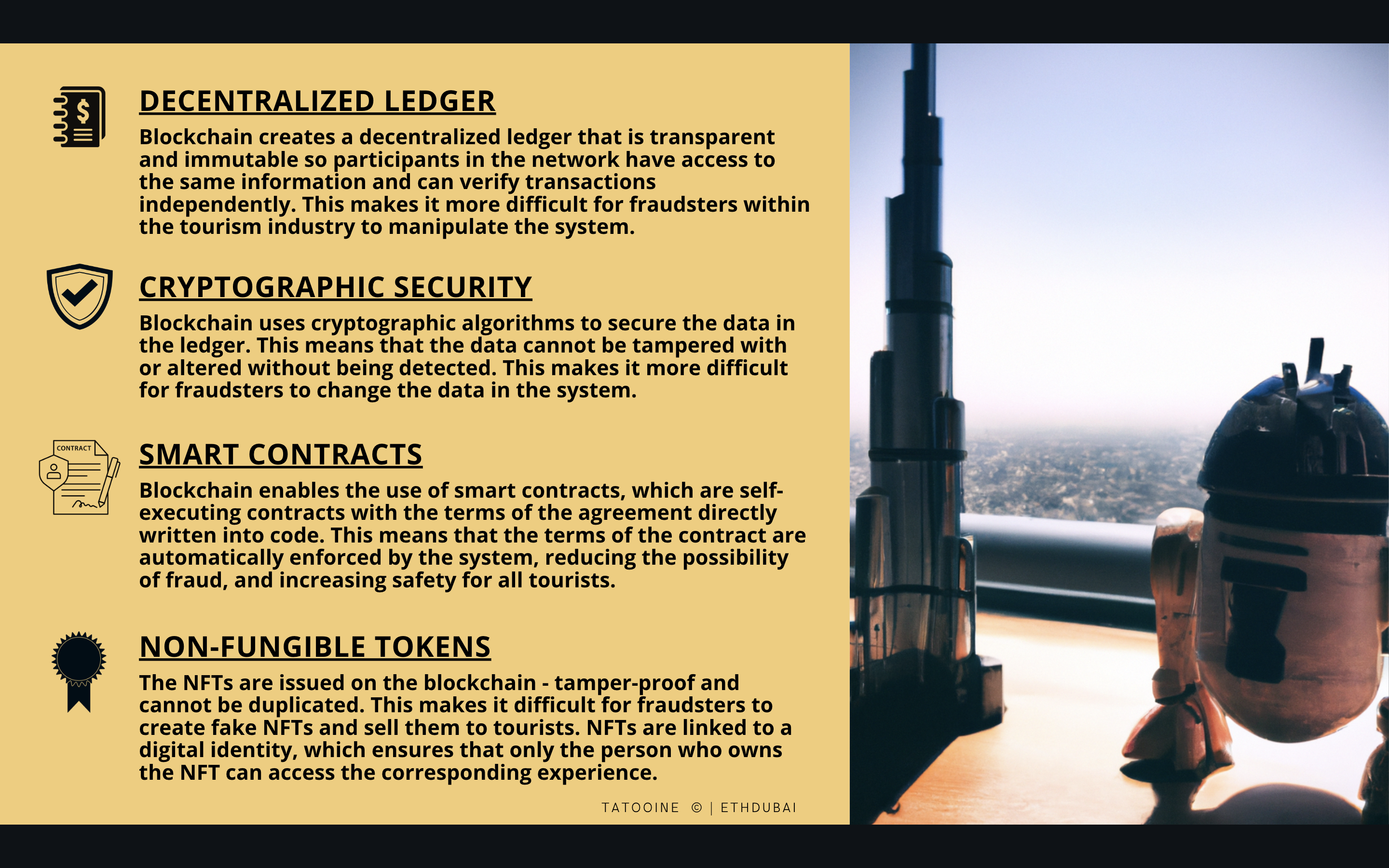
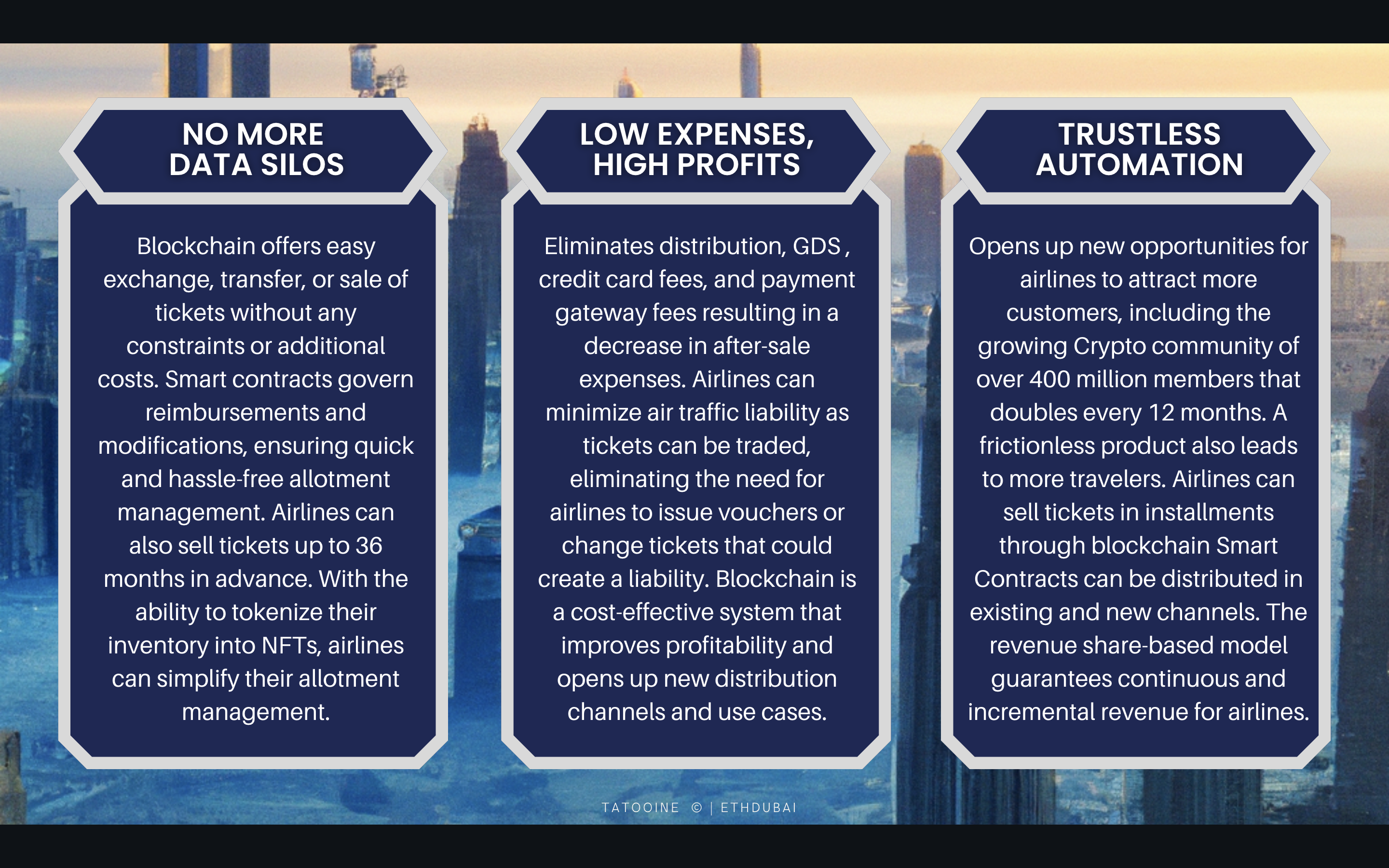
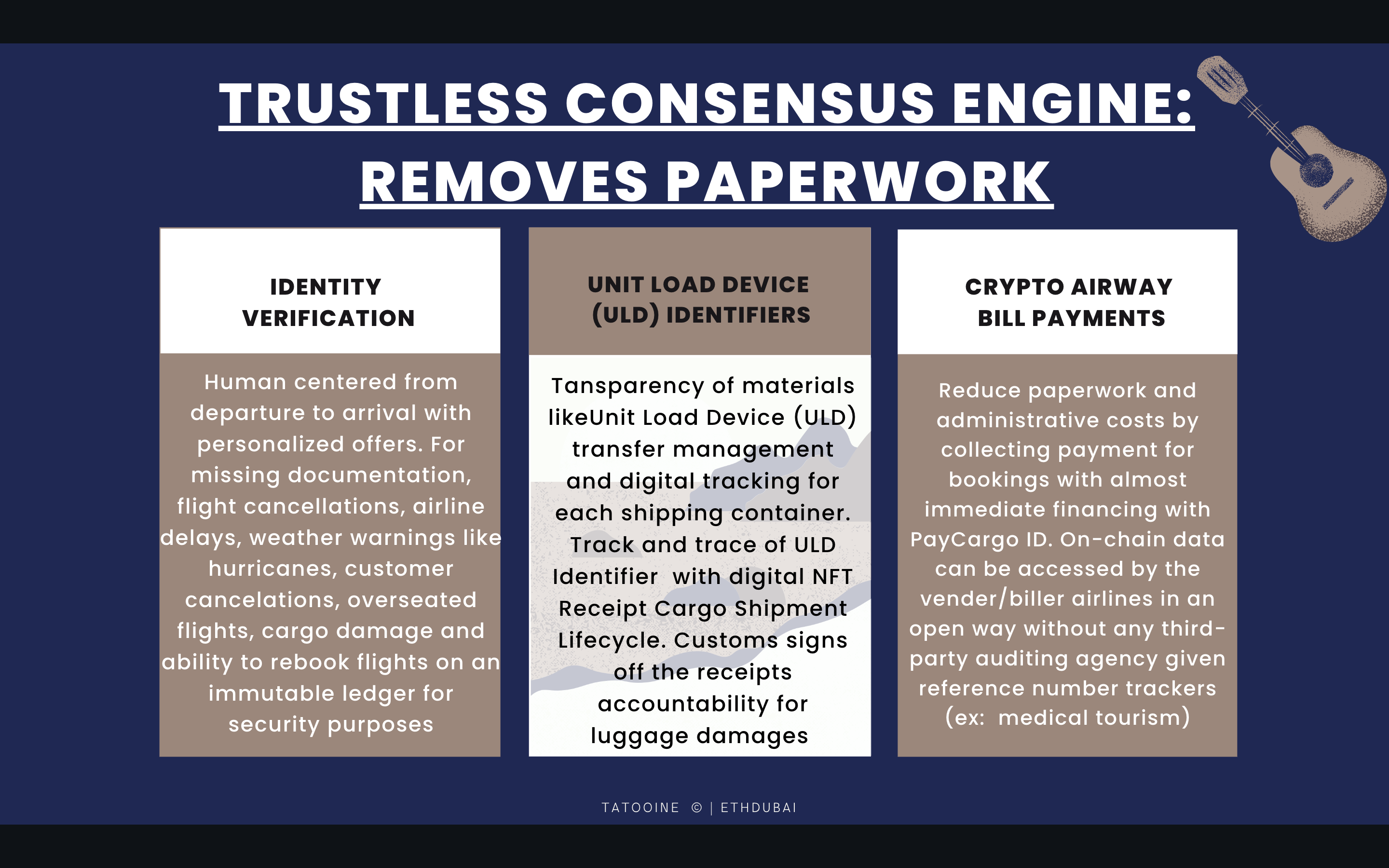
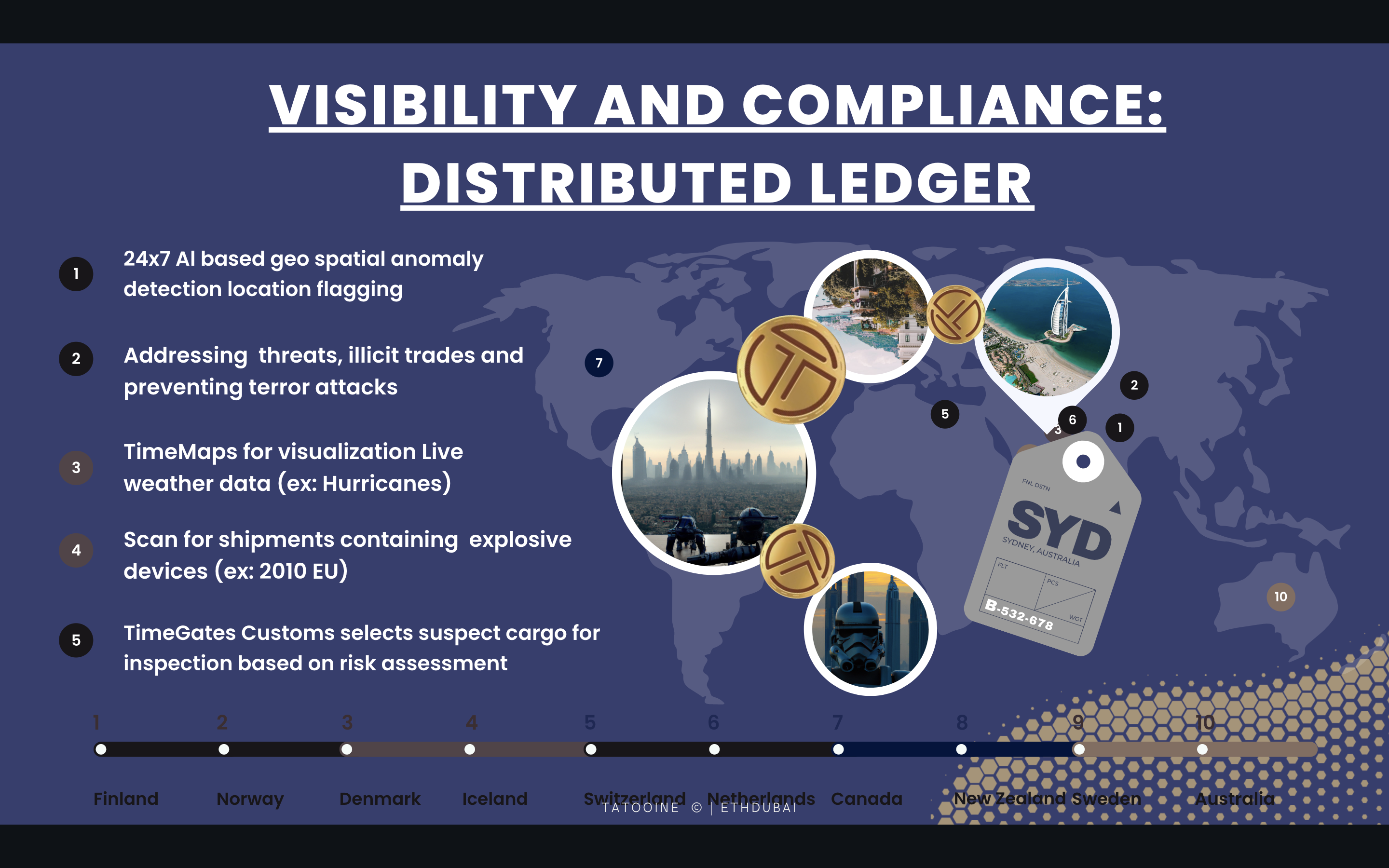
 Blockchain technology can be leveraged in airport security and customs to improve efficiency, transparency, and security of operations. Here are some ways blockchain can be used specifically for Dubai's airport security and customs and automated decisions that can alert the authorities. To address these challenges, the air travel sector needs new collaborations, technologies, and processes. By combining biometric identity innovations with blockchain technologies, the industry can accelerate its recovery and deliver impactful benefits for passengers, governments, airlines, and airports.
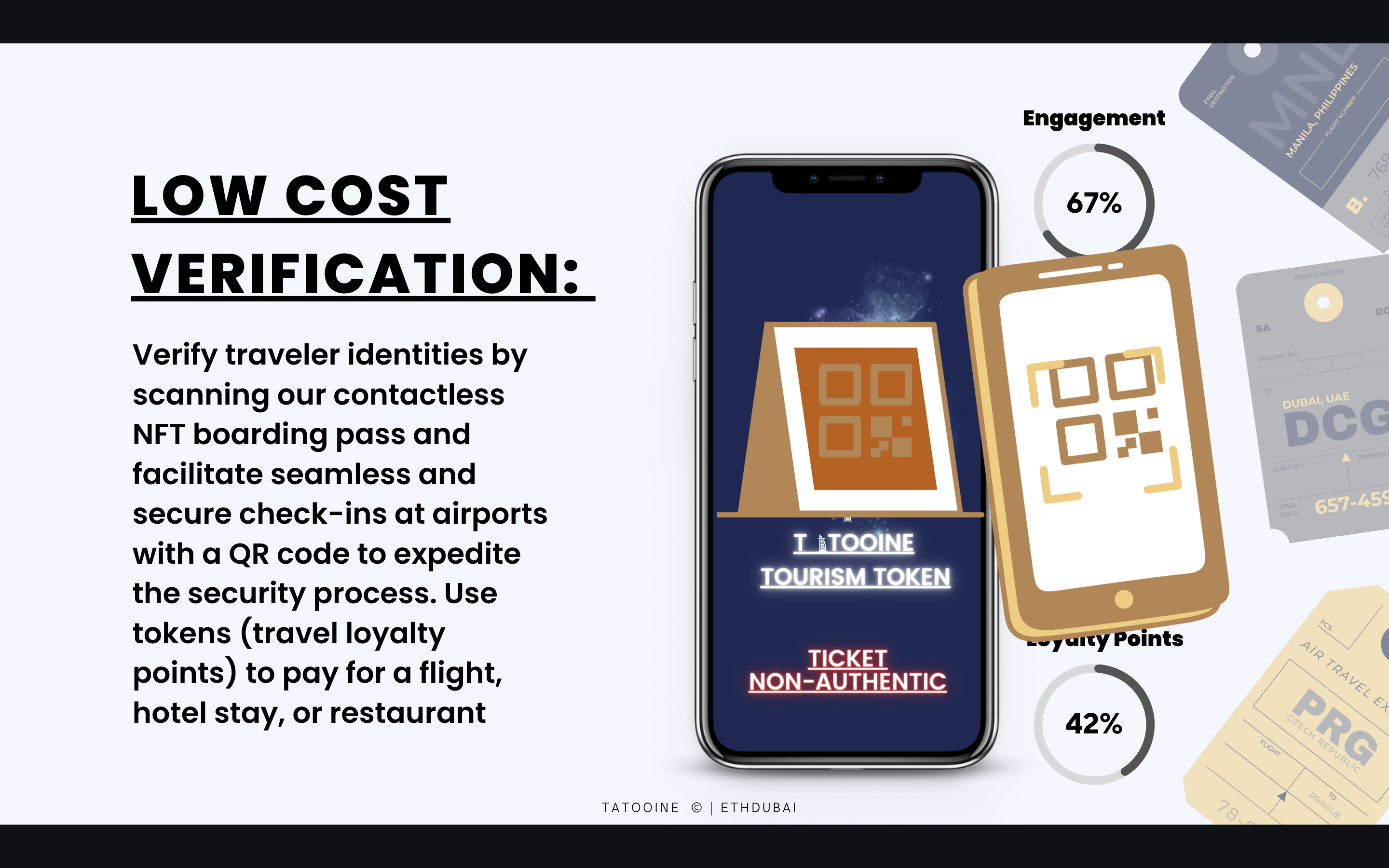
To generate confidence in customers, governments, and the travel sector, the team aims to build new ways to authenticate users' identities and digitalize travel documents, transforming customs and borders into contactless controls while keeping all data validated and secure for travelers, airports, governments, and airlines in Dubai. The future of air travel is digital, governed, touch-less, and self-served. Automated blockchain technology can replace repetitive paper or physical document-based checks that are less secure, more prone to errors, and that increase the spread of contagious diseases.

BLOCKCHAIN FEATURES
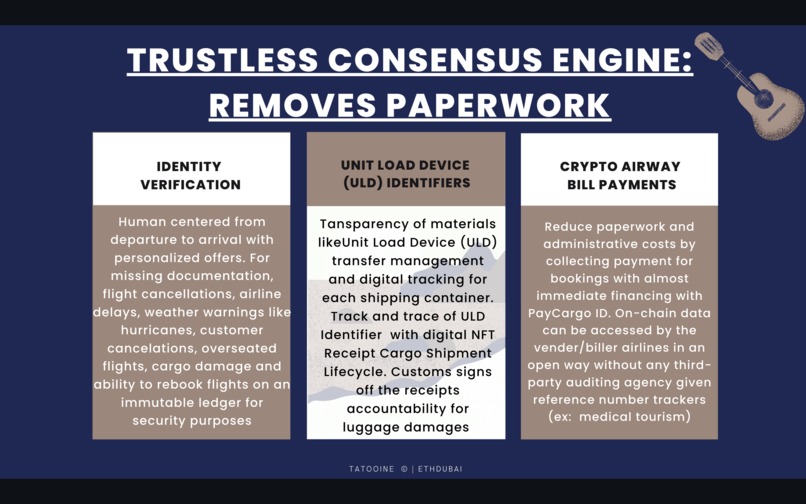
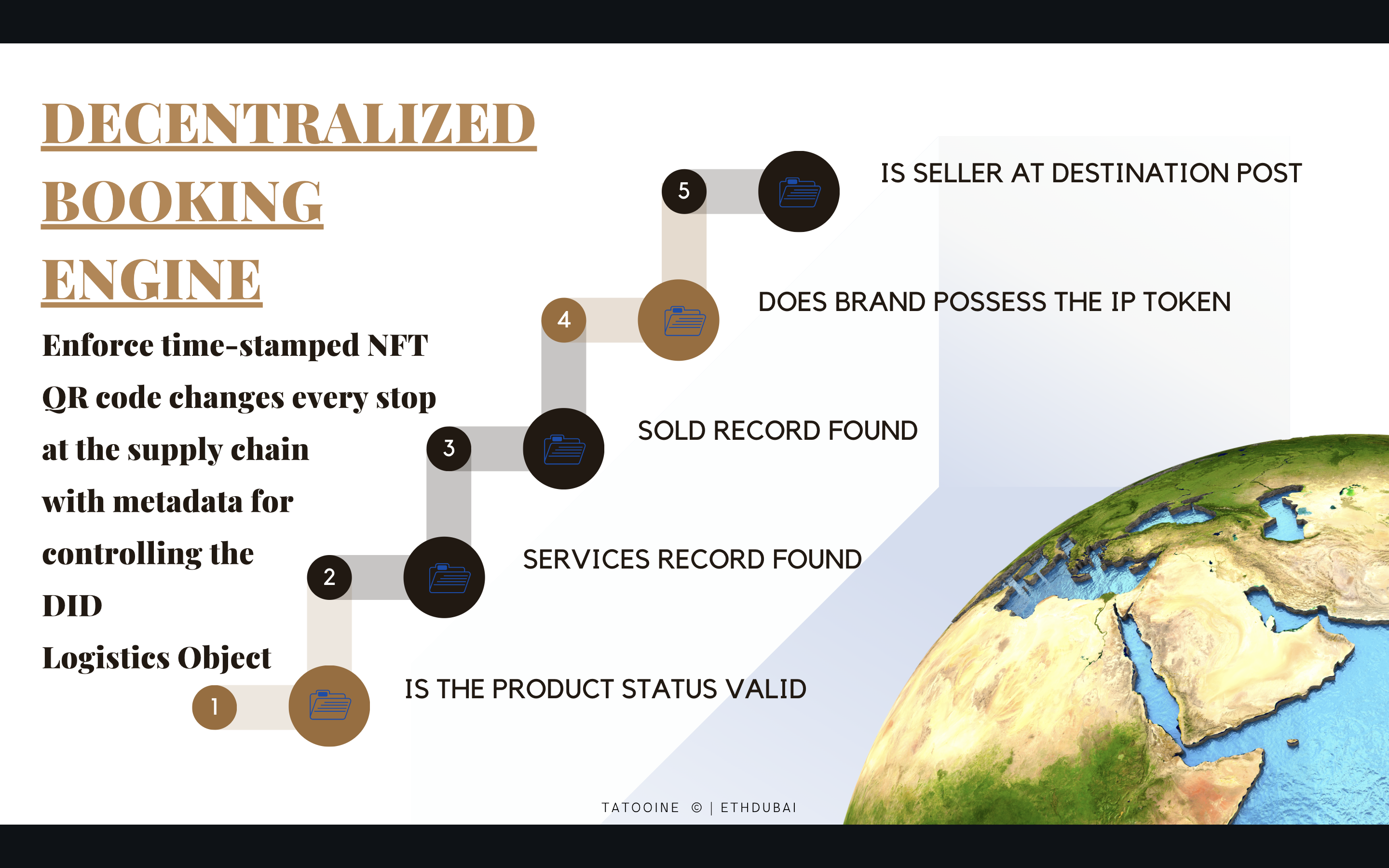
- Digital Identity: Many states are introducing new reporting requirements, such as the EU ICS2 but also the work done by the US DHS on identity and verification with DIDs and VCs. One of the challenges in airport security and customs is the verification of passengers' identity. By implementing a blockchain-based digital identity system, passengers can securely and transparently store and share their identity information with airport authorities. Amount paid in cryptocurrency (as to an airport company) for carrying goods for international payments processing.This can improve the efficiency of security and customs processes and reduce wait times.


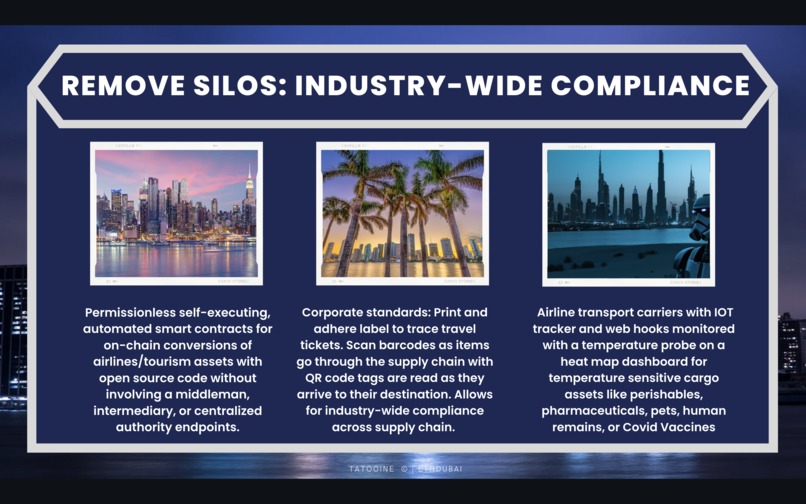
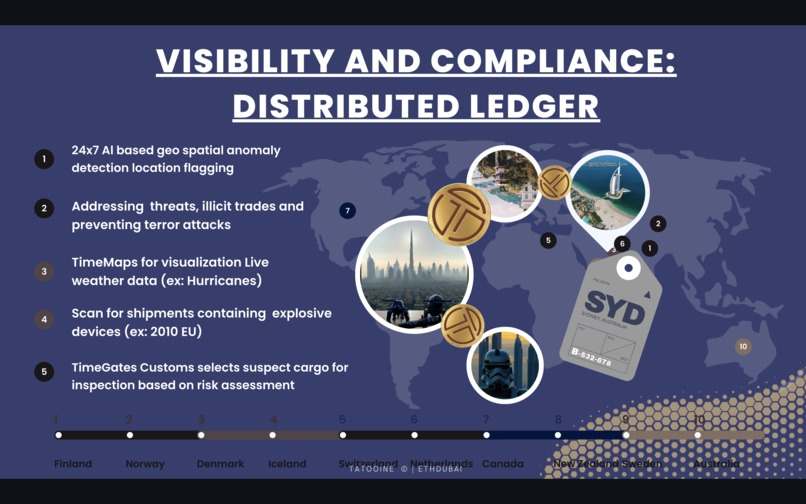
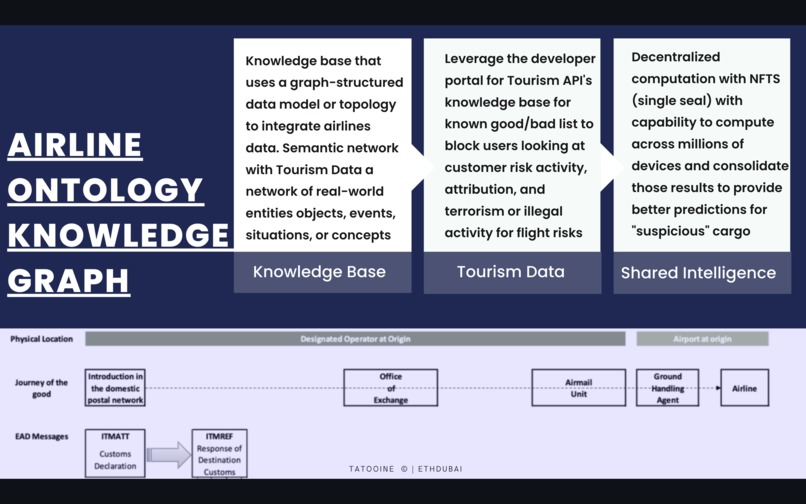
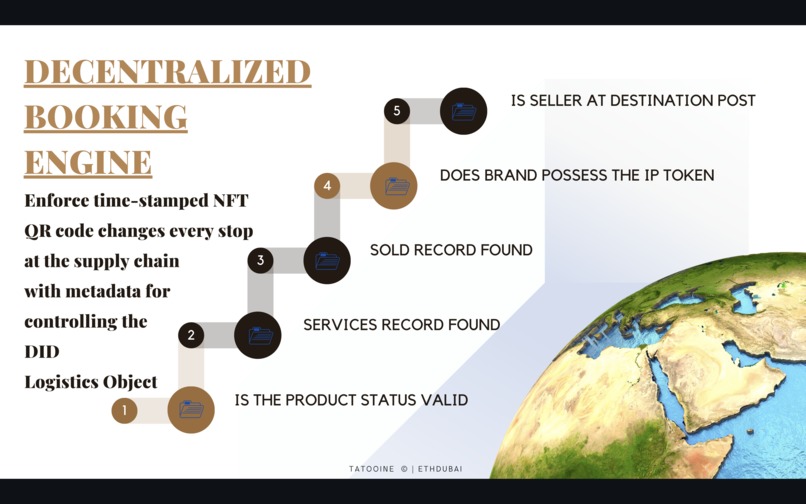
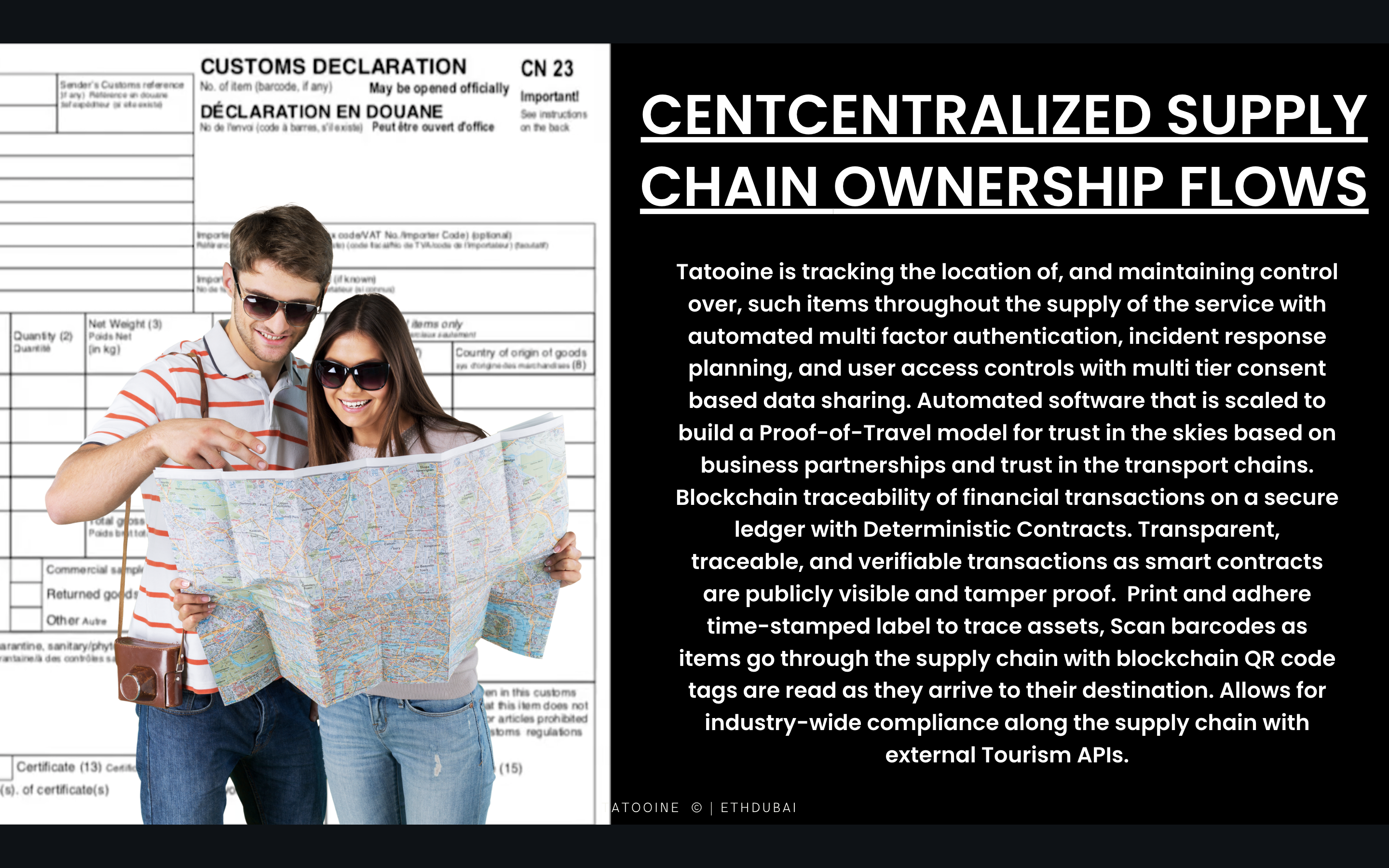
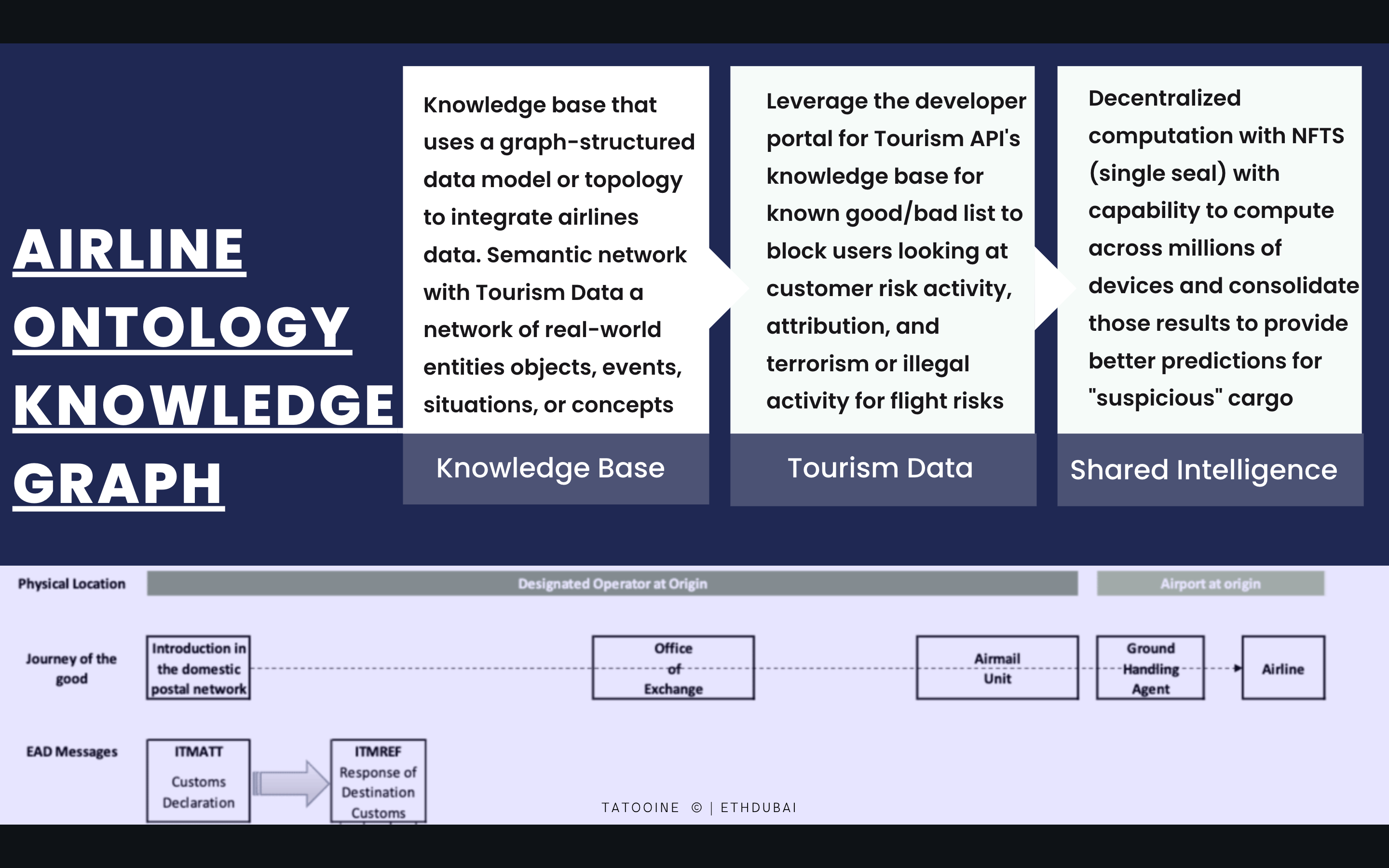
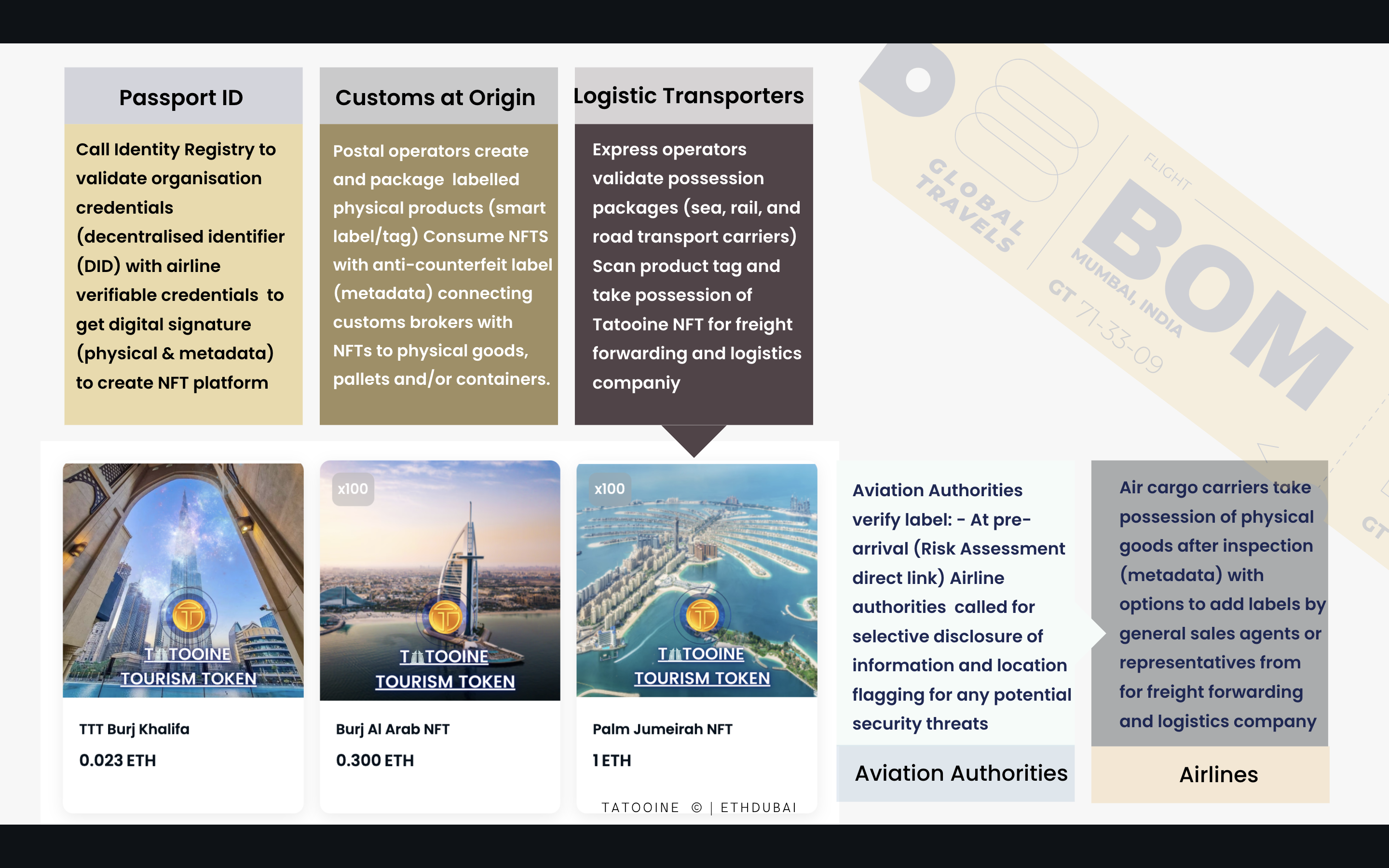
- Cargo Tracking: Blockchain technology can be used to create an immutable record of the movement of goods and cargo through the supply chain. Can we be sure about the origin of the freight and parties involved in its origin and generations? Is the freight correctly identified and described? Goods or cargo carried by ship, train, truck, or airplane. b : the carrying of goods from one place to another by vehicle ship the order by freight. This can help customs authorities verify the authenticity of the goods and prevent fraud and counterfeiting as that is a security and customs trust problem that could be solved with blockchain technology.
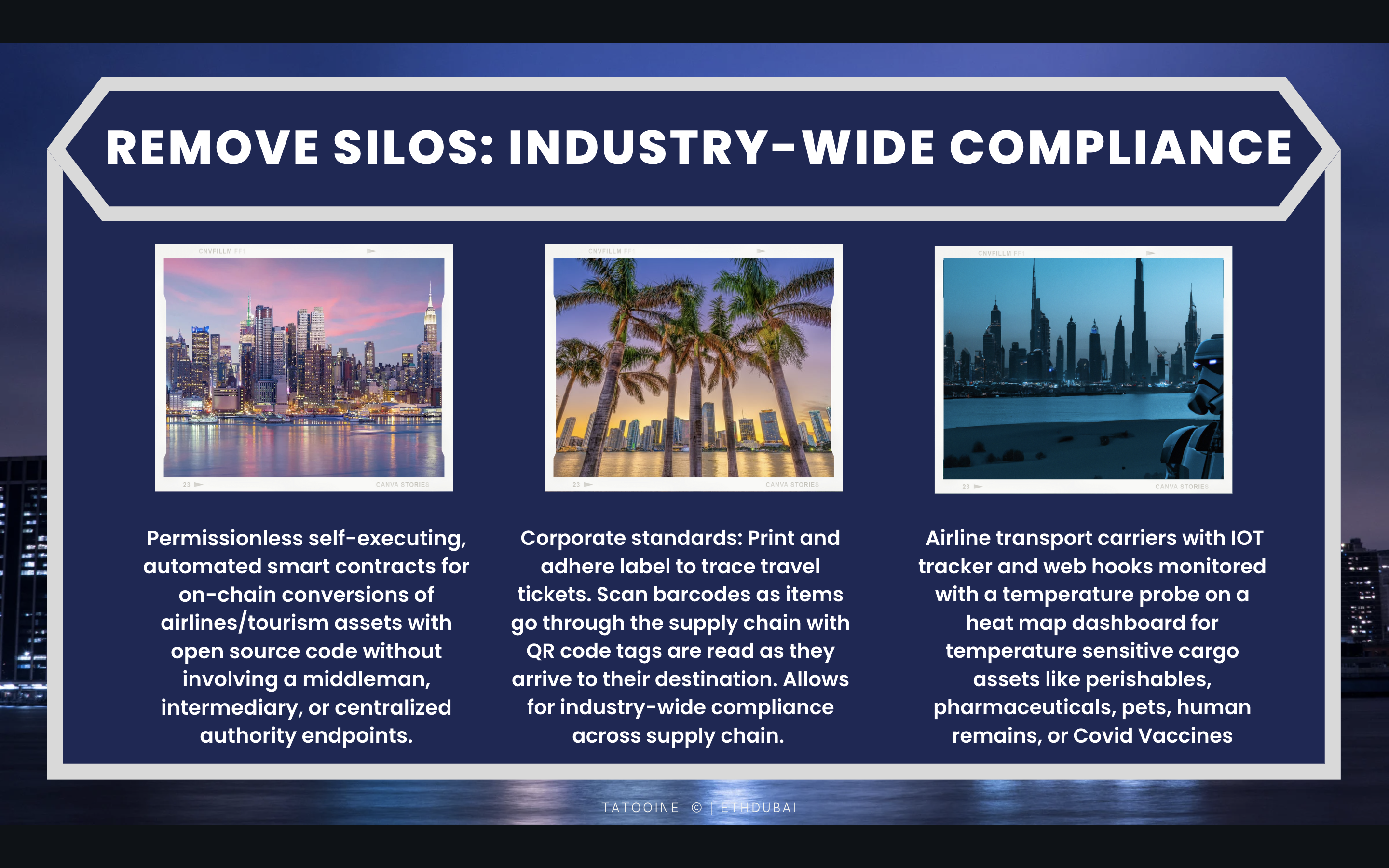
- Smart Contracts: Smart contracts can be used to automate and enforce contracts between airlines, airports, and customs authorities. Does the freight need special assessment? What if we scale up number of items by a million, as does the current e-commerce growth? For example, airlines can use smart contracts to provide real-time updates on the status of flights, and customs authorities can use smart contracts to enforce regulations and penalties for non-compliance. By implementing a blockchain-based supply chain traceability solution, airports in Dubai can improve the efficiency and transparency of their supply chain processes, reduce the risk of fraud and counterfeiting, and enhance the safety and quality of their products.
NFT SOLIDITY CODE + METADATA:
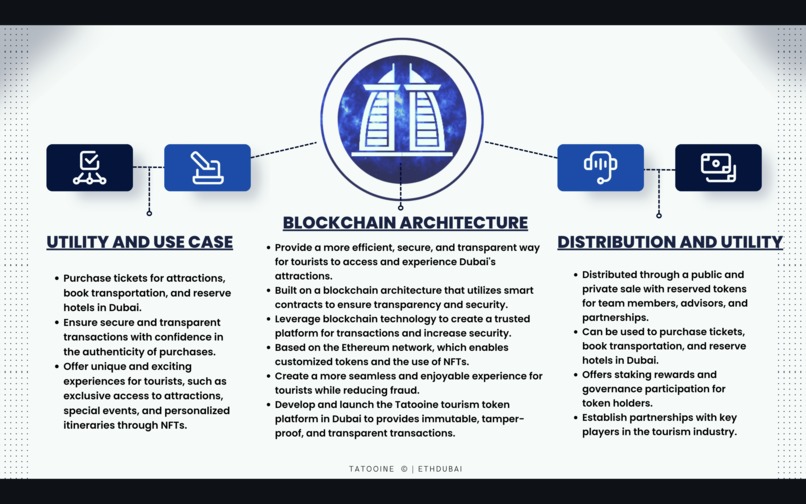
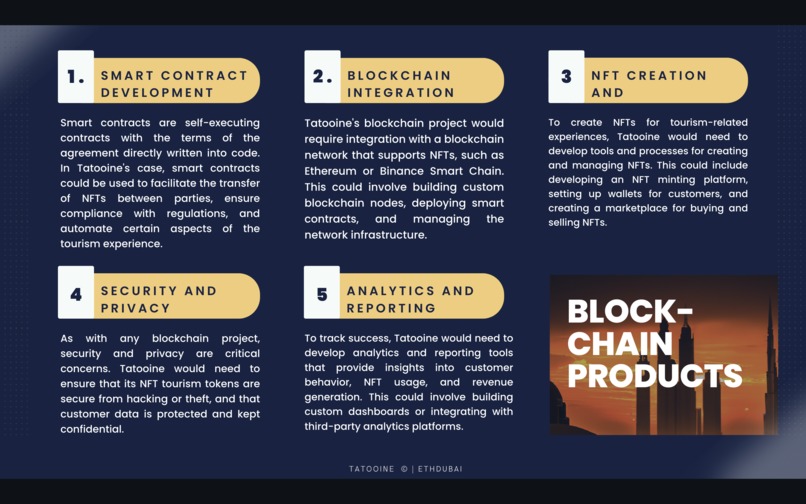
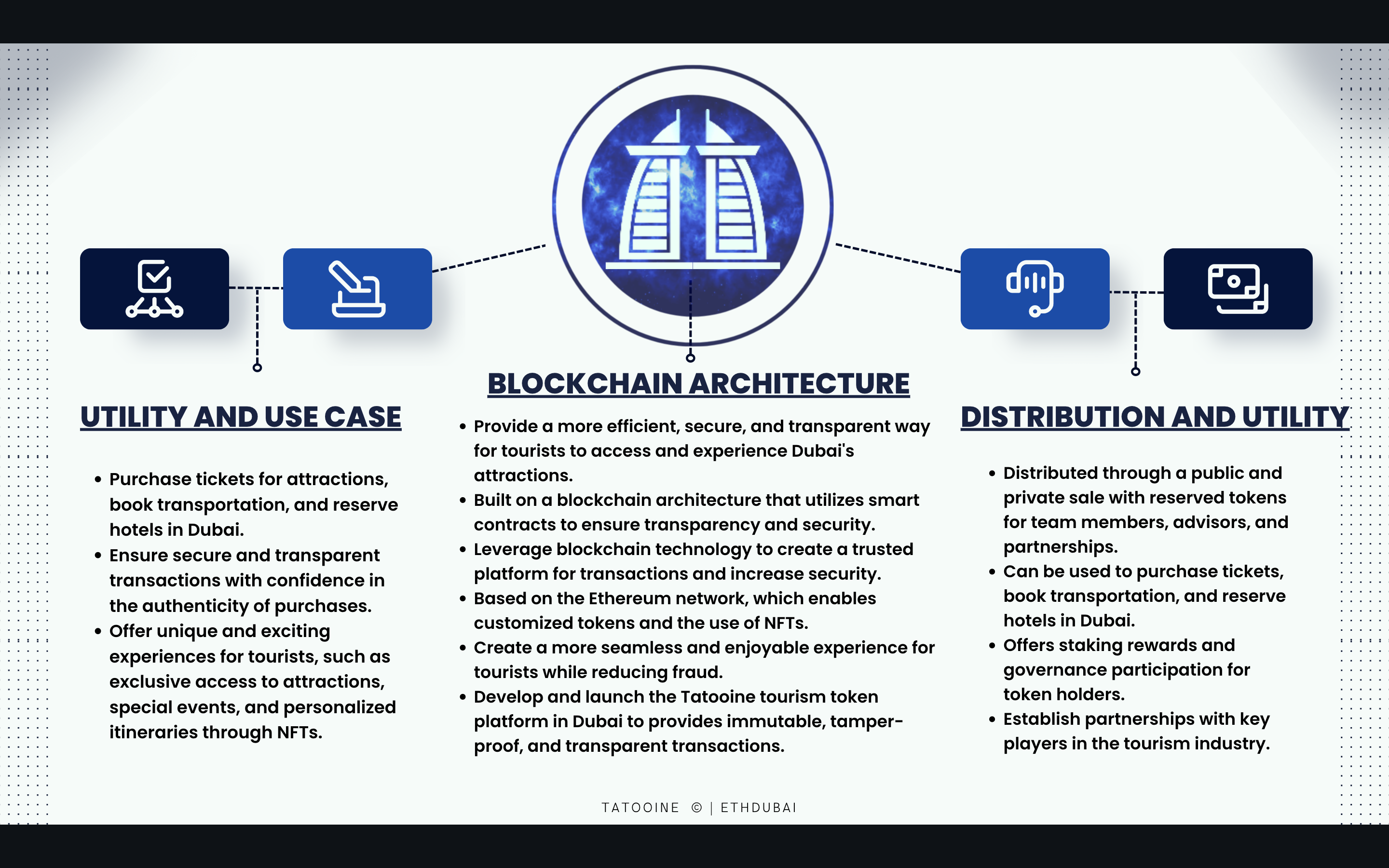
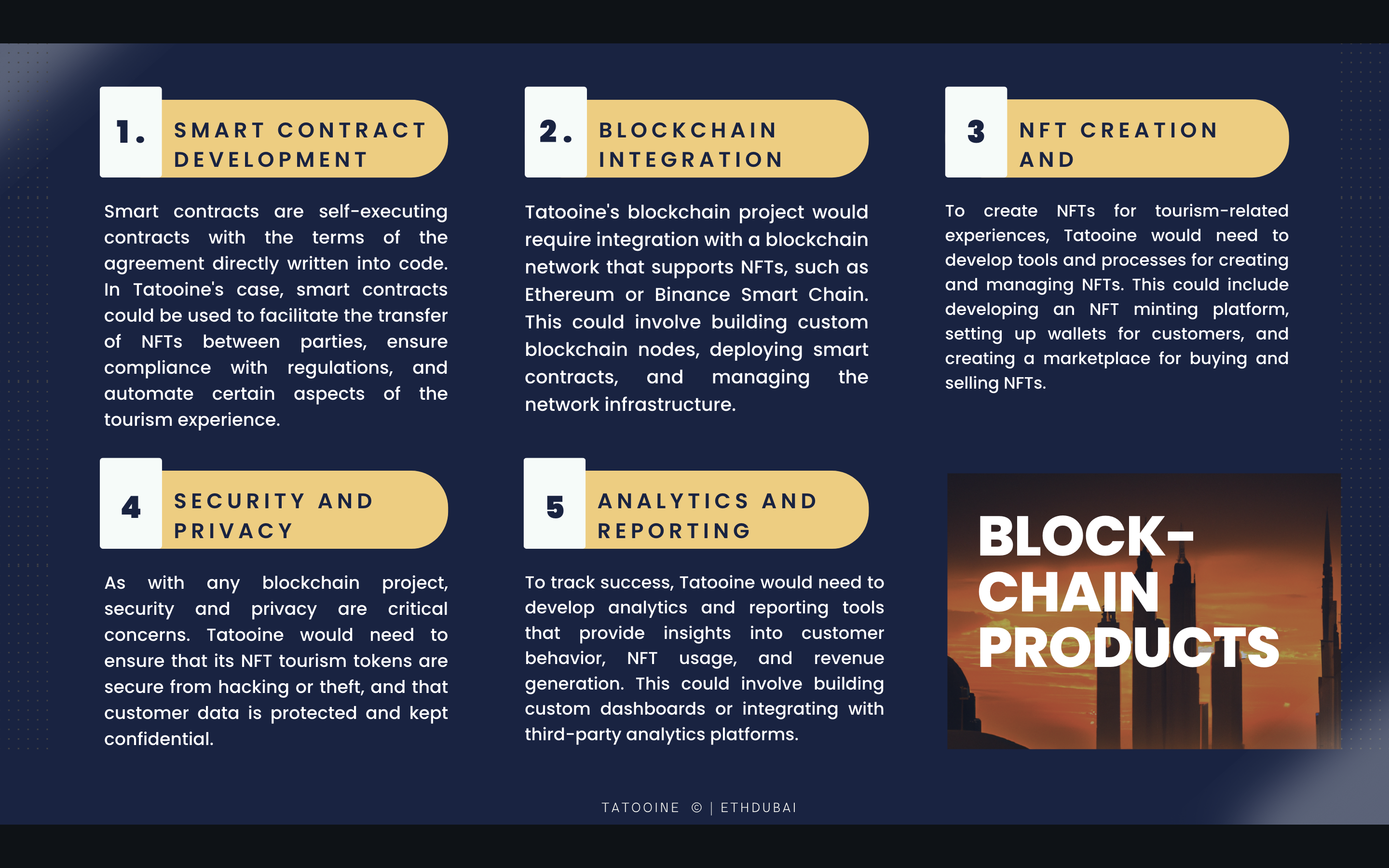
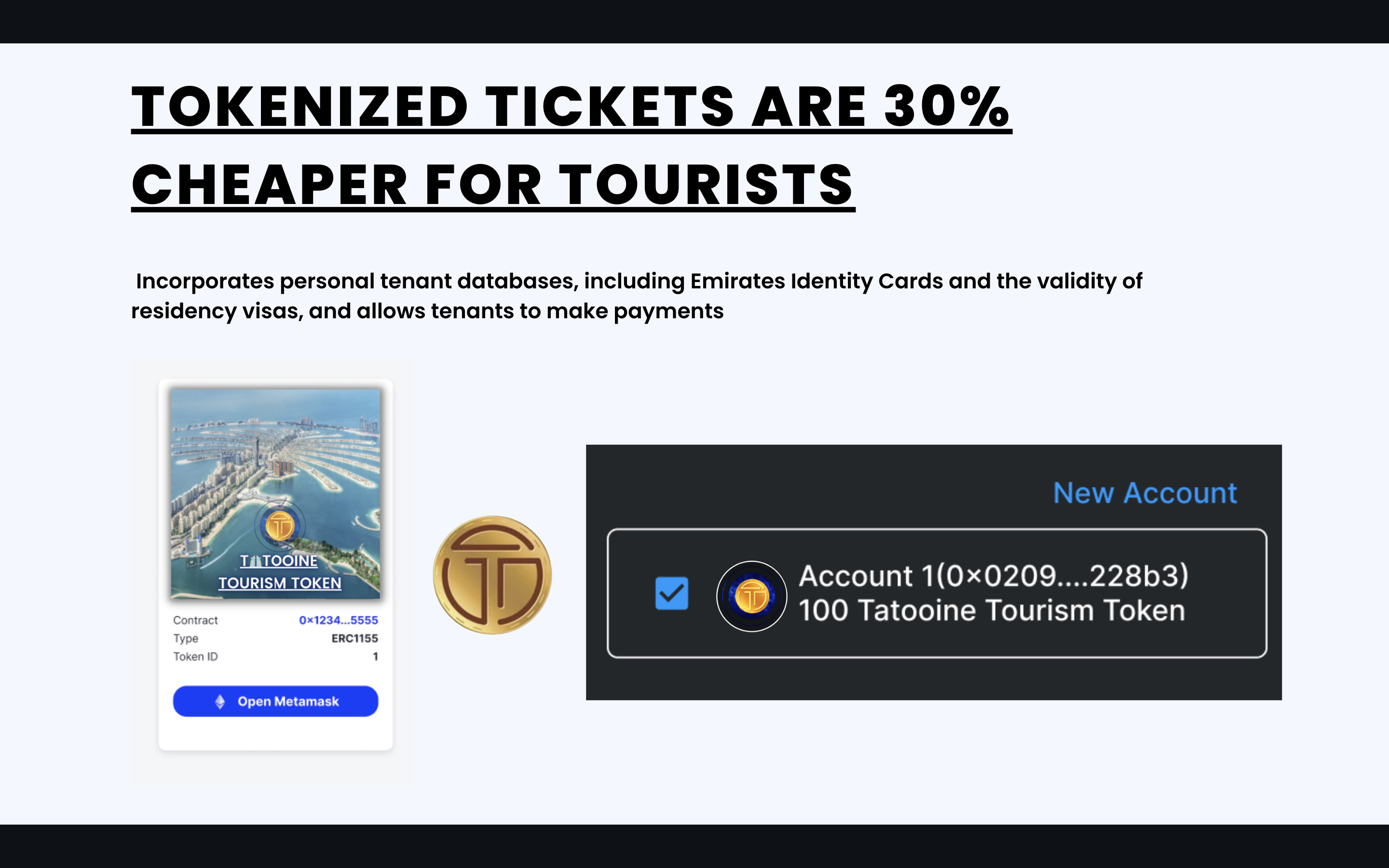
Smart Contract is written in Solidity and deployed on Ethereum testnet to mint NFTs in accordance with ERC721. Tatooine's contract inherits from the ERC721 contract in the OpenZeppelin library, which implements the ERC721 standard for non-fungible tokens (NFTs). The mintNFT function allows users to mint a new NFT by passing in a name and image URI. The function generates a new token ID using the _tokenIds counter, mints the NFT to the sender's address, and sets the token URI to the image URI. The contract also has a getLocation function that allows users to retrieve the name and image URI of a vacation location NFT by passing in the token ID. This contract can be deployed on a blockchain platform such as Ethereum, and users can interact with it by calling the mintNFT and getLocation functions using a blockchain wallet application. Tatooine leverages NFT standards such as ERC-721 or ERC-1155, IPFS (InterPlanetary File System) for storing the images and metadata, and web3.js for connecting with the Ethereum network.
export GOERLI_RPC_URL='www.infura.io/coolest_random_code_ever' export PRIVATE_KEY='abcdef'
- APIConsumer.sol
- DynamicTravelTrip.sol
- KeepersConsumer.sol
- Migrations.sol
- NFTMetadata.sol
- PriceConsumerV3.sol
- RandomNumberConsumerV2.sol
- Tatooine_Tourism_Token.sol
- TravelNFT.sol
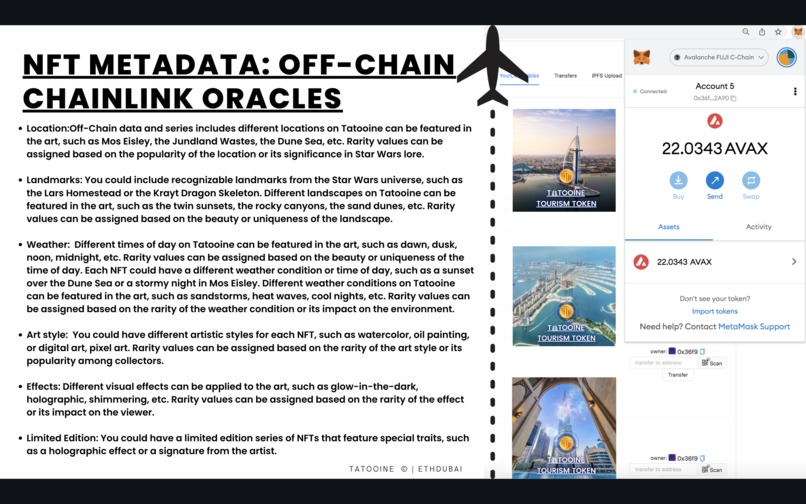
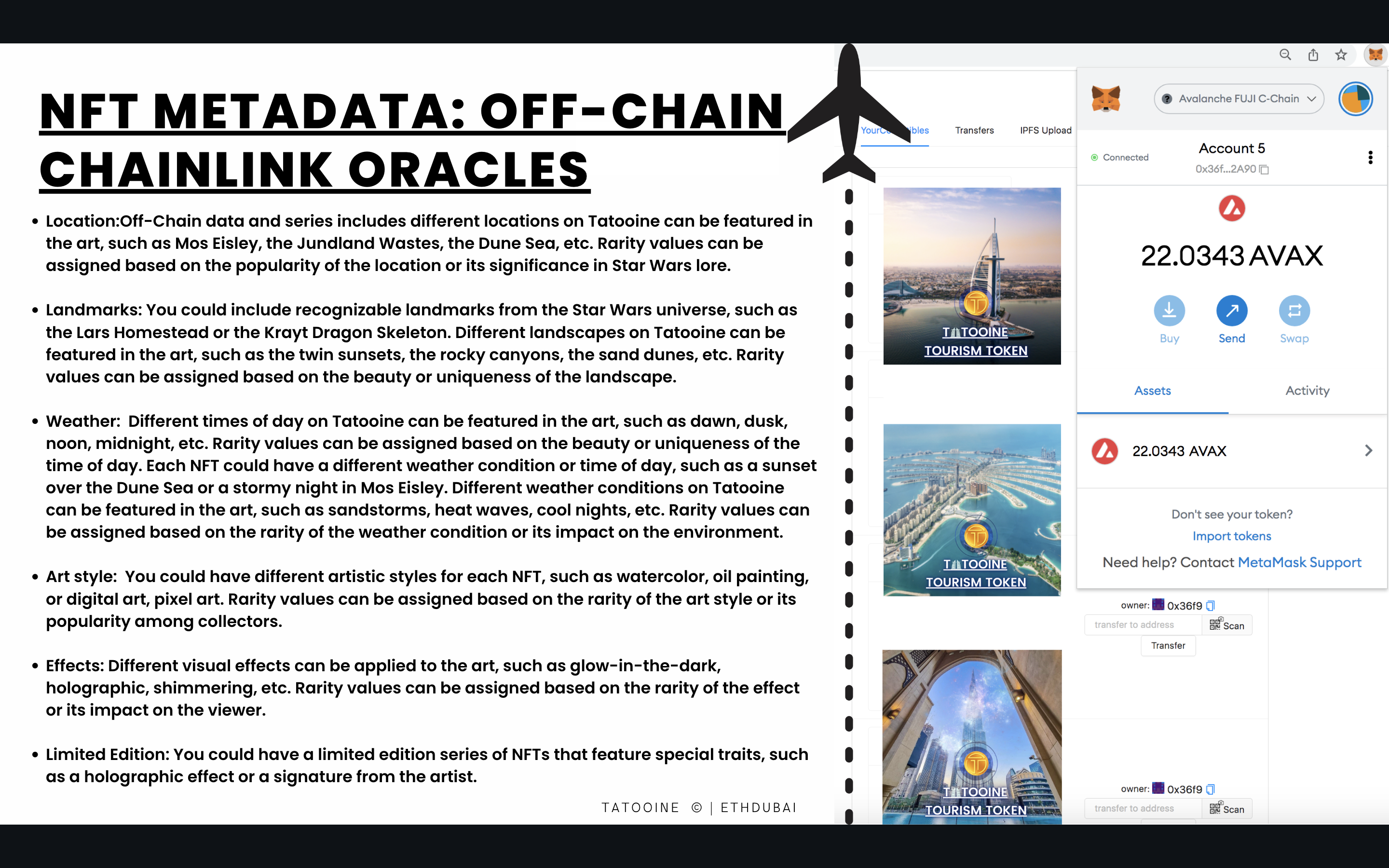
TRAVEL NFT METADATA:
Location: Different locations on Tatooine can be featured in the art, such as Mos Eisley, the Jundland Wastes, the Dune Sea, etc. Rarity values can be assigned based on the popularity of the location or its significance in Star Wars lore.
Landmarks: You could include recognizable landmarks from the Star Wars universe, such as the Lars Homestead or the Krayt Dragon Skeleton. Different landscapes on Tatooine can be featured in the art, such as the twin sunsets, the rocky canyons, the sand dunes, etc. Rarity values can be assigned based on the beauty or uniqueness of the landscape.
Weather: Different times of day on Tatooine can be featured in the art, such as dawn, dusk, noon, midnight, etc. Rarity values can be assigned based on the beauty or uniqueness of the time of day. Each NFT could have a different weather condition or time of day, such as a sunset over the Dune Sea or a stormy night in Mos Eisley. Different weather conditions on Tatooine can be featured in the art, such as sandstorms, heat waves, cool nights, etc. Rarity values can be assigned based on the rarity of the weather condition or its impact on the environment.
Art style: You could have different artistic styles for each NFT, such as watercolor, oil painting, or digital art, pixel art. Rarity values can be assigned based on the rarity of the art style or its popularity among collectors.
Effects: Different visual effects can be applied to the art, such as glow-in-the-dark, holographic, shimmering, etc. Rarity values can be assigned based on the rarity of the effect or its impact on the viewer.
Limited Edition: You could have a limited edition series of NFTs that feature special traits, such as a holographic effect or a signature from the artist.
Solidity code for a travel NFT contract that can be used for pictures of vacation locations:
""" contract TravelNFT is ERC721 { using Counters for Counters.Counter; Counters.Counter private _tokenIds;
struct NFTMetadata {
    string location;
    string landmarks;
    string time;
    string photographer;
    string rarity;
    string sizeAndResolution;
    string additionalMedia;
}

mapping(uint256 => NFTMetadata) private _tokenMetadata;

constructor() ERC721("TravelNFT", "TNFT") {}

function createNFT(address owner, string memory tokenURI, NFTMetadata memory metadata) public returns (uint256) {
    _tokenIds.increment();

    uint256 newTokenId = _tokenIds.current();
    _mint(owner, newTokenId);
    _setTokenURI(newTokenId, tokenURI);

    _tokenMetadata[newTokenId] = metadata;

    return newTokenId;
}
"""
Now, when creating a new NFT using the createNFT function, you can pass in a NFTMetadata struct with the following fields:
- location: a string representing the specific location within Dubai where the tourist destination depicted in the picture is located.
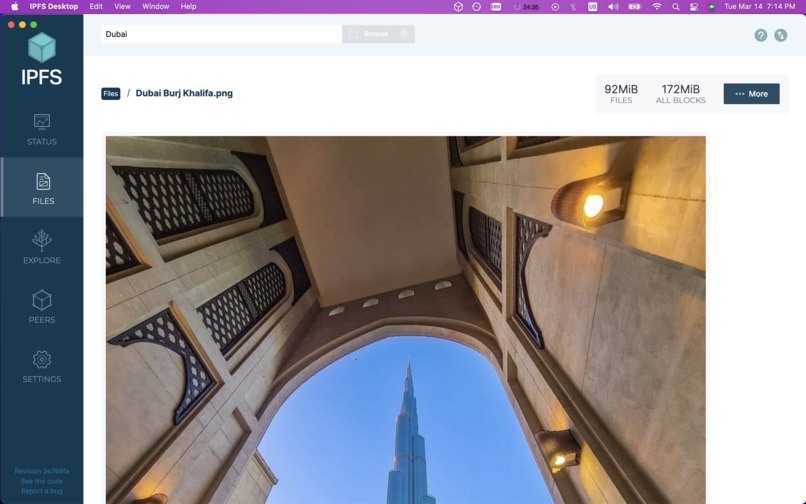
- landmarks: a string representing any significant landmarks or recognizable features that are present in the picture, such as the Burj Khalifa or the Dubai Fountain.
- time: a string representing the date and time when the picture was taken. photographer: a string representing the name or username of the photographer who took the picture.
- rarity: a string representing the rarity of the picture, which could be determined by factors such as whether it was taken during a special event or in a hard-to-reach location within Dubai.
- sizeAndResolution: a string representing the size and resolution of the picture. additionalMedia: a string representing additional media, such as videos or audio recordings, that provide - further context or information about the tourist destination depicted in the picture, as well as information about the cultural significance or history of the destination.


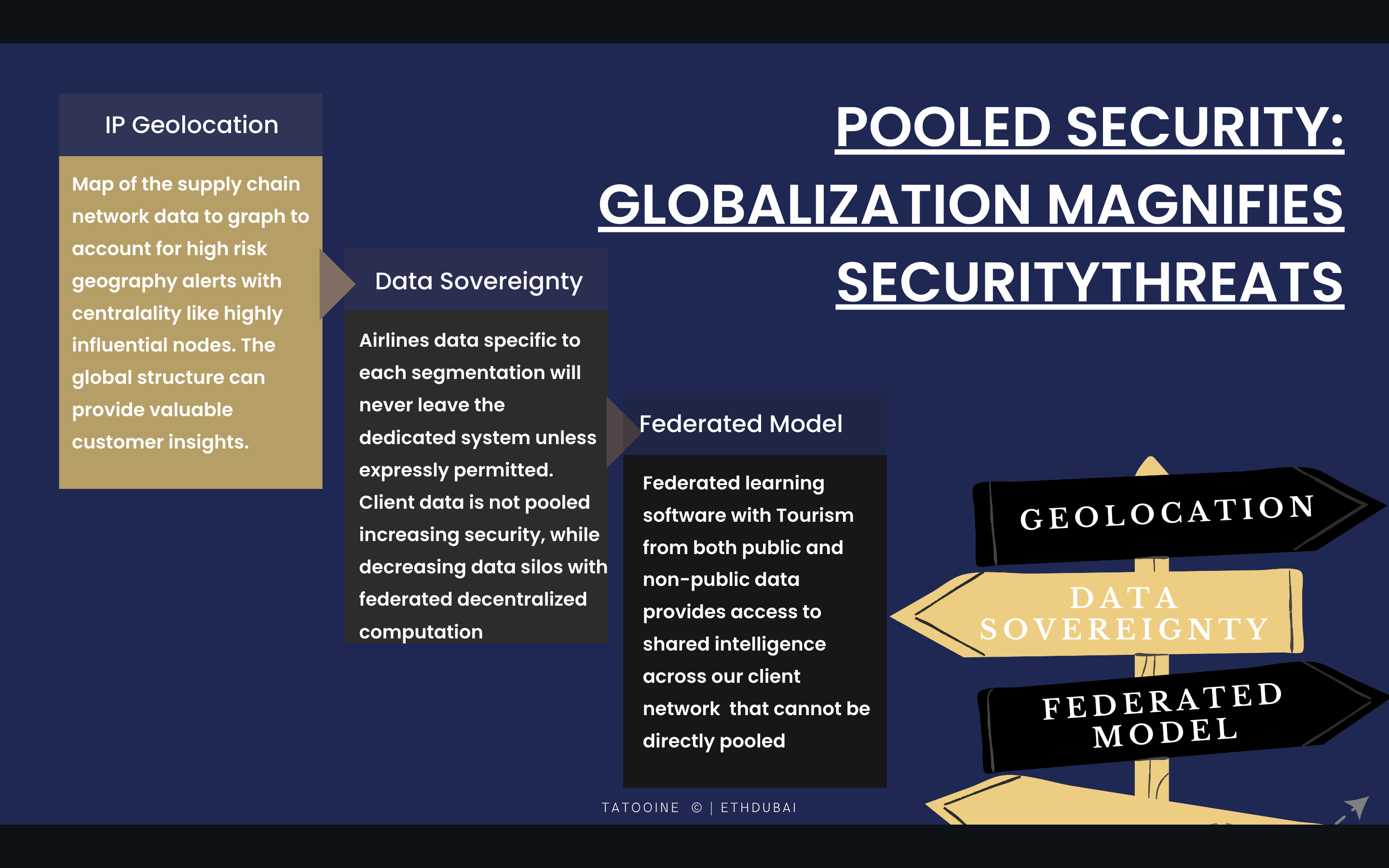
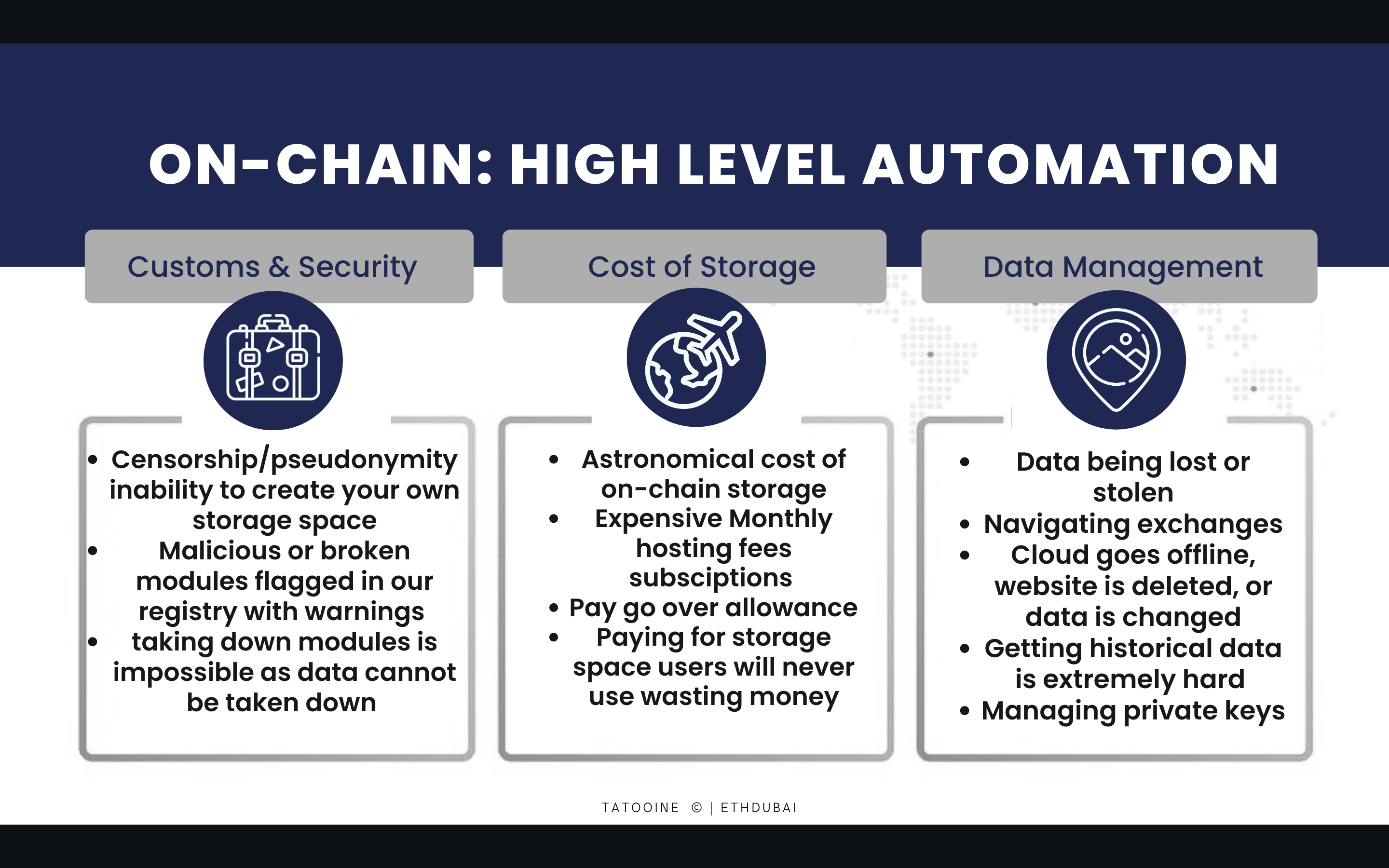
- Data Sharing: How can we integrate these developments with the data sharing concepts to enhance visibility, transparency of data, but also security and identity? Blockchain technology can enable secure and transparent data sharing between different stakeholders in the airport security and customs process. Ensure data integrity to ensure data integrity, use digital signatures and hash functions to secure the data and prevent unauthorized access or modification. International freight crosses many borders, and this brings in a security and customs challenge with data moving across borders. This can improve collaboration and information sharing, reducing delays and improving the accuracy of security and customs checks. Track products: Use IoT (Internet of Things) devices, such as RFID (Radio Frequency Identification) tags, to track the movement of products along the supply chain. These devices can record the location, temperature, and humidity of the products and send this data to the blockchain.


How we built it
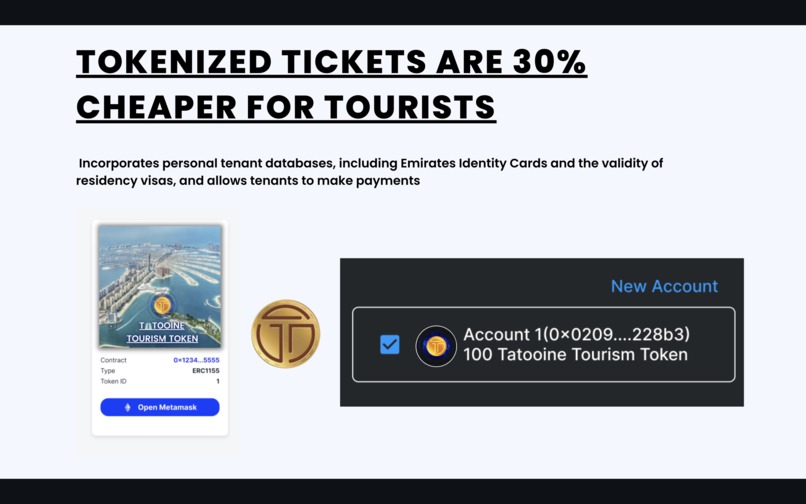
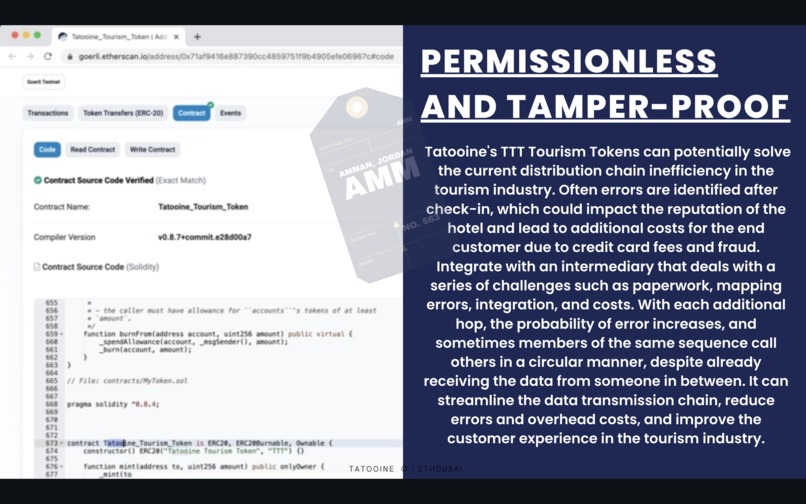
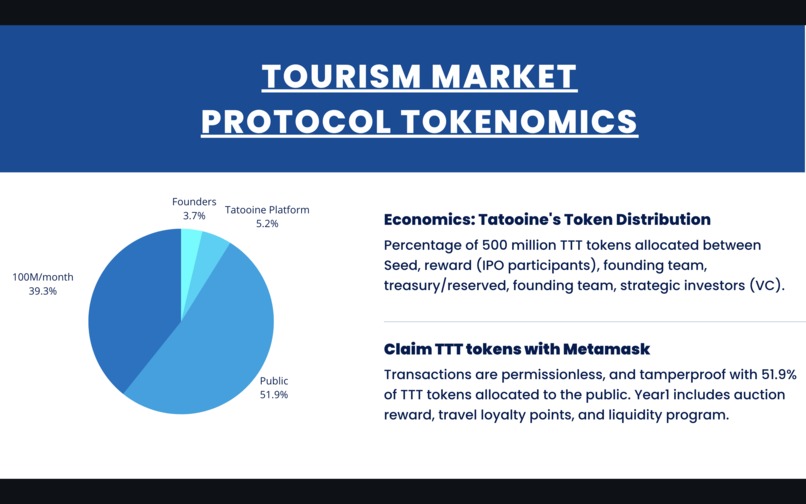
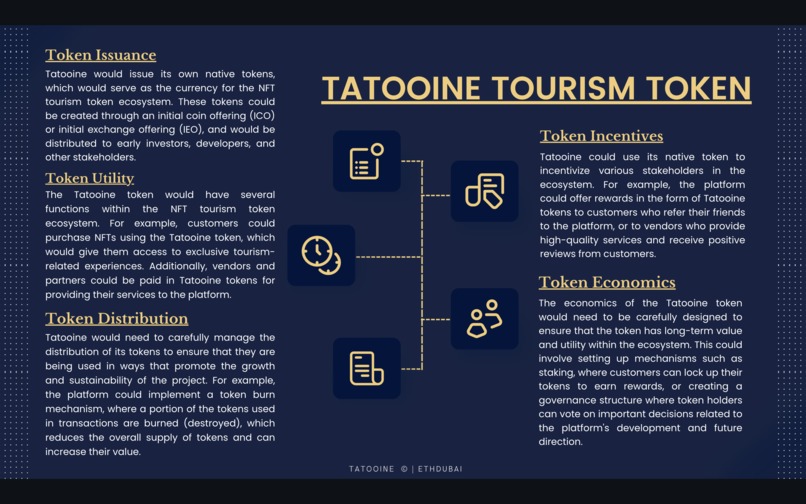
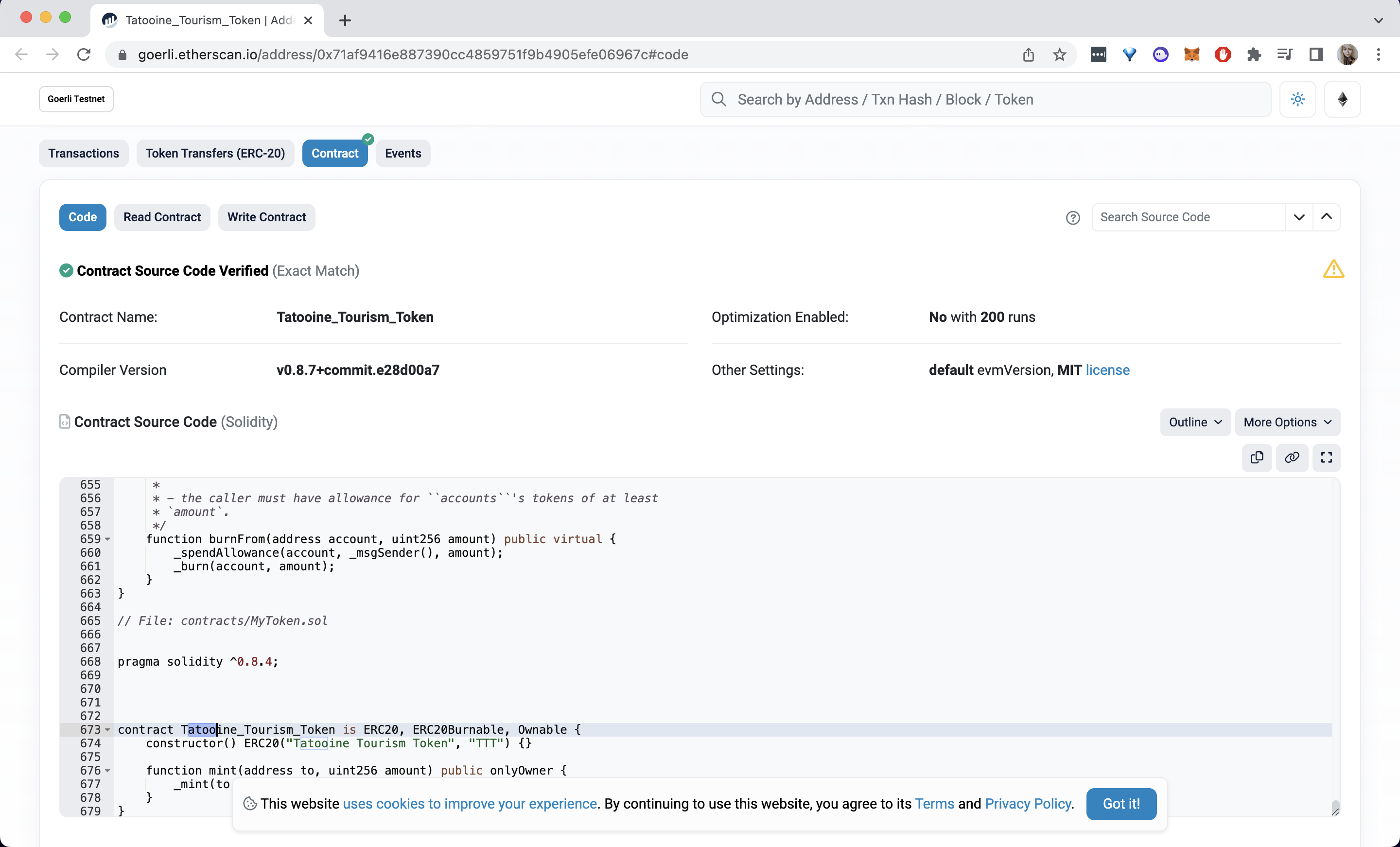
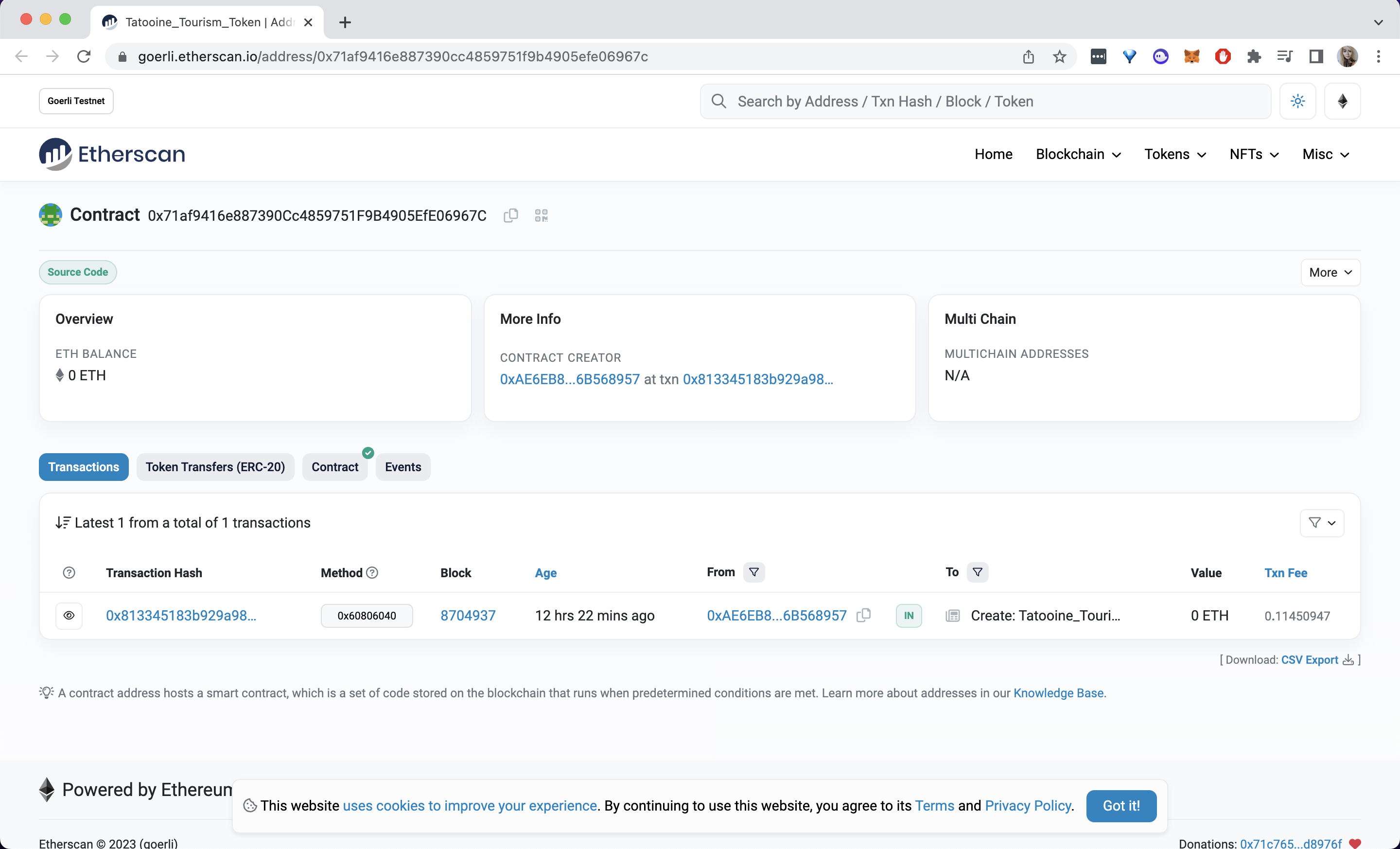
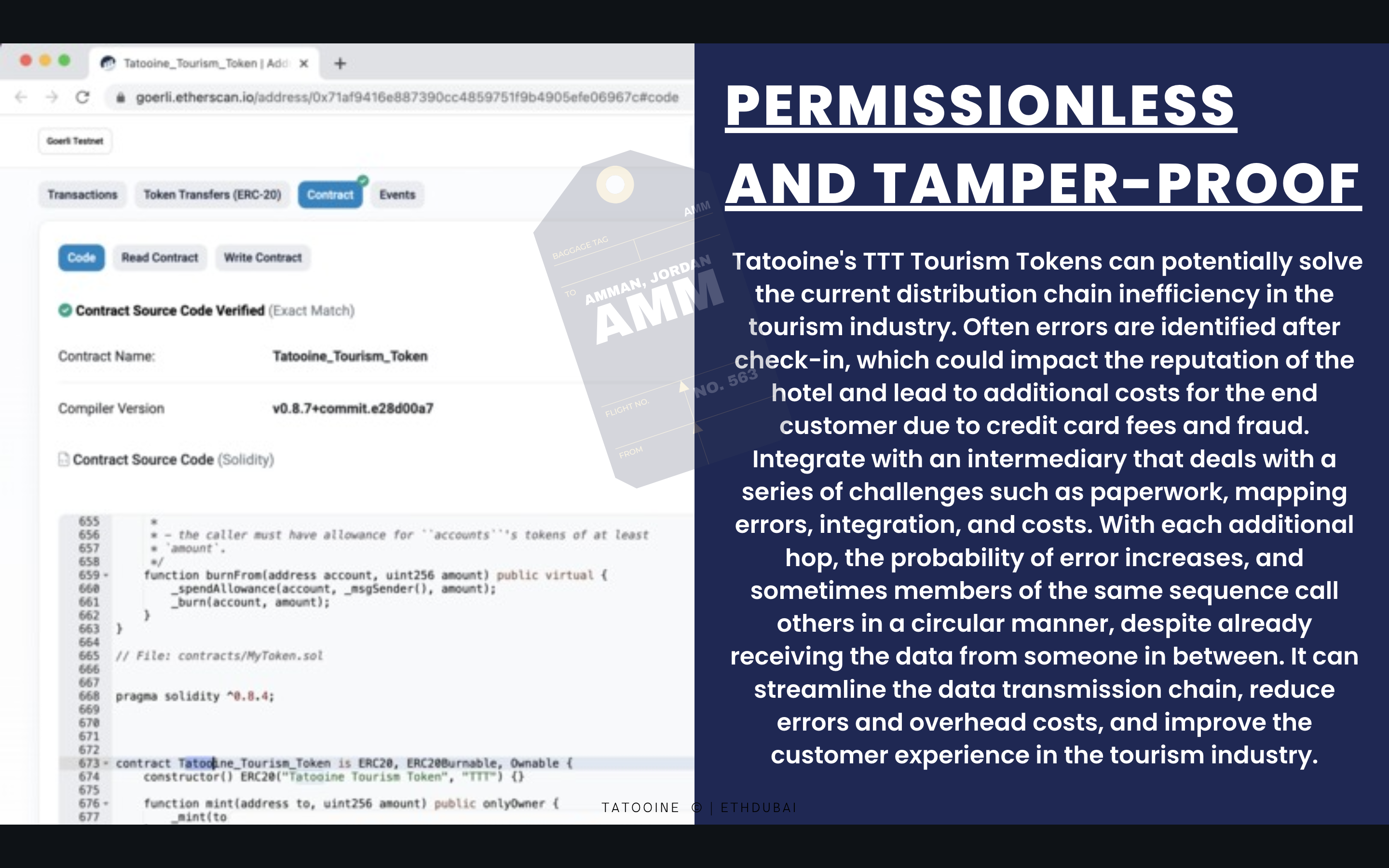
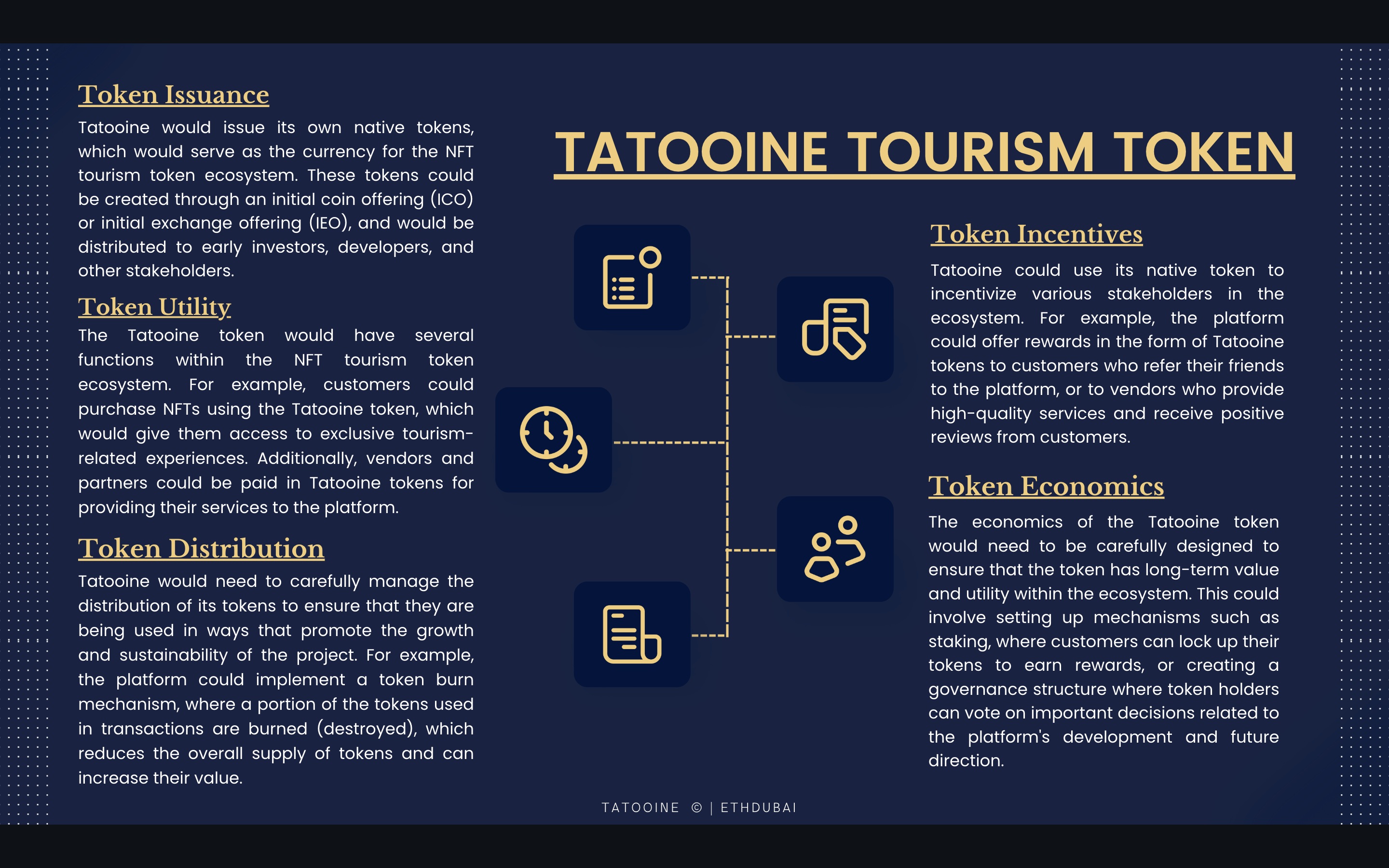
ERC20: Tatooine Tourism Tokens (TTT)
Tatooine_Tourism_Token :https://goerli.etherscan.io/address/0x71af9416e887390cc4859751f9b4905efe06967c this is the code on goerli testnet

Verify on Etherscan You'll need an ETHERSCAN_API_KEY environment variable. You can get one from the Etherscan API site.. If you have it set, your deploy script will try to verify them by default, but if you want to verify any manually, you can run:
yarn truffle run verify Tatooine_Tourism_Token.sol --network example:
yarn truffle run verify Tatooine_Tourism_Token.sol --network goerli
=================================================================
ERC721: NFTS (NON-FUNGIBLE TOKENS)
 Tatooine Travel NFTs
https://goerli.etherscan.io/address/0xf4910c763ed4e47a585e2d34baa9a4b611ae448c

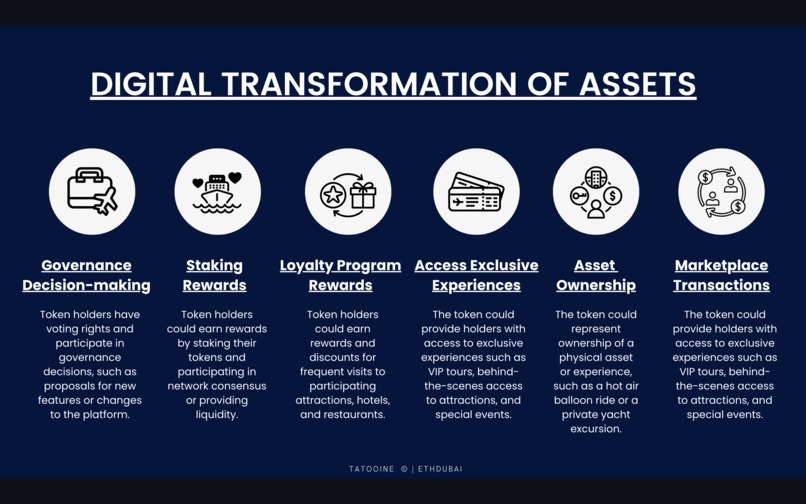
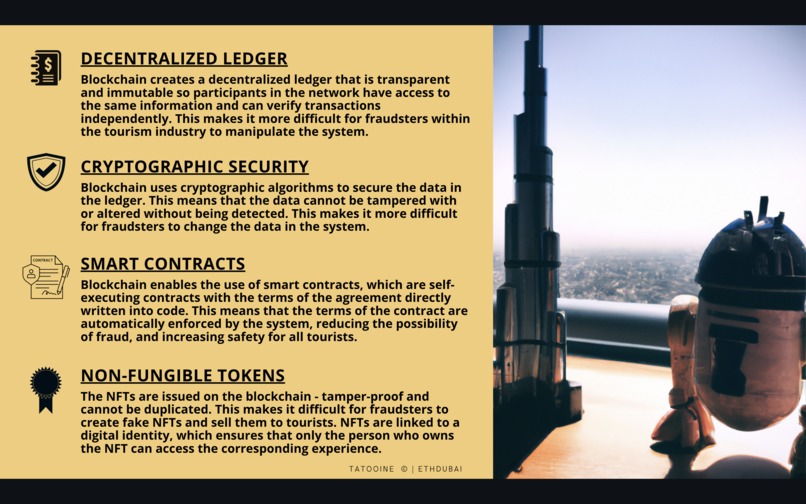
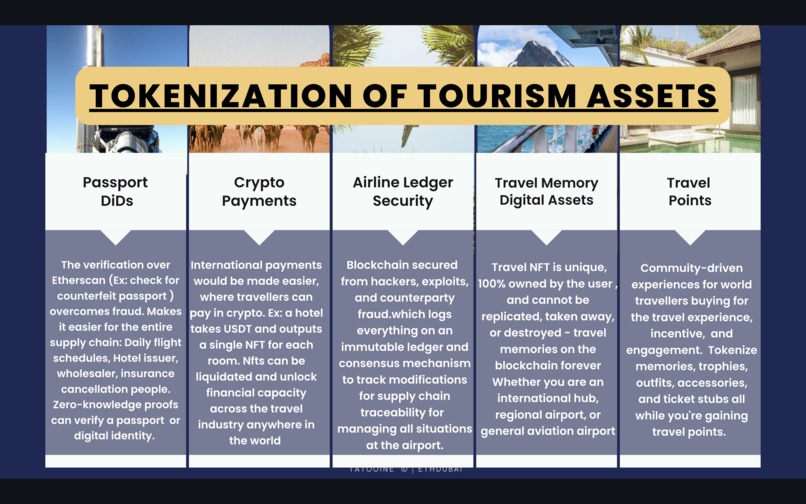
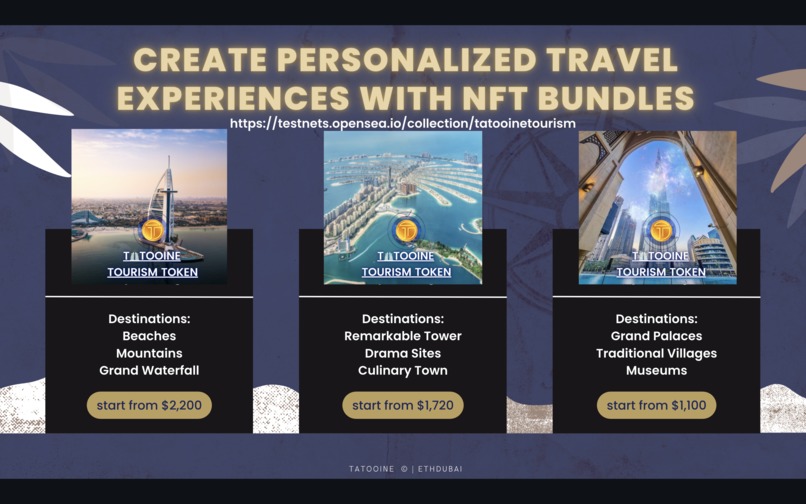
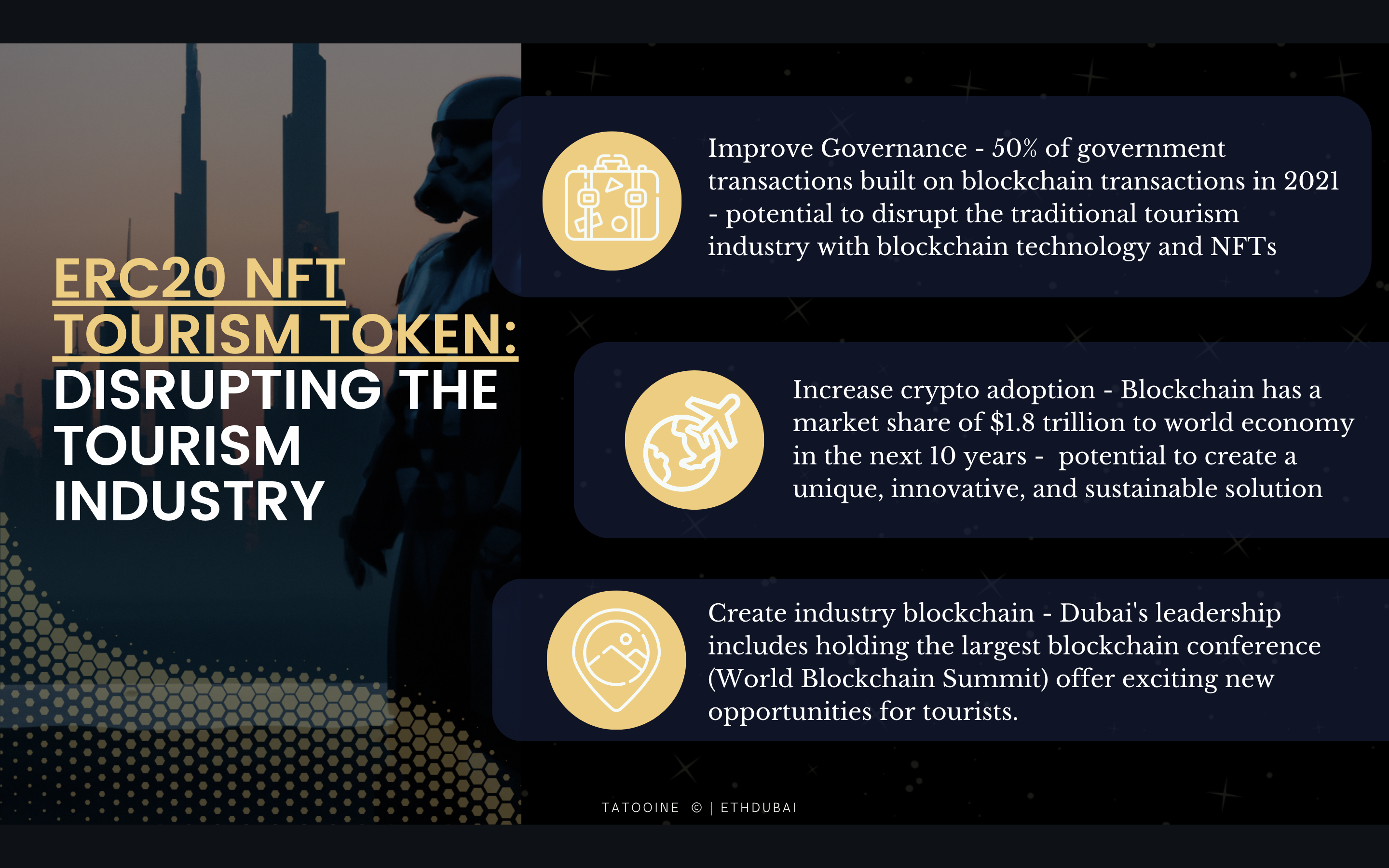
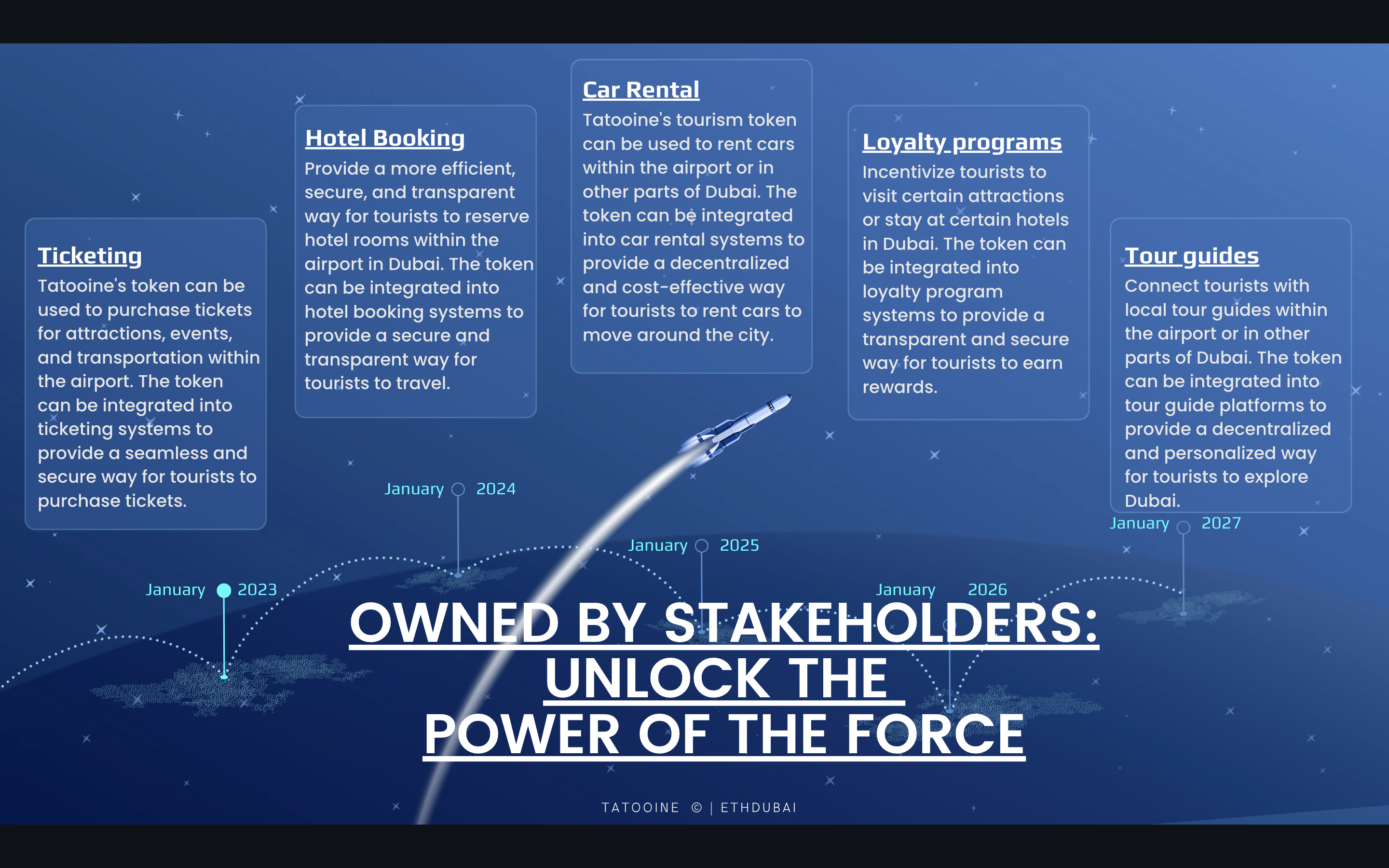
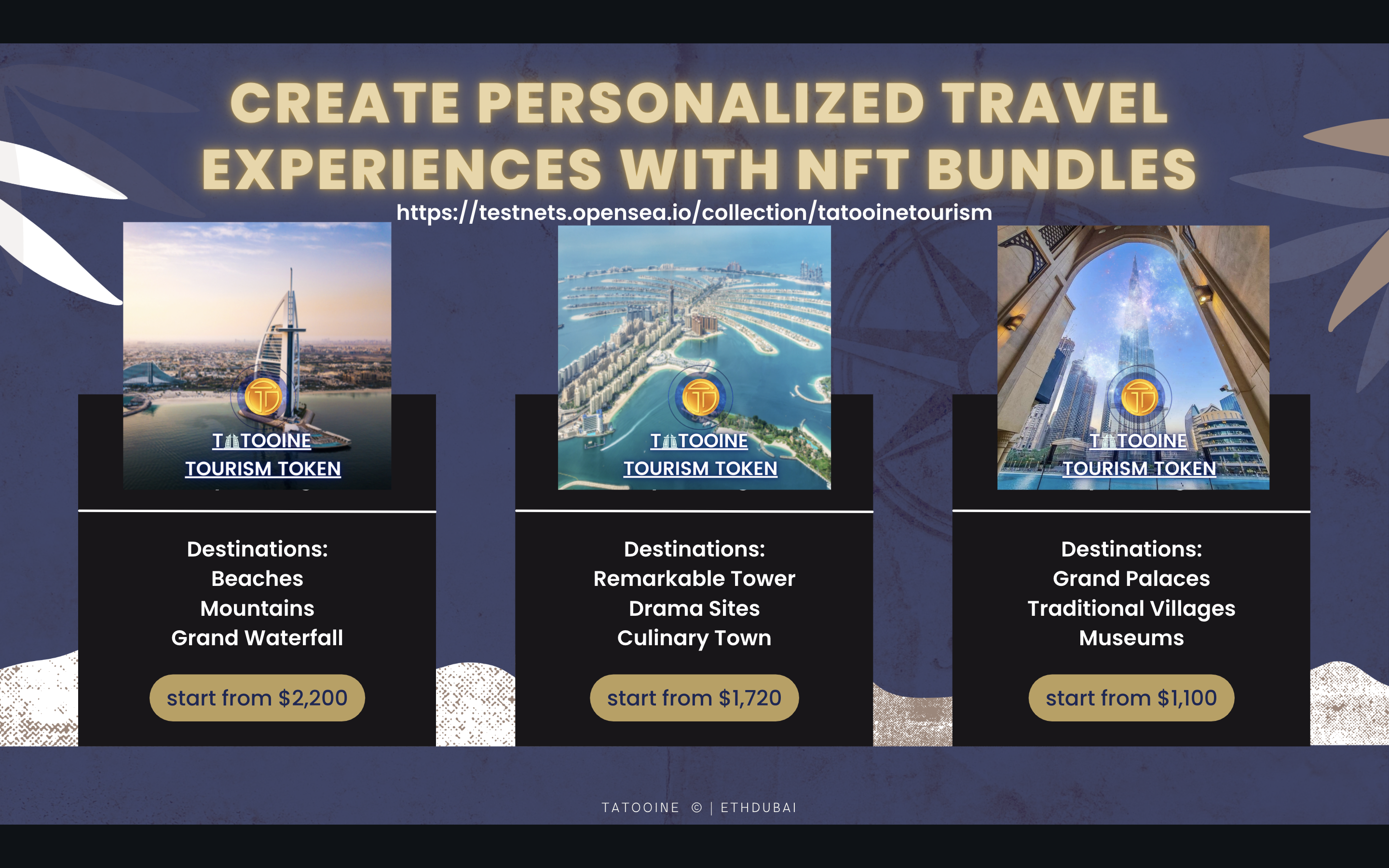
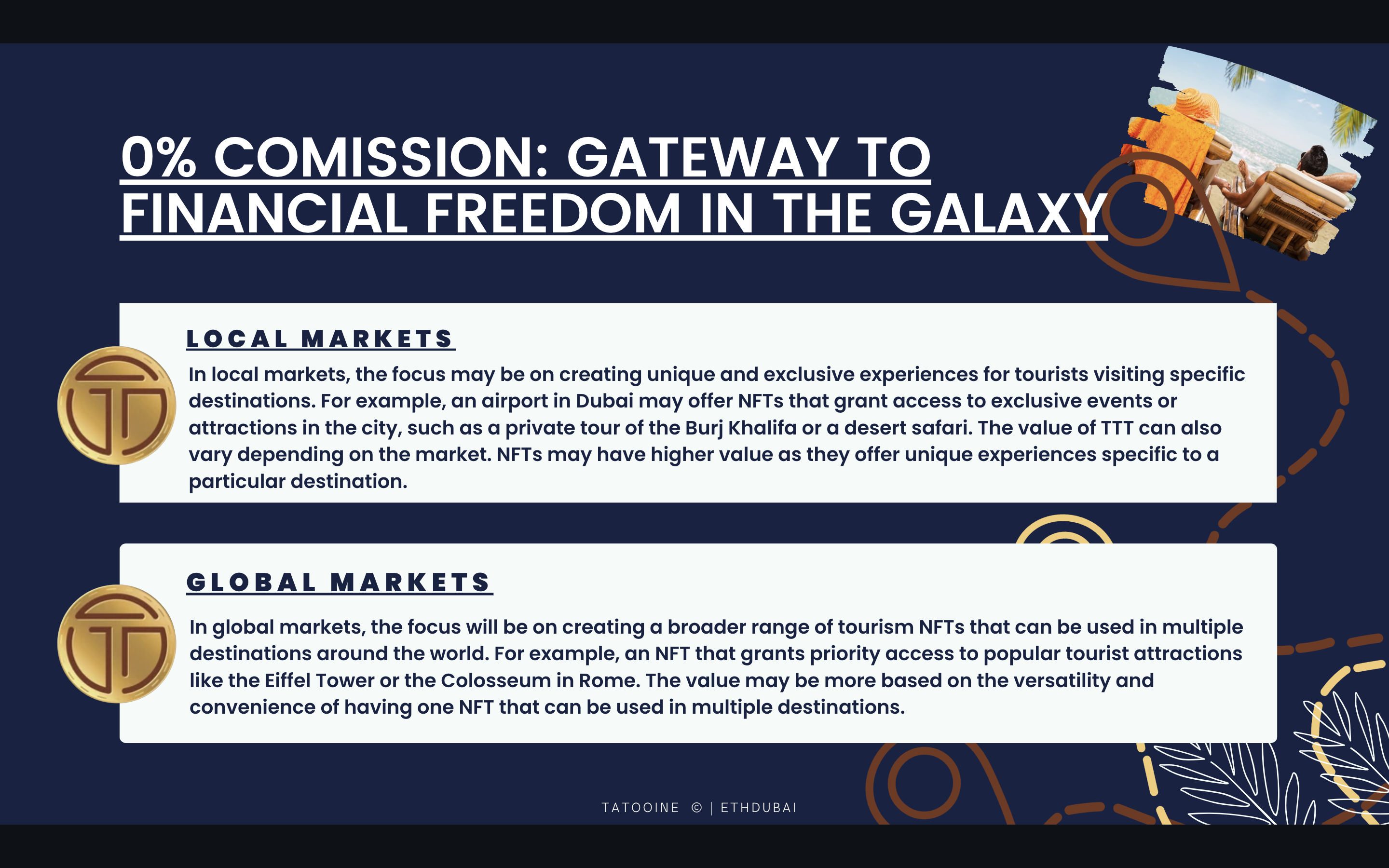
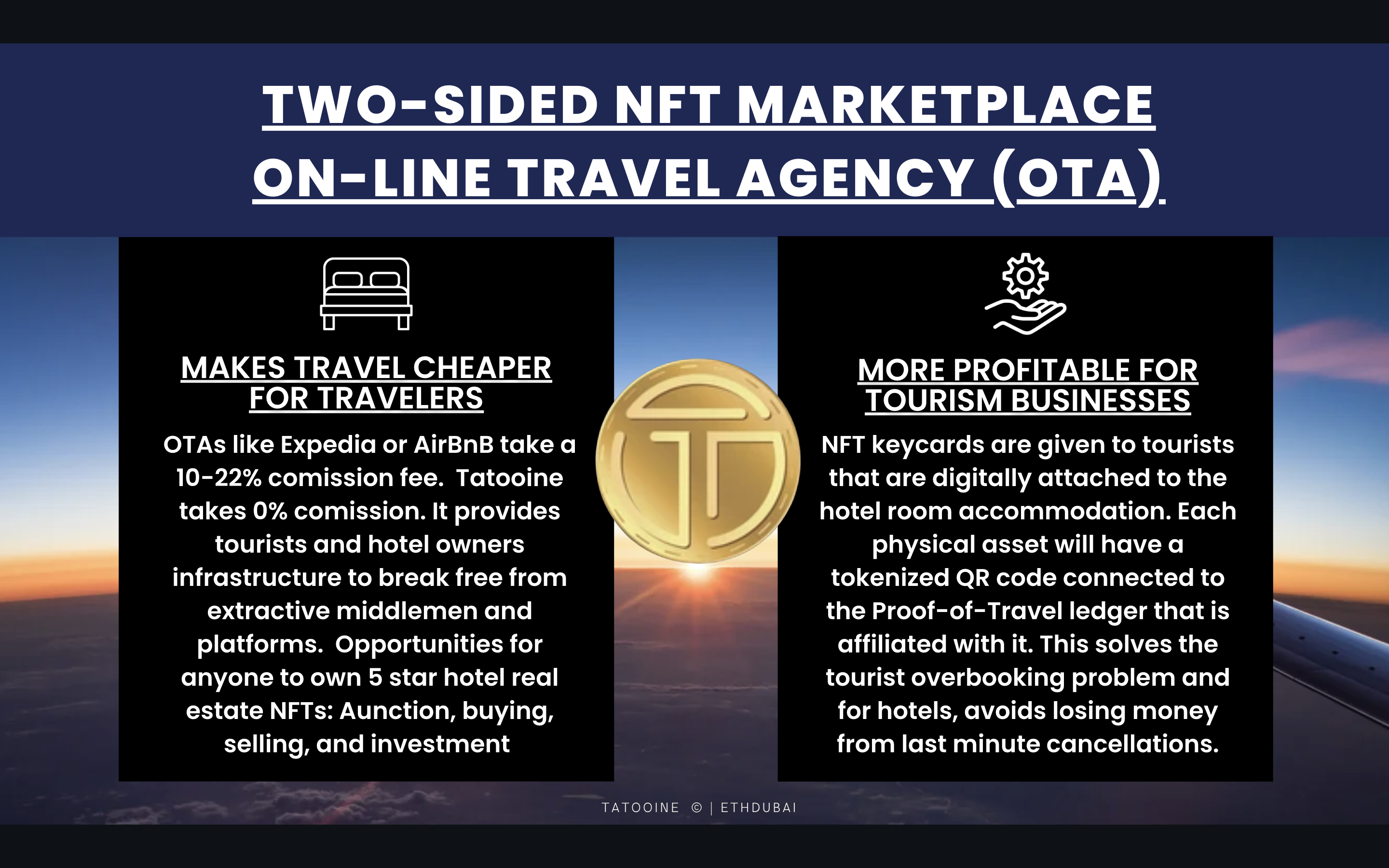
NFTs are unique digital assets that can be bought and sold on the blockchain. While NFTs have primarily been used in the art world, they have the potential to be applied in various industries, including tourism. Overall, NFTs have the potential to create unique and engaging experiences for tourists in Dubai, while also providing a new revenue stream for businesses in the tourism industry. Here are some potential ways that NFTs could be used to solve tourism in Dubai post-COVID:

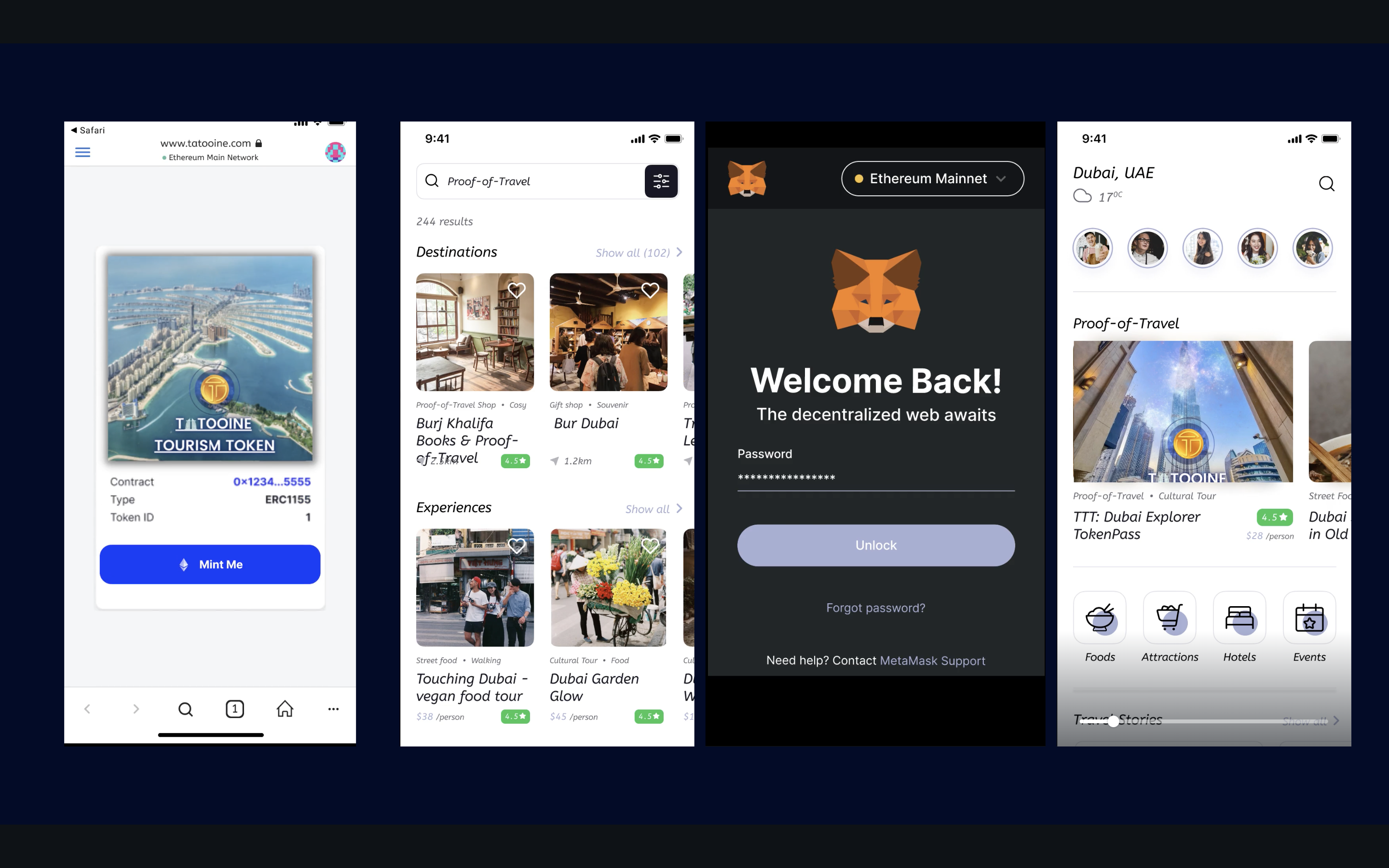

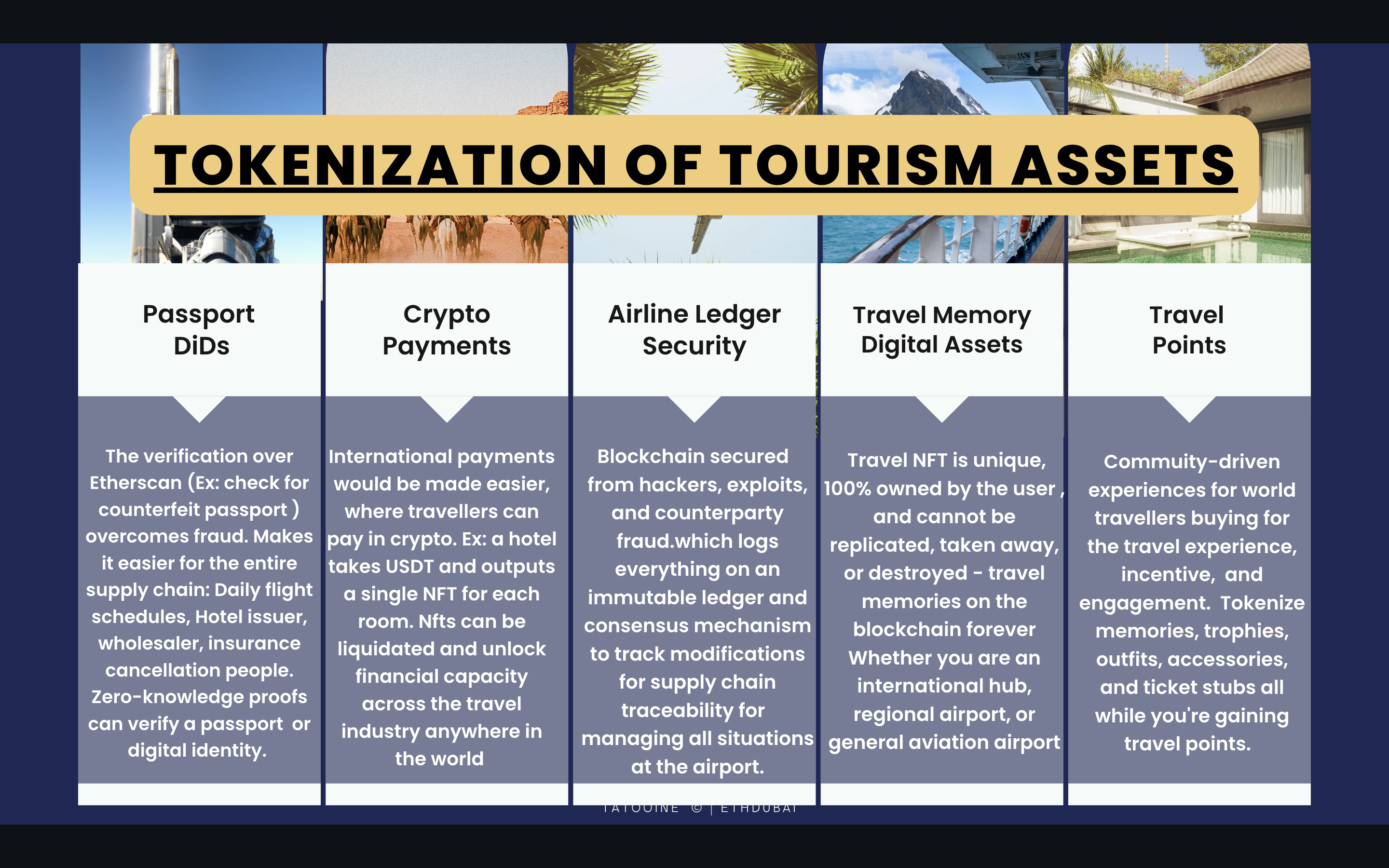 1) Virtual Tours: With travel restrictions in place, virtual tours have become more popular. NFTs could be used to create unique, virtual tours of Dubai's attractions, such as the Burj Khalifa or the Dubai Mall. These tours could be sold as NFTs, providing tourists with an immersive experience of the city.
2) Experiences: NFTs could be used to offer unique experiences to tourists in Dubai, such as VIP access to events or exclusive tours of the city's landmarks. These experiences could be sold as NFTs, providing tourists with a one-of-a-kind experience.
3) Souvenirs: NFTs could be used to create digital souvenirs of Dubai, such as virtual postcards or photos. These souvenirs could be sold as NFTs, providing tourists with a unique way to remember their trip to Dubai.
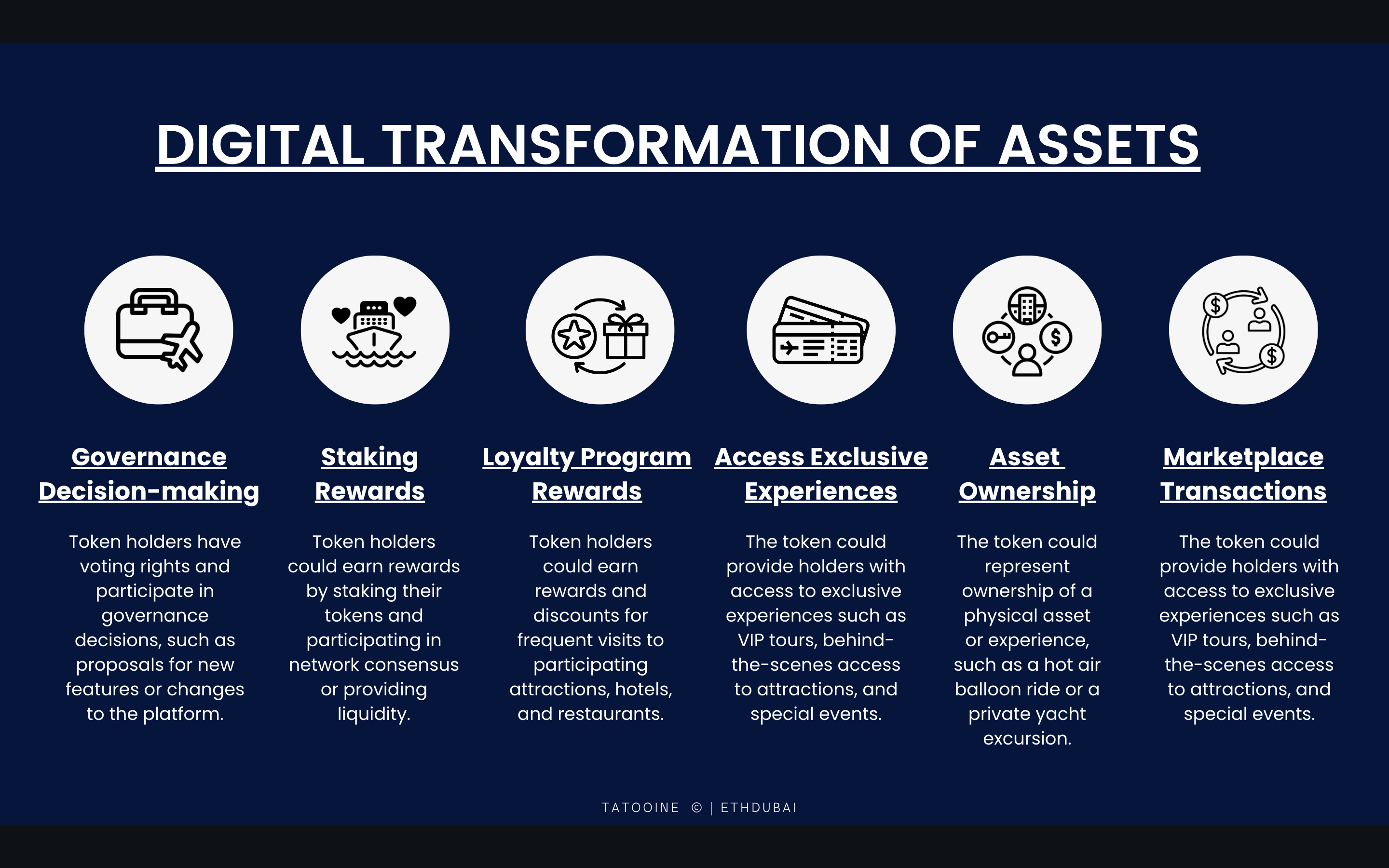
4) Loyalty Programs: NFTs could be used as part of loyalty programs for hotels and attractions in Dubai. Tourists could earn NFTs by staying at a hotel or visiting an attraction, which could be redeemed for discounts or other rewards.
5) Charity Initiatives: NFTs could be used to support charity initiatives in Dubai. For example, tourists could purchase an NFT that supports a local charity or conservation project, providing a unique way to give back to the community.
=====================================================================
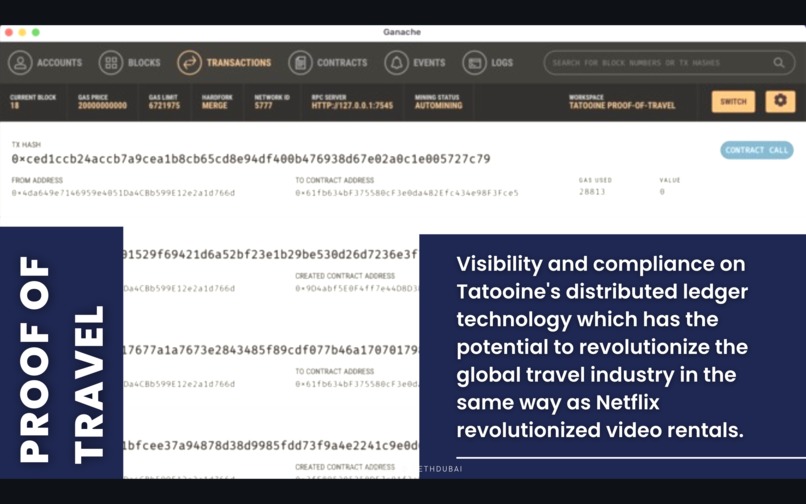
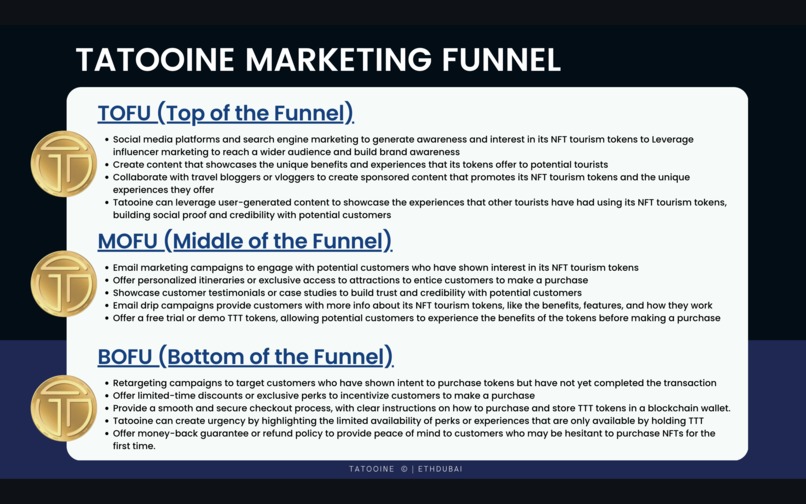
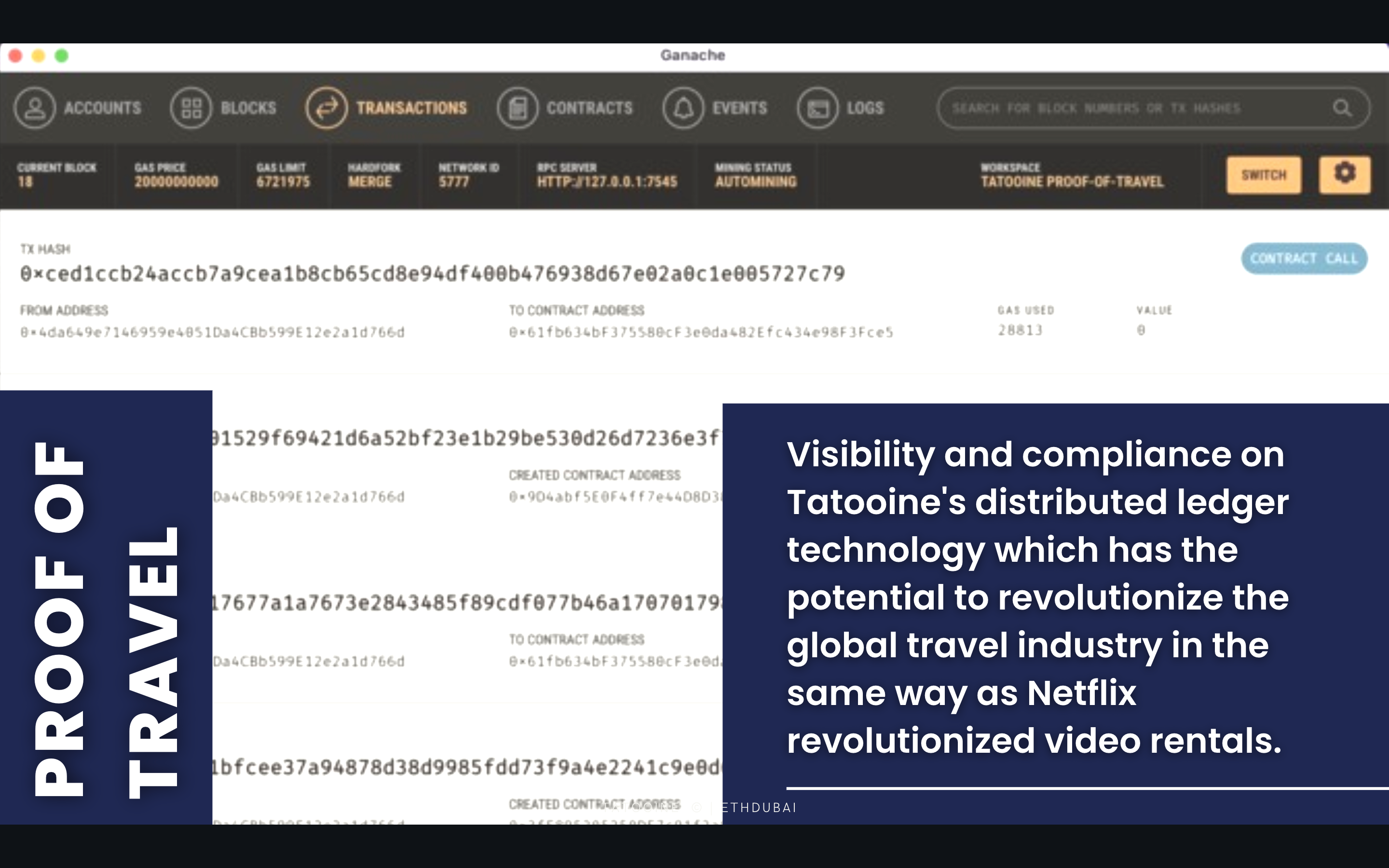
PROOF-OF-TRAVEL
BENCHMARKING TRAVEL DOCUMENTS
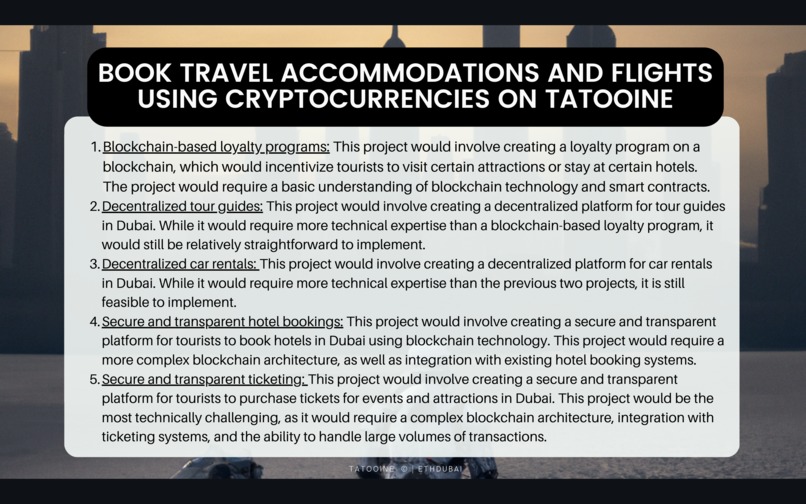
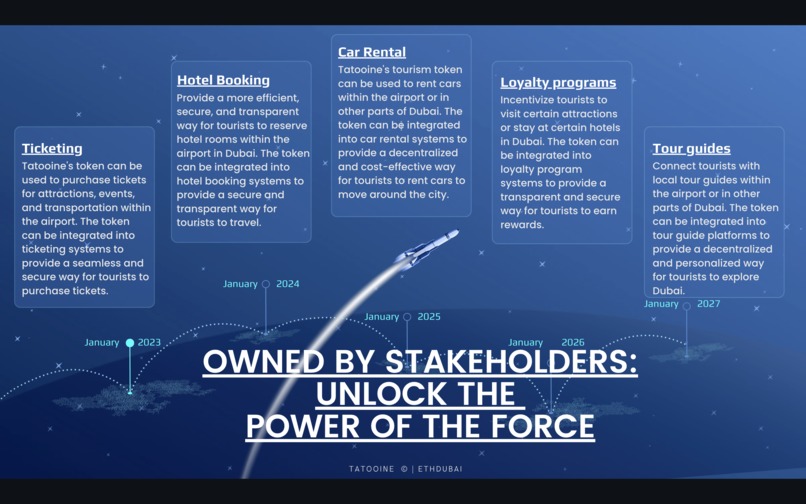
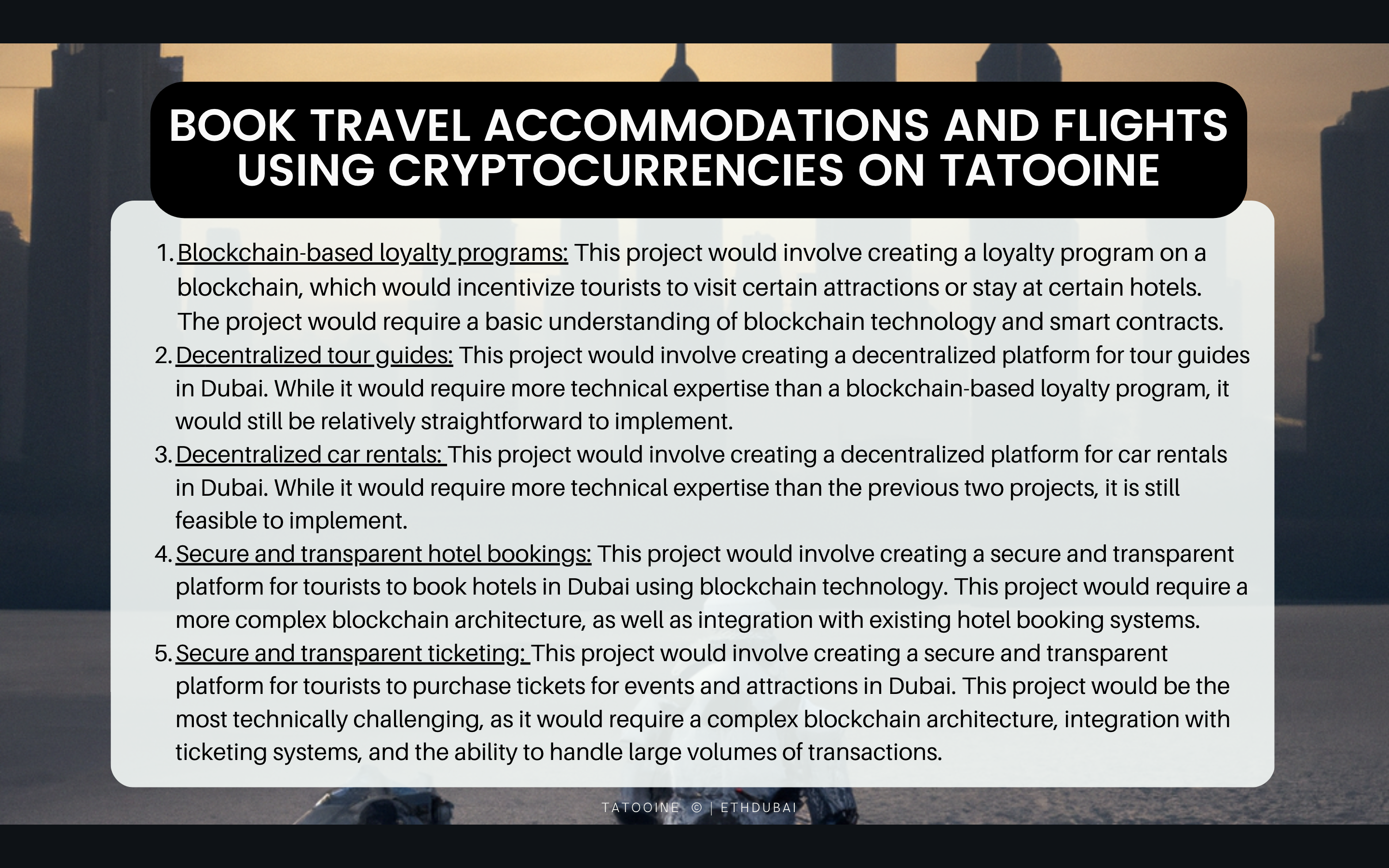
Make traveling to Dubai easier by putting Passport IDs on Tatooine's blockchain technology can be used to create a secure and transparent system to create their own travel itineraries. This would involve creating a decentralized platform where travelers can input their preferred destinations, activities, and accommodations. Smart contracts could then be used to automatically execute these bookings and payments when certain conditions are met to issue universal acceptance digital passports we need Digital Identifiers. The use of blockchain technology would provide a secure and transparent platform so users manage their itineraries without the need for intermediaries or third-party services, reducing costs and increasing efficiency.





IMMUTABLE, VERIFIABLE, AND DIGITALLY ACCESSIBLE DIGITAL IDENTIFIERS (DIDS)
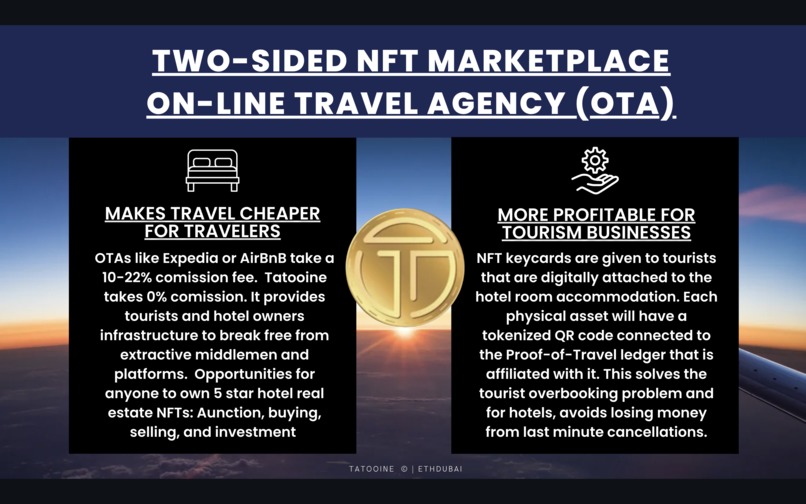
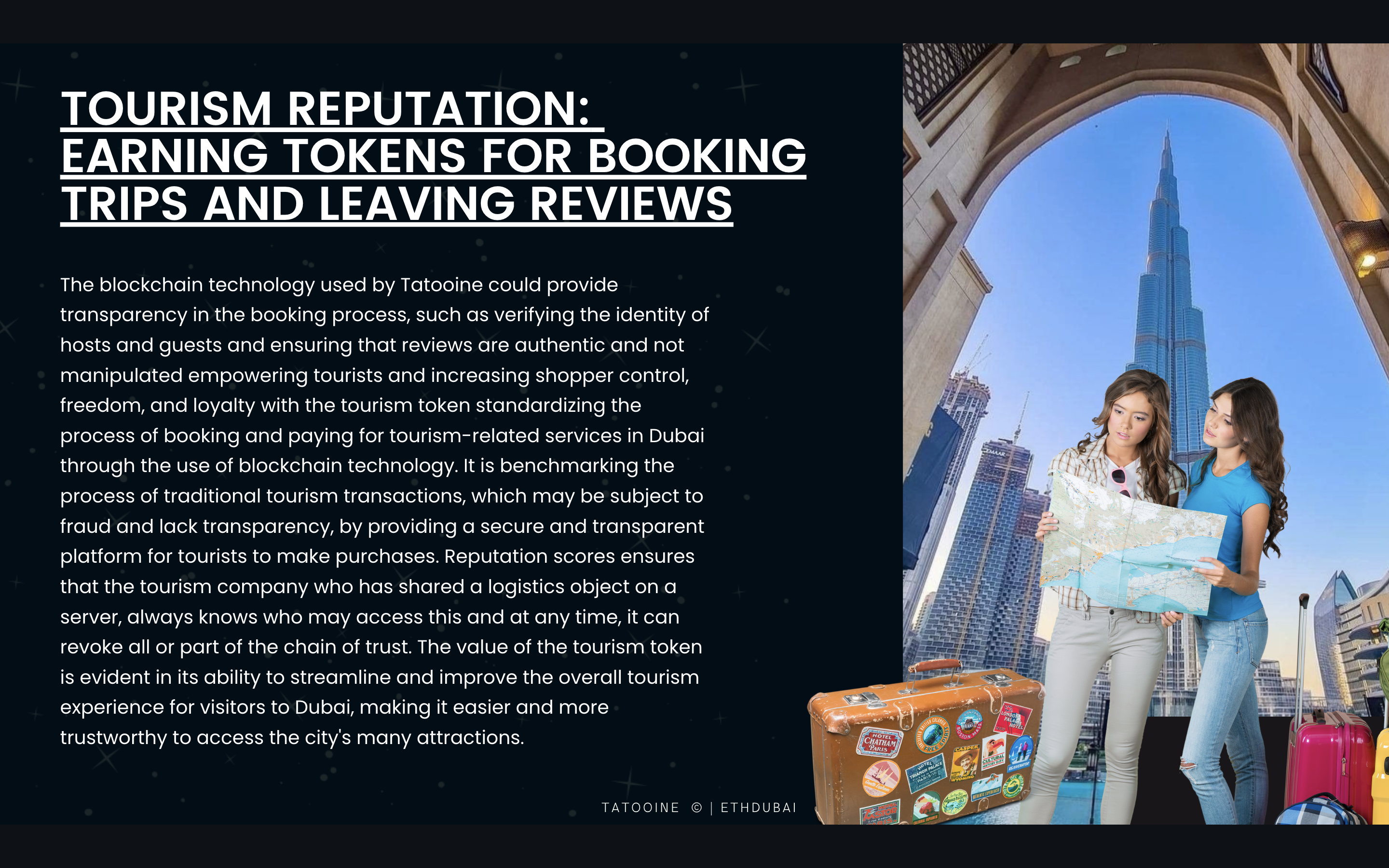
If you has verified your identity and your wallet address, you can speed up your travel process in Dubai. Blockchain technology can be used to avoid overbooking in the travel industry by creating a decentralized system that records reservations and bookings on an immutable ledger. This would ensure that every booking is unique and cannot be duplicated or overwritten. It would also allow for real-time tracking of bookings and availability, reducing the risk of overbooking.



==================================================================
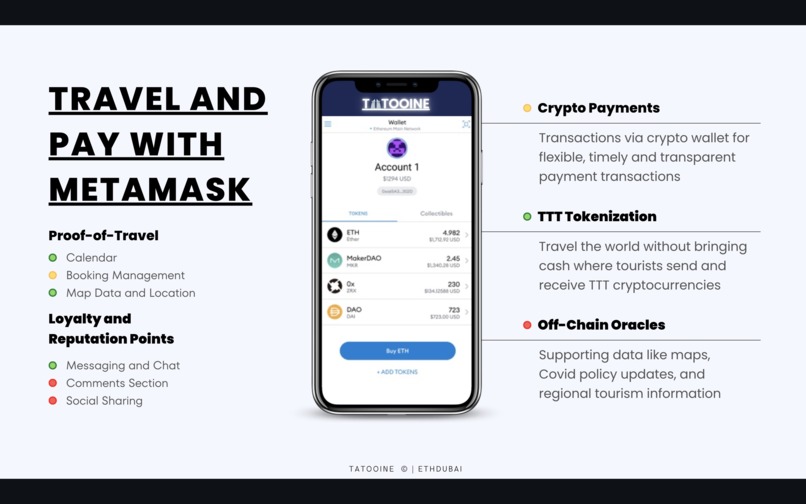
METAMASK WALLET
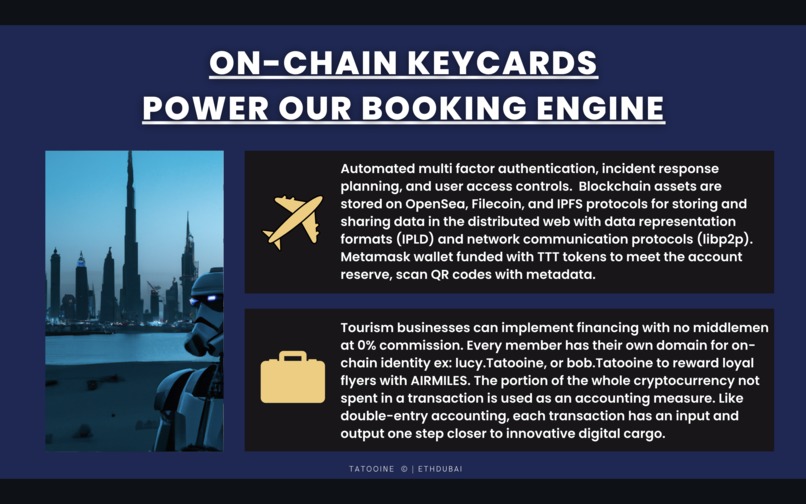
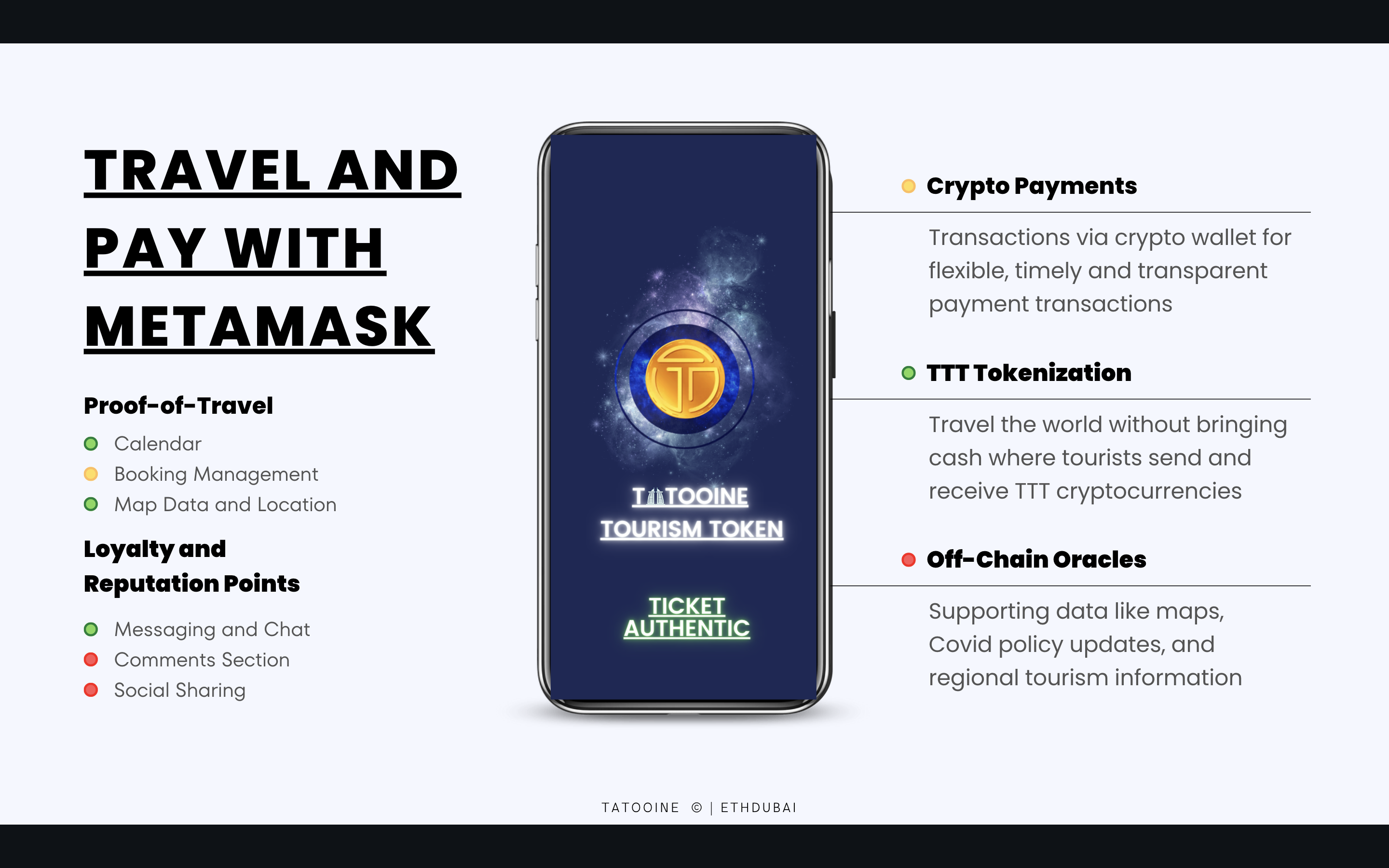
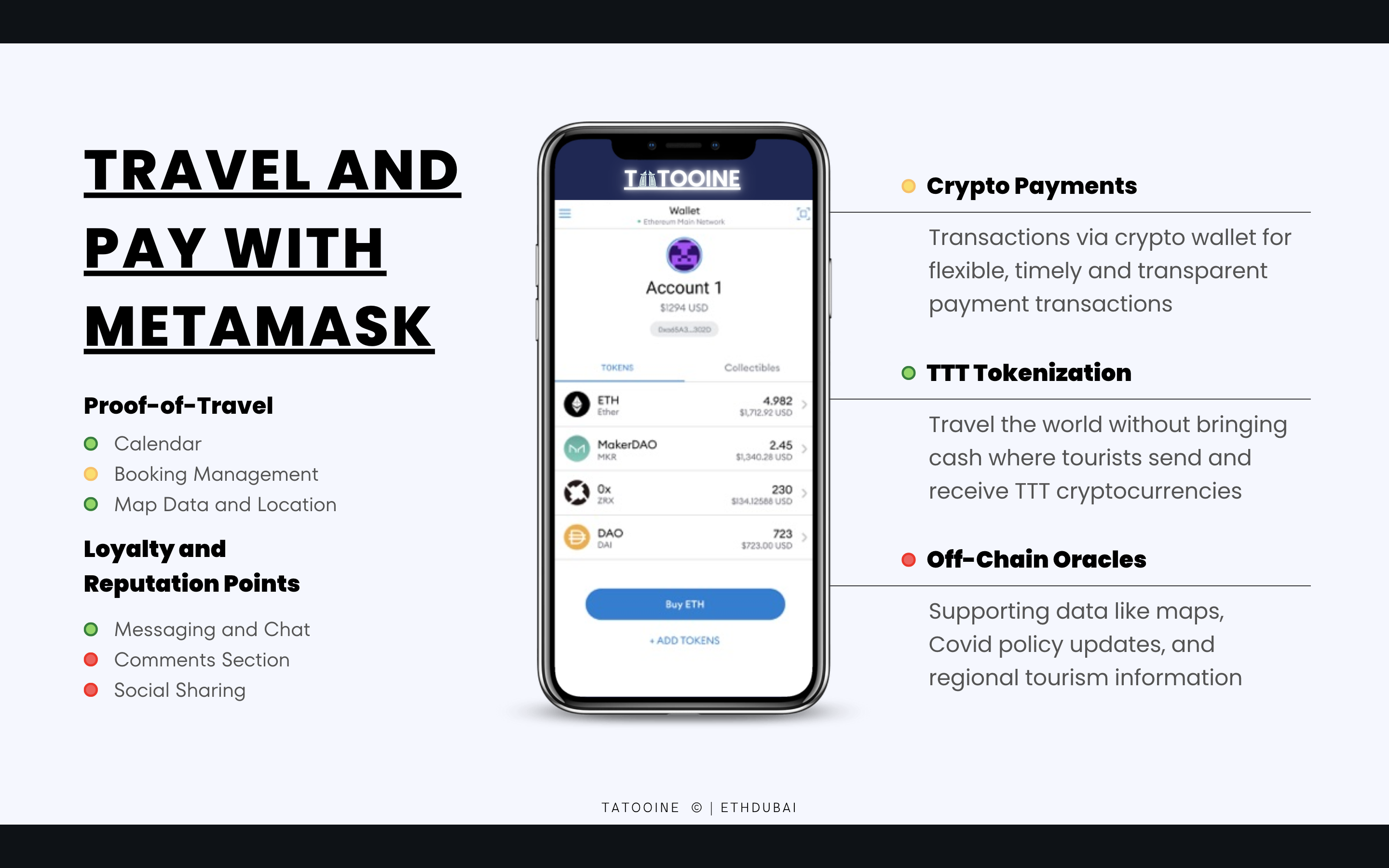
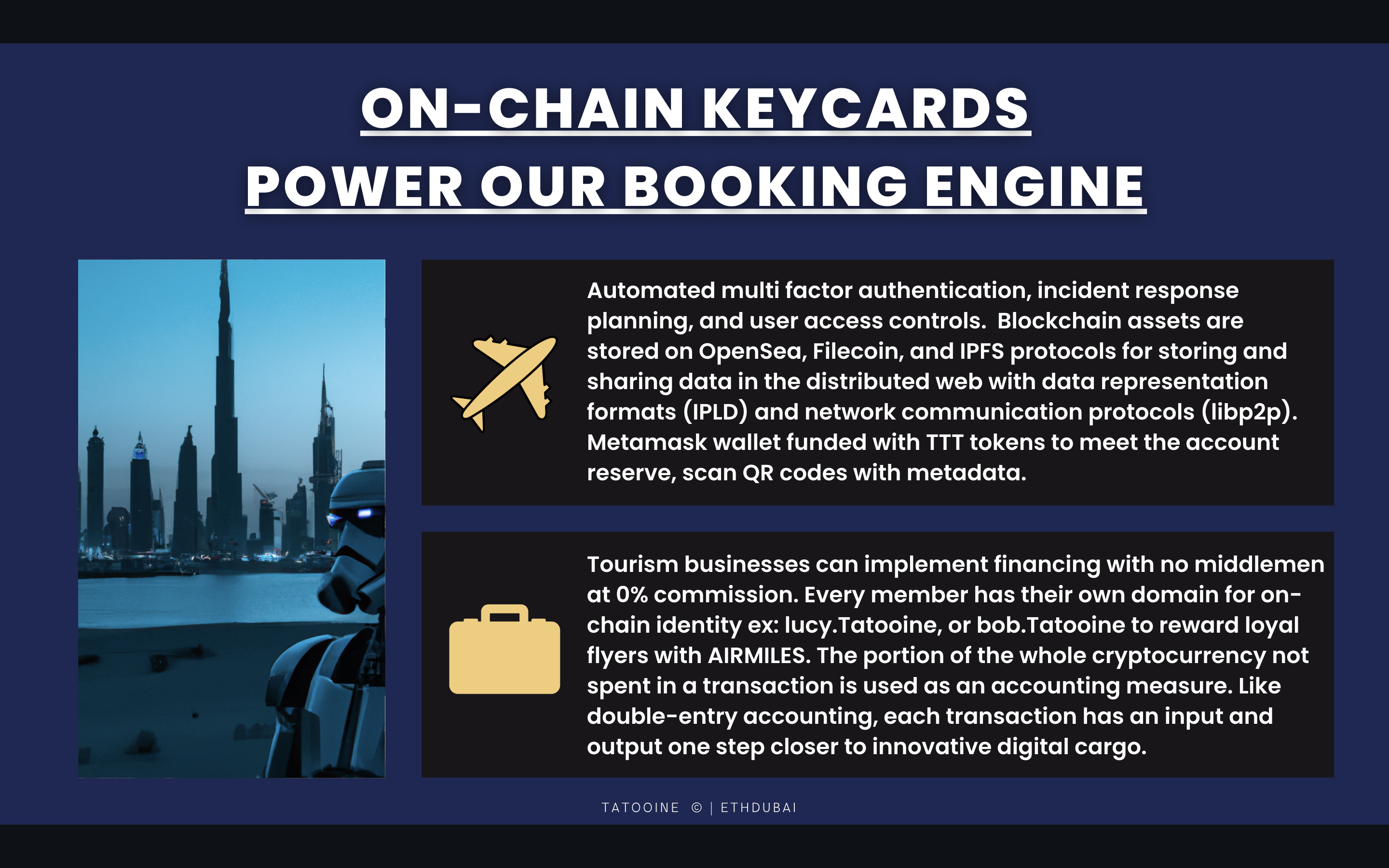
Consensys' Metamask wallet was used to access and to sign the transactions to interact with the Ethereum Blockchain as it is a popular and user-friendly wallet for interacting with Ethereum-based applications. It allows users to securely store and manage their private keys, and provides a seamless interface for interacting with the blockchain. Overall, integrating MetaMask wallet in the project would provide a secure and user-friendly way for users to manage their NFTs and interact with the blockchain.
Once the wallet is installed and configured enabling the extension installation prompt, the project needs to be integrated with the MetaMask API. This involves using JavaScript code to interact with the MetaMask API and send transactions to the blockchain. Metamask would likely be used to securely store the user's private key and to sign transactions when interacting with the smart contract on the Ethereum blockchain. Once the user has authenticated themselves, Tattooine can initiate transactions with the ganache blockchain ledger. This step involves interacting with the blockchain through the MetaMask API to update the state of the NFT and transfer ownership.
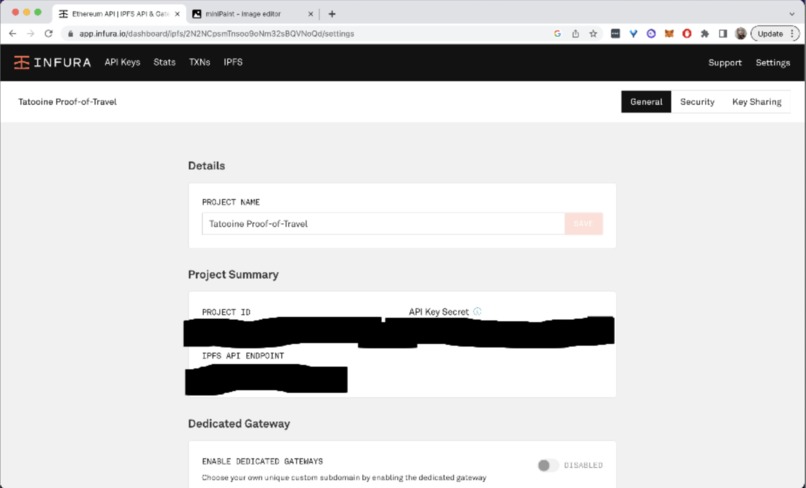
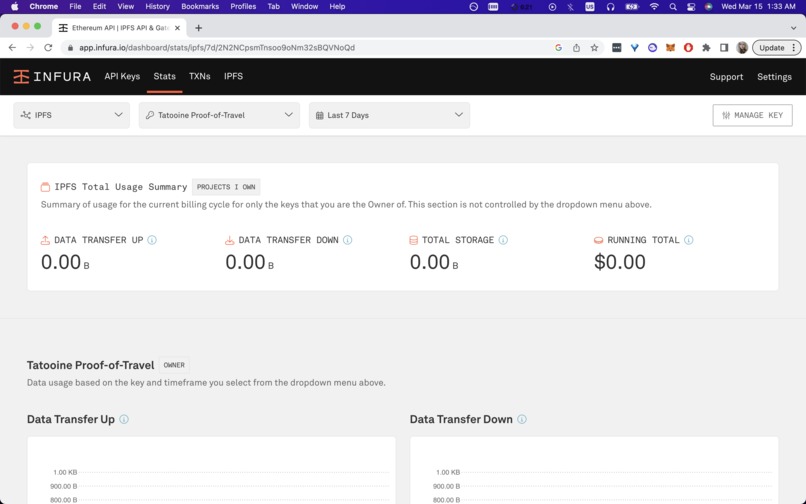
- Set GOERLI_RPC_URL environment variable. You can get one for free from Alchmey, Infura, or Moralis. This is your connection to the blockchain.
- Set PRIVATE_KEY environment variable. This is the private key from your wallet, ie MetaMask. This is needed for deploying contracts to public networks.





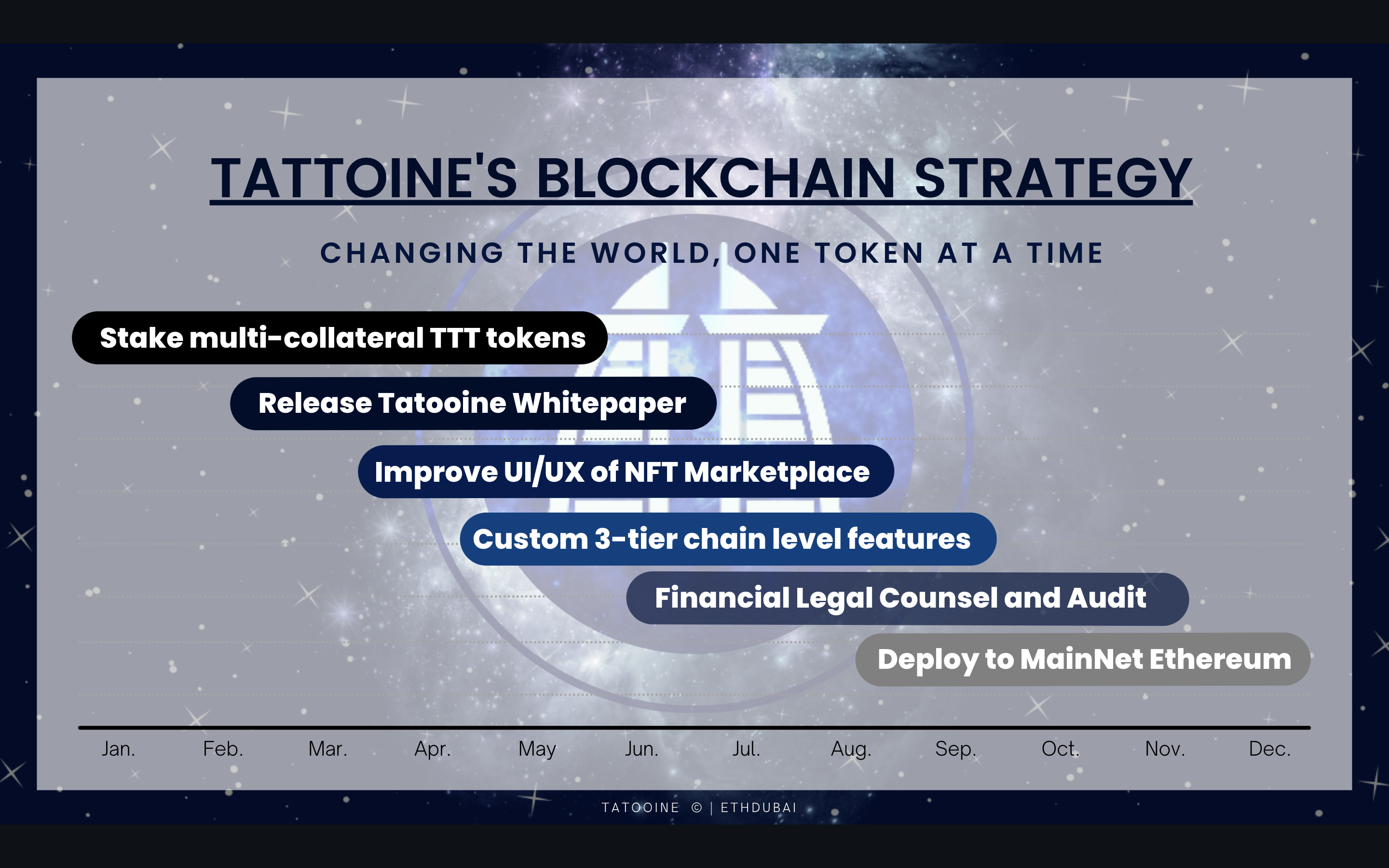
Next Steps: Sponsor Implementation
NFT MARKETPALCE
ThunderCore ($5k bounty)
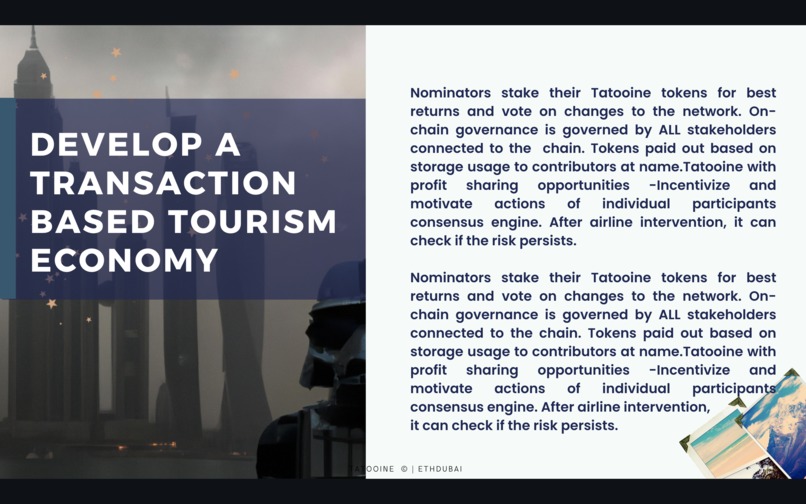
Integrating Tatooine's tourism token with ThunderCore's technology would involve building a decentralized tourism platform on ThunderCore that utilizes ThunderCore's fast and affordable transactions to enable seamless booking and payment using Tatooine's tourism token. To integrate Tatooine's tourism token with ThunderCore, one could leverage ThunderCore's fast and low-cost blockchain infrastructure to create a decentralized marketplace for tourism services, allowing users to use Tatooine tokens to purchase travel experiences and services, while also offering staking opportunities for users to earn rewards and incentivizing liquidity providers to provide liquidity to the marketplace.
XDC
To integrate Tatooine's tourism token with XDC technology, I would build a smart contract on the XDC blockchain that mints the tourism token and enables users to trade and transfer it.
BuildOn5ire ( $5000 USD Bounty)
To integrate Tatooine's tourism token with 5ire, a blockchain software engineer could build a decentralized application on the platform that allows users to purchase tourism experiences using the token.
……………
MetaMask SDK + ConsenSys Products Bounty Description
To integrate Tatooine's tourism token with MetaMask, I would utilize the MetaMask SDK to create a Web3 dApp platform that enables users to use Tatooine's tourism token for various tourism-related services. This dApp could utilize other ConsenSys products like Infura, Truffle, and Ganache to provide seamless integration with the blockchain and enable features like NFT issuance or POAPs to incentivize participation and engagement with the platform.
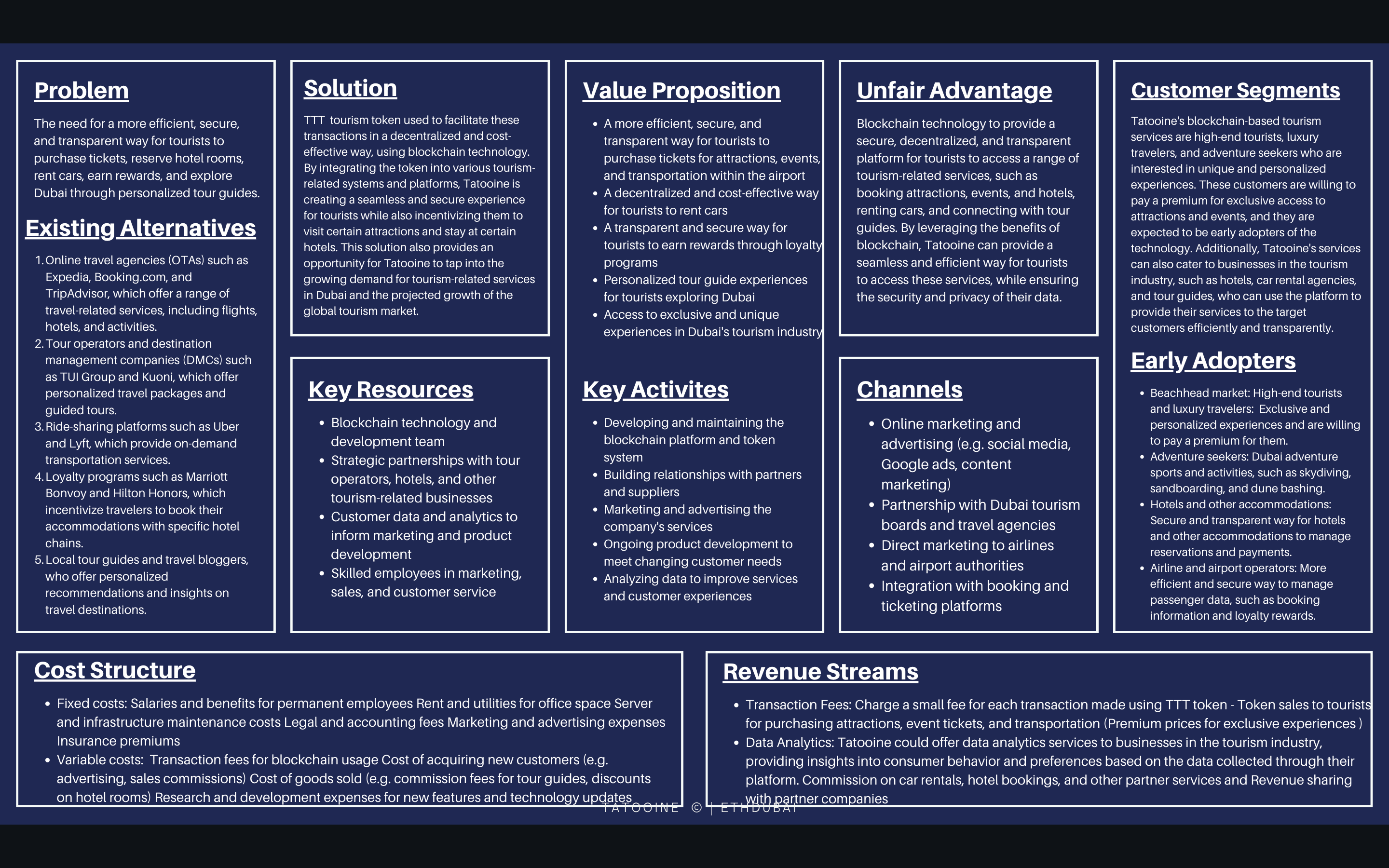
The solution leverages the power of the Ethereum blockchain and smart contracts to create a decentralized tourism platform powered by Tatooine's tourism token. The platform allows tourists to book accommodations, transportation, and activities using the token, while also providing tourism service providers with a reliable and efficient payment system.
- Solidity: A high-level programming language used to write smart contracts for the Ethereum blockchain.
- Truffle: A development framework for Ethereum that simplifies the process of building, testing, and deploying smart contracts.
- Web3.js: A JavaScript library that provides a way to interact with Ethereum nodes and smart contracts.
- IPFS: A peer-to-peer distributed file system that can be used to store and share data in a decentralized manner.
Ideally how the platform would work:
- Service providers can register on the platform and create listings for accommodations, transportation, and activities, including their availability and pricing.
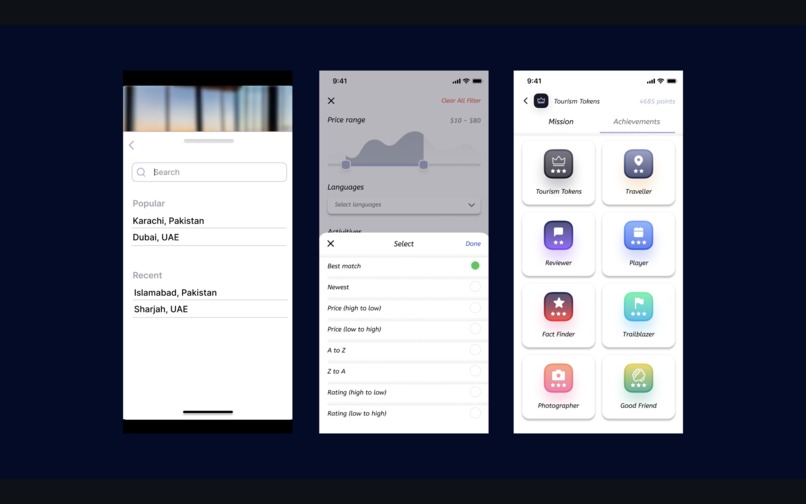
- Tourists can search for listings and book their desired services using Tatooine's tourism token. The platform will use an oracle service to determine the real-time exchange rate of Tatooine's tourism token to the local currency of the destination.
- The smart contract will hold the funds in an escrow until the service has been provided, ensuring that both the tourist and the service provider are protected against fraud.
- Once the service has been provided, the funds will be released to the service provider automatically, without the need for any intermediaries or manual intervention.
- The platform will also implement a reputation system to ensure that service providers are incentivized to provide high-quality services and that tourists can make informed decisions when booking.
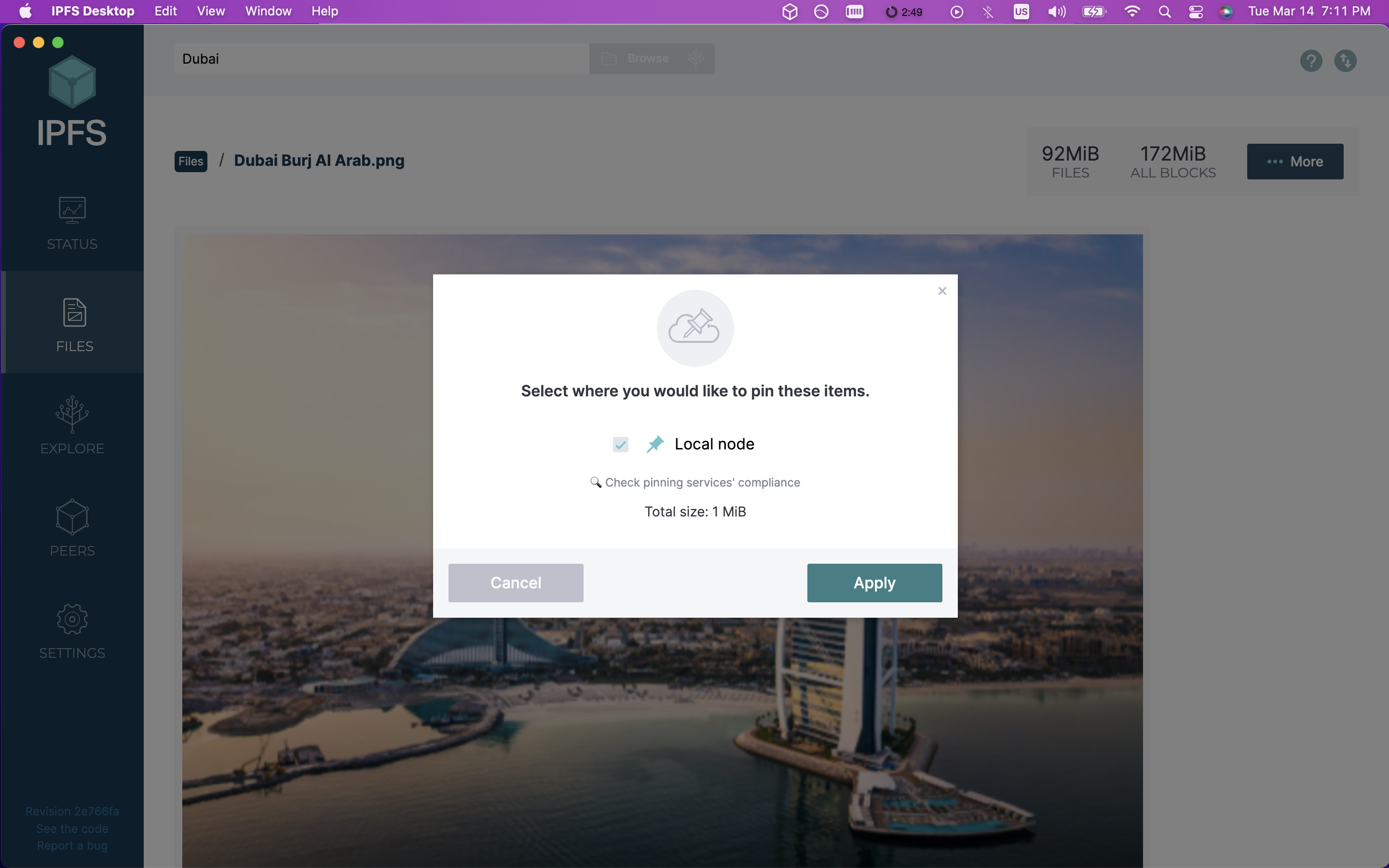
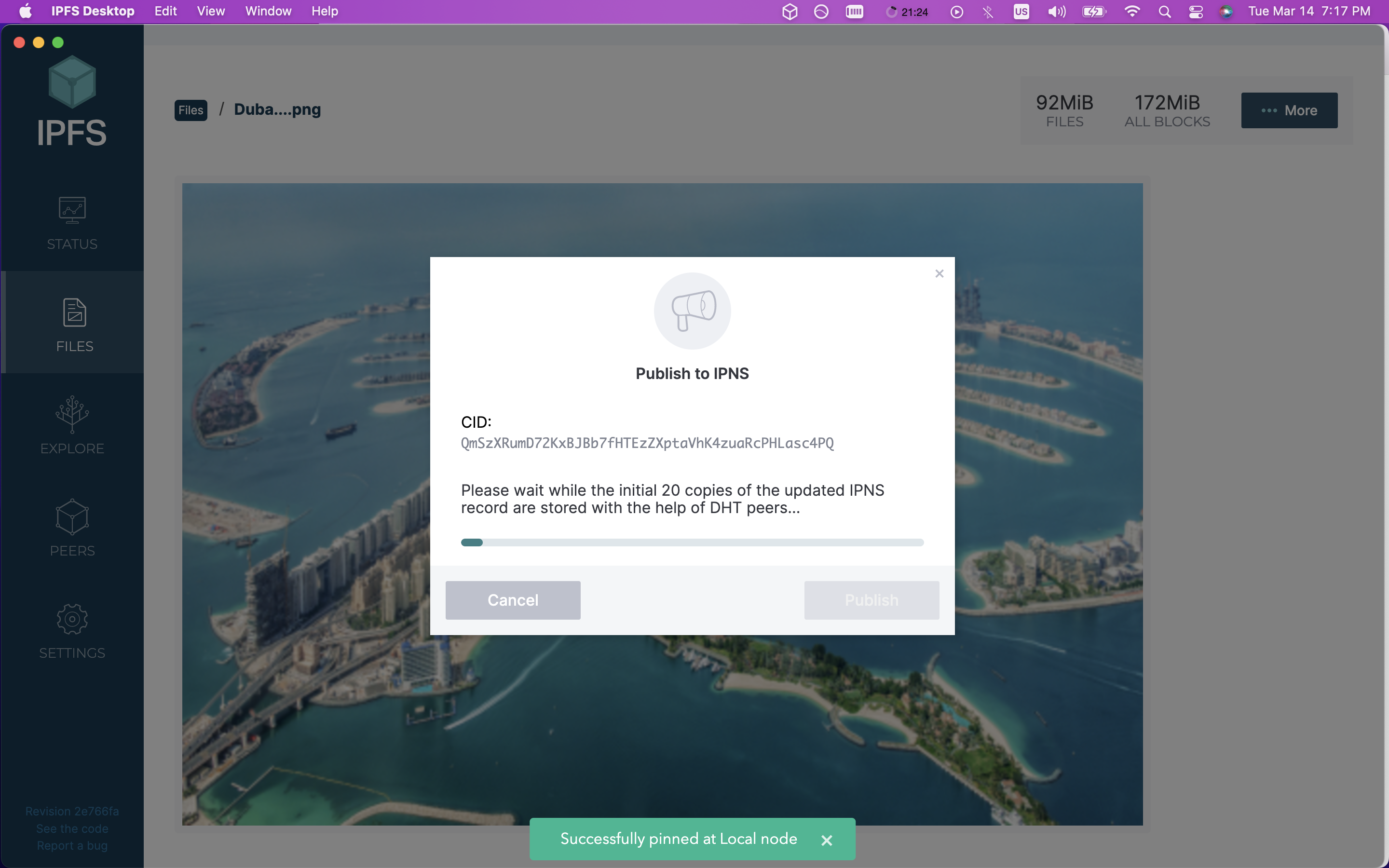
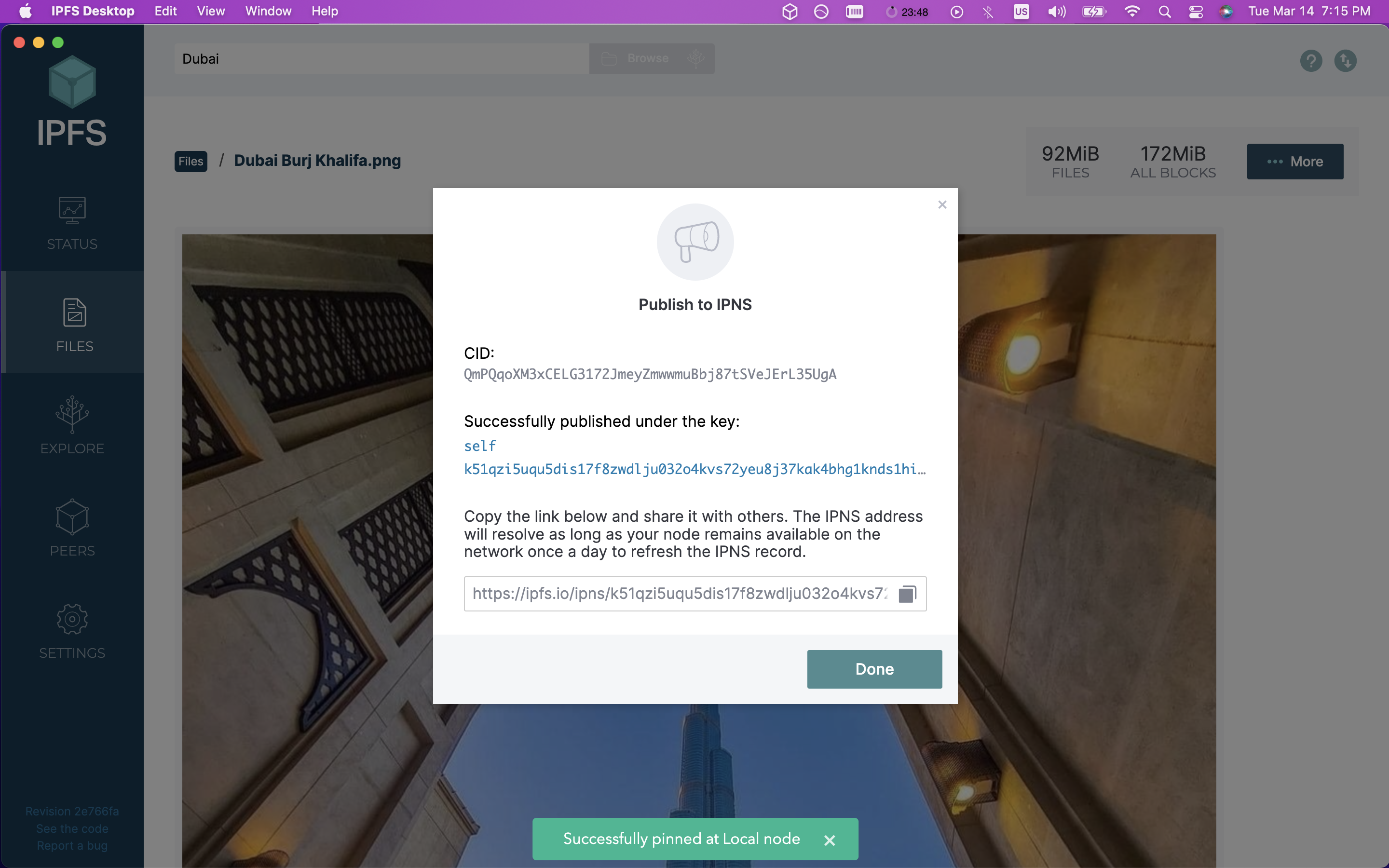
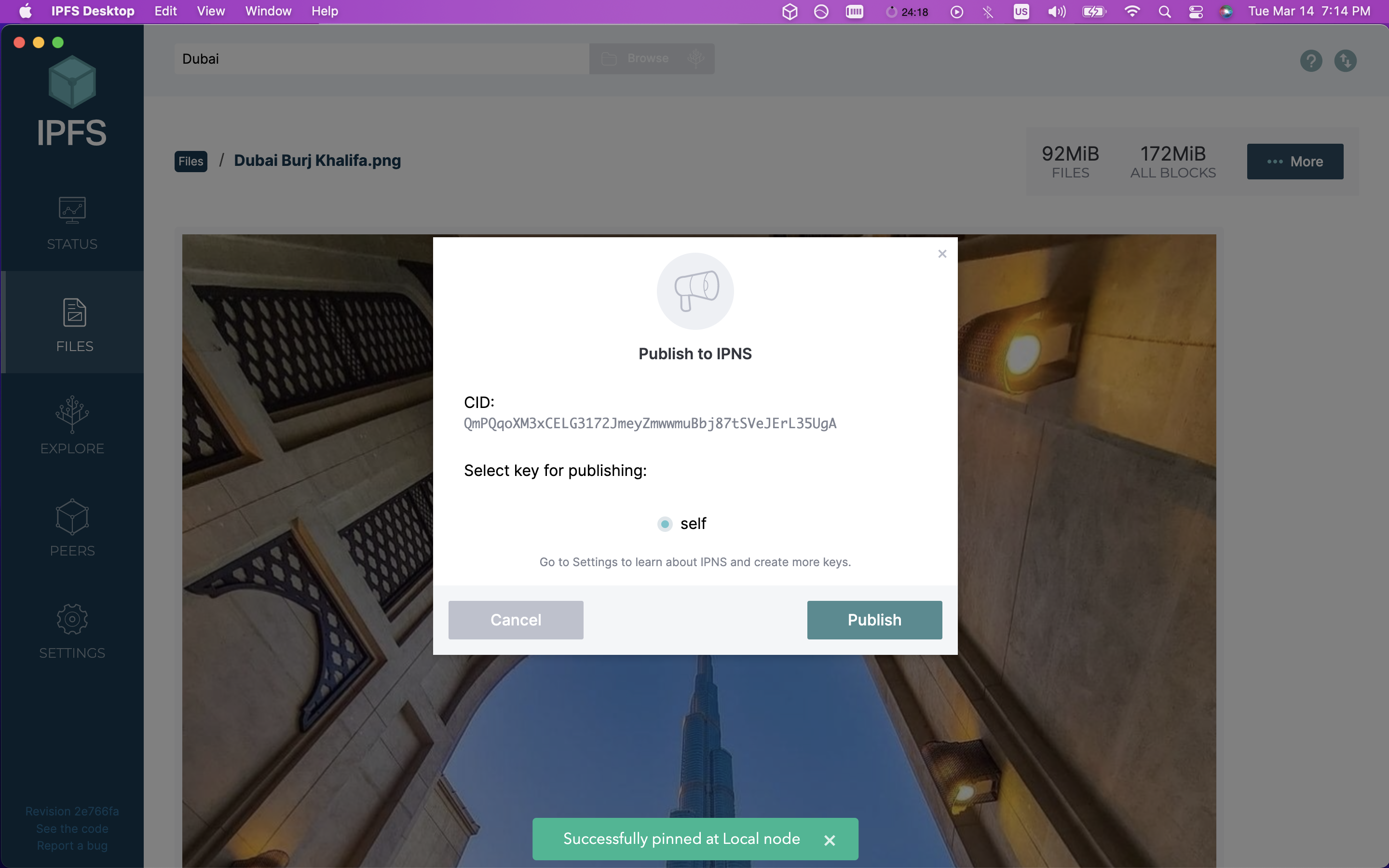
- All data related to listings, bookings, and payments will be stored on IPFS, ensuring that it is accessible and transparent to all parties involved.

To implement this solution,Tatooinewill start by developing the smart contracts that will handle the booking, payment, and reputation systems. We will then create a web interface that allows tourists to search for listings and book services using Tatooine's tourism token.Finally, Tatooine will deploy the platform on a test network such as Ropsten for testing and then on the Ethereum mainnet for production use.
In conclusion, our solution leverages the power of smart contracts, IPFS, and Web3.js to create a decentralized tourism platform powered by Tatooine's tourism token. This platform provides tourists with a reliable and efficient payment system while also incentivizing service providers to provide high-quality services with a two sided marketplace and escrow system.
========================================================
========================================================
DEX UNISWAP
Claystack ($3k bounty)
To integrate Tatooine's tourism token with ClayStack, a blockchain software engineer could create a liquidity pool for the token on the ClayStack platform, allowing users to stake their tourism tokens and receive csTokens in return, which can then be used to participate in other DeFi protocols and potentially earn additional rewards.
Gains ($3k bounty)
Integrating Tatooine's tourism token with Gains Network's gTrade platform could potentially allow users to trade the token with leverage, increasing their potential profits and exposure to the tourism market.
$SUSHI
- Bentobox - Integrate Tatooine's tourism token as a collateral asset in the Bentobox vault to enable users to borrow against it for various financial operations.
- Swap - Allow users to swap Tatooine's tourism token with other tokens on SushiSwap to provide better liquidity and price discovery for the token.
- Sushi - X - Swap - Use Sushi Cross Swaps to enable cross-chain trading for Tatooine's tourism token and increase its accessibility.
- Limit Order - Develop a limit order system for Tatooine's tourism token on SushiSwap to provide users with more trading options and flexibility.
XDC
Additionally, I would explore integrating the tourism token with existing XDC-based DeFi protocols such as XSWAP or Storx to enable users to earn additional rewards or access liquidity.
BuildOn5ire ( $5000 USD Bounty)
The application could also leverage 5ire's DeFi capabilities to enable users to earn rewards or participate in liquidity pools with their tokens.
($15K bounty paid out in $FLOW)
To integrate Tatooine's tourism token with Flow's DeFi ecosystem, I would develop a decentralized application that enables users to trade, stake, or lend/borrow the token using smart contracts on the Flow blockchain. The app could also integrate with existing DeFi applications on Flow to provide users with more liquidity and investment opportunities.
QuickSwap v3
To integrate Tatooine's tourism token with QuickSwap v3, I would build a liquidity pool for the token on the QuickSwap platform to allow for seamless trading with other tokens on the platform. Additionally, I would create an interface for users to easily swap the tourism token with other tokens on the platform.
========================================================================
Challenges we ran into
- Smart contract security: The smart contract code that underlies the NFT project must be thoroughly tested and audited to ensure that it is secure and free from vulnerabilities. Any vulnerabilities could be exploited by attackers to steal or damage the NFTs.
- Interoperability: Different blockchains may have different technical standards for NFTs, which could make it difficult to move NFTs between different platforms or marketplaces.
- Scalability: As the number of NFTs grows, the blockchain network must be able to handle the increased load. This could require implementing scaling solutions, such as sharding or layer-two protocols.
- Gas fees: Every transaction on the blockchain requires a fee in the form of "gas," which is paid in the native cryptocurrency of the blockchain. As the number of transactions and NFTs grows, the gas fees may become prohibitively expensive for users.
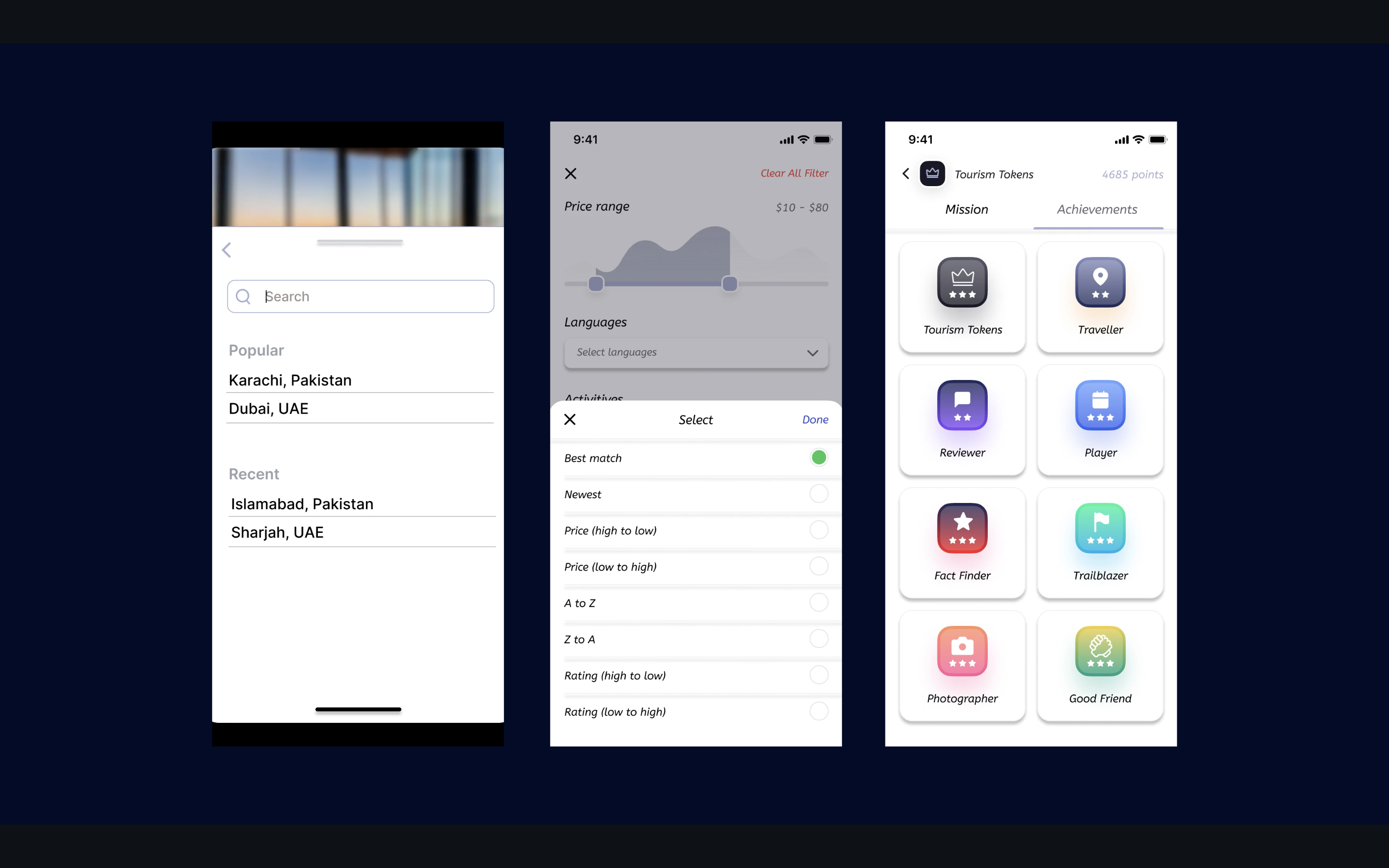
- User experience: The user interface of the NFT project must be intuitive and easy to use, especially for users who may not have extensive technical knowledge. This may require investing in a user experience designer or conducting user testing to optimize the design.
- Storage: The size and resolution of NFTs can be quite large, which could make it challenging to store them on the blockchain or to retrieve them quickly when needed.
What we learned
- Understanding of blockchain technology, smart contract development, NFT standards, IPFS, web development, and data storage on the blockchain.
- Adding location, landmarks, time, and photographer information to the NFTs
- Knowledge of how to store and retrieve data on the blockchain using smart contracts and web3.js
- Fun pragmatic business application
REFERENCES
https://www.globaltrademag.com/common-u-s-customs-clearance-issues-overcoming-them/
https://www.beinformed.com/blog/the-top-customs-challenges-in-international-trade-and-transport/
https://taxation-customs.ec.europa.eu/customs-4/customs-security/import-control-system-2-ics2-0_en
What's next for Tatooine
Technical
- Enhancing the UI UX by making the platform more user-friendly and intuitive
- Use encryption on top of the blockchain technology for sensitive data such as user information, travel itineraries, and financial transactions should be encrypted to prevent unauthorized access.
- Access controls (civilians, military, politicians, etc) to limit who can access different parts of the platform and what actions they can perform.
- Mapping services were google API services or Google Open Street Map leveraging the power of smart contracts to automate transactions and enforce rules, such as payment and delivery terms
- Large number of users, images, and transactions, and ensure that the system is scalable and able to handle the increasing demand.
- Weather with Chainlink Oracle Data Feeds
- Simplify the process of minting, buying, and selling NFTs to encourage more users to join and use the platform.
- Interoperability: Consider the use of industry standards and protocols to make the platform interoperable with other blockchain systems and networks, enabling greater connectivity and data sharing.
- Implement multi-factor authentication: Require multiple forms of authentication, such as a password and a fingerprint or face scan, to access the platform or perform certain actions.
- Implement strong security measures to prevent hacking and unauthorized access to the platform (prevent vulnerabilities such as SQL injections, cross-site scripting) and third-party security firm to perform regular security audits
- Implement a disaster recovery plan: Have a plan in place for disaster recovery in case of system failure, cyber-attacks or data breaches. This should include backups, redundancy, and data recovery procedures.
- AI? Explore the integration of other technologies, such as AI and machine learning, to enhance the platform's functionality and provide more value to users. Use biometric identity verification: Use biometric identity verification techniques like facial recognition or fingerprint scans to verify user identity and reduce the risk of fraudulent activity.
==========================================================================
Non-Technical
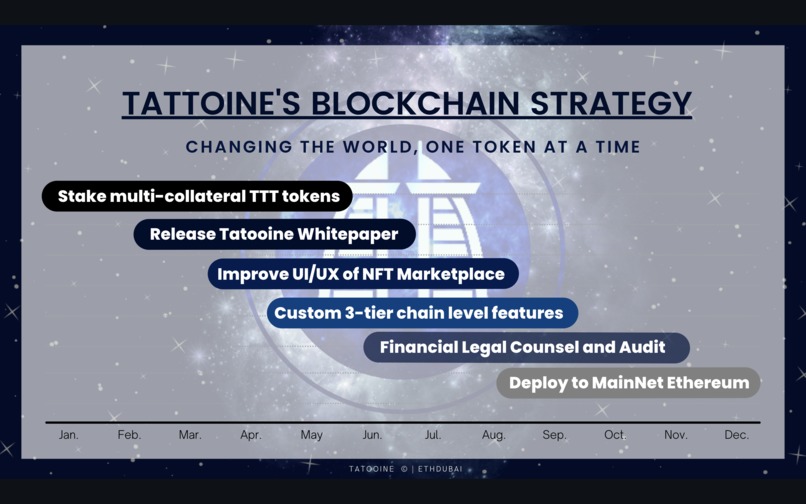
In terms of market segmentation, blockchain-based airport security and customs solutions can be marketed towards airlines, airports, and customs authorities in Dubai (Emirates NBD).The city's strategic location and high volume of international trade make it a prime market for innovative solutions that can improve the efficiency and security of airport operations and promote public private partnerships (DEWA; wasl Asset Management Group, one of the largest real estate developers in Dubai). Additionally, blockchain-based solutions can help Dubai differentiate itself as a leader in airport security and customs, attracting more businesses and travelers to the city. Overall, the key to improving a technical project is to constantly innovate, listen to feedback, and adapt to changing user needs and market trends.
- Dubai Future Accelerators (DFA)
- The Smart Dubai Office (SDO)
- Dubai Future Accelerators
- Etisalat Scale-Ups Program
- Smart Dubai Global Blockchain









Built With
- blood
- chainlink
- ethereum
- ganache
- infera
- metamask
- solidity
- sweat
- tears
Log in or sign up for Devpost to join the conversation.