-
-
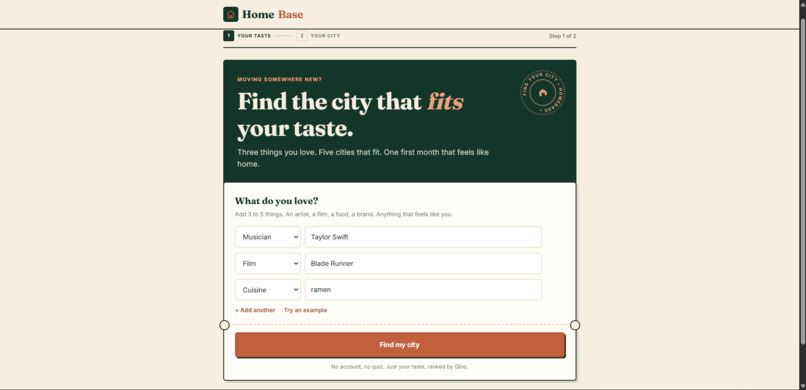
HOME
-
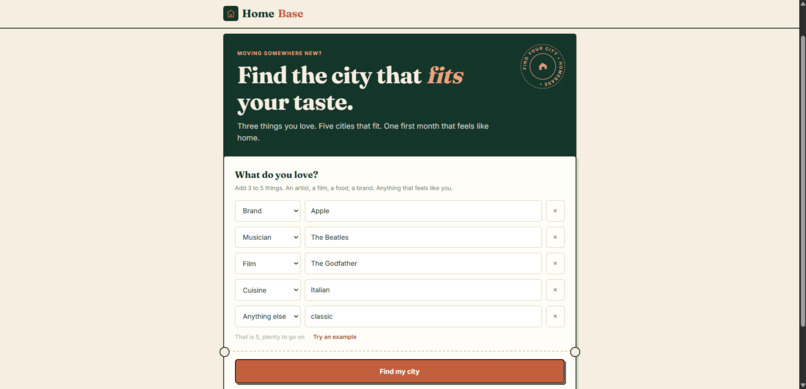
USER INPUTS
-
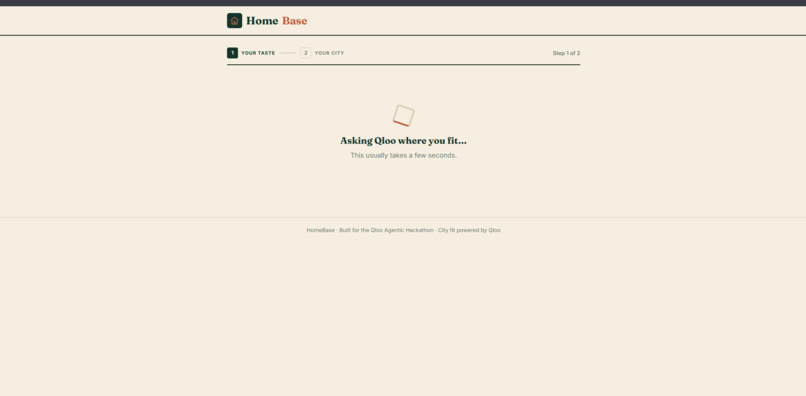
FINDING BEST MATCH
-
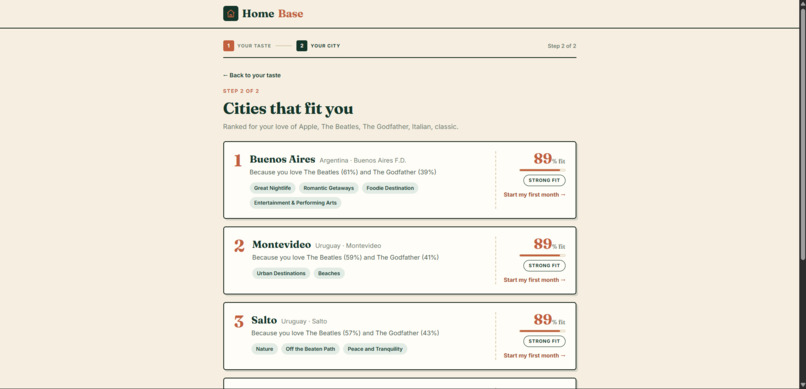
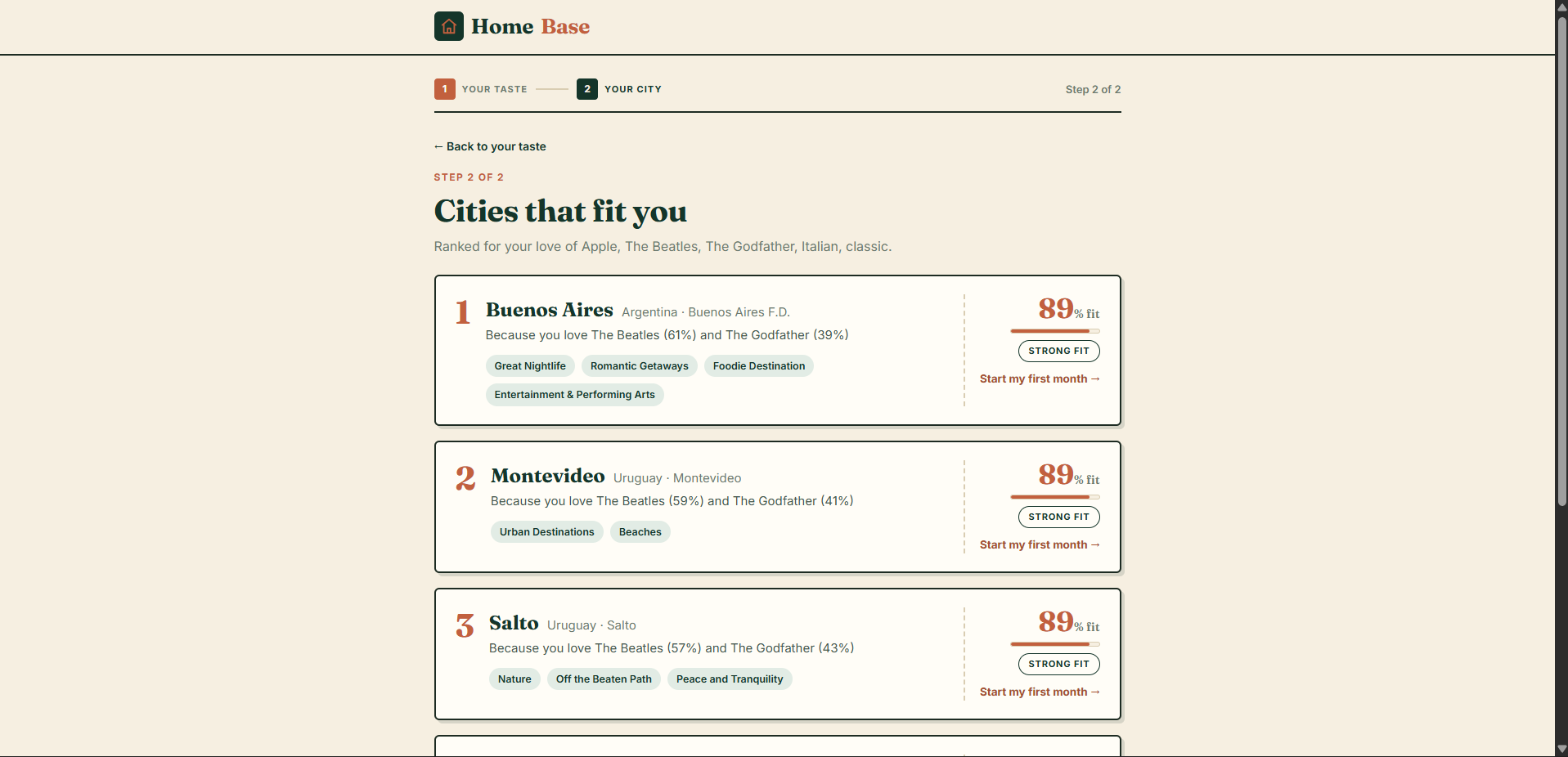
TOP FINDINGS (CITITES)
-
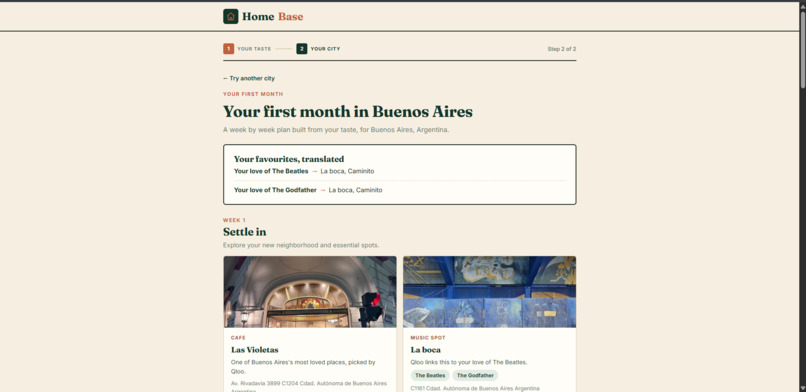
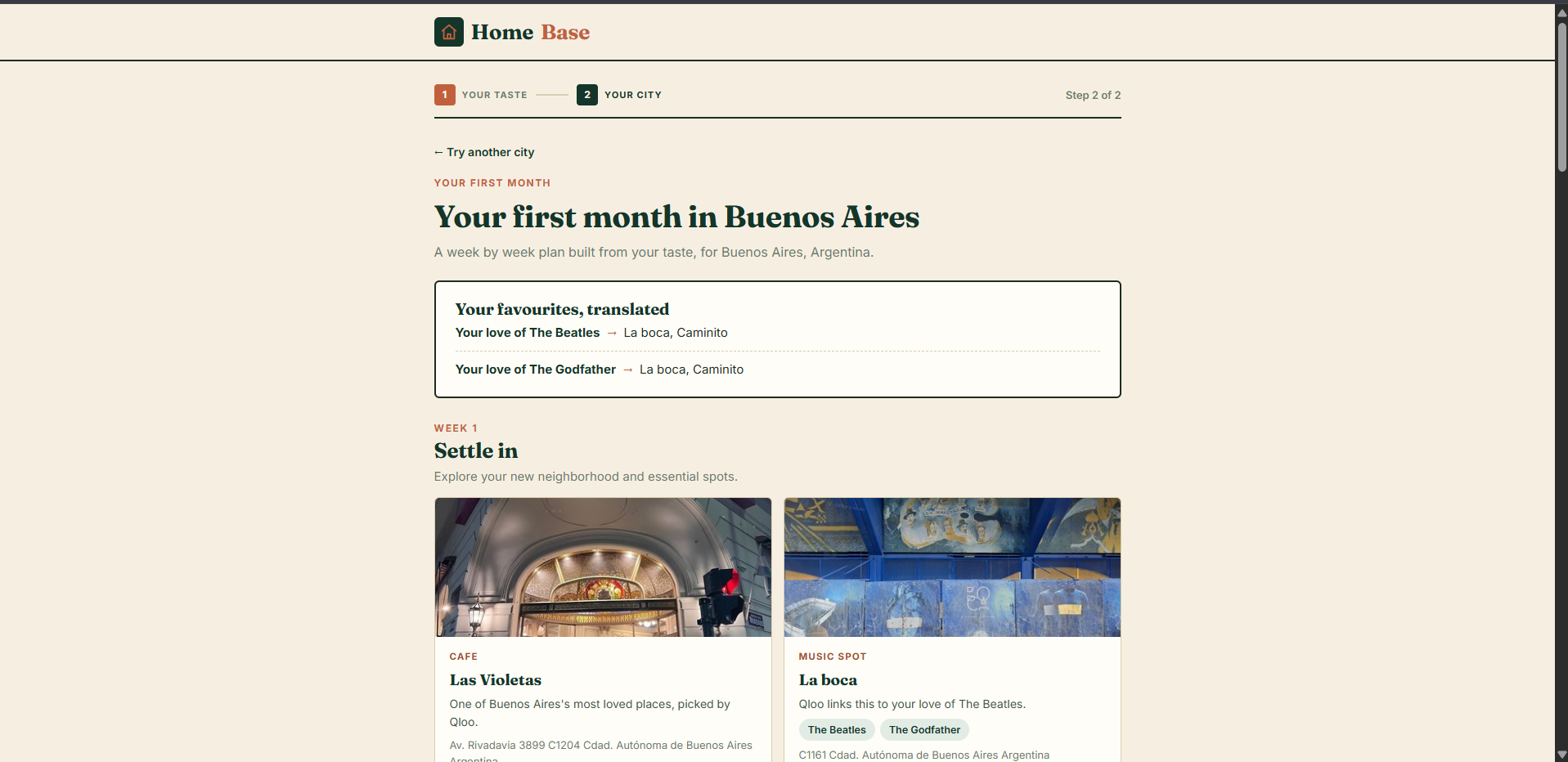
ONE MONTH PLAN IN SELECTED CITY
Inspiration
Moving to a new city is one of the biggest decisions in a young person's life, and the advice out there is useless: cost of living tables, top 10 lists, weather charts. None of it answers the real question: will I feel at home there?
I am a recent graduate from Mardan, Pakistan, applying to study abroad. I kept asking myself which city fits me, and I realised no tool answers that from taste: the music you love, the food you crave, the films you rewatch. So I built one.
What it does
HomeBase works in two acts.
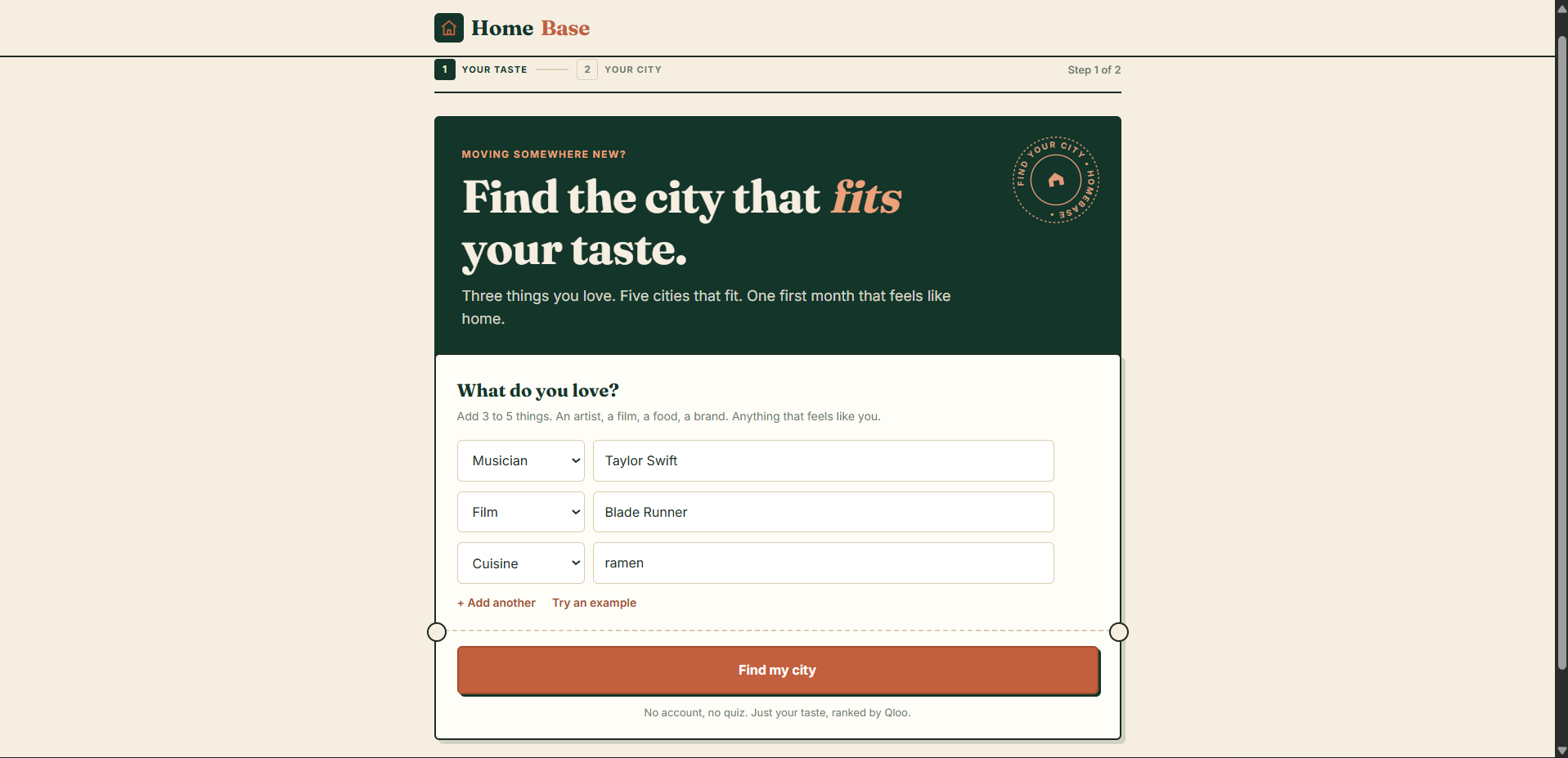
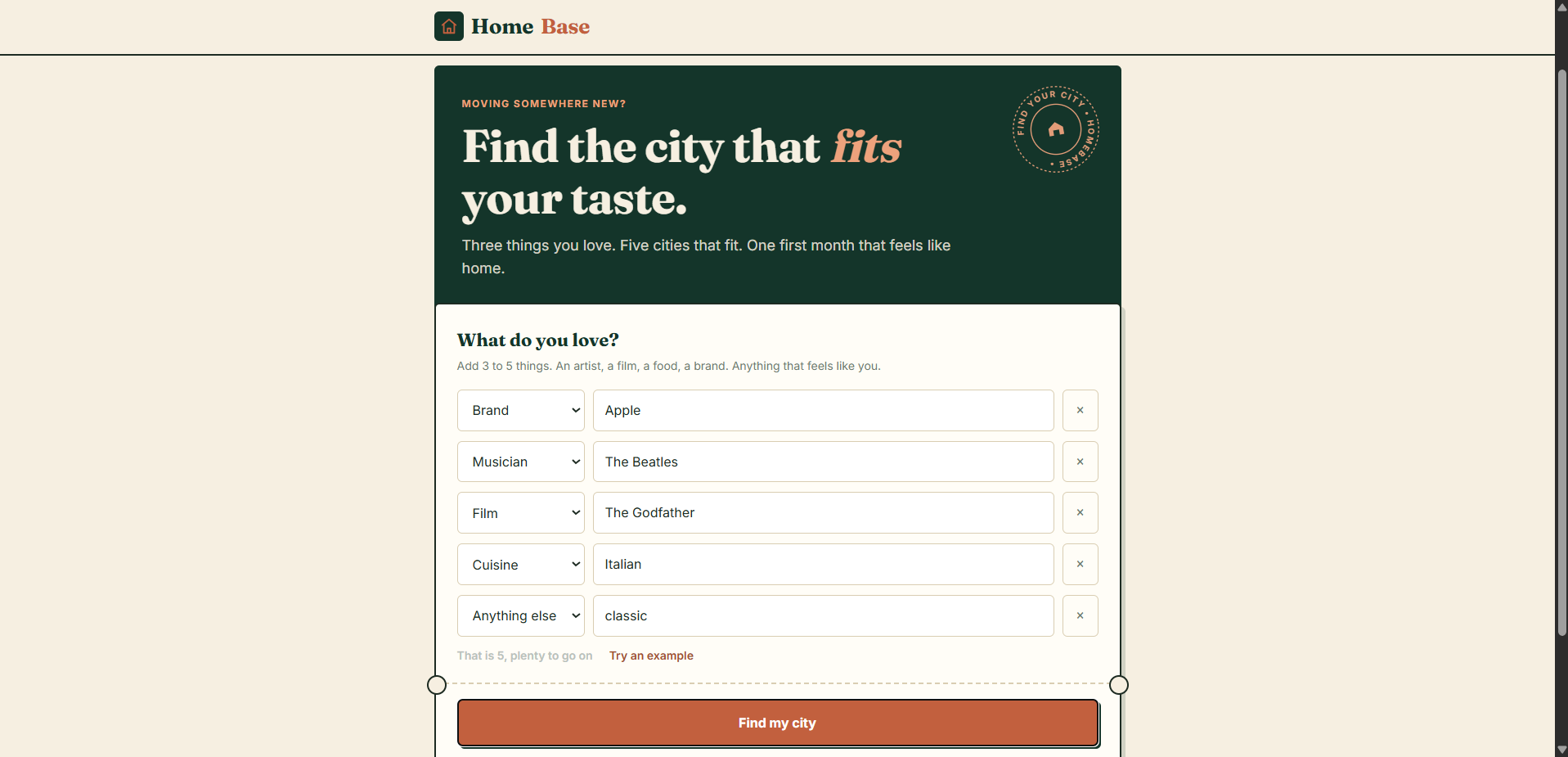
Act 1, "Where should I live?": tell it three to five things you love, an artist, a film, a cuisine, a brand, and it ranks cities by cultural fit. Every city comes with a fit score and the reason it fits.
Act 2, "Feel at home": pick a city, and HomeBase maps your home favourites to local equivalents in the new city. The ramen spot that plays the role your old one did, the venue with your sound, the places where your people gather. Then it builds a first month plan: where to eat, where to go, who your people are.
How I built it
Qloo Taste AI is the core of the product, not a garnish. The flow is:
/searchresolves each favourite to a Qloo entity./v2/insightswithfilter.type=urn:entity:destinationandsignal.interests.entitiesranks cities by taste affinity.feature.explainability=truereturns the contributing entities behind every pick, so the app shows Qloo's own reasoning for why a city fits.- For Act 2,
/v2/insightswithfilter.type=urn:entity:placeandfilter.location.query=<city>finds local equivalents in the chosen city. - Gemini (free tier) only composes the story from Qloo results. It never invents a place. Every recommendation traces back to a real Qloo call, and the agent says so honestly when the data is thin.
The app is a lightweight web app deployed on Render's free tier, and the code is public under an MIT licence.
Challenges I ran into
Taste affinity can look arbitrary at first glance. Why would a city rank highly for a fan of a particular artist? We answered that by showing the contributing entities from Qloo's explainability data, capping results at the top five, adding a confidence label, and having the agent hedge or refuse when affinity is thin. An honest "I am not sure" beats a confident wrong answer.
The second challenge was keeping the language model honest. Gemini writes the narrative, but it is never allowed to invent a place. If Qloo has no good match, the app says so.
The third was time. Four days, zero budget, and a pivot halfway through: the project started as a travel planner, and the research showed the travel lane was the most crowded in the hackathon. The itinerary work did not go to waste, it became Act 2.
What I learned
Taste is portable across domains. The same signal that ranks a city can find your local cafe. Explainability is a feature, not a footnote: showing why a city fits is what makes people trust the ranking. And the hardest part of moving is not logistics, it is belonging. That is a taste problem, not a spreadsheet problem.
What's next
More personas (families, remote workers), saved taste profiles, and side by side comparison of two cities.
Built With
- agentic-ai
- api
- google-gemini
- javascript
- llm
- python
- qloo
- render
- taste-ai
- web


Log in or sign up for Devpost to join the conversation.