-
-
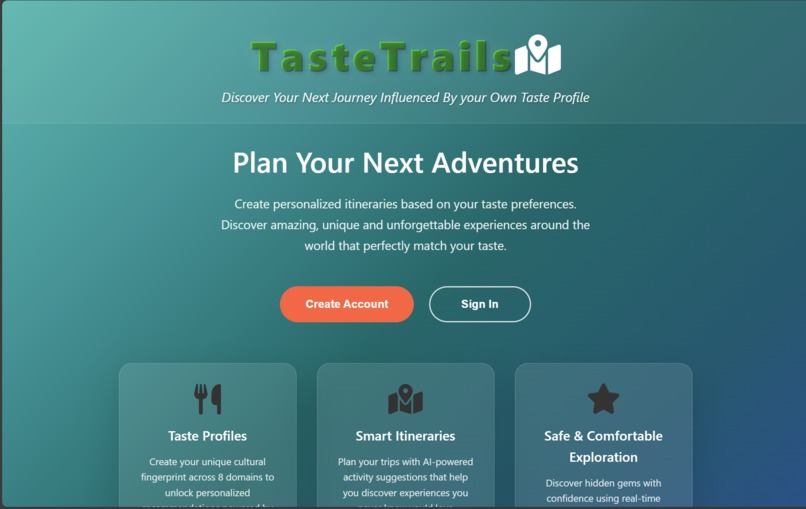
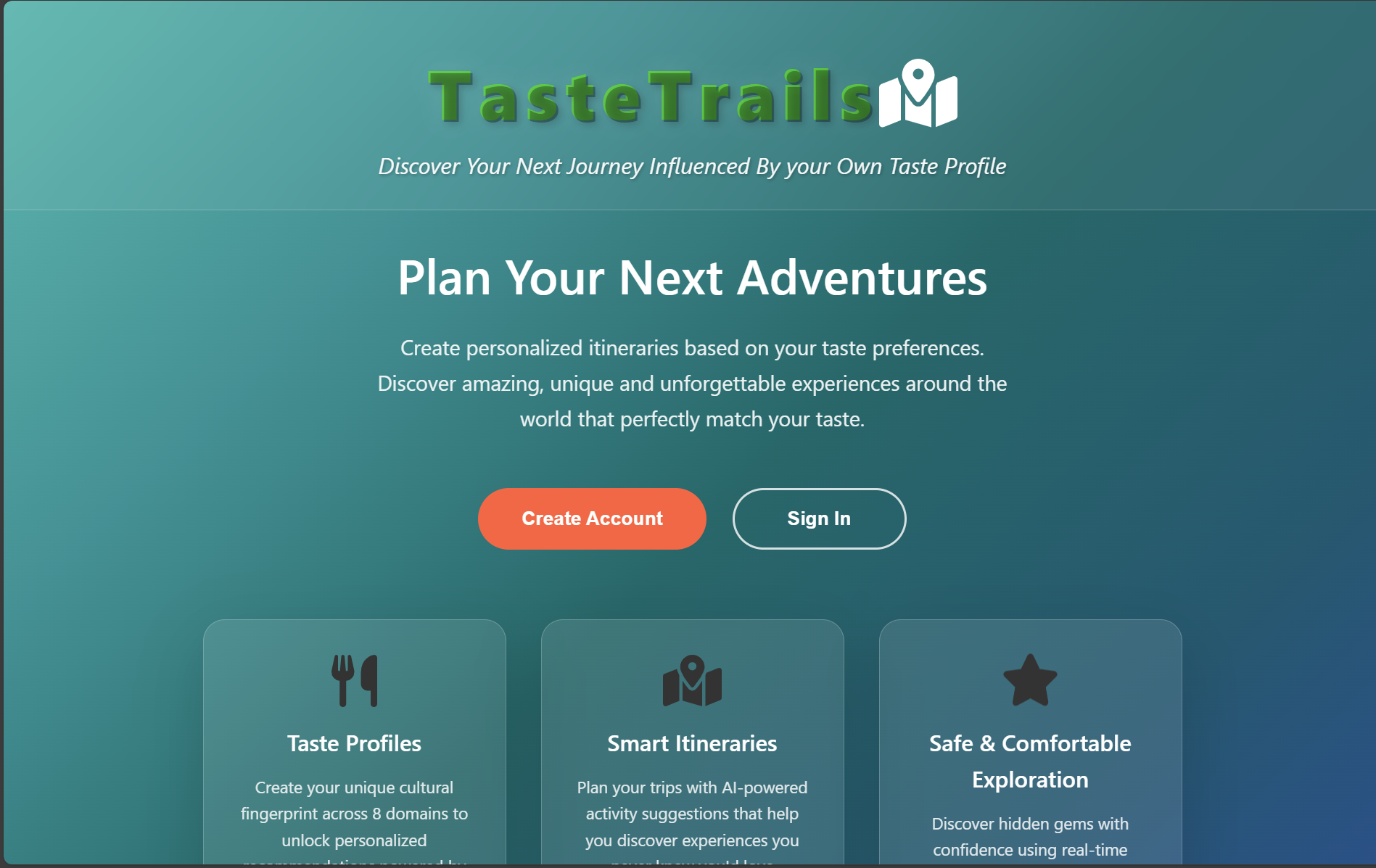
Landing Page
-
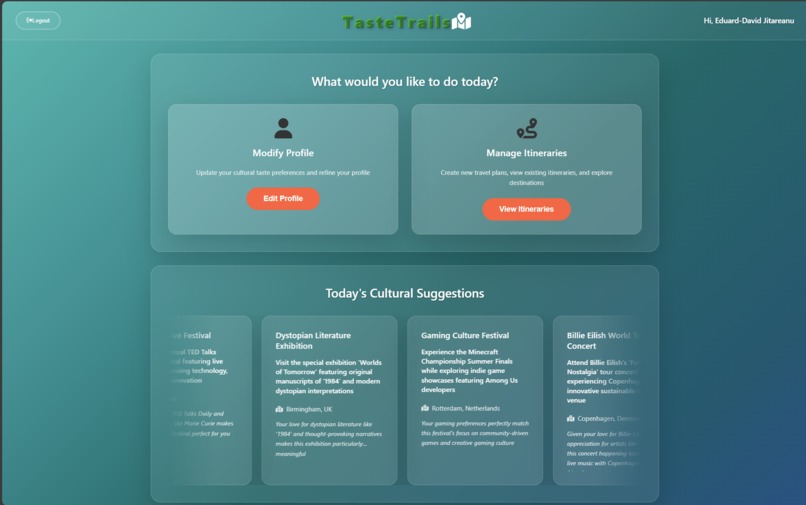
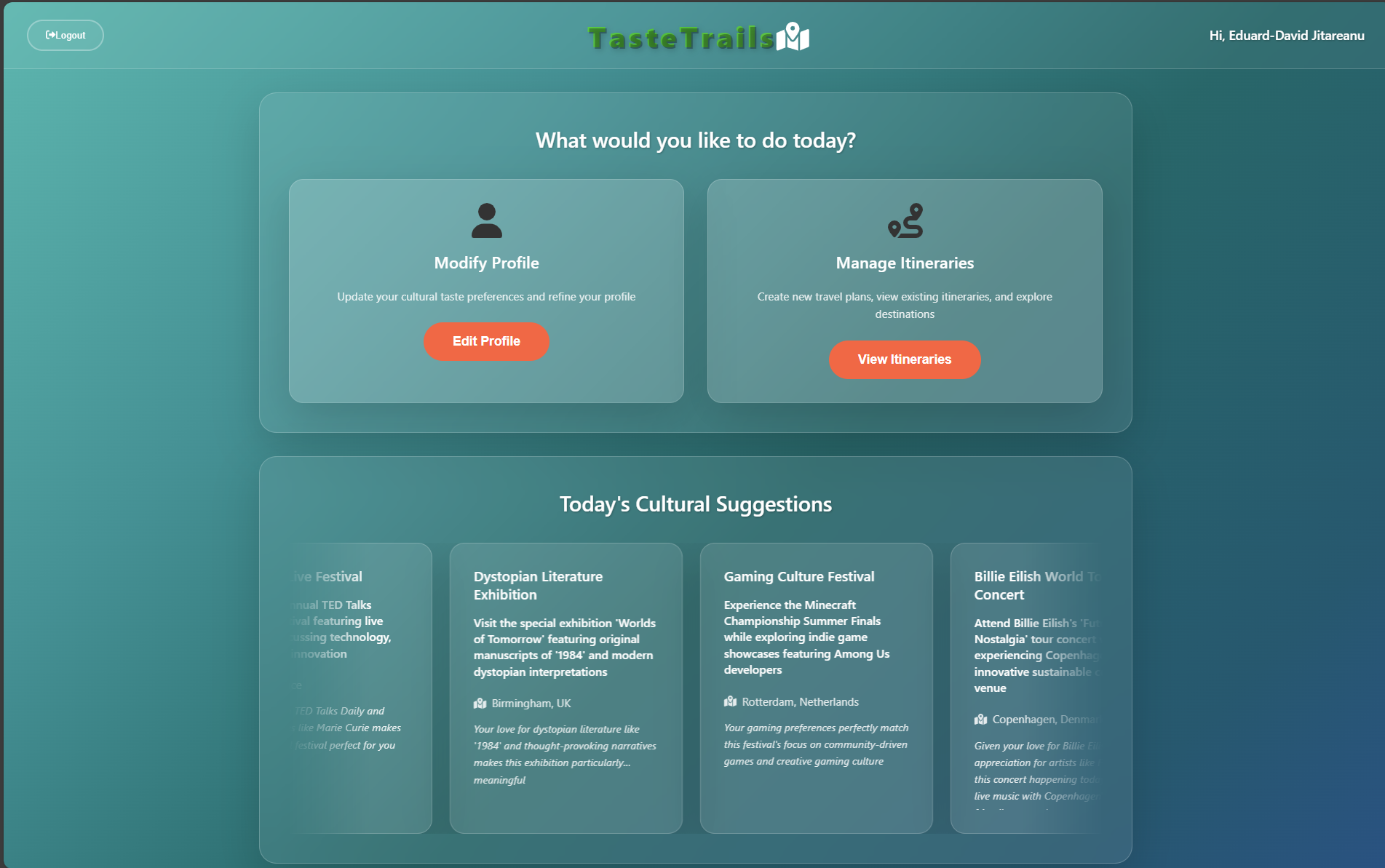
Dashboard Page
-
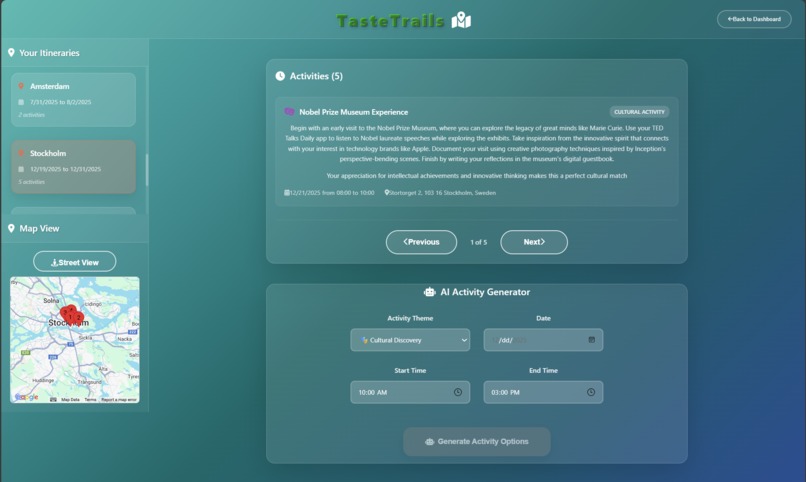
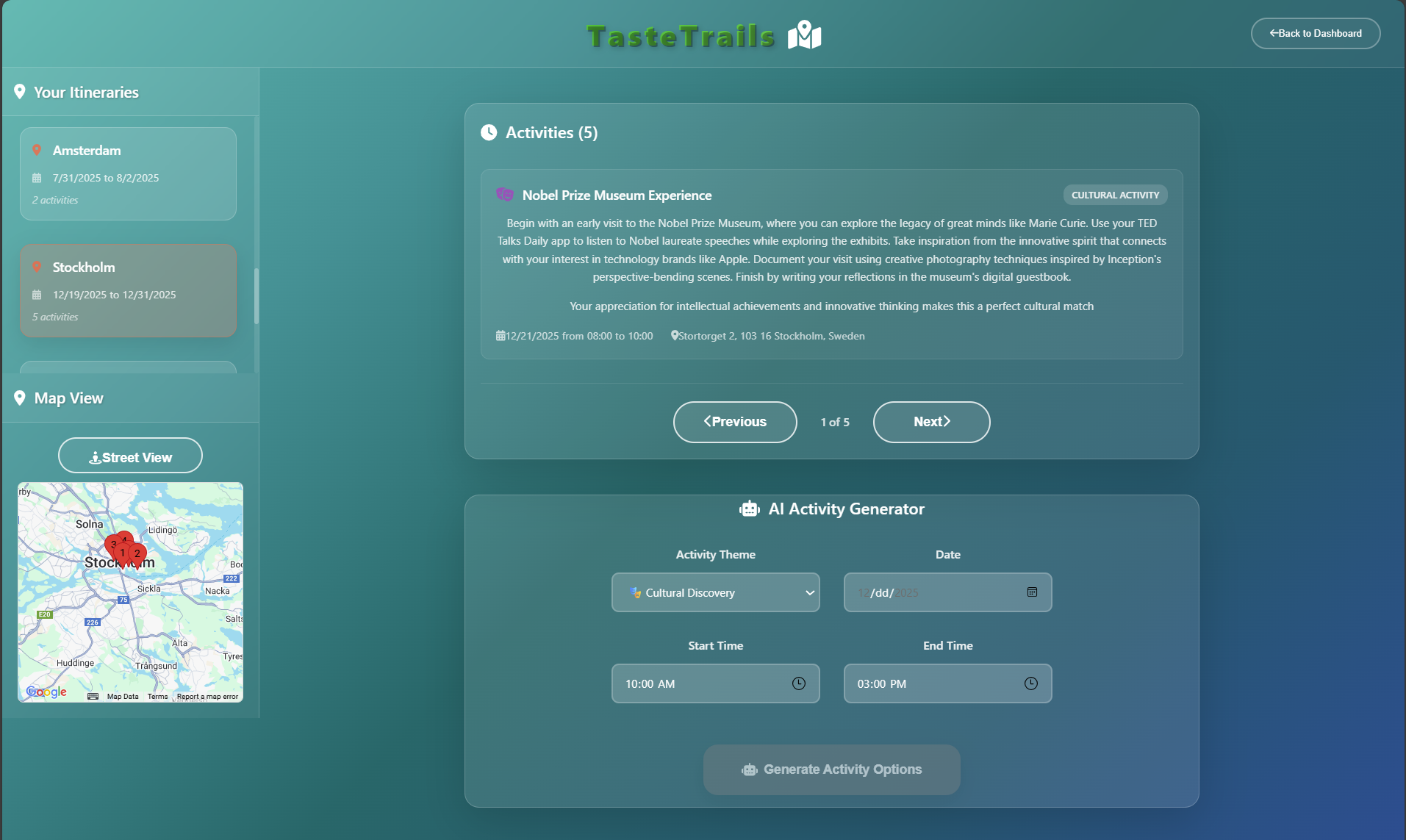
Itinerary Page
-
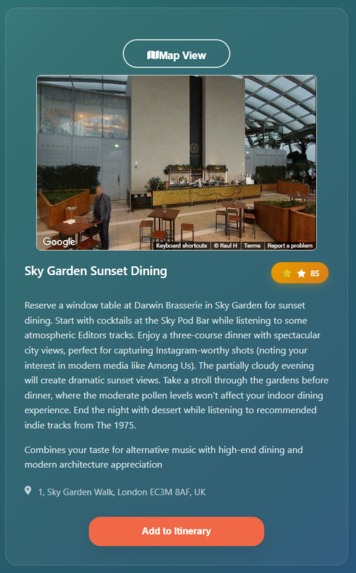
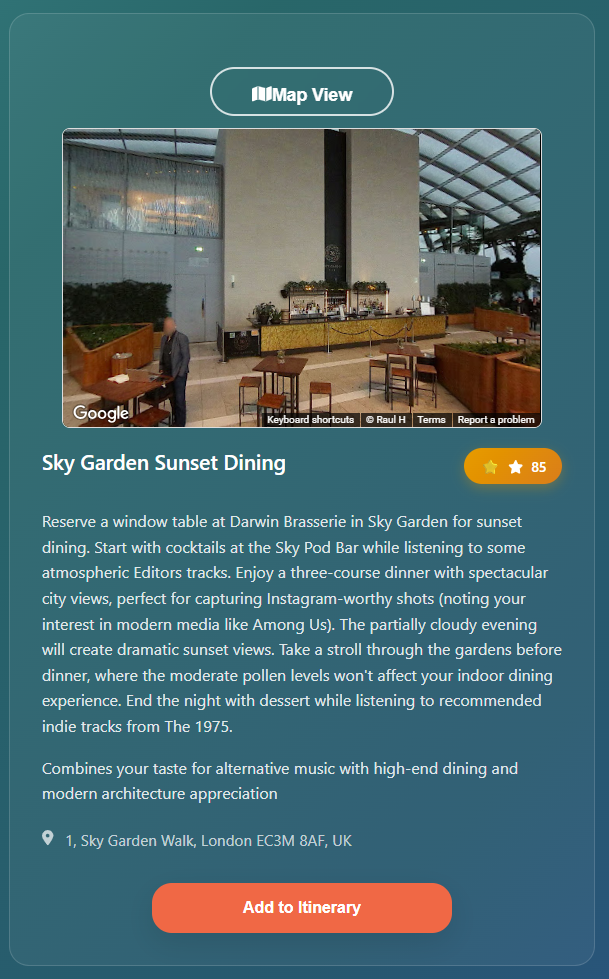
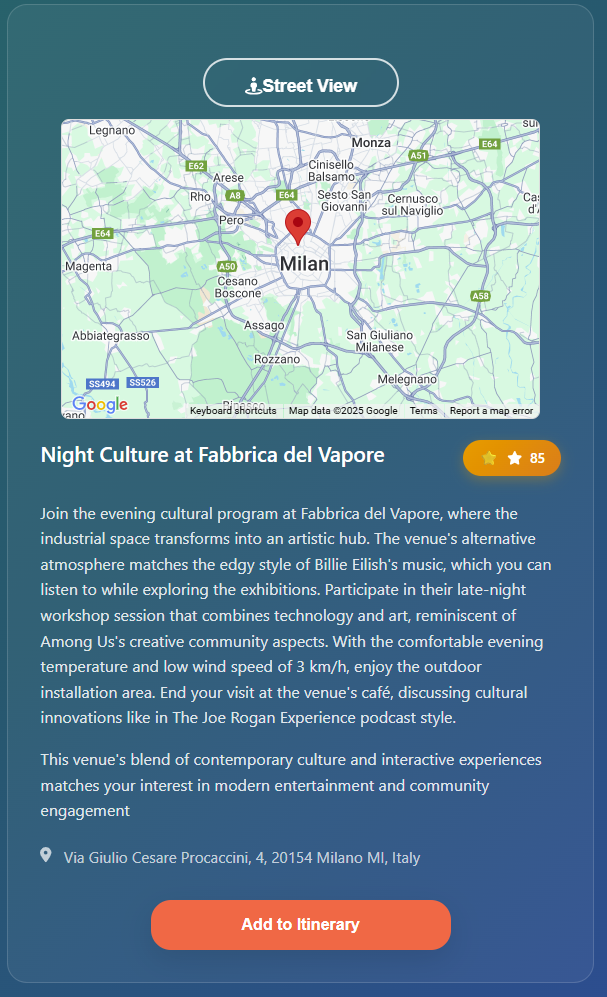
Example of Generated Activity #1
-
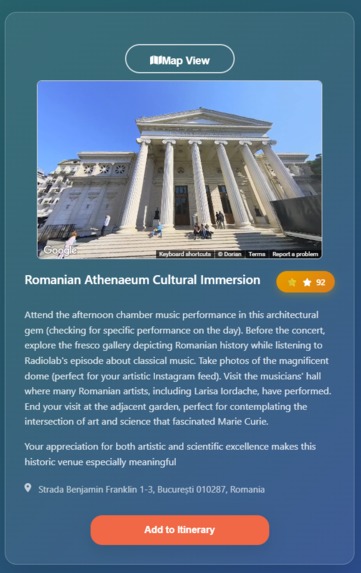
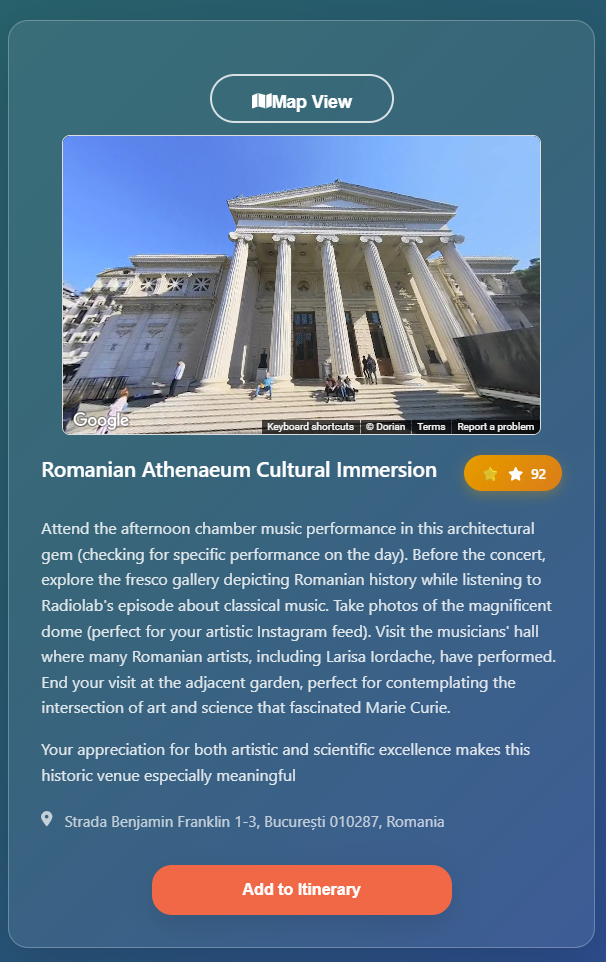
Example of Generated Activity #2
-
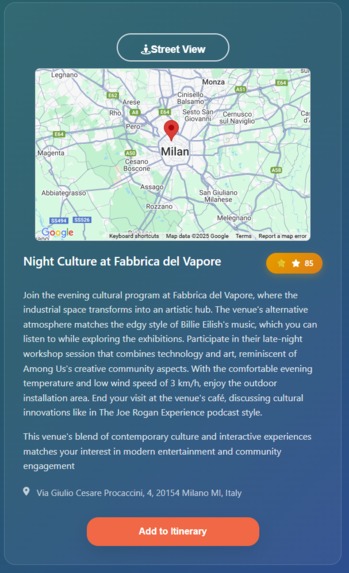
Example of Generated Activity #3
-
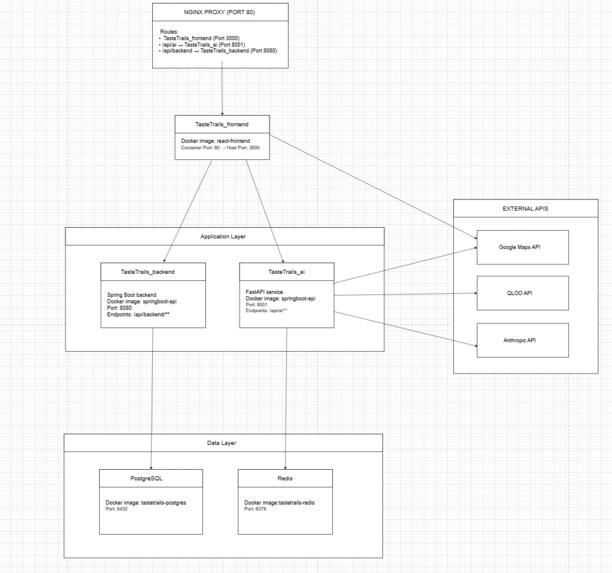
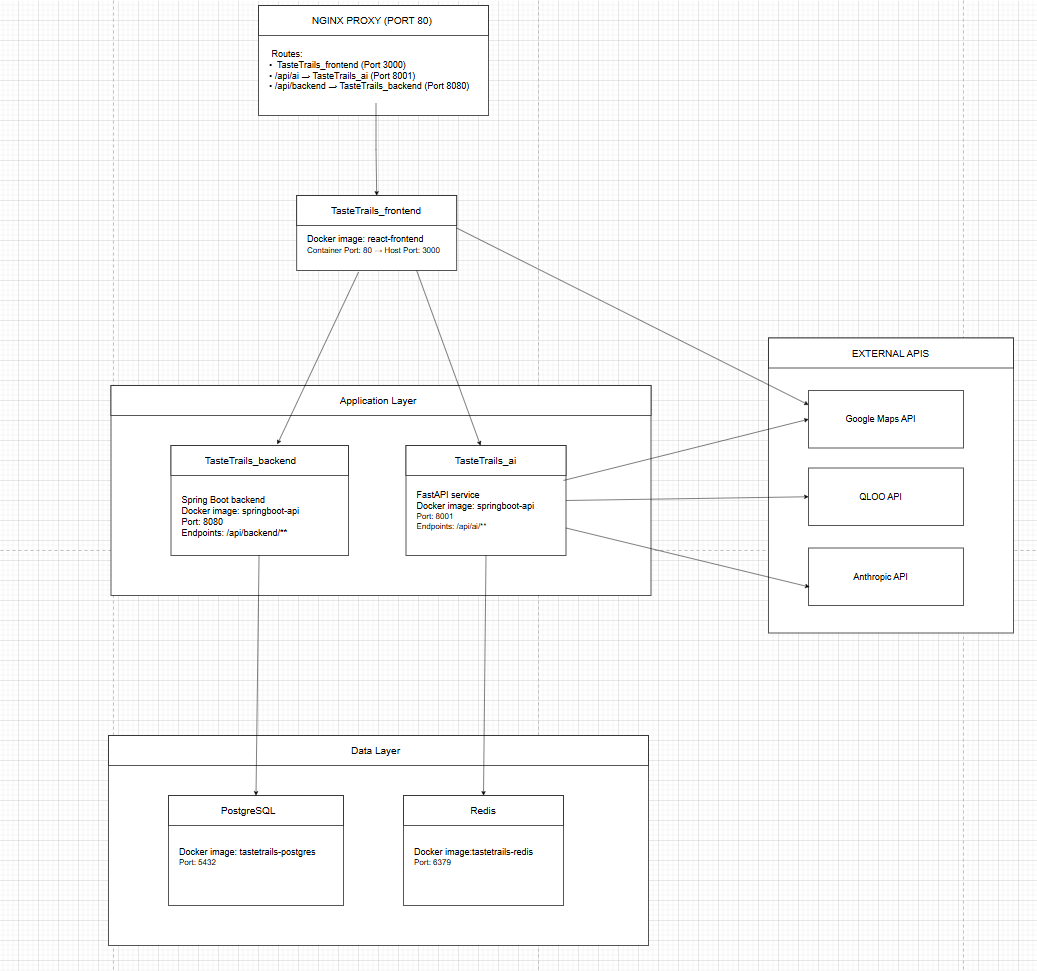
Microservices Diagram
Inspiration
TasteTrails was born from a frustration I've experienced countless times: "Should I even visit this city? Nothing there seems to fit my taste." Too often, I found myself disappointed by destinations because I was seeing them through generic tourist recommendations, missing all the hidden gems that would actually resonate with who I am as a person.
I realized that our entertainment choices - the movies we love, the actors we admire, the books we devour - reveal so much about our personality and what we'd truly enjoy in the real world. Having the opportunity to explore Qloo's cultural intelligence API seemed like the perfect chance to unlock these deep connections and create something truly revolutionary.
What it does
TasteTrails is your AI travel companion that actually understands you. Input your favorite actors, movies, books, brands, video games, TV shows, podcasts, and people - then watch as it creates personalized activities for itineraries that feel like they were designed specifically for your soul.
The platform demonstrates the power of LLM + Cultural Intelligence + Google Maps synergy: Qloo's Taste AI™ maps your preferences across domains to discover unexpected cultural connections, while Claude AI synthesizes this cultural insight with real-world data to generate experiences that genuinely excite you because they align with your unique cultural fingerprint and are optimized for the best environmental conditions thanks to Google Maps Platform data.
How I built it
I designed TasteTrails as a microservices architecture with three core components:
- React + Vite Frontend: Delivers a seamless, intuitive user experience with Google Maps JavaScript SDK integration
- Spring Boot Backend: Connected to PostgreSQL for rock-solid reliability, security, and data persistence
- FastAPI AI Service: Built with client-service-controller architecture, orchestrating external APIs (Qloo, Claude, Google Maps Platform) for intelligent recommendation generation
Each service runs in Docker containers, connected through nginx for production-ready deployment on DigitalOcean.
Challenges I ran into
The biggest challenge was maximizing the synergy between Qloo's cultural intelligence and Claude AI's reasoning capabilities. I had to design a sophisticated pipeline where:
- Qloo's API analyzes user preferences across all cultural domains
- Cross-domain affinities reveal unexpected cultural connections
- Claude AI synthesizes these cultural insights with environmental data to create contextually perfect recommendations
The breakthrough came from caching Qloo's cultural intelligence with Redis, which allowed Claude AI to access rich cultural context instantly, creating a seamless user experience that demonstrates the true power of Cultural Intelligence integration.
Accomplishments that I'm proud of
What makes me most proud is the reaction I get when I demo this to people. They're genuinely speechless when they see how deeply the AI understands their preferences and connects their entertainment choices to real-world experiences they'd actually love.
I'm particularly proud of creating the world's first platform that combines Qloo's cultural intelligence with environmental optimization - proving that cultural understanding can be enhanced with real-world context to create experiences that are both personally meaningful and practically optimized.
I've created something that innovates on multiple levels - cultural intelligence, environmental optimization, AI reasoning, and user experience design. It feels like a true "work of art" in the technical sense, and that level of innovation just inspires me to keep pushing boundaries.
What I learned
- Cultural intelligence: Understanding how Qloo's cross-domain affinities can create unexpected but meaningful connections
- Prompt engineering: Crafting Claude AI prompts that consistently deliver high-quality, contextual recommendations
- Cultural intelligence mastery: Understanding how Qloo's cross-domain affinities create unexpected but meaningful connections that traditional systems miss
- LLM + Cultural Intelligence synergy: Crafting Claude AI prompts that leverage Qloo's cultural insights for contextually perfect recommendations
- Microservices orchestration: Coordinating multiple services with different technologies seamlessly
- Production deployment: Taking a complex multi-service application from development to live production on DigitalOcean
What's next for TasteTrails
I'm honest about TasteTrails' current weaknesses. The application lacks comprehensive testing, which puts it at risk of breaking when new features are added since so many components depend on each other.
Immediate priorities:
- Comprehensive testing suite: Unit tests, integration tests, and end-to-end testing
- CI/CD pipeline: Automated testing and deployment for safer feature additions
- Performance optimization: Database query optimization and API response caching improvements
Future vision:
- Social features: Share itineraries and discover friends with similar cultural DNA or share an itinerary and contribute to activities together
- Routes API Integration: Improve activity generation by checking the time needed to travel from one activity to the next using Google Maps routing
- Mobile app: Native iOS/Android experience with offline capabilities


Log in or sign up for Devpost to join the conversation.