Inspiration
Most travel and cultural discovery platforms recommend places based on popularity, ratings, or trending lists. But popularity does not necessarily mean something matches an individual's interests.
We wanted to build something different: a platform that understands people's cultural preferences and uses them to discover experiences that genuinely match their tastes.
That idea inspired TasteTrail AI — an agentic cultural discovery platform powered by Qloo's Cultural Intelligence Graph.
What it does
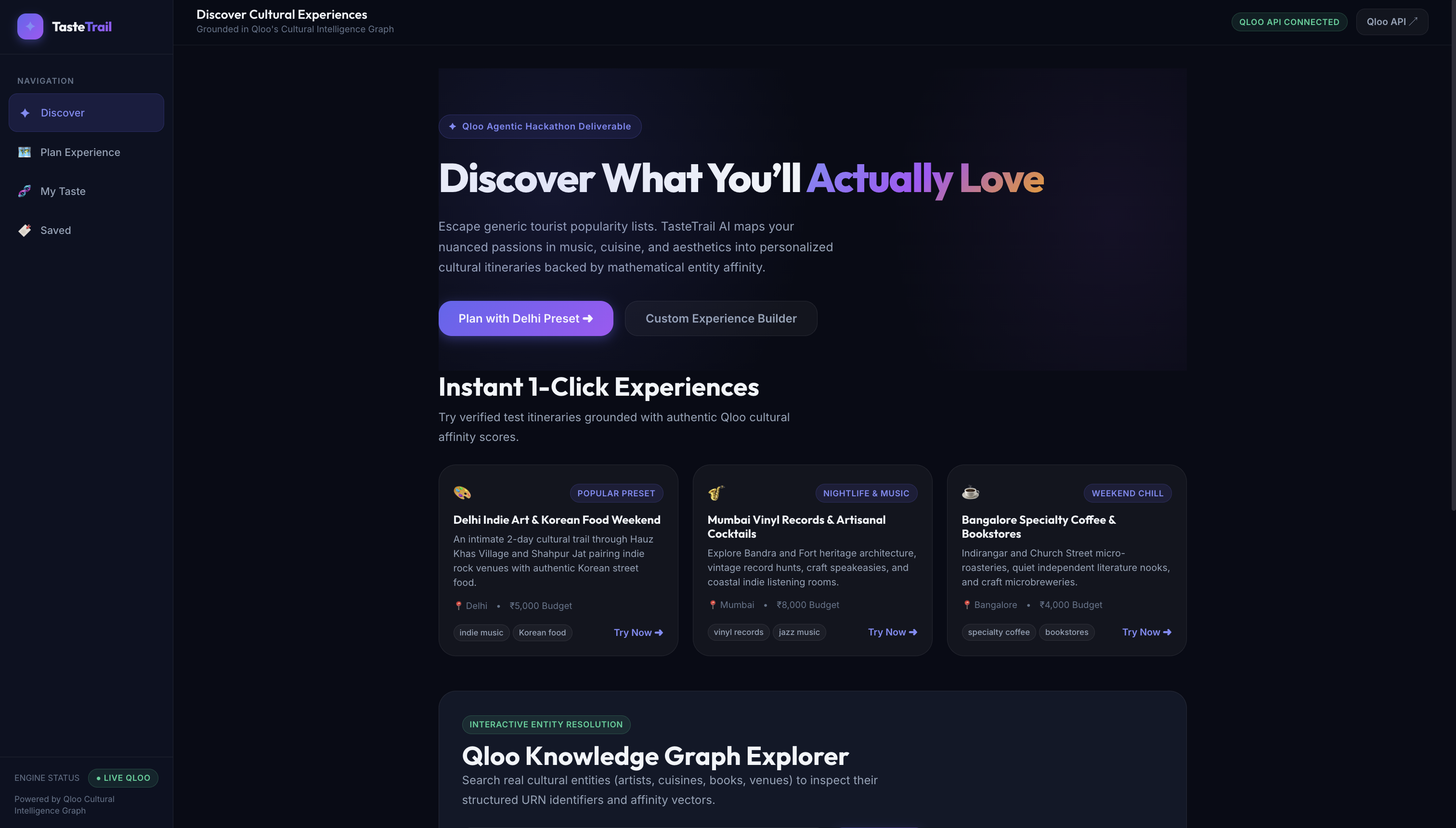
TasteTrail AI transforms interests in music, food, aesthetics, and culture into personalized discoveries and experience itineraries.
Key features include:
- Discover: Explore cultural experiences based on personal interests.
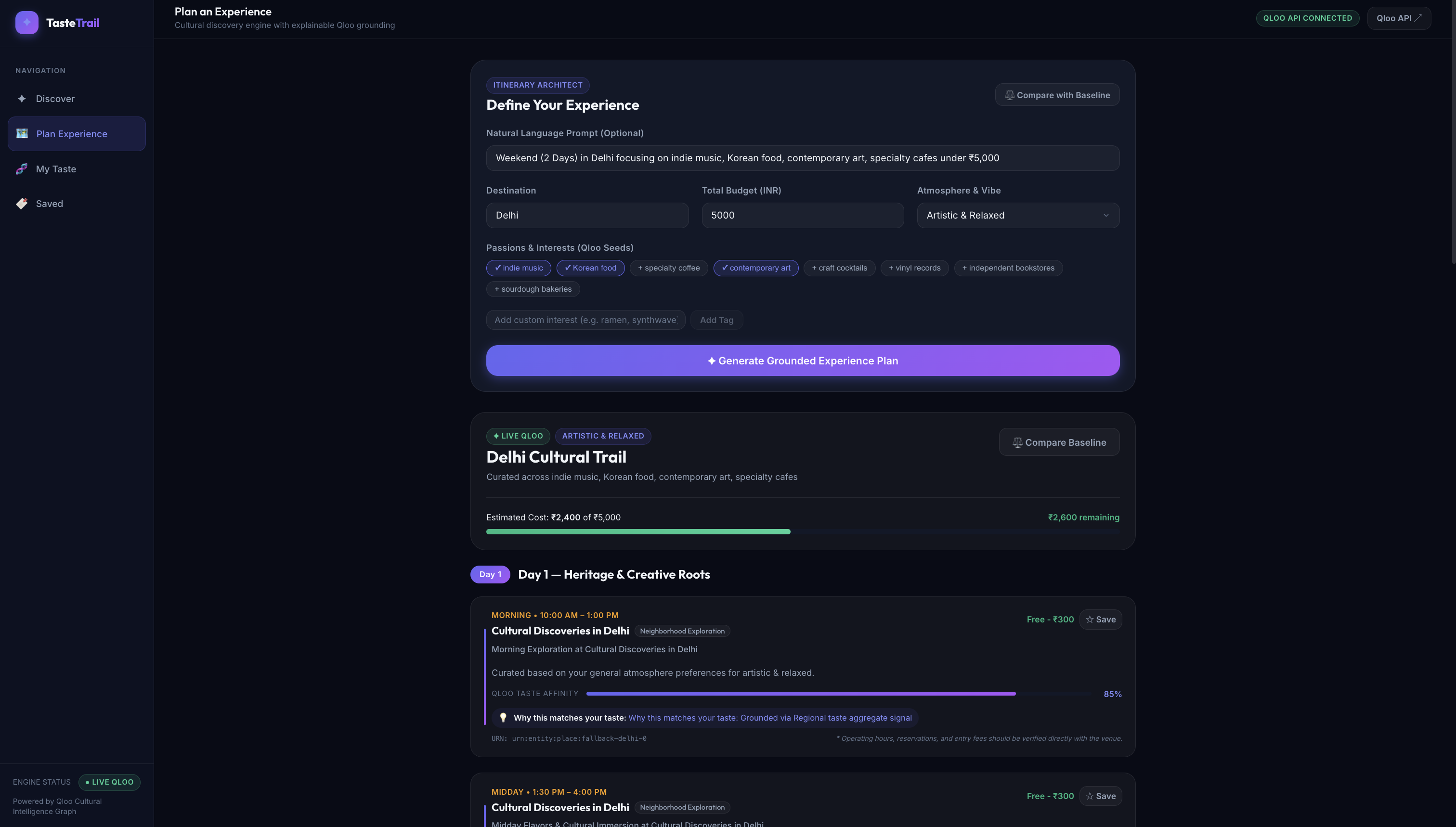
- Plan Experience: Generate personalized cultural itineraries with budget-aware recommendations.
- Conversational Refinement: Adjust plans through natural-language instructions.
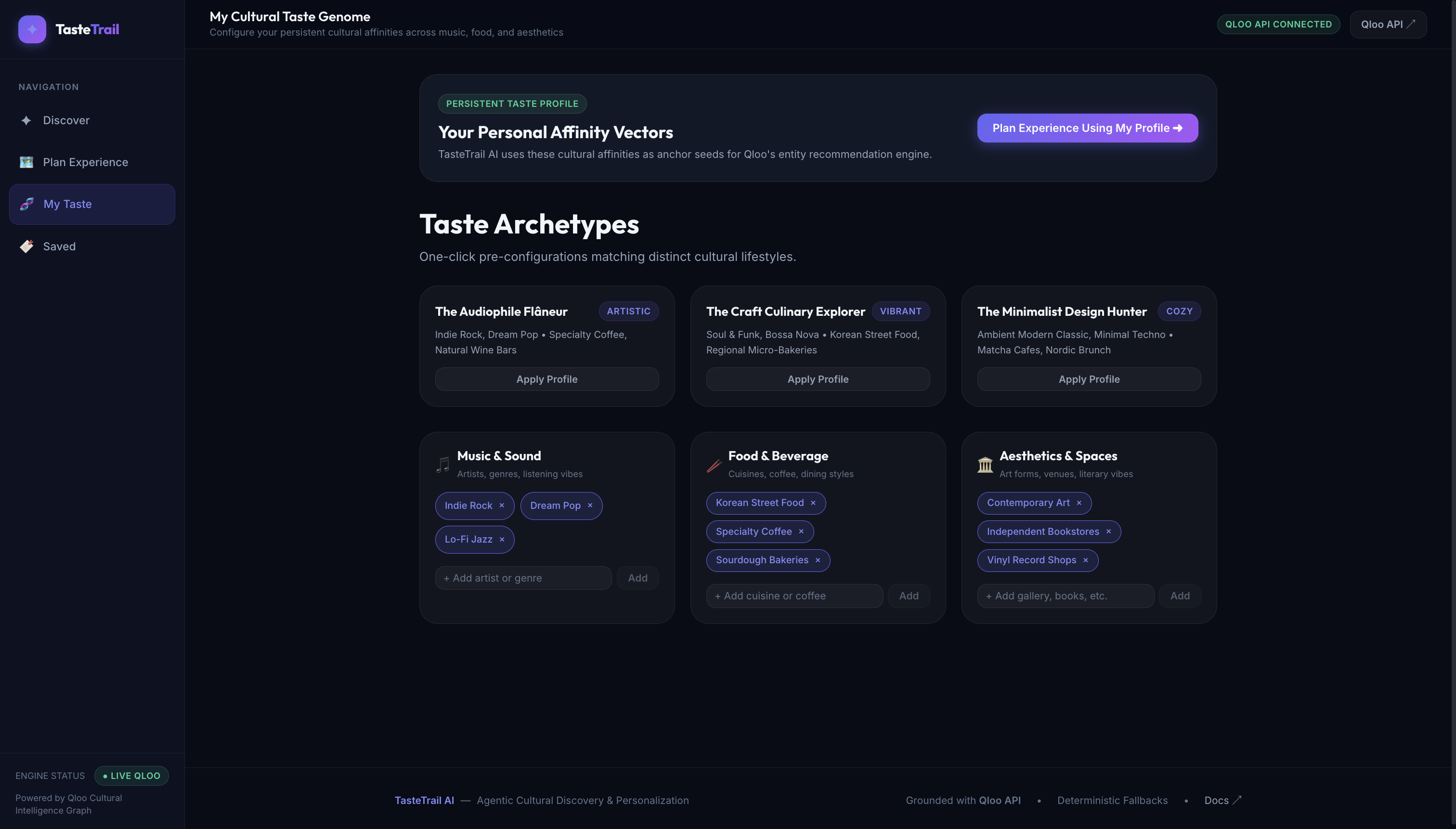
- My Taste: Explore a personalized taste profile and cultural preferences.
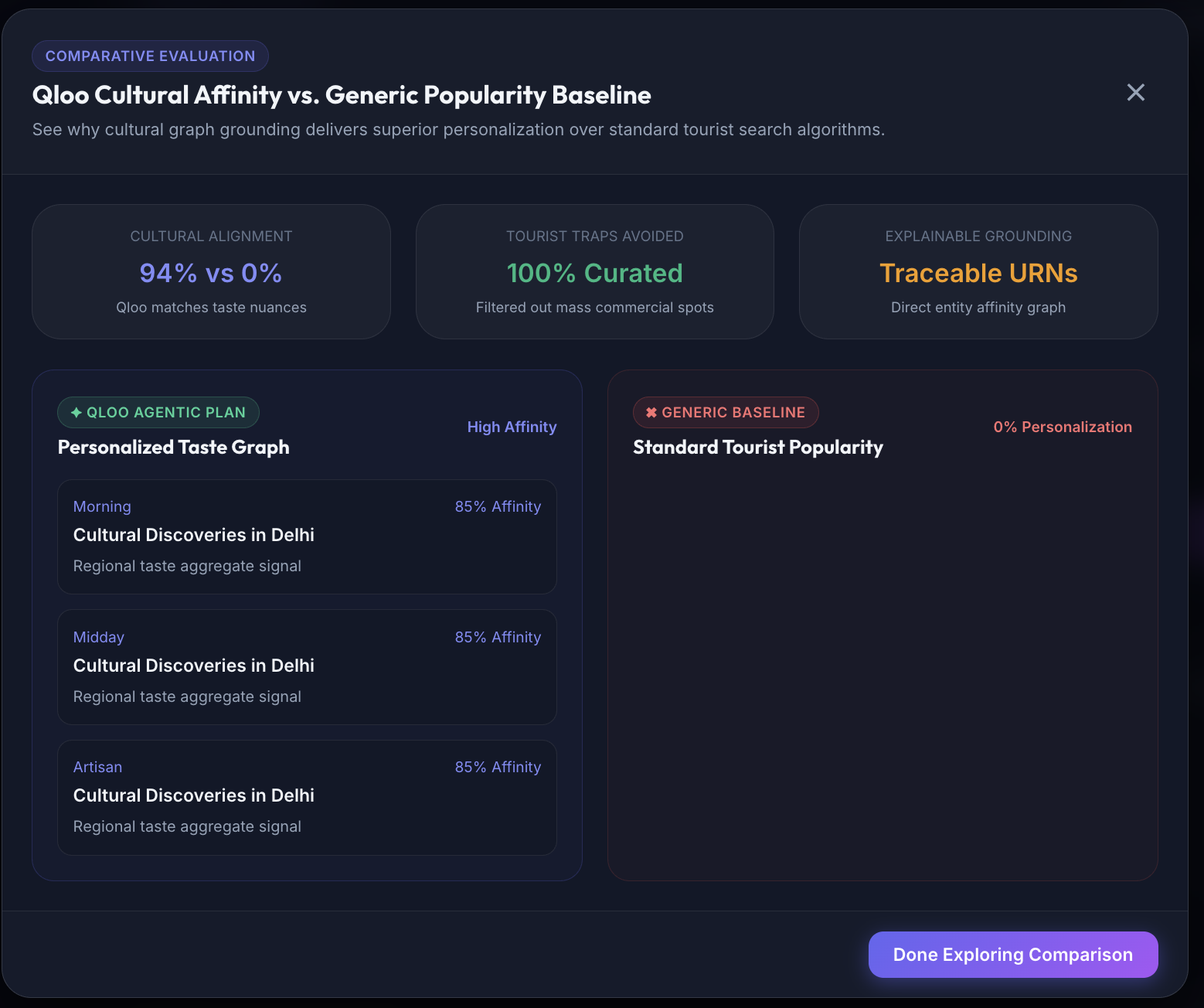
- Qloo vs Generic Comparison: Compare Qloo-grounded recommendations with a generic popularity-based baseline.
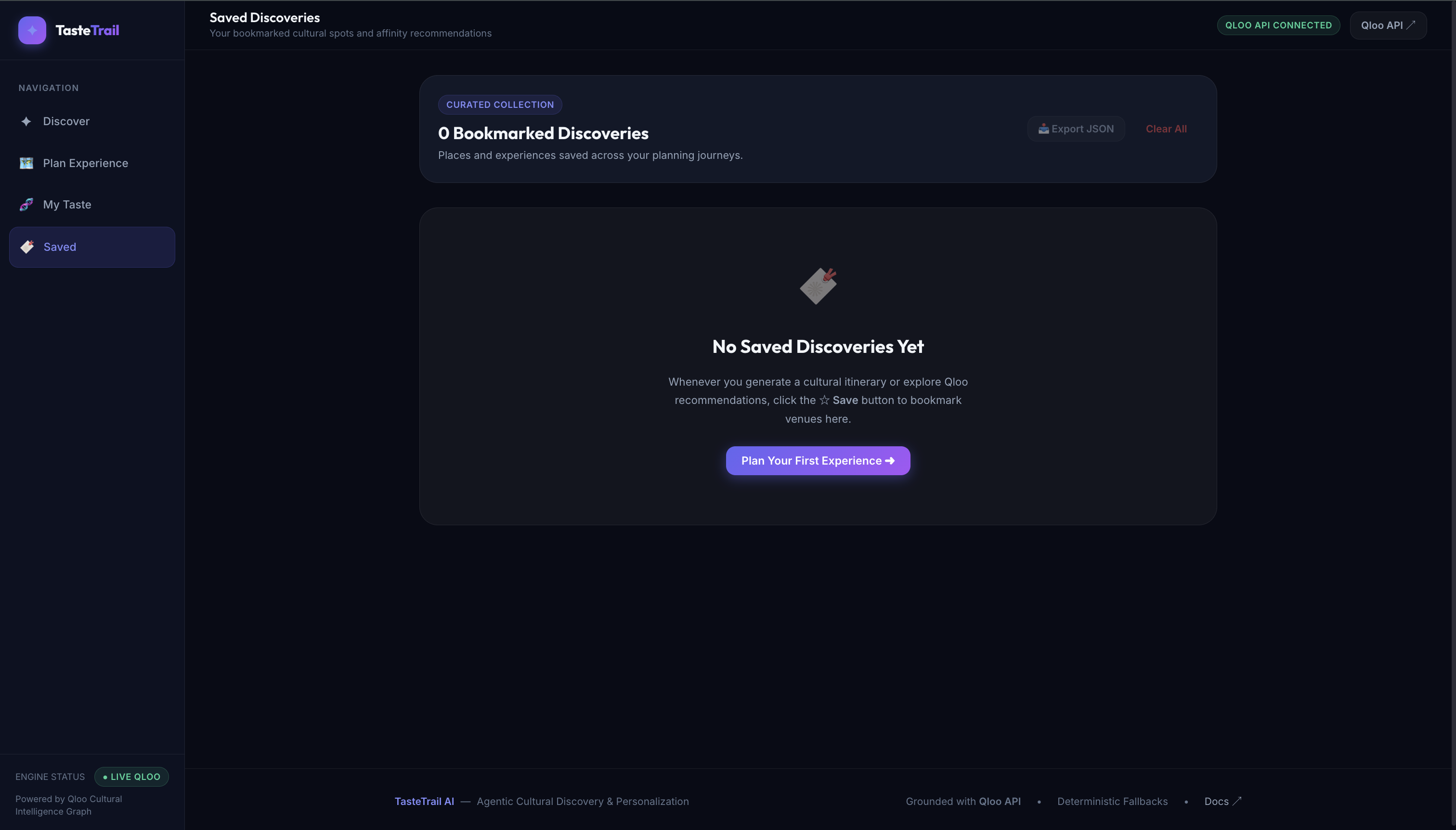
- Saved Discoveries: Keep track of interesting experiences.
- Export: Export generated experience plans as JSON.
How we built it
We built the frontend using React and Vite, with a Node.js and Express backend.
The backend integrates with the official Qloo Hackathon API to retrieve cultural intelligence and use entity affinity signals when generating recommendations.
The application also includes a Demo Mode powered by Qloo-schema fixtures, allowing the experience to remain usable when live API access is unavailable.
The application is deployed as a unified web service on Render, with the frontend and backend served from the same origin.
Challenges we faced
One of our major challenges was integrating live cultural intelligence into a complete recommendation workflow.
We also worked through API error handling, data consistency between frontend and backend, budget calculations, production dependency installation, and deployment configuration.
During deployment, we identified and fixed a production build issue involving Vite dependencies, verified the application with automated tests, and successfully deployed the application.
What we learned
Building TasteTrail AI helped us understand how cultural intelligence can make recommendations more meaningful than generic popularity-based suggestions.
We also gained practical experience with API integration, backend architecture, agentic workflows, testing, environment configuration, and deploying a full-stack application.
What's next
We aim to improve taste-profile learning, expand cultural discovery categories, enhance recommendation explanations, and make personalized experience planning even more useful.
TasteTrail AI — Discover What You'll Actually Love.
Built With
- css
- express.js
- html
- javascript
- node.js
- qloo-api
- react
- rest-api
- vite


Log in or sign up for Devpost to join the conversation.