-
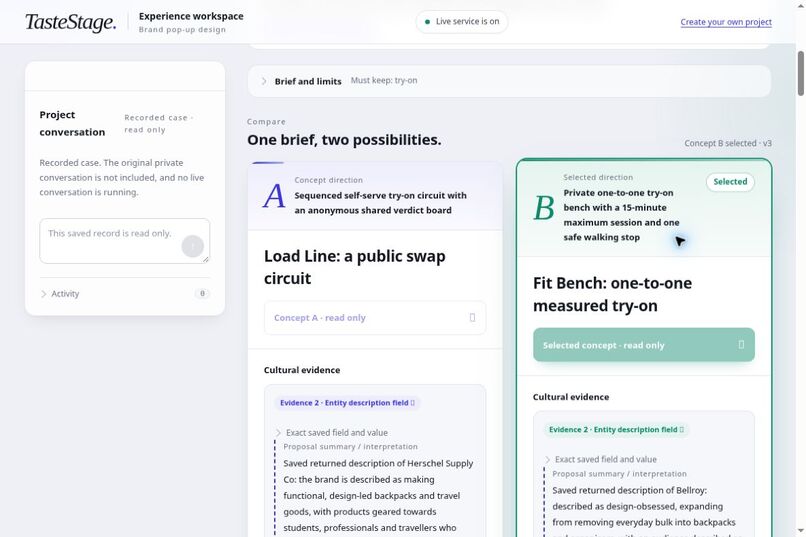
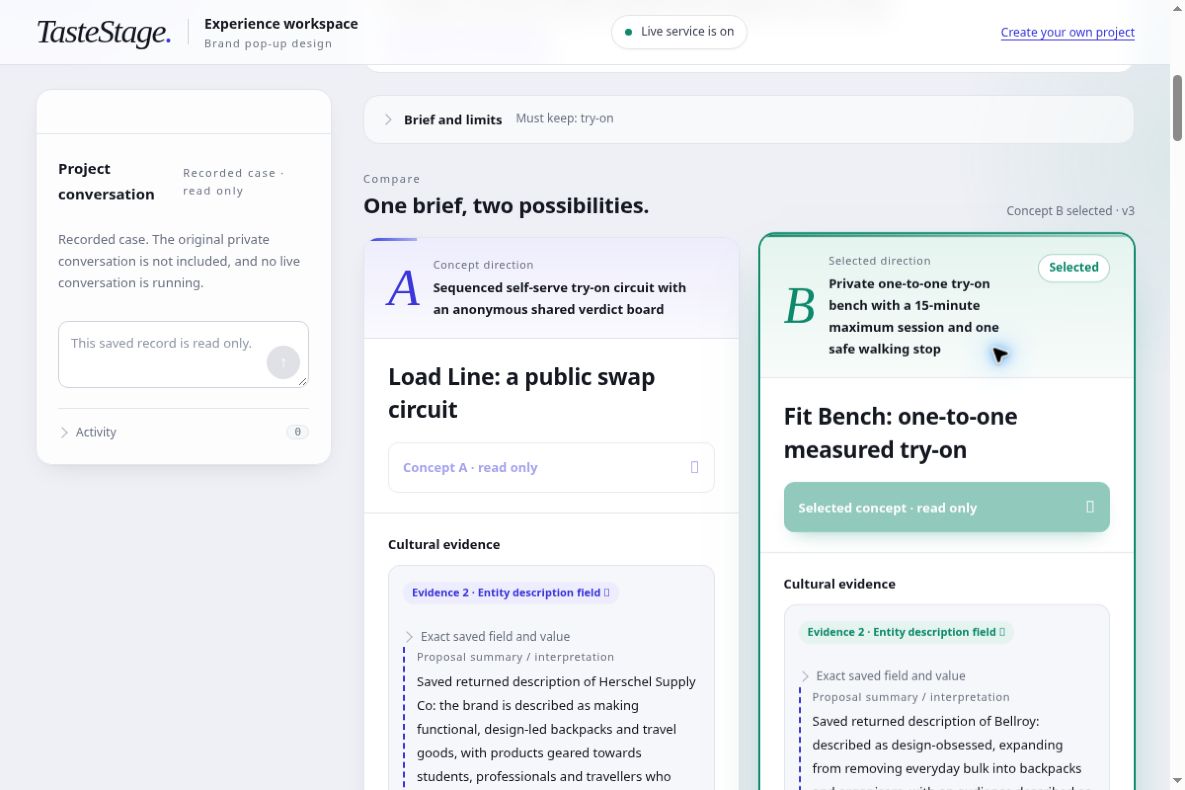
Compare two distinct participation concepts and choose a direction.
-
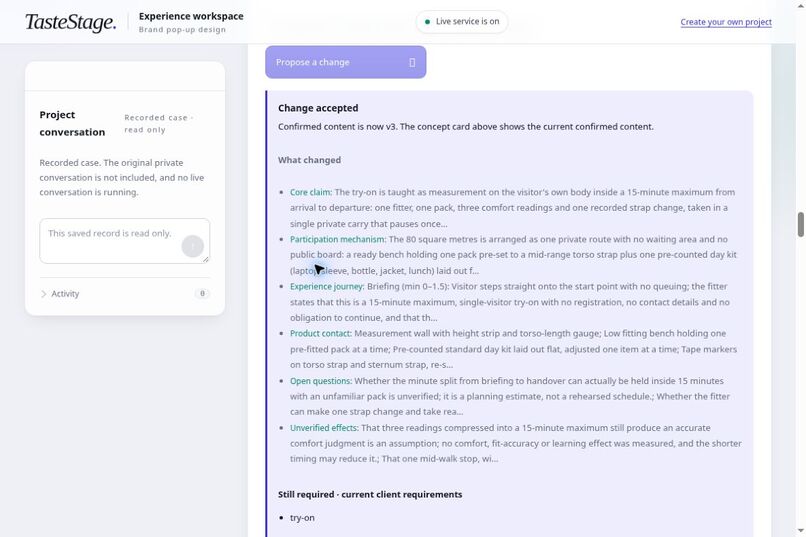
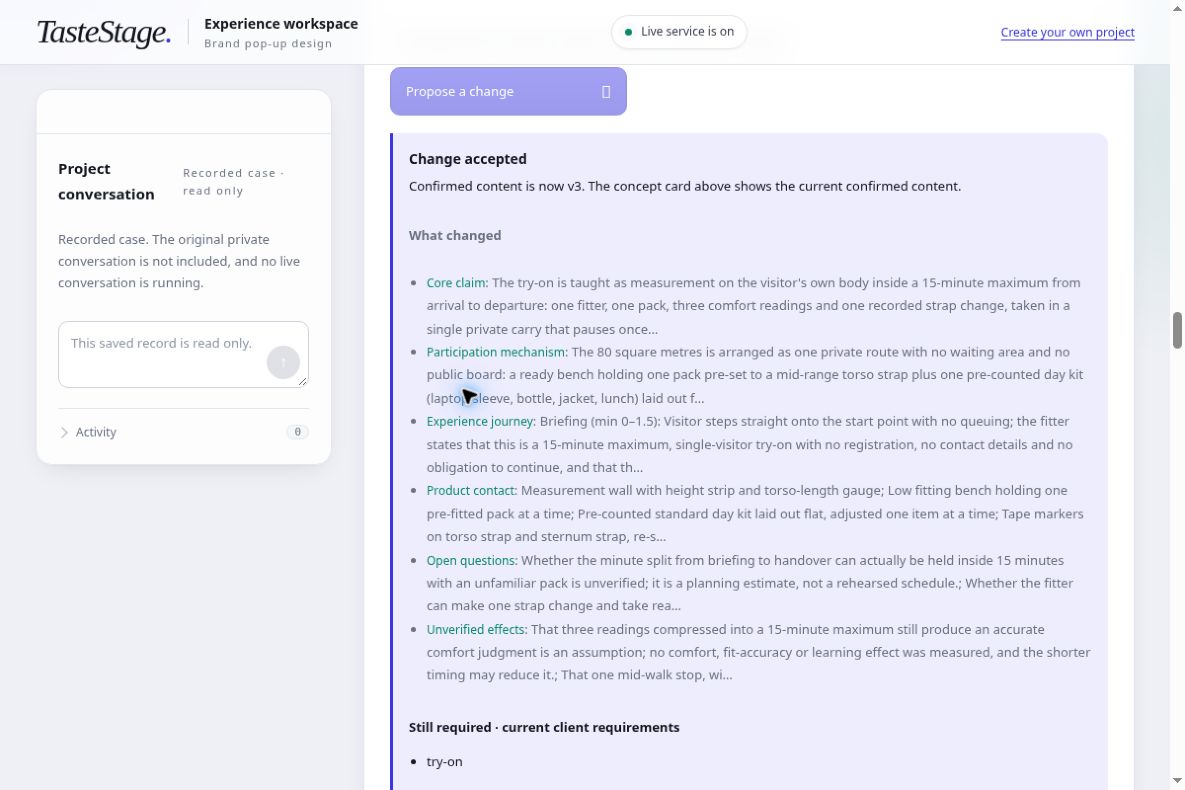
Review accepted v3 changes while preserving the brief’s requirements.
-
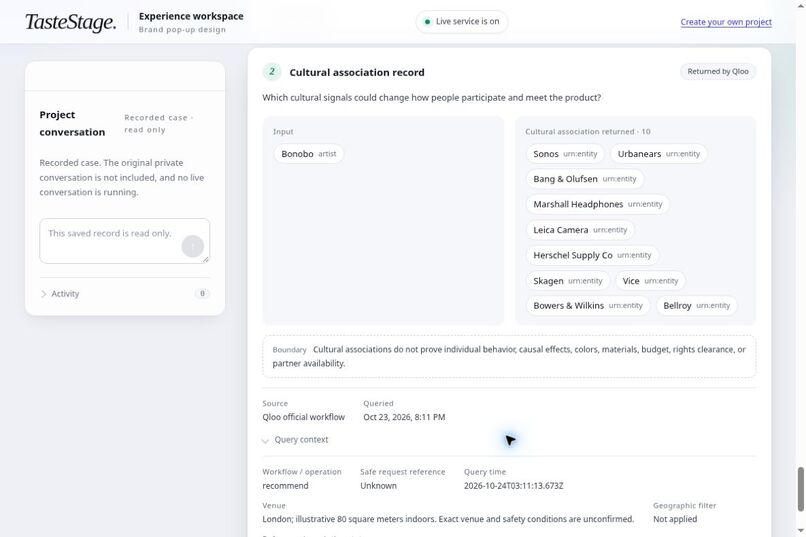
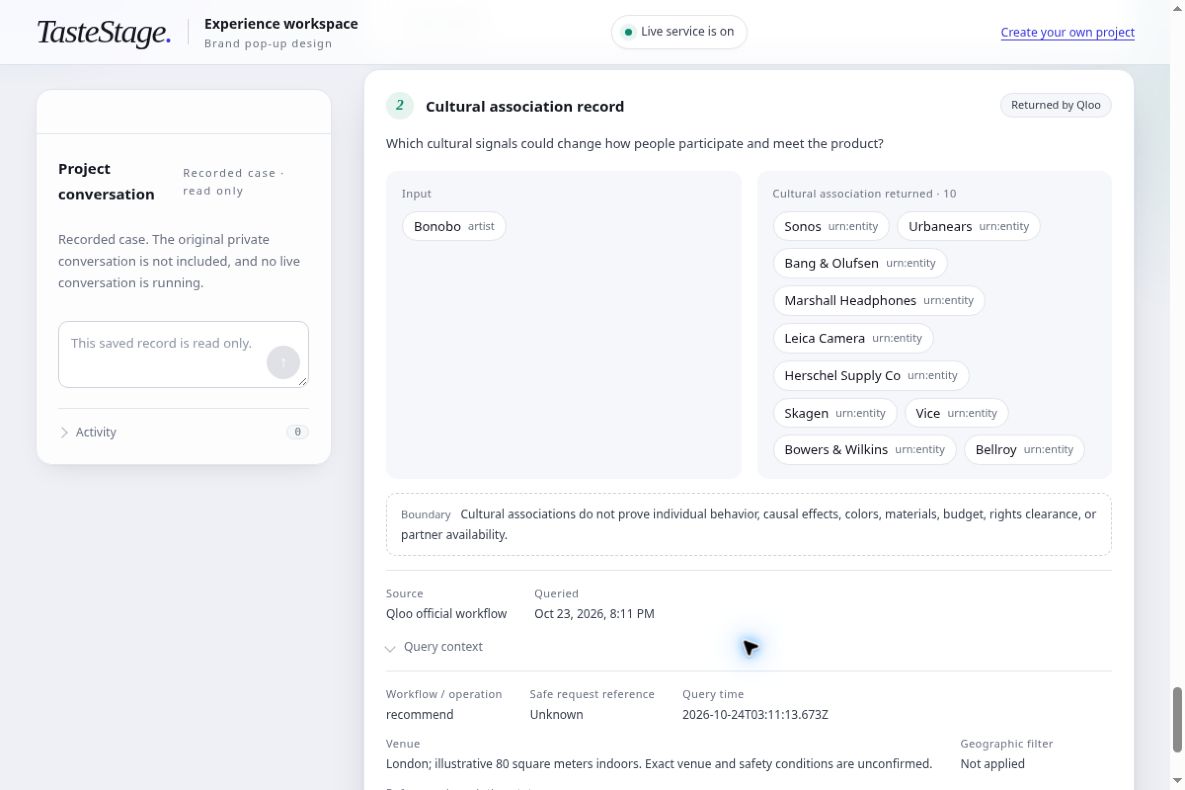
Trace design decisions to recorded Qloo associations and query context.
-
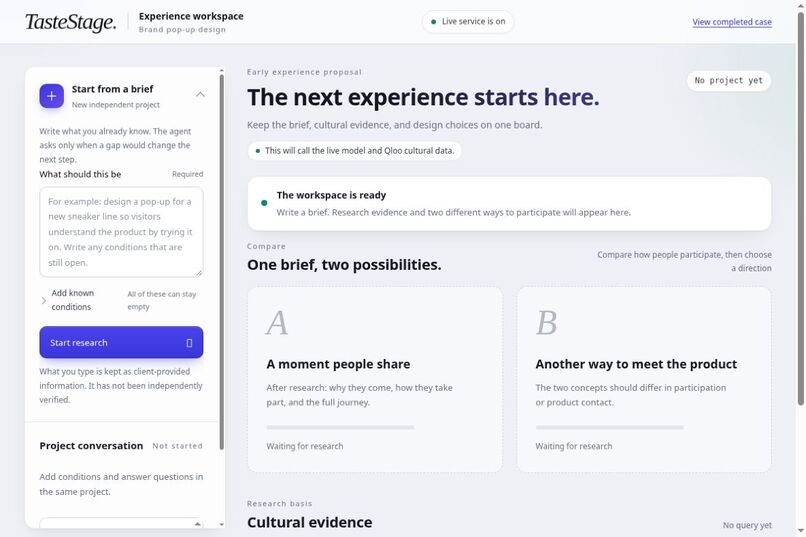
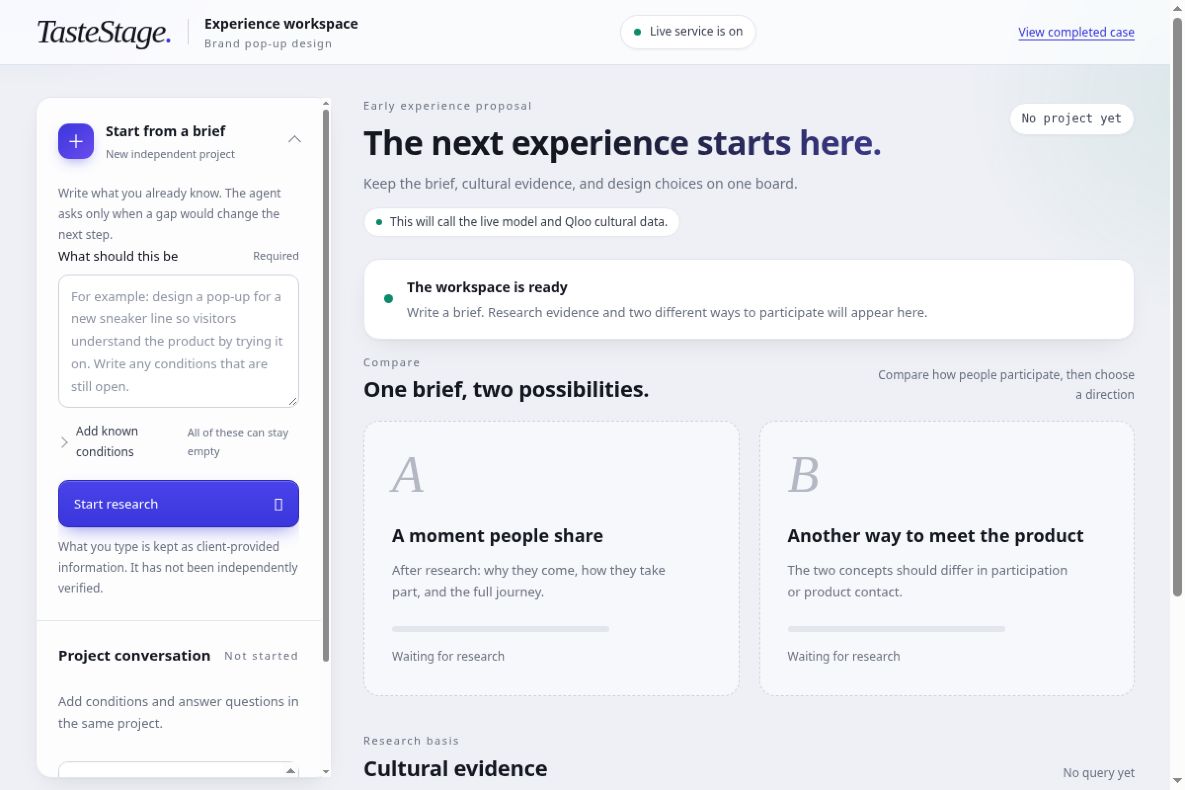
Start with a brand brief and develop an evidence-backed experience proposal.
Inspiration
A good brand experience needs more than a mood board. It needs a reason to participate, a meaningful encounter with the product, and a clear explanation of why the idea fits the brief. TasteStage connects cultural research with those design decisions, while keeping people in control of revisions.
What it does
TasteStage turns a brand brief into two distinct pop-up experience proposals. Users describe the product, audience references, venue, goals, and constraints. The agent researches cultural signals through Qloo, asks for clarification when needed, and proposes different ways for visitors to participate and encounter the product.
Users can compare the concepts, select a direction, lock important fields, and request changes. Revisions appear as reviewable differences rather than silently replacing the confirmed proposal. After acceptance, the updated proposal can be exported as Markdown. Saved projects can be reopened in the same browser.
How Qloo makes a difference
TasteStage uses the official Qloo harness to resolve cultural references and explore related places and brands. Evidence cards preserve the returned information and query context, allowing users to distinguish data from design interpretation.
Our recorded case uses Rill, a fictional daypack brand, and Bonobo, confirmed as the electronic artist, as a research signal. Qloo returned recommendations for London places and brands. These references informed two different participation formats: a self-paced swap circuit and a guided fit bench. The case then shows human feedback, a locked concept name, and an accepted revision aligned to a 15-minute experience.
These are design inferences, not proof of audience preferences or event performance. The value of Qloo is a traceable cultural discovery path, rather than an uncited list of ideas generated by an LLM alone.
How we built it
The interface uses HTML, CSS, and JavaScript, with a Node.js backend integrating the official Qloo harness and agent runtime. Production is hosted on Vercel with PostgreSQL persistence. Model and Qloo credentials remain server-side.
The application validates evidence references, project ownership, versions, constraints, and locked fields before applying changes. A failed live request does not silently fall back to a synthetic proposal. A separate read-only completed case lets judges inspect recorded work before starting an independent live project.
Challenges and what we learned
The hardest part was keeping evidence, interpretation, and approval separate. Cultural associations should not become invented audience facts, and a small editing request should not overwrite a confirmed concept.
We also addressed interrupted project creation, cross-project failure isolation, and consistency between accepted revisions and exports. These challenges reinforced the importance of testing real user journeys, not just individual functions.
What we are proud of
TasteStage connects research, two genuinely different participation concepts, human review, and a usable proposal in one workspace. The recorded case makes the reasoning and accepted changes inspectable instead of presenting an unexplained final answer.
What is next
We want to test real briefs with experience designers and assess whether the evidence and revision workflow improve their decisions. TasteStage currently produces early proposals, not construction plans or safety approval. Feasibility, accessibility, rights, supplier availability, costs, and business outcomes still require human validation.
Built With
- css3
- html5
- javascript
- node.js
- postgresql
- qloo
- vercel

Log in or sign up for Devpost to join the conversation.