-
-
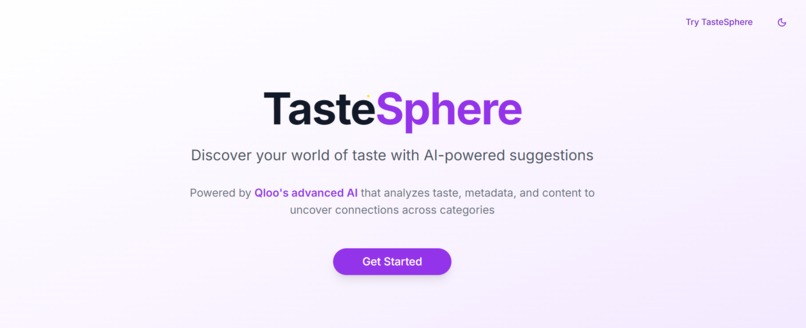
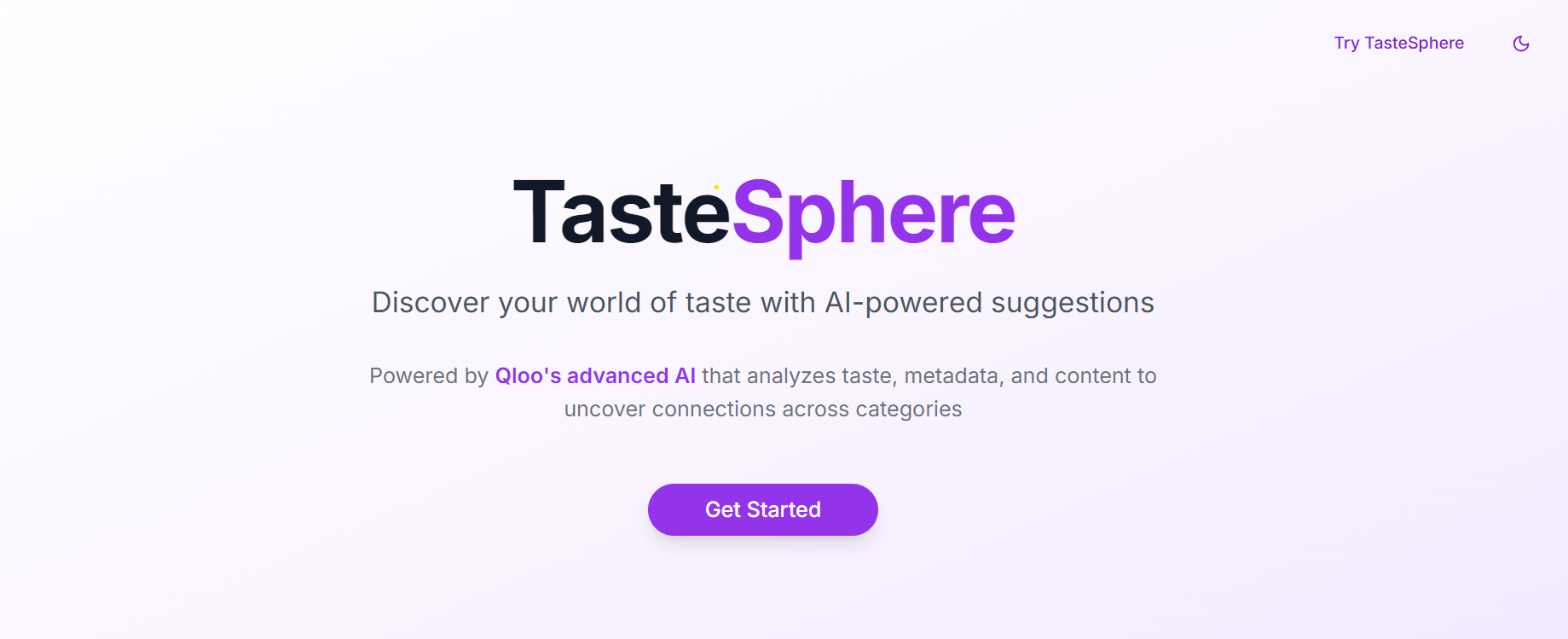
TasteSphere
-
AI Suggestions
Inspiration
We were inspired by the idea that cultural discovery can be more personal, meaningful, and focused. While many platforms offer broad recommendations, we wanted to create a system that allows users to explore deeply within one interest type at a time — whether it’s movies, places, video games, or beyond — powered by real cultural data and natural language understanding.
What it does
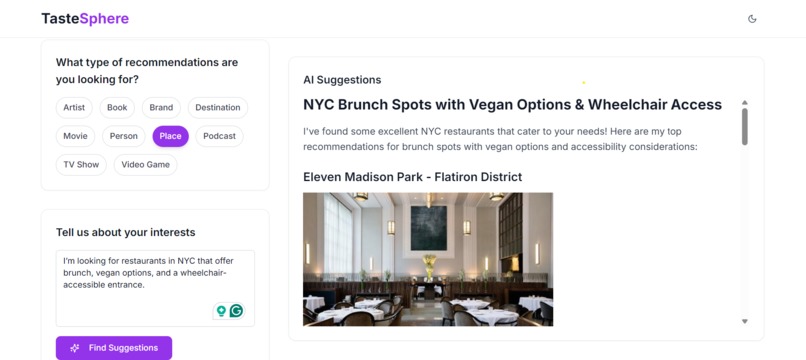
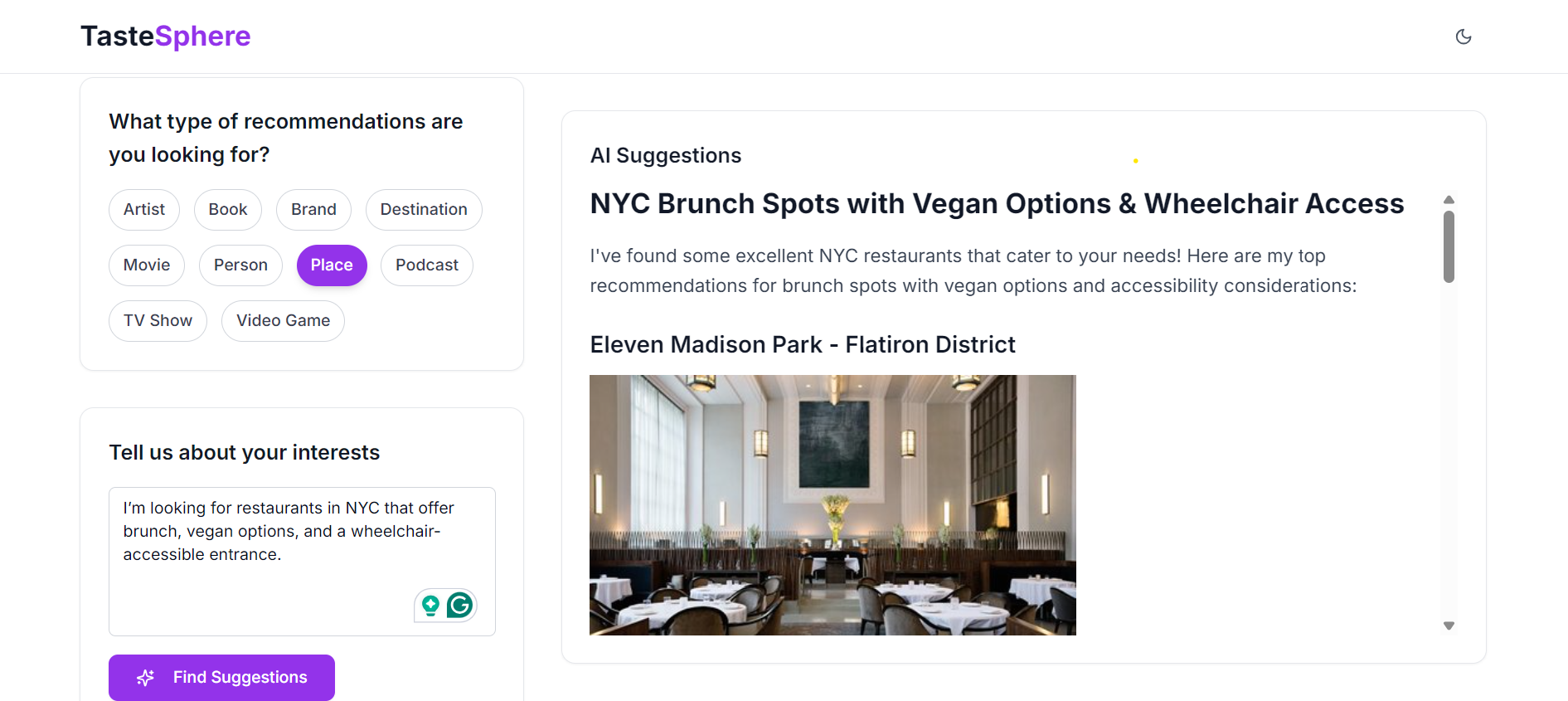
TasteSphere is a personalized cultural discovery tool. The user selects a single interest type (e.g., movie, place, or podcast) and then enters a free-form prompt describing their tastes, feelings, or preferences. TasteSphere returns curated results from that specific domain, grounded in real data.
Example:
“I’m looking for restaurants in NYC that offer brunch, vegan options, and a wheelchair-accessible entrance.”
TasteSphere parses the intent, queries Qloo to find relevant content in the selected domain, and generates a rich, readable response — complete with summaries, visuals, and more.
How we built it
- Backend: Python + Django
- Frontend: React + Tailwind CSS
- AI Stack:
- Claude 4 Sonnet (via AWS Bedrock) is used in two places:
- To parse the user's natural-language prompt and extract parameters like:
signal.interests.entitiesfilter.location.queryfilter.tags
- To generate the final user-facing response, based only on the selected interest type and Qloo insights.
- Cultural Data: Qloo API is used in two steps:
- Called with extracted keywords to fetch relevant entity and tag IDs
- Called again with those IDs + interest type to get a curated list of recommendations
- Output Generation: Claude 4 Sonnet takes both the Qloo data and original user intent to generate the final, grounded, helpful recommendation.
Challenges we ran into
- Building a multi-step AI pipeline where Claude is used twice in different roles (parsing and generation)
- Mapping vague natural language into structured query parameters acceptable by Qloo
- Handling Qloo edge cases where data was missing or sparse
- Making sure the final AI response remains grounded in Qloo’s data, not general hallucination
Accomplishments that we're proud of
- Integrated Claude 4 Sonnet with Qloo in a seamless, structured prompt flow
- Developed a robust backend using Django to orchestrate multi-stage data flow
- Created a system that makes focused discovery more creative and intelligent
- Built a clean and extendable frontend that shows insights in a compelling way
What we learned
- The power of using language models to bridge user input and structured APIs
- How to split the roles of a model between understanding and generation
- Real-world API integration with cultural data sources like Qloo
- The value of separating AI reasoning and data retrieval into modular components
What's next for TasteSphere
- Explore voice and image-based input
- Enable daily AI-generated discovery emails
- Add Google Authentication and user profile saving to keep track of favorites

Log in or sign up for Devpost to join the conversation.