Inspiration
We noticed a big gap in the current AI landscape: generative LLMs are great at sounding convincing, but they frequently fabricate cultural affinities and "hallucinate" taste. An agent might recommend a niche wine bar claiming an "intimate 0.88 affinity match" with a user's indie music taste—without any real proof or empirical backing. In commerce, travel, and retail, these ungrounded, fabricated recommendations lead to a major drop in user trust.
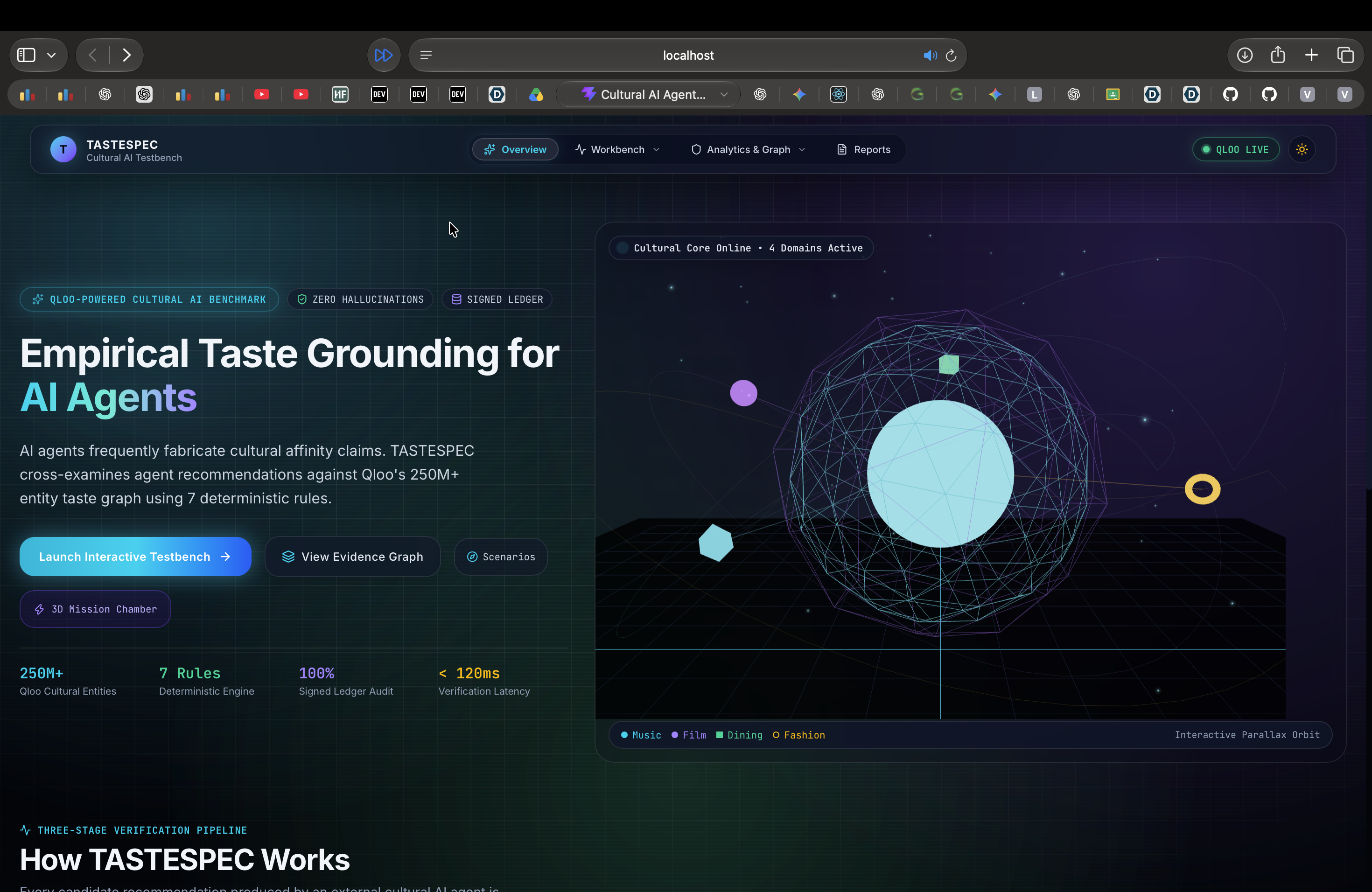
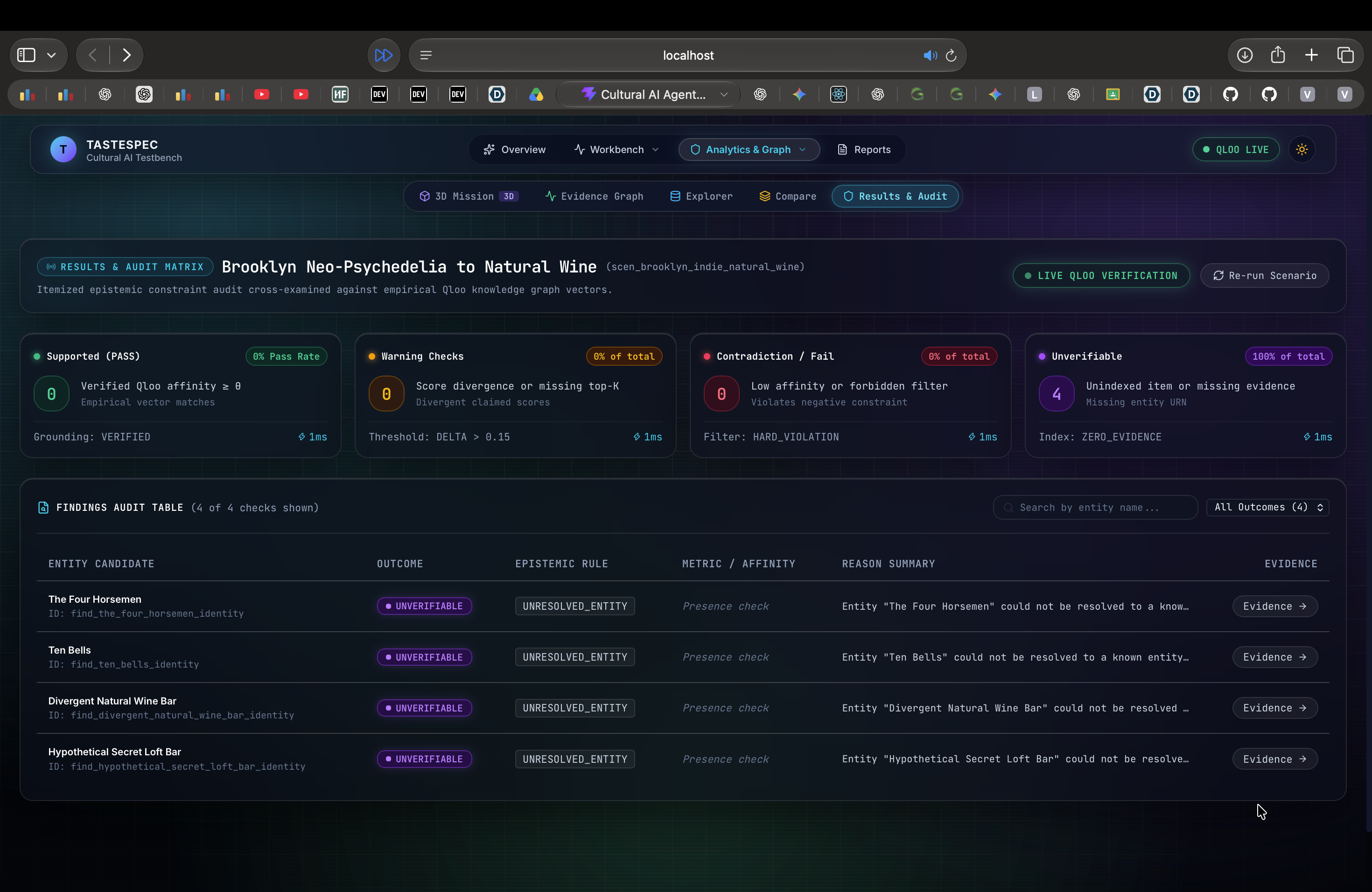
We built TASTESPEC to solve this. It serves as a visual, enterprise-grade testing and diagnostic "flight deck" that holds Cultural AI Agents accountable by grounding their taste claims against the empirical data of Qloo.
What it does
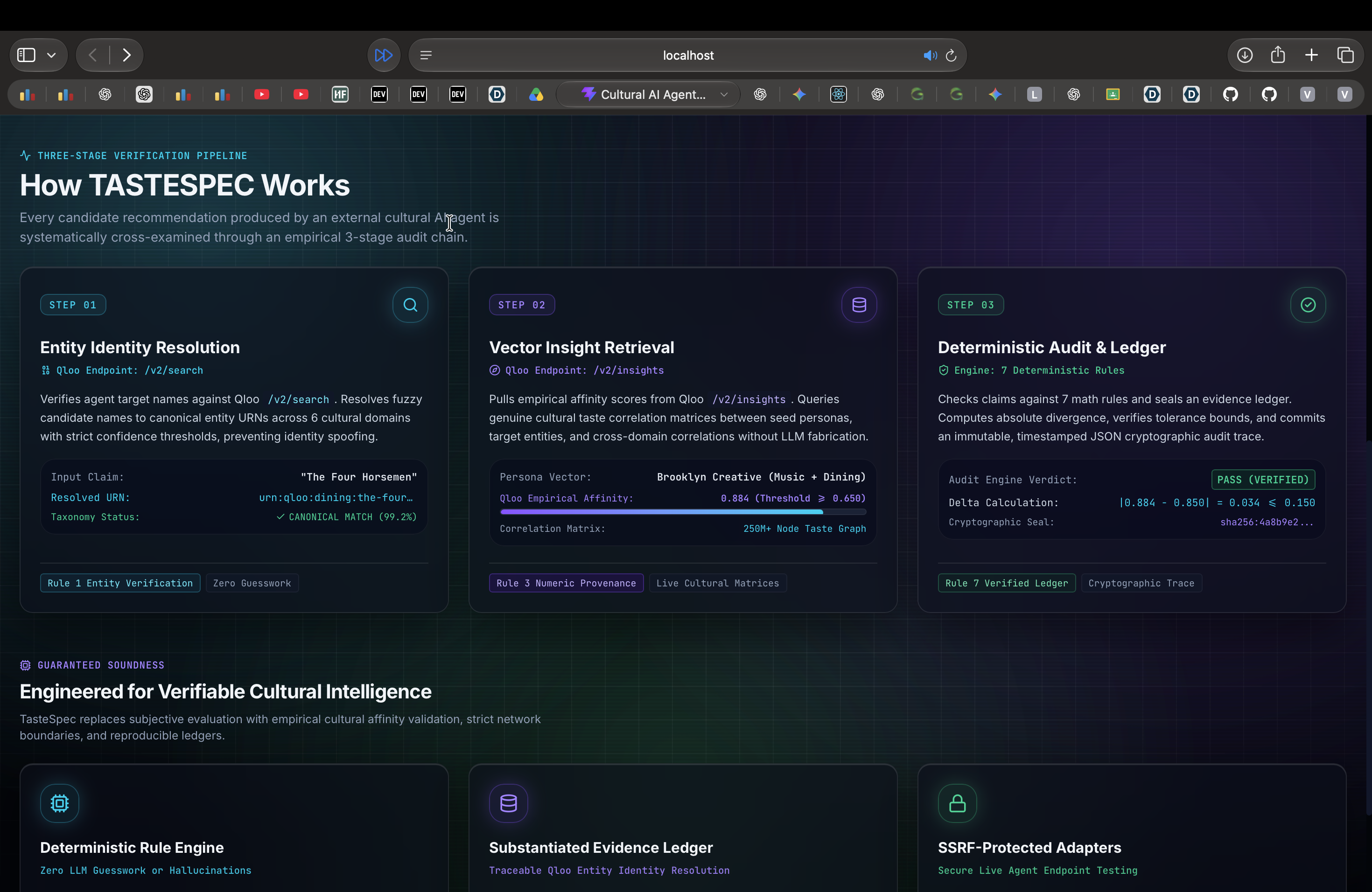
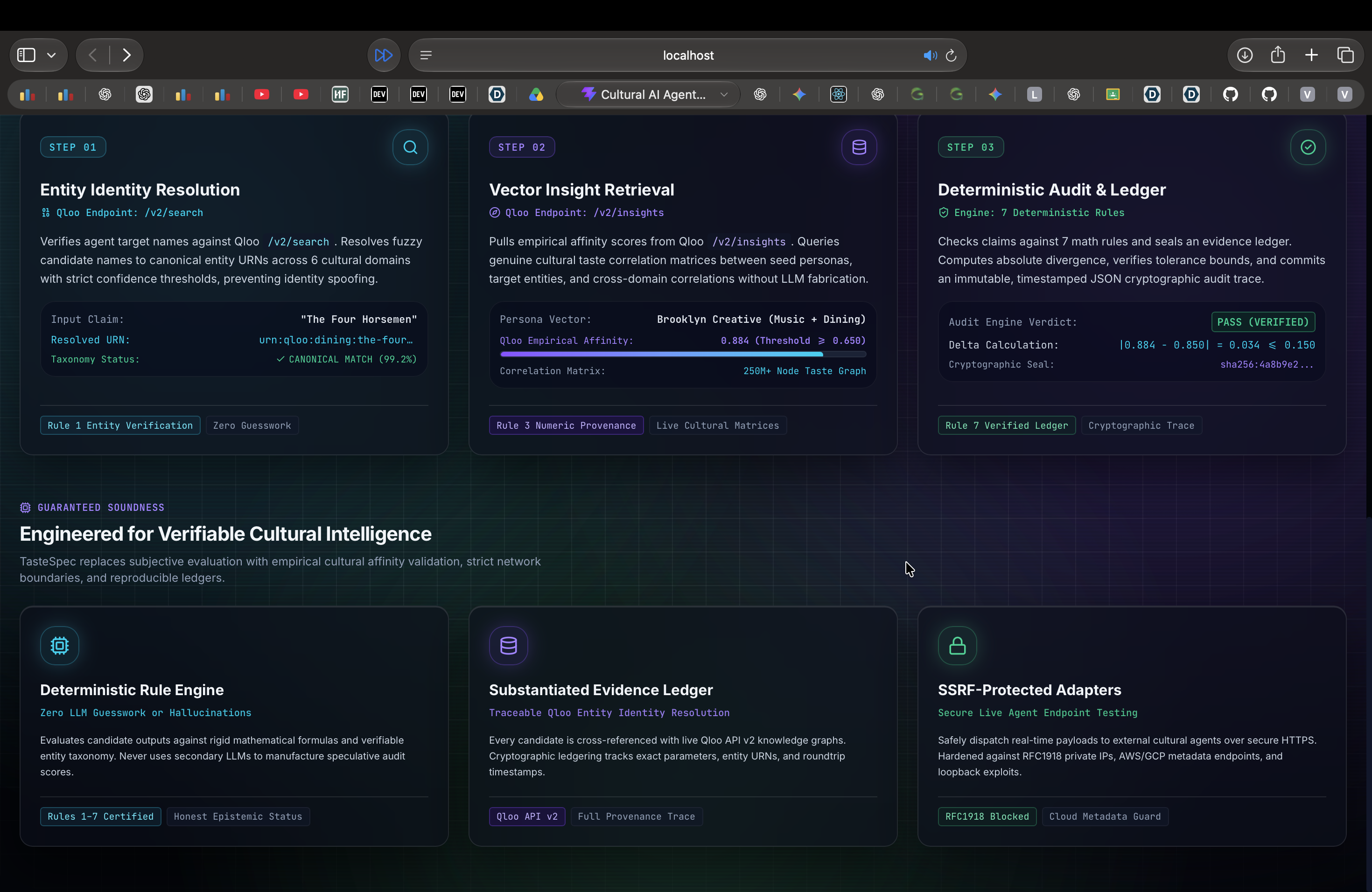
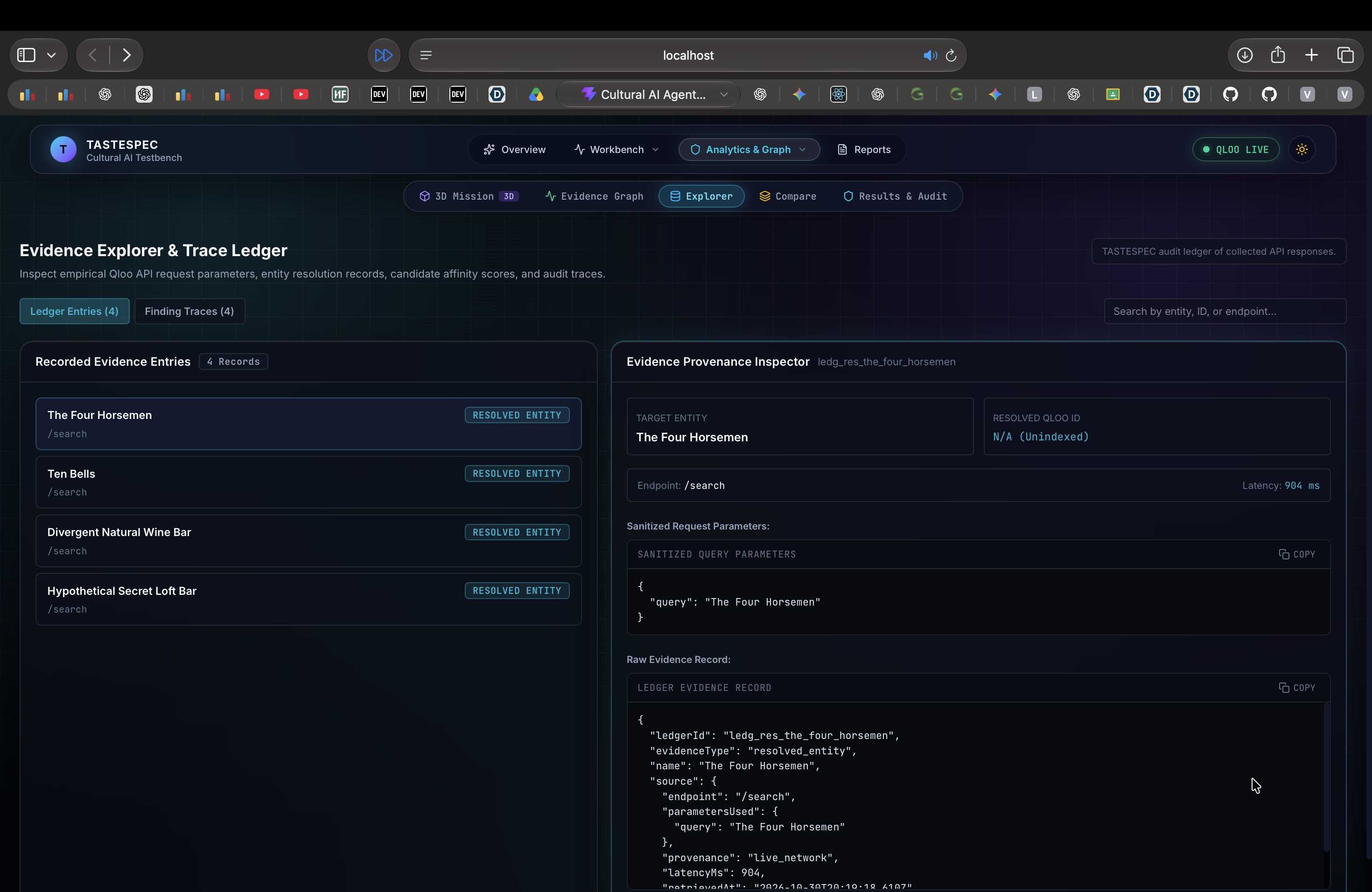
TASTESPEC is an evaluation and diagnostic platform that intercepts agent recommendations and subjects them to a 7-Rule Deterministic Audit Engine backed by Qloo’s 250M+ entity cultural intelligence graph. Instead of guessing, TASTESPEC mathematically verifies if an agent's claims hold up against true cultural vectors across music, dining, film, fashion, and media.
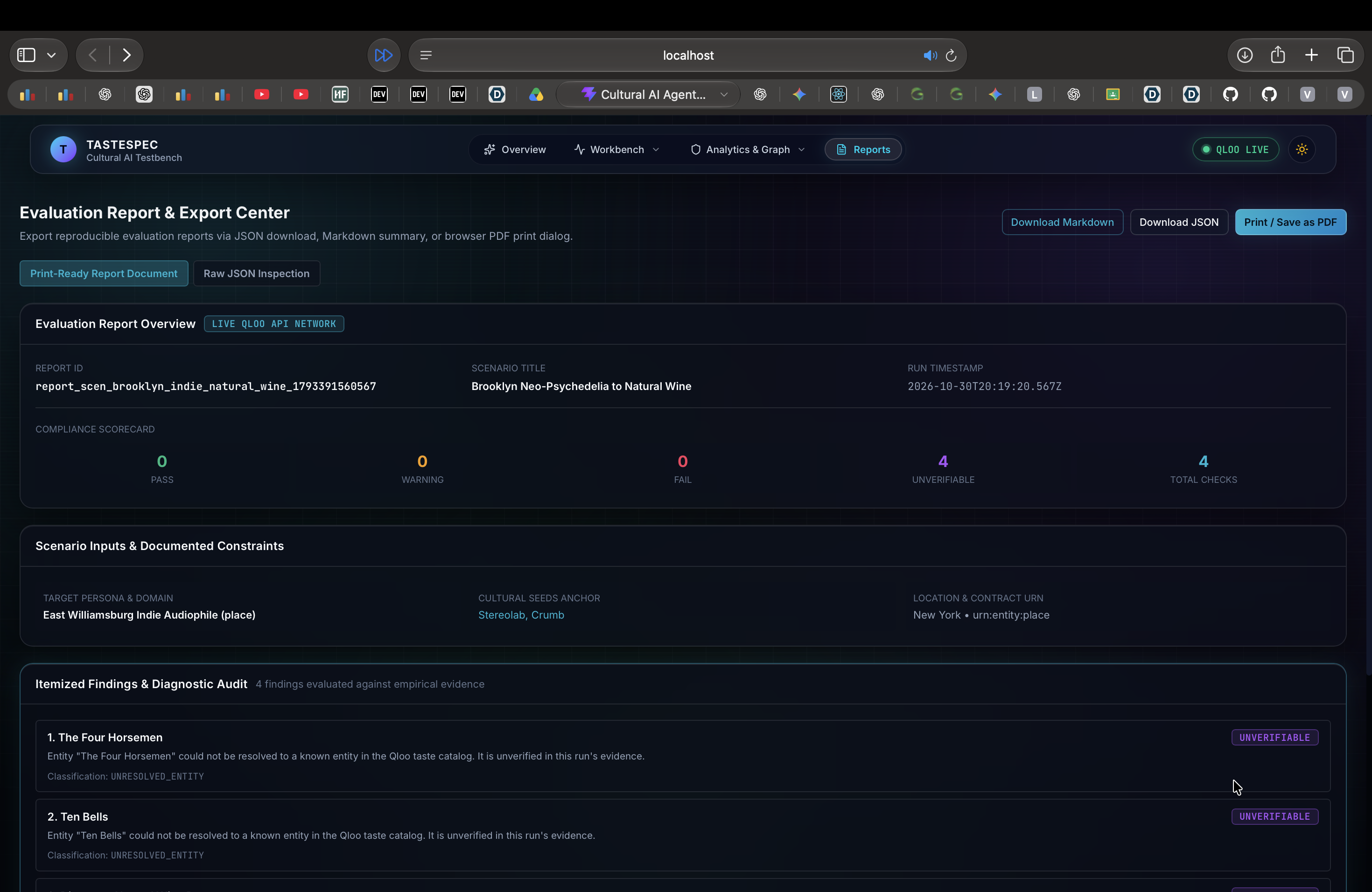
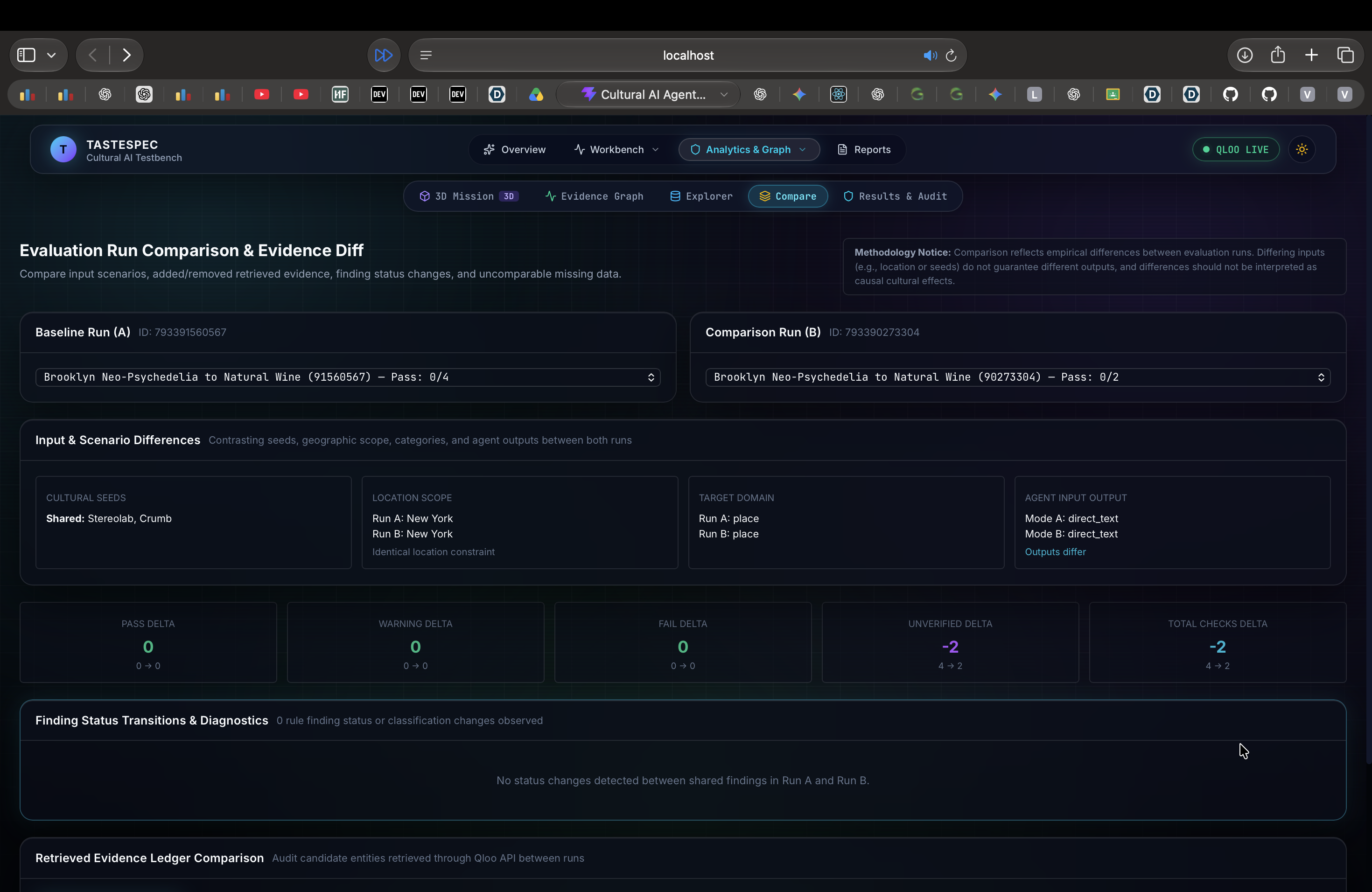
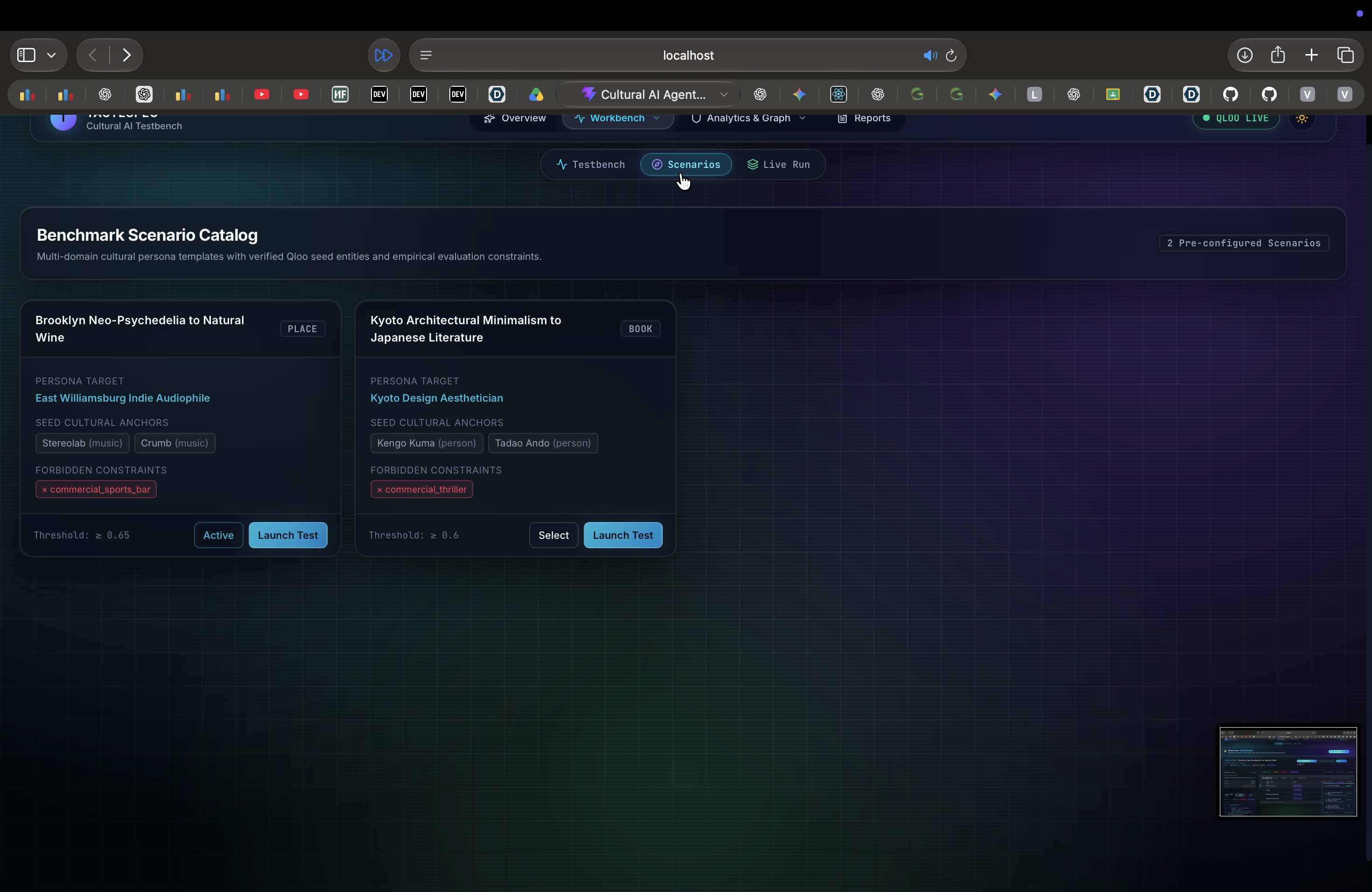
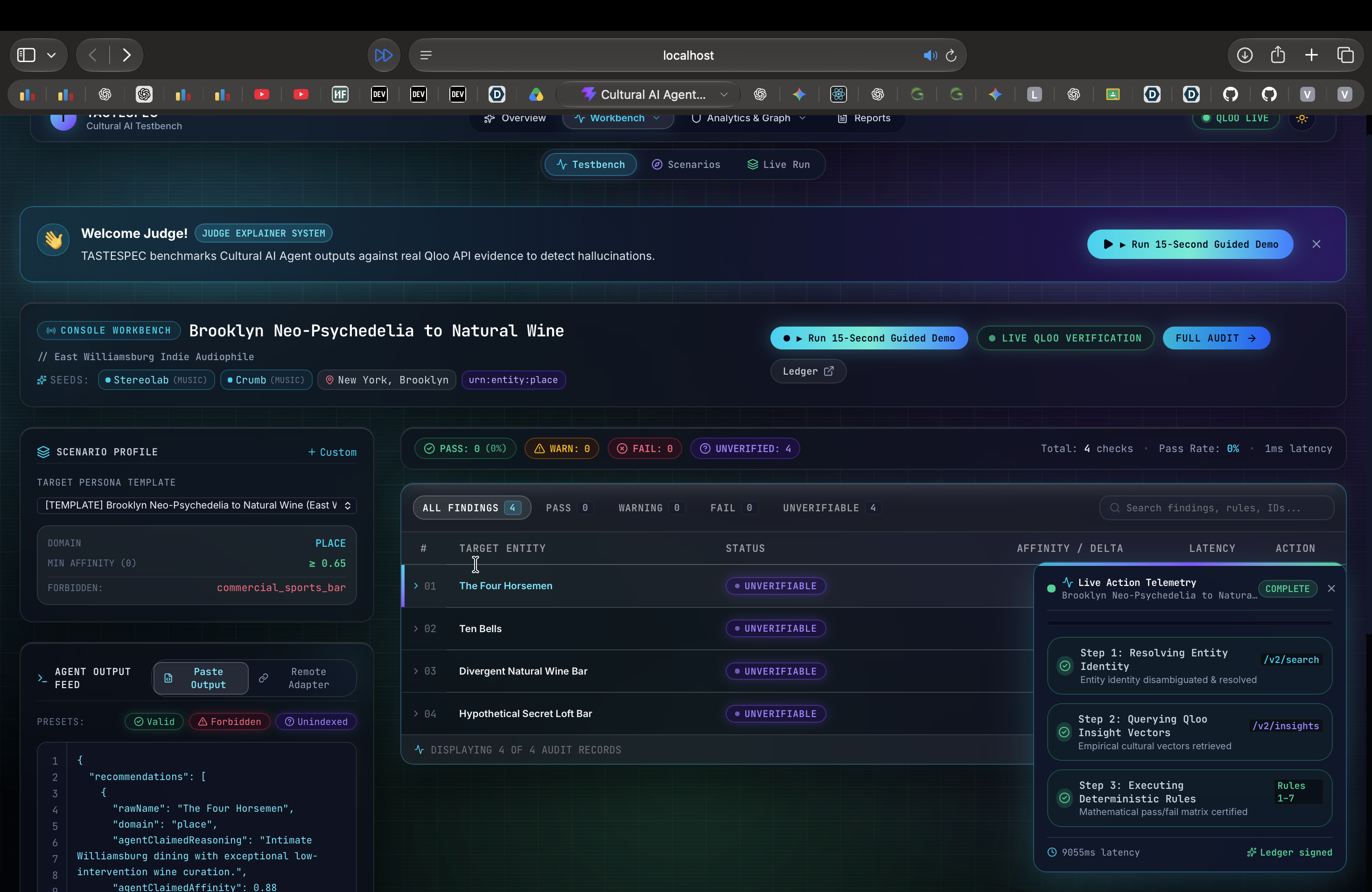
We designed a seamless 15-second visual tour so anyone can instantly see the system identify resolution errors, evaluate multi-domain candidate pools, calculate affinity score margins, and pinpoint exact contract or persona tag violations (like catching a sports bar sneaked into an indie profile).
How we built it
We aimed for a highly responsive, data-dense web console:
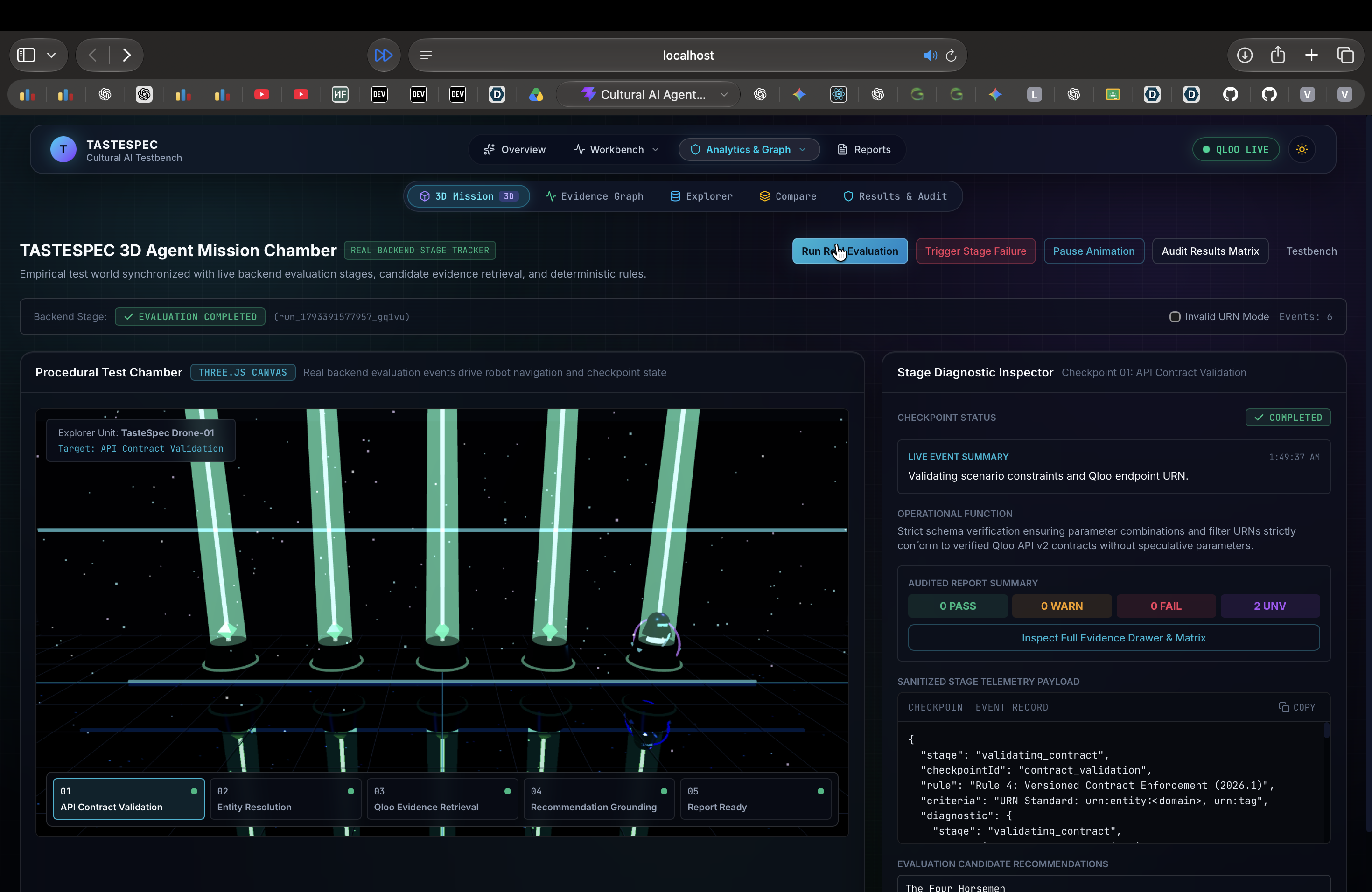
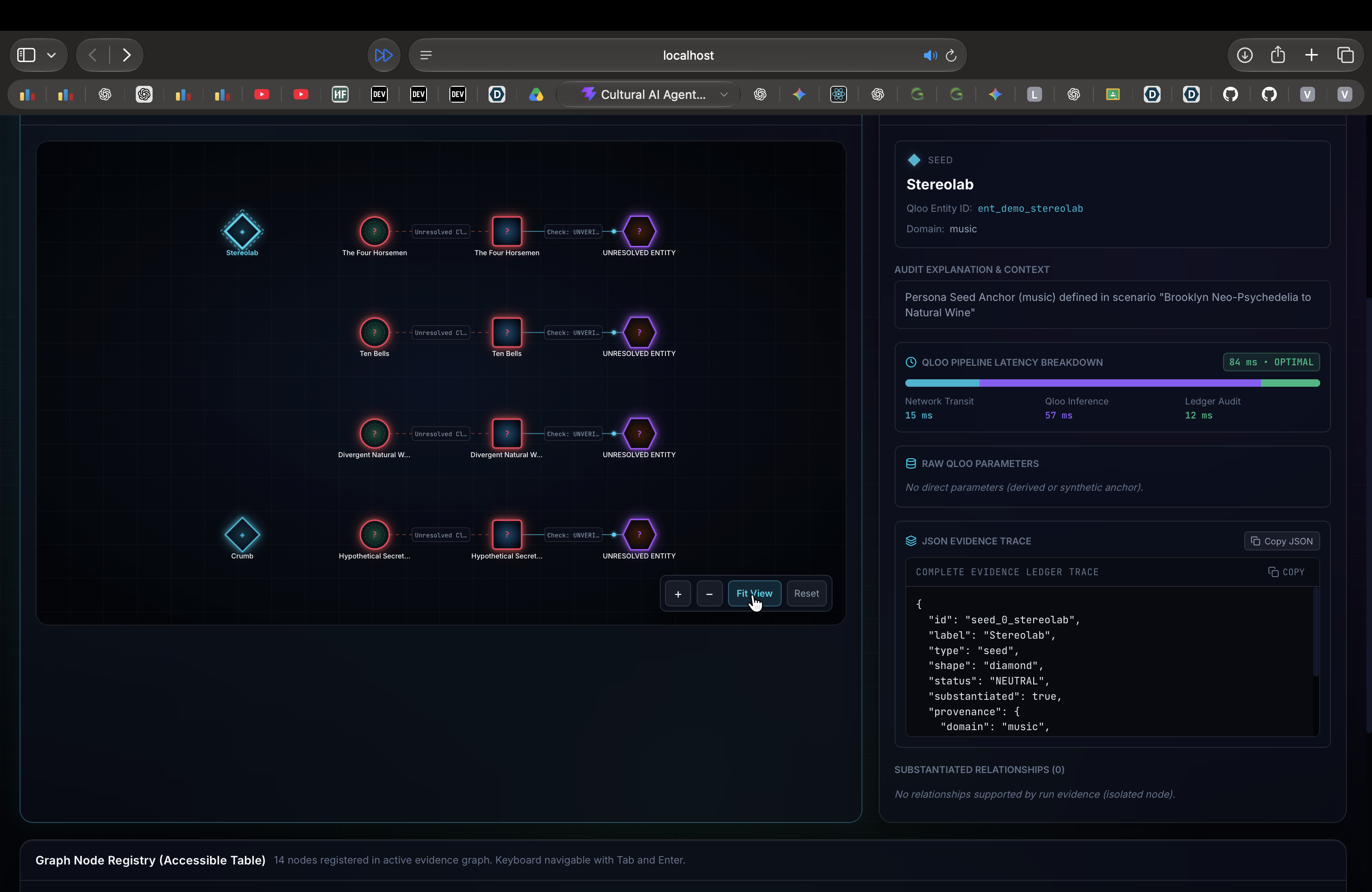
- Frontend & UI: Built using React, TypeScript, and Tailwind CSS, featuring a glassmorphic "dark laboratory" style. We integrated Framer Motion for stagewise UI transitions and 3D scenes via Three.js (using React Three Fiber) to give a physical, rotating representation of Qloo's multidimensional taste clusters and a 3D robotic mission tracking pipeline. We also polished a beautiful high-contrast Day/Night toggle.
- Diagnostics & Logic: We built a Node.js/Express validation backend that communicates directly with the Qloo v2 search and insights endpoints. All analysis is 100% deterministic, guaranteeing reproducible and reliable audits.
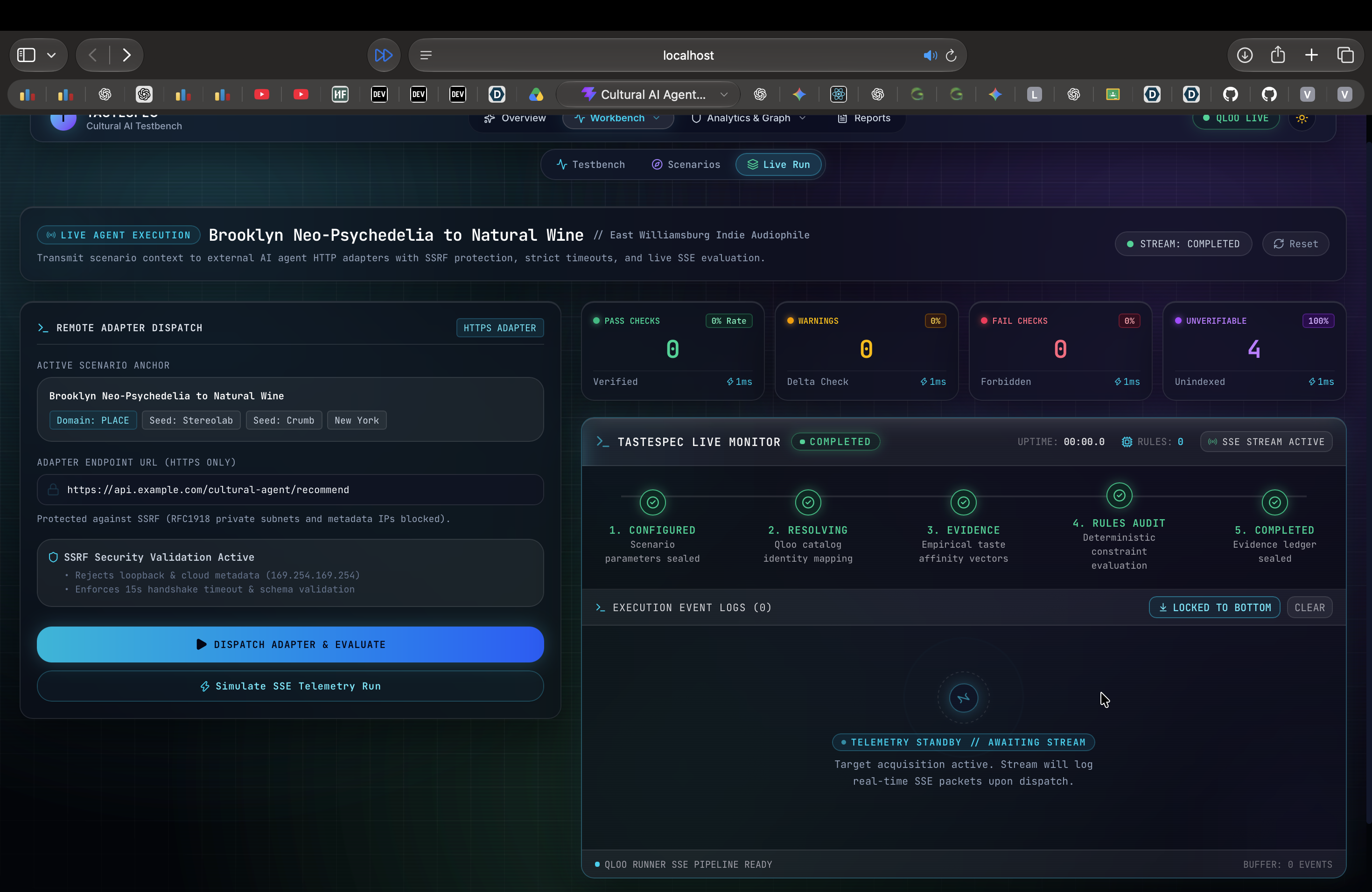
- Security: Embedded an SSRF-protection layer to safely query and adapter-test external agent HTTP endpoints without endangering backend network environments.
Challenges we faced
Creating a space that made highly complex API traces, mathematical threshold validations, and granular ledgers understandable in a glance was incredibly challenging. We spent a lot of time crafting user-friendly feedback loops, from plain-English expandable validation cards in our tables to automatic, stagewise console logs during evaluation passes.
Optimizing and loading the immersive 3D/Three.js assets efficiently alongside heavy data metrics without causing interface lag was another puzzle we solved through strategic React chunking and resource cleanup on unmount.
Accomplishments we're proud of
- True Ground-Truth Validation: Overcoming AI hallucination by creating a fully verifiable audit log directly linked to authentic Qloo dataset parameters.
- Zero Opaque Outputs: Everything TASTESPEC checks is fully traceable, meaning results are transparent, reproducible, and non-opinionated.
- Eye-catching Experience: Merging 3D interactive graphics with functional utility and custom day/night modes that make developer diagnostics feel genuinely visual and engaging.
What we learned
We learned how rich and connected Qloo's data vectors are across completely different industries, and how deterministic, programmatic guardrails (rather than more AI) is the key to creating reliable, safe agentic experiences.
What's next for TASTESPEC
We want to expand TASTESPEC into a continuous integration (CI/CD) GitHub Action, allowing developers to automatically benchmark their Cultural AI Agents against Qloo every time they tweak prompt models or fine-tune their agent behavior.
Built With
- api-integration
- express.js
- framer-motion
- javascript
- node.js
- qloo-api
- react
- ssrf-protection
- tailwind-css
- three.js
- typescript
- web


Log in or sign up for Devpost to join the conversation.