-
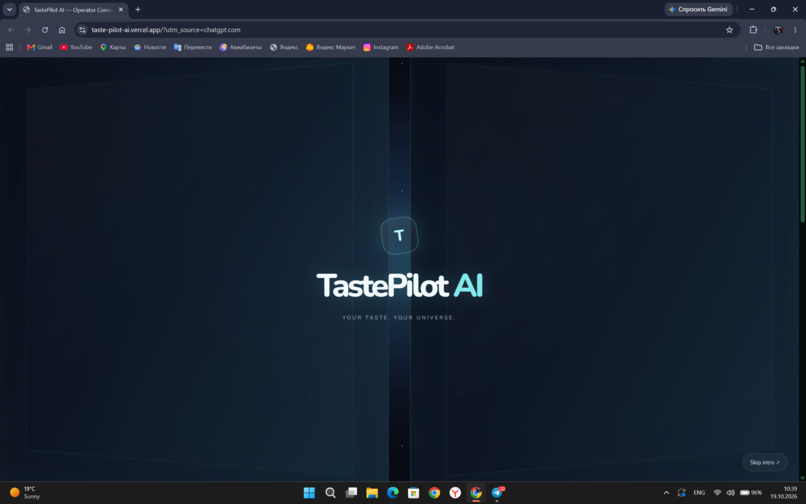
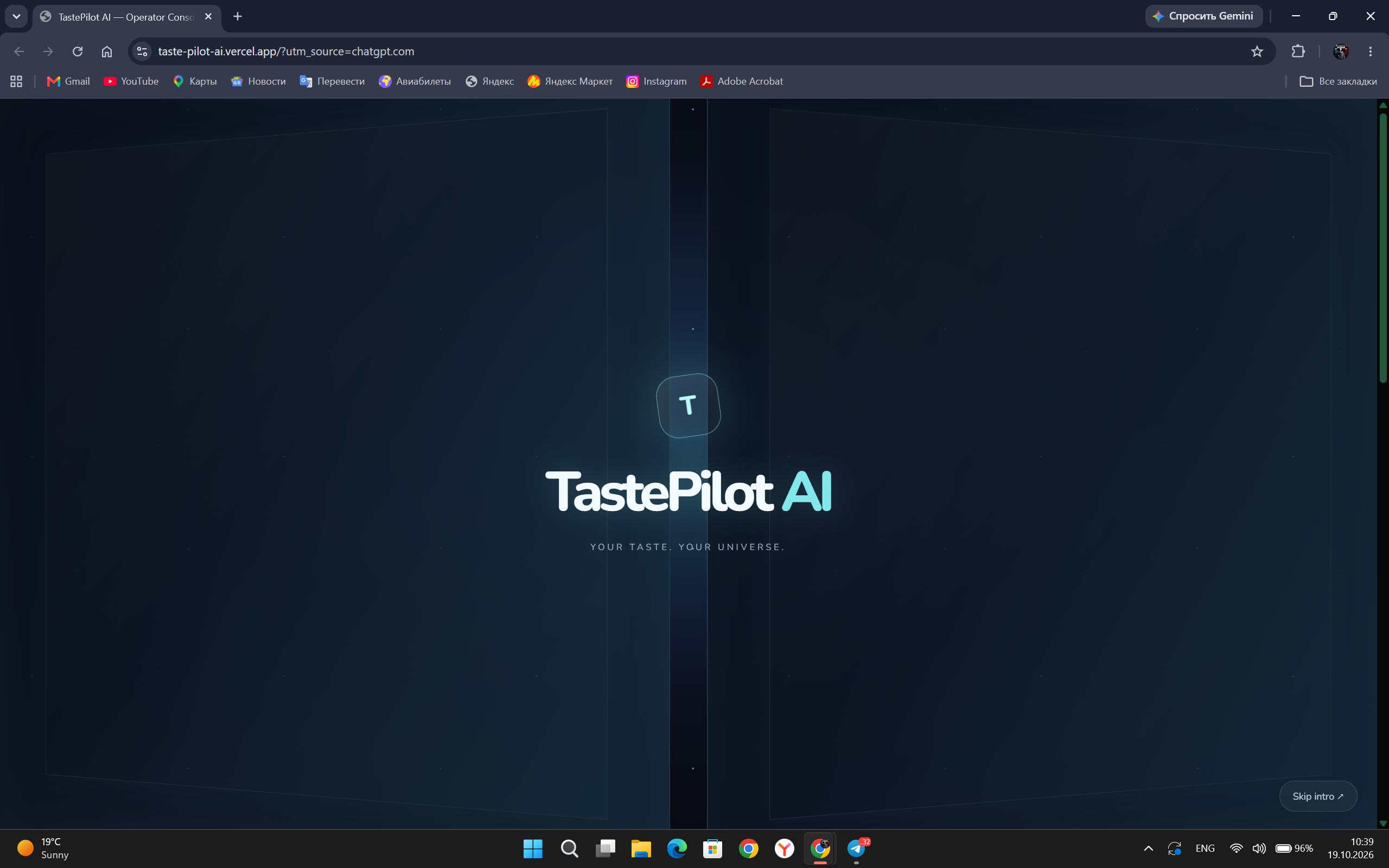
A cinematic introduction to TastePilot AI — a personal discovery experience built around your unique taste.
-
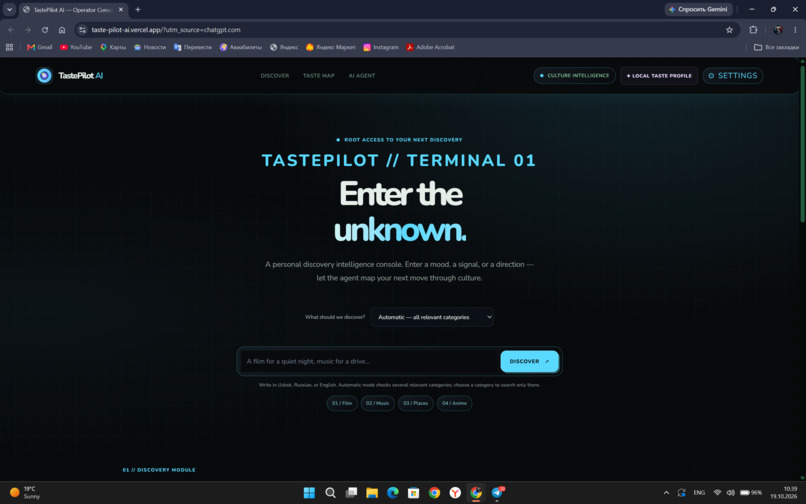
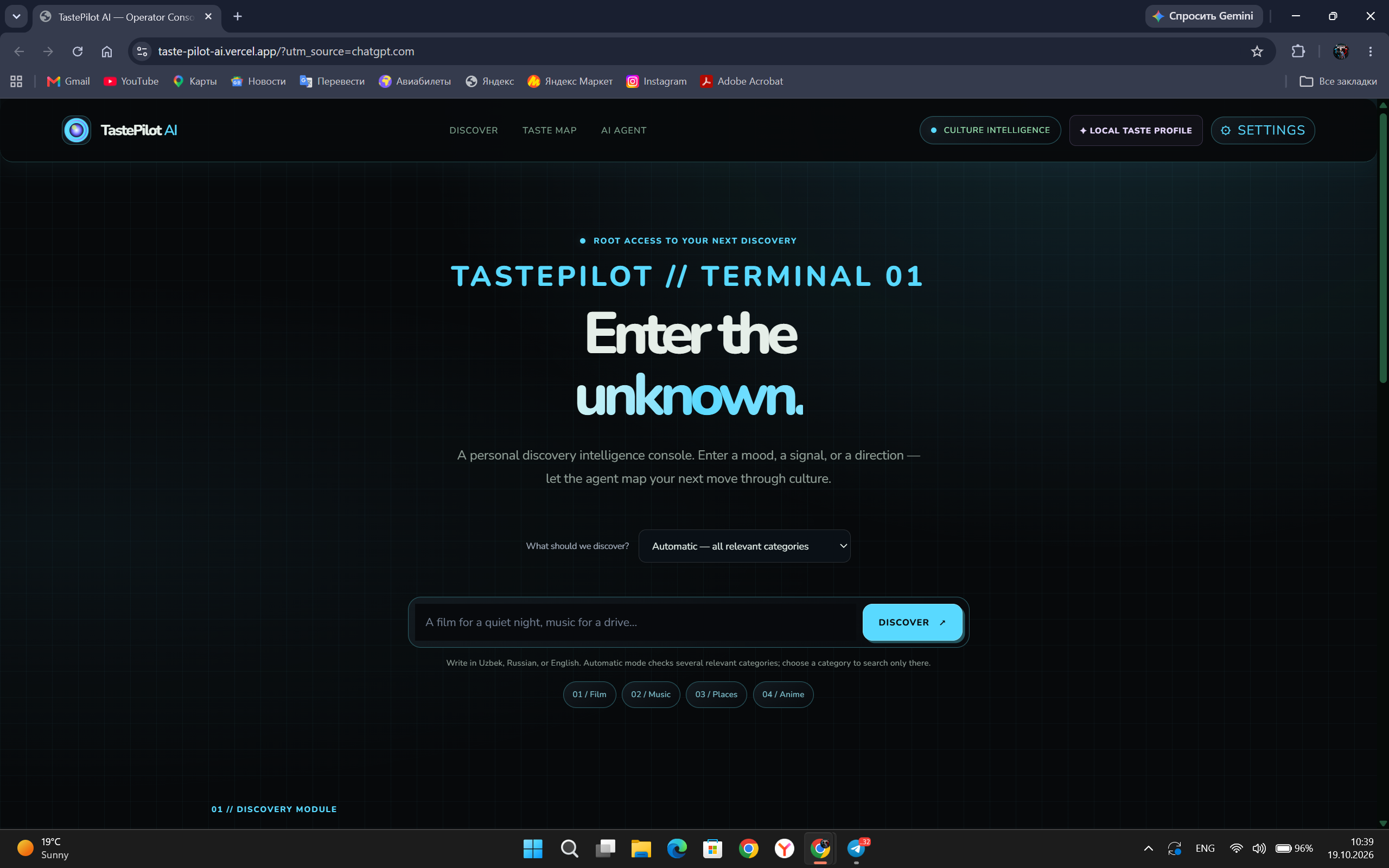
The main discovery interface lets users express a mood, interest, or direction and begin exploring what fits them.
-
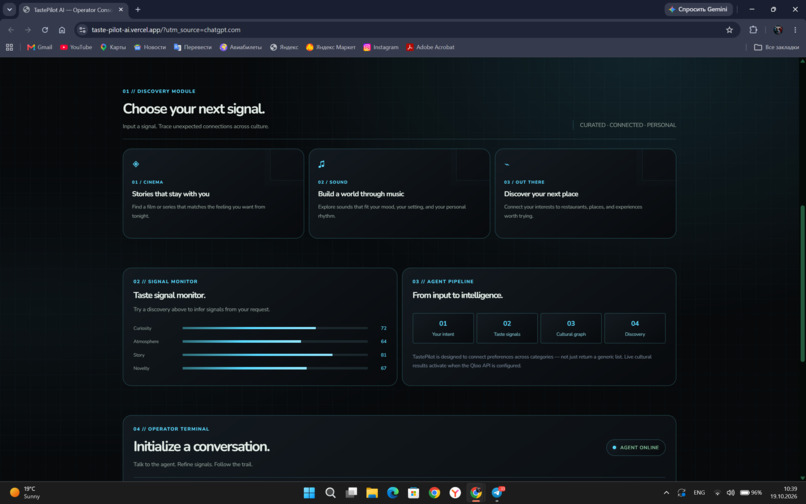
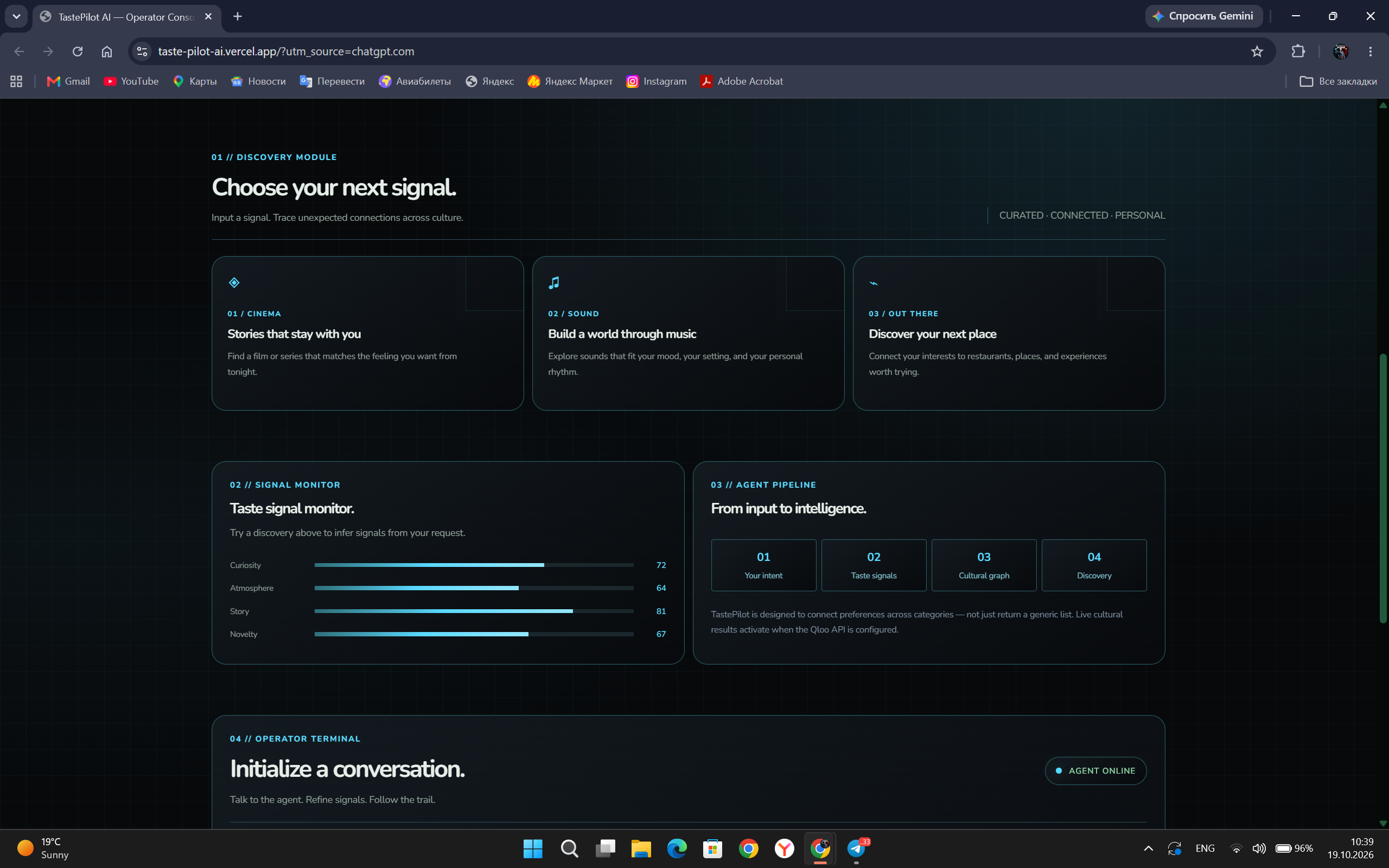
Explore cinema, music, and places through taste signals and a discovery pipeline designed to connect interests across categories.
-
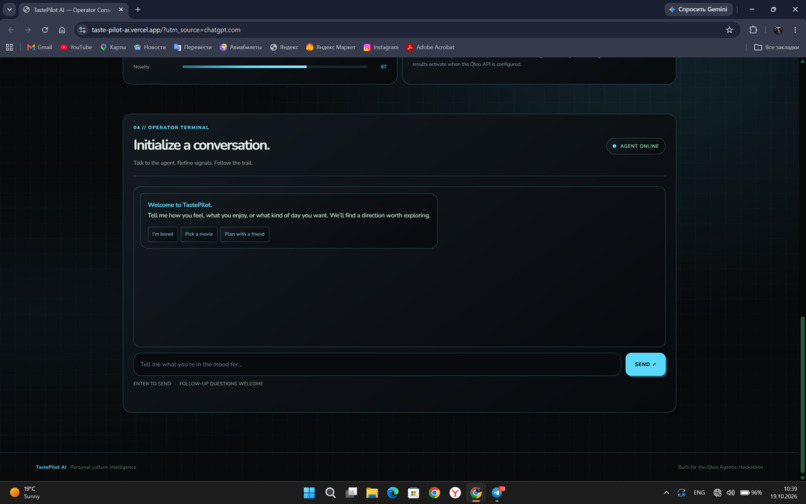
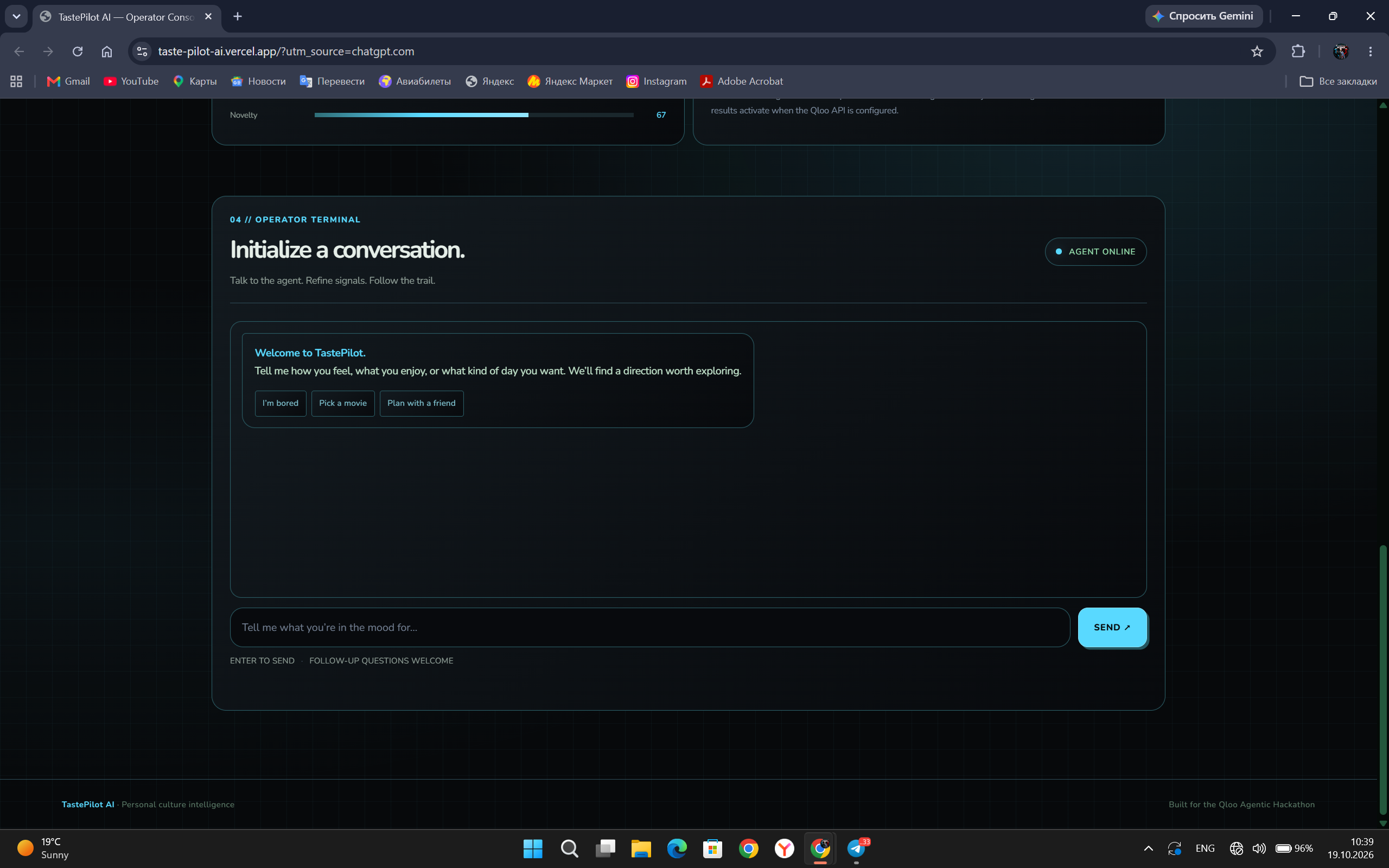
The AI agent helps users explore their interests and discover personalized recommendations through natural conversation.
Inspiration
People have more choices than ever, but discovering something that truly matches their personal taste is still difficult. Traditional recommendation experiences often treat movies, music, food, places, and activities as separate categories, missing the connections between the things a person enjoys.
TastePilot AI was created to explore a more personal approach to discovery: an AI agent that helps people find experiences connected to their interests, preferences, and the kind of experience they are looking for.
What It Does
TastePilot AI lets users describe what they like, what they are in the mood for, and what they want to discover through a conversational interface. The agent interprets the request and helps turn it into personalized discovery across categories such as movies, music, food, places, and experiences.
Rather than treating every request as an isolated search, TastePilot AI aims to connect related interests and make recommendations feel more relevant and meaningful.
The application combines conversational AI, taste signals, and a multilingual user experience to make discovery more natural and accessible.
How We Built It
TastePilot AI brings together a web-based interface, a backend powered by Node.js and Express.js, Gemini-powered conversational AI, and Qloo's taste-intelligence capabilities.
The frontend uses HTML, CSS, and JavaScript. The application also includes taste-signal logic and fallback behavior to support a more resilient user experience when certain services or data are unavailable.
Our goal was to build more than a static recommendation page: we wanted a conversational agent that could interpret a user's intent and turn it into a useful discovery experience.
Why Qloo
Qloo is important to TastePilot AI because it focuses on connections between cultural interests and preferences. These relationships can help make discovery more meaningful than simply returning results from a single category.
TastePilot AI is designed to use Qloo's taste intelligence as part of its approach to connecting user interests with relevant discoveries. The goal is to help users explore connections between the entertainment, food, places, and experiences they enjoy.
Challenges
One of our main challenges was making the agent's responses useful, relevant, and consistent across different user requests and languages.
We also worked on connecting the frontend, backend, conversational AI, taste-related logic, and fallback behavior into a cohesive experience. Supporting a multilingual interface requires particular attention to the language of both the user's request and the agent's response.
What We Learned
Building TastePilot AI helped us explore how conversational AI and cultural taste intelligence can work together to support personalized discovery.
We learned that a useful AI agent needs more than a model response: it also needs a clear user experience, reliable integration between components, thoughtful handling of different requests, and transparent behavior when a capability is unavailable.
What's Next
We want to keep improving the relevance of recommendations, multilingual consistency, and the connections between different categories of interests. Our long-term vision is to make TastePilot AI a helpful companion for discovering things people may love but would not necessarily have found on their own.

Log in or sign up for Devpost to join the conversation.