-
-
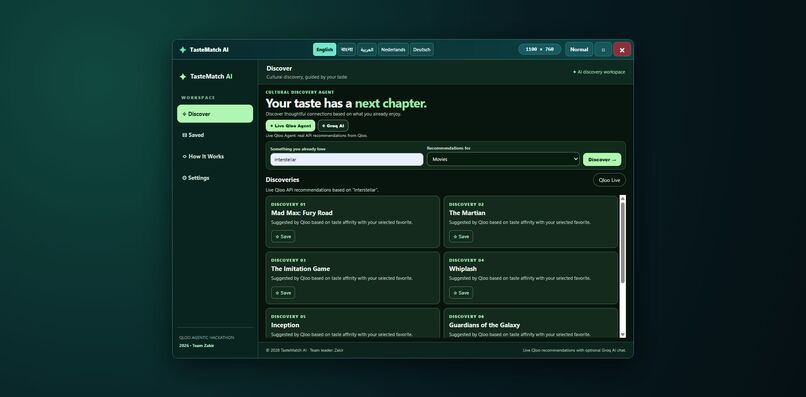
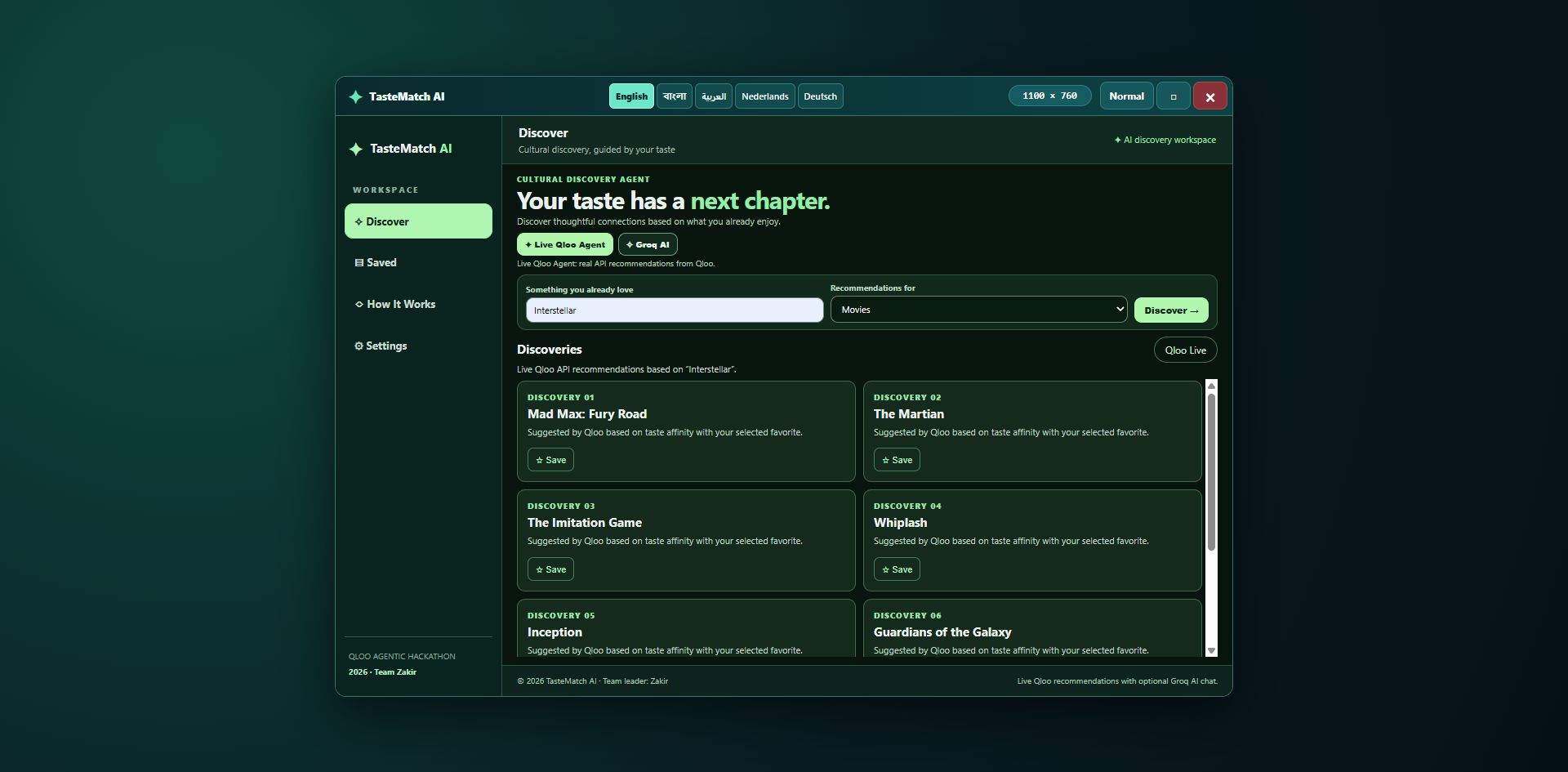
Live Qloo taste recommendations with saveable discoveries
-
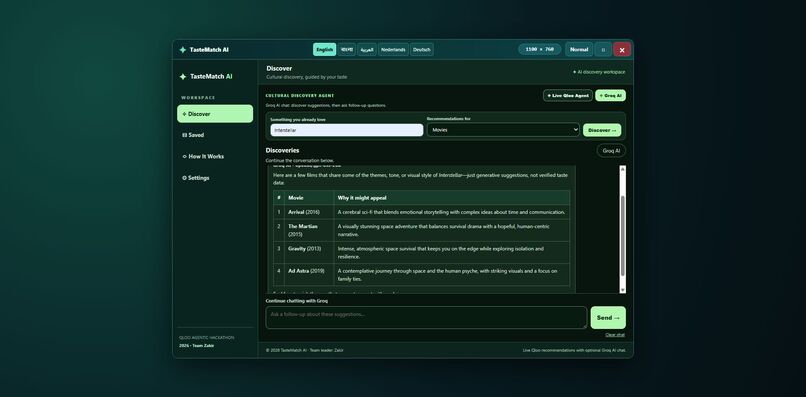
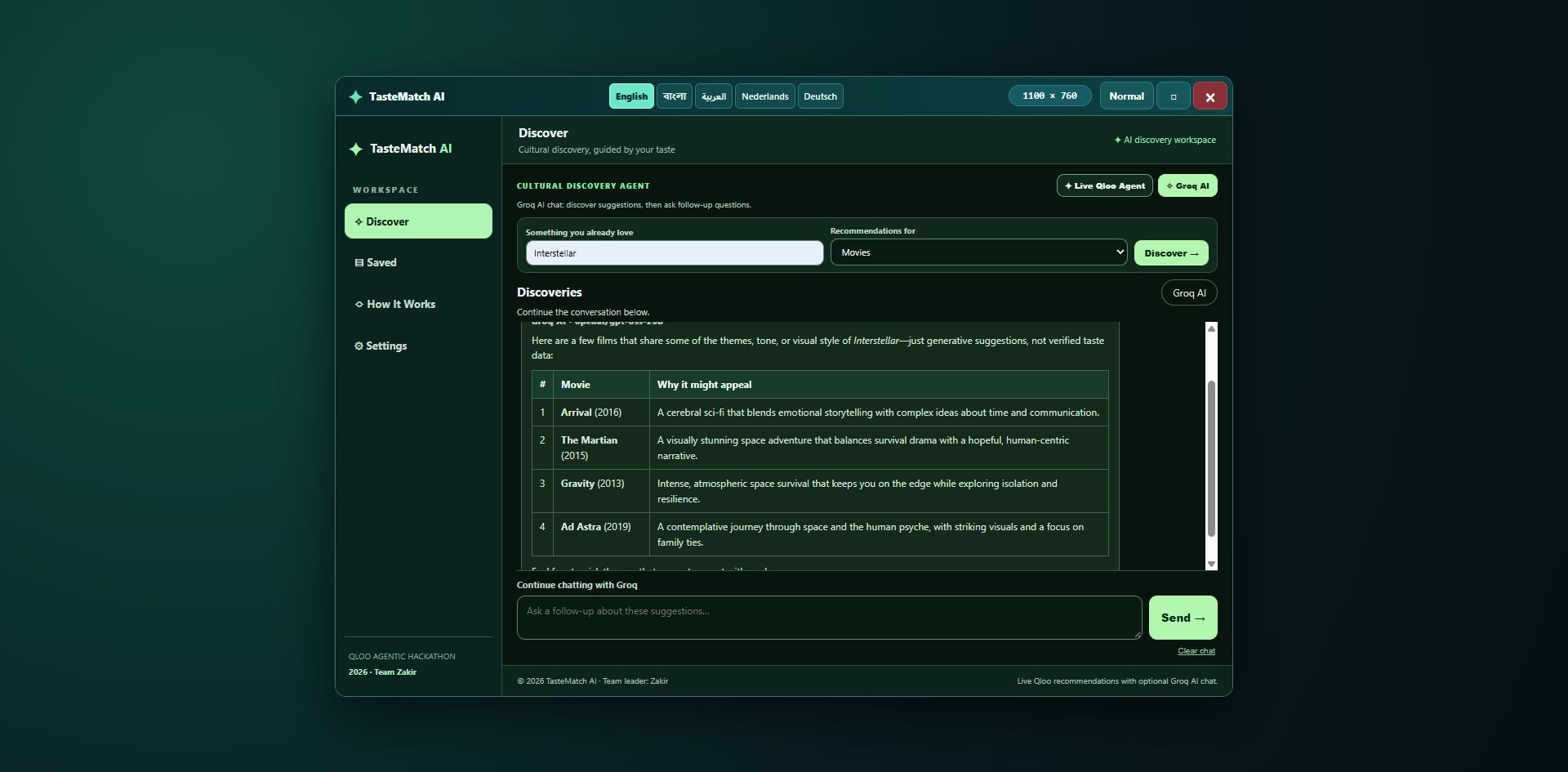
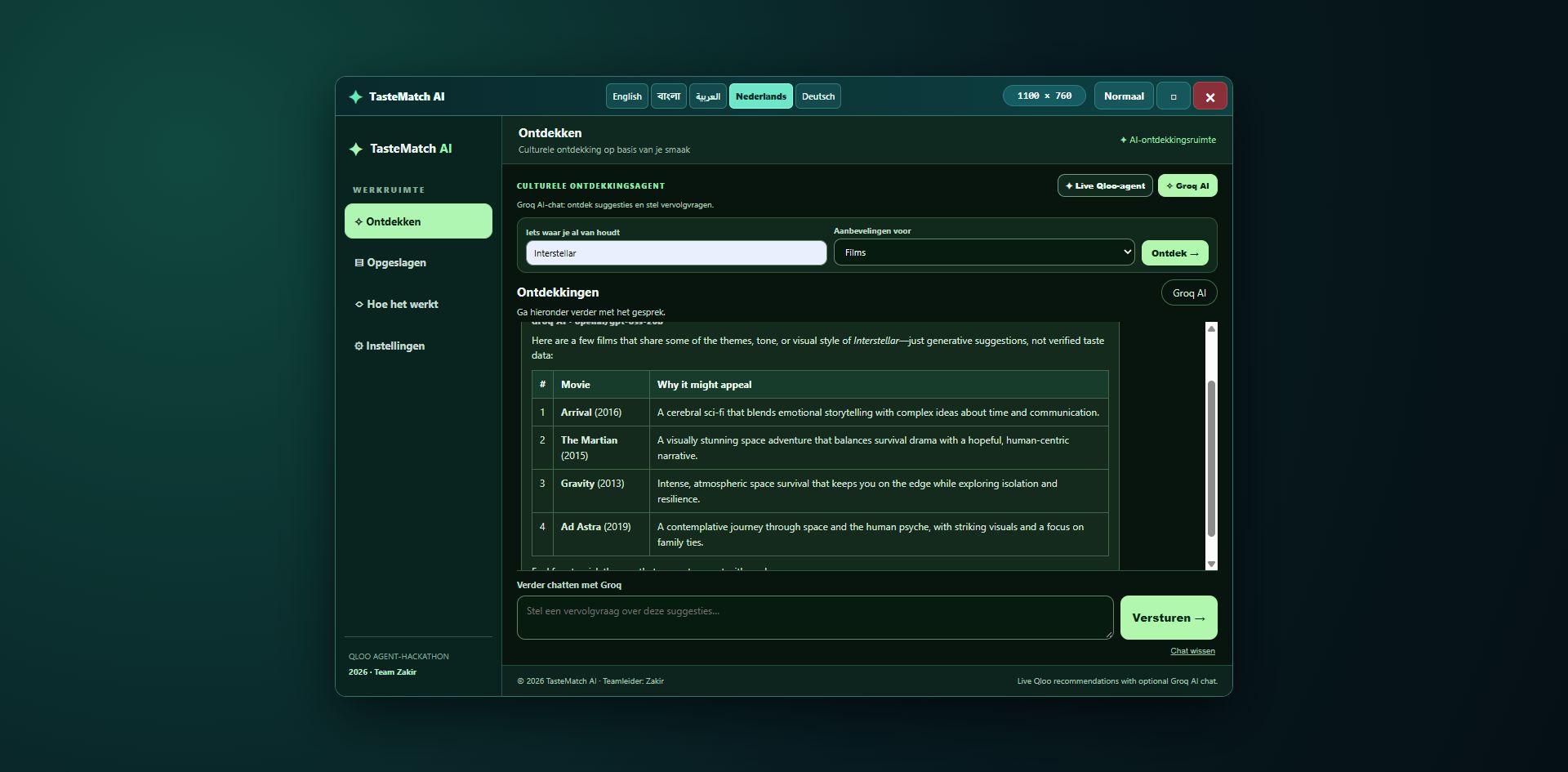
Groq AI follow-up chat with safe formatted Markdown
-
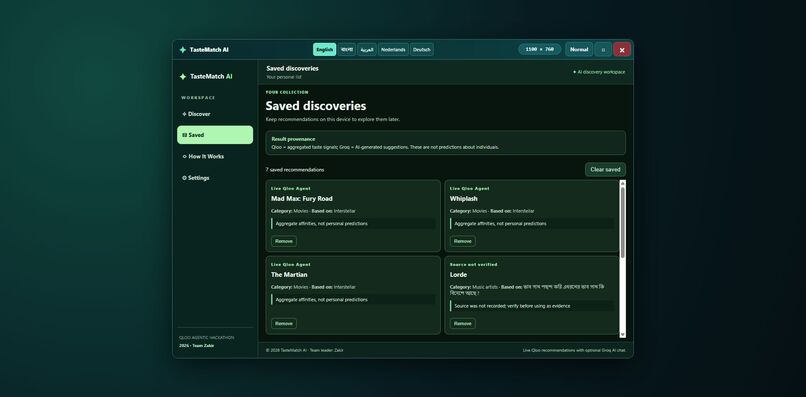
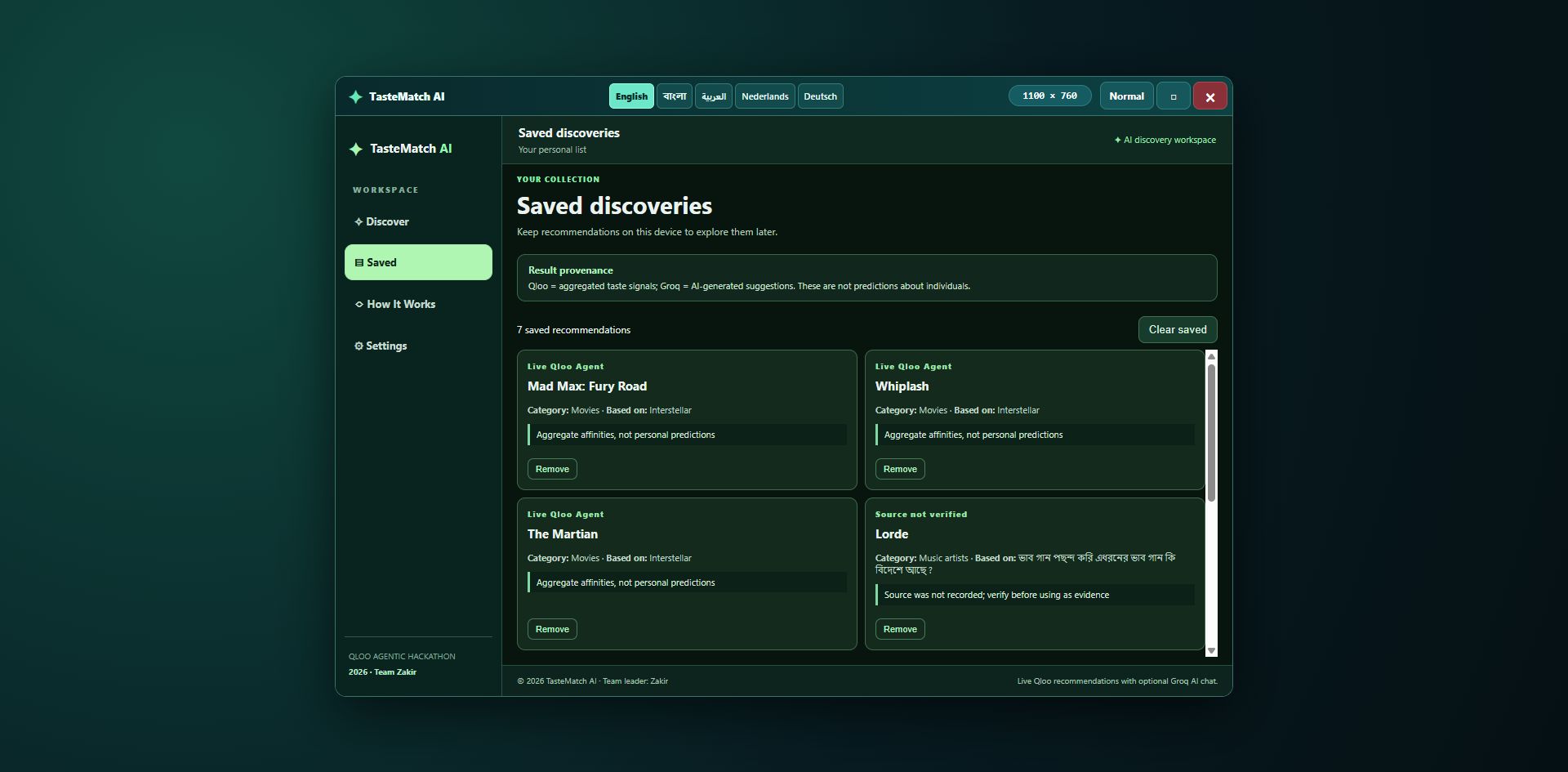
Saved discoveries with source provenance
-
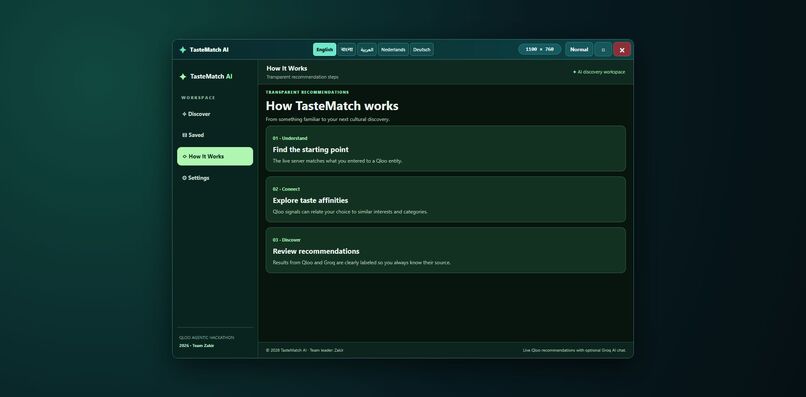
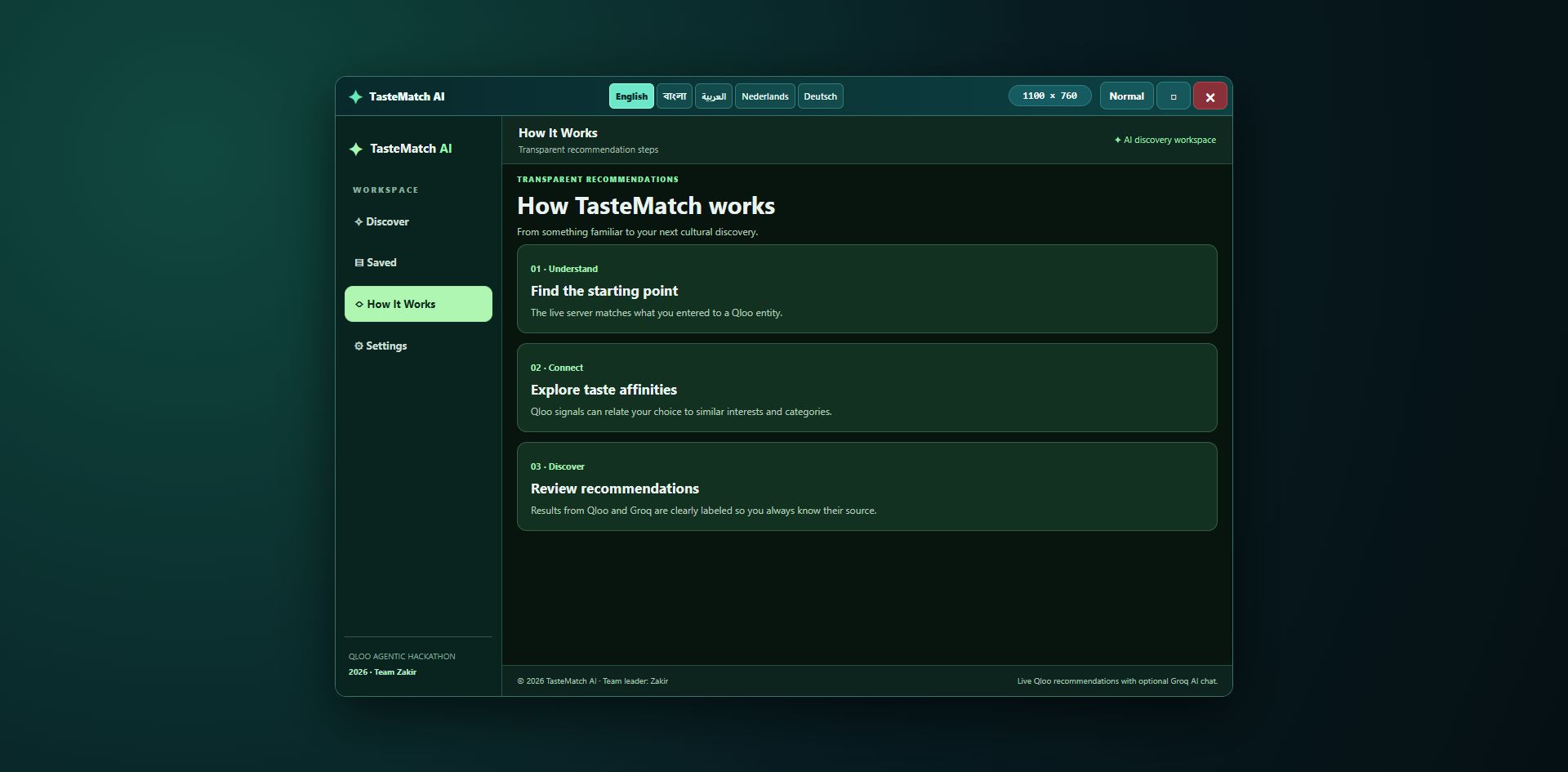
How TasteMatch turns a favorite into transparent recommendations
-
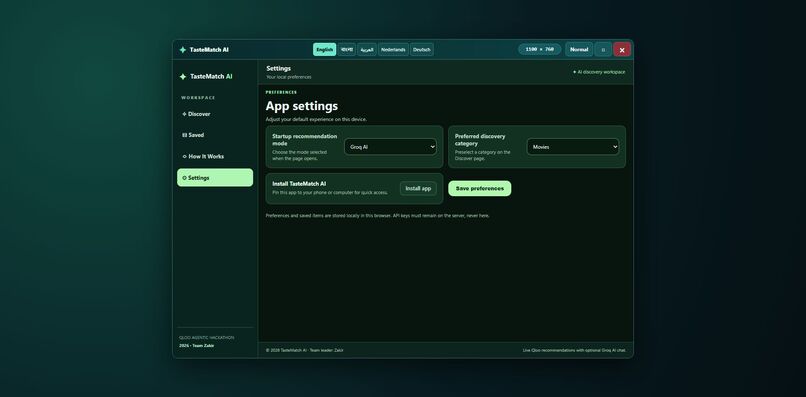
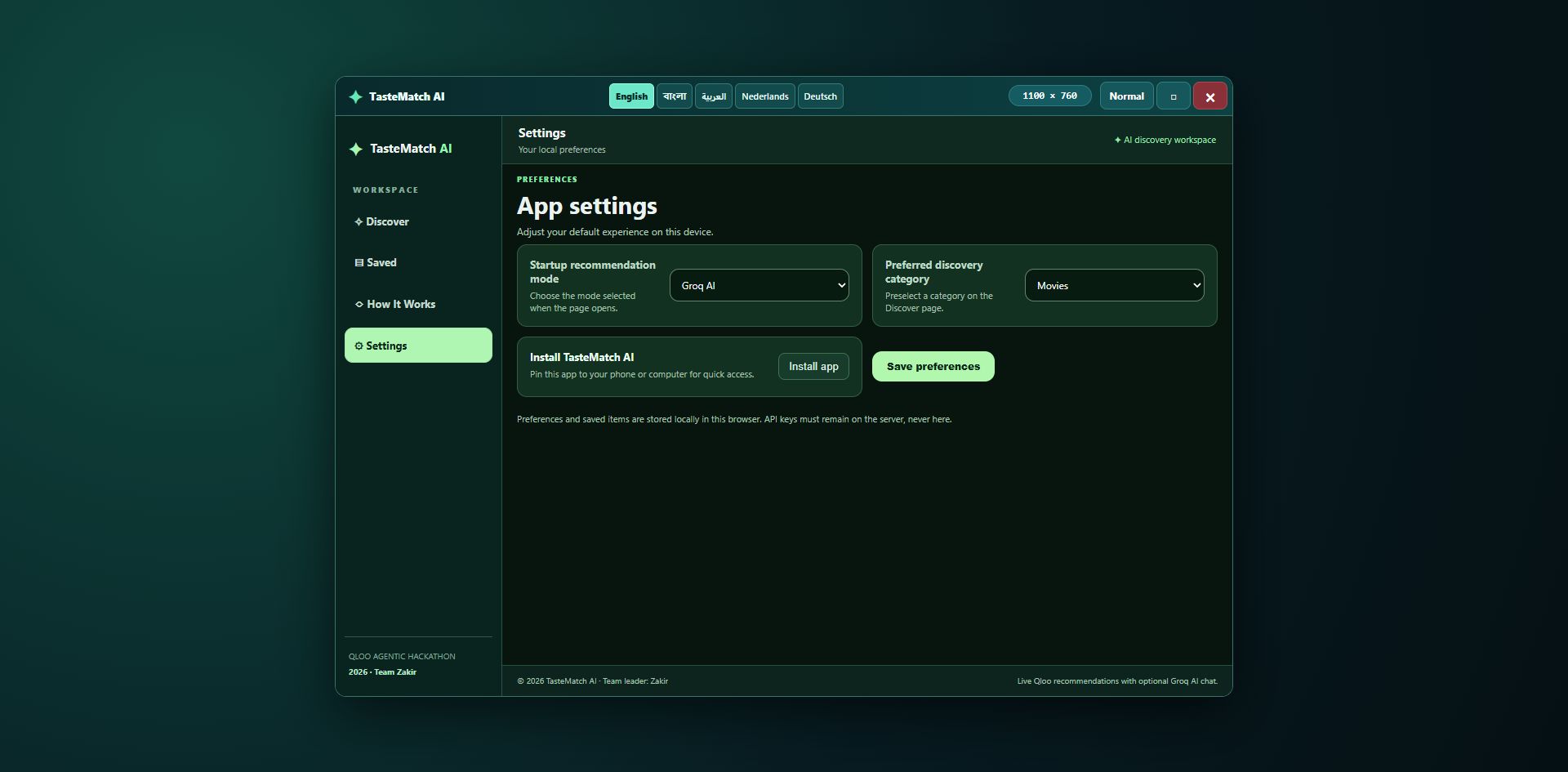
Installable PWA settings and local preferences
-
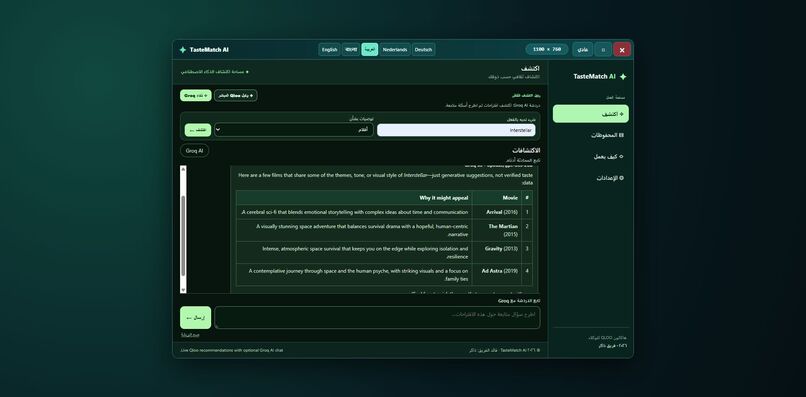
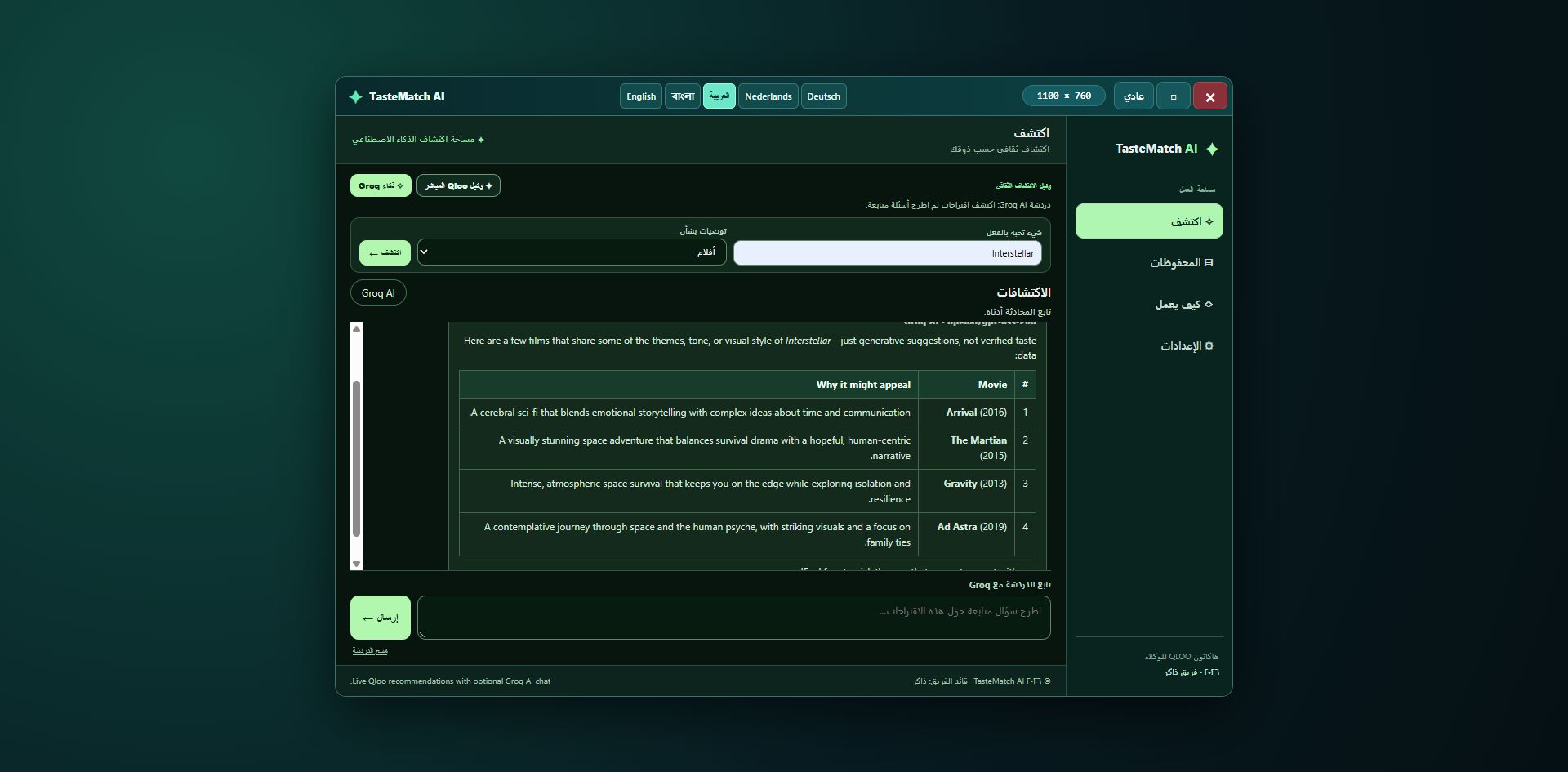
Arabic interface with right-to-left layout
-
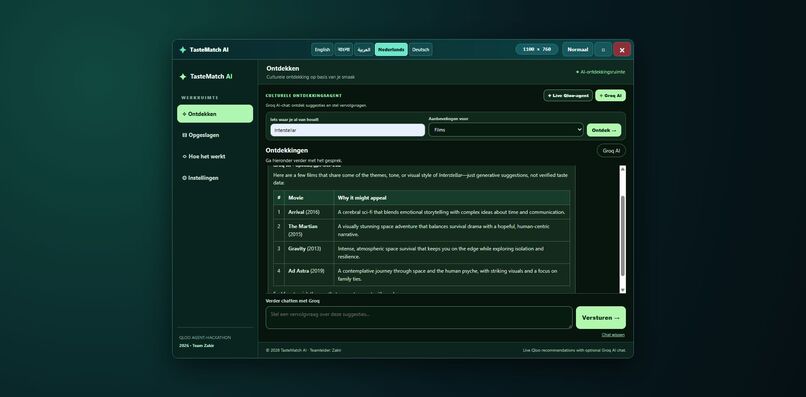
Dutch interface
-
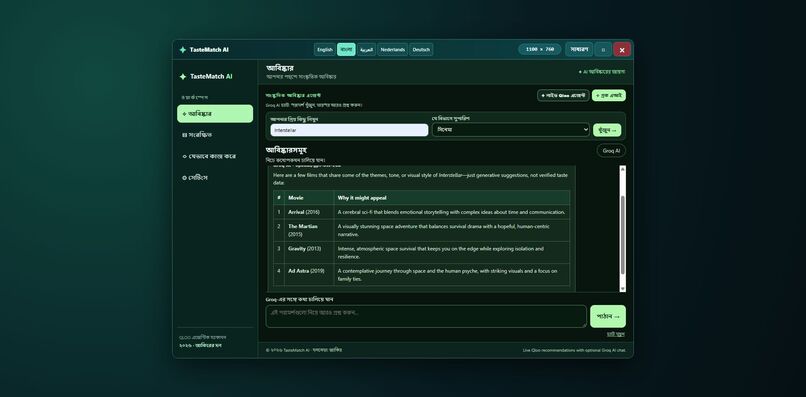
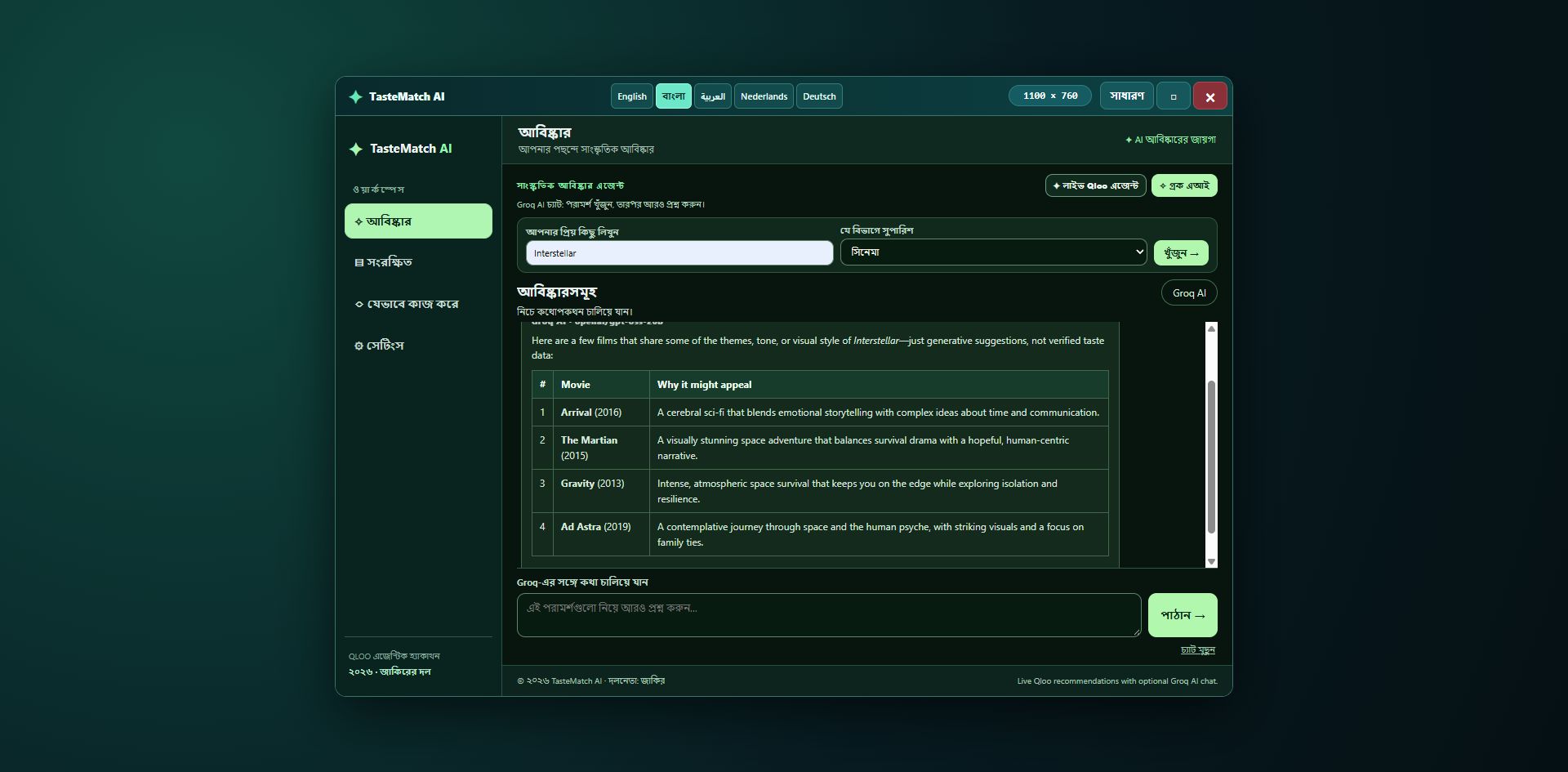
Bangla interface
-
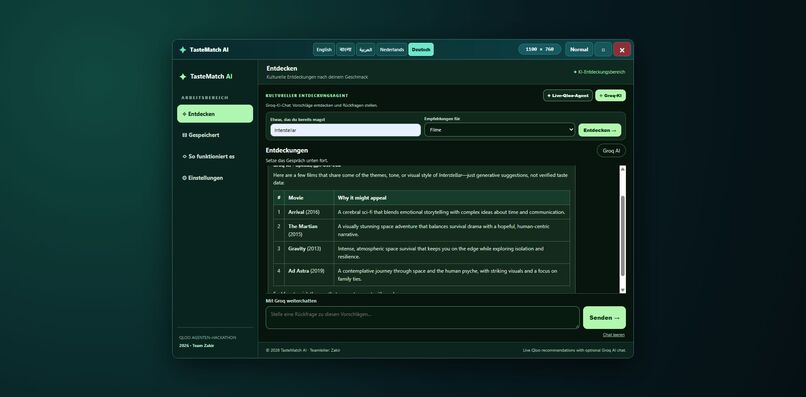
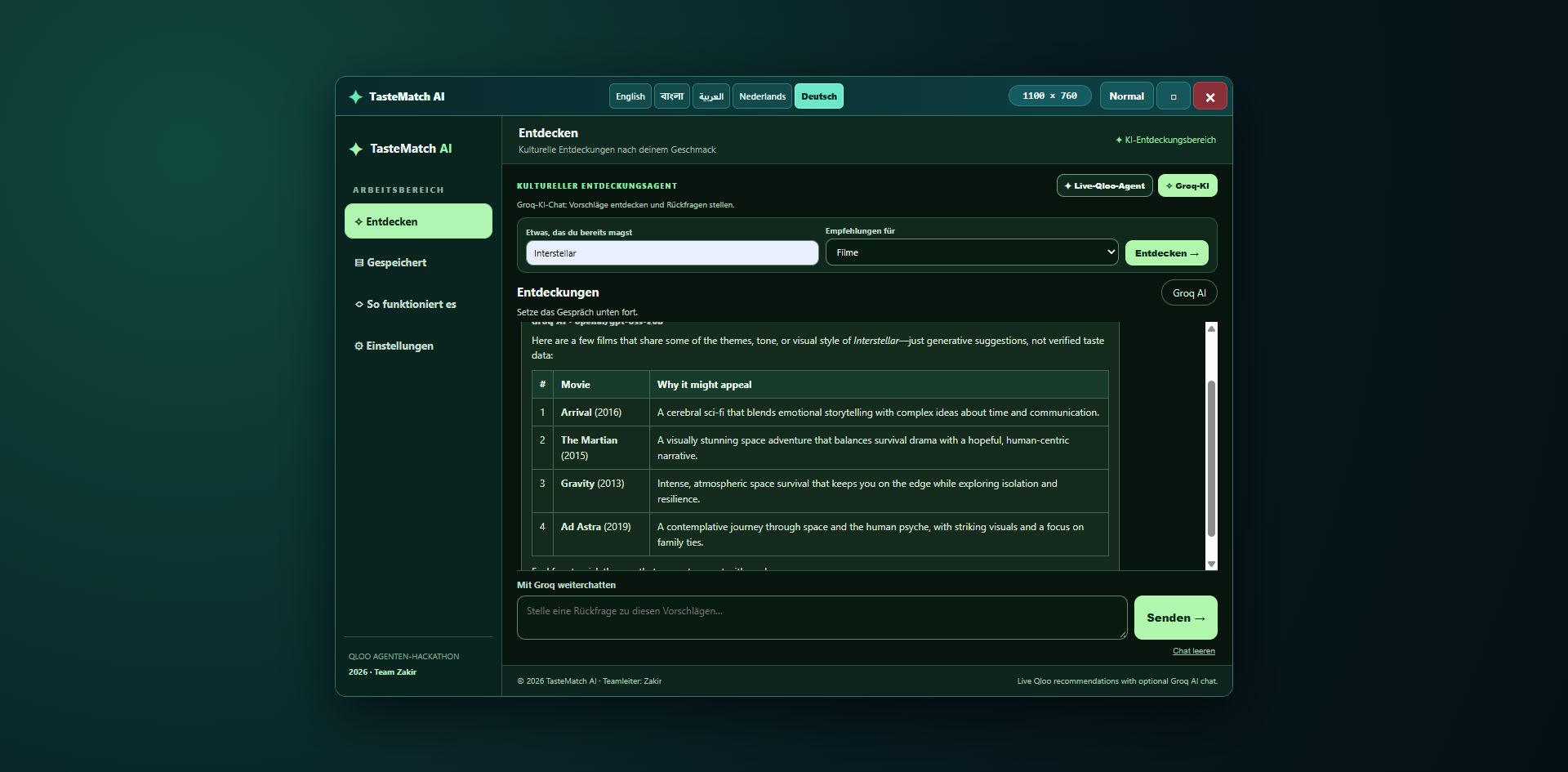
German interface
Inspiration
People usually know what they already love, but discovering what to try next across movies, books, music, travel, dining, fashion, and brands is fragmented. We built TasteMatch AI to turn one familiar favorite into a culturally relevant path of discovery.
What it does
TasteMatch AI is a multilingual cultural discovery agent. A user enters something they already enjoy and selects a recommendation category. In Live Qloo Agent mode, the app resolves the input to a Qloo entity and uses it as a taste signal to request live affinity-based recommendations. Each result is clearly labeled as Qloo data and can be saved in the browser.
Groq AI is an optional, separately labeled mode for generative suggestions and follow-up conversation. Groq responses support headings, bold text, lists, tables, code blocks, and links through a sanitized Markdown preview. The interface supports English, Bangla, Arabic, Dutch, and German, works on desktop and mobile, and can be installed as a Progressive Web App.
How we built it
The frontend uses HTML, CSS, and vanilla JavaScript. PHP endpoints keep Qloo and Groq API credentials on the server. The Qloo workflow calls /search to resolve the user's favorite, then /v2/insights with signal.interests.entities and the selected filter type. Marked parses Groq Markdown and DOMPurify sanitizes the rendered HTML to prevent XSS. Saved discoveries and preferences use browser local storage, while the service worker provides the installable app shell.
Challenges
The largest challenge was normalizing results across multiple cultural categories while keeping the data source transparent. We also needed a responsive layout with scrolling only inside the results area, a useful chat experience on small screens, secure Markdown rendering, and API error messages that did not misrepresent generated content as Qloo results.
Accomplishments
We delivered a fully published end-to-end web app with live Qloo recommendations, optional Groq follow-up chat, five interface languages, saved discoveries, responsive layouts, safe rich-text rendering, and PWA installation. The public repository includes the complete source, setup instructions, tests, third-party license notices, and an MIT license.
What we learned
We learned how Qloo's Taste AI graph connects interests across cultural domains, how to use entity resolution as the first step of an agentic workflow, and how important clear provenance is when combining live recommendation data with generative AI.
What's next
Next we want to add deeper Qloo signals, richer explanations for cross-domain connections, collaborative taste profiles, improved accessibility, and more localized discovery experiences.
Built With
- css
- dompurify
- groq
- html
- javascript
- marked
- php
- progressive-web-app
- qloo-api
- service-worker

Log in or sign up for Devpost to join the conversation.