-
-
TasteLaunch
-
-
-
-
Inspiration
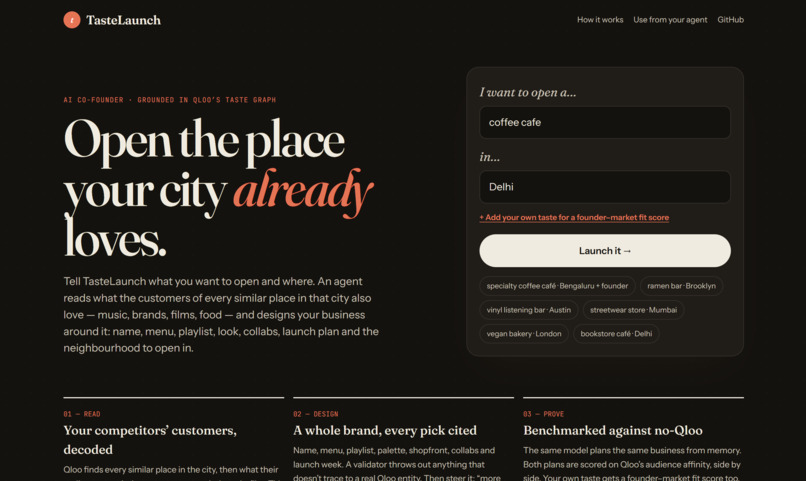
Most new cafés, bars and stores are designed on gut feel: the founder’s own playlist, a Pinterest board, a menu copied from down the road. Asking an LLM doesn’t fix that. It knows what’s famous, not what the people who already spend money at similar places in your city actually love. Qloo knows that. TasteLaunch puts it to work for founders.
What it does
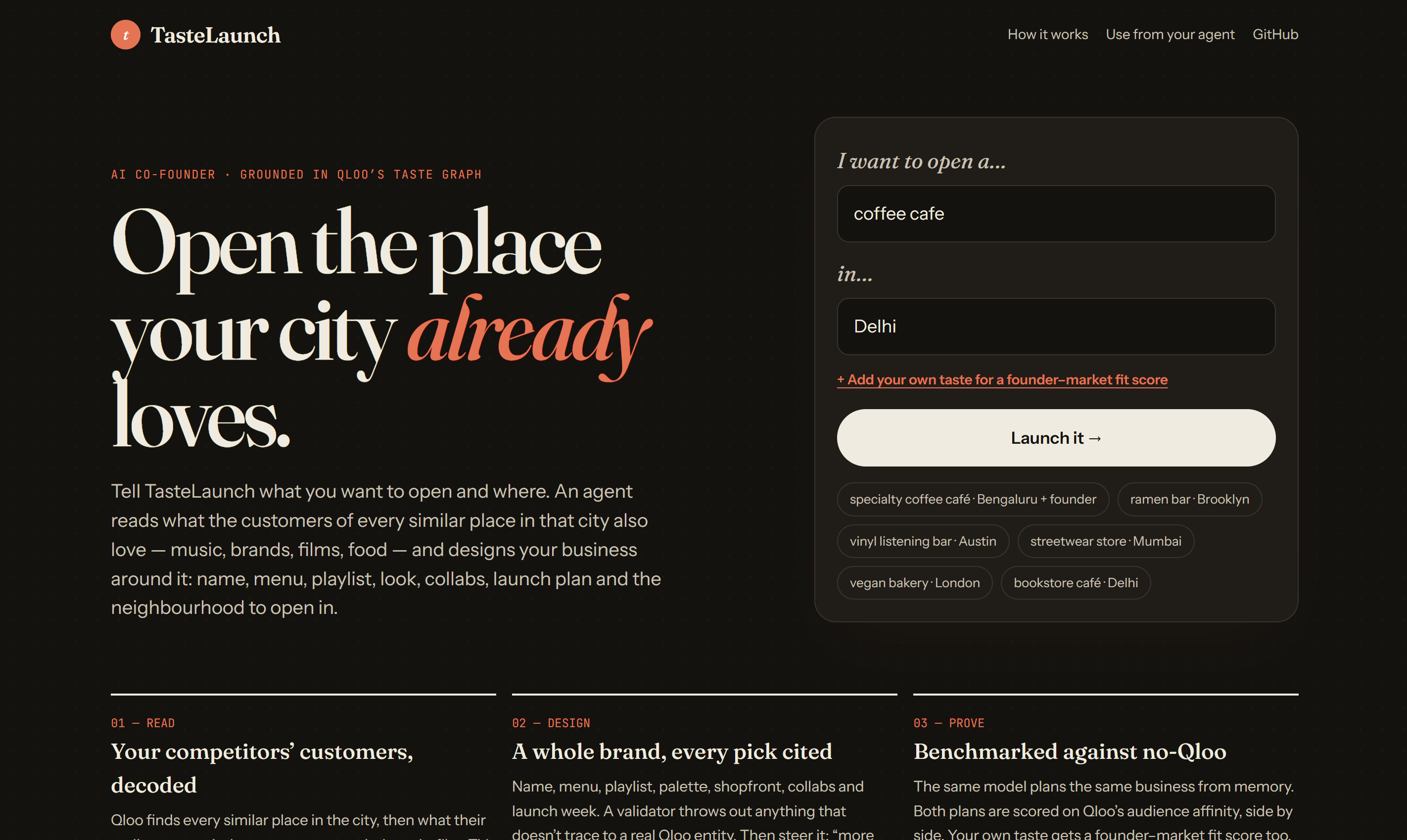
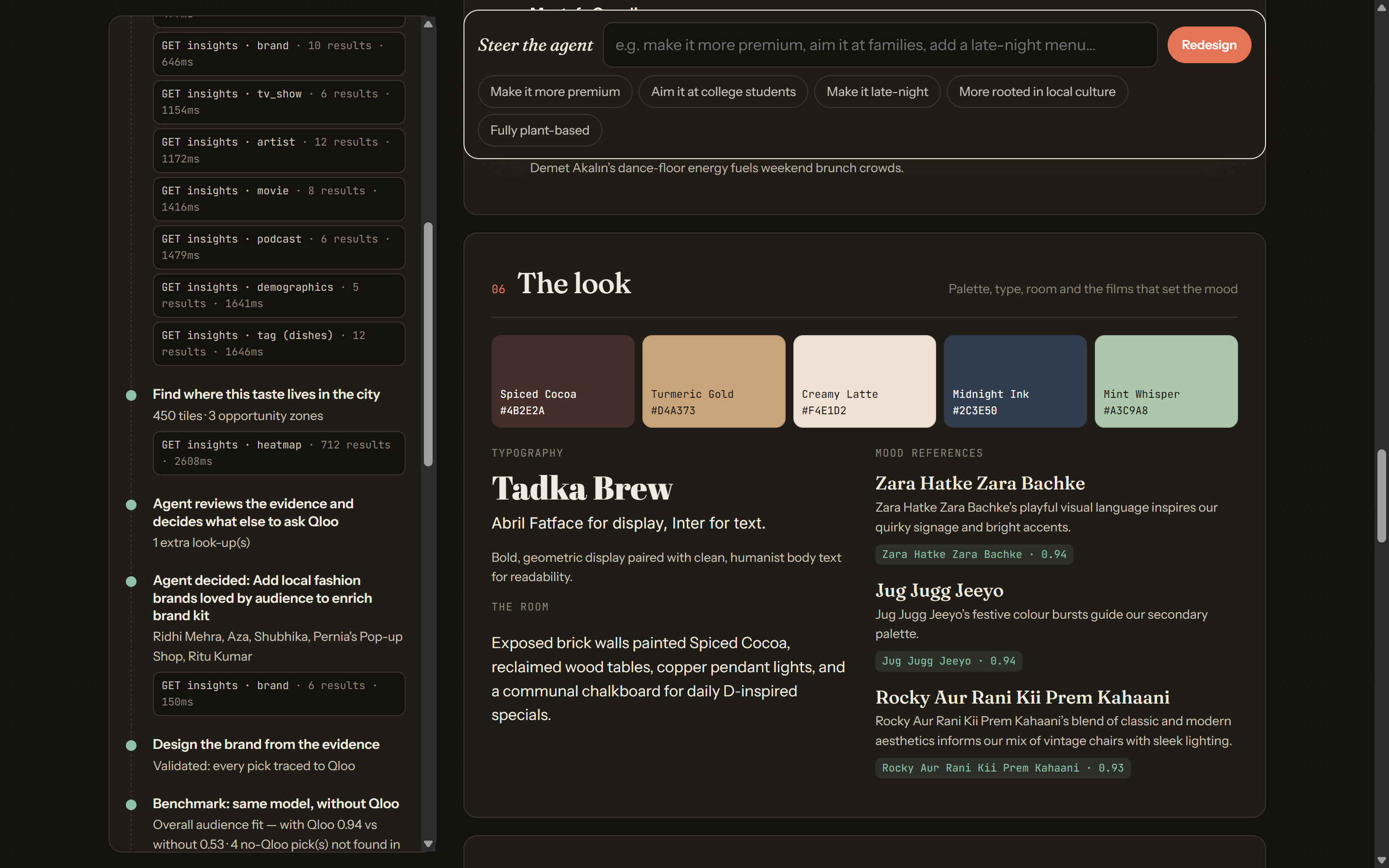
You type what you want to open (“specialty coffee café”) and where (“Bengaluru”). TasteLaunch’s agent then:
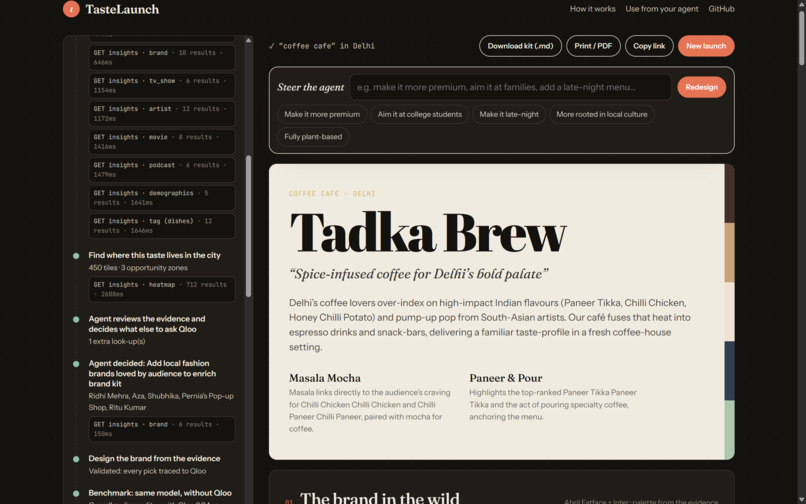
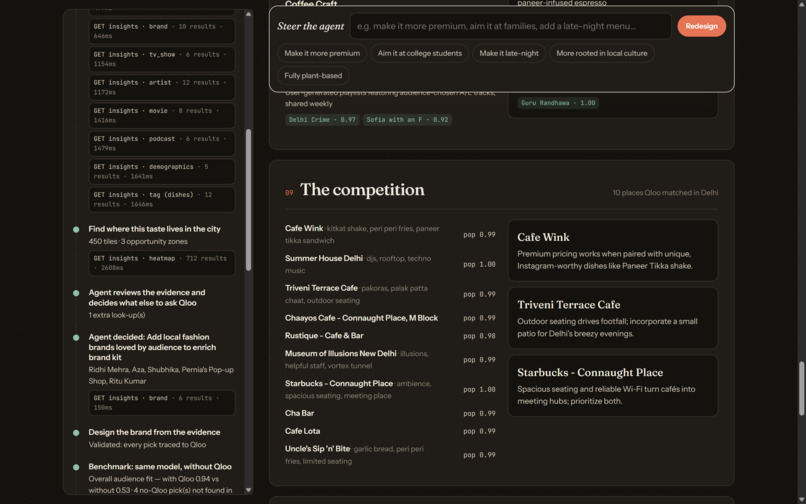
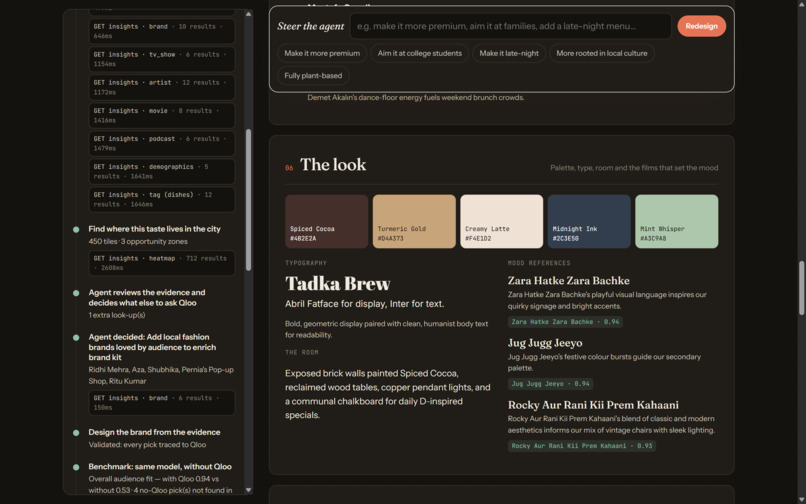
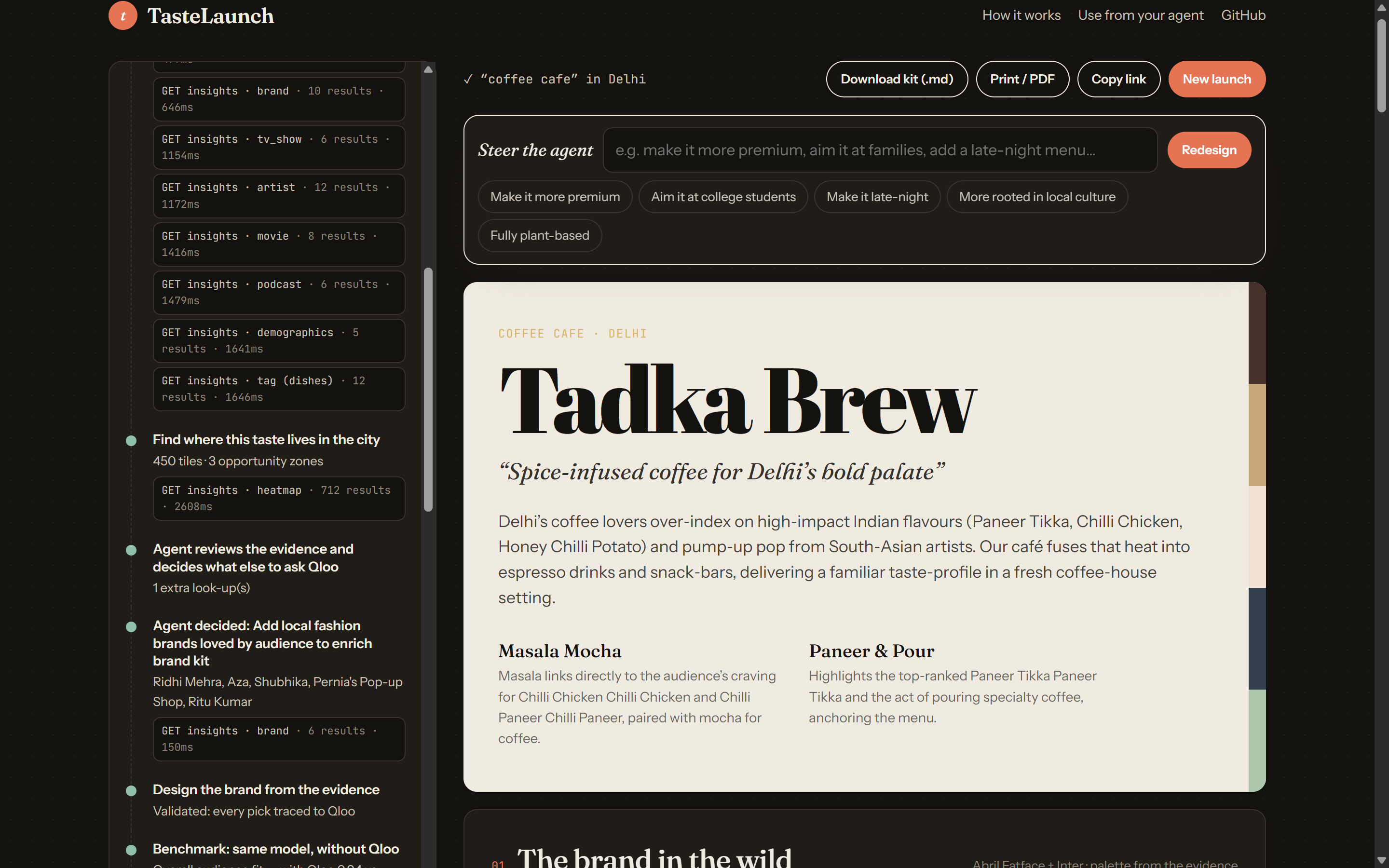
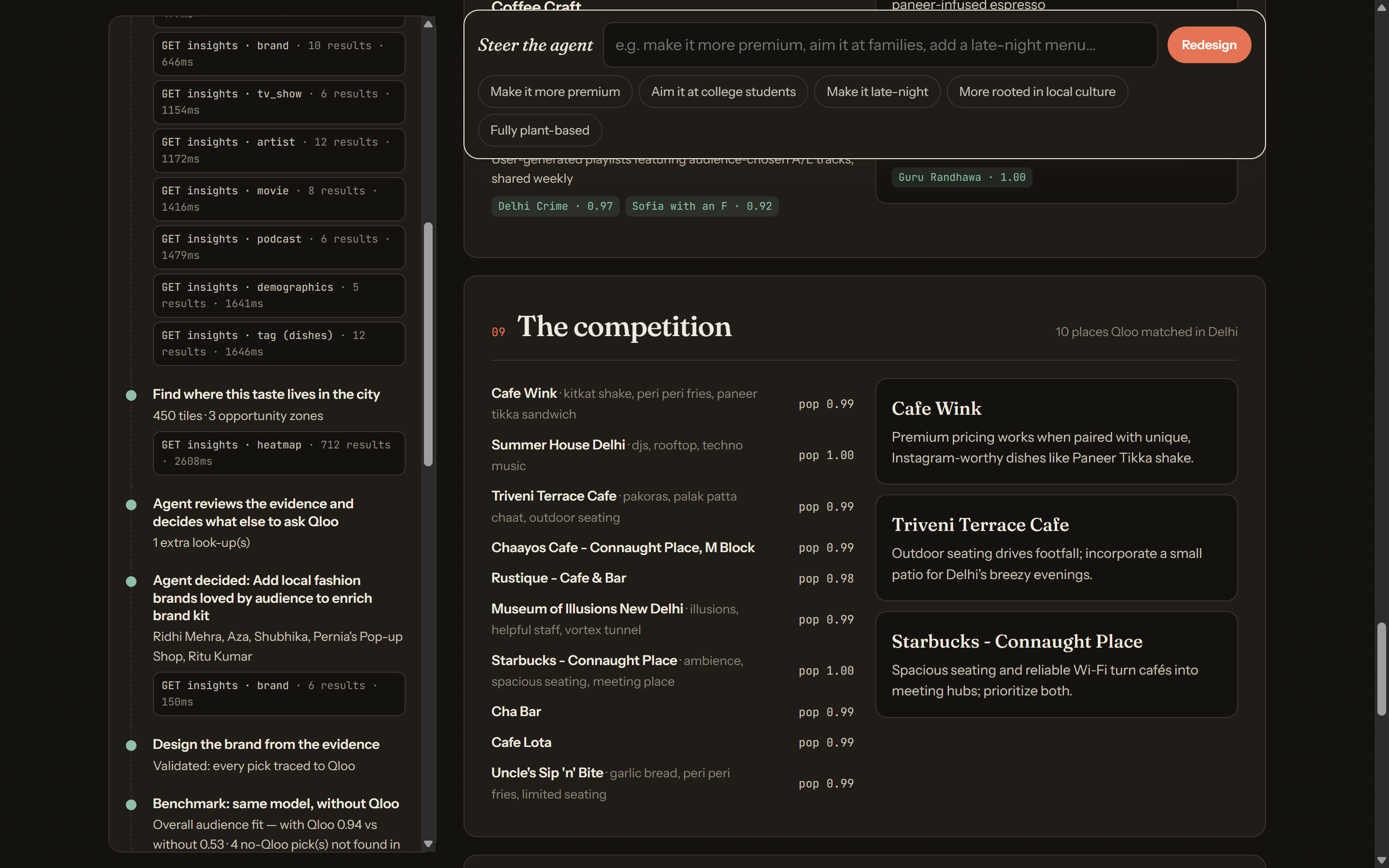
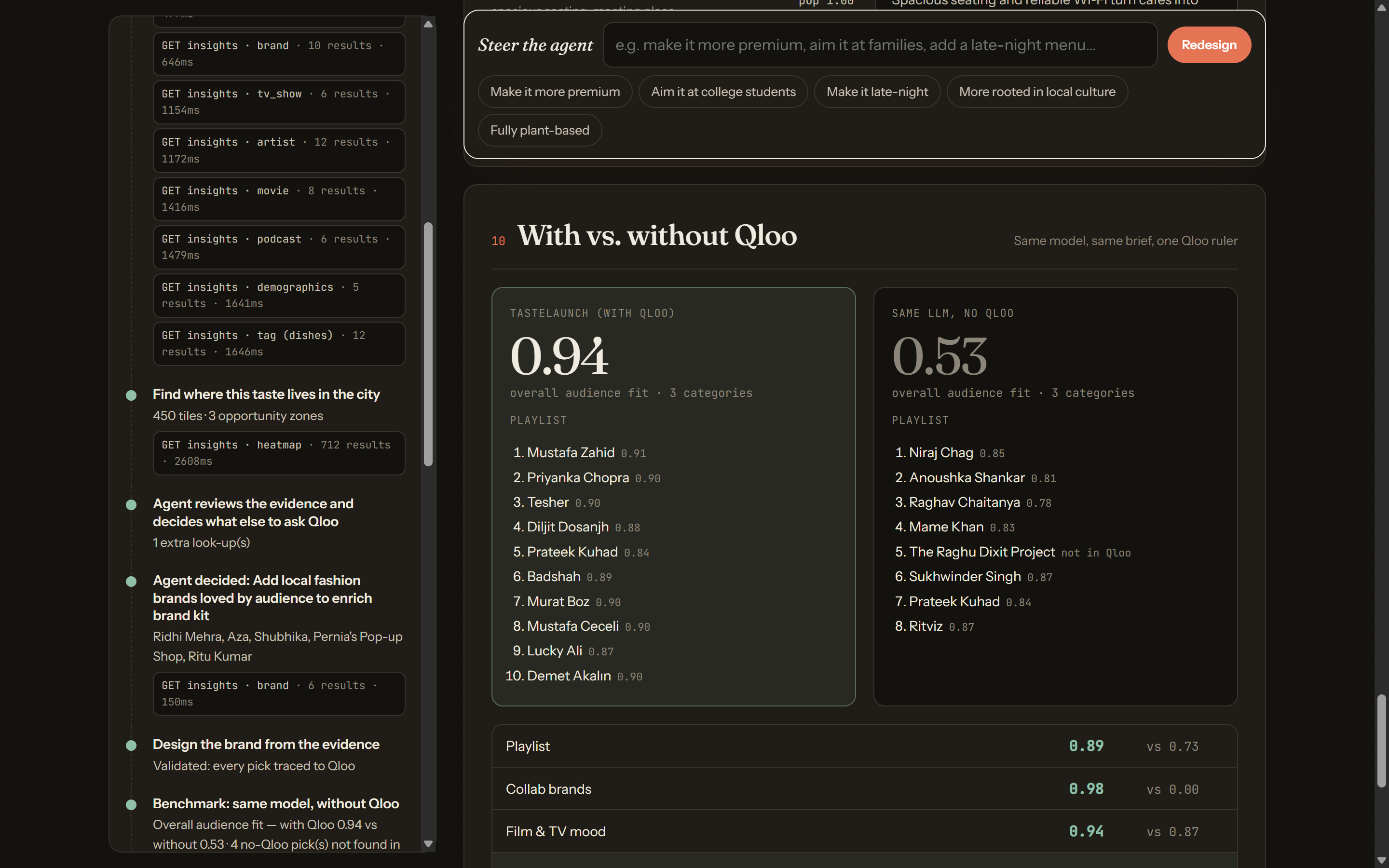
Maps the competition. It grounds your idea in Qloo place tags and pulls 40 candidate places. The agent then vets them down to real direct competitors, dropping malls, hotels and generic restaurants. Reads their customers. With those competitors as the taste signal, it pulls what that audience over-indexes on across music, brands, film, TV, podcasts and specialty dishes, plus the audience’s demographic skew. Finds where to open. A Qloo taste heatmap, minus competitor density, gives ranked opportunity zones. Explores on its own. The LLM reviews the evidence and decides which extra Qloo lookups would sharpen the brand. Designs the business. You get names, positioning, a customer persona, a signature menu, an in-store playlist, a palette and fonts, collab brands, content pillars, a launch week and competitor lessons. It also renders a shopfront, a menu card and an Instagram grid in the kit’s own palette. Scores the founder. Add your favourite artists, films and brands, and Qloo measures your founder–market fit. Takes direction. Say “Make it more premium” or “Aim it at students”, and the agent re-queries Qloo and redesigns. Every version is kept. Proves itself. The same LLM plans the same business without Qloo, and both plans are scored on Qloo’s audience affinity.
It also works inside other agents: /api/mcp is an MCP server with read_local_taste and launch_brand_kit tools.
Why it only works with Qloo (the benchmark)
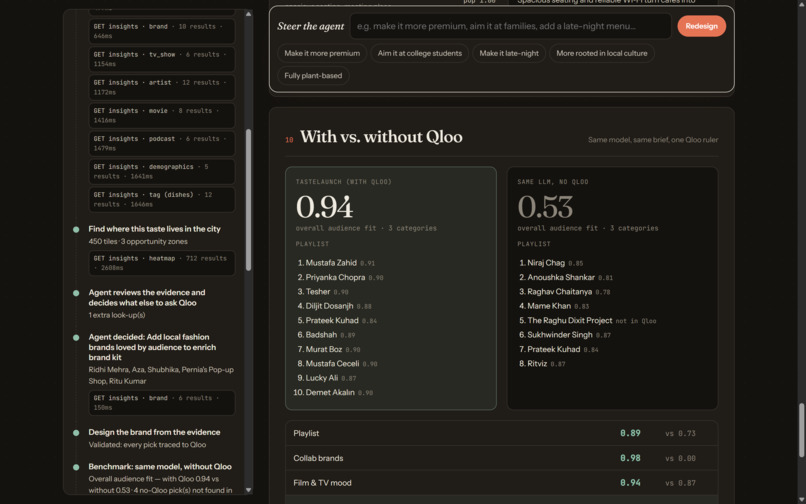
Across 10 live launches in 10 cities:
Overall audience fit: 0.93 with Qloo vs 0.62 without (1.5×). Collab brands: 0.95 vs 0.37. Without Qloo, the model suggested 17 picks that aren’t anywhere in Qloo’s graph. A surprise: for a Bengaluru specialty café, the AI without Qloo guessed Bonobo and Khruangbin. Qloo showed the city’s specialty-coffee crowd actually over-indexes on EDM. No LLM guesses that.
Honest caveat: TasteLaunch picks from Qloo’s ranking and is scored on Qloo’s ruler. The number shows how far a model working from memory drifts from the audience Qloo measures. It doesn’t show that the graph is infallible.
How we built it Stack: Next.js 15 and TypeScript on Vercel, streaming the agent’s steps live. Every Qloo request is shown in an on-screen trace with its exact parameters. Qloo hackathon API calls: /v2/tags with semantic search /v2/insights: places, artists, brands, movies, TV, podcasts, specialty-dish tags, demographics, heatmap, filter.results.entities scoring, filter.exclude.entities and popularity floors /search Anti-hallucination validator: the LLM only sees an aliased evidence ledger. Every pick must cite a real Qloo entity of the right type, and ungrounded picks are dropped and counted. Free LLMs with failover: Groq gpt-oss and Gemini. When a free model is retired, the client automatically switches to an available one. Demo reliability: saved live runs replay instantly, plus per-IP rate guards. Challenges we ran into Wrong competitors. On real data, the first competitors Qloo returned were malls and biryani restaurants, which skewed everything downstream. We fixed it with tag scoring, rule-based ranking and agent vetting. Junk entities. Raw affinity favoured tiny niche entities (yes, a meme account). A popularity floor fixed it. Name matching. “Nicobar” matched a book about the islands, so we added strict name resolution across entity types. Retired free models. Groq retired its free Llama models mid-hackathon, which is why we built automatic model discovery. Accomplishments that we’re proud of A measured, honest benchmark, not just “trust us”. Every pick on screen traces to a real Qloo entity. A real surprise insight (the EDM finding) that shows cultural data beating LLM guesswork. It runs end to end on free tiers. What we learned
Cultural data is only as good as the signal you feed it. Picking the right competitors mattered more than any prompt.
What’s next Lease-listing overlays on opportunity zones. Menu pricing from Qloo price levels. A monthly “taste drift” report that alerts open businesses when their neighbourhood’s taste shifts. Business model: free first launch, then a subscription for drift alerts and re-launches. Franchises picking their next city are a natural fit.
Built With
- gemini
- groq
- leaflet.js
- mcp
- nextjs
- qloo
- react
- typescript
- vercel


Log in or sign up for Devpost to join the conversation.