-
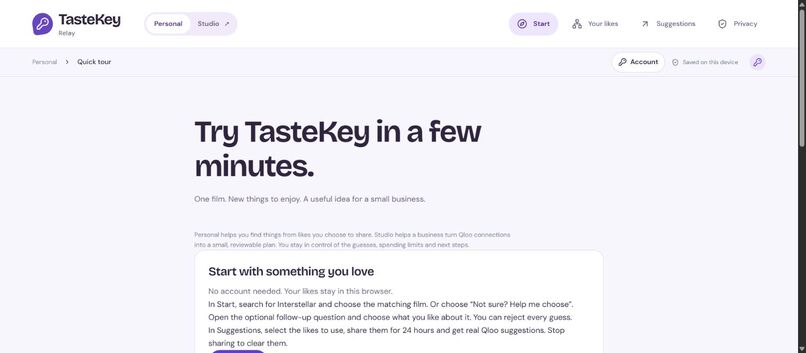
One cultural engine, two journeys: choices you control and business ideas you can inspect. Current app, October 30.
-
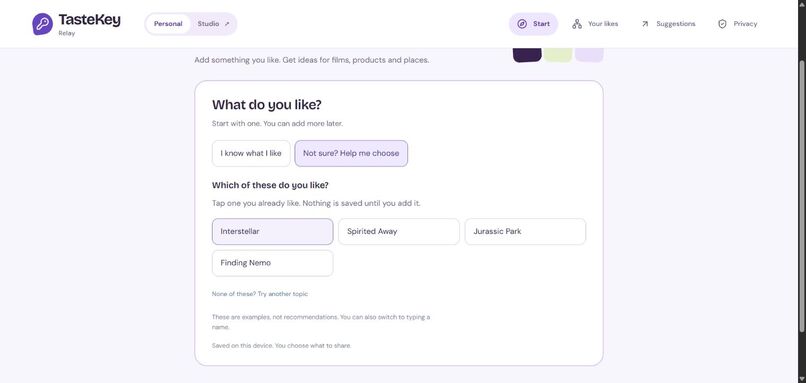
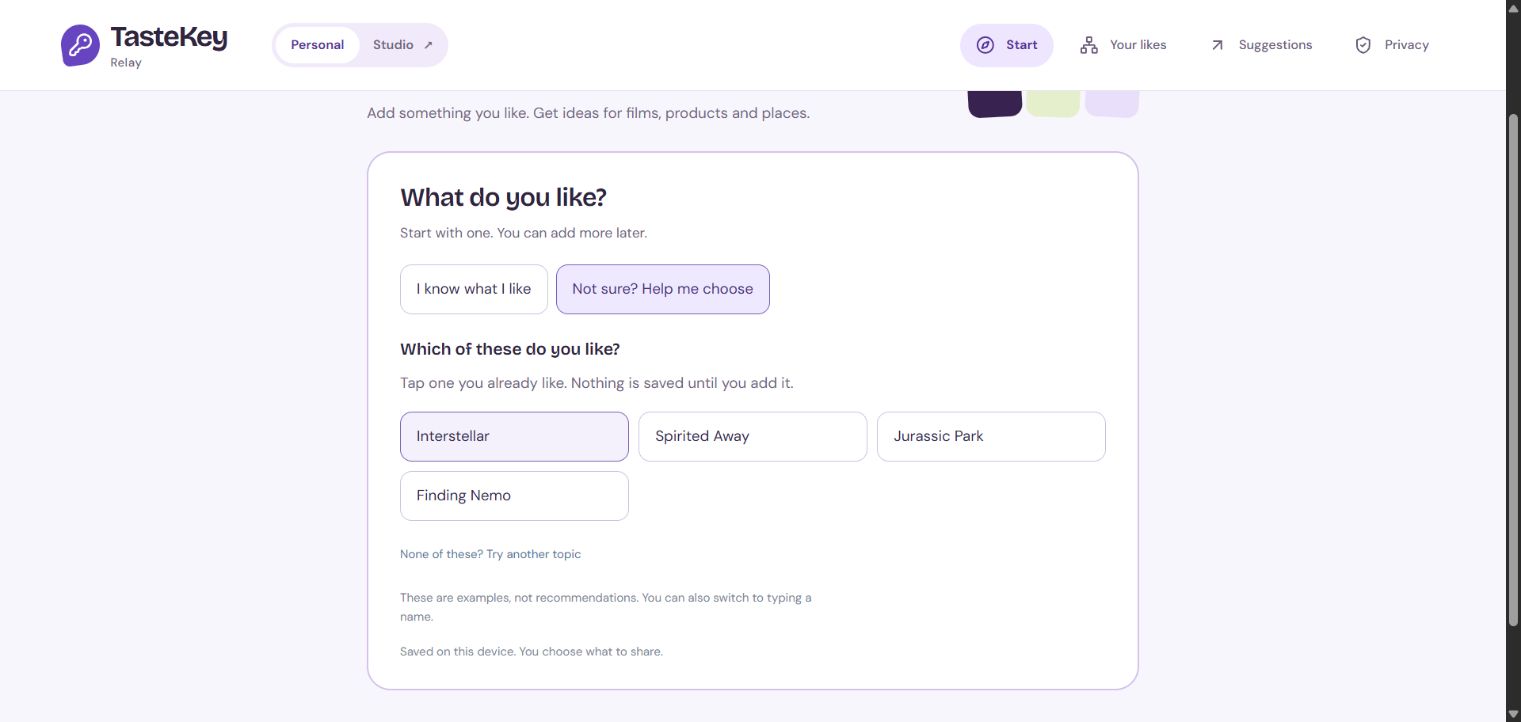
Not sure where to start? Tap examples, then review the real Qloo result before saving. Examples are not recommendations.
-
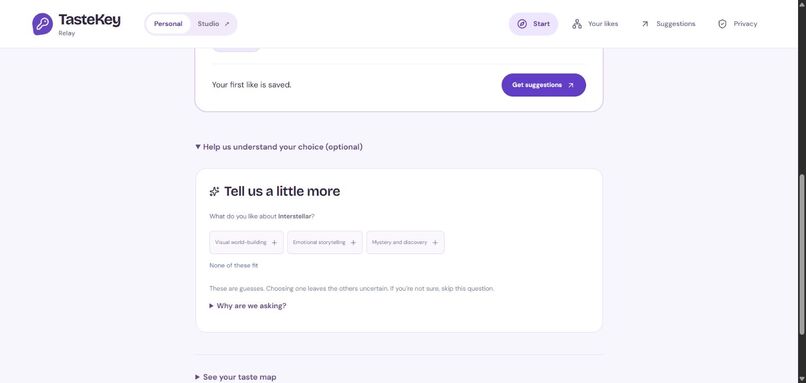
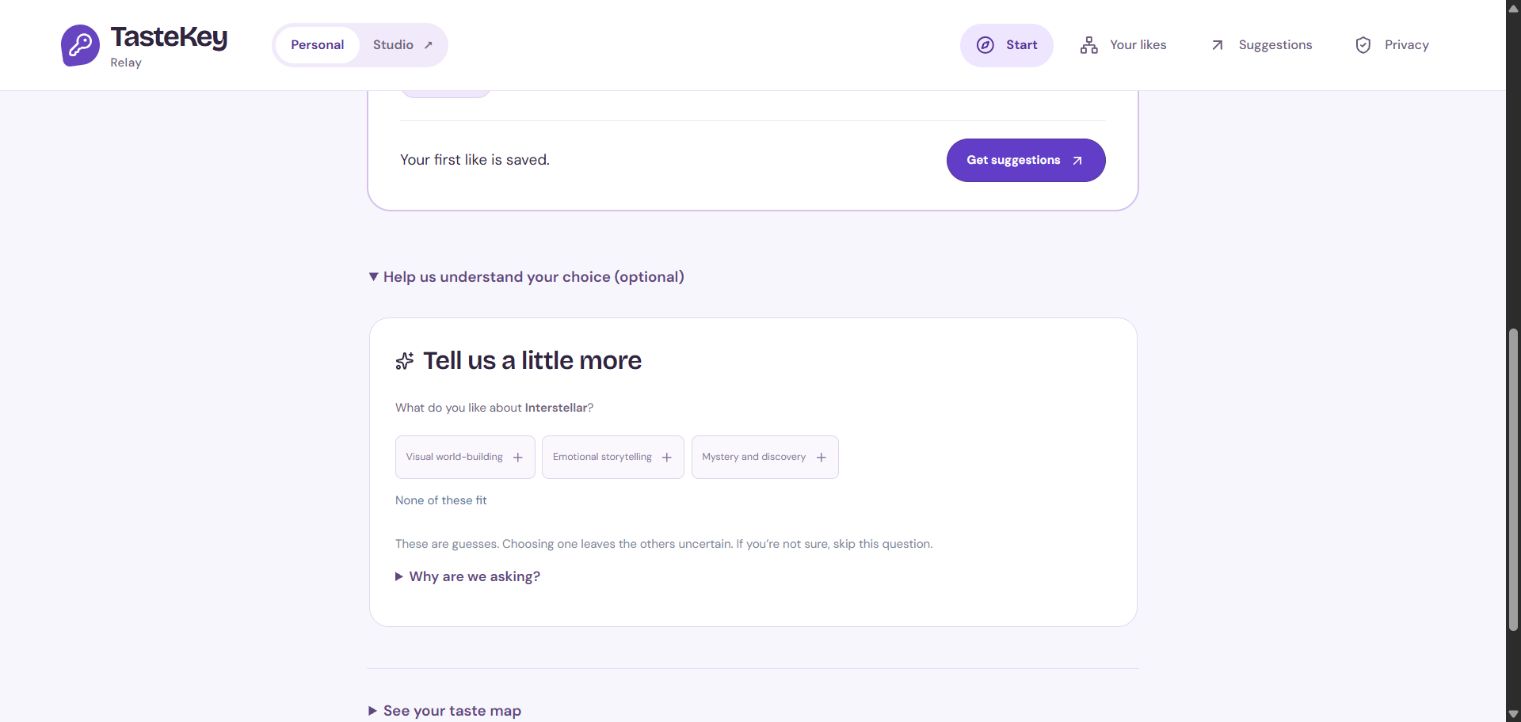
Why do you like Interstellar? Confirm a reason or reject every guess. Unchosen reasons stay uncertain. Synthetic demo tastes.
-
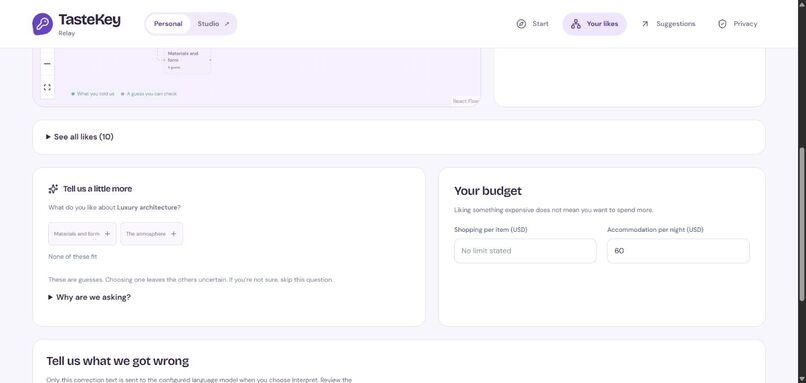
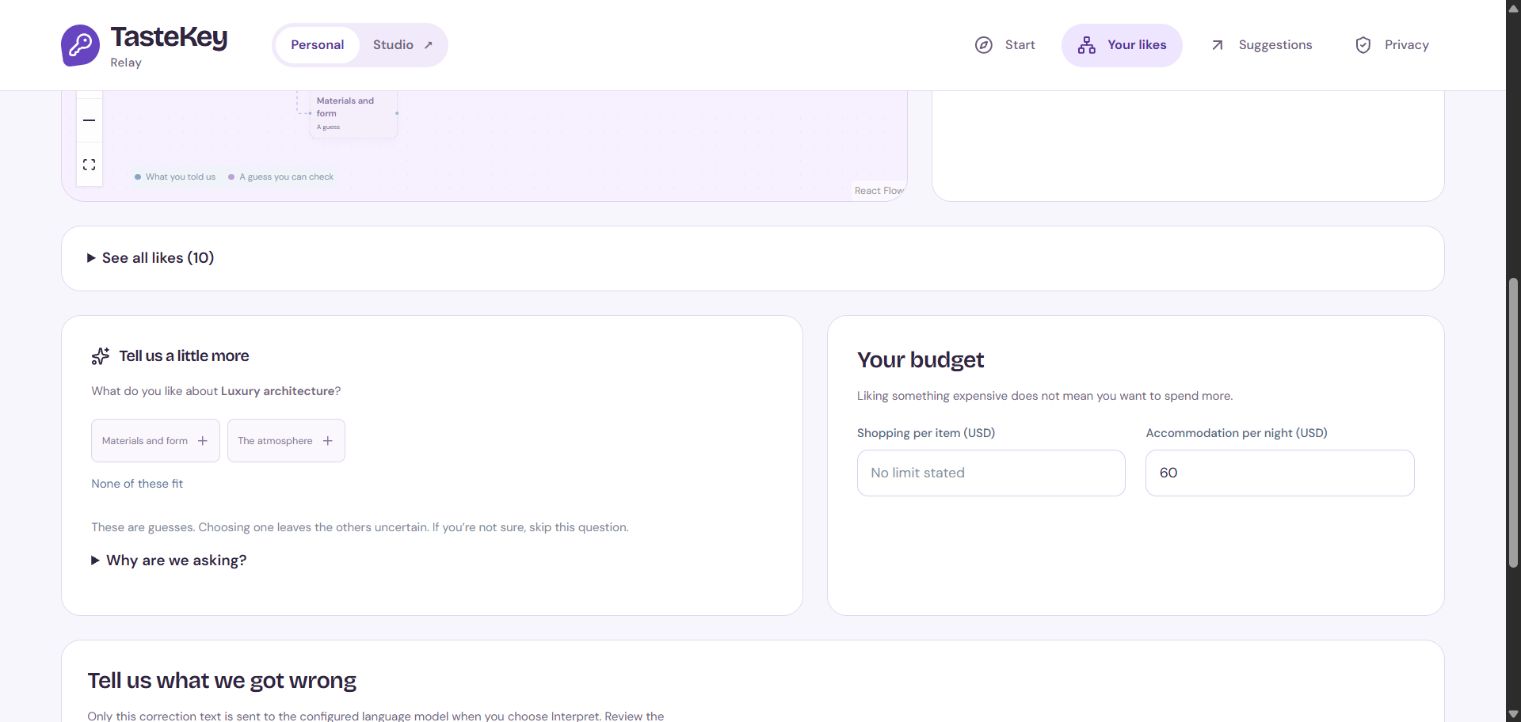
Earlier demo exposed an extra AI label. New safeguards leave added tastes unchecked and validate explicit changes. Review remains essential.
-
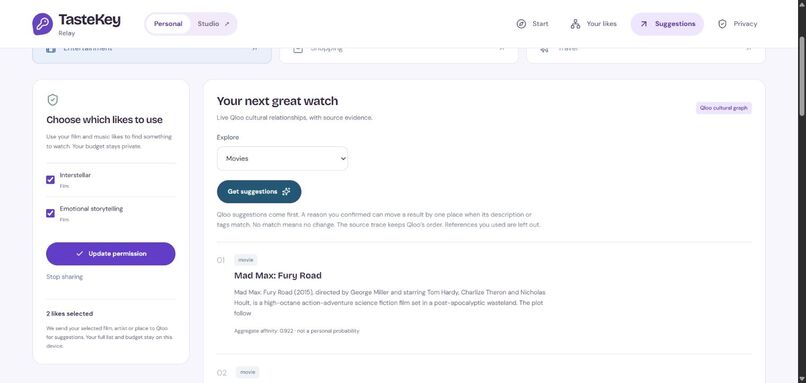
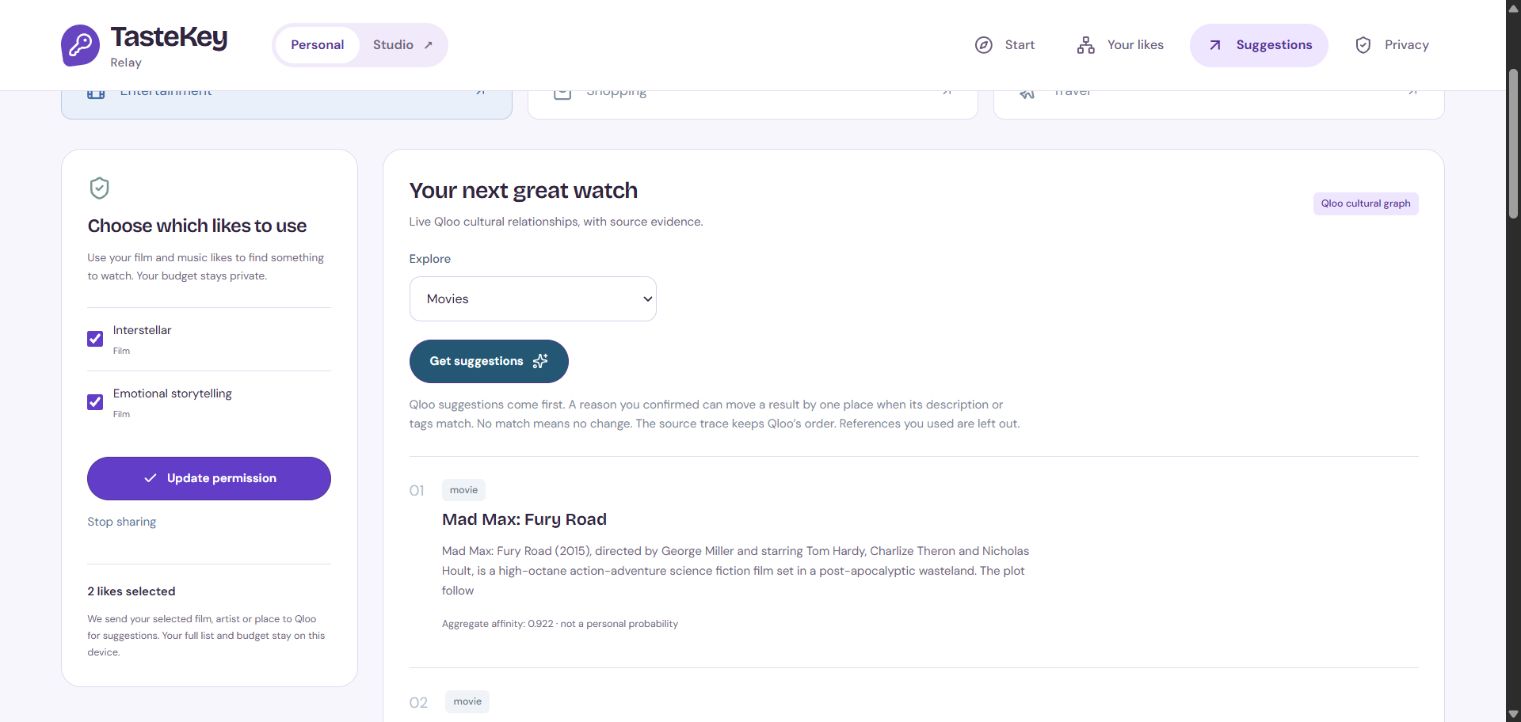
Real Qloo film suggestions from selected demo likes. Budget stays private; Stop sharing clears the results. No accuracy-gain claim.
-
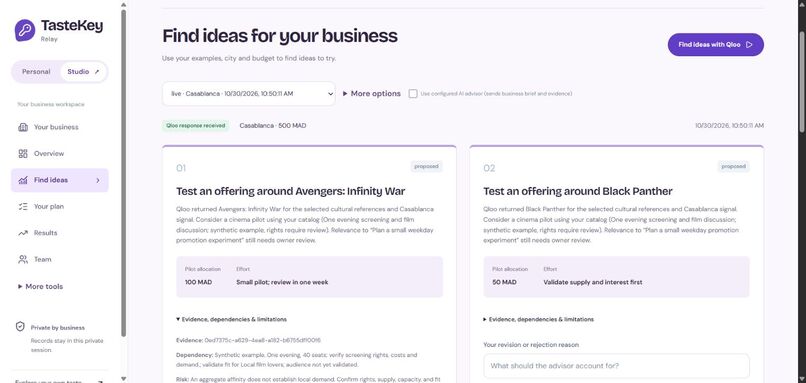
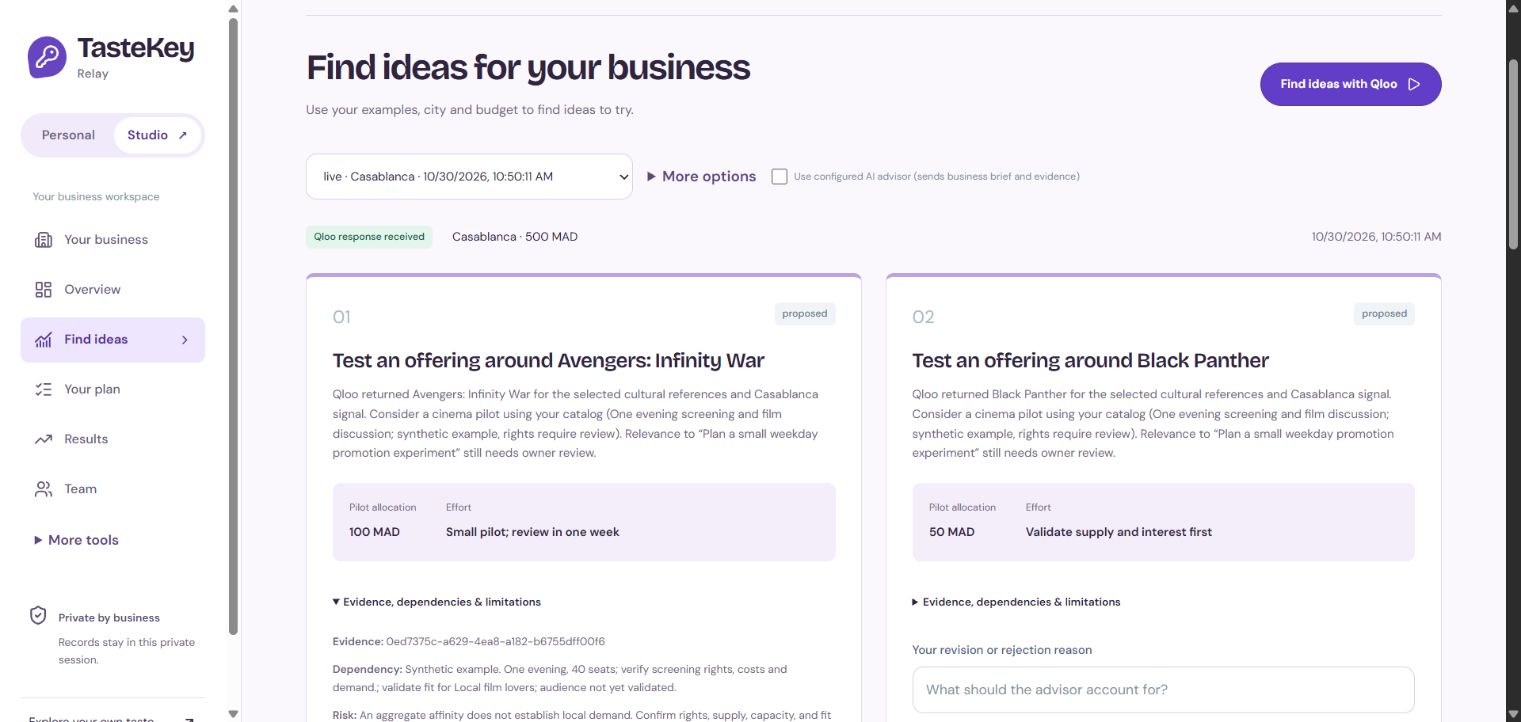
Real Qloo, synthetic Casablanca cinema, 500 MAD budget. Inspect evidence and rights/cost limits before accepting a pilot.
-
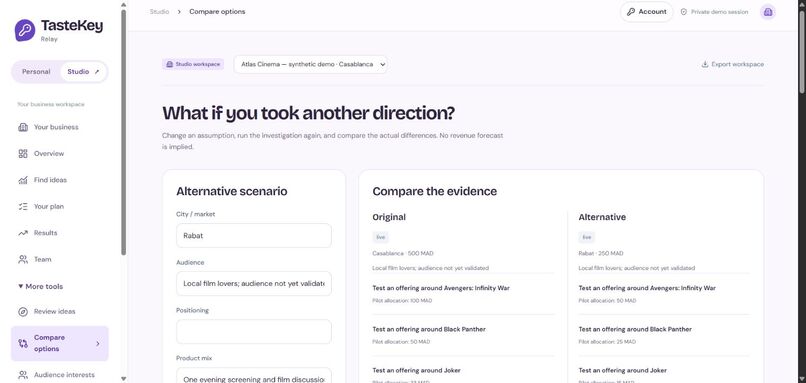
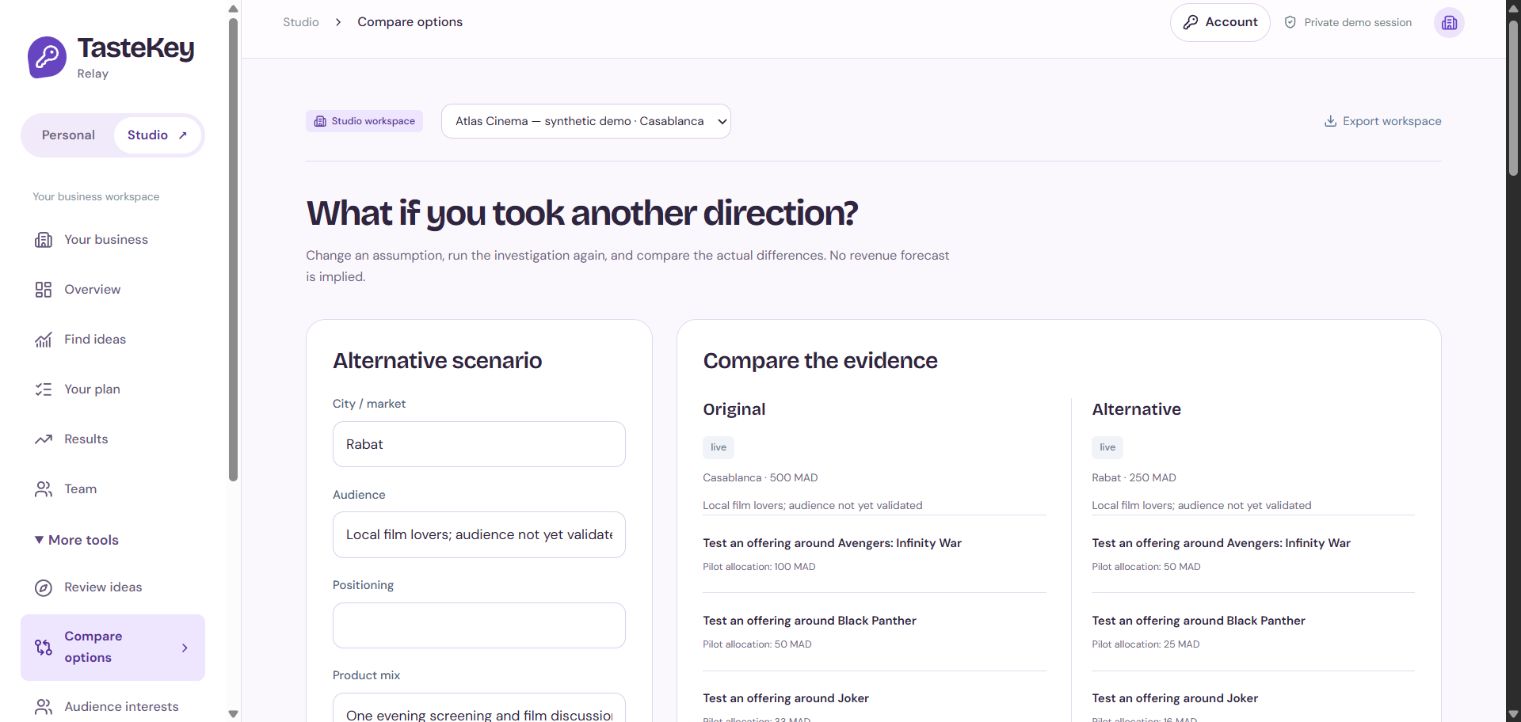
Real Qloo: Casablanca/500 MAD versus Rabat/250 MAD. Allocations change; candidates can stay the same. No demand forecast.
-
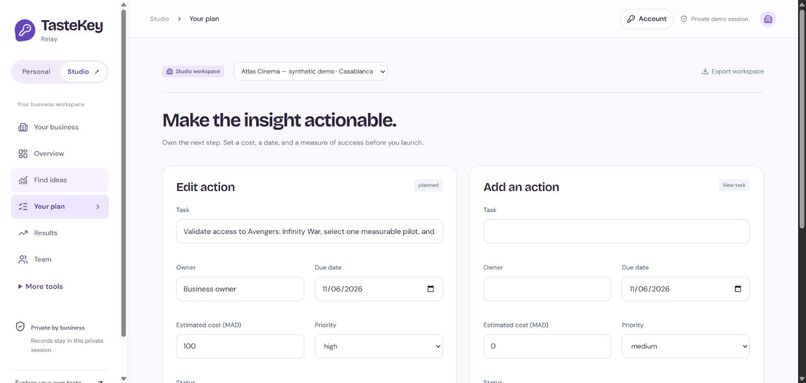
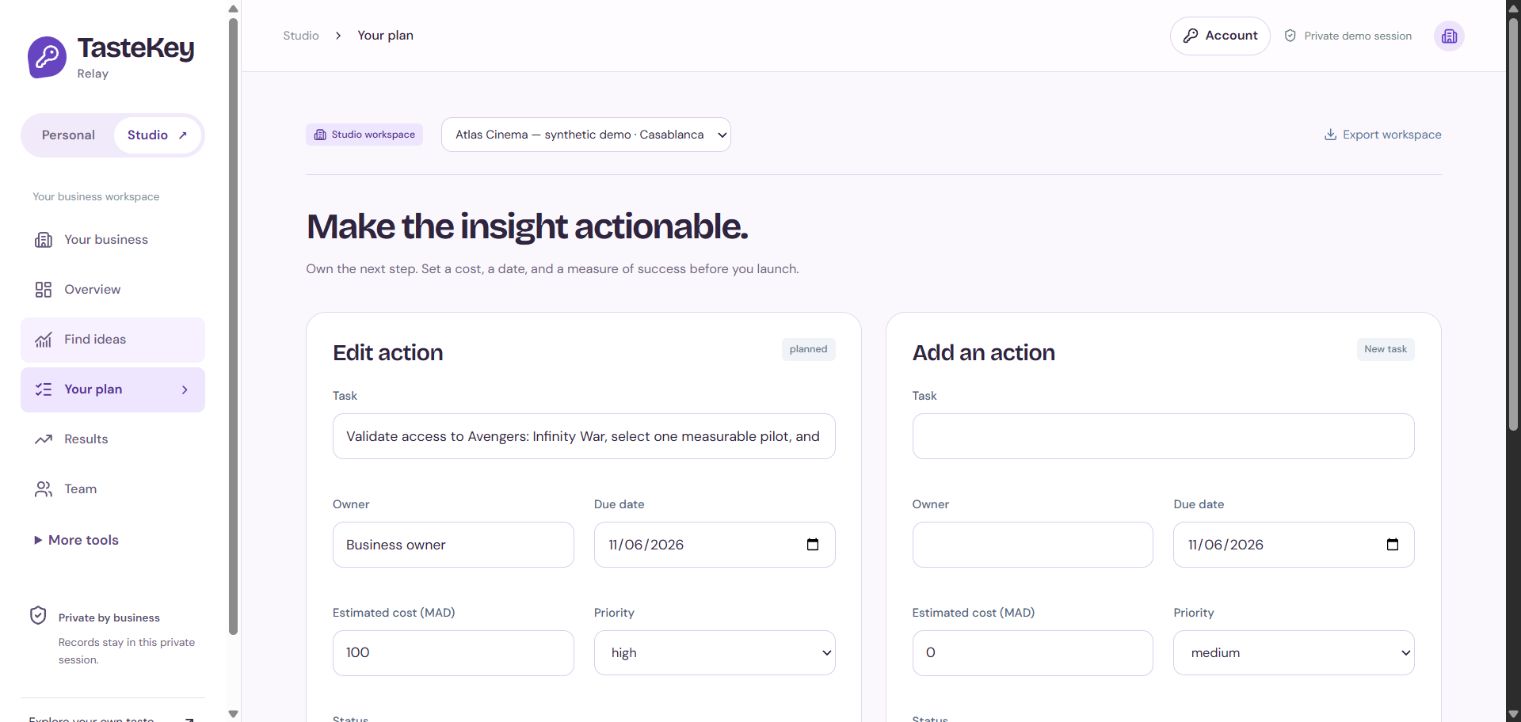
An accepted idea becomes a saved plan with owner, date and budget. Synthetic cinema; planned work, not completed sales.
Your taste. Your say.
Loving luxury architecture should not tell an app you can afford a luxury hotel. Yet personalization often mixes what we enjoy with assumptions we never made—and asks us to start again on the next website.
TasteKey Relay makes cultural discovery something you can check, correct and control. Personal keeps your likes on your device. Studio uses the same Qloo-powered cultural intelligence to help a small business choose its next experiment. Shared intelligence does not mean shared private profiles.
A correction that keeps what matters
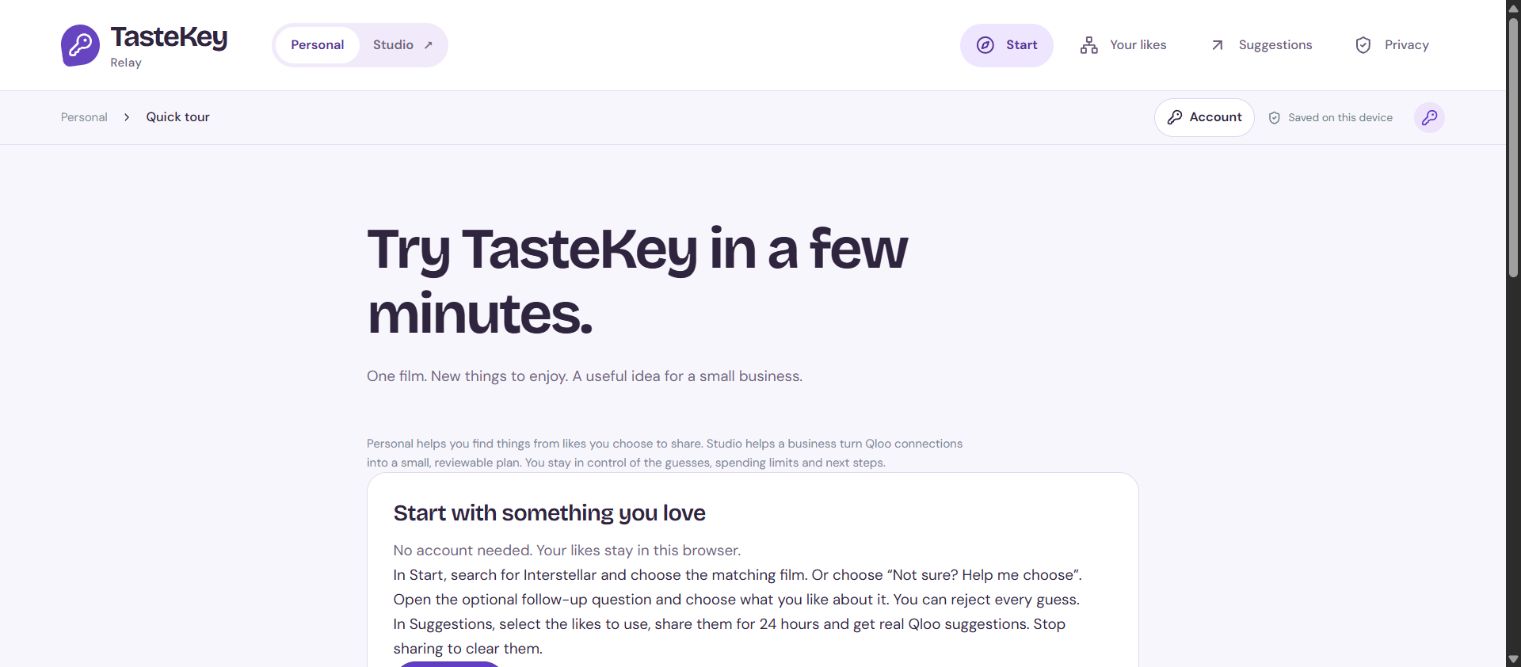
Start Personal with a film you love, such as Interstellar. Not sure where to begin? Tap suggested examples instead of writing an answer. Choose the intended Qloo search result, then answer an optional question about why you like it. A guess stays a guess until you confirm it; you can reject every suggestion.
Now add a design taste and say: “I love luxury architecture. My hotel budget is $60 a night. Keep my movie tastes.”
Optional Bedrock interpretation proposes changes for you to review and apply. The practical hotel limit stays separate from aesthetic preferences. An earlier demo exposed an irrelevant added label; the repair validates explicit statements and leaves new tastes unchecked. Only checked fields are applied. Uncertain wording can be entered directly in the structured editors. Review remains essential.
Choose which confirmed likes to use for entertainment, shopping or travel, and share them with that context for 24 hours. Stop sharing clears its results. Export or delete the local profile when you choose. This is one editable taste memory within TasteKey, not automatic account sync across devices.
TasteKey does not just guess what you like. It lets you verify, correct and control what it learns. Travel offers destination inspiration and filtering of dated, user-checked accommodation quotes; it does not book hotels or verify market availability. Shopping products are labeled samples.
The same intelligence, a business decision
Consider our synthetic Casablanca cinema, with a 500 MAD pilot budget and a one-evening capacity limit. Its owner reviews a cultural reference and asks Studio to find ideas with Qloo.
Studio returns cultural evidence and bounded pilot proposals. The owner can inspect their sources, reject an idea, accept another and save an editable action plan with responsibilities and dependencies. Compare Rabat at 250 MAD to see the changed inputs, location signal and allocations alongside the original scenario. Similar candidates may remain; a changed city is not proof of a changed audience.
Later, record what actually happened. Each outcome specifies whether higher, lower or neither counts as success. These reports and rejected ideas inform disclosed planning rules—not an independently validated learning system.
Studio turns cultural signals into decisions a business can inspect, test and improve. Allocations are experimental spending bounds, not supplier quotes, screening rights or predicted ticket sales. No customers, revenue gains or real cinema outcomes are claimed.
What Qloo supplies—and the agent adds
Qloo resolves reviewed names into cultural entity IDs and returns related films, TV, brands and destinations, plus location and explainability evidence. In an actual recorded Personal run seeded by Interstellar, returned films included The Martian and The Imitation Game. These were provider results, not titles invented by a model; future results may differ.
TasteKey keeps three things distinct: your stated preferences, Qloo evidence and proposed interpretations. Its bounded workflow checks permissions, investigates cultural connections, applies constraints and saves reviewed decisions. Optional Amazon Nova Micro interprets correction text or words Studio proposals; code protects costs, ownership and evidence IDs. Owner review remains necessary. A chatbot alone could write a plausible idea, but would not supply this run's returned Qloo records and traceable identities.
Personal and Studio share this infrastructure. Studio never receives the full personal graph. Optional audience contributions require separate category-only consent and protected aggregates. Verified email is not proof of unique people.
Built to preserve trust
TypeScript, Next.js and React Flow support the interface; tenant-scoped SQLite persists business work. Server-side Qloo calls have timeouts, caching and bounded retries. Bedrock has a daily call cap. Cognito-backed sign-in and team roles protect collaboration; a non-root container runs behind HTTPS on AWS Lightsail.
The hard part was preserving meaning across edits, permissions and business feedback. Repairs protect reviewed cultural identities, handle lower-is-better outcomes and require explicit review of AI changes. Latest local verification passed 127 unit tests and 29 browser cases, with one and two intentional live-provider skips respectively; build, types and CI passed. The first public safeguard run passed 26 cases but exposed two failures: synthetic profile setup timing and missing model explanatory text. Both received follow-up fixes. A focused live check on the final release still missed the stated hotel budget and kept Apply disabled; no change was applied. Direct budget entry remains available. The complete public suite on this final release remains pending. The running host, backup service and an isolated restoration of a fresh on-host backup passed inspection; a fresh off-host copy remains unverified. CI and safeguard details provide the scope and limits.
Evidence before promises
Our public-ballot proxy did not establish recommendation superiority: only one of 25 held-out films was retrieved, and a simulated clarification worsened its rank. A later small diagnostic also found no top-three gain. These are retrospective proxies, not people testing the product. Methods, negative results and limits remain public.
One self-selected owner film check found the initial suggestions relevant but already seen; a follow-up candidate looked useful. This is limited owner feedback, not independent validation or observed viewing. Next: independent preference comparisons and cinema-owner pilot reviews. Studio could become a subscription for teams without an insights department; willingness to pay and usefulness remain unvalidated. Optional developer extension/widget prototypes have limited local matching, not official shopping or booking integrations. Corporate federation and live inventory feeds remain future work.
Try the connected journey
Open the Quick tour—no account needed for the core journeys. Review a film in Personal, answer a follow-up, share selected likes and revoke them. Then create the labeled test cinema in Studio, inspect Qloo evidence, compare a budget and save a plan. Public MIT source and setup.
Built With
- amazon-bedrock
- qloo
- typescript
