-
-
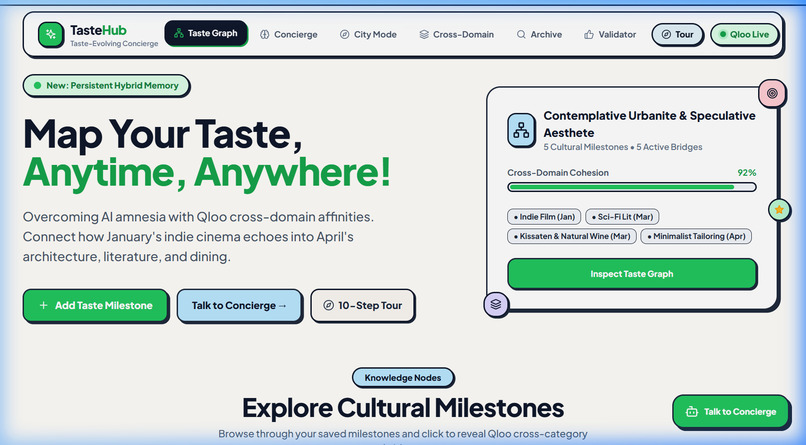
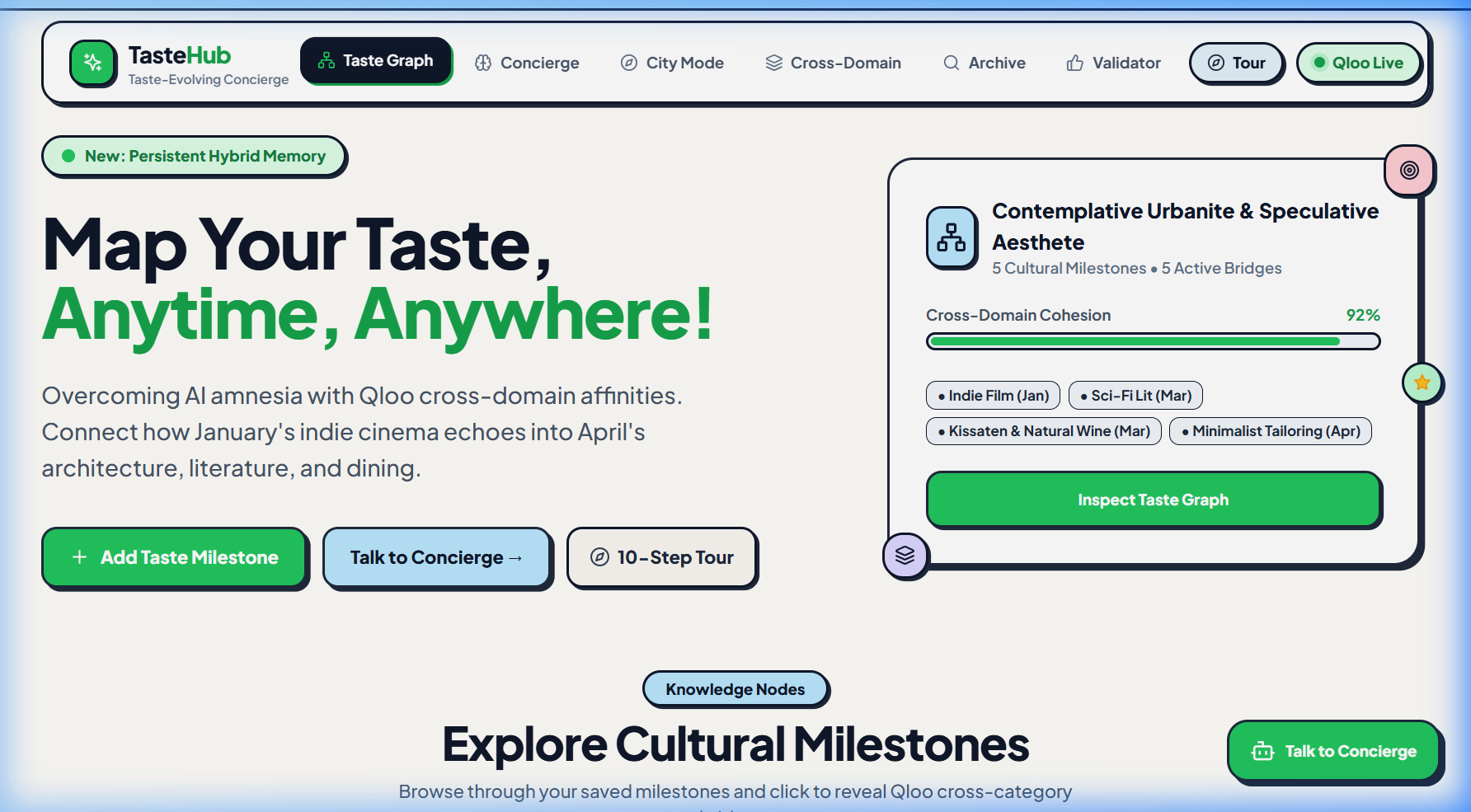
Persistent taste graph tracking cultural milestones over time with automated persona archetype synthesis.
-
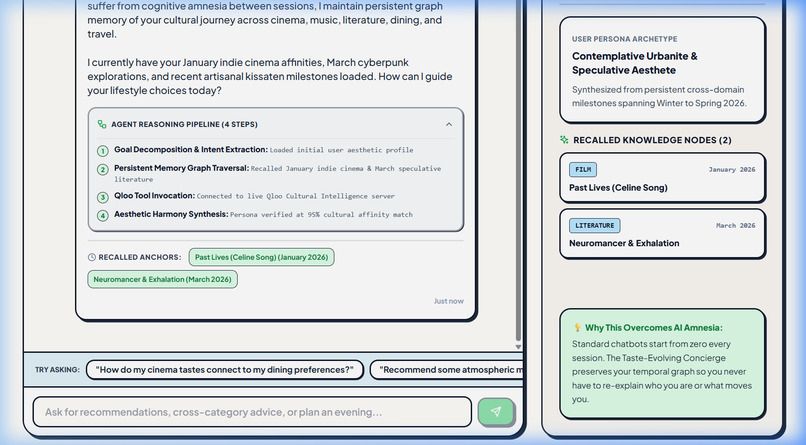
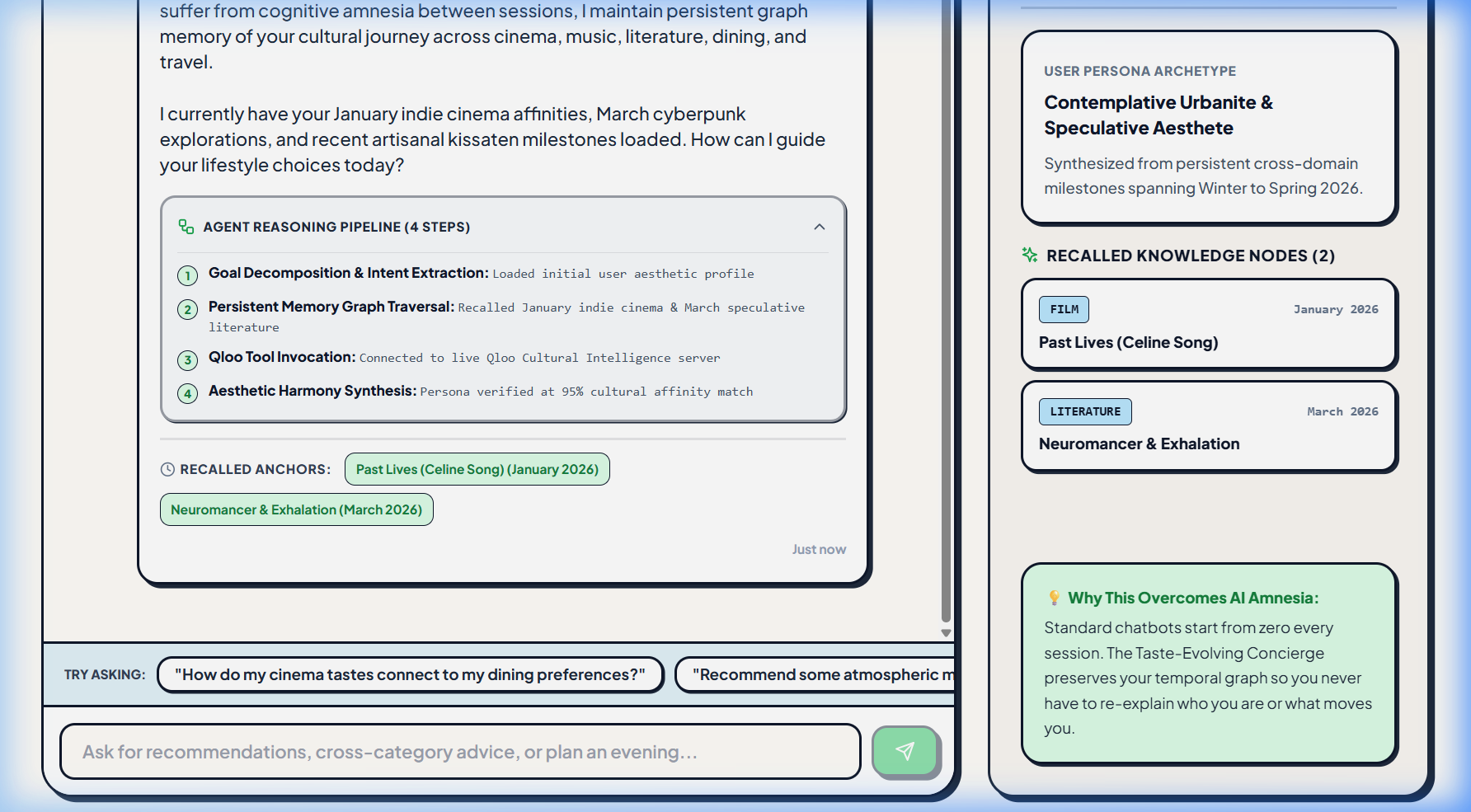
Conversational lifestyle concierge exposing a transparent 4-step autonomous agent reasoning trace.
-
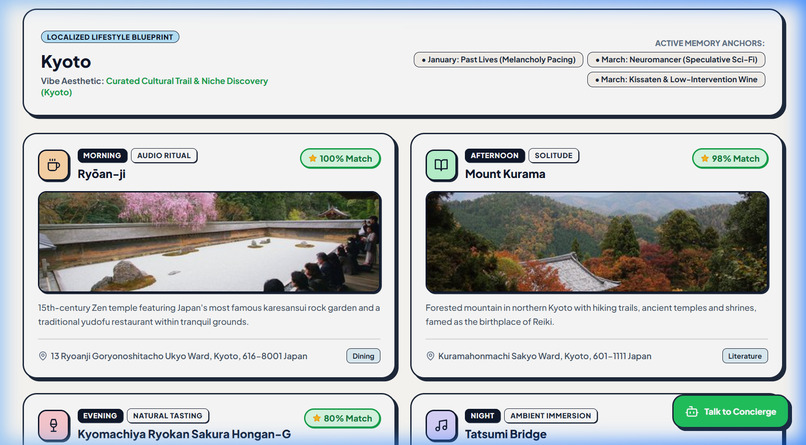
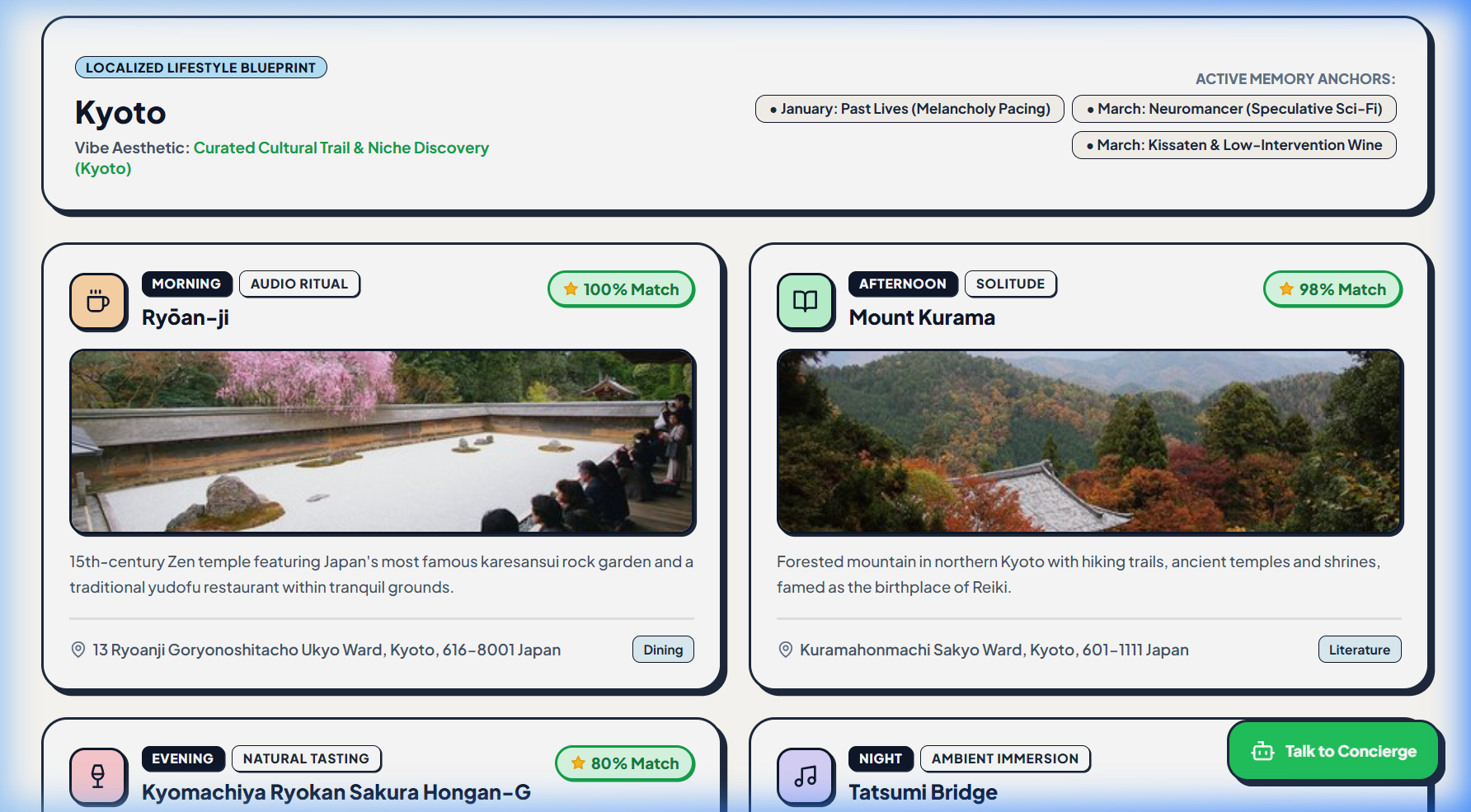
City Concierge synthesizing a bespoke 4-part Kyoto day blueprint using live Qloo cultural place data.
-
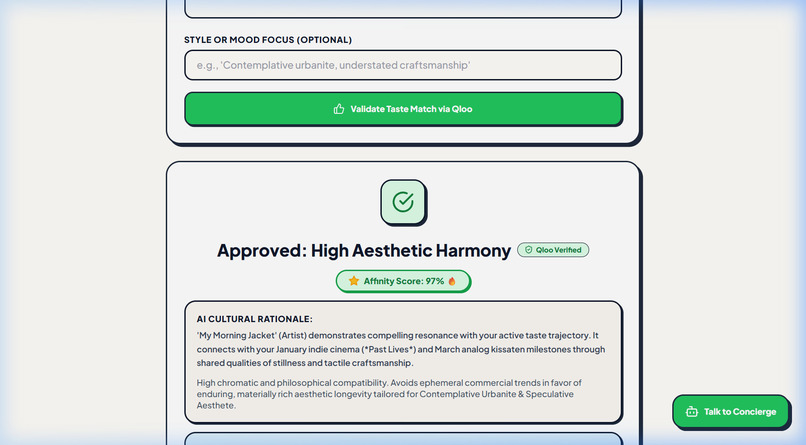
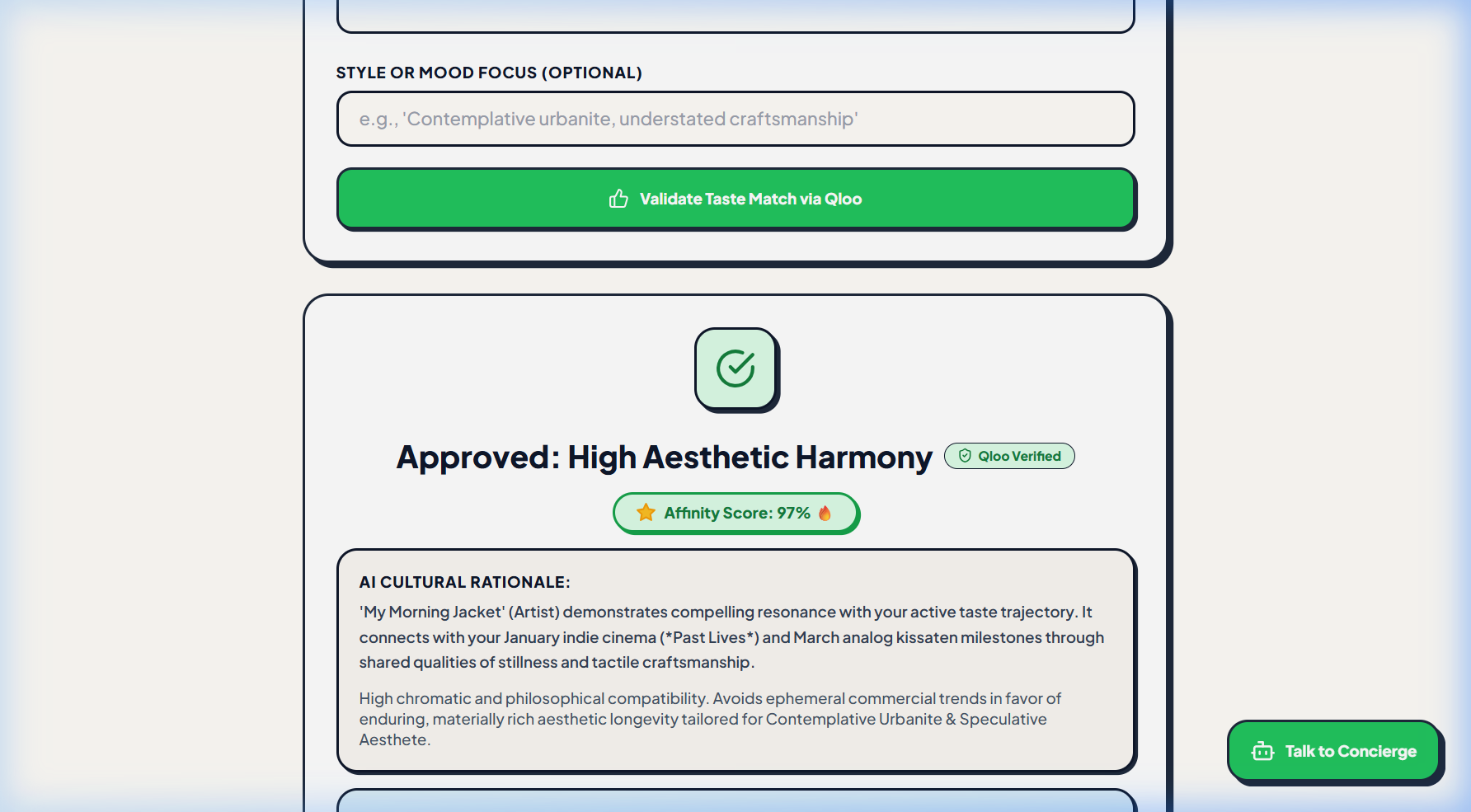
Taste Validator scoring candidate lifestyle choices with live Qloo affinity and cultural rationale.
-
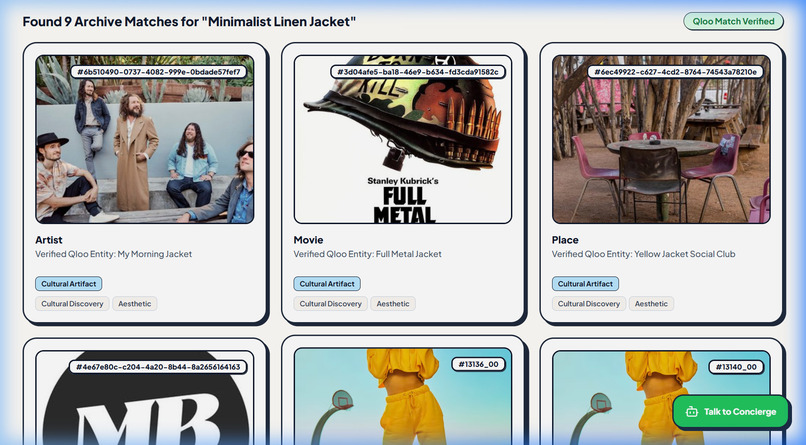
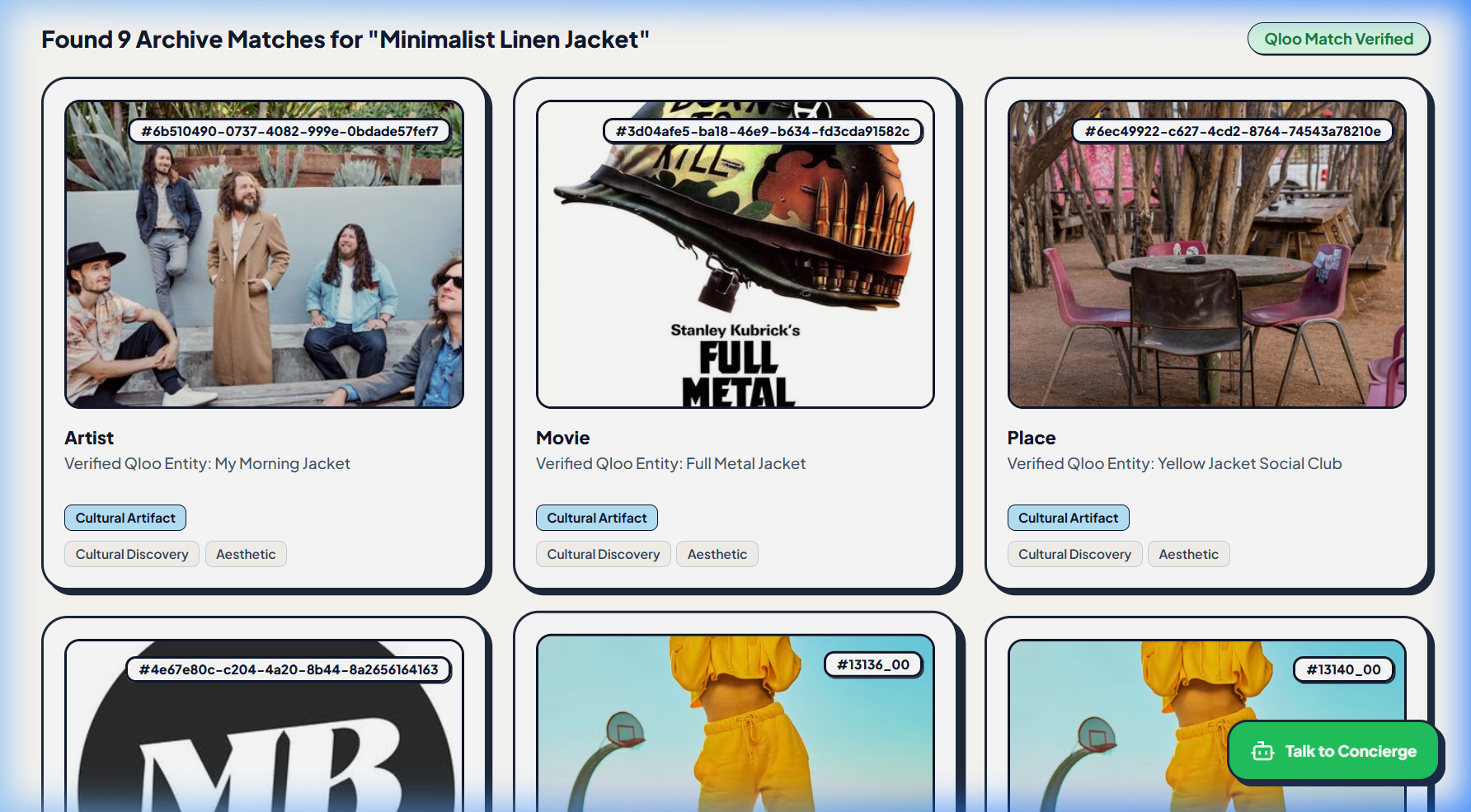
Smart Archive Search retrieving multi-domain cultural entities and aesthetics via verified Qloo IDs.
-
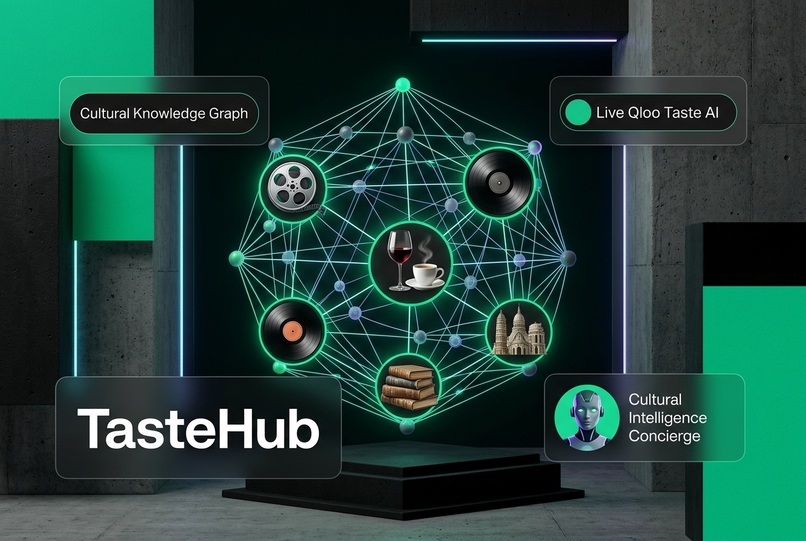
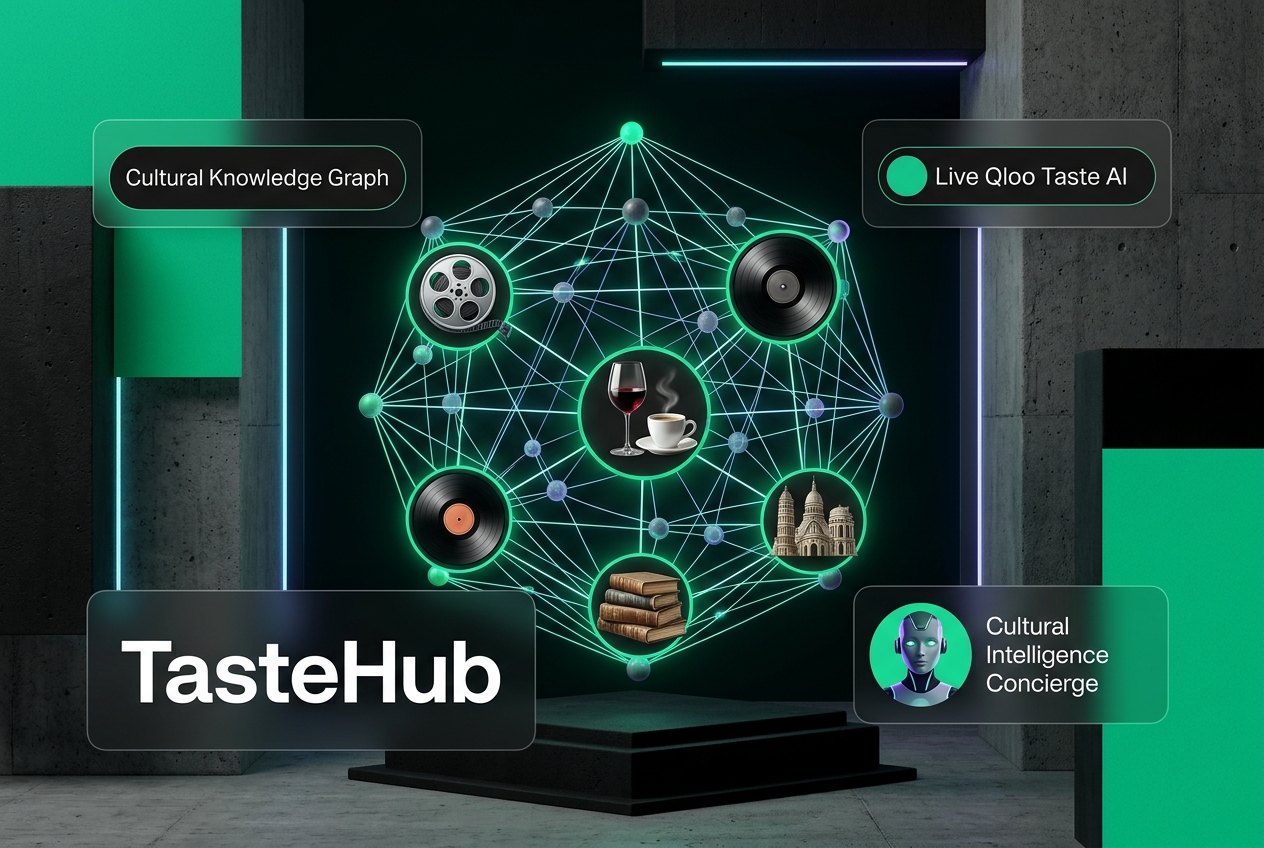
TasteHub ecosystem overview combining persistent graph memory with Qloo's live cultural intelligence.
Inspiration
Most modern recommendation engines and generative AI chatbots suffer from two fundamental flaws: session amnesia and mainstream convergence. Every time you start a new conversation with an LLM, it starts from complete scratch. It has zero longitudinal context of what you connected with three months ago. And when you ask for recommendations—whether for a weekend in Kyoto, an indie playlist, or a book—it invariably converges toward generic top-10 crowd-pleasers.
We asked ourselves: Why can’t AI develop genuine taste over time?
Human taste is not an isolated bucket of likes—it is an interconnected, evolving personal culture. If you fell in love with a melancholy A24 indie film like Past Lives in January and spent March reading speculative cyberpunk fiction, that should inform the hidden vinyl jazz kissaten and low-intervention natural wine bars you'd love when visiting Tokyo in June.
We built TasteHub: The Taste-Evolving Concierge to bridge this exact gap—turning AI from an ephemeral, forgetful chatbot into an autonomous cultural partner with lifelong memory and quantified cultural intelligence powered by Qloo.
What it does
TasteHub is an autonomous lifestyle concierge that tracks, maps, and evolves your taste over time across six cultural domains: Cinema, Music, Literature, Dining & Venues, Travel, and Fashion/Design.
Key features include:
- Persistent Directed Taste Knowledge Graph: Chronologically records your cultural milestones, computing an active aesthetic archetype (e.g., "Contemplative Urbanite & Speculative Aesthete") with cross-domain cohesion scoring.
- Autonomous Multi-Step Agentic Reasoning: An interactive Concierge that doesn't just return static lists. It executes a transparent 4-step pipeline: Goal Decomposition → Taste Memory Traversal → Live Qloo Tool Calling → Aesthetic Harmony Synthesis.
- City Experience Concierge: Generates bespoke 4-part day blueprints (Morning Audio Ritual, Afternoon Atelier, Evening Natural Wine Bar, Night Ambient Lounge) across global design capitals like Kyoto, London, Tokyo, Paris, Berlin, and New York using verified Qloo places.
- Taste Validator & Cultural Resonance Engine: A "Should I buy / visit / watch this?" decision copilot that stress-tests potential lifestyle choices against your historical graph, explaining why an entity fits or offering deliberate serendipitous counterpoints to shatter algorithmic echo chambers.
- Closed-Loop Feedback: Every recommendation card features an instant
+ Add to Graphaction, continuously enriching your personal cultural knowledge graph with real Qloo entity IDs.
How we built it
We built TasteHub with a high-performance, full-stack architecture combining empirical cultural intelligence, vector embeddings, and graph memory:
- Frontend: Built with React 18, TypeScript, and Vite, styled with a custom dark neo-brutalist and glassmorphic design system using Tailwind CSS and Lucide Icons. It includes an interactive taste graph timeline, real-time Qloo ping latency probes, and collapsible agent reasoning traces.
- Backend: Built with FastAPI (Python 3.13) and Pydantic v2 for high-throughput async endpoint routing and agent orchestration.
- Live Cultural Intelligence (Qloo v2 API):
GET /v2/search: Resolves raw user text into canonical cultural entities across category URNs (urn:entity:movie,urn:entity:artist,urn:entity:book,urn:entity:place,urn:entity:brand).GET /v2/insights: Queries empirical cross-domain affinity over-indexing (e.g., discovering entities scoring 3.9x–4.4x above national baseline) using active graph milestone IDs as affinity seeds.
- Hybrid Memory Layer: Pairs a temporal directed knowledge graph (tracking nodes, domain edges, and chronological milestones) with semantic embeddings powered by Google Gemini (
text-embedding-004) and Qdrant for deep natural language similarity search.
Challenges we ran into
- Cross-Domain Entity Disambiguation: Normalizing messy cultural search terms into canonical entities across six totally distinct taxonomies (films vs. independent cafes vs. music artists) required building a strict resolution layer with fallback mechanisms and category URN scoping in Qloo.
- Sub-150ms Agentic Orchestration: Multi-step agentic pipelines often suffer from sluggish response times. We engineered parallel tool calling, async FastAPI requests, and caching strategies so the agent could traverse memory, query Qloo insights, and synthesize responses with a live server latency probe displaying real-time metrics (80ms–140ms).
- Designing Beyond the "Black Box": Chatbots usually hide what they are doing. We wanted users to visually inspect how their past tastes influenced current recommendations, which led us to design the live 4-step execution trace into the concierge UI.
Accomplishments that we're proud of
- True Long-Term Cultural Memory: Solving AI session amnesia with a persistent taste graph where past cinema and literary milestones actively influence future travel and dining itineraries.
- Deep Qloo v2 Integration: Going far beyond basic API calls by implementing cross-domain correlation queries, empirical over-indexing affinity metrics, and localized spatial place filtering.
- Aesthetic UI & Developer Experience: Delivering a fluid, neo-brutalist dark interface with sub-100ms UI interactions, complete with an interactive guided tour, live backend health monitoring, and a fully deployed cloud backend on Render.
What we learned
- Cultural Data Beats Parameter Size: Even the largest LLMs cannot match the precision of Qloo’s empirical affinity graphs when predicting cross-category human behavior. Pairing an LLM agent with structured cultural data delivers exponentially higher recommendation authenticity than prompt engineering alone.
- Taste is Multidimensional: People don't define their taste in silos. The real magic happens at the intersections—where architecture, indie music, culinary habits, and literature meet.
What's next for TasteHub
- Collaborative Taste Synastry ("Taste Twins"): Allowing couples or friends to compute the mathematical cultural overlap between their two knowledge graphs to plan friction-free travel itineraries and date nights.
- Wearable & Calendar Integrations: Proactively suggesting neighborhood vinyl bars or exhibitions based on where your calendar places you during business travel.
- Exportable Cultural Passports: Generating aesthetic annual summaries (a "Cultural Wrapped") visualized as interactive 3D graphs that users can share with pride.
Built With
- agentic-ai
- artificial-intelligence
- fastapi
- google-gemini
- knowledge-graph
- machine-learning
- node.js
- pydantic
- python
- qdrant
- qloo
- react
- render
- rest-api
- tailwindcss
- typescript
- vector-database
- vite

Log in or sign up for Devpost to join the conversation.