Inspiration
Modern agent workflows often suffer from generic, hallucinated outputs because they lack grounded, real-world taste signals. We set out to bridge this gap by creating an autonomous agent pipeline that queries deep cultural data to deliver precise, preference-driven recommendations.
What it does
The TasteGraph Agent Pipeline ingests user parameters, processes them through clean orchestrations, and interfaces with structured preference engines to map cultural entities across film, music, dining, and lifestyle domains.
How we built it
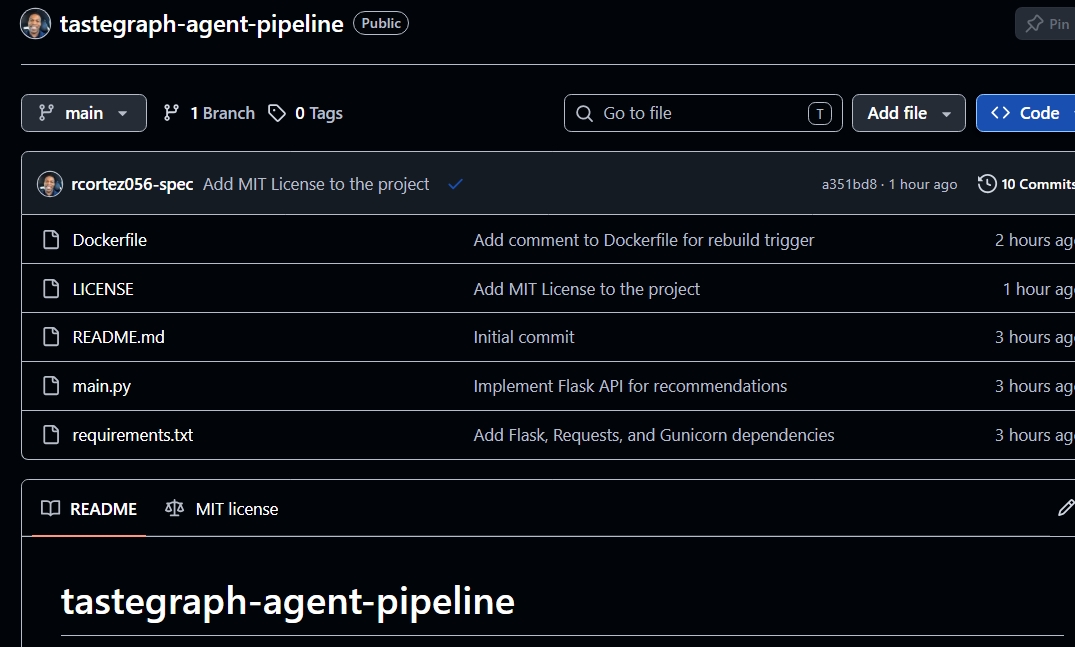
- Built with a robust, zero-fluff Python backend architecture focused on maintainability and resilience.
- Integrated structured API calls to fetch granular data points and entity graphs without bloat.
- Designed for seamless, scalable deployment straight to Google Cloud Run with clean environment configurations.
Challenges we ran into
- Managing strict schema validation across asynchronous agent execution loops.
- Ensuring zero-latency handoffs between state persistence layers and external query modules.
What we learned
The power of an autonomous agent isn't just in its prompt loop—it's entirely dependent on the quality and structure of the underlying data graph it consumes.
What's next for the TasteGraph Agent Pipeline
Scaling multi-tenant security, rate-limiting, and advanced human-in-the-loop approval queues.
Built With
- agenticworkflow
- ai
- api
- cloudrun
- googlerun
- python
- relevanceai

Log in or sign up for Devpost to join the conversation.