Inspiration
Modern users expect personalized, culturally-aware digital experiences. We were inspired by the potential of Qloo's taste graph to go beyond static recommendations and power truly dynamic agents that understand user preferences and act on them. We wanted to make it easy for any website—travel, fashion, dining, or lifestyle—to embed an AI assistant that doesn’t just chat, but takes action and renders interactive UI based on cultural insights.
What it does
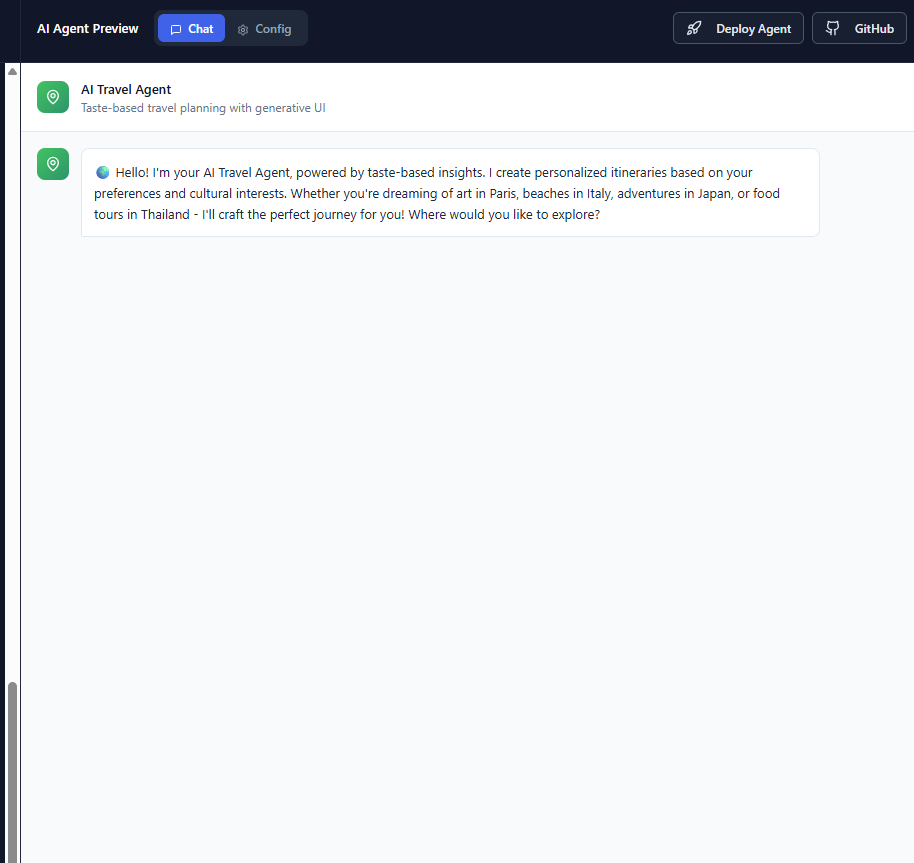
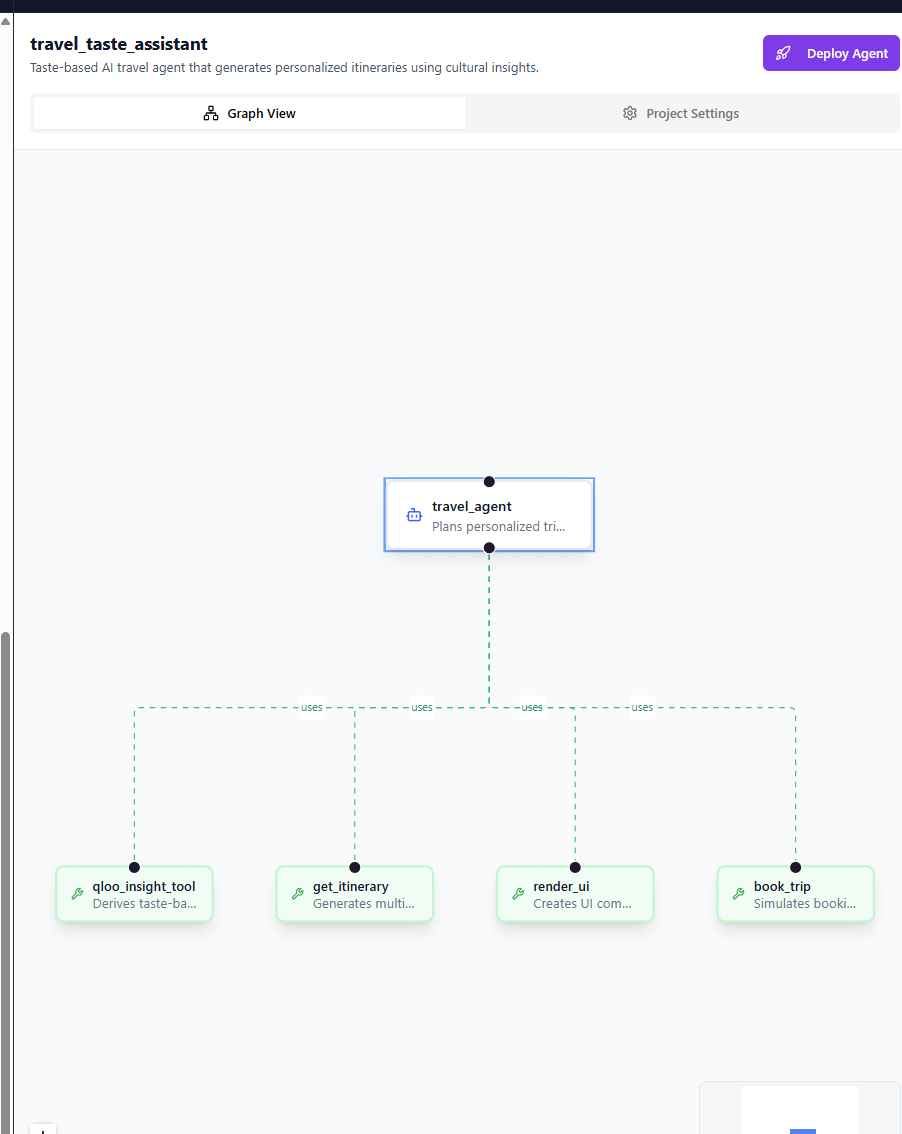
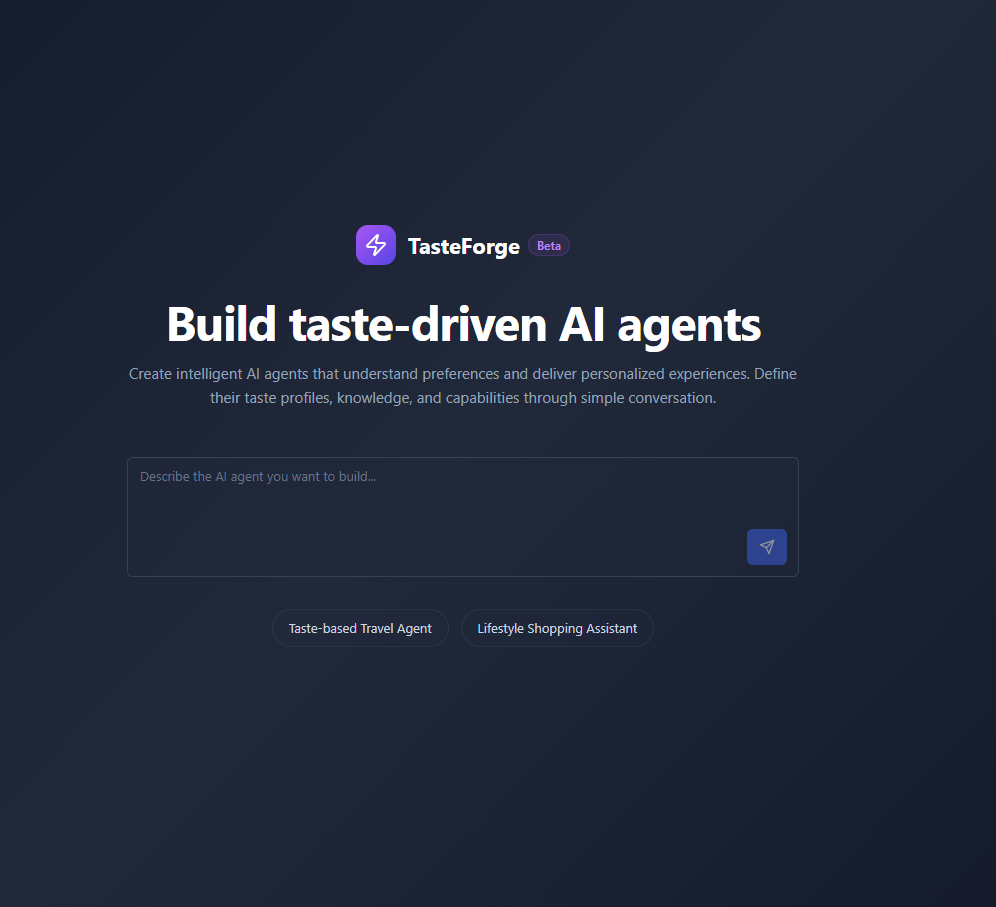
TasteForge is a platform to build taste-based AI agents that can be embedded into any website. These agents leverage Qloo’s insights to understand user preferences and generate contextual responses, render UI components like maps, product listings, and itineraries, and take actions like booking a trip or adding a product to cart. Developers can configure agents with tools and UI blocks, and instantly deploy them to enhance user engagement on their own platforms.
How we built it
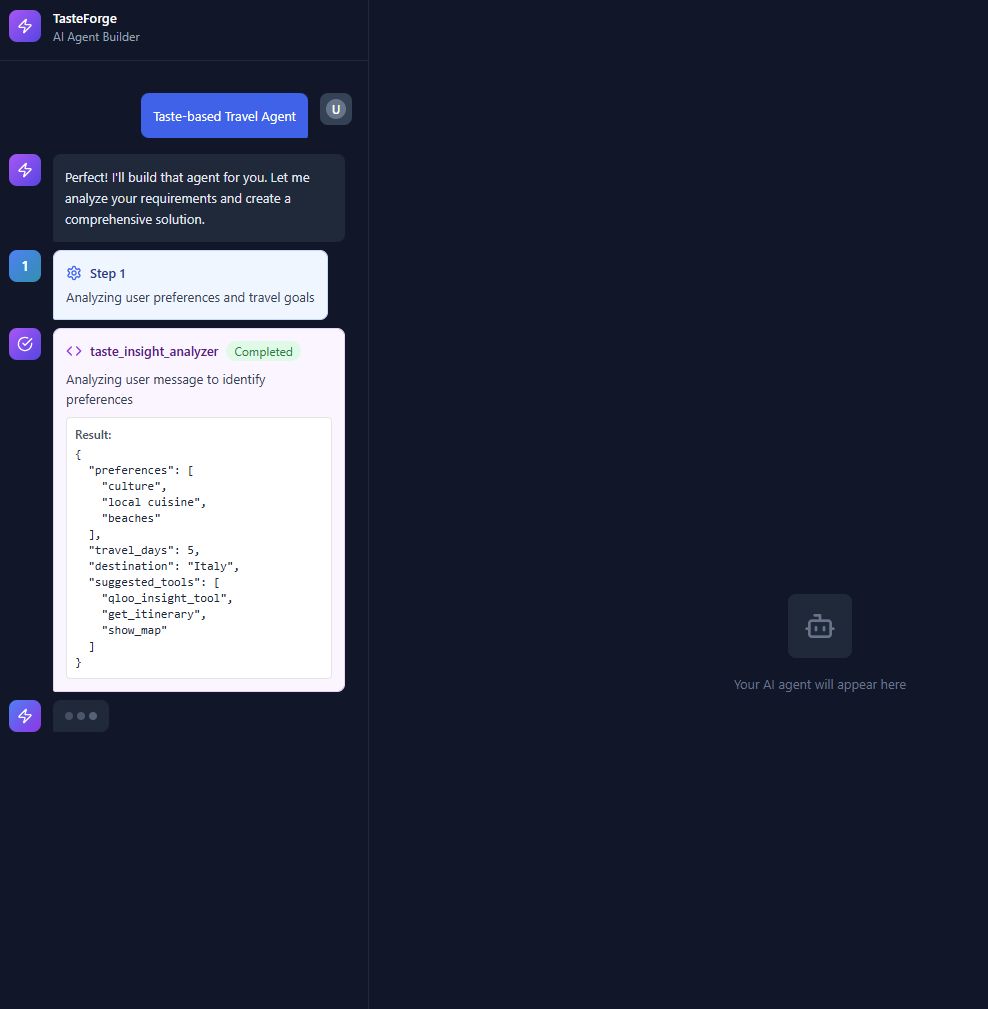
We built TasteForge using a modular architecture. The core includes an agent builder interface to define agent instructions, tools, and UI components. Each tool is a function the agent can call, including Qloo’s insight APIs, itinerary planning, product discovery, and booking actions. The frontend uses React to render chat and dynamically generated components. The agents are LLM-powered and respond with both textual output and structured UI JSON, which our renderer interprets and displays.
Challenges we ran into
Designing a flexible schema for dynamically rendered UI components that works across travel and shopping use cases was non-trivial. Integrating tools in a way that kept the agent stateless yet context-aware also required iteration. Ensuring the agent could respond intelligently while adhering to available tools and UI capabilities was another challenge we had to solve with careful instruction tuning and tool registration.
Accomplishments that we're proud of
We created a full end-to-end agent builder that enables non-technical teams to define, configure, and deploy powerful AI agents in minutes. Our system cleanly separates logic, tools, and presentation, allowing rich taste-driven experiences to be embedded into any domain. We’re especially proud of how seamlessly the agents combine natural conversation, real-time UI generation, and cultural intelligence.
What we learned
We learned how powerful and expressive structured agent outputs can be when paired with taste-based APIs like Qloo. We also gained deep insights into orchestrating multiple tools and UI interactions from a single LLM agent, and how to guide agent behavior through composable configuration rather than hardcoded logic. Working at the intersection of cultural intelligence, generative UI, and LLMs taught us a great deal about modular agent design.
What's next for TasteForge
Next, we plan to support full agent analytics, allow training on user data, and integrate more real-time APIs across industries. We’ll offer embeddable SDKs and templates for common domains like travel and e-commerce. We also plan to open up a marketplace where developers can publish and monetize pre-configured taste agents. Our vision is to make TasteForge the go-to platform for building intelligent, personalized AI agents for any website.
Built With
- aisdk
- qloo
- react
- vercel
- xai

Log in or sign up for Devpost to join the conversation.