-
-
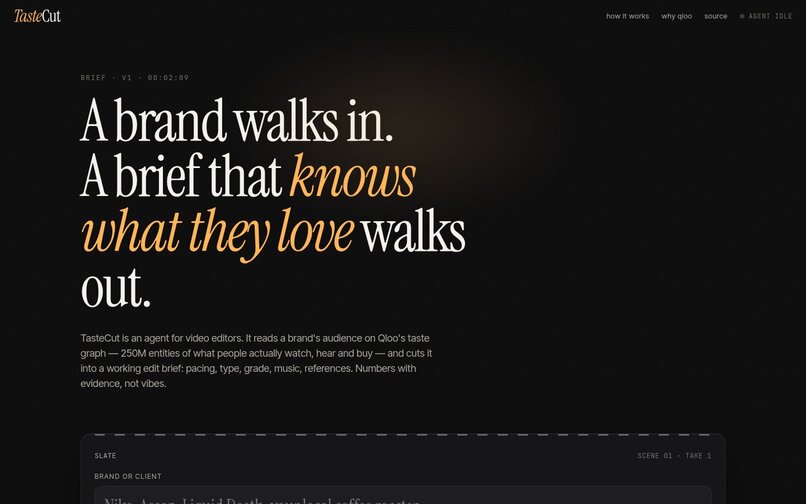
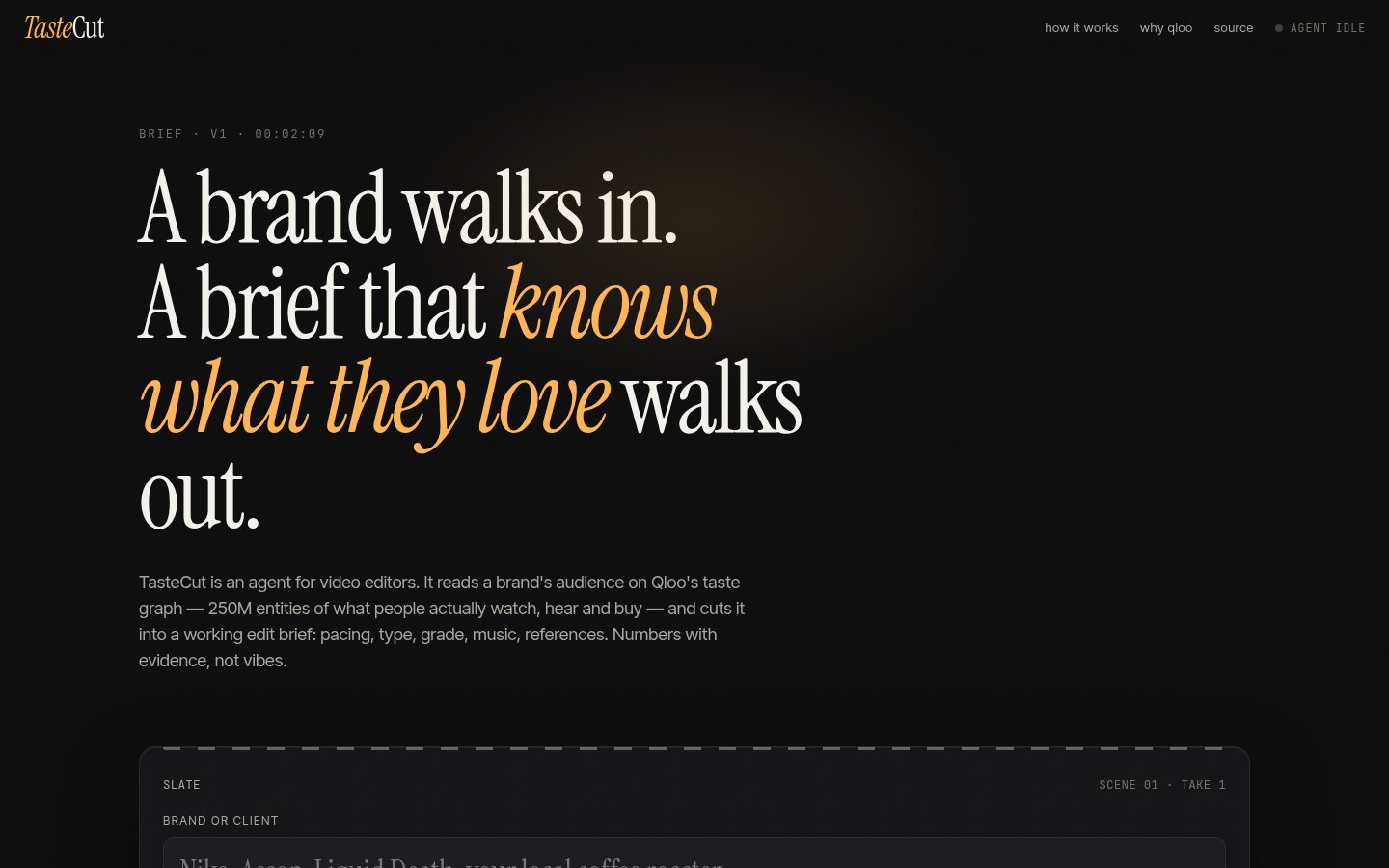
Home: type a brand, pick the deliverable, add your reel
-
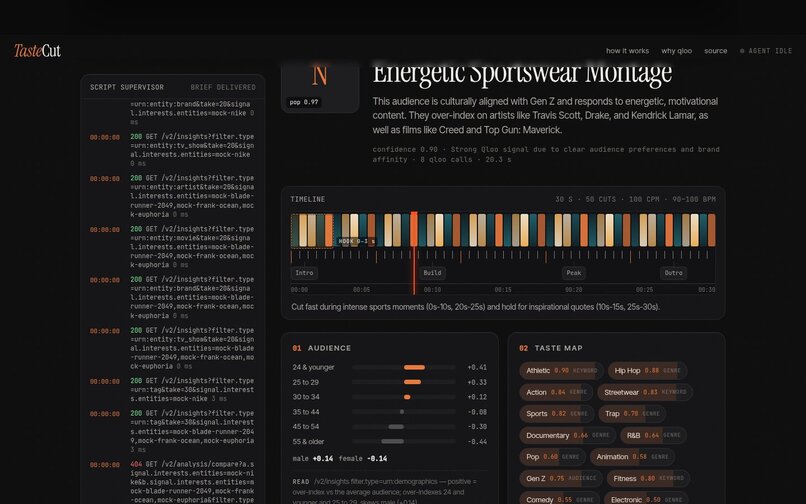
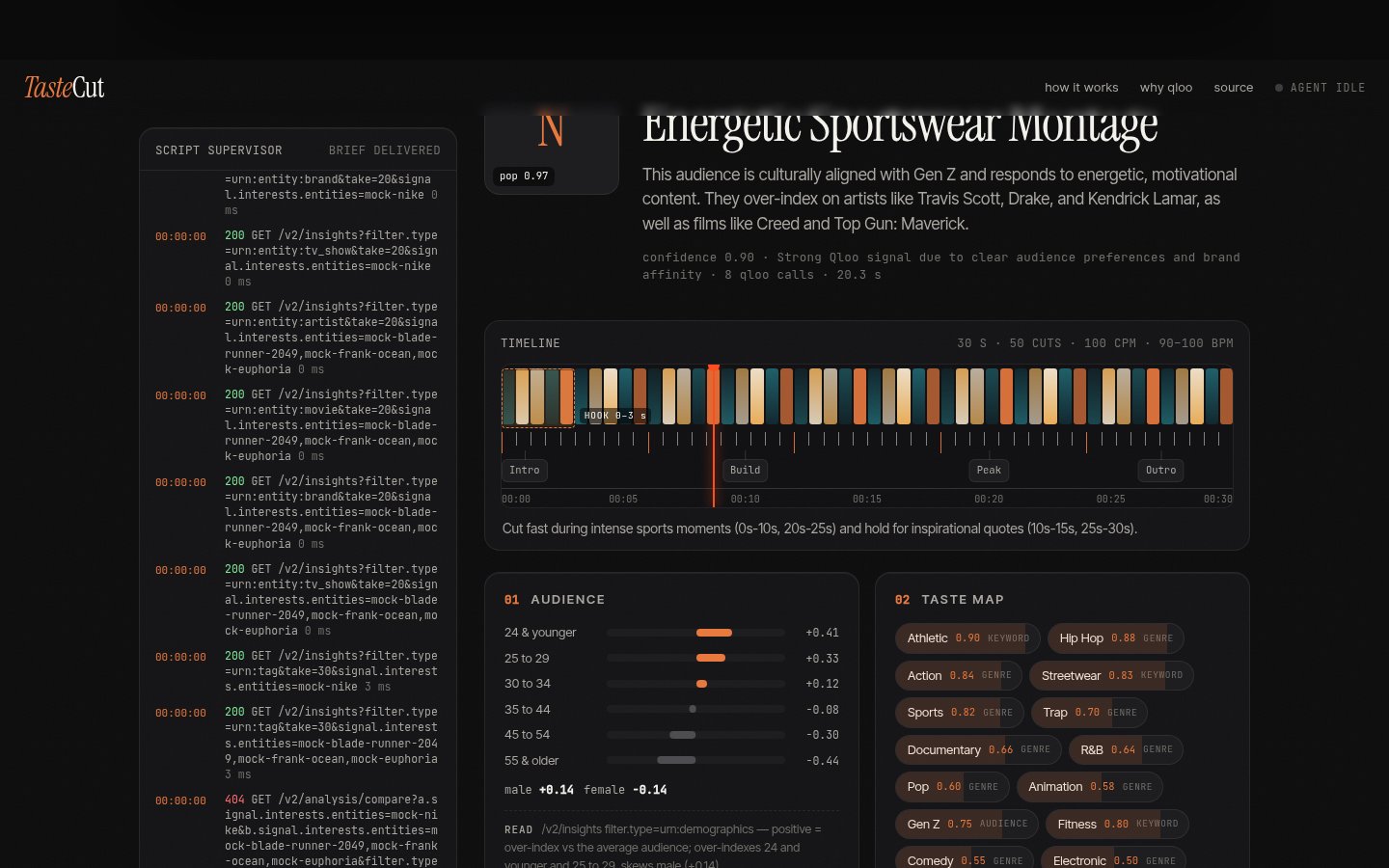
The brief: pacing, type, grade, music and references from real Qloo affinities
Inspiration
Editors get briefs like "premium but young, fast but not TikTok". The brand deck says what the brand wants to be; nobody tells the editor what the audience already loves. I cut videos for brands and this is the gap I fall into every job: the first hour is guessing pacing, type, grade and music from vibes. Qloo's taste graph has the actual answer, with numbers.
What it does
Type a brand (and optionally the deliverable, some notes, and the references that define your own cutting style). TasteCut's agent reads that brand's audience on Qloo — demographics, taste tags, and the artists, films, TV, podcasts and neighbouring brands that audience over-indexes on — and turns the affinities into a working edit brief: cuts per minute and average shot length, an edit style, a type pairing (rendered live on the brand name), a colour grade (applied to a test chart), music direction with reference artists and a BPM window, a cue map at timecodes, references with affinity scores, do/don't, sound design. The brief is drawn as the deliverable's own timeline. Then it scores the editor's reel against the brand's taste so you know before the call whether you're the right editor for it — and a "Why Qloo" card shows the model's unaided guess next to the grounded brief.
How I built it
One Cloudflare Pages project: static HTML/CSS/JS (no framework) plus one Worker. The agent is a six-step loop — READ (small model cleans the slate), RESOLVE (/search), GRAPH (seven parallel /v2/insights calls), DERIVE (deterministic rules: genre tags → tempo index → cuts/min; tags pre-score 13 grades, 14 type pairings, 12 edit styles), WRITE (two parallel writers return strict JSON citing the affinities), MATCH (weighted-Jaccard overlap of the editor's affinity sets vs the brand's). Everything streams as server-sent events so the console shows the reasoning and every Qloo call with its status and latency, like a script supervisor's log. Briefs cache at the edge and are shareable by URL; export to Markdown or PDF.
Challenges I ran into
Keeping the numbers honest: LLMs happily invent "120 BPM" — so pacing, BPM, palette and type come from fixed rules over Qloo tag affinities and the writers only phrase them; a normaliser re-checks every figure. Streaming structured JSON from a 70B model without a schema mode meant building a small JSON repair layer. And making a brief feel like an edit, not a report: the timeline, the type preview and the live grade were the difference.
What's next for TasteCut
Hand the brief to the NLE: an export that drops markers at the cut cadence and cue points into Premiere/Resolve; a client-facing share page; team taste profiles for studios.
Try it (testing instructions)
Open the live URL, type any brand (Nike, Aesop, Liquid Death…), pick a deliverable, press "Cut the brief". Add 2–6 films/artists/brands in "Your reel" to get the match score. Click "Show the model-only guess" on card 11 to see the comparison. No login, no key needed.
Demo video music: "Wallpaper" by Kevin MacLeod (incompetech.com), licensed under CC BY 4.0.
Built With
- cloudflare-pages
- cloudflare-workers
- css
- google-fonts
- html
- javascript
- llama
- qloo
- qloo-api
- server-sent-events
- workers-ai

Log in or sign up for Devpost to join the conversation.