Inspiration
Independent musicians pay for the van, the fuel and the venue at every stop, and they pick cities by population or guesswork. Streaming dashboards only show the listeners an artist already has, which is nothing for a new act. Ask a general-purpose AI where to tour and it names the biggest cities.
But taste doesn't follow population. For many artists, the cities where their sound is loved most are small college and festival towns, while some of the country's biggest cities rank near the bottom.
What it does
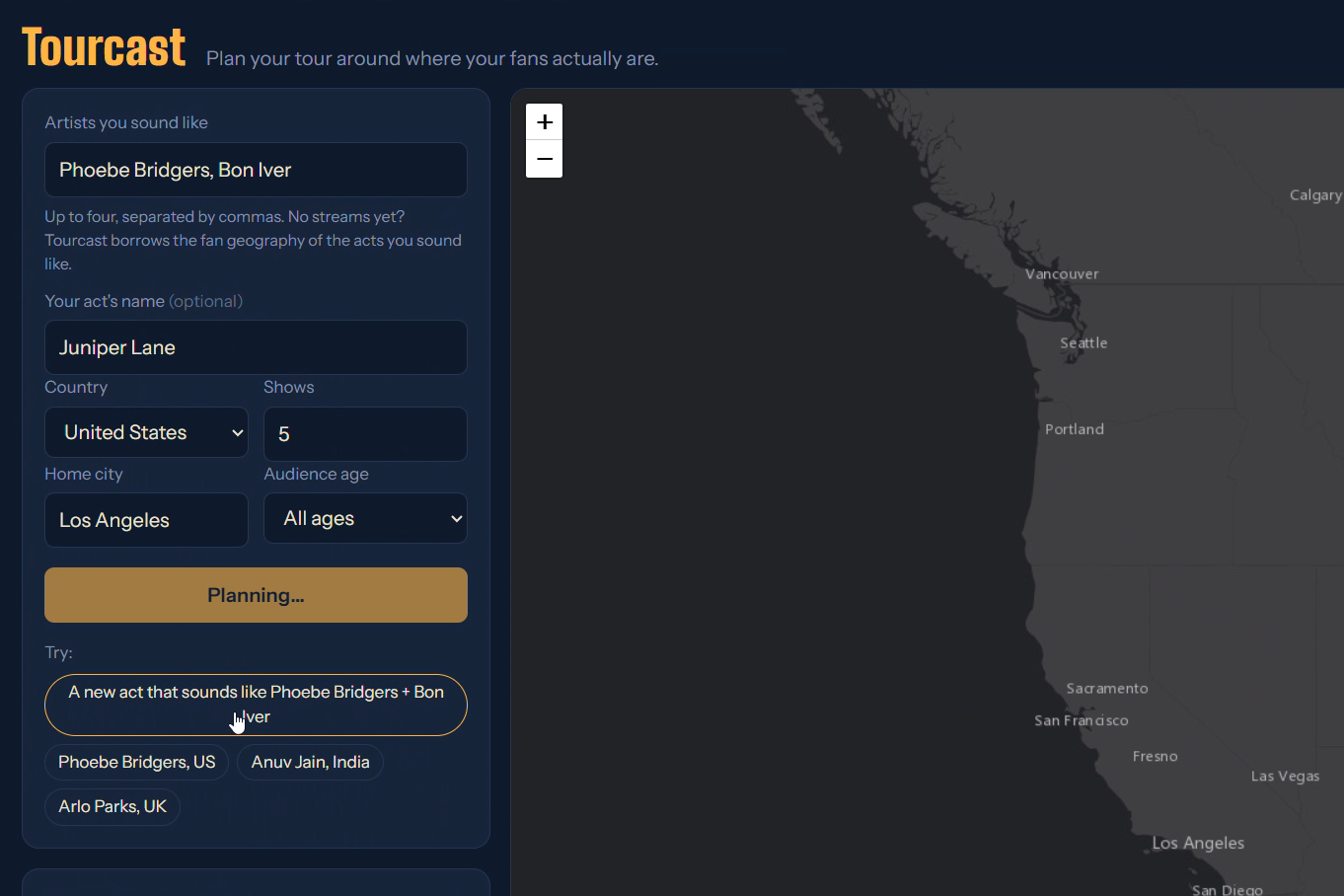
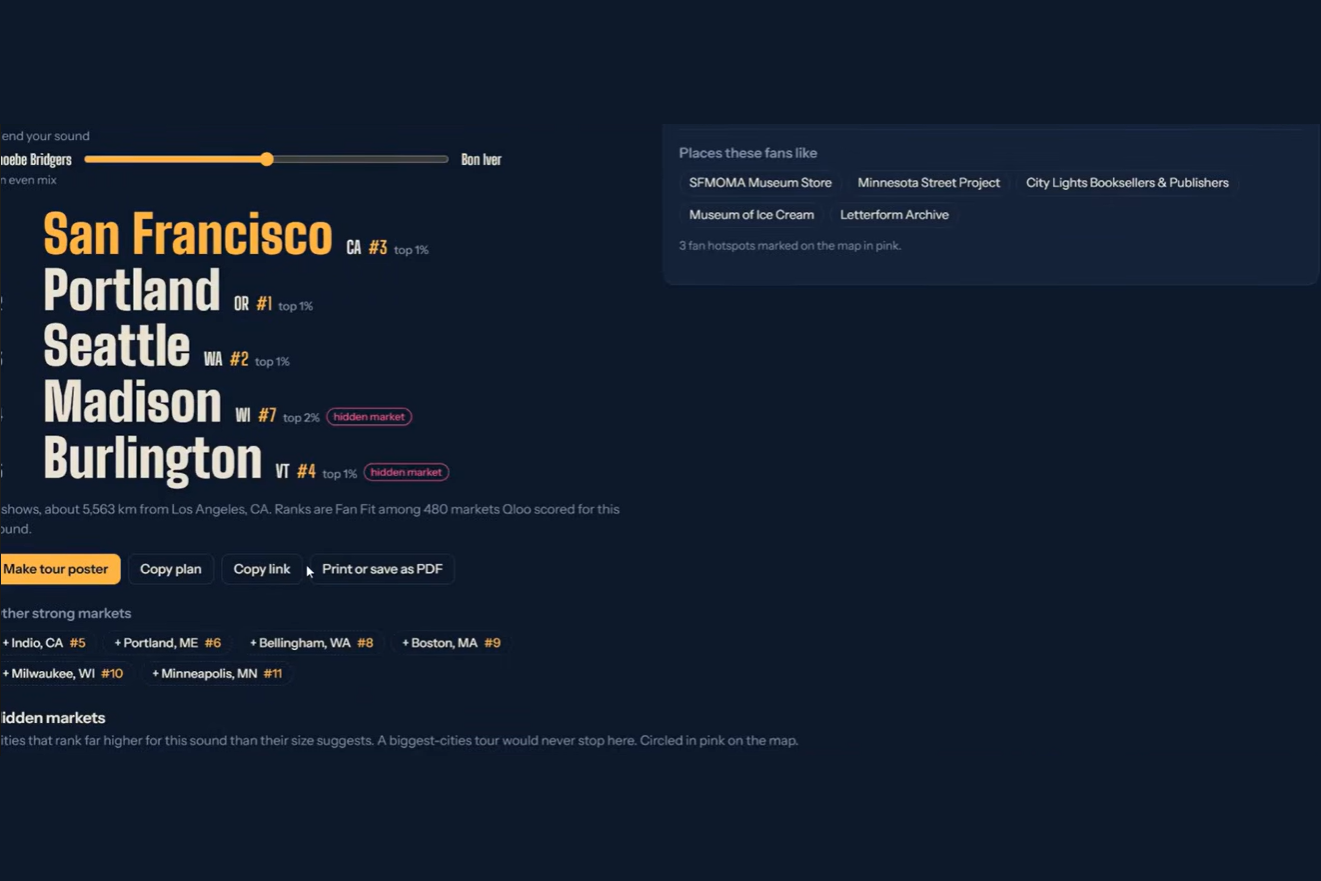
Enter the artists you sound like (no streams of your own needed), a country, a home city and how many shows. The Tourcast agent:
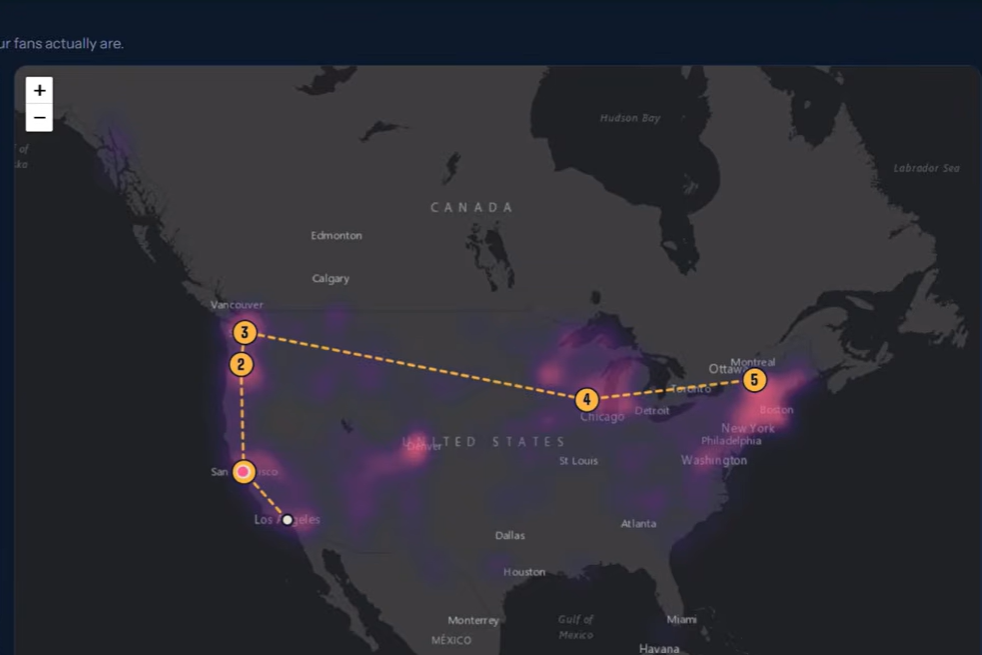
- Ranks every market for your sound. It turns Qloo's heatmap of fan affinity into a Fan Fit rank for every city in the country.
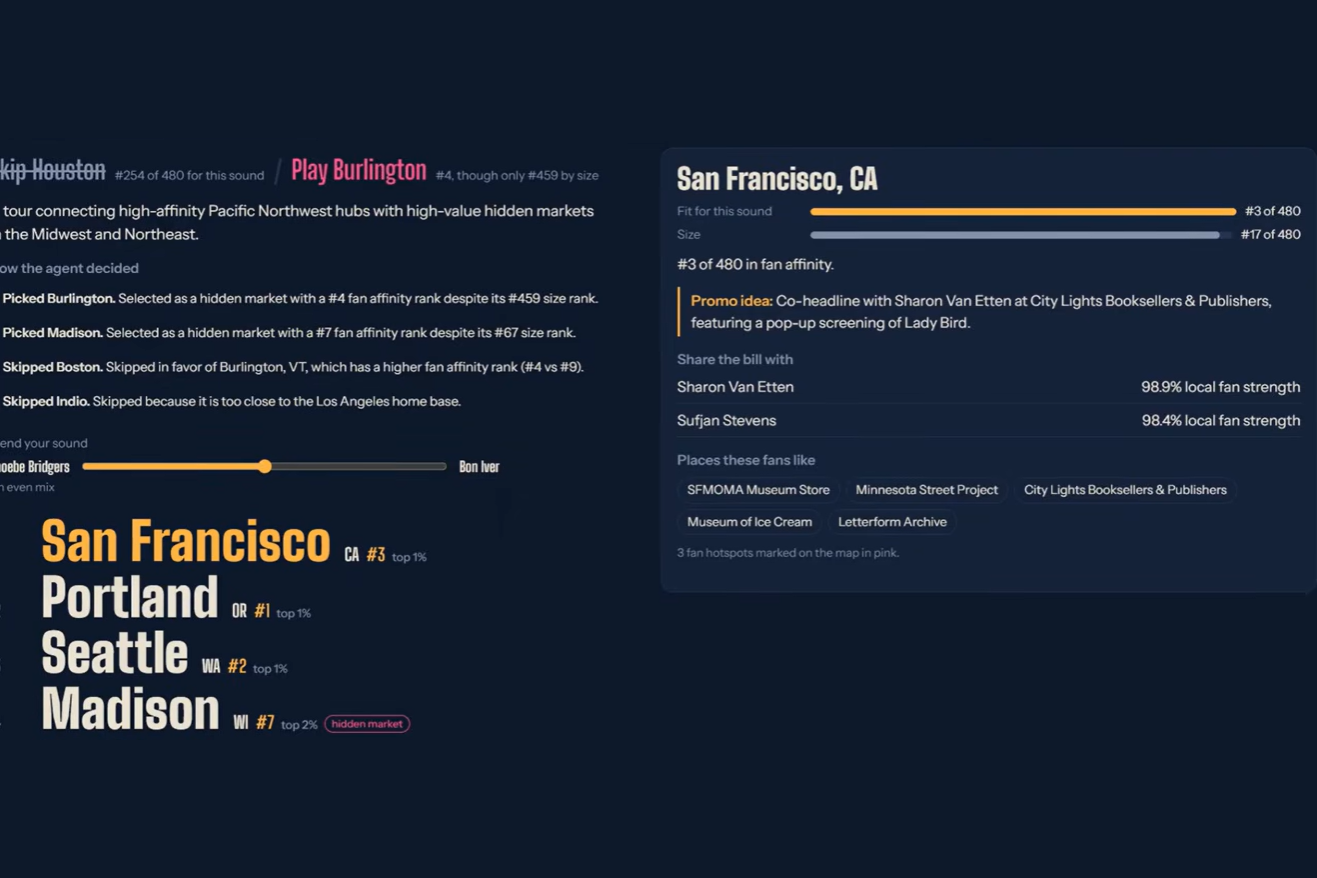
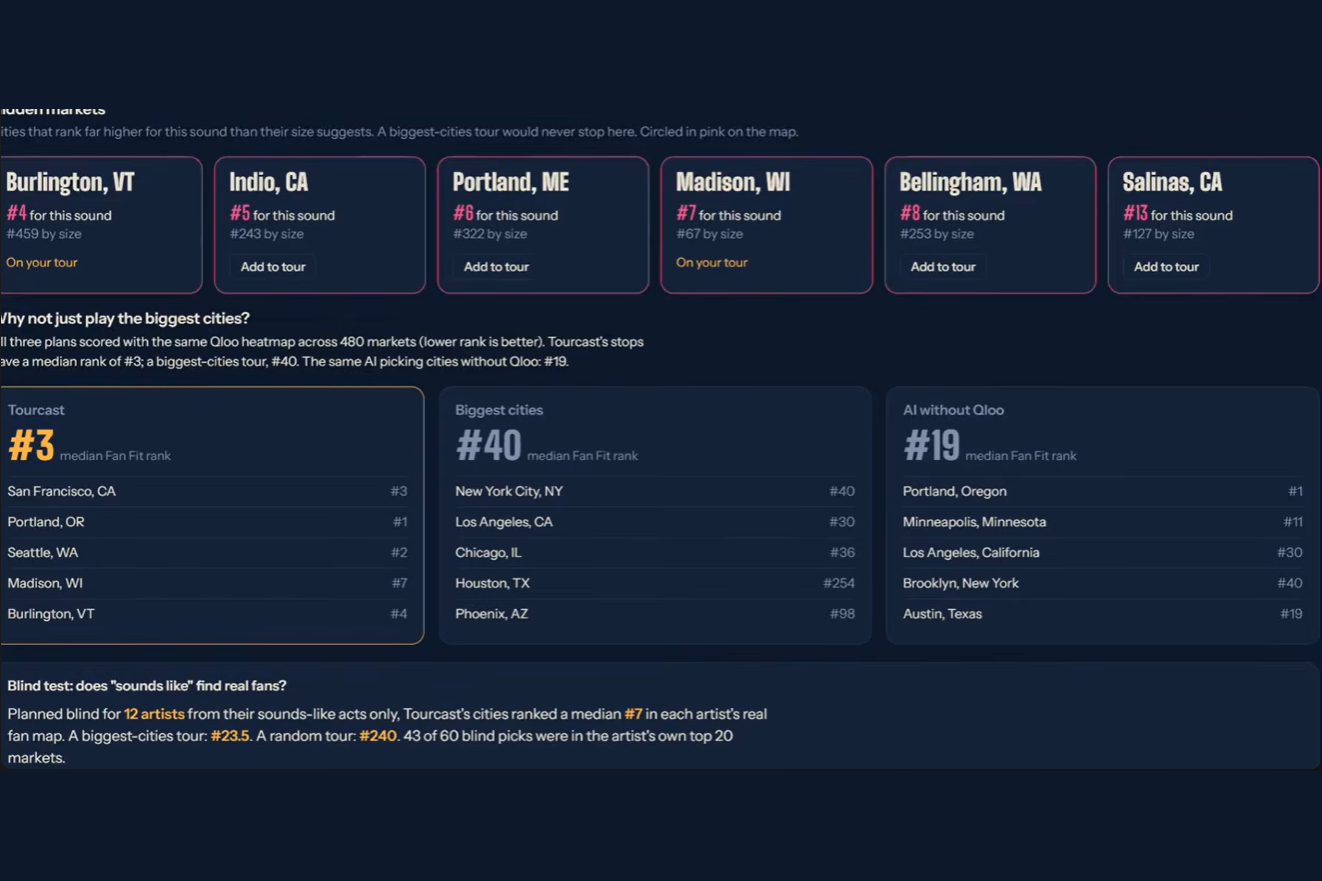
- Finds hidden markets: small and mid-sized cities that rank far higher for your sound than their size predicts, the stops a biggest-cities tour would never make.
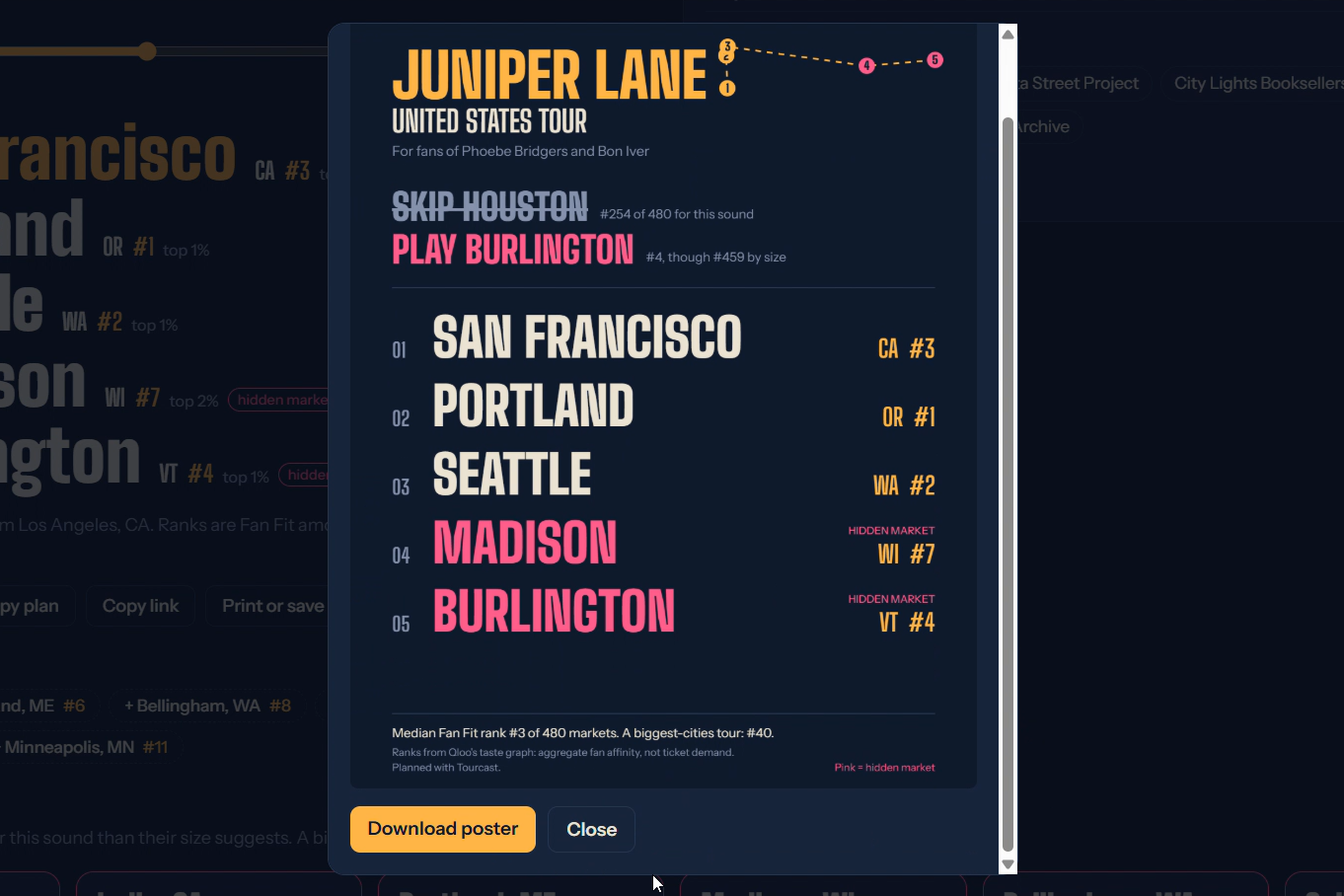
- Plans the tour. It picks the cities with judgement (favouring hidden markets, skipping near-duplicates) and orders a route from your home city.
- Zooms into each city. It finds the neighbourhoods where fans cluster, places those fans already go, and the similar artist with the strongest local following to share the bill with.
- Writes a promo idea for every stop from that city's own data.
Then you can blend your sound with a slider ("more Phoebe Bridgers, less Bon Iver") and watch every market re-rank, edit the tour, download a tour poster, or share the plan by link, copy or PDF.
The proof
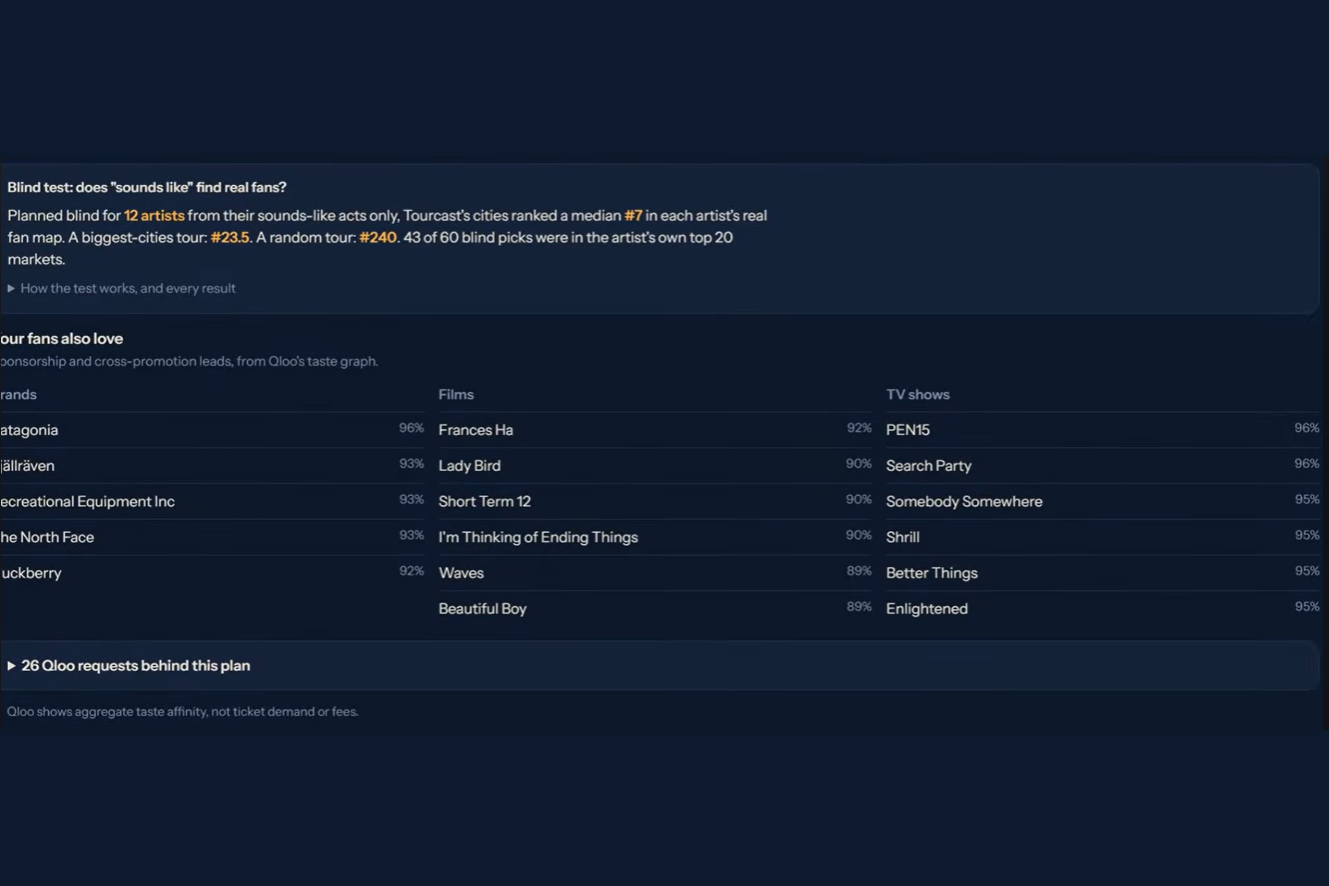
1. A blind test across 12 artists. Tourcast's core promise is that a new act with no streams can plan from the artists they sound like. To test it, we planned a 5-city tour for each of 12 artists (US, India and UK) using only the three artists Qloo rates most similar to them, never the artist's own data. Then we ranked those cities in the artist's own Qloo fan map.
- Tourcast's blind picks ranked a median #7 in the artist's real fan map.
- A biggest-cities tour: median #23.5. A random tour: median #240.
- Tourcast beat the biggest-cities tour for 9 of 12 artists (2 ties, 1 loss).
- 43 of 60 blind picks were in the artist's own top 20 markets.
The full table is in the repo's evidence.md and on the results page.
2. A live comparison on every plan. Each plan scores three tours with the same Qloo data: Tourcast's, the country's biggest cities, and the same AI picking cities without Qloo, compared by median Fan Fit rank. Judges can check it for any artist.
3. It finds things a person wouldn't. For Phoebe Bridgers it suggested Lucy Dacus and Julien Baker as co-headliners, her bandmates in boygenius, without ever being told that. It flagged hidden markets like Indio (home of Coachella) and San Luis Obispo, a college town.
How it's agentic
Gemini plans each tour by calling seven Qloo-backed tools in the order it chooses, running independent calls in parallel. It picks the cities with judgement, explains every decision on the page ("Skipped Boston: same fans as another stop"), and any claim that isn't in the Qloo results is dropped. If the model is slow, a time limit hands over to a fixed planner using the same tools, so a plan always completes.
What makes it Qloo-powered
Remove Qloo and nothing is left to plan with:
/searchresolves the artists./v2/insightswithfilter.type=urn:heatmapranks every market, maps fan neighbourhoods inside each city, and scores similar artists city by city to pick co-headliners.urn:entity:artist, with and withoutbias.trends, finds similar and rising artists.urn:entity:placewith a location point finds places fans like near the strongest hotspot.urn:entity:brand,movieandtv_showgive sponsorship and promotion leads.signal.demographics.agere-targets the plan to an audience age.
Every plan lists the exact Qloo requests behind it.
How we built it
- Agent: Google Gemini via its OpenAI-compatible API, with seven tools that each wrap Qloo calls. City details are prefetched while it decides, so the tour appears as soon as the route is chosen.
- Backend: Python and FastAPI, streaming each agent step to the browser. Qloo responses are cached privately on the server.
- Geography: heatmap points are matched to real cities with offline GeoNames data; suburbs are merged into their metro.
Frontend: HTML, CSS and JavaScript with a Leaflet map, styled like the back of a band's tour shirt.
Challenges we ran into
Turning thousands of heatmap points into real city names. GeoNames lists neighbourhoods like East Harlem as separate cities, so we merge records into their metro.
Fan affinity saturates near 99% in strong markets, so raw percentages couldn't tell cities apart. Ranking every market fixed that.
Two Portlands on one tour, which needed state-aware lookups everywhere.
Qloo place results include memorials and parks, so we filter to gig-friendly places.
Slow "thinking" models, solved with strict time limits and a fallback.
Accomplishments we're proud of
- Every city, place and co-headliner traces back to a Qloo request.
- The comparison turns "Qloo makes it better" into a measurable rank.
- It works across six countries, from Phoebe Bridgers in the US to Anuv Jain in India.
What we learned
An artist's strongest markets are often mid-sized college and festival towns, not the biggest cities, and a general-purpose model can't see that. Rankings reflect taste affinity, the signal a new act has before any ticket data.
What's next
- Venue capacity, to match room size to local demand.
- Ticket-sales feedback, so the agent learns which predictions held up.
- Multi-country tours and festival-season routing.
Built With
- css
- fastapi
- gemini
- geonames
- html
- javascript
- leaflet.js
- openai
- python
- qloo
- render

Log in or sign up for Devpost to join the conversation.