Inspiration## Inspiration
Students who move abroad get advice like "visit the ethnic district." That advice ignores their budget, their schedule and their actual taste. Liking Coke Studio doesn't mean someone wants every South Asian venue in the city, and nationality is not taste. We wanted an agent that asks what a student wants to keep from home, then builds a realistic plan around it.
What it does
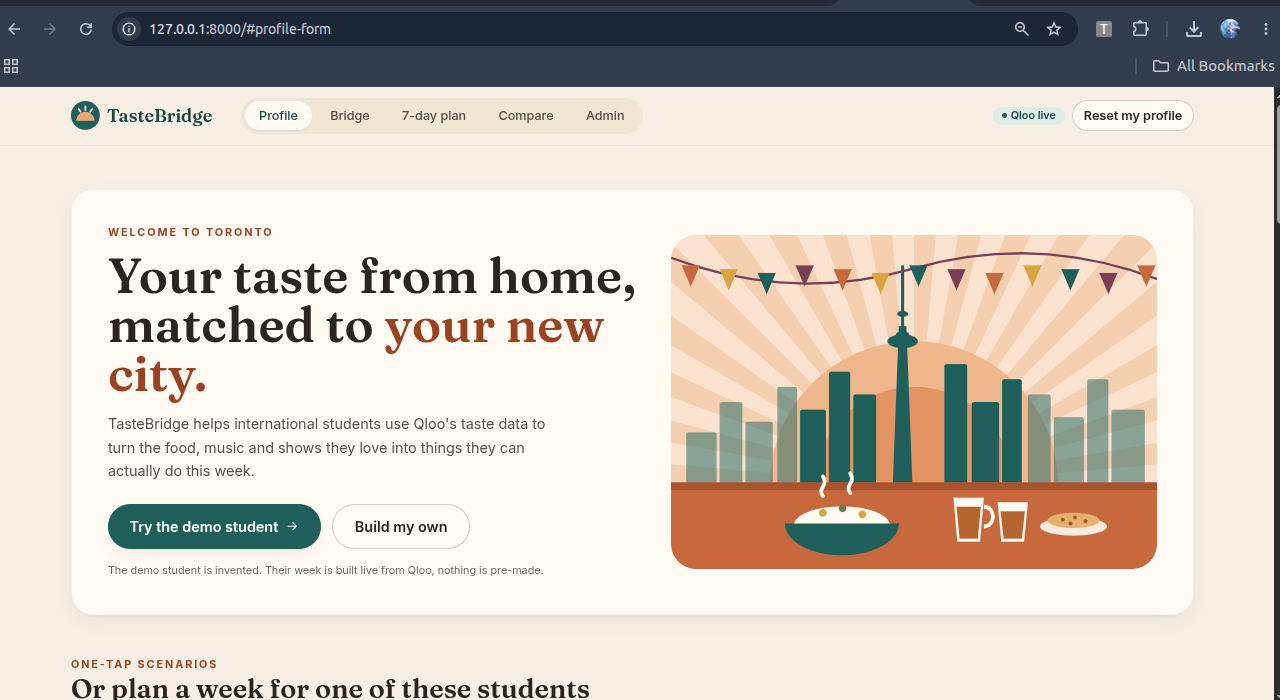
TasteBridge is a cultural-integration agent for international students moving to a new city (Toronto in the demo).
- The student picks what to preserve (food, music, language, festivals, friends) and enters a few loved items. Nothing is inferred from nationality.
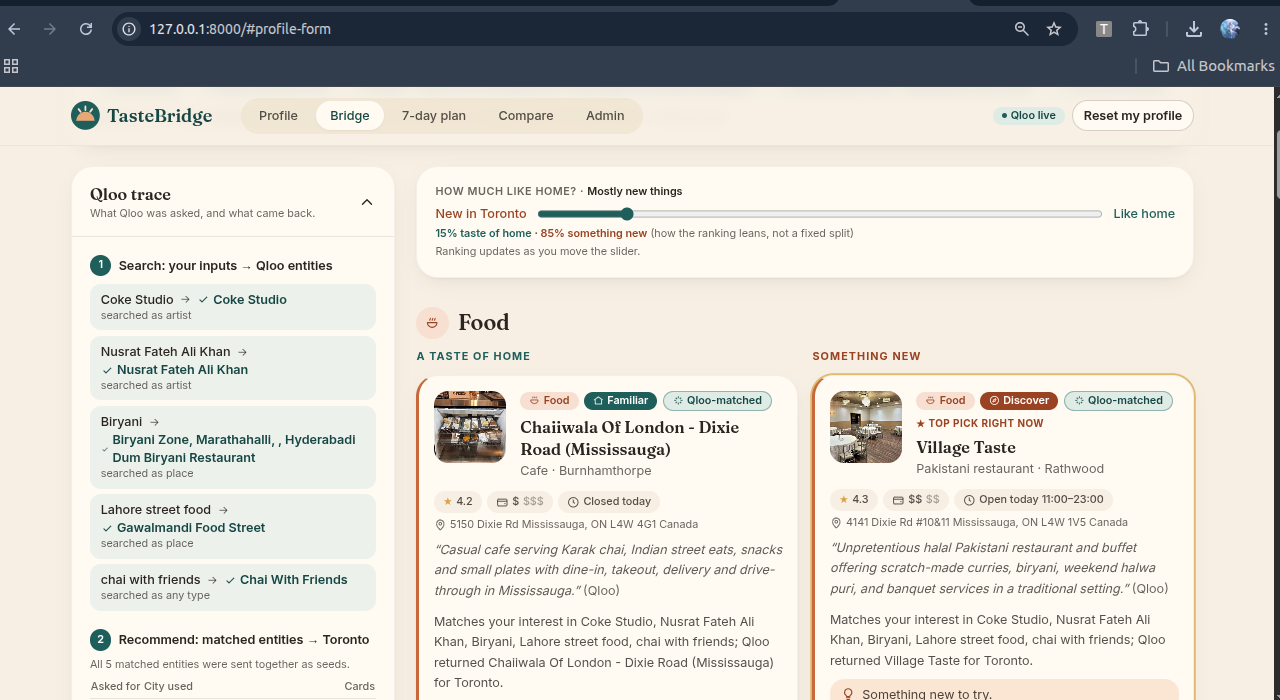
- The backend resolves those items to Qloo entities and fetches taste affinities for the destination city.
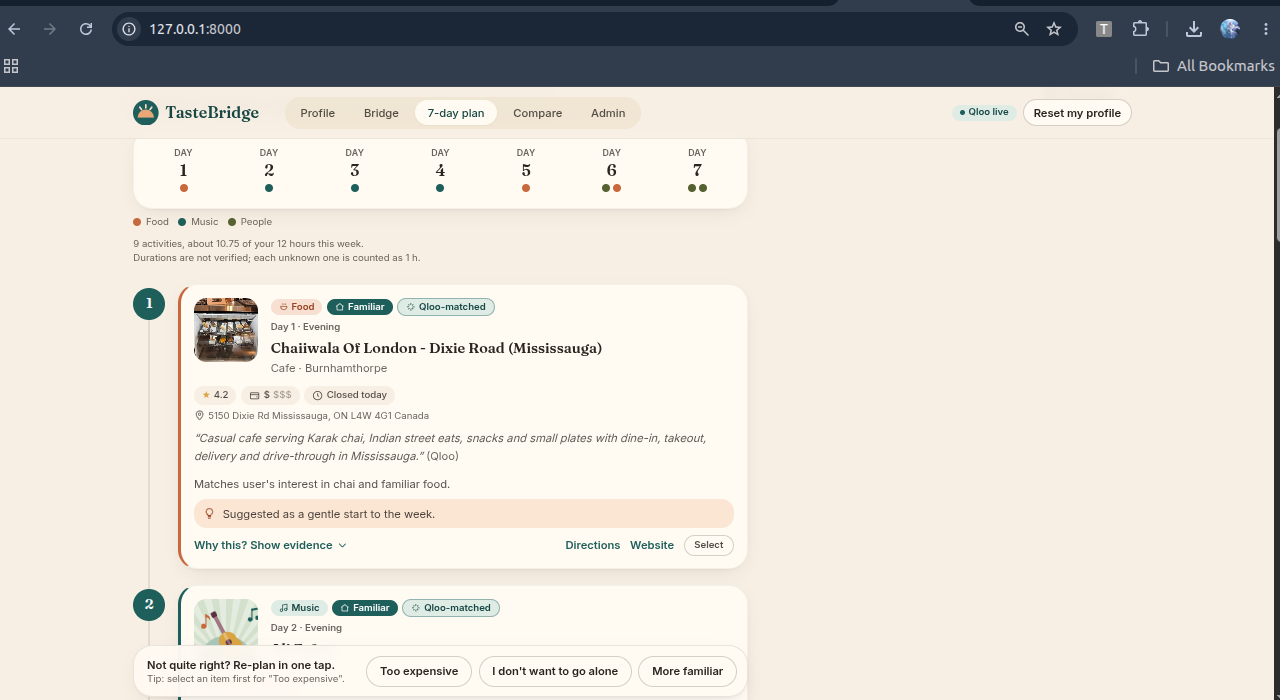
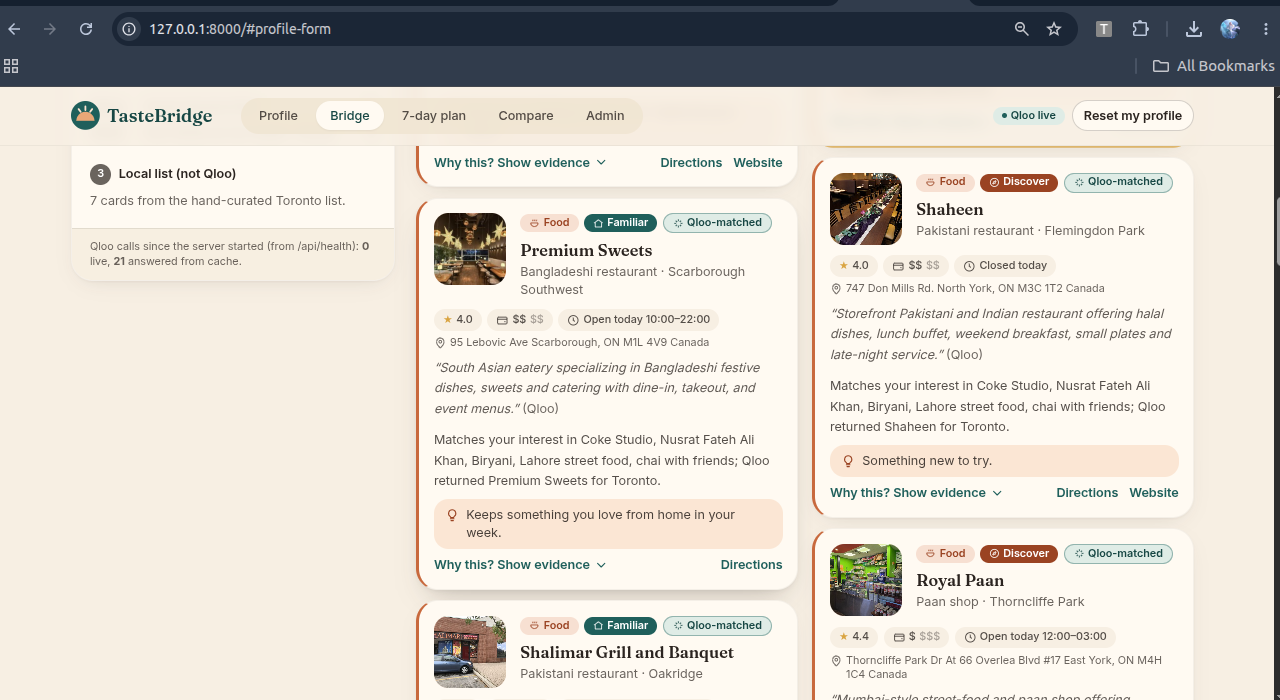
- Each category gets a Familiar option (close to home) and a Discover option (a local experience with similar taste), controlled by a slider.
- Code, not the LLM, filters by budget, travel time, diet and comfort level, then builds a 7-day plan with at least one social activity.
- Three buttons re-plan without starting over: Too expensive, I don't want to go alone, More familiar.
- Every card shows its evidence and a label: Qloo-matched, Curated or Unverified.
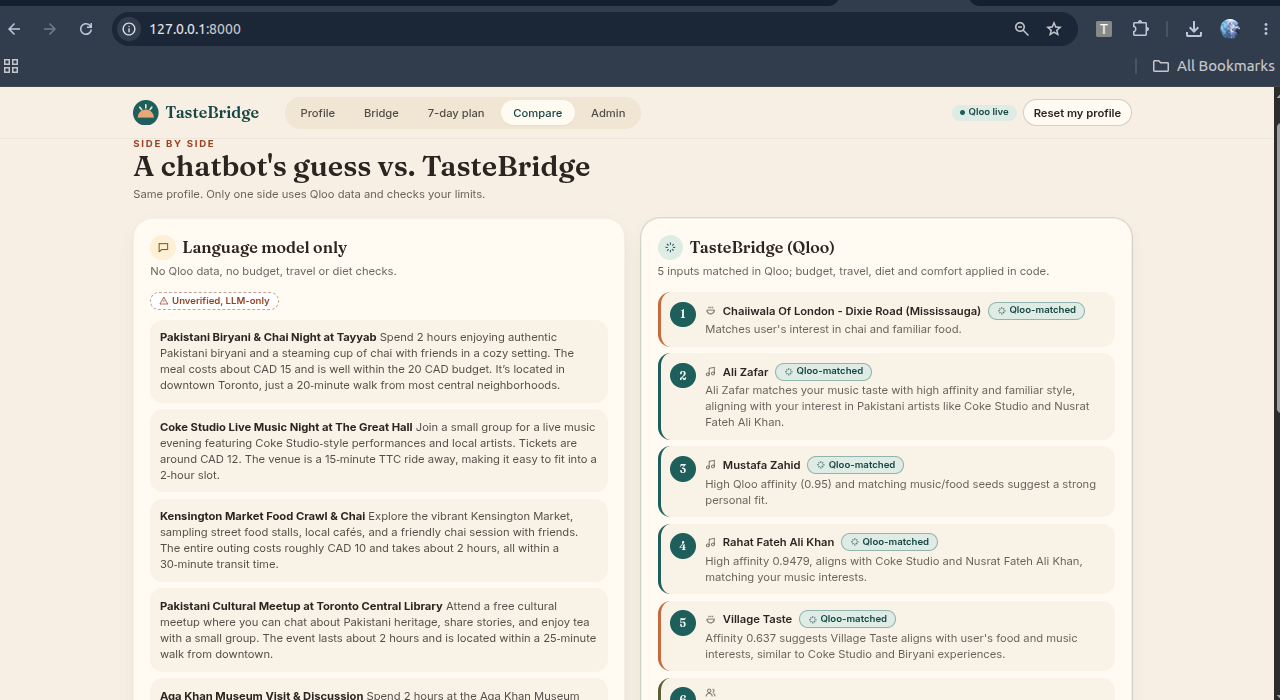
- A Compare view shows the same profile with an LLM-only baseline next to the TasteBridge result.
How Qloo powers it
Qloo supplies the cross-domain taste matching: from a loved artist, dish or show to related options in the destination city. Each card shows the seed inputs, the matched Qloo entity, the signal Qloo returned and the city used as the location signal. If Qloo finds nothing for an input, the app says so instead of filling the gap with LLM guesses. [Describe the Qloo calls you confirmed in live mode, e.g. entity search plus recommendations.]
How we built it
- Backend: Python + FastAPI. Qloo is called through the official Qloo CLI harness, with caching and typed error handling.
- Ranking: a deterministic, unit-tested scoring function and hard constraint filters in code. The LLM only phrases short explanations from supplied evidence and cannot add venues, prices or dates.
- LLM: [Groq, model name], with template fallback if it fails.
- Frontend: React + Vite + TypeScript, served by the same FastAPI container.
- Deploy: single Docker container on [Render].
- Tests: [N] backend tests plus a frontend build check.
Challenges
- Qloo is a taste layer, not an events database, so the practical details and the social slot come from [N] hand-verified listings. Anything unconfirmed is labelled Unverified, never hidden.
- Keeping the LLM from inventing facts. We moved filtering, ranking and scheduling into tested code.
- Not overclaiming. TasteBridge helps students discover culture and social opportunities. It does not measure or treat homesickness.
What we learned
[One or two honest lines, e.g. how Qloo results changed when the seed inputs changed, or what the baseline comparison showed.]
Limitations
One demo city, session-only memory, [N] curated entries, and Qloo results are aggregate affinities, not facts about any person. The Admin cohort chart uses synthetic demo data and is labelled as such.
What's next
Support more cities, add verified event feeds, and let university international offices host the events the cohort clusters point to.
Business case
Per-cohort licensing to university international-student offices, where retention and student satisfaction matter.
Built With
- ai-agents
- docker
- fastapi
- groq
- llm
- pydantic
- pytest
- python
- qloo
- qloo-api
- react
- render
- tailwindcss
- typescript
- vite

Log in or sign up for Devpost to join the conversation.