The problem
Every travel assistant answers "where should I eat in Manchester?" with the same list. An LLM on its own can't know that someone who loves Joy Division and Wes Anderson films will walk past the chain café and into a moody, design-led coffee bar. Without cultural grounding, "personalised" travel advice is really just popular travel advice.
What it does
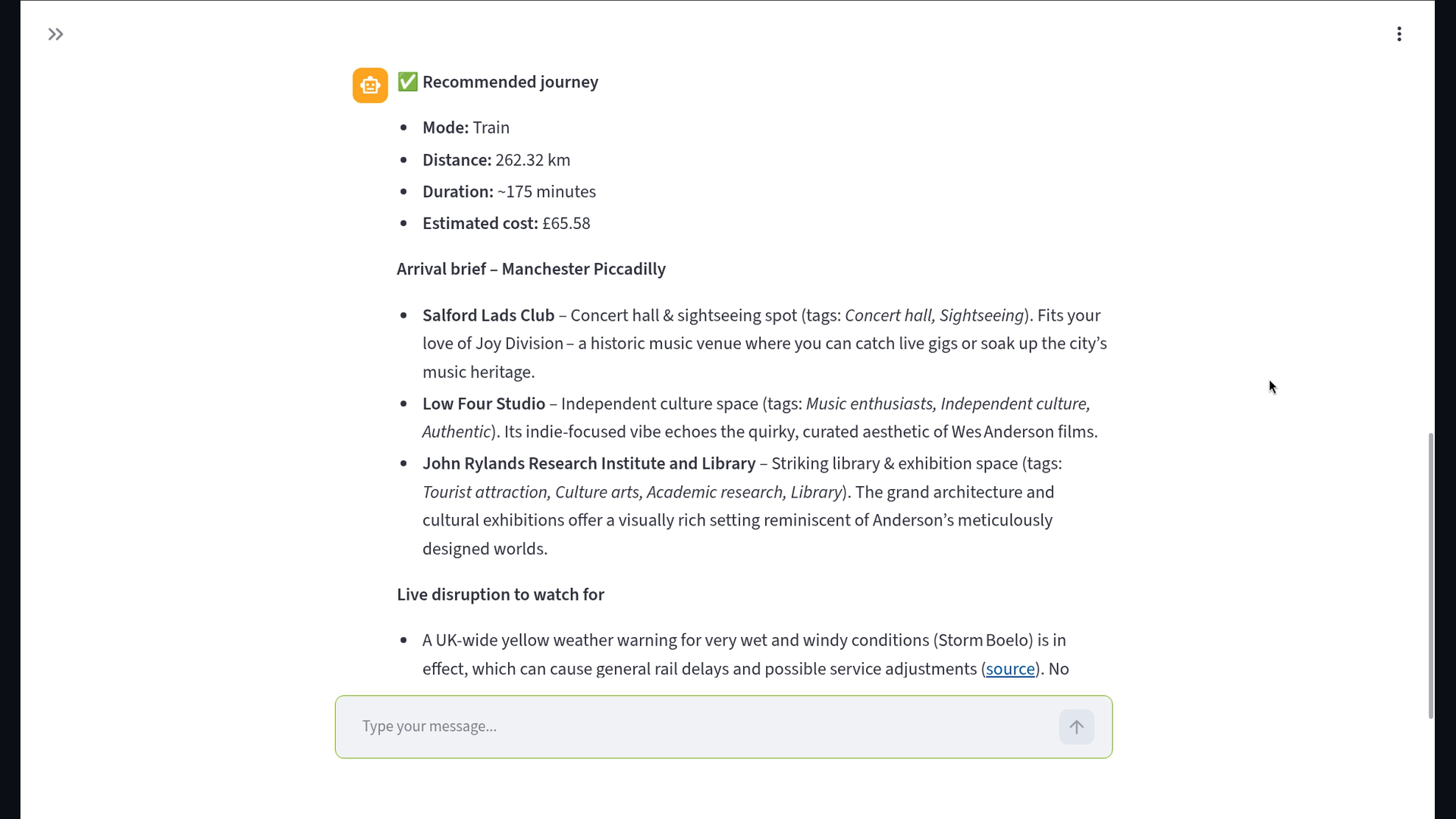
Tastebound is a chat agent for UK trips:
- It plans the journey (start, destination, time, preference) and recommends the best option, clearly labelled as an estimate.
- It asks what you love, for example "Joy Division, Wes Anderson films and good coffee".
- The agent calls Qloo to:
- resolve each taste to a Qloo entity (
/search); - query
/v2/insightsforurn:entity:placewithsignal.interests.entitiesaround the destination (filter.locationas a WKT point); - optionally narrow by vibe via
/v2/tags(e.g. a brunch tag).
- resolve each taste to a Qloo entity (
- It explains every pick using Qloo's own tags and affinity scores.
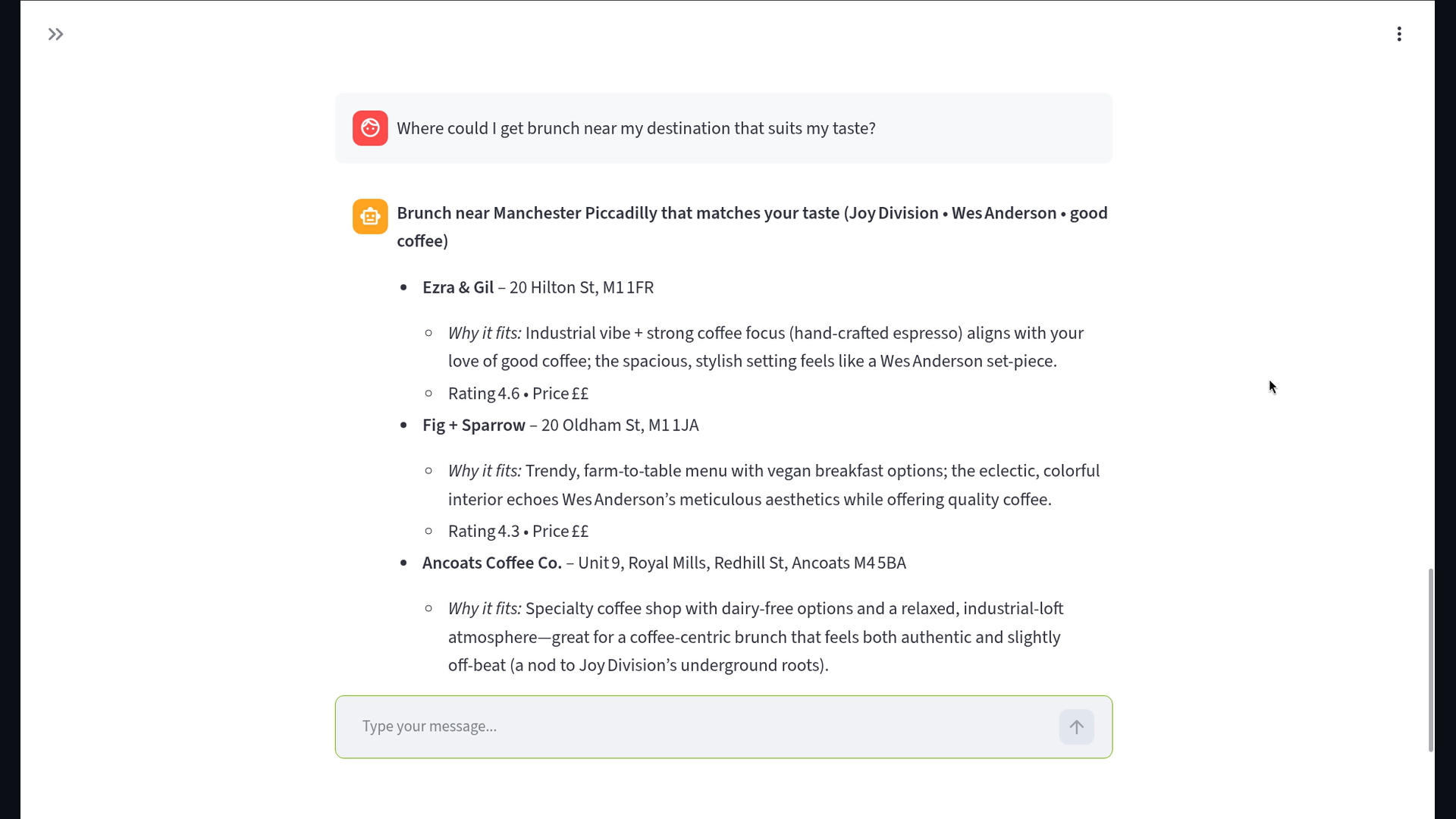
- Follow-ups reuse what it knows about you. "Brunch near my destination that suits my taste?" triggers a new Qloo query combining the brunch tag with your interests.
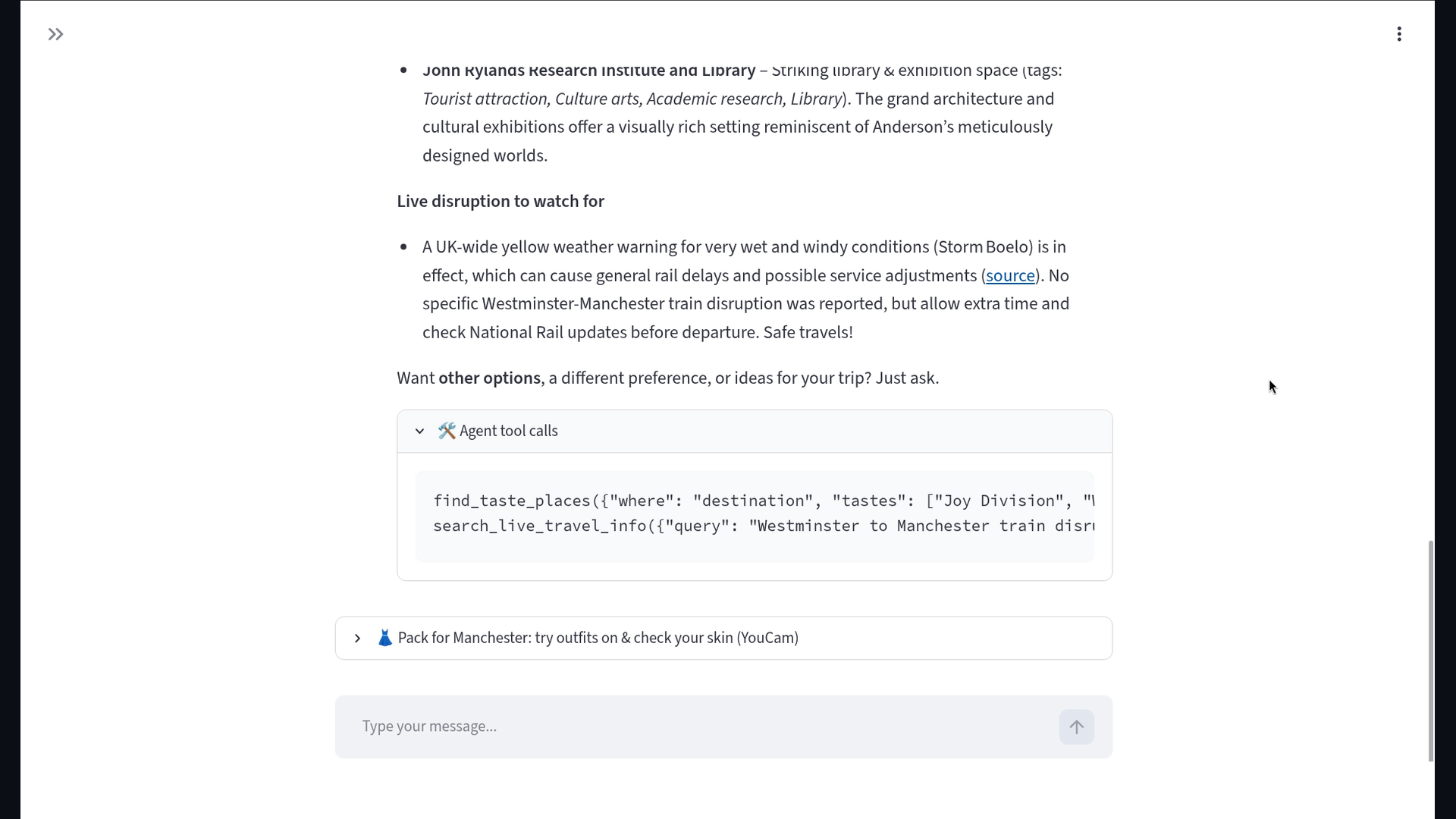
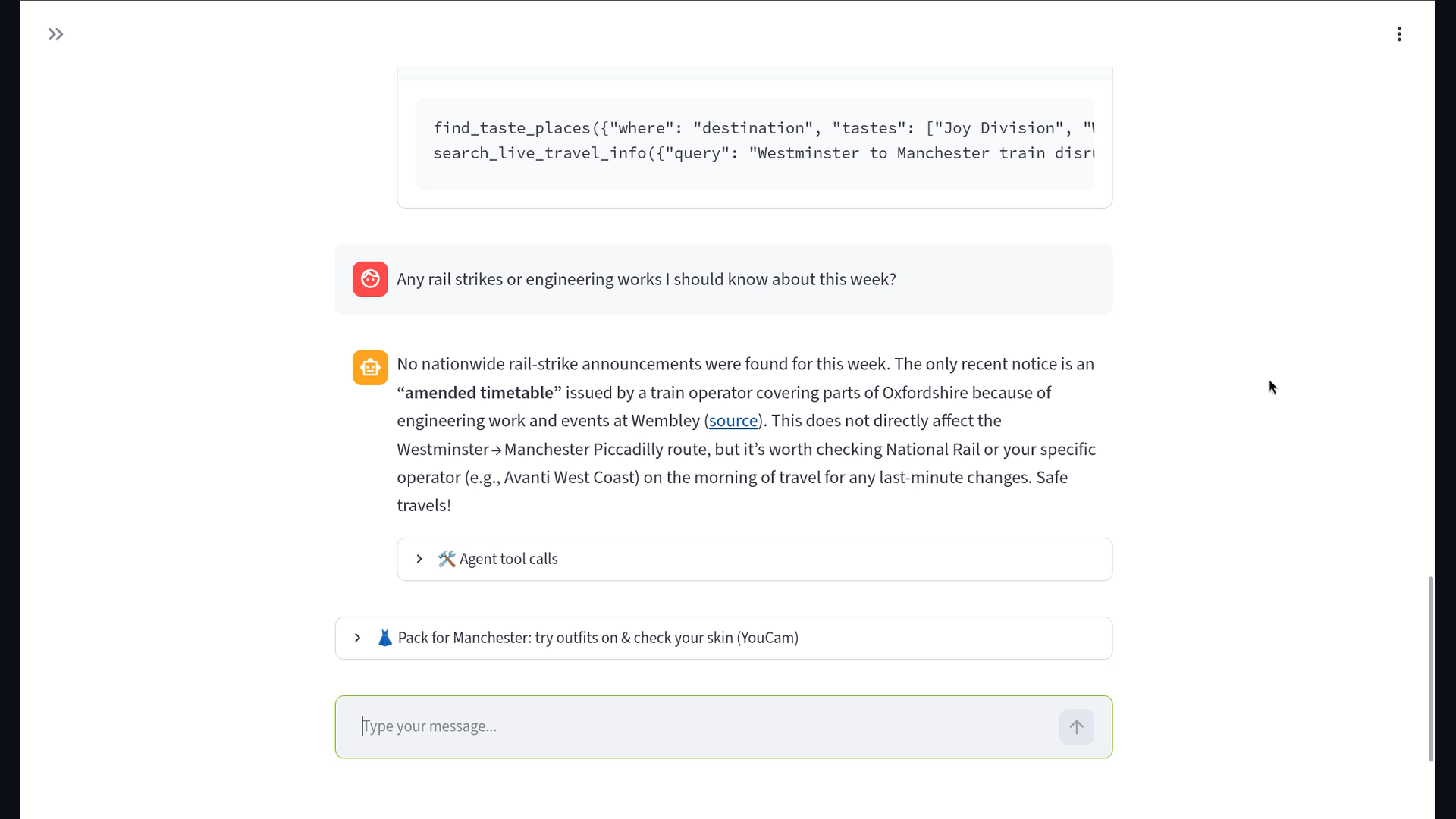
Live disruption news (Tavily, with sources) and journey estimates complete the arrival brief.
Why it only works because of Qloo
Remove Qloo and the agent can still plan the train, but its recommendations collapse to generic tourist spots. With Qloo, two travellers on the same train get different arrival briefs, because the agent knows what people with their taste actually love instead of guessing.
How it's agentic
- An NVIDIA Nemotron Super reasoning model runs a bounded tool-calling loop. It decides when to call Qloo (and with which tastes and vibe), when to search live news and when to look up routes, and it answers only from tool results.
- Every tool call is shown in the UI, so judges can see the agent's decisions.
- A fast Nemotron Nano model parses each message, and tastes mentioned anywhere in the conversation are picked up automatically.
Technical notes
- Qloo integration:
tastebound/taste.py(search → insights → tags), with parallel taste resolution and a per-turn cache. - Undocumented behaviour we found: the hackathon API rejects
filter.location=lat,lon(HTTP 400, "WKT format is invalid") although the docs list it, so we sendPOINT(lon lat). - Responsible use of the hackathon key:
- Qloo calls are limited app-wide (hourly and daily).
- Keys stay server-side.
- No Qloo response data is stored in the repository; tests use synthetic fixtures only.
- 113 offline tests plus live smoke tests against the real Qloo hackathon API.
How to try it (for judges)
- Open https://tastebound.streamlit.app (no login needed).
- Type:
Westminster, London→Manchester Piccadilly→tomorrow at 9am→balanced please→I love Joy Division, Wes Anderson films and good coffee. - Open 🛠️ Agent tool calls to see the Qloo queries, then ask:
Where could I get brunch near my destination that suits my taste? - The demo has fair-use limits per session and per hour, so if it says a limit is reached, try again a little later.
Existing project: what changed during the submission period
The project began as a UK journey-planning chatbot prototype with no recommendations. The Qloo integration, the tool-calling agent, taste capture in conversation and the hosted demo were all built during the submission period (Sep 30 – Oct 30, 2026).
What's next
- Taste-matched destinations, not just places (Qloo
urn:entity:destination): "where should a Britpop fan spend a weekend?" - A human last-mile check: the Tendem module (implemented behind an operator passphrase and price caps) can have a person phone a Qloo-recommended restaurant to confirm it's open with a table free.
- Group trips: blending several travellers' tastes into one plan.
Built With
- nebius-token-factory
- nvidia-nemotron
- python
- qloo
- streamlit
- tavily
