-
-
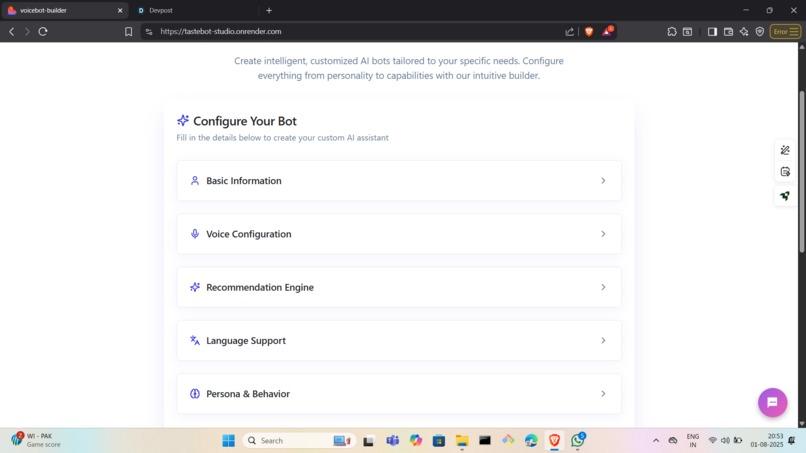
Create a Custom TasteBot AI Bot
-
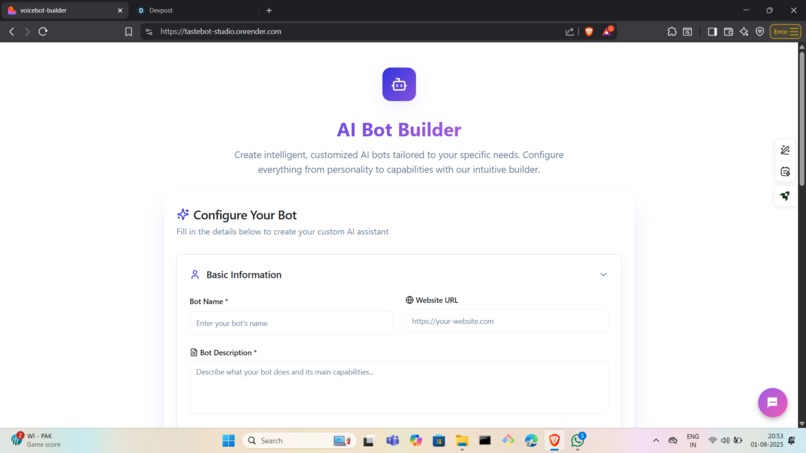
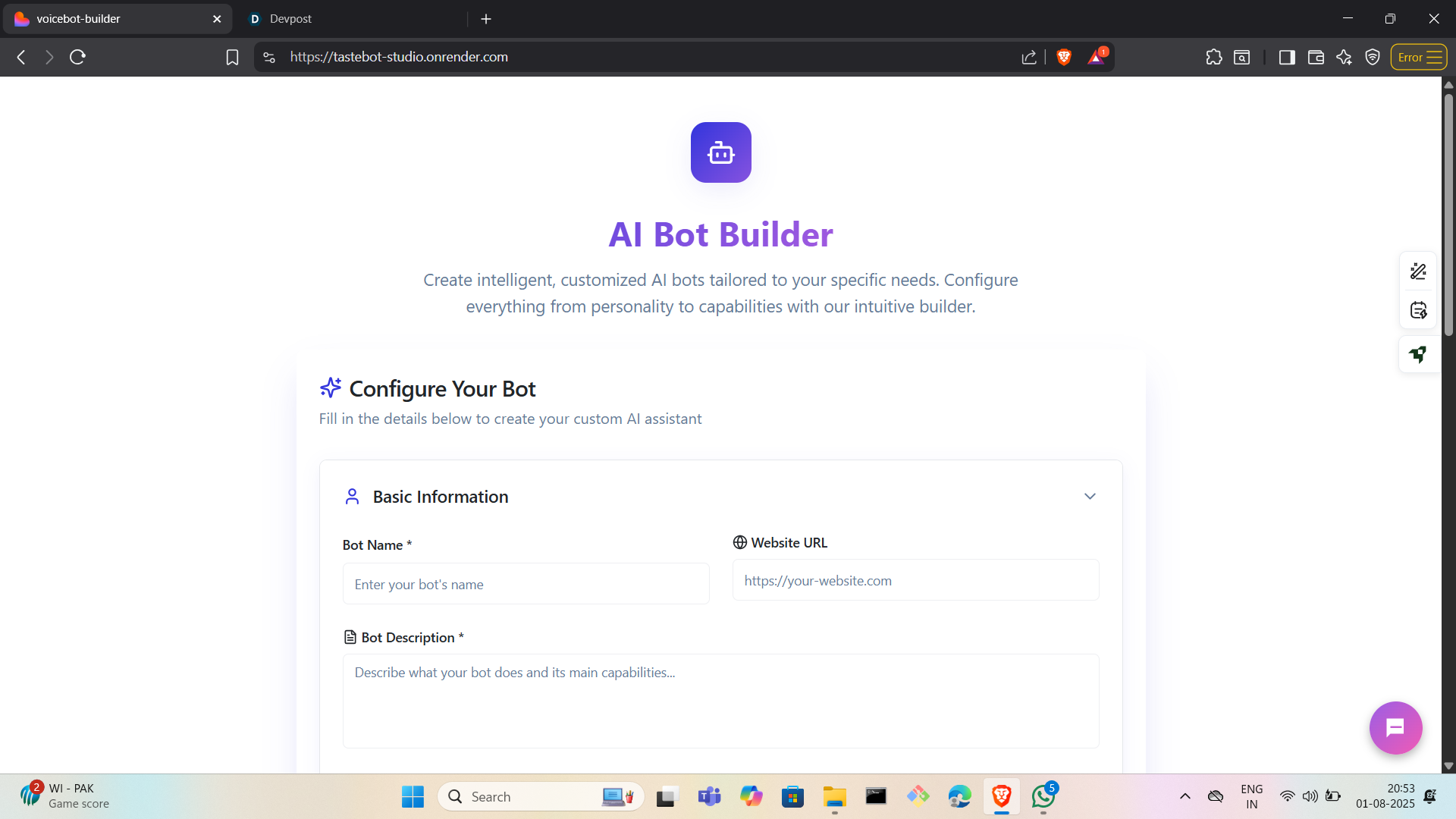
TasteBot Studio - Home Page
-
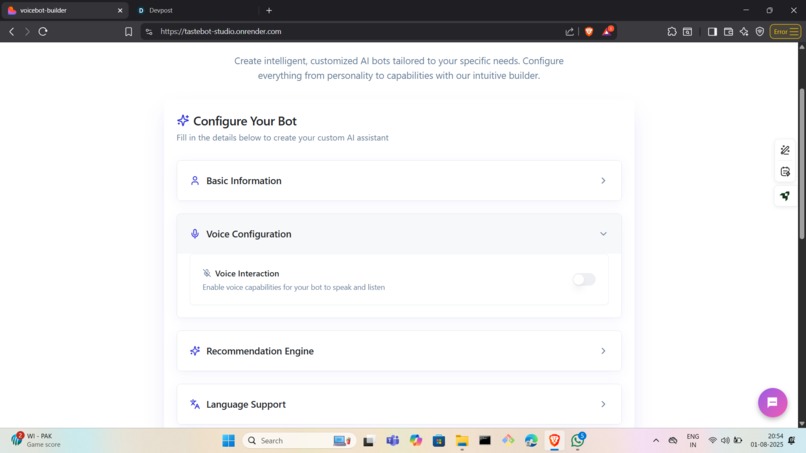
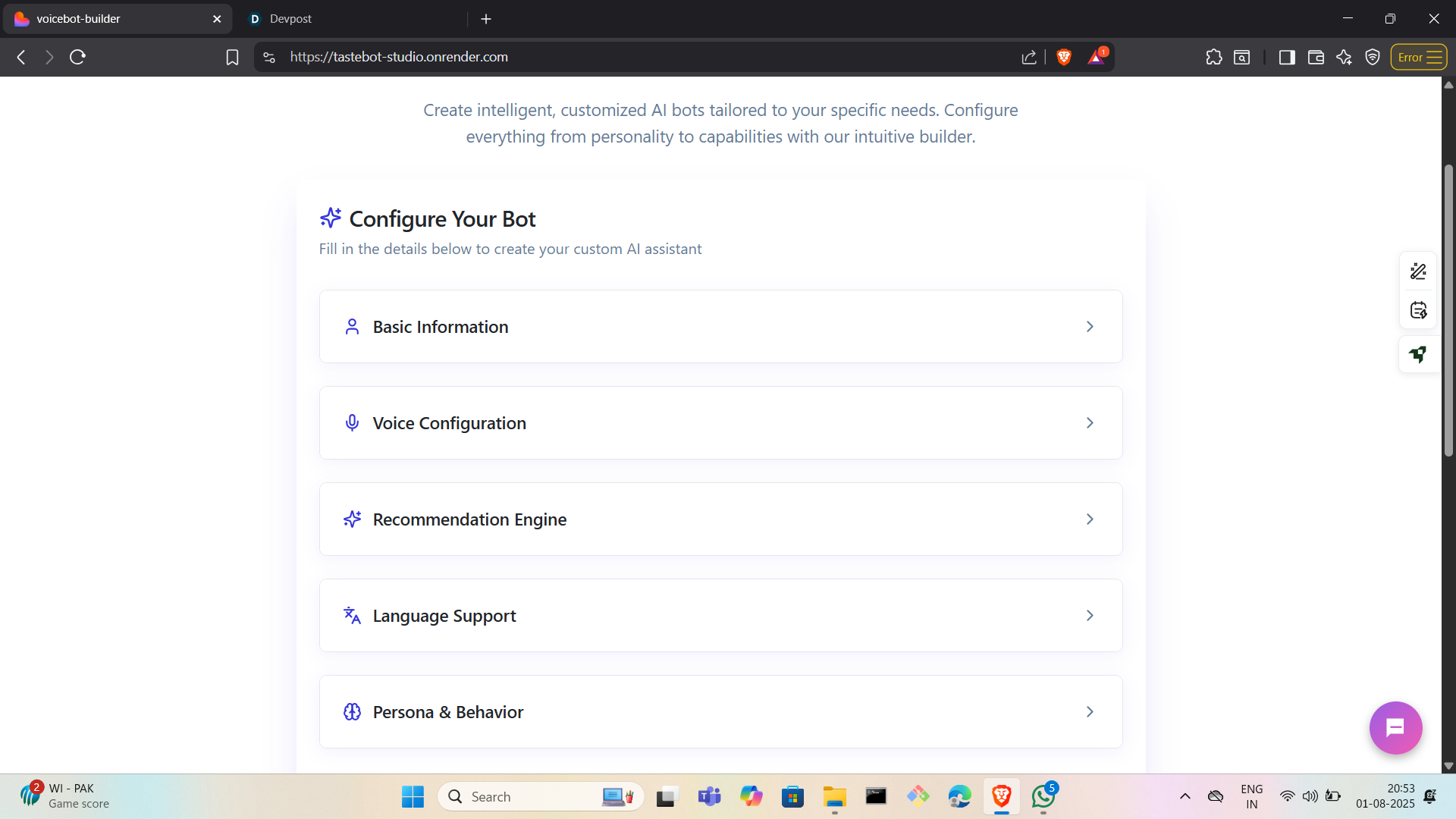
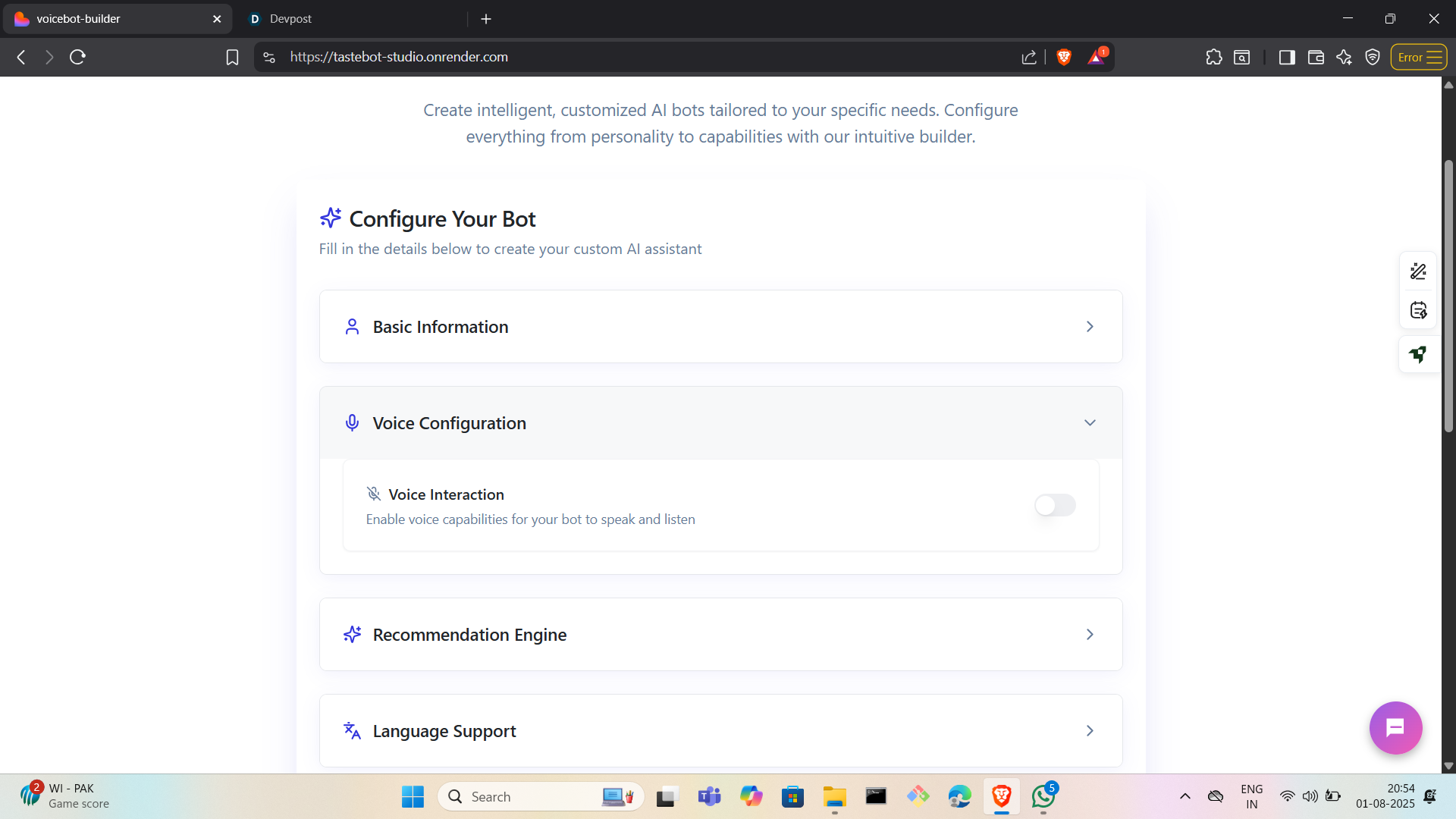
Customise the Bot
-
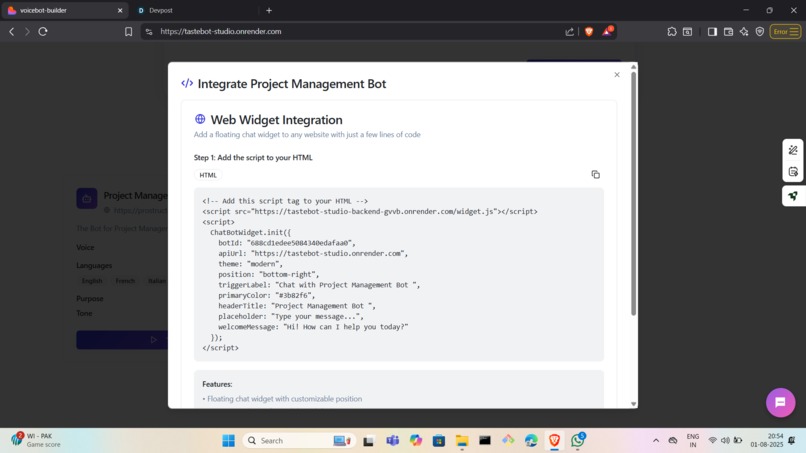
Integrate as Embed in Website in Secs
-
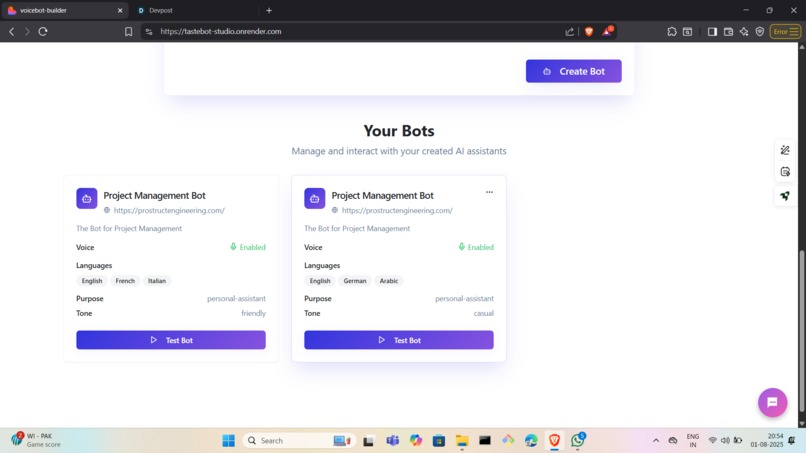
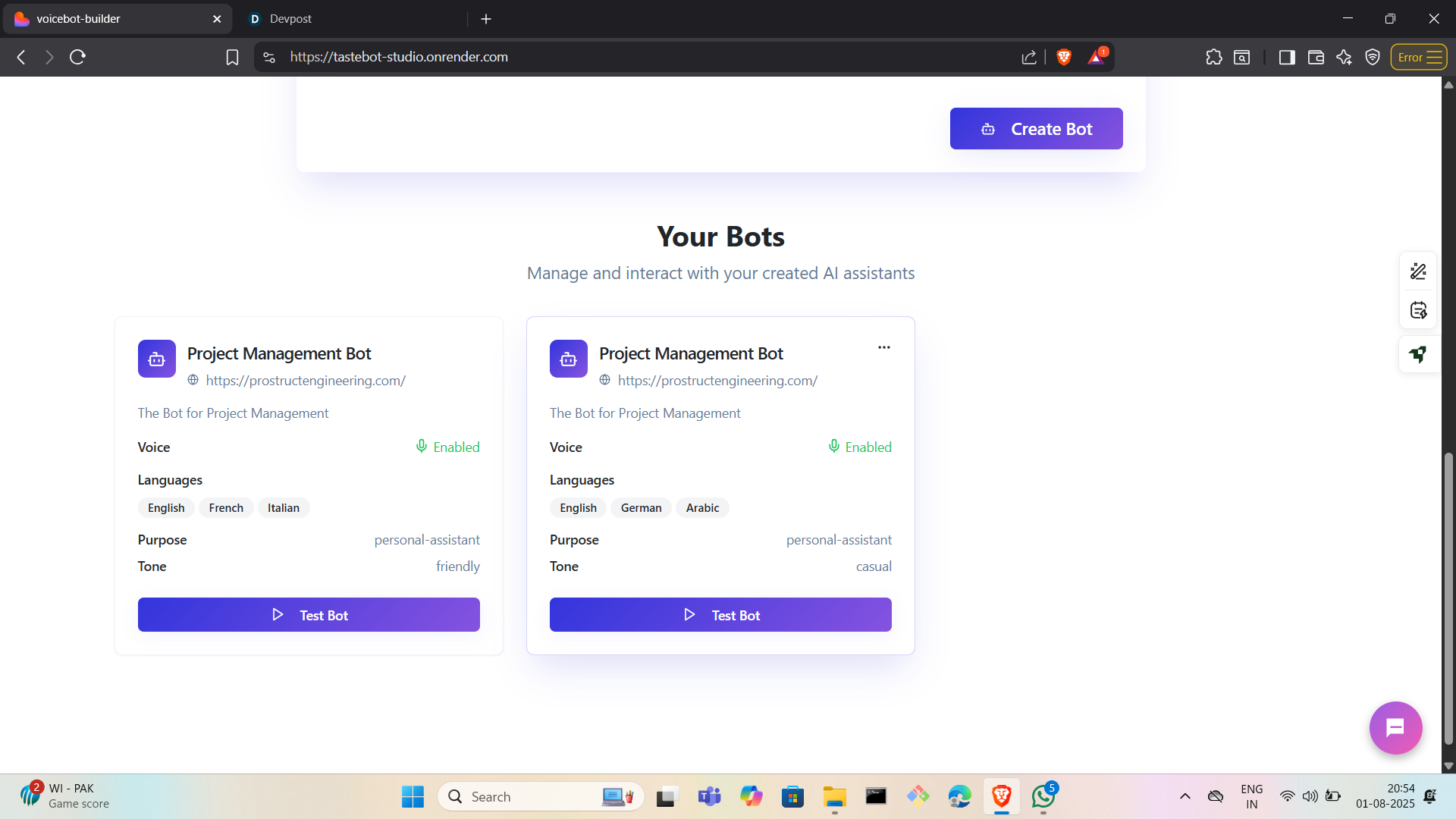
See all Bots
-
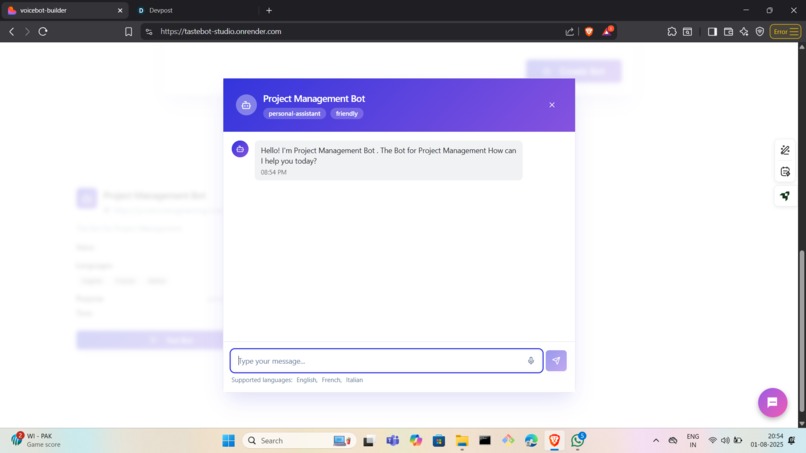
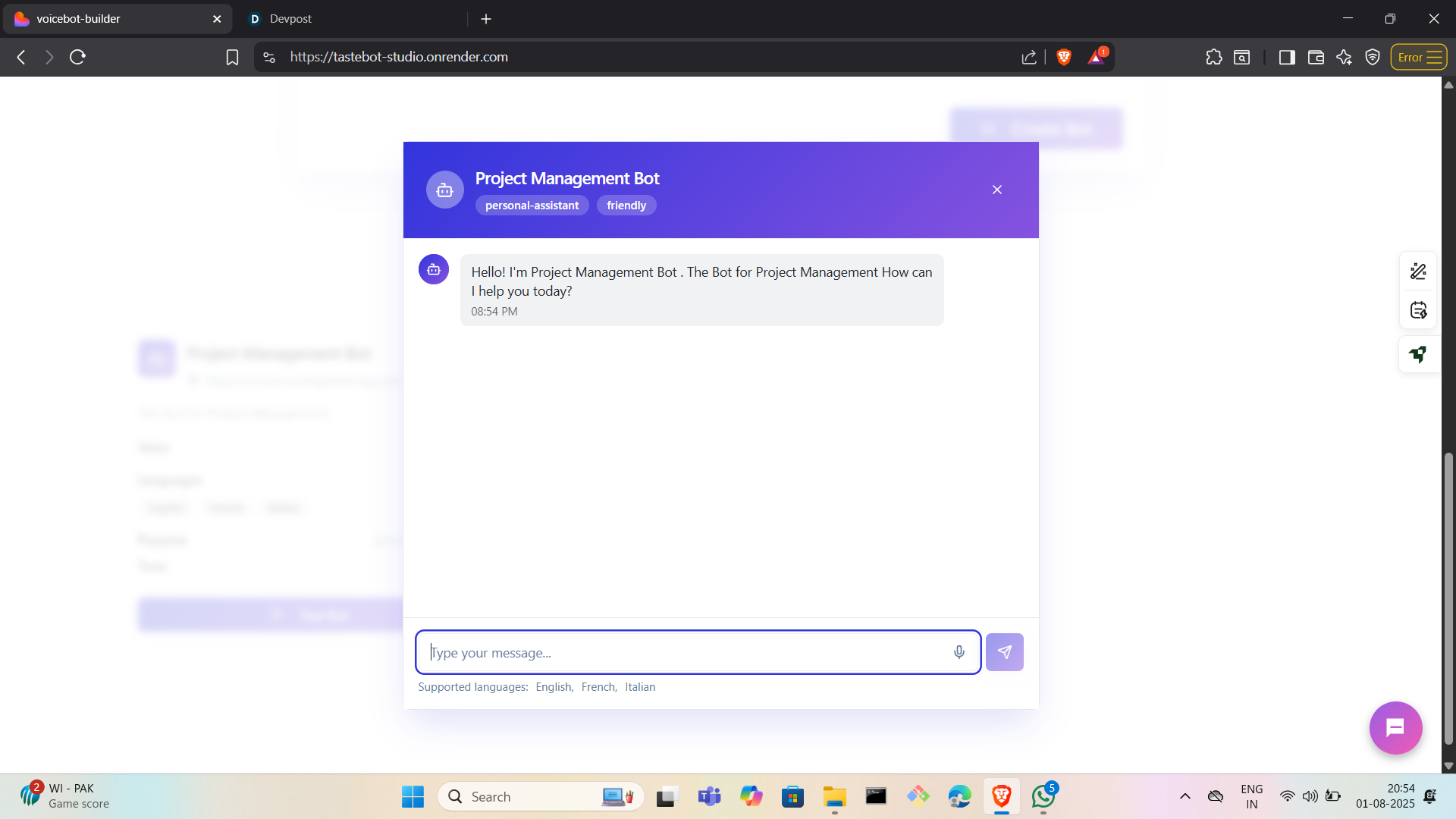
Test or Share the Bot

Inspiration
Creating custom AI chatbots often involves tedious setup, technical integration, and limited personality customization. We wanted to change that. Inspired by tools like Botpress and the rise of RAG-based systems, we envisioned a simple platform where anyone — technical or not — could build, test, and integrate powerful, taste-aware bots in just a few minutes. Our goal was to make chatbot creation feel more like crafting a personality than configuring a machine.
What it does
TasteBot Studio is a no-code platform that allows users to build AI-powered chatbots tailored to their website, use-case, and brand voice.
Users simply:
- Enter the bot’s name, website, and description
- Upload a reference file (e.g. manuals, guides)
- Choose if the bot should have voice support
- Enable recommendation capabilities using Qloo
- Select supported languages
- Define the bot’s persona: tone, audience, keywords, and purpose
Once created, bots can be:
- Tested with real-time Q&A
- Shared via public links
- Embedded on websites with fully customizable UI (colors, headers, chat styles)
- Easily edited, updated, or deleted
The bots leverage RAG (Retrieval-Augmented Generation) techniques with a memory layer for optimized performance, and respond intelligently using uploaded documents or context, making them useful for customer support, onboarding, recommendations, and more.
How we built it
- Frontend: Built with React, providing a clean and interactive interface for bot creation, preview, testing, and sharing.
- Backend: Node.js and Express.js, with APIs to manage bots, files, memory cache, and user configurations.
- RAG Engine: Used embedding and vector similarity search (via tools like Pinecone or FAISS) to extract relevant answers from uploaded documents.
- Voice Support: Web Speech API integration for real-time voice input and responses.
- Recommendations: Integrated with the Qloo API to offer contextual recommendations based on taste profiles.
- Embedding: Generated embeddable JS widgets with customizable UI, previewable before deployment.
Challenges we ran into
- Optimizing RAG response speed while keeping context accuracy high
- Designing an intuitive flow for non-technical users to define complex bot behaviors
- Building a scalable memory layer that caches prior queries to avoid redundant computation
- Integrating dynamic voice support and multi-language capabilities smoothly across platforms
- Ensuring bot embed previews rendered exactly as they would on user websites
Accomplishments that we're proud of
- Created a truly end-to-end bot-building experience that takes under 3 minutes
- Seamlessly blended taste-based recommendations, voice input, and persona-based response styling
- Enabled real-time preview and embed with full customization
- Built a flexible system that can scale from simple FAQ bots to complex, document-aware assistants
What we learned
- Simplicity is key — users don’t want to deal with configs or APIs; they want instant results
- Memory + RAG is a powerful combo for speed and accuracy
- Persona design matters — a bot with the right tone and purpose enhances user trust and engagement
- Embedding AI assistants in websites should be as easy as copy-paste — and now it is
What's next for TasteBot Studio - AI Chatbots Powered by Personality & Taste
- Launching a template gallery for industry-specific bots (e.g. travel, e-commerce, education)
- Adding support for multimedia files like images or PDFs as knowledge inputs
- Training custom fine-tuned models per bot for more nuanced behavior
- Enabling analytics dashboards to monitor user interactions and bot performance
- Building Slack, WhatsApp, and Discord integrations for omni-channel support
- Introducing collaborative bot editing and team-based access controls
TasteBot Studio is just getting started — our mission is to democratize bot creation and let everyone design bots with flavor, personality, and purpose.
Built With
- googleapis
- javascript
- llm
- mongodb
- node.js
- openai
- qloo
- rag
- react
- shadcn

Log in or sign up for Devpost to join the conversation.