💡 The Inspiration
We've all been there: you sit down to start a new anime or movie, but you don't know what to eat. You end up scrolling endlessly on food delivery apps or settling for plain popcorn. I wanted to solve the "dinner and a movie" dilemma by turning it into an automated, thematic experience.
⚙️ What it does
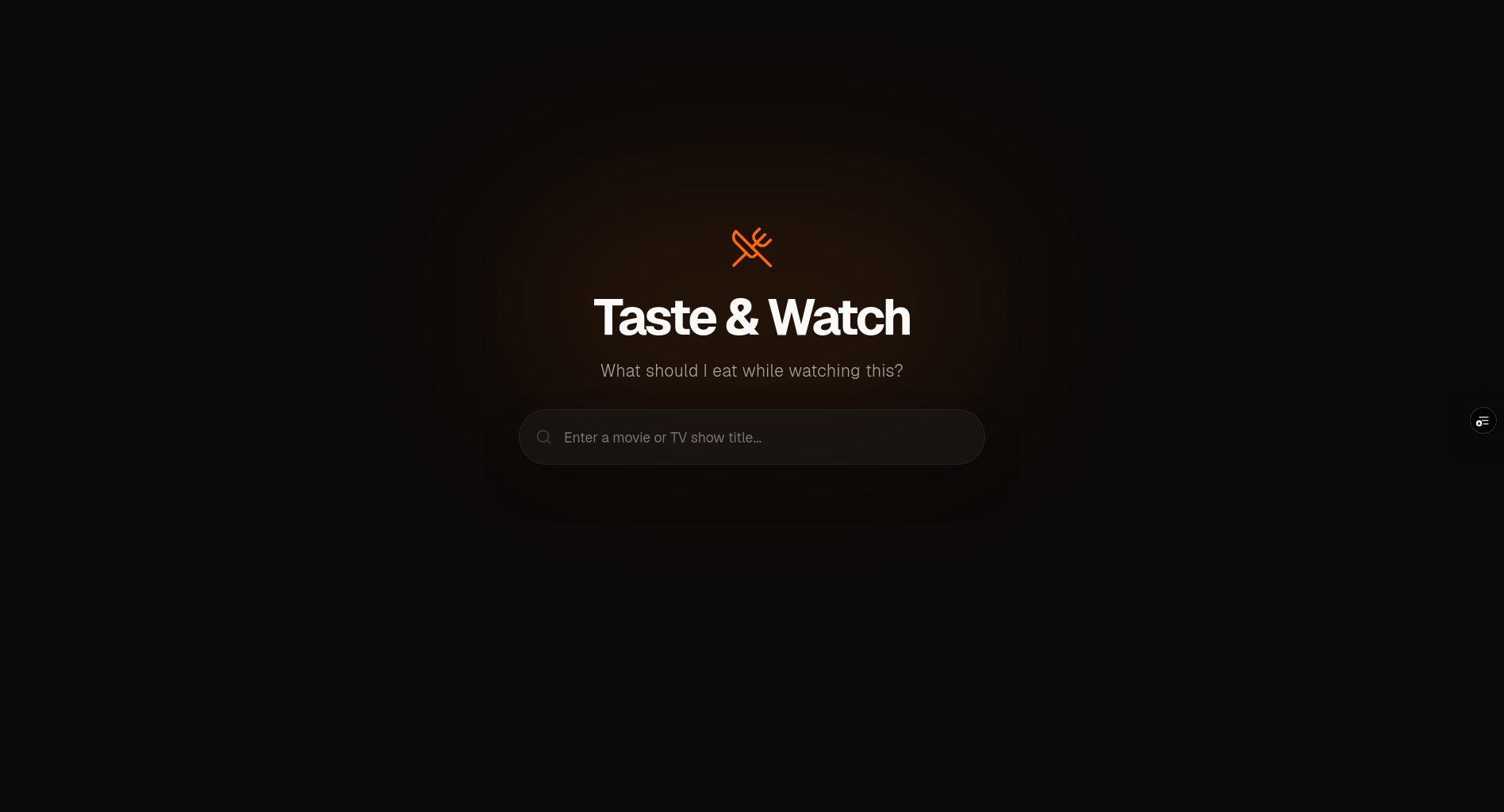
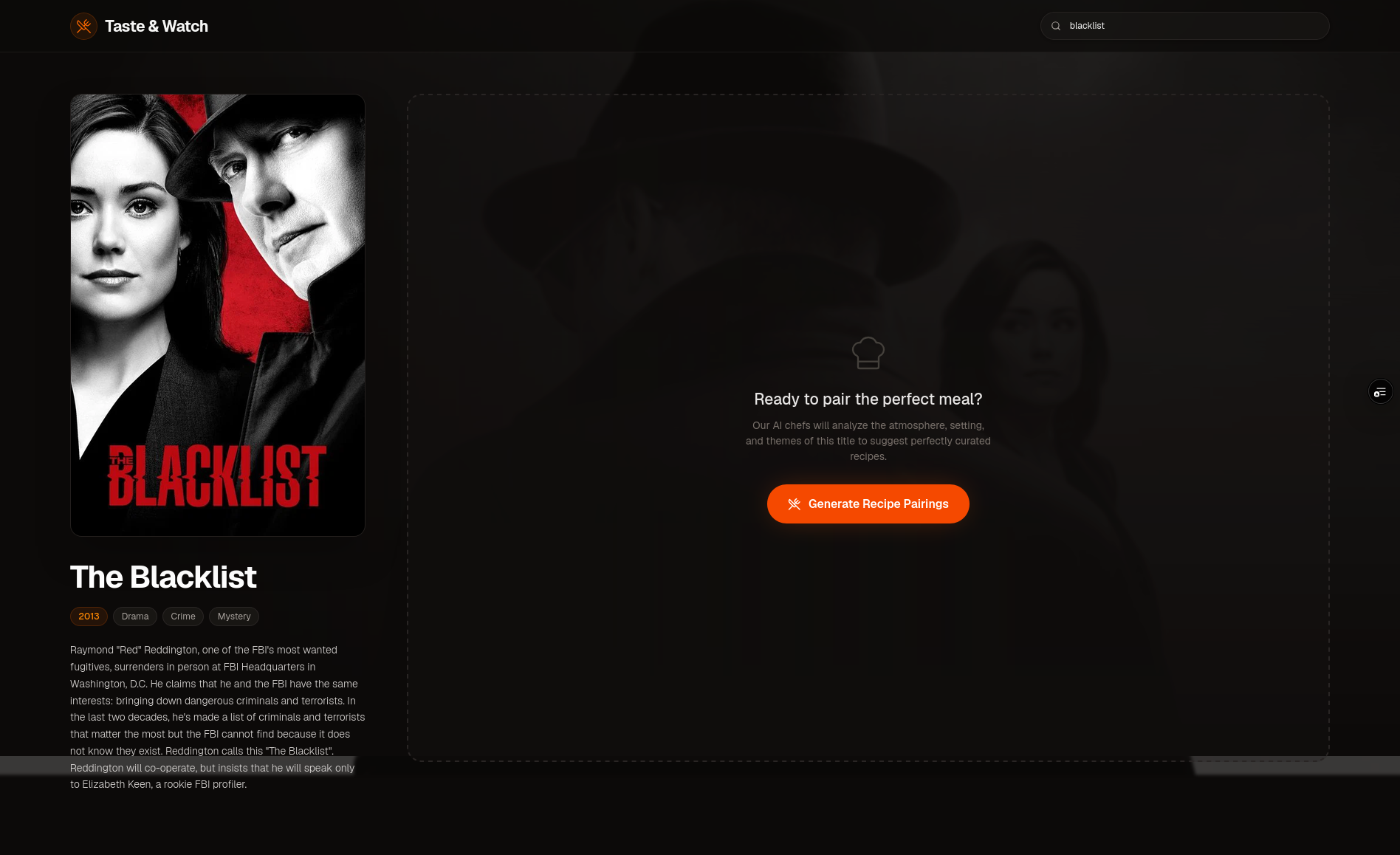
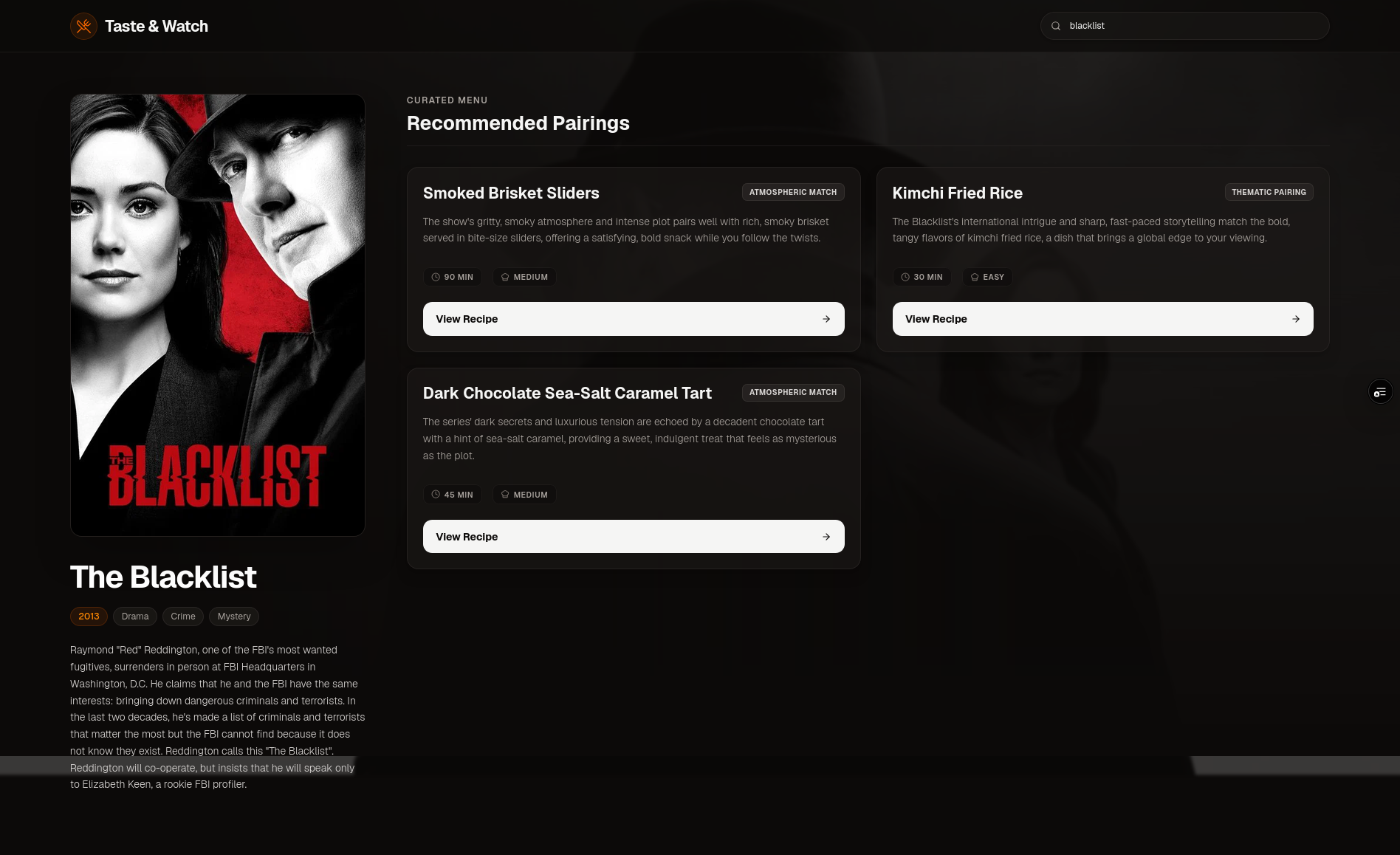
Taste & Watch takes whatever media you are watching and dynamically suggests a customized, thematic recipe.
- If you search for an anime like Naruto, it curates authentic ramen recipes.
- If you search for a cyberpunk sci-fi movie, it suggests neon-themed mocktails or modern street food.
It cross-references entertainment databases with recipe APIs to generate the perfect pairing.
🛠️ How we built it
The frontend is built using Next.js and Tailwind CSS, utilizing shadcn/ui for clean, accessible components. To make the interface feel cinematic, I used Framer Motion for page transitions and micro-interactions.
The core logic orchestrates several APIs:
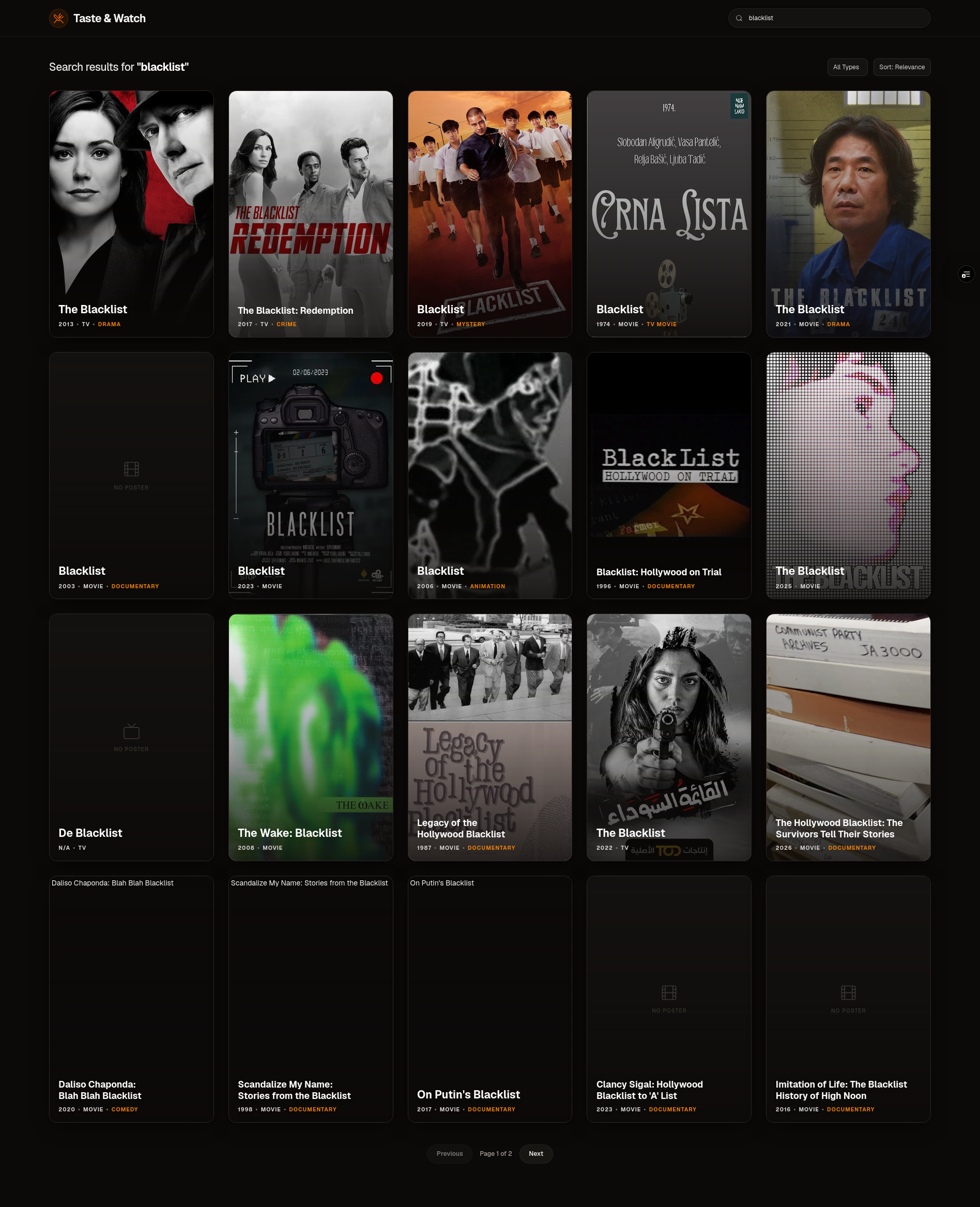
- The TMDB API: Fetches the movie/anime details, genres, and high-quality poster artwork.
- The Vercel AI SDK: The heart of the project. Using strictly typed Zod schemas and
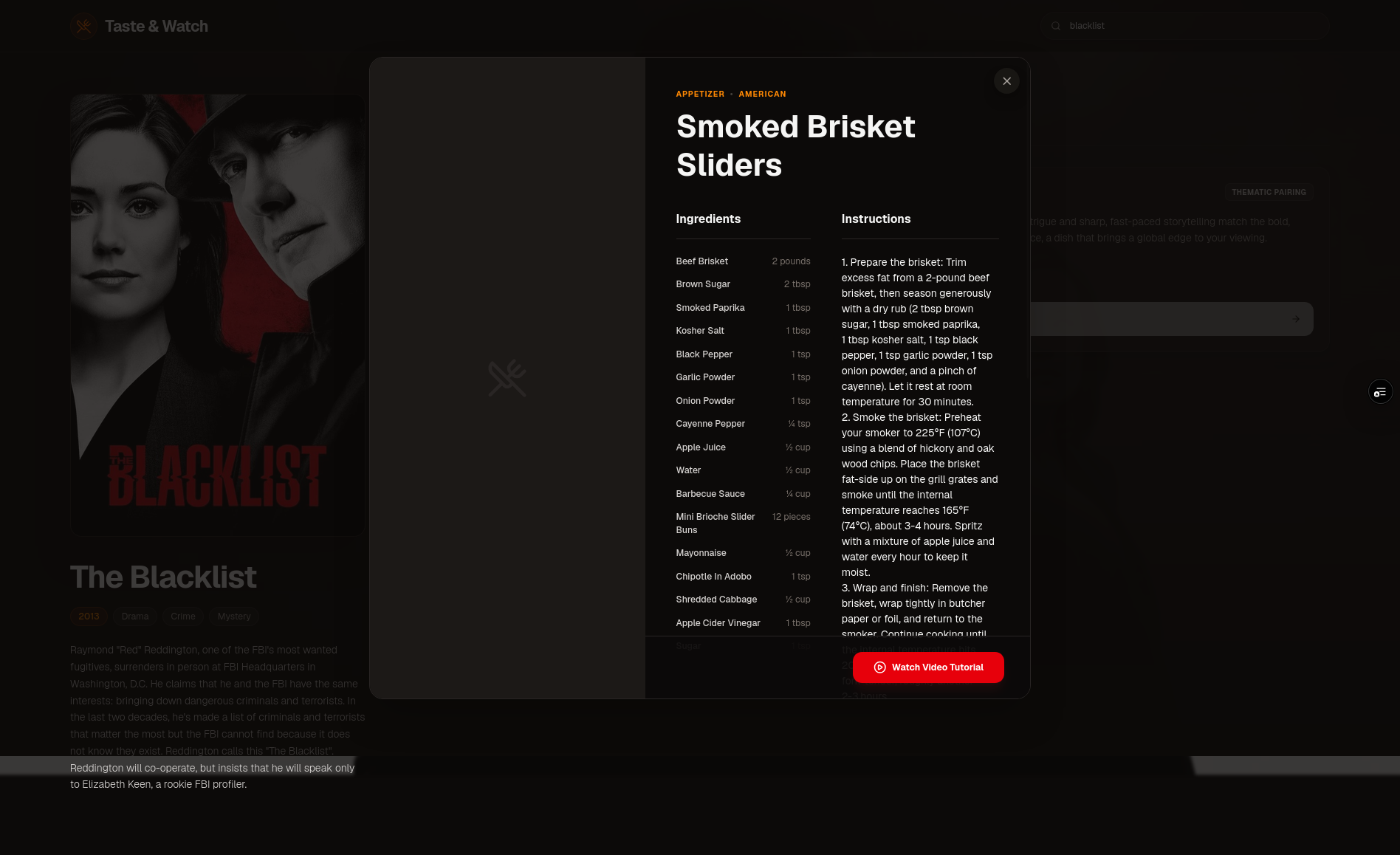
generateObject, the LLM reads the title, genres, and overview, then invents three pairings — each with a name, a prep time, a difficulty, a one-line reason it fits, and the exact search terms to use downstream. It is also used to rescue search: if TMDB returns nothing, the AI guesses the title the user actually meant. - TheMealDB: Serves the real recipe content — ingredients, measurements, and step-by-step instructions.
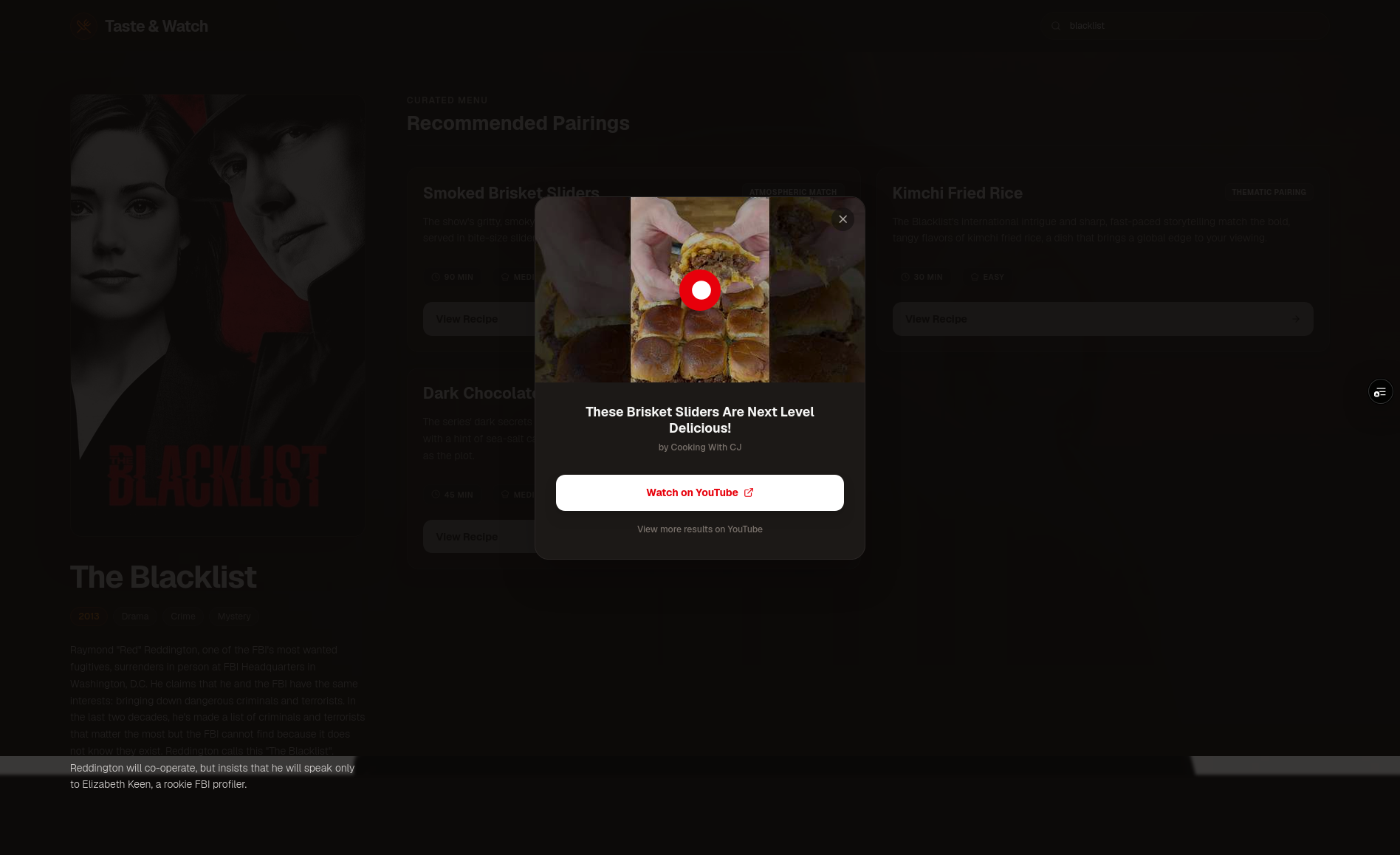
- The YouTube Data API: Finds a tutorial for the winning dish and hands the user off to watch it.
The AI layer is provider-agnostic and will run on Gemini, Groq, or NVIDIA NIM, depending on which API key is configured.
🚧 Challenges I ran into
The biggest challenge was the data orchestration. Matching a movie title directly to a recipe doesn't work out of the box — a recipe database has no concept of "the food that goes with a 1999 cyberpunk thriller."
I had to build a "Keyword Matcher" system that asks the model to translate a title's genres and themes (e.g., "Horror" or "Slice of Life") into genuinely searchable culinary terms (e.g., "spooky, dark chocolate" or "comfort food, soup").
The second problem was that even a good keyword can miss. So every step degrades gracefully instead of failing: the search falls back to a cleaned-up query, a recipe miss falls back to a fully AI-generated recipe, and an expired YouTube key silently drops the tutorial button rather than breaking the flow.
🎓 Accomplishments that I'm proud of
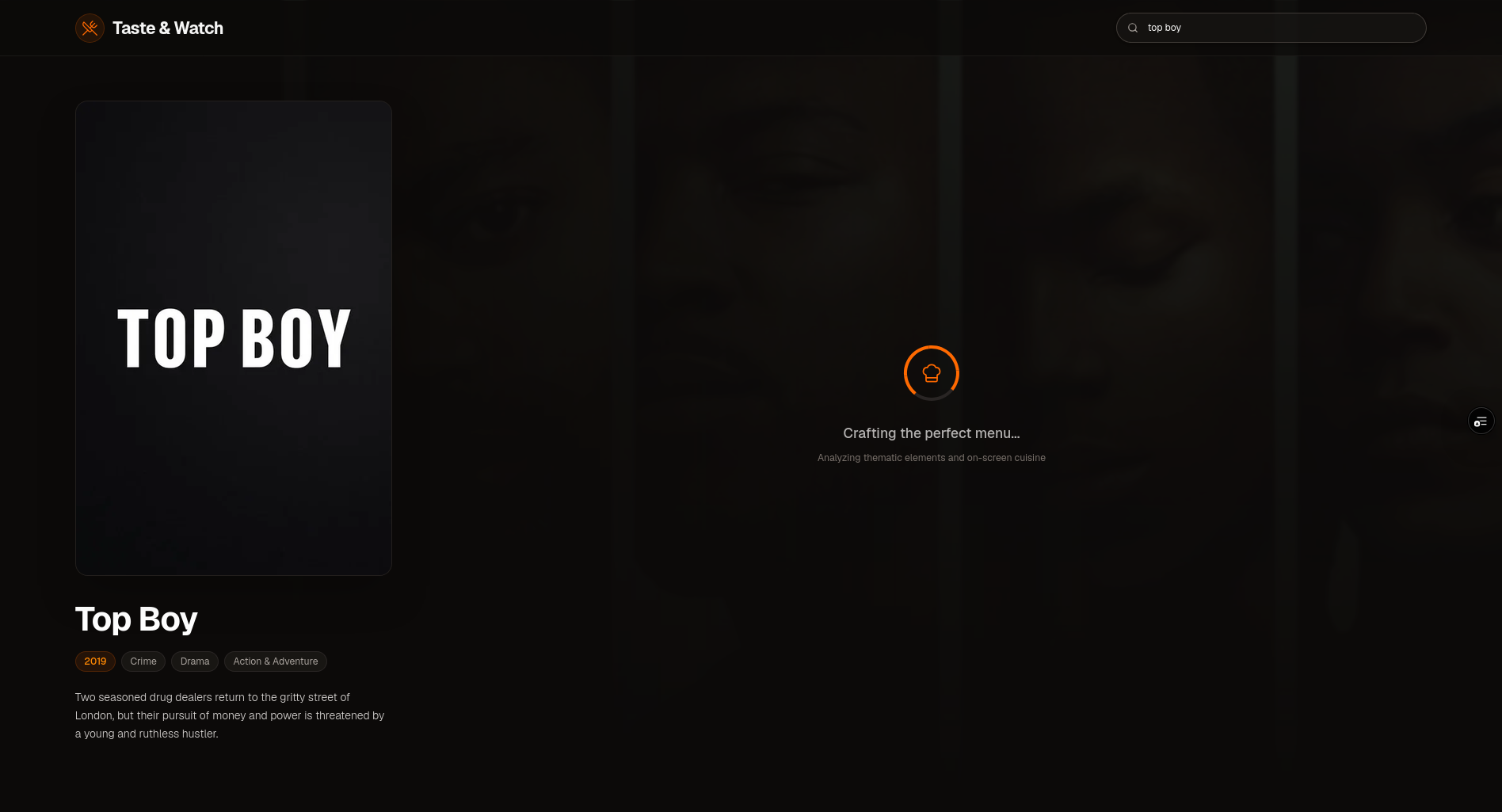
I am extremely proud of the UI layer. By focusing on a clean layout and handling asynchronous API loading states gracefully, the app feels immersive and professional rather than just a basic data-fetcher.
I'm also proud that the pairings carry their reasoning. Each suggestion explains why it fits — the vibe, the theme, or a dish tied directly to a scene on screen — so it reads as a recommendation rather than a random search result.
📚 What I learned
This project was a deep dive into asynchronous API orchestration. Managing loading states and error boundaries while waiting on several sequential APIs was a massive learning experience for my frontend engineering skills.
On the AI side, I learned that the hard part isn't calling a model — it's constraining it. Validating every response against a Zod schema is what turns a chat completion into something a UI can actually render, and designing the schema first (what is a pairing, what is a recipe step) shaped the whole architecture.
🚀 What's next for Taste & Watch
In the future, I plan to add a "Pantry Mode," where users can input the ingredients they already have in their fridge, and the app will generate a movie-themed recipe using only those available items!
Built With
| Layer | Technology |
|---|---|
| Framework | Next.js 16 (App Router, Server Actions), React 19, TypeScript |
| Styling | Tailwind CSS v4, shadcn/ui on Base UI, Framer Motion |
| AI | Vercel AI SDK — generateObject + Zod (Gemini / Groq / NVIDIA NIM) |
| Data | TMDB API, TheMealDB, YouTube Data API |
Author
Ifeoluwa Olajubaje — Full-Stack Developer






Built With
- api
- framer-motion
- nextjs
- react
- spoonacular
- tailwindcss
- tmdb

Log in or sign up for Devpost to join the conversation.