-
-
Qloo-grounded personas, city fit and ad copy for small e-commerce brands.
-
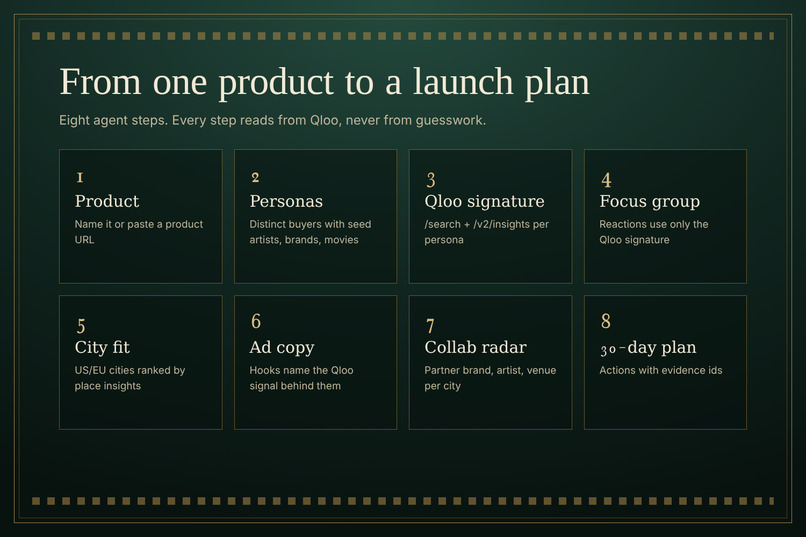
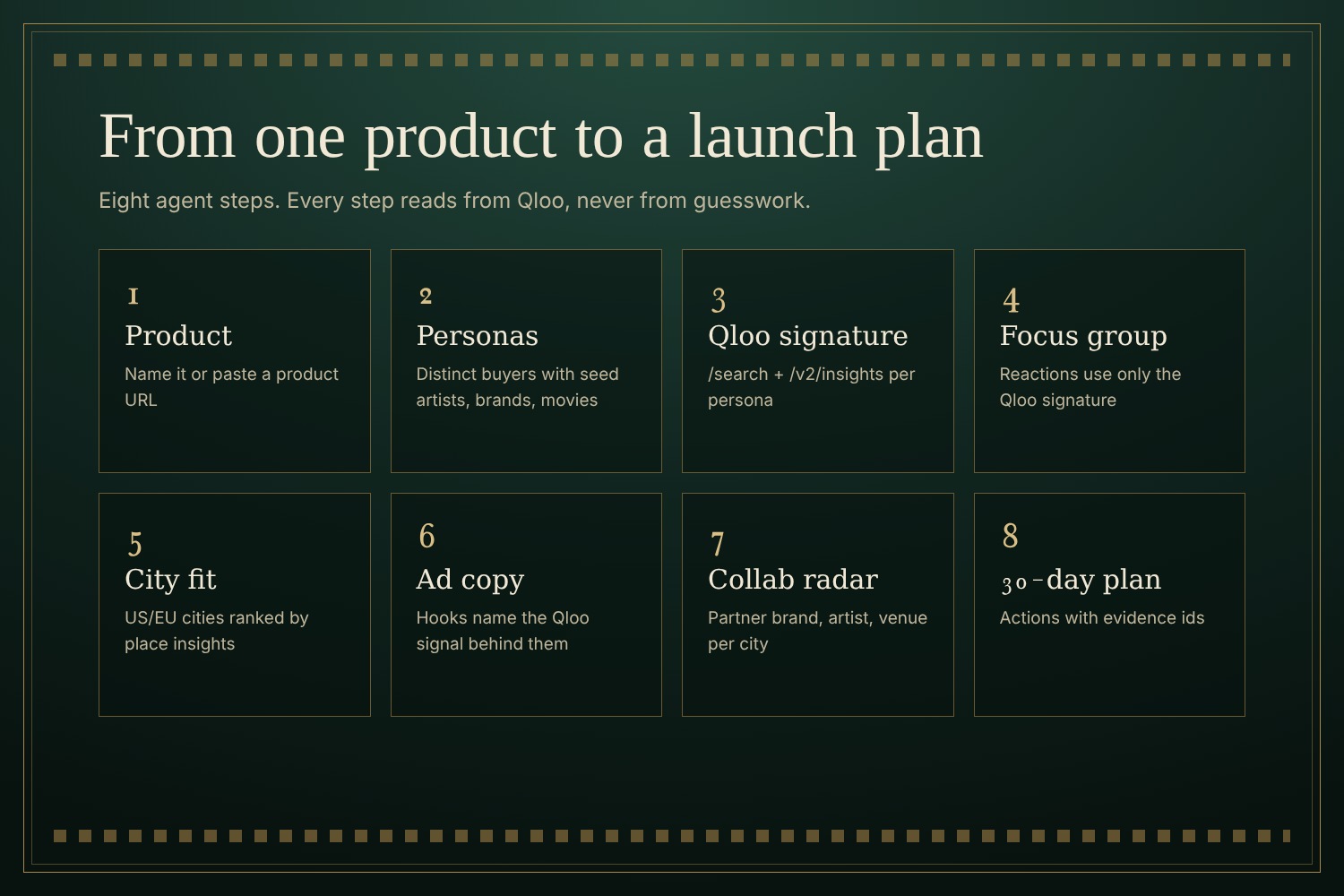
Eight agent steps, each reading from Qloo: personas, signatures, focus group, cities, ad copy, partners, plan.
-
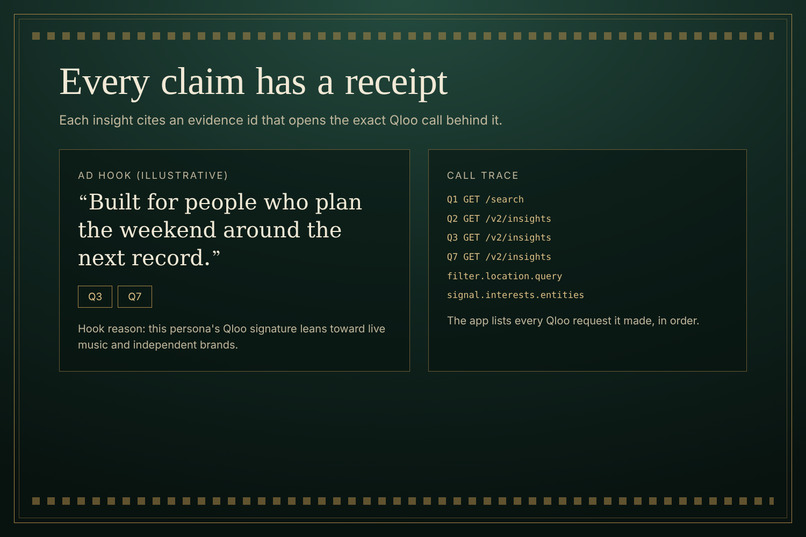
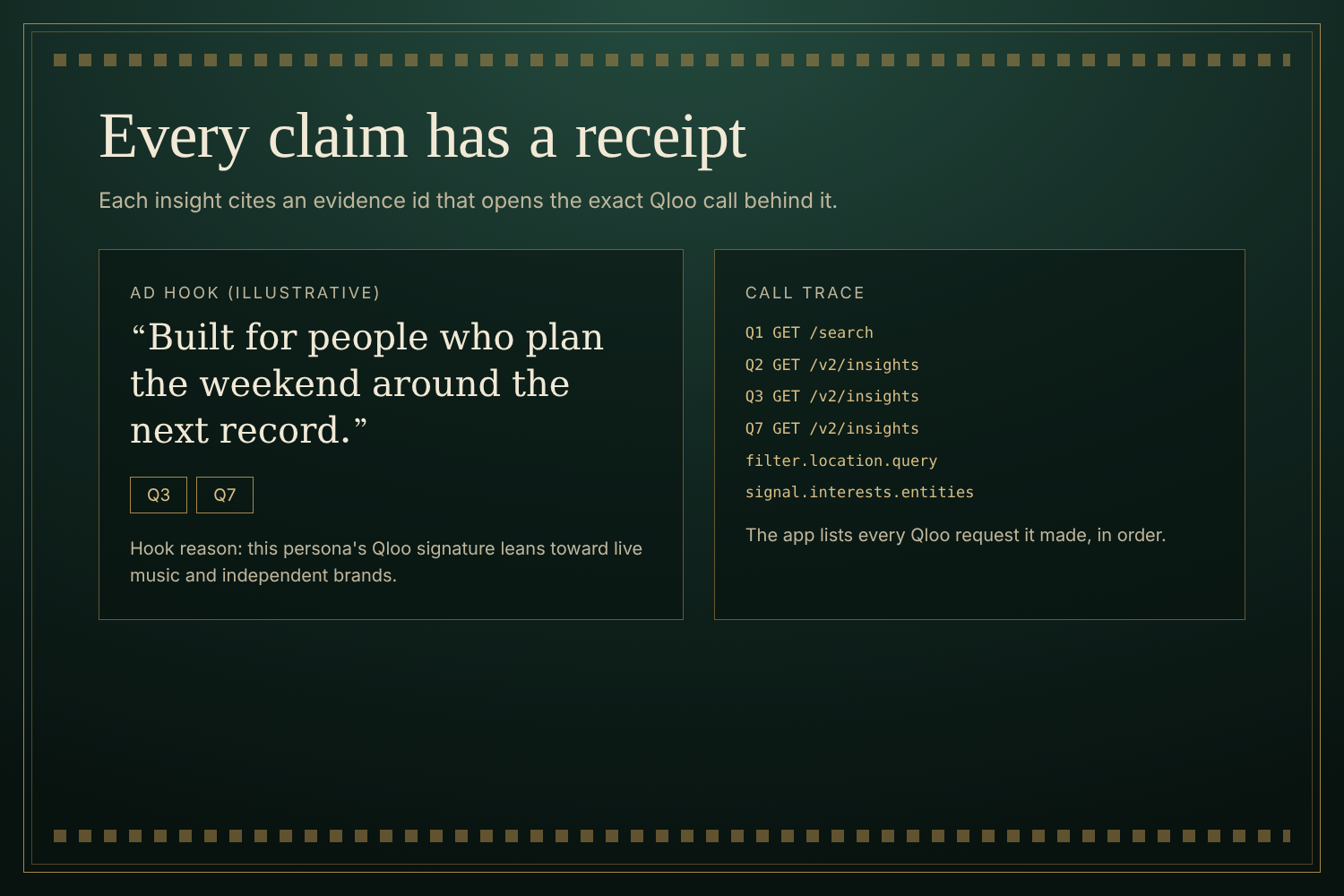
Every insight cites an evidence ID that opens the exact Qloo call behind it. Illustrative example.
-
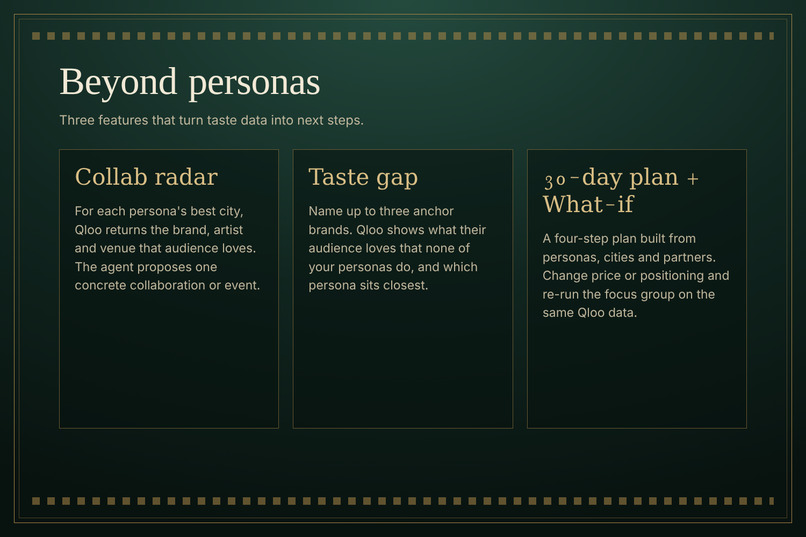
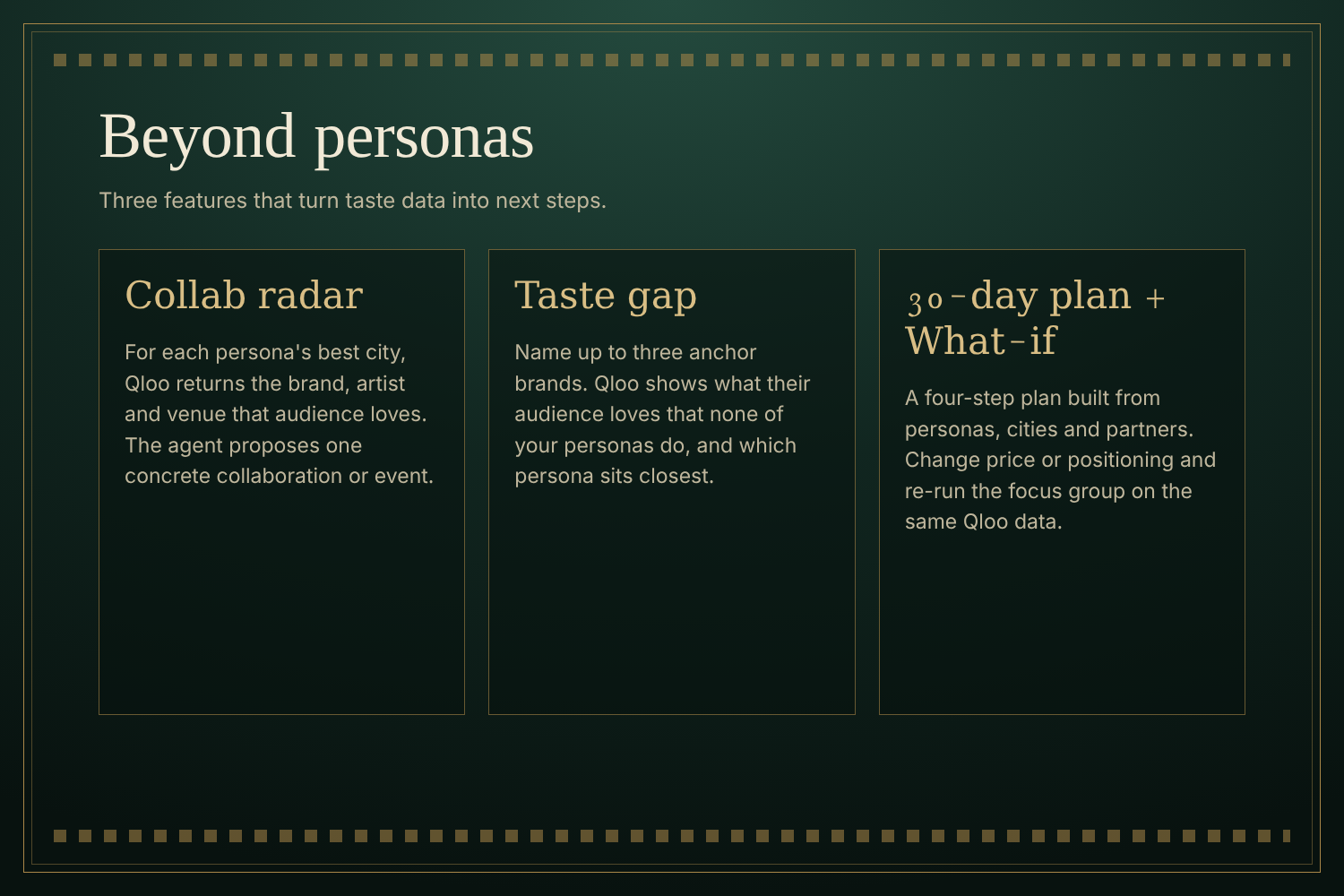
Collab radar, taste gap against anchor brands, and a 30-day plan with a what-if re-run.
-
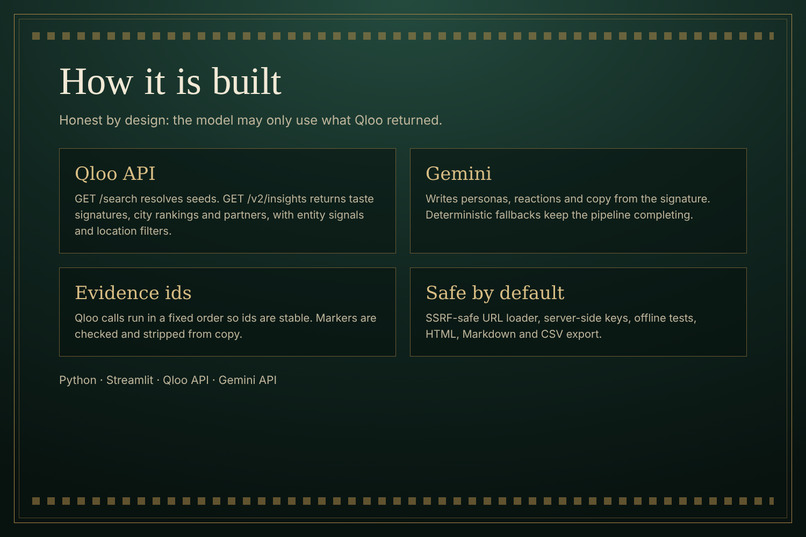
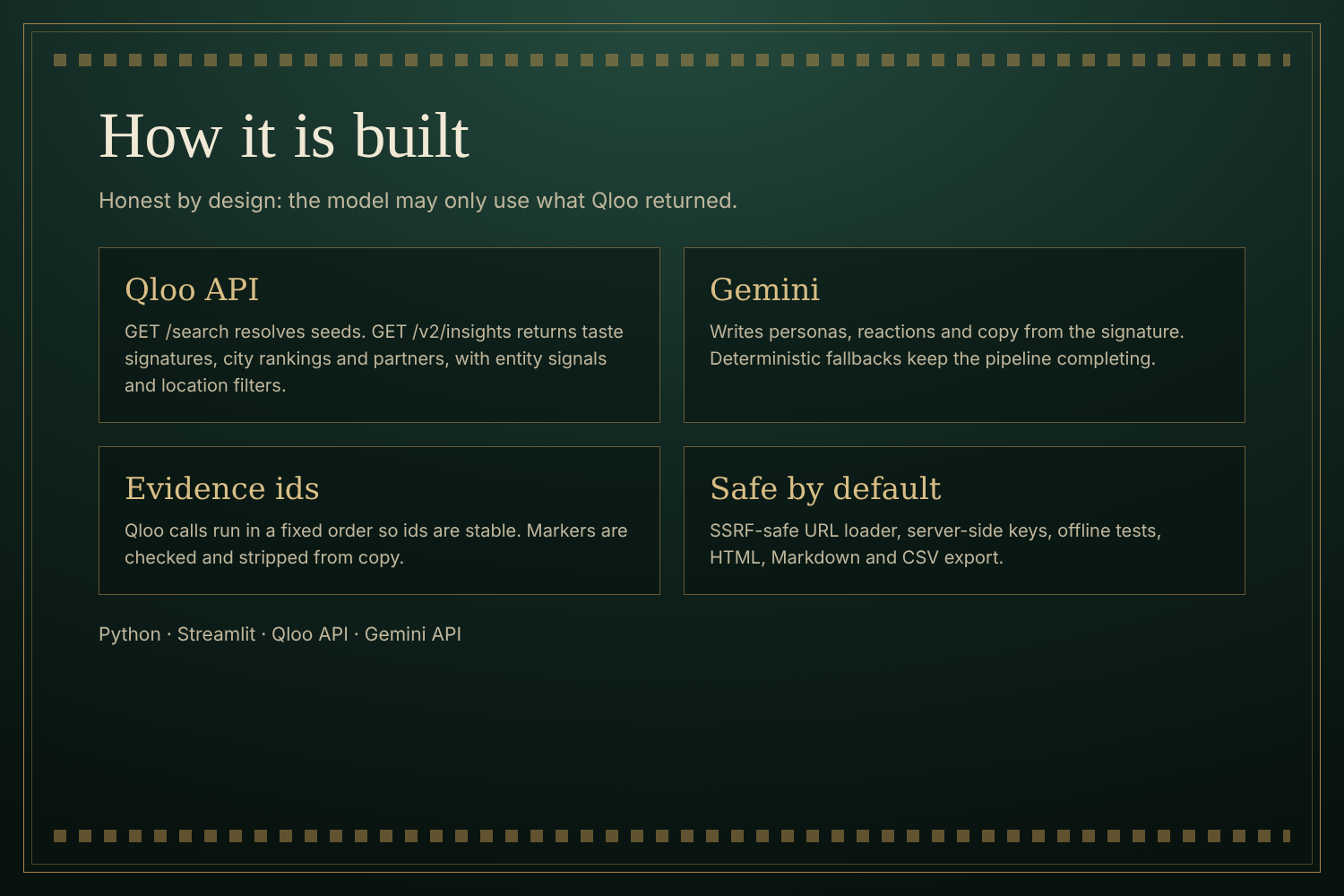
Qloo /search and /v2/insights for taste data, Gemini for text, deterministic fallbacks, SSRF-safe loader.
-
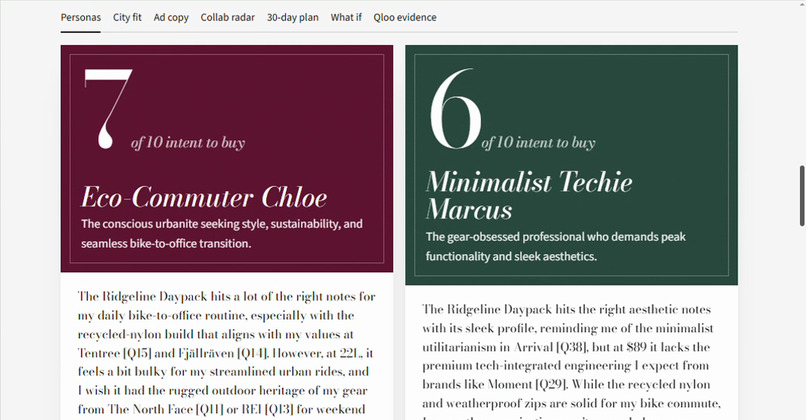
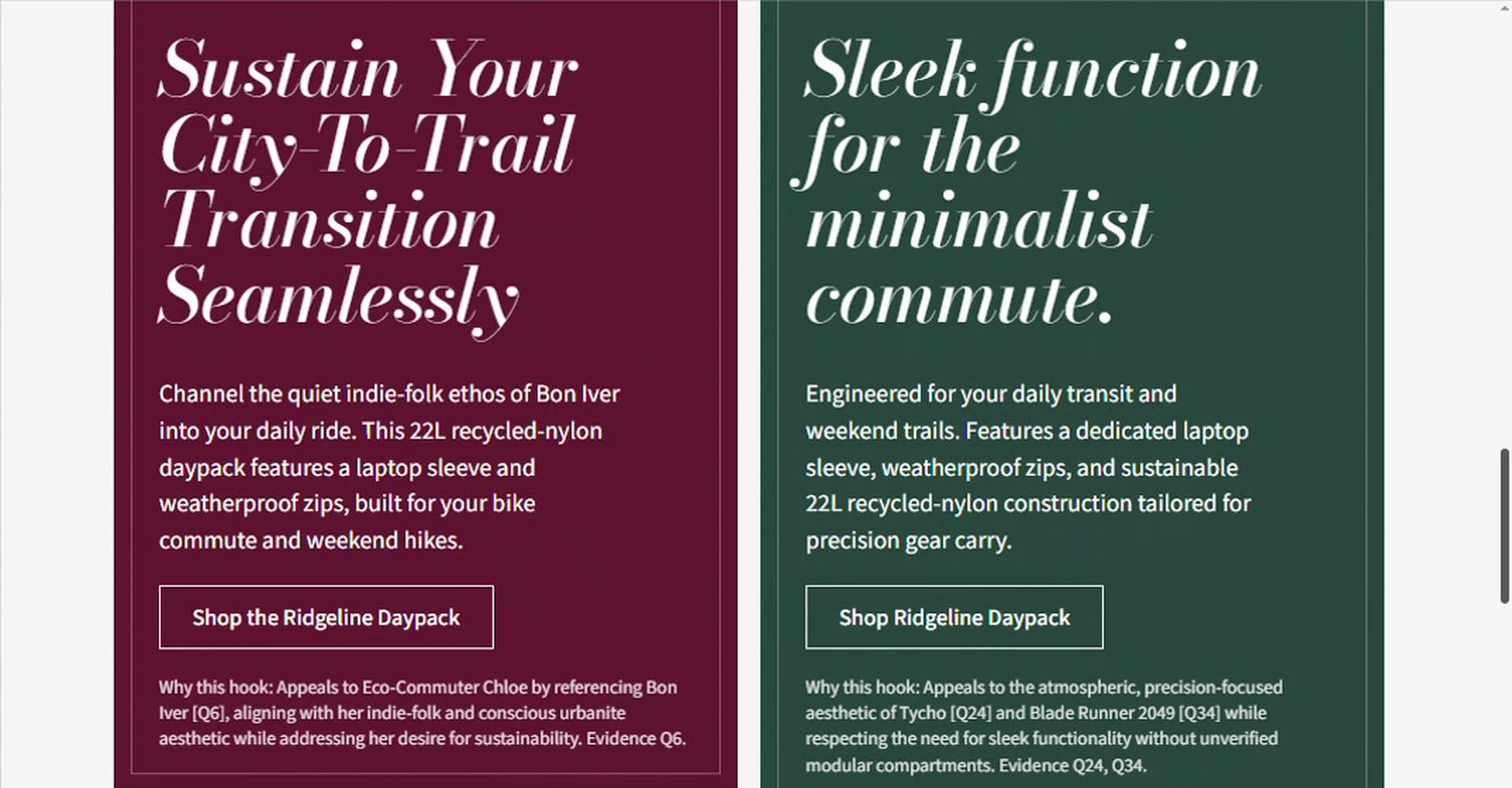
Persona-specific ad copy; each hook cites the Qloo evidence behind it.
-
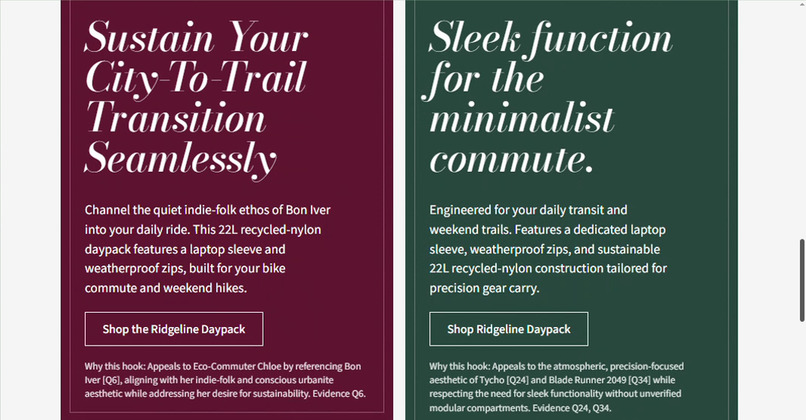
A four-week launch plan from personas, cities and partners. Hypotheses to test, with evidence IDs.
-
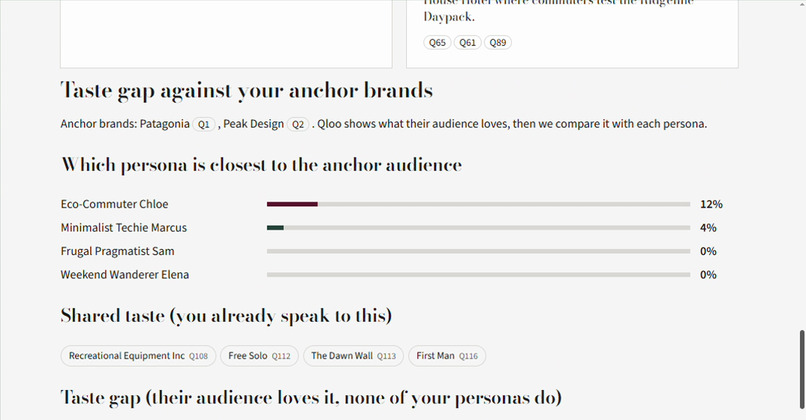
Taste gap: what the audience of my anchor brands loves that none of my personas do.
-
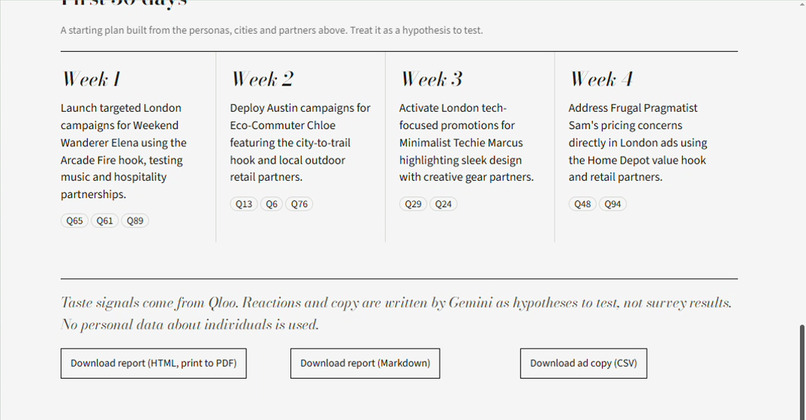
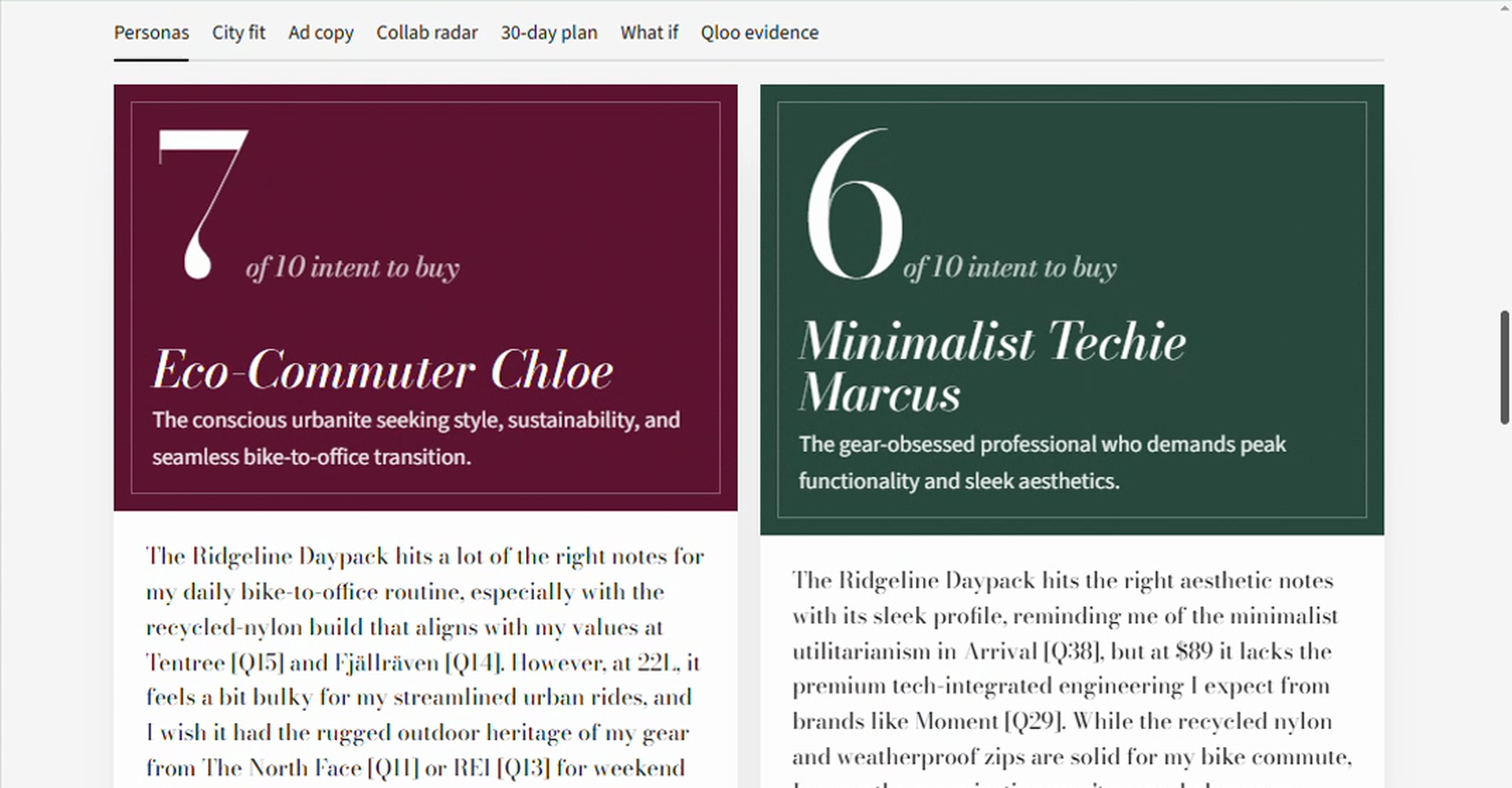
Four buyer personas defined by Qloo signals, with purchase intent from a synthetic focus group.
-
Cities ranked with Qloo place insights, each persona gets its own best city.
-
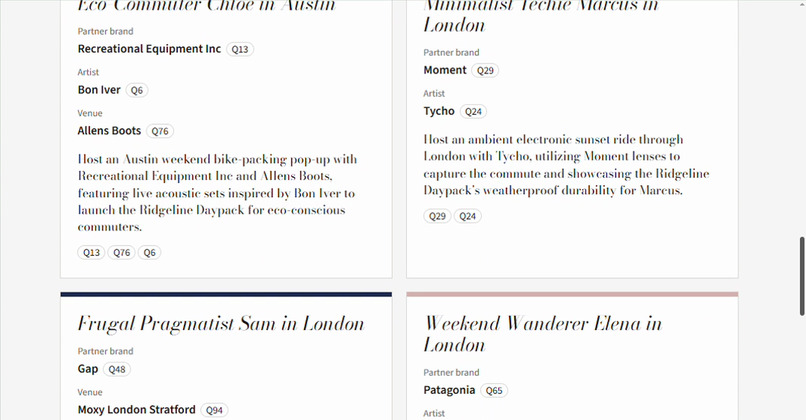
Collab radar: the partner brand, artist and venue each audience loves, per city.
Inspiration## Inspiration
Small online brands selling into the US and EU can't afford focus groups, and generic AI personas are just stereotypes. We wanted buyer personas that come from real taste data, not from a model's guesses.
What it does
Taste Lab is an agentic tool. You enter a product (or a product-page URL) and the agents:
- propose distinct buyer personas, each with seed artists, brands and movies;
- ground every persona in Qloo:
/searchresolves the seeds and/v2/insightsreturns what that taste cluster loves across domains (its taste signature); - run a synthetic focus group where each persona reacts using only its Qloo signature, with purchase intent, loves and concerns, plus a moderator synthesis;
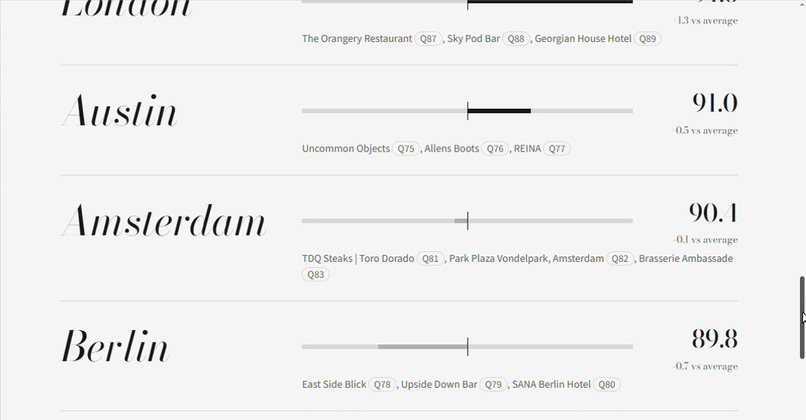
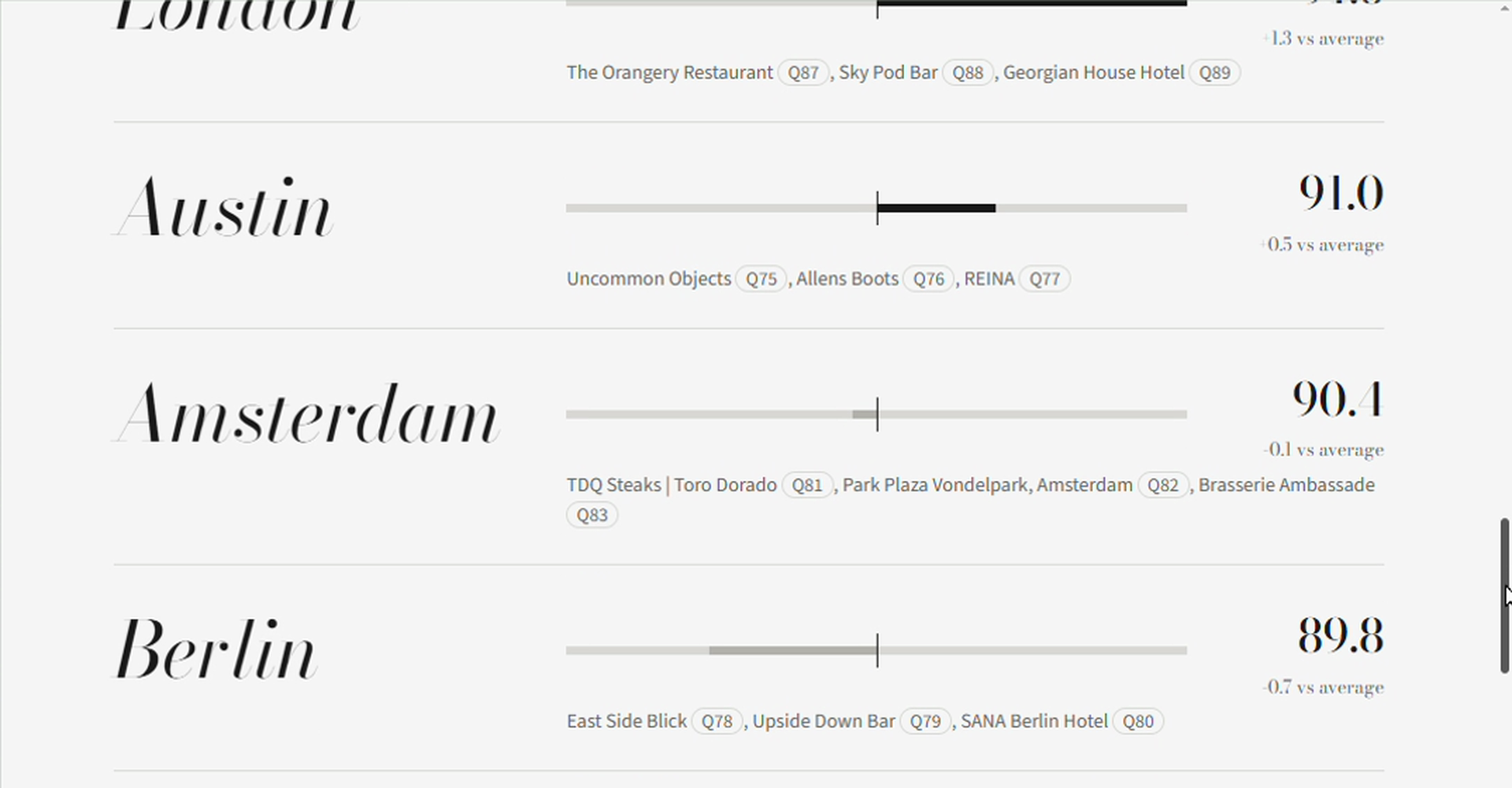
- rank US/EU cities (Austin, Berlin, Amsterdam and more) with Qloo place insights filtered by location;
- write persona-specific ad copy whose hook names the Qloo signal behind it;
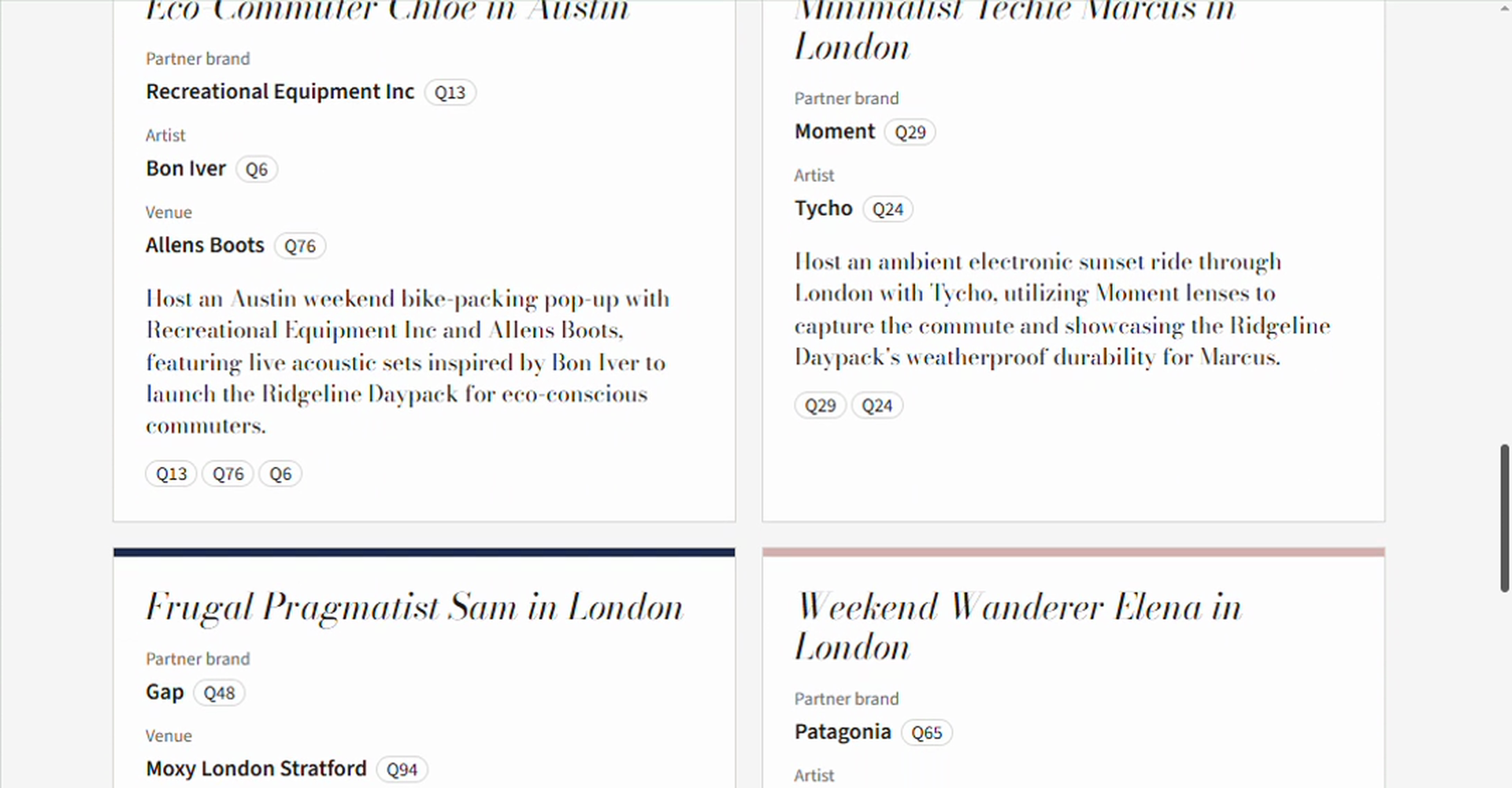
- Collab radar: for each persona's best city, Qloo returns the partner brand, artist and venue that audience loves, and the agent proposes one concrete collaboration or event;
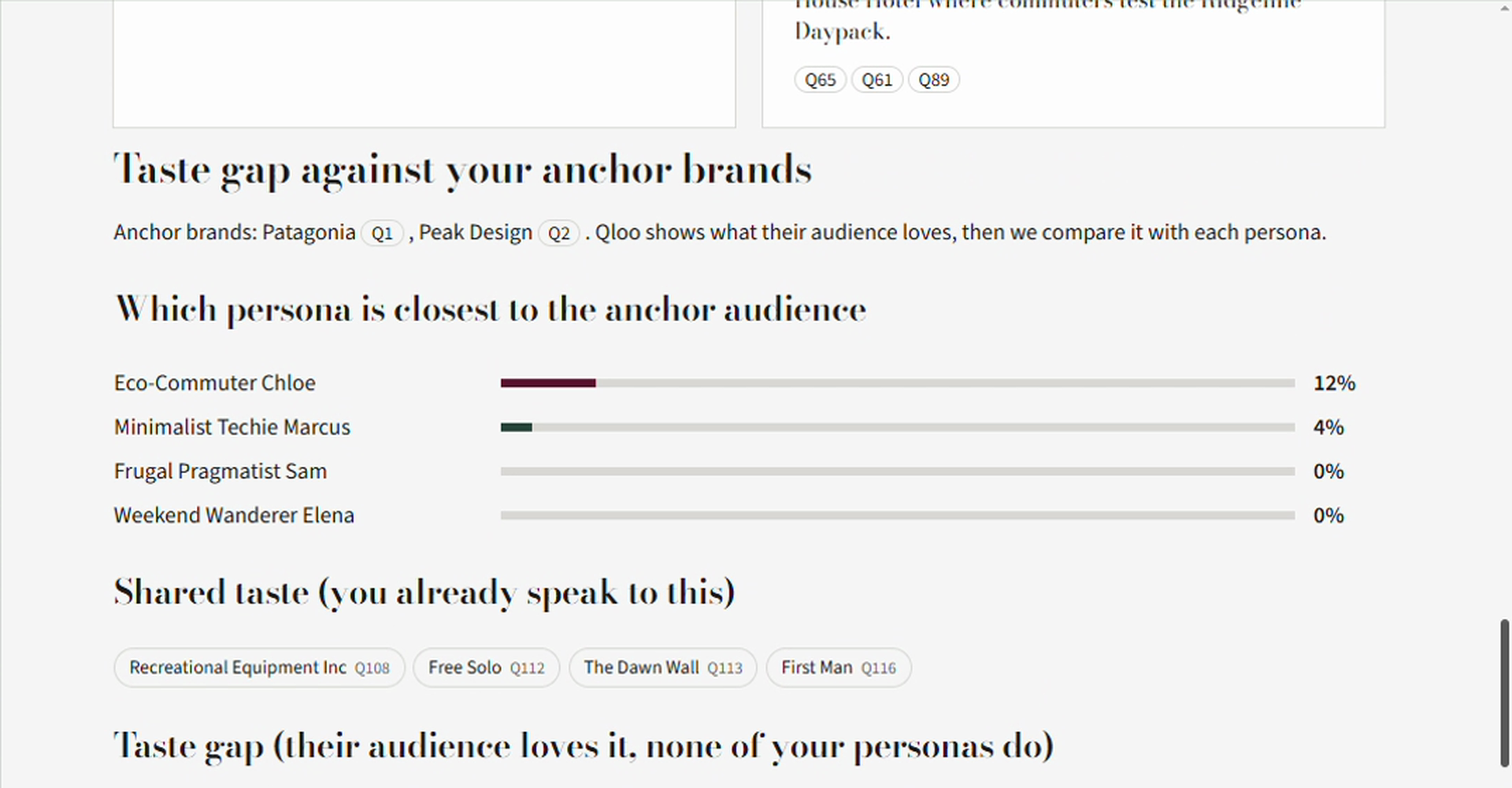
- Taste gap: the owner names up to 3 anchor brands; Qloo shows what those brands' audience loves that none of the personas do, and which persona sits closest;
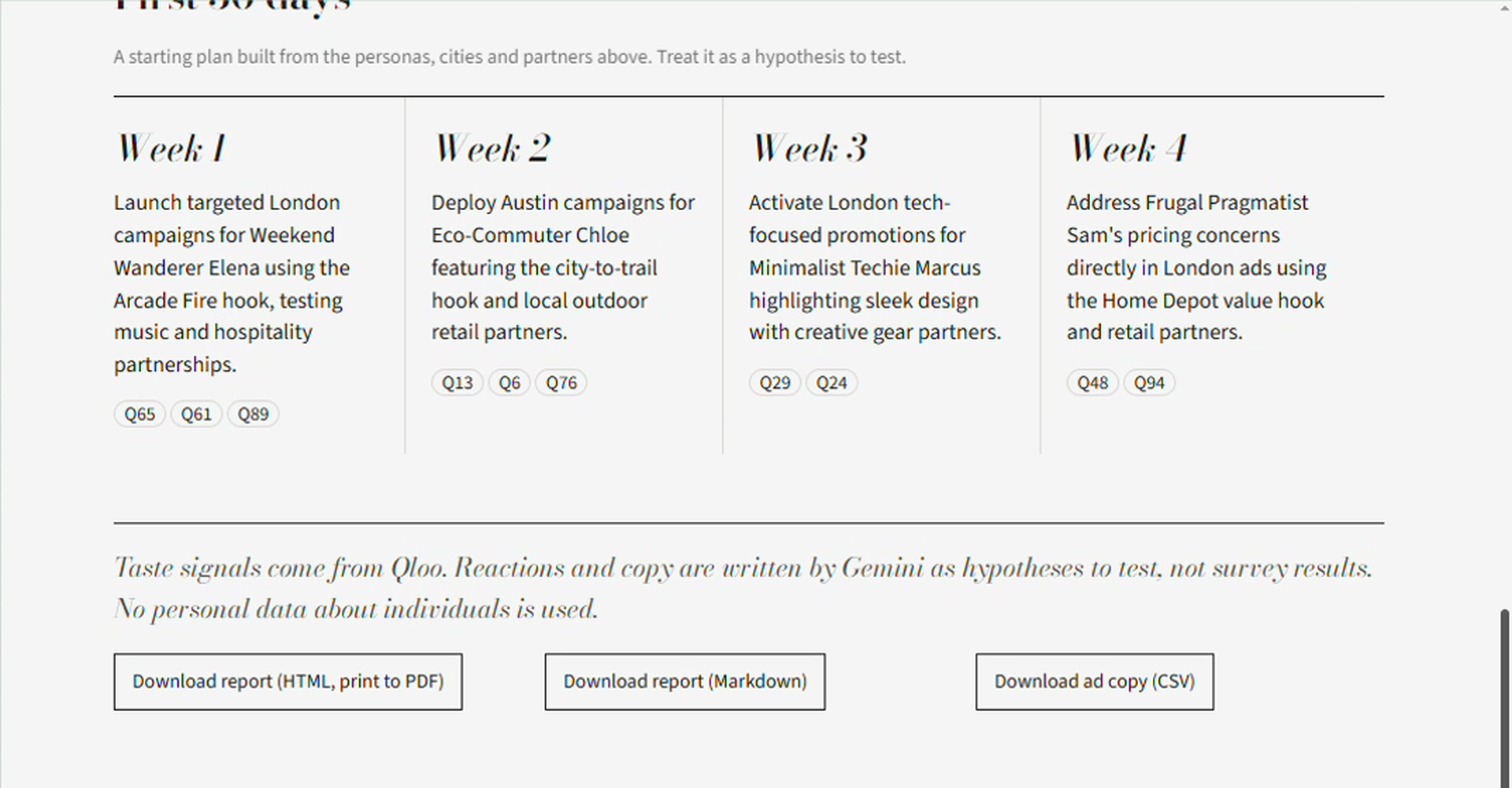
- 30-day plan built from the personas, cities and partners, plus a What-if test that re-runs the focus group on the same Qloo data after a price or positioning change.
Every insight carries an evidence id (Q1, Q2, ...) linking to the exact Qloo entity, affinity score and query. The app shows every Qloo call it made. Reports export as printable HTML (PDF), Markdown and CSV.
How we built it
Python and Streamlit, the Qloo hackathon API (GET /search, GET /v2/insights with entity signals and location filters), and Gemini for persona, reaction and copy text. Qloo calls run in a fixed order so evidence ids are deterministic. If a model call fails, deterministic fallbacks keep the pipeline completing. Product-URL loading is SSRF-safe, API keys stay server-side, and an offline test suite covers the pipeline.
Challenges we ran into
Keeping LLM output honest. Personas may only use their Qloo signature, and every claim must cite an evidence id. We also had to handle ambiguous seed names (a seed like "Office" resolving to the wrong entity), weak signatures, and models that invent product features or mention competitors in copy. We fixed these with seed top-ups, de-duplication, strict prompts and post-checks.
Accomplishments that we're proud of
A full agent loop on live Qloo data where nothing is unsourced: personas, cities, partners, the taste gap and the 30-day plan all trace back to Qloo calls you can inspect. It is deployed publicly and needs no login.
What we learned
Taste data is most useful when it constrains the model rather than decorates it. Forcing every claim to cite an evidence id made the output more specific and much easier to check.
What's next for Taste Lab
Shopify app integration, A/B-testing the generated copy against real campaign results, and more Qloo domains (podcasts, books). The focus group is AI-simulated, so its output is a set of hypotheses to test, not survey results.
What it does
How we built it
Challenges we ran into
Accomplishments that we're proud of
What we learned
What's next for Taste Lab
Built With
- gemini-api
- python
- qloo-api
- streamlit
- streamlit-cloud
