-
-
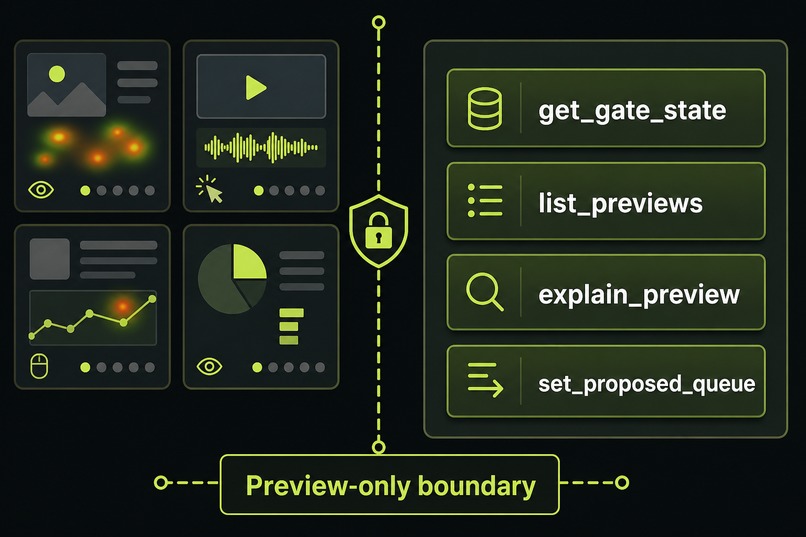
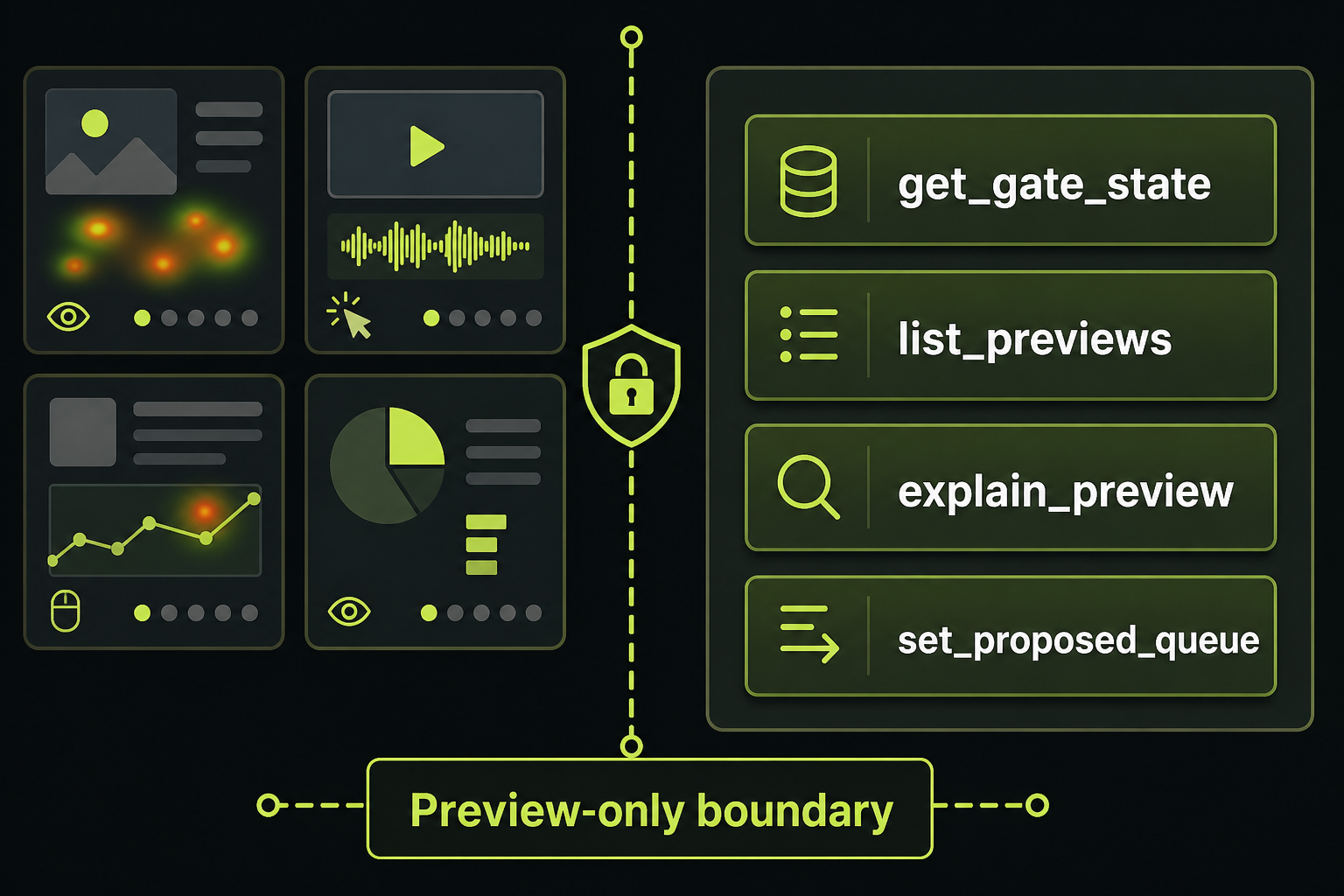
Four narrow WebMCP tools expose previews and proposals — never full post content.
-
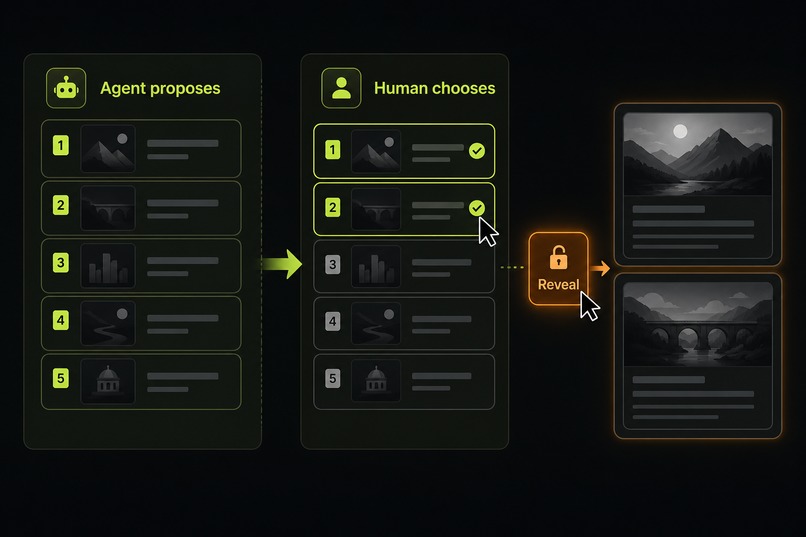
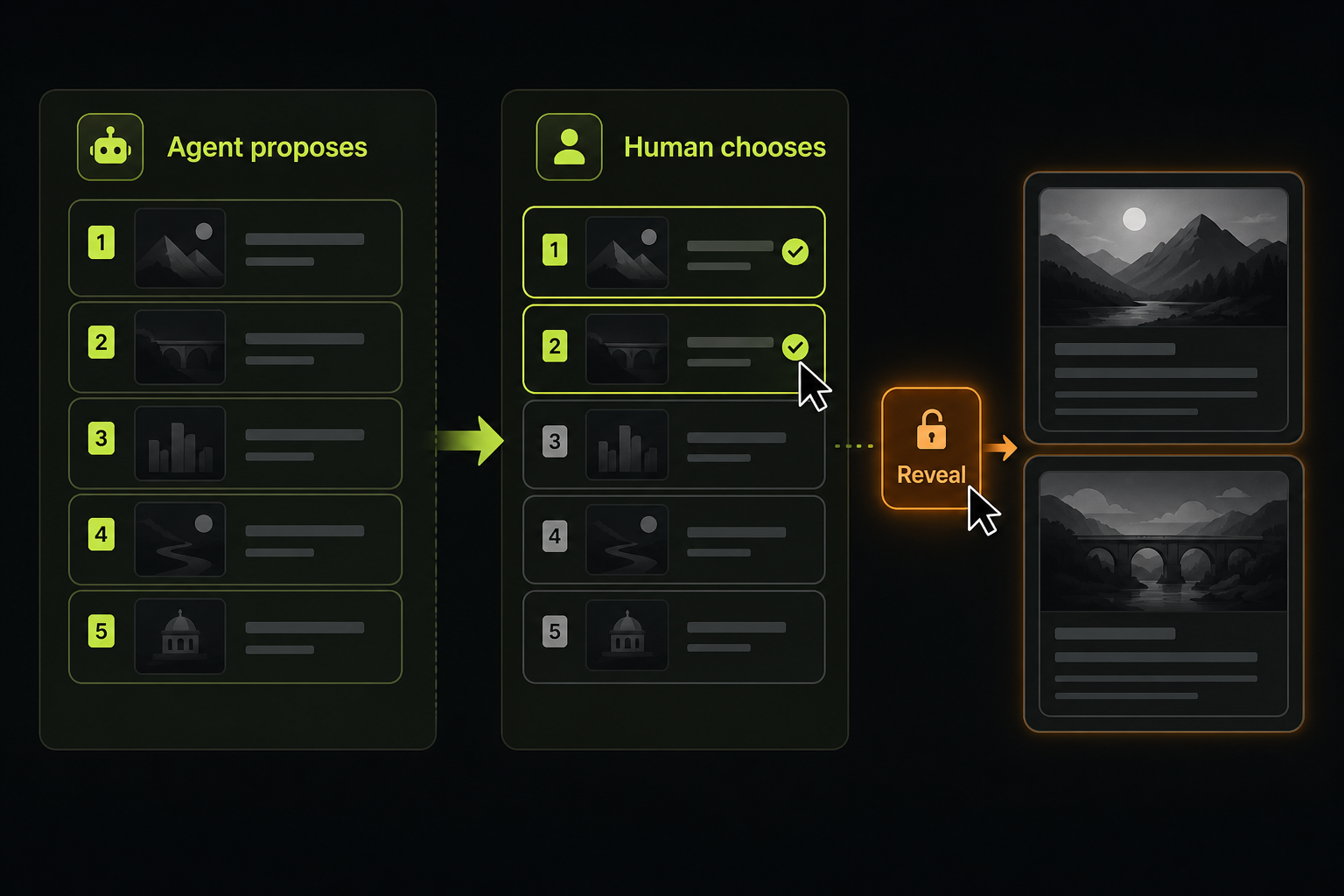
The agent proposes an order; the person independently selects and reveals stories.
Judge's 45-second path
- Open the live URL in ChatGPT's in-app browser.
- Ask for a preview-only two-card queue.
- Inspect the four discovered Site tools and the visible proposed queue.
- Select cards yourself and press Reveal my selected stories.
The agent can propose and explain; only the person can choose a reveal.
Inspiration
Project .taste already proves that a social card can begin as a compact,
deterministic 16-byte preview packet. Taste Gate asks a different question:
when an agent and a person share the same live page, can the agent help plan
attention without silently deciding what the person must open?
What it does
Taste Gate exposes a preview-only view of a live feed through WebMCP. The agent can inspect media shape, text geometry, engagement heat, visual seed, and existing interaction flags; it can then explain and write a proposed queue. The user sees that proposal in the same page but must select cards and press Reveal my selected stories themselves.
The gate filters muted or blocked cards before they reach the agent-facing preview list. It does not infer author identity, topic, timestamp, or full text from a packet.
How I built it
I reused the existing zero-dependency TypeScript .taste decoder and built a
small static JavaScript app around it. The top-level page conditionally
registers four WebMCP site tools:
get_gate_statelist_previewsexplain_previewset_proposed_queue
The normal UI remains fully usable without WebMCP. Full sample content is fetched only when the user uses the ordinary Reveal action. The app labels this honestly as a coordination contract for the demo, not server-enforced privacy.
The demo video voiceover is generated with macOS text-to-speech (Samantha).
Challenges I ran into
The hard part was defining a useful agent boundary without inventing meaning that the 16-byte protocol does not contain. A packet gives layout, media, coarse heat, and social-state signals; it does not justify a claim about a post's topic, author, or relevance. The tools therefore return field-level reasons and explicit non-inferences instead of a hidden recommendation score.
Accomplishments that I'm proud of
- A shared-page agent workflow that stays inspectable by the person using it.
- Four narrow tools, including a state-changing proposal tool that cannot reveal content or alter the human selection.
- Tests that reject gated, unknown, and repeated cards and verify that the agent-facing list contains no author, topic, timestamp, or full text.
- A normal UI fallback and a live ChatGPT desktop-browser check that discovers all four tools.
What I learned
WebMCP becomes most compelling when it exposes application state that a person can see and review immediately. Narrow, verifiable operations are more useful than a broad agent action that obscures how a decision was made.
What's next for Taste Gate
Replace the demo content source with an application-controlled hydration endpoint, retain the same packet-only agent contract, and evaluate whether users find proposed queues more understandable than automatic ranking.
Built With
- chatgpt
- github
- javascript
- typescript
- webmcp

Log in or sign up for Devpost to join the conversation.