-
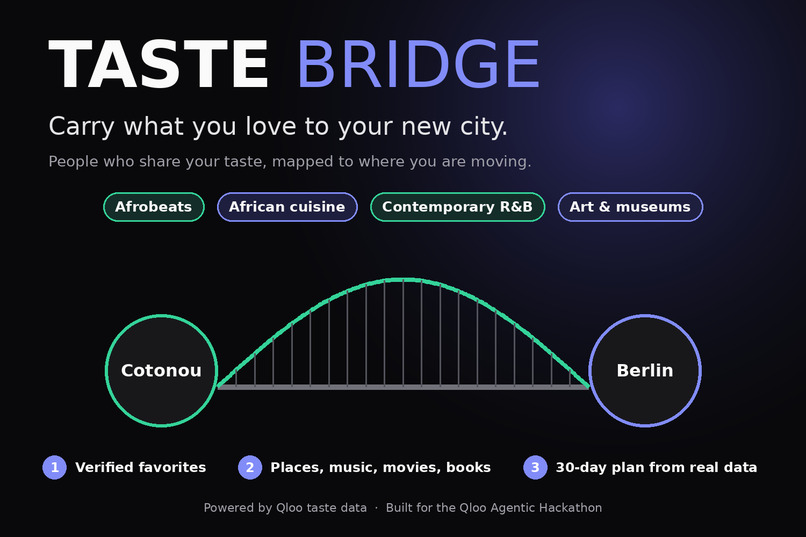
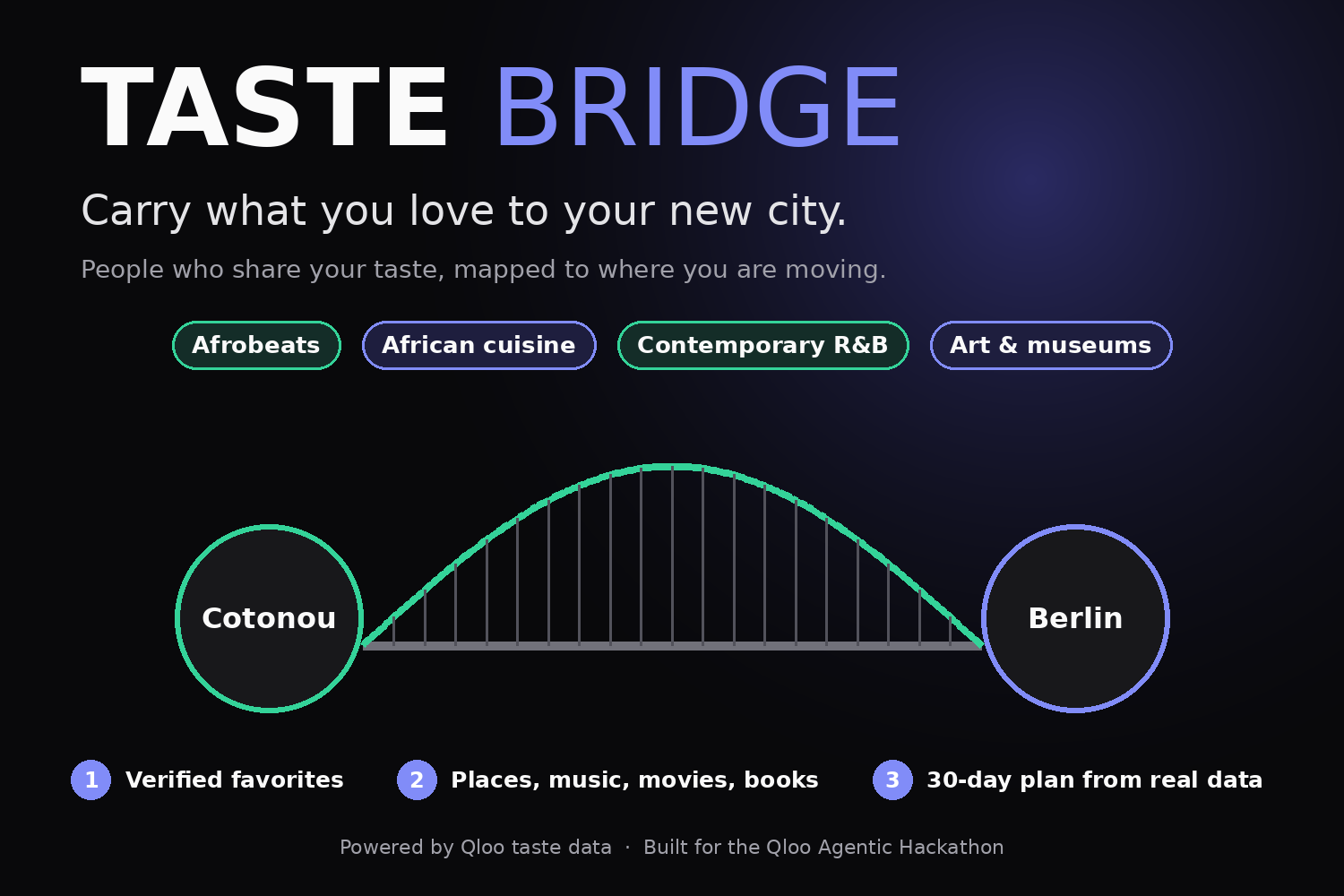
Taste Bridge: carry what you love to your new city.
-
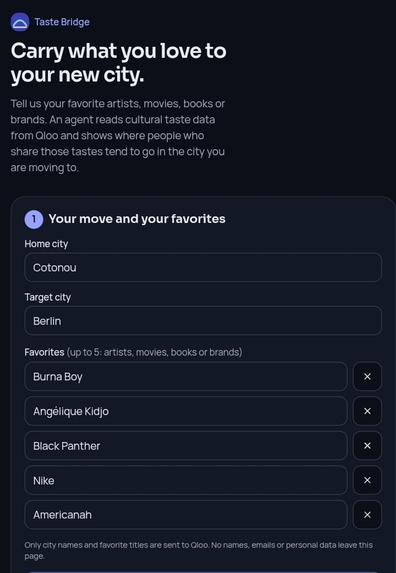
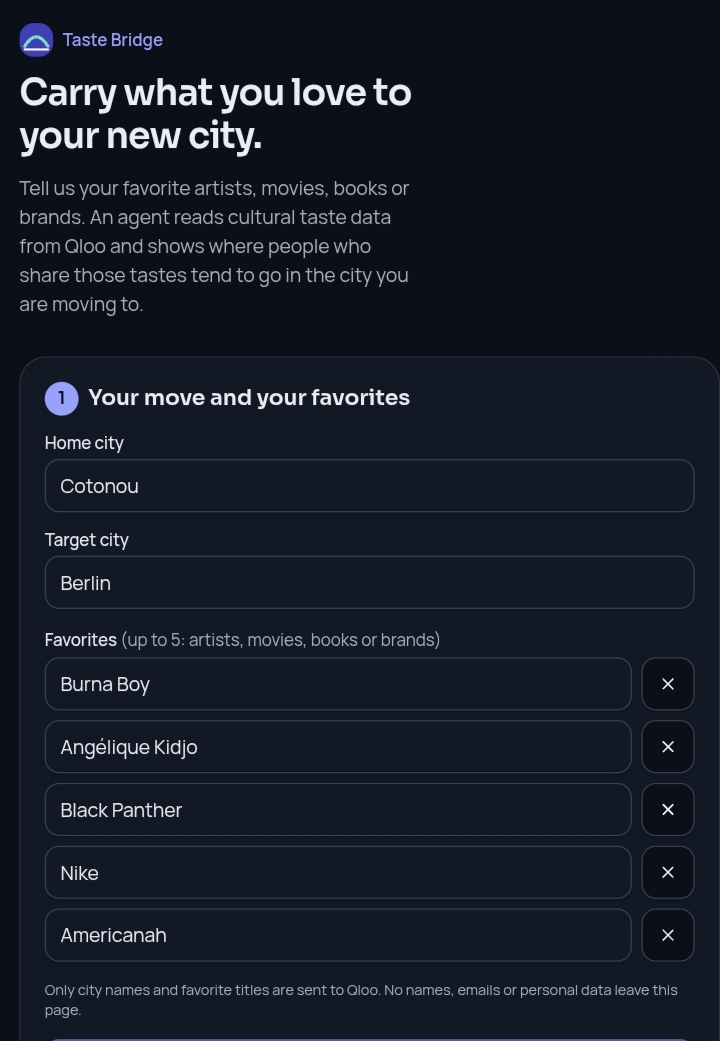
Step 1: home city, target city and up to 5 favorites. Only city names and titles are sent to Qloo.
-
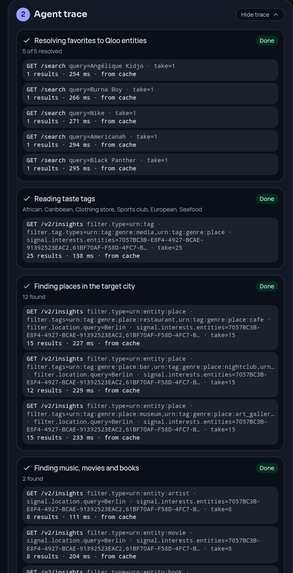
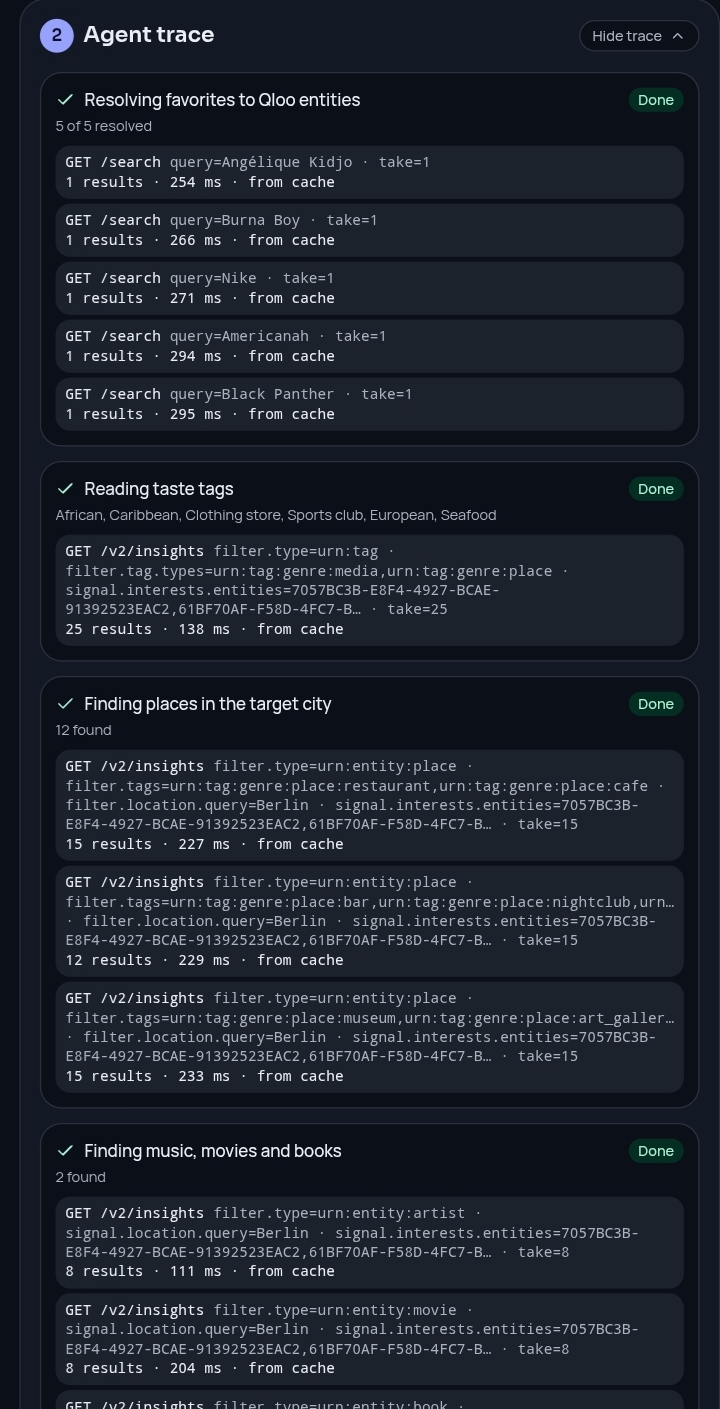
Live agent trace: every Qloo call with its endpoint, parameters (never the key), result count and duration.
-
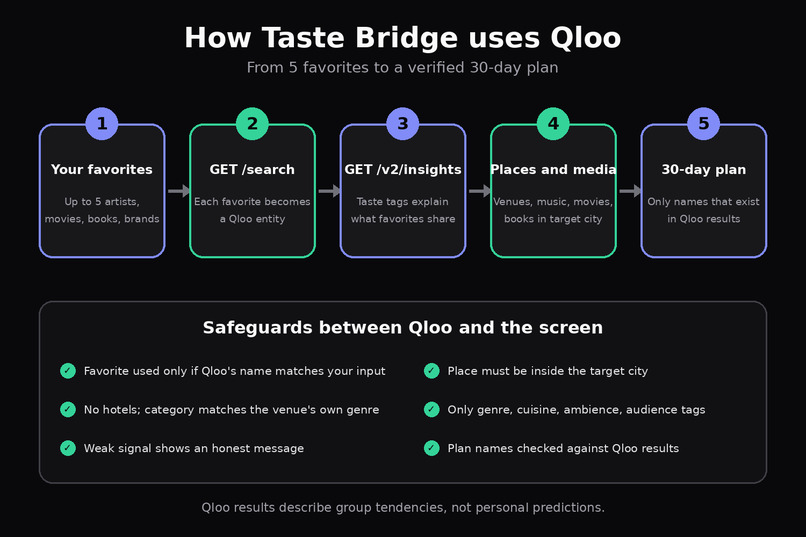
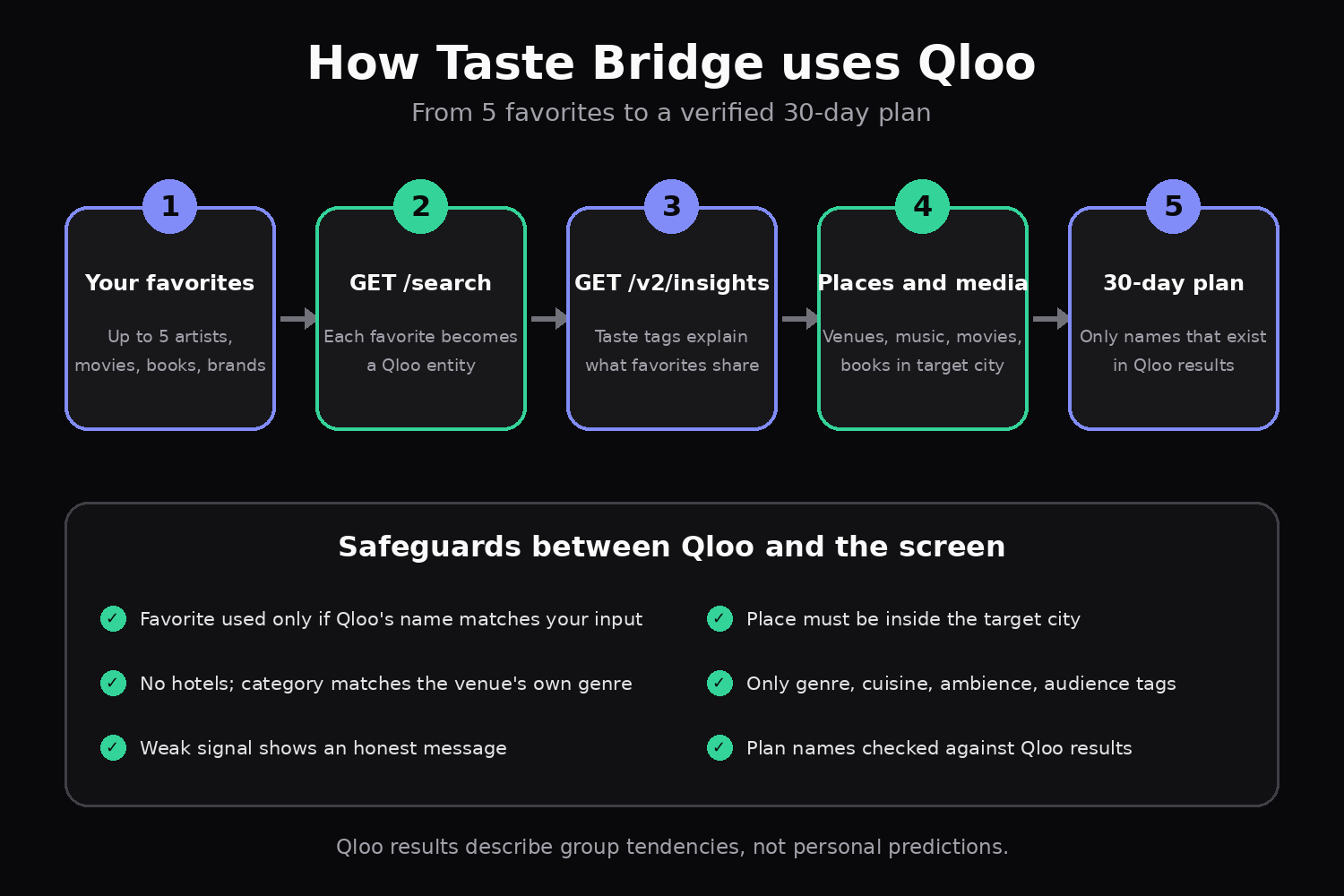
How Taste Bridge uses Qloo: from 5 favorites to a verified 30-day plan, with the safeguards in between.
-
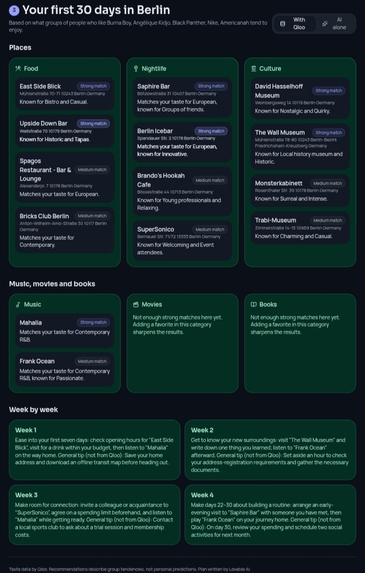
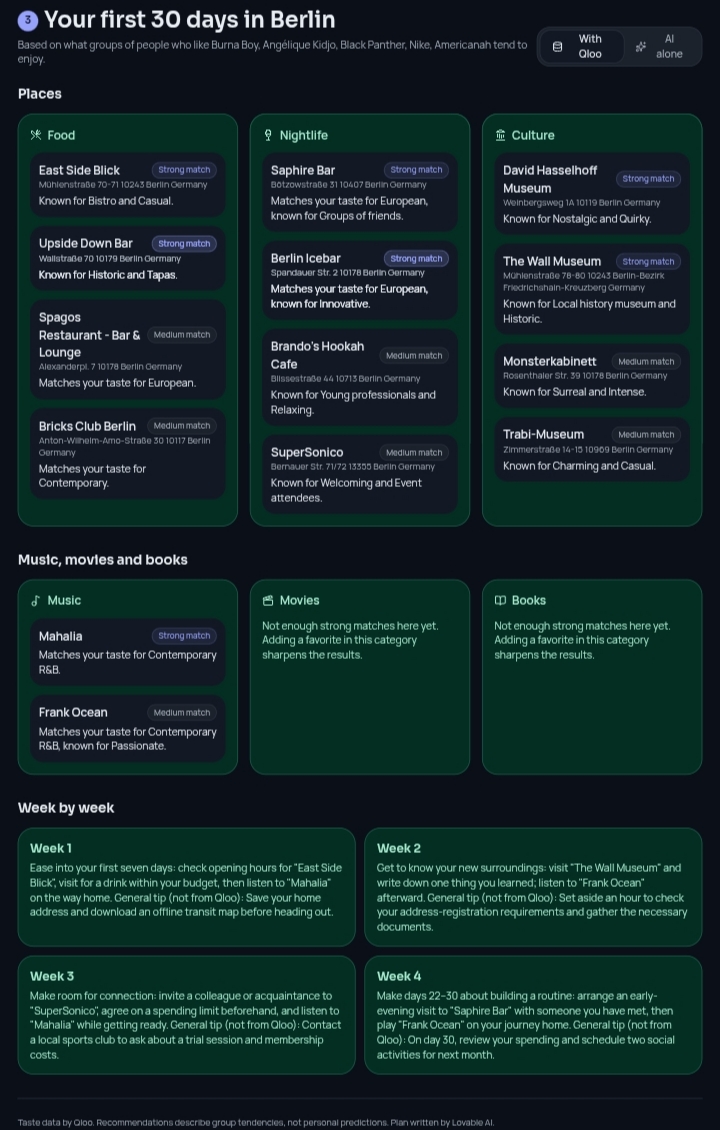
Places in Berlin with a match badge and a tag-based reason. Hotels, suburbs and generic tags are filtered out.
Inspiration
I am preparing an Ausbildung (vocational training) in Germany as a plan B alongside my software projects, and I am currently at A1 level in German. When you leave your city, you lose your cultural map: the places, music and stories that felt like home. Generic "top 10" lists ignore taste, and an AI chatbot alone happily invents venues. I wanted to know: where would people who love what I love go in my new city?
What it does
Taste Bridge takes your home city, your target city and up to 5 favorites (artists, movies, books or brands). An agent reads Qloo's cultural taste data and returns:
- places in the target city (food, nightlife, culture),
- music, movies and books that people with the same tastes tend to enjoy,
- a week-by-week plan for your first 30 days, where every venue and title comes from Qloo results.
A live Agent trace shows every Qloo call (endpoint, parameters without the key, result count, duration). A "With Qloo / AI alone" tab shows what a plain AI answers with the same favorites, so the value of Qloo is visible.
How I used Qloo
- GET /search resolves each favorite to a Qloo entity.
- GET /v2/insights with filter.type=urn:tag reads what the favorites have in common (used to explain each result).
- GET /v2/insights with filter.type=urn:entity:place, tag filters and filter.location.query finds places in the target city.
- GET /v2/insights for artists, movies and books with signal.location.query gives cross-domain recommendations.
Qloo results are used as evidence in the product flow, not as an isolated API response: each card shows a match badge and a tag-based reason.
Responsible data handling and provenance
- Only city names and favorite titles are sent to Qloo. No personal data.
- The API key stays on the server.
- Results describe group tendencies. The UI says "people who like X tend to enjoy Y", never "you will love".
- Every venue or title in the AI-written plan is checked against Qloo results; unverified mentions are removed. General tips are labeled "not from Qloo".
Quality work
Real test runs surfaced problems that I fixed and covered with 40+ unit tests: a typo resolving to a different artist (now refused with "Did you mean ...?"), hotels listed as nightlife, a suburb listed as the city, generic tags ("Restaurant", "Audiobook") counted as taste, restaurants listed under Culture, and political memoirs recommended to an Afrobeats fan. Weak categories now show an honest empty message instead.
Challenges
Qloo's coverage varies (some local artists are not in the data), and taste signals across domains are indirect. Filtering for relevance and being honest about weak signal mattered more than showing more results. I built this entirely from an Android phone.
What I learned
Qloo's tag types matter: choosing genre tags over keywords, and removing venue categories from the taste profile, made the biggest difference in relevance.
What's next
Let users refine results with feedback, add more cities with precise geographic filters, and support more local artists as coverage grows.
Built With
- claude
- lovable
- lovable-cloud
- qloo-api
- react
- tailwindcss
- tanstack-start
- typescript

Log in or sign up for Devpost to join the conversation.