-
-
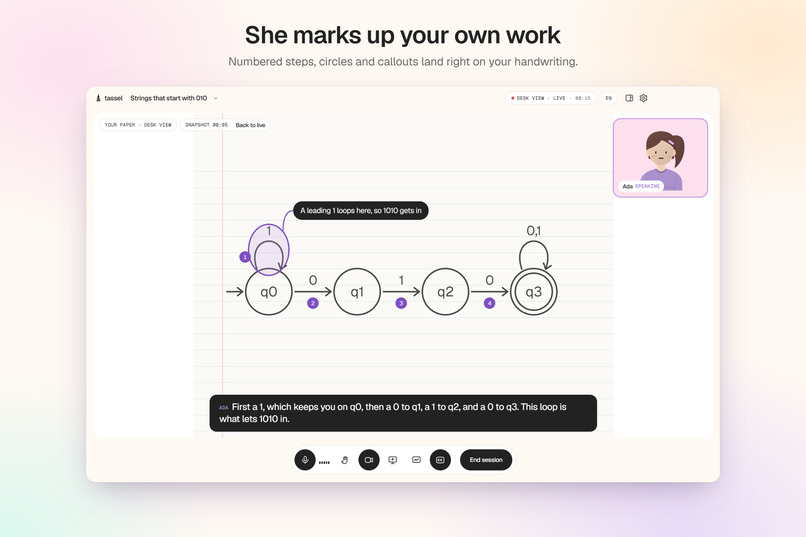
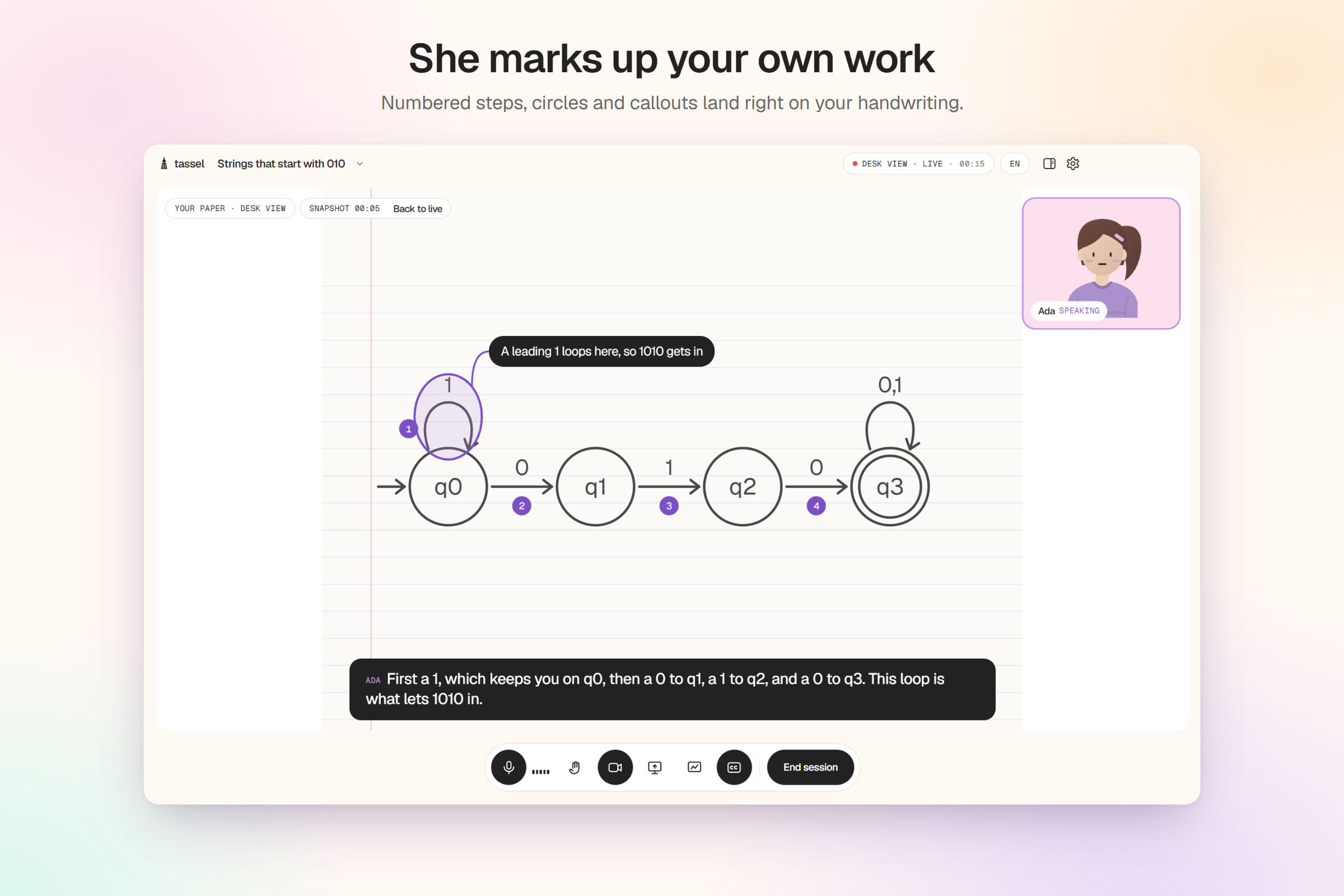
Ada marks up the student’s own paper: numbered steps trace an input, and a callout explains the loop that lets “1010” through.
-
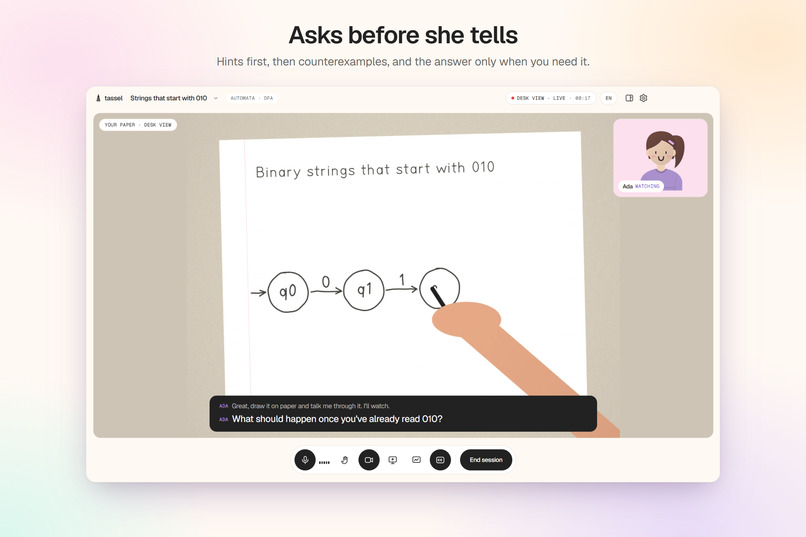
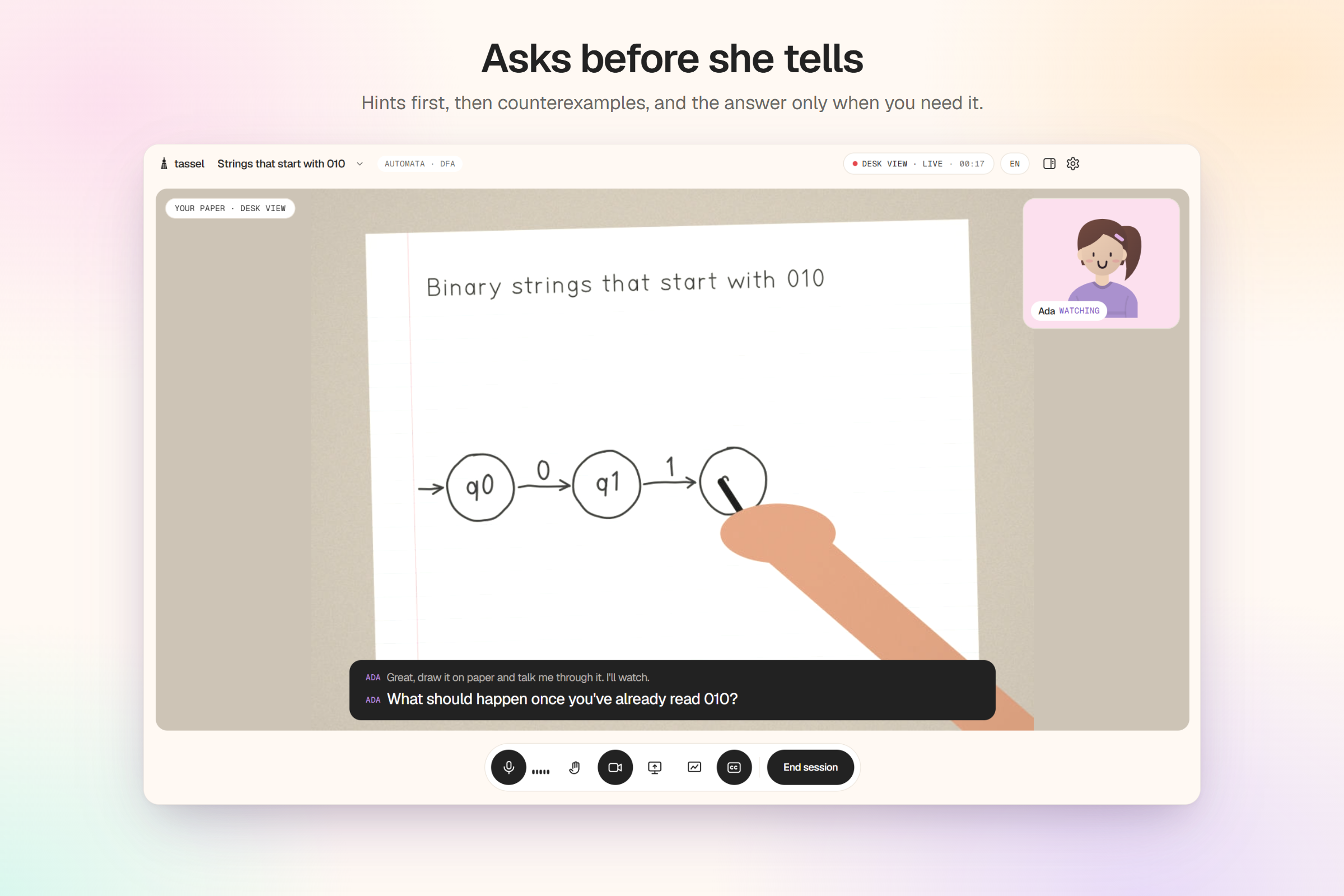
Ada asks before she tells: she watches the student work, then nudges with a question instead of handing over the answer.
-
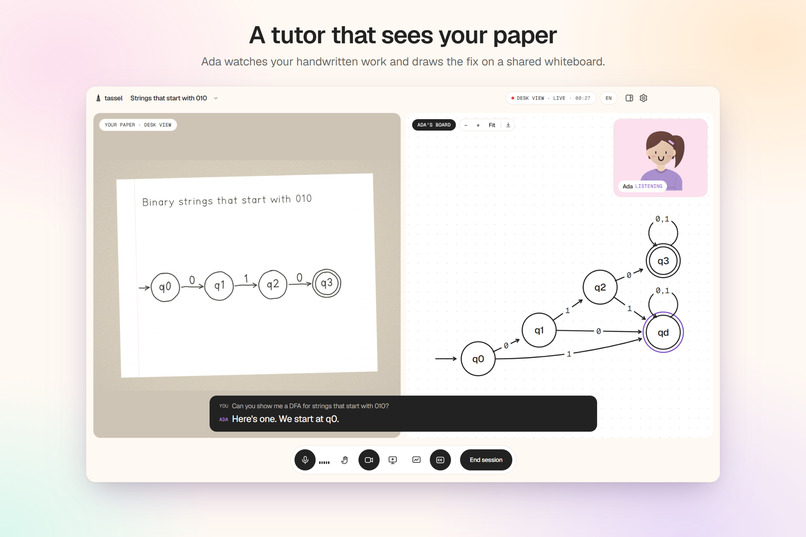
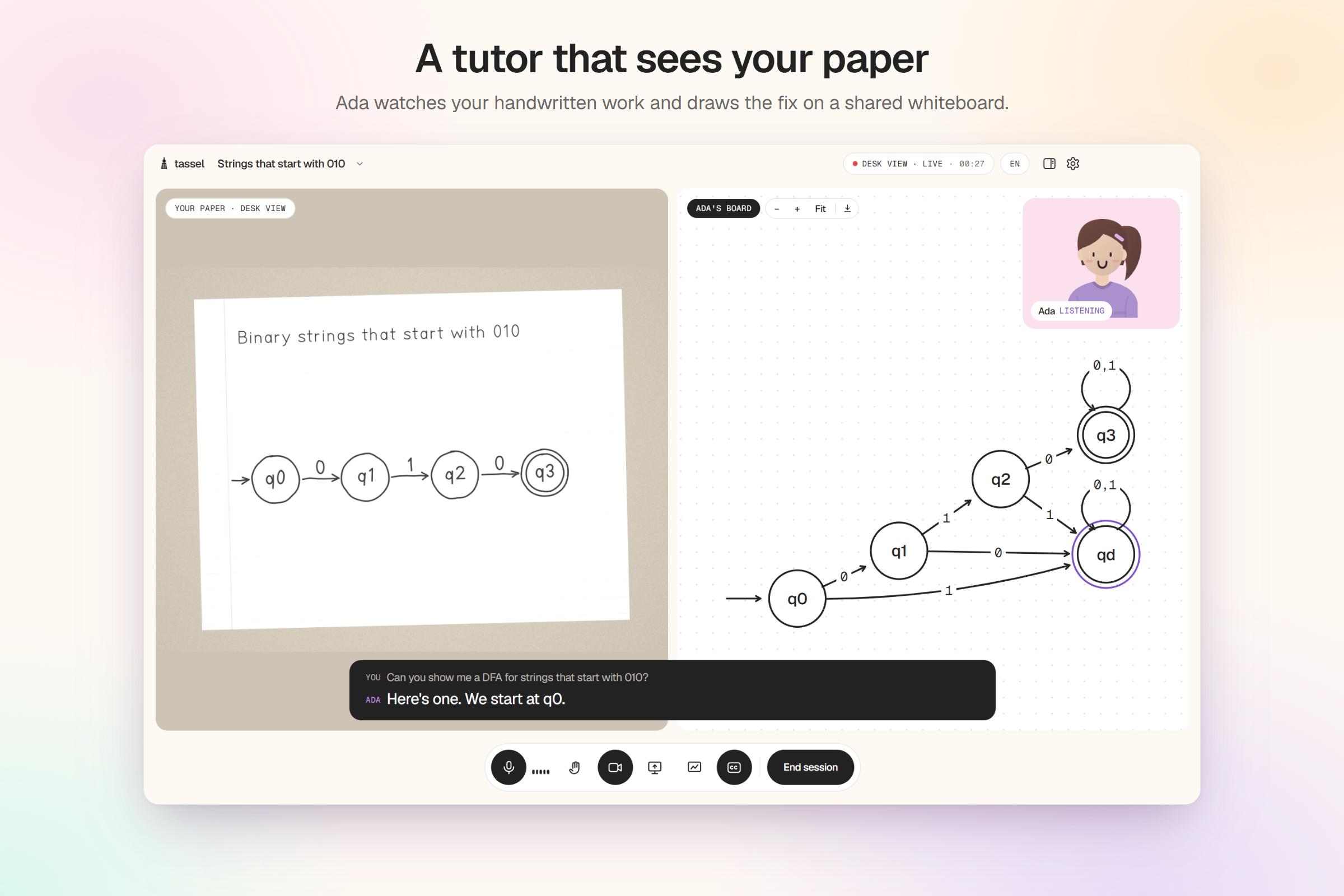
Ada watches the student’s handwritten DFA through Desk View and draws the correct machine, dead state included, on a shared whiteboard.
-
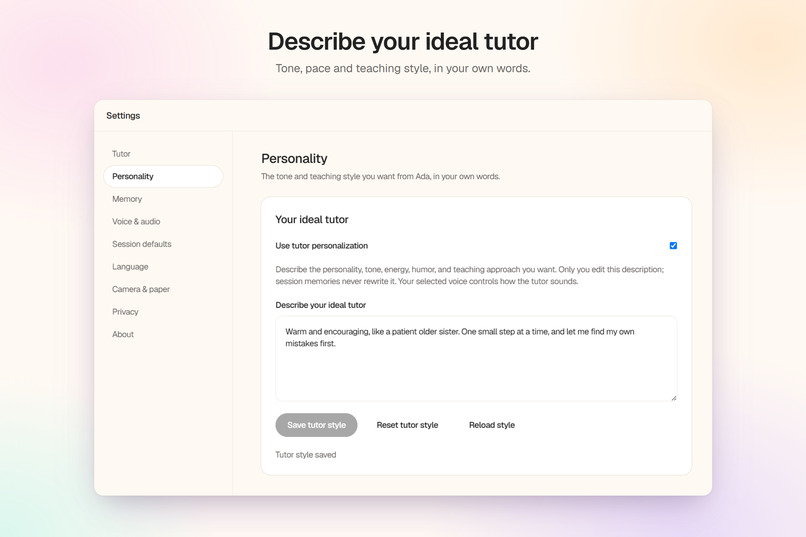
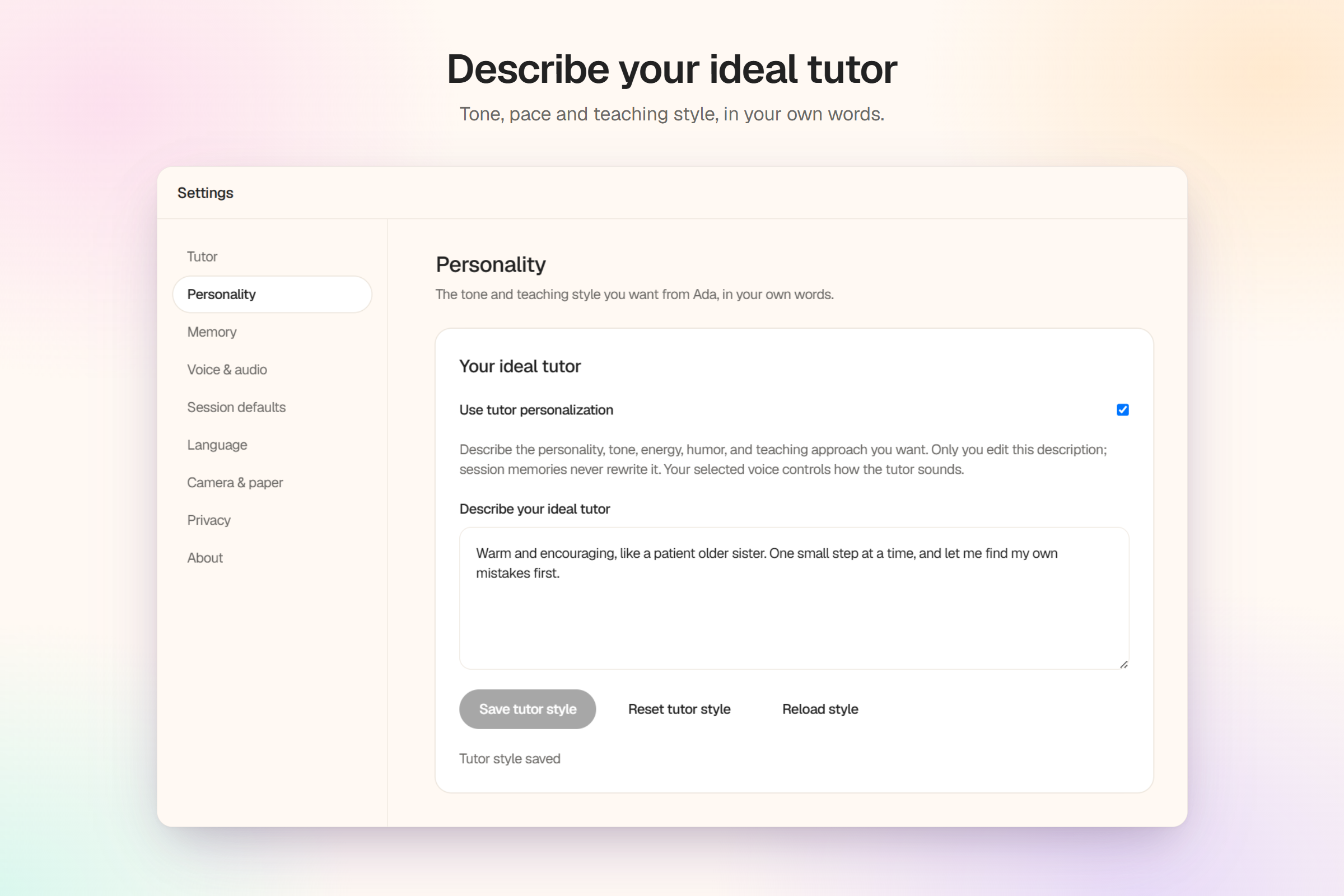
Describe your ideal tutor in your own words. Ada adapts her tone, pace and teaching style to match.
-
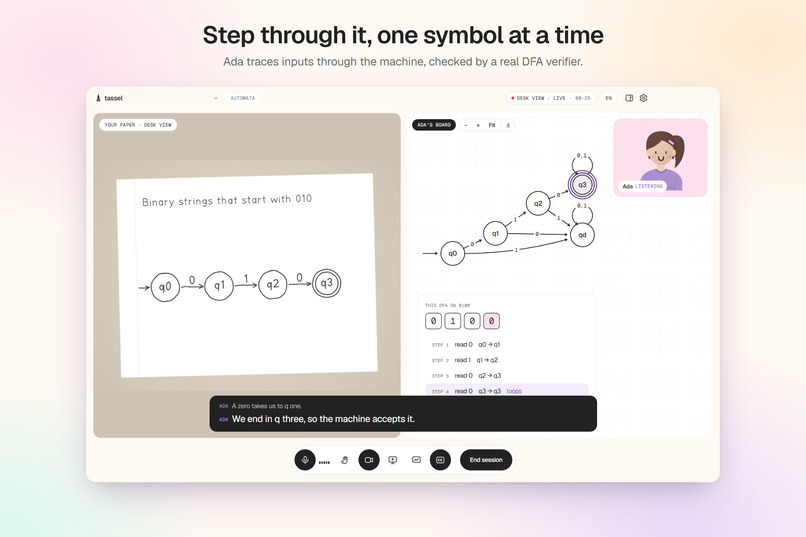
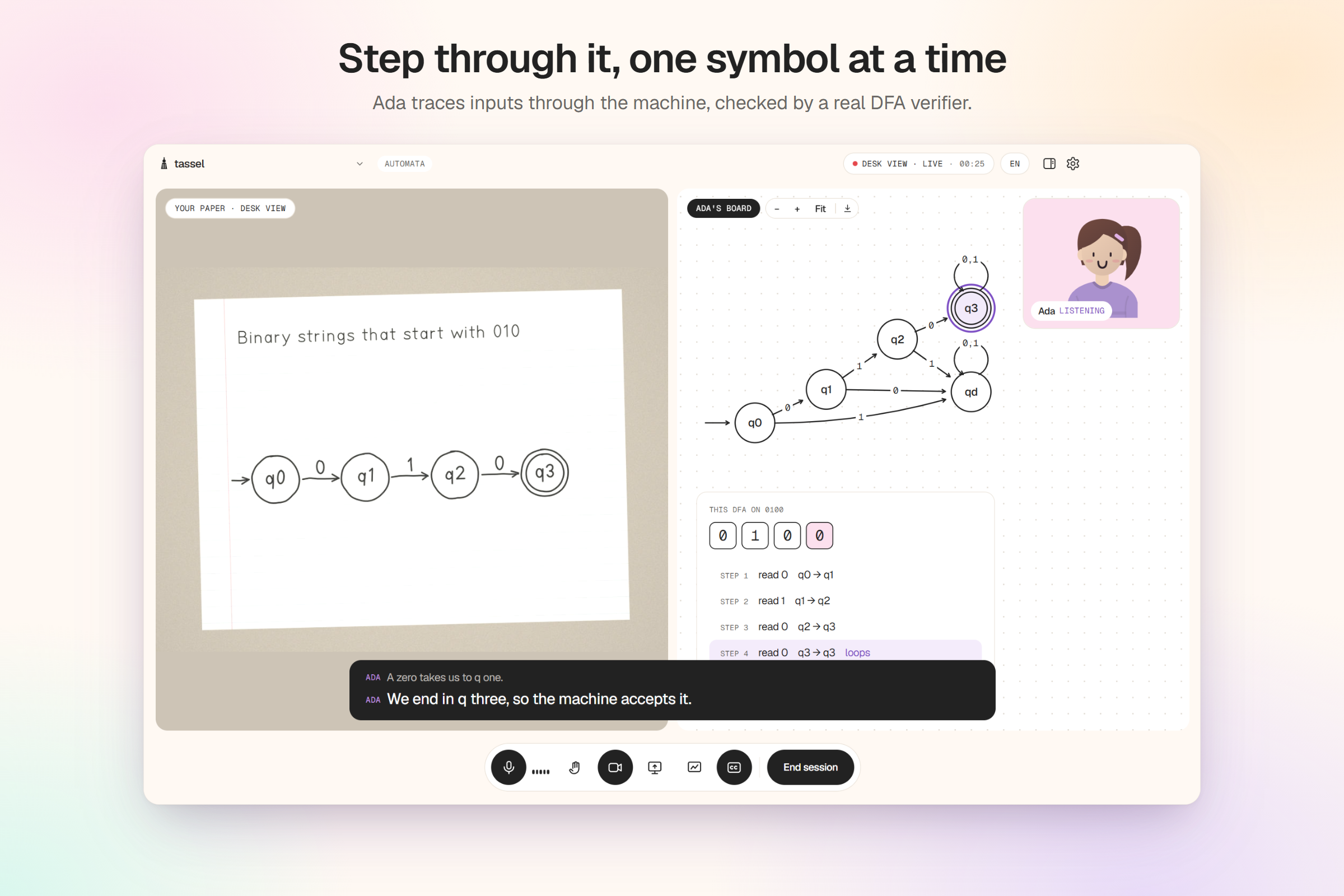
Ada steps an input through the machine one symbol at a time. Every answer if verified, so nothing is left to the model’s guess.
-
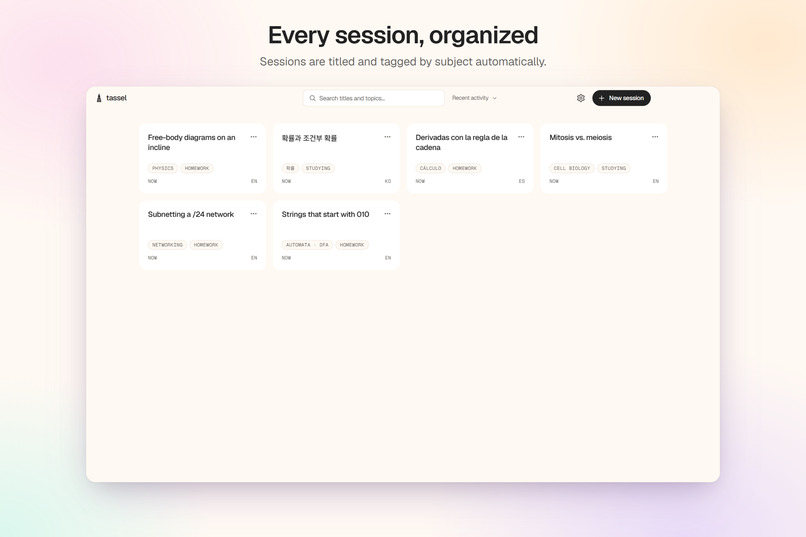
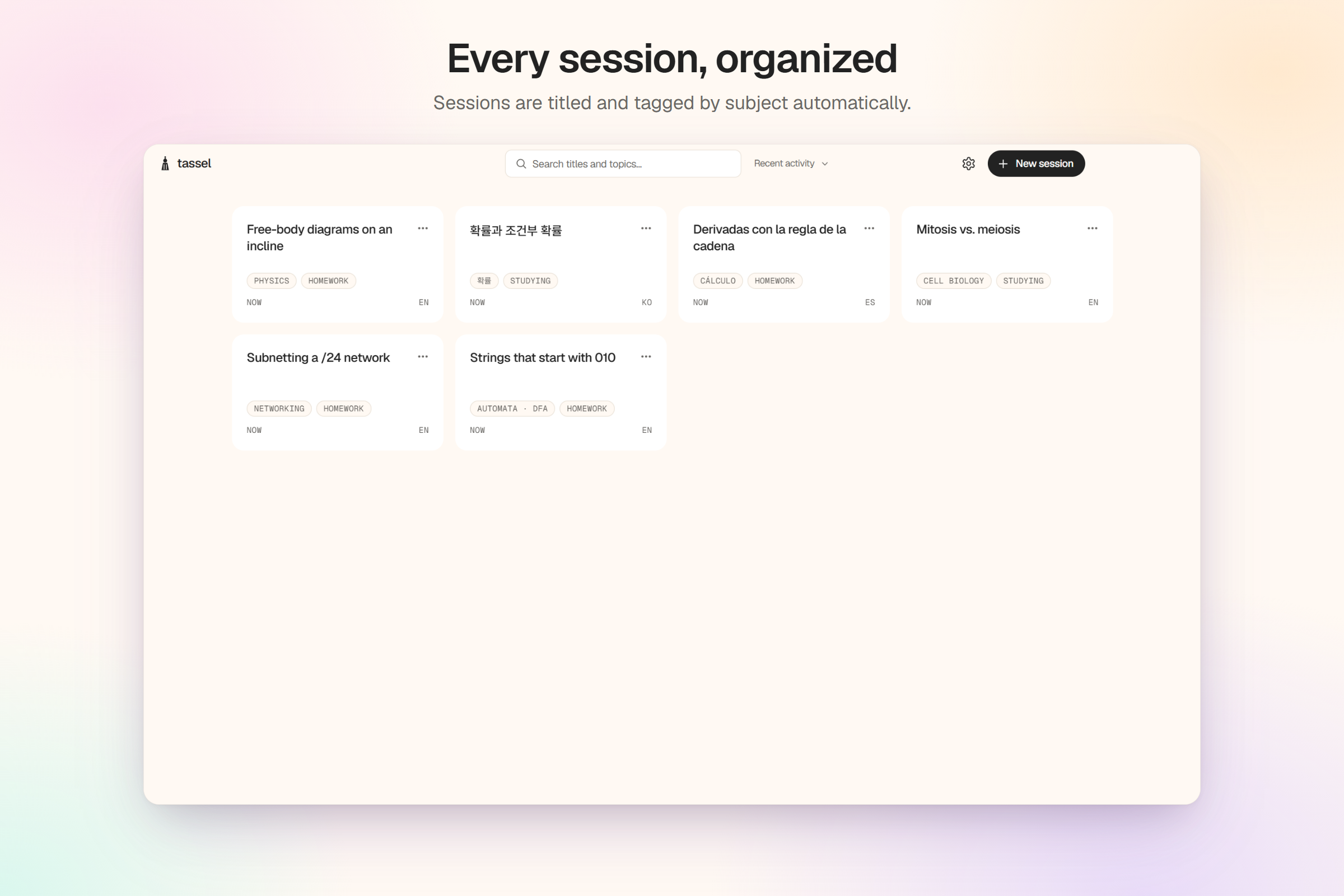
Every session is titled and tagged by subject automatically, so it’s easy to pick up where you left off.
-
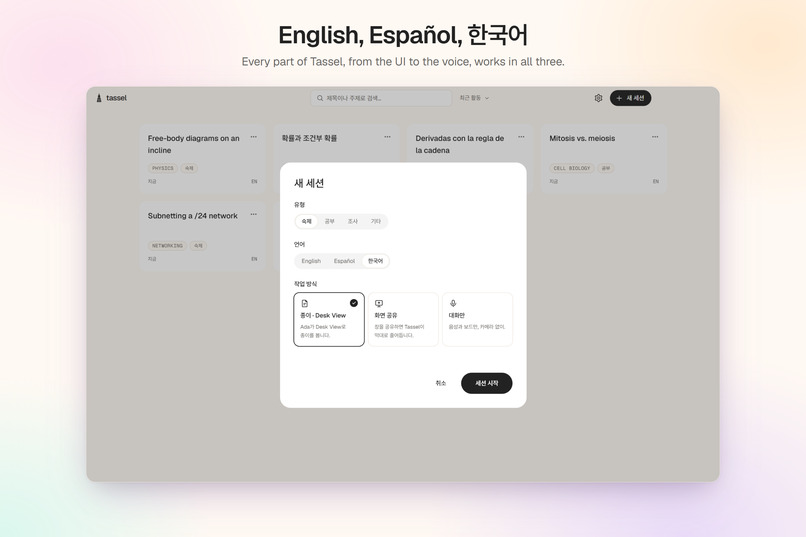
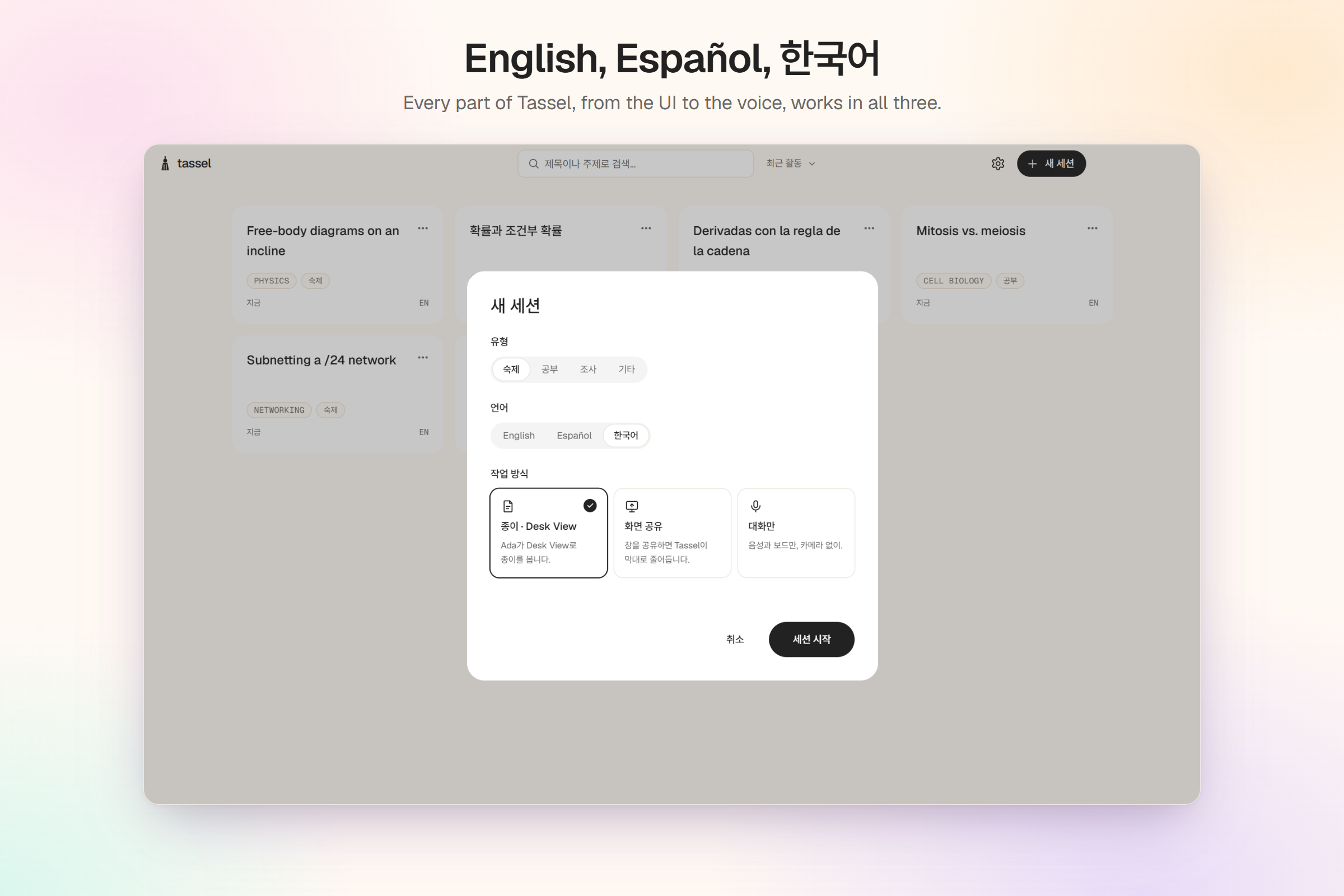
Tassel works fully in English, Spanish and Korean, from the menus to the tutor’s voice.
-
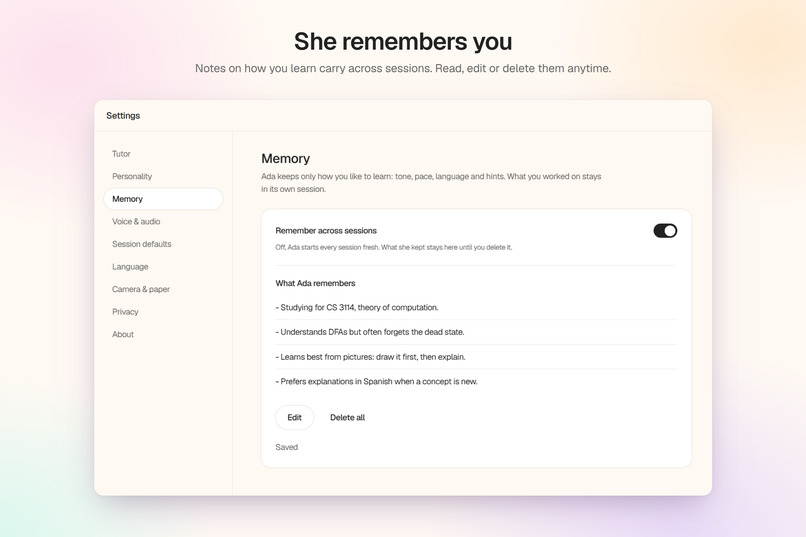
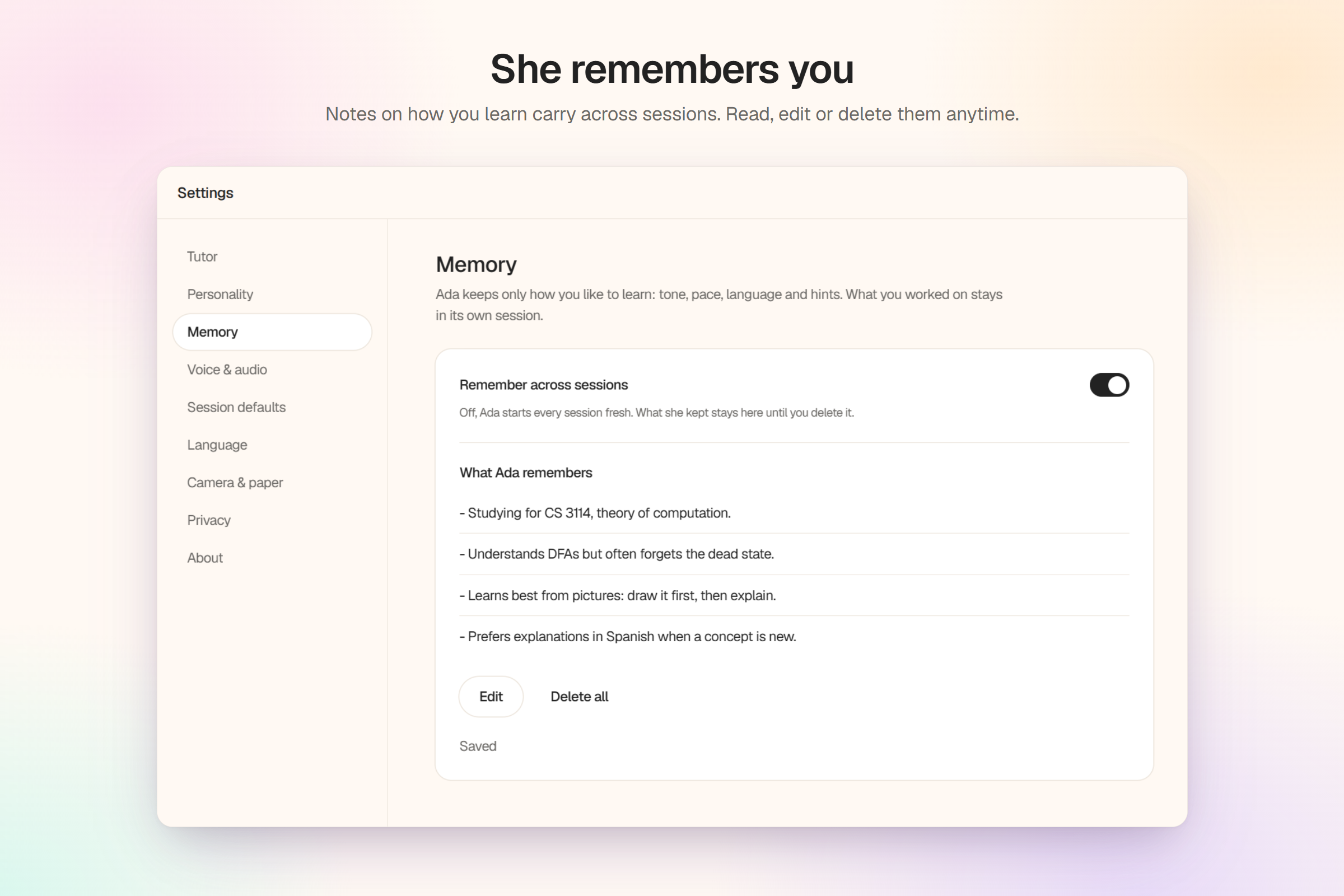
Ada remembers how you learn across sessions, and you can read, edit or delete her notes anytime.
-
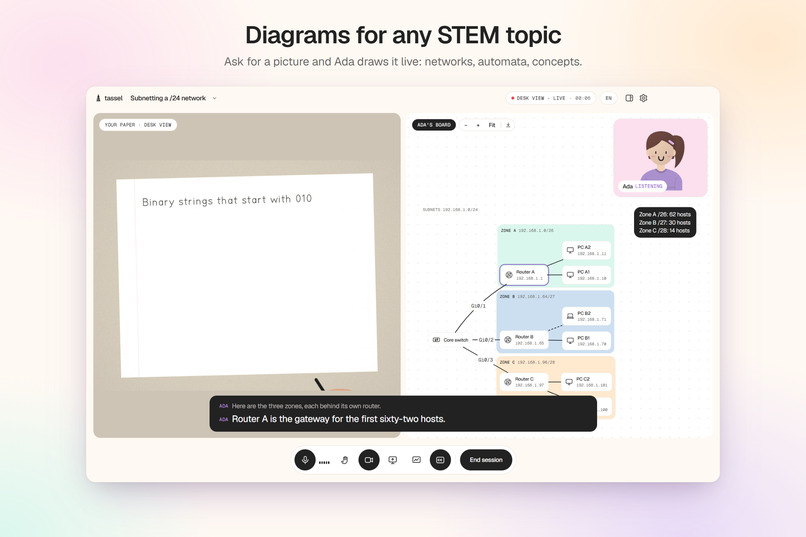
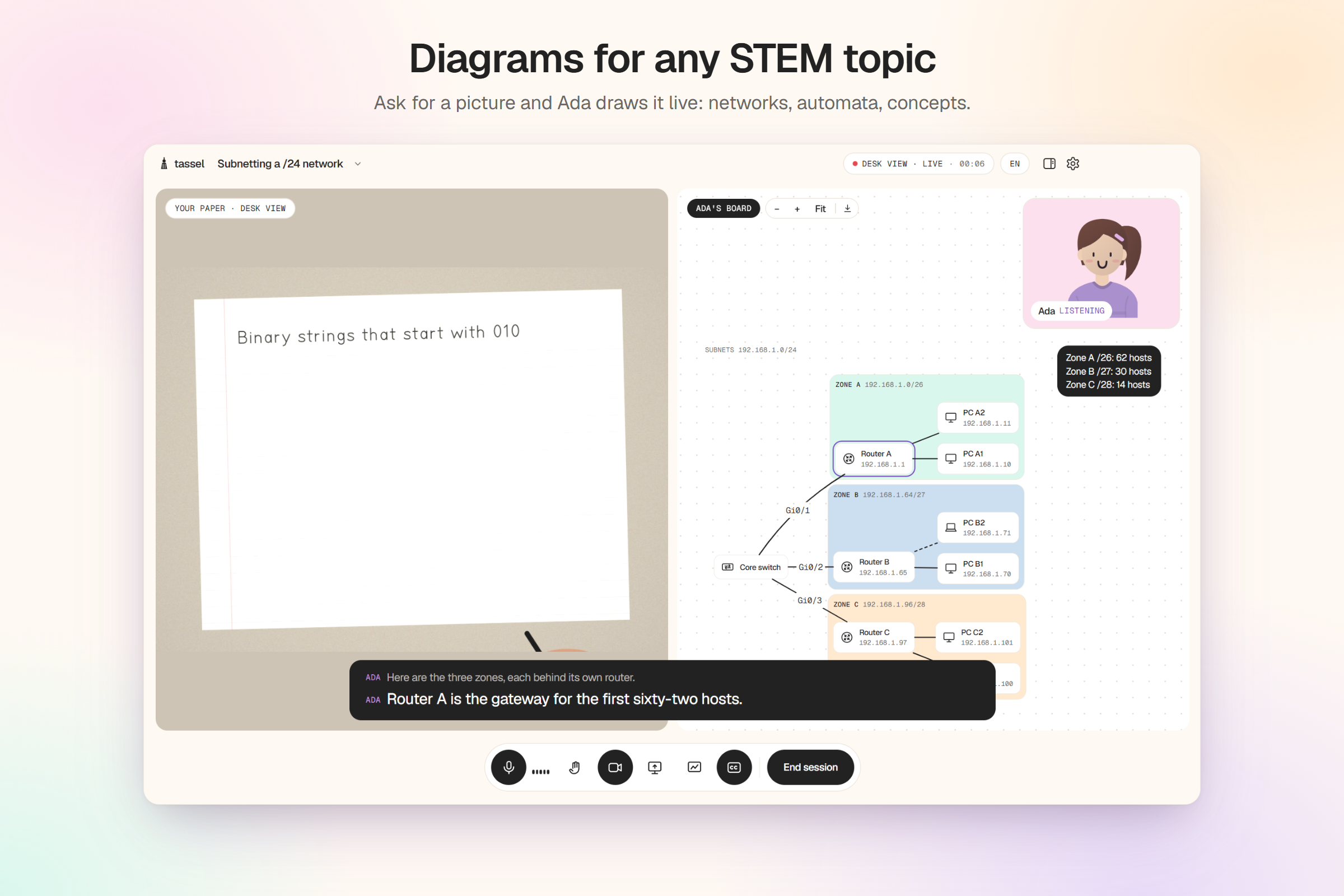
Ask for a diagram and Ada draws it live. Here she lays out three subnets behind their routers, with every IP range validated.
-
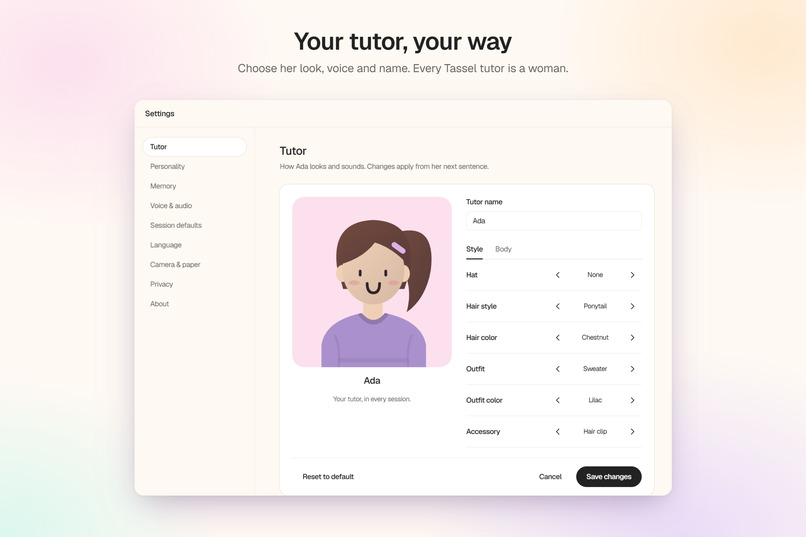
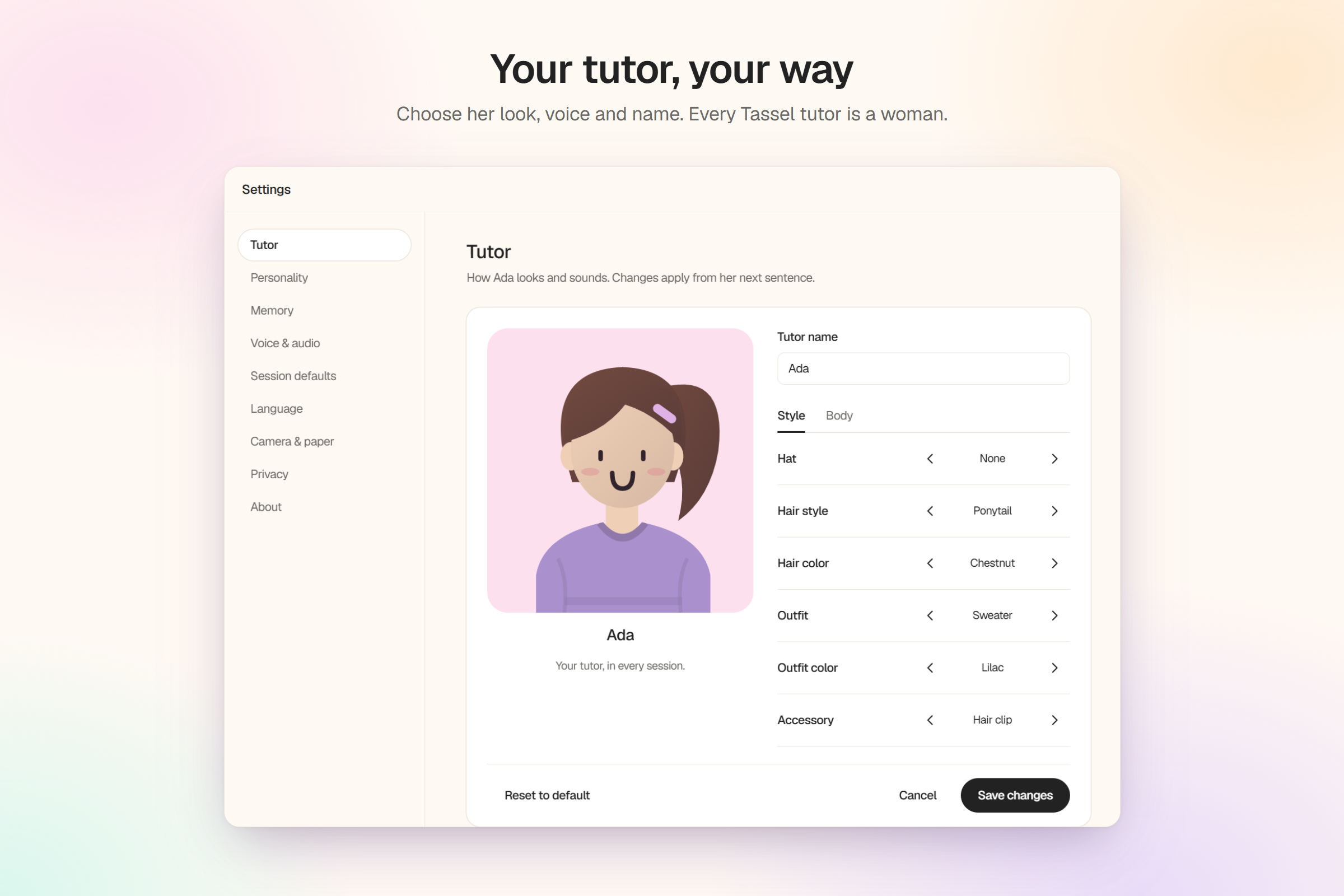
Customize your tutor’s name, hair, outfit, skin tone and voice. Every Tassel tutor is a woman, by design.
Inspiration
Stanford researchers found that girls taught by female math tutors showed significantly greater interest in STEM (https://nssa.stanford.edu/studies/impact-tutor-gender-match-girls-stem-interest-engagement-and-performance). Inspired by this, we built Tassel to make personalized mentorship more accessible through customizable AI tutors, multilingual support, live interactive learning, making STEM more welcoming & approachable for women of all backgrounds.
What it does
Tassel is a study companion that sees the work you're doing on paper, talks through problems with you, and brings explanations to life on a shared whiteboard. There are options for English, Spanish, and Korean, so you can learn in the language that feels most comfortable. With a customizable tutor (including the avatar, voice, and personality) that learns and remembers things about you, shows expressive features, and presented through a soft, colorful interface, Tassel makes studying feel more personal and welcoming.
How we built it
We built the desktop app with Electron, React, and TypeScript, backed by a Python FastAPI server and PostgreSQL. We connected voice (Deepgram -> speech to text -> 11ElevenLabs text to speech), vision to AI response so the tutor can follow a student’s work and explain it conversationally. The interface brings together a customizable tutor, camera input, and a shared whiteboard.
Challenges we ran into
- getting the AI to accurately recognize handwritten work
- unnatural speech patterns/conversations
- tutor says they did something but they didn't
- awkward pauses and general coordination
- latency in responses
- making the AI feel warmer
Accomplishments that we're proud of
We're proud of how welcoming Tassel feels. Other AI tutors have been done before, but our aesthetic gives Tassel a warmth and personality that make studying feel less intimidating. On the technical side, getting the tutor’s speech, avatar animations, and whiteboard drawings to stay in sync was a challenge, and we’re proud of bringing those pieces together.
What we learned
We learned that there's much more to tutoring than simply subject knowledge. Effective tutoring requires a deep understanding of the student's thought process and learning style. We also learned how challenging it is to connect image processing, natural conversation, and drawing in to a low latency experience.
What's next for Tassel
A few possible next steps:
- more language support
- better personality customization
- lowering latency


Log in or sign up for Devpost to join the conversation.