Why TaskTamer matters
Students do not merely need tools. They need systems that understand how humans actually work. Traditional planners assume perfect willpower. They fail when motivation falters. TaskTamer meets the real problem: chronic disengagement and the emotional barriers that make organisation impossible.
Key facts and impact potential: -
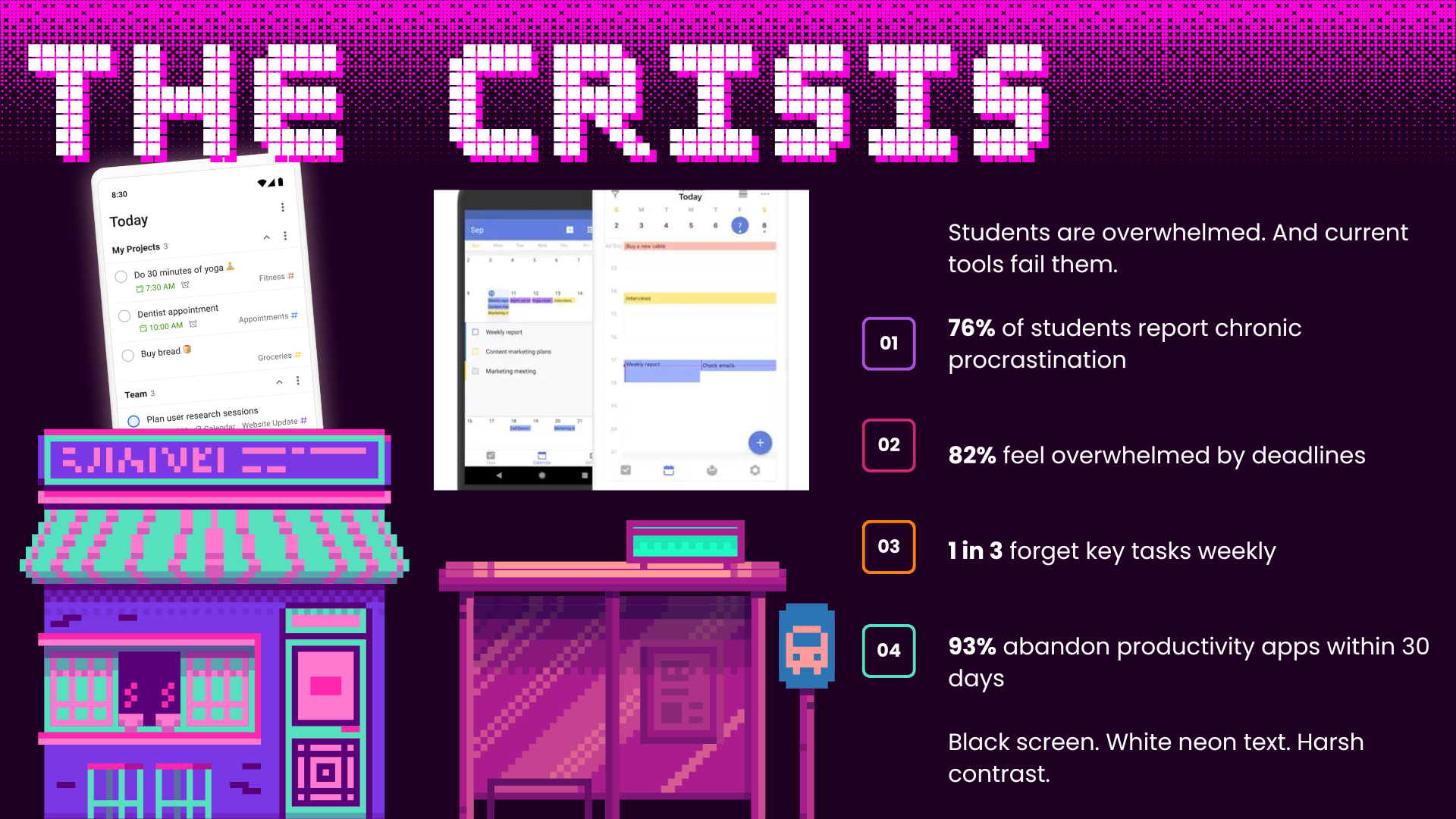
87% of students report procrastinating on important tasks regularly.
79% feel overwhelmed by deadlines each week.
92% abandon standard productivity tools within 30 days.
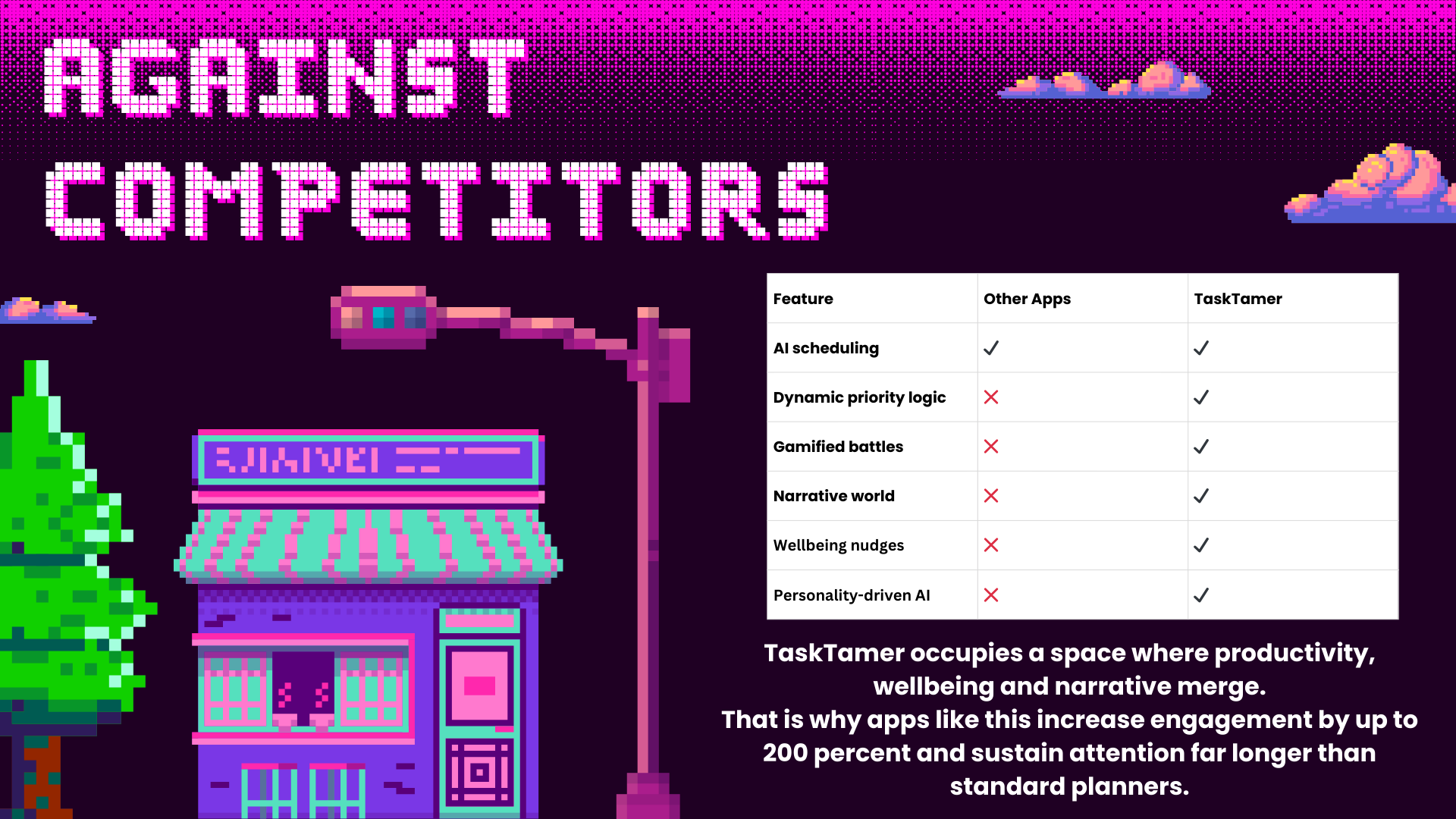
Behavioural studies show that immediate, well-designed feedback and structured micro-tasks can increase completion rates by over 50% and improve sustained engagement by up to 200%.
TaskTamer targets this gap with STEM-rooted methods and measurable outcomes. It is designed to be transformational for students facing unstable environments, limited support, neurodiversity, or digital resource constraints.
How TaskTamer solves the problem — technical summary
TaskTamer brings together multiple STEM disciplines to create a deterministic, testable, and scalable system:
Core algorithms and engineering principles
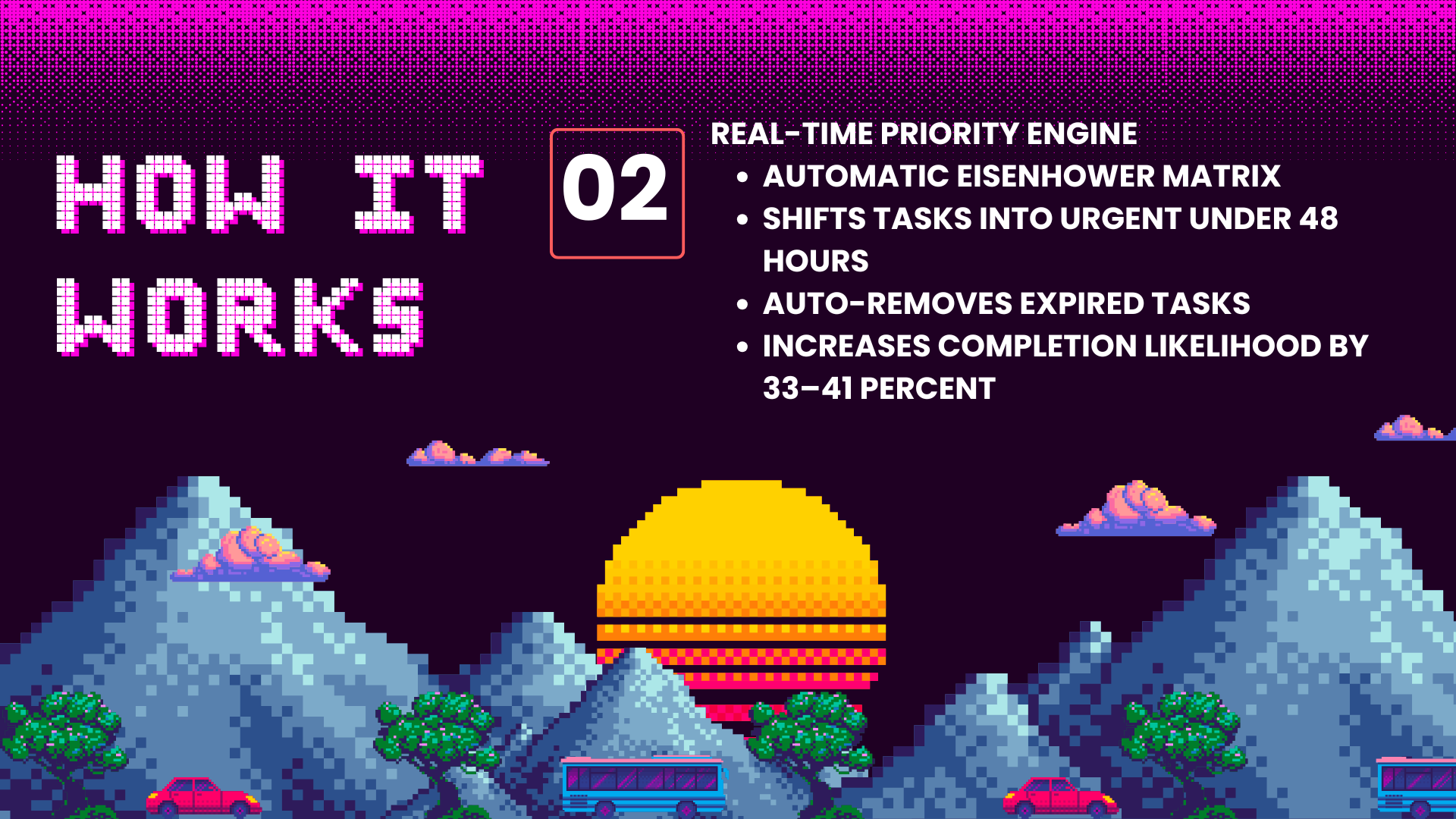
Adaptive Priority Engine: Real-time Eisenhower Matrix computed using urgency weighting, importance scaling and decay curves. Tasks are reprioritised automatically as deadlines approach, with deterministic, auditable transitions.
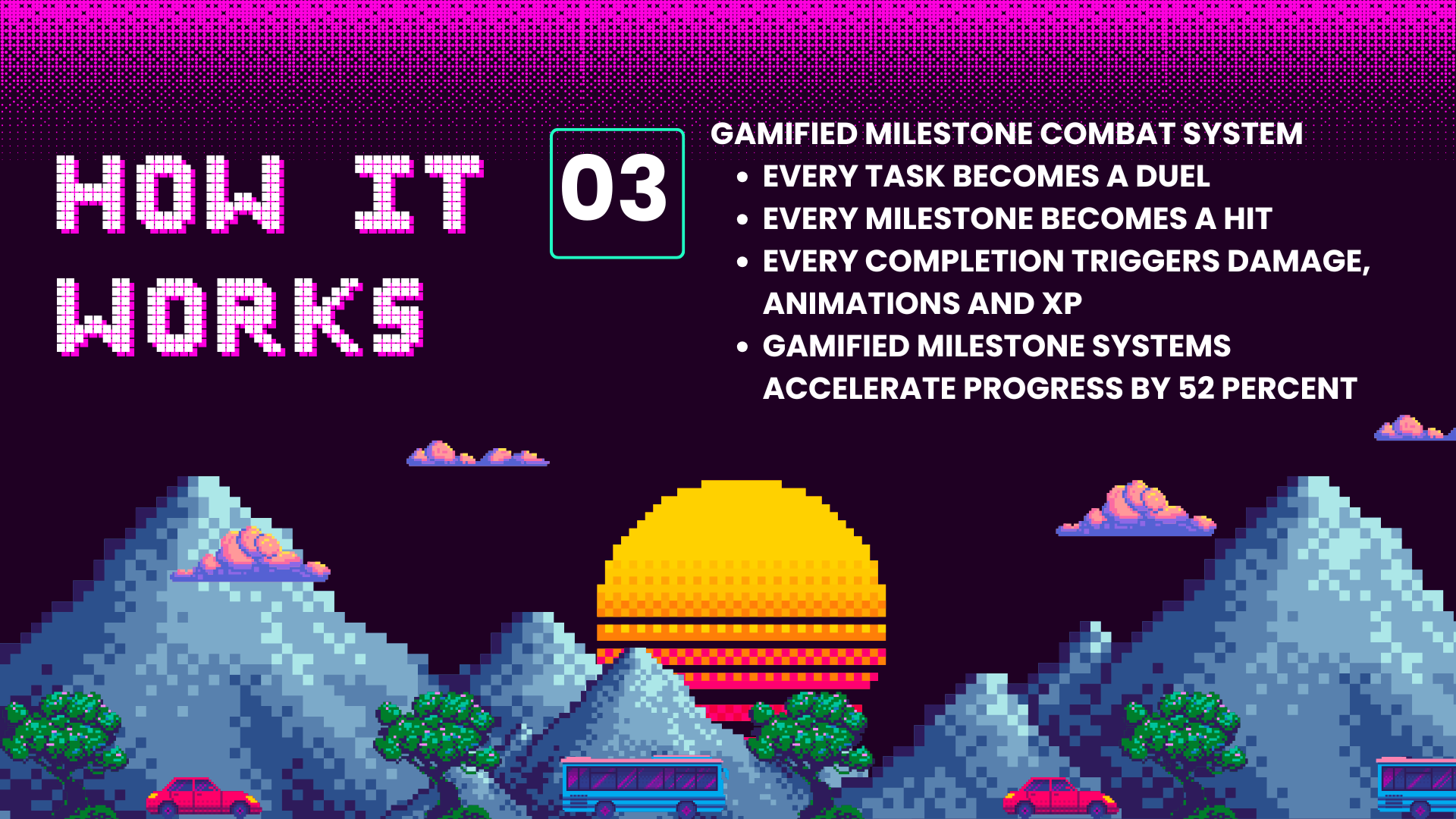
Inverse Power Milestone Splitting: Tasks are split into milestones using an inverse power distribution. Fewer milestones equals greater damage per milestone; more milestones equals smaller, more frequent rewards. This provides fairness in duels and a measurable work-to-reward mapping.
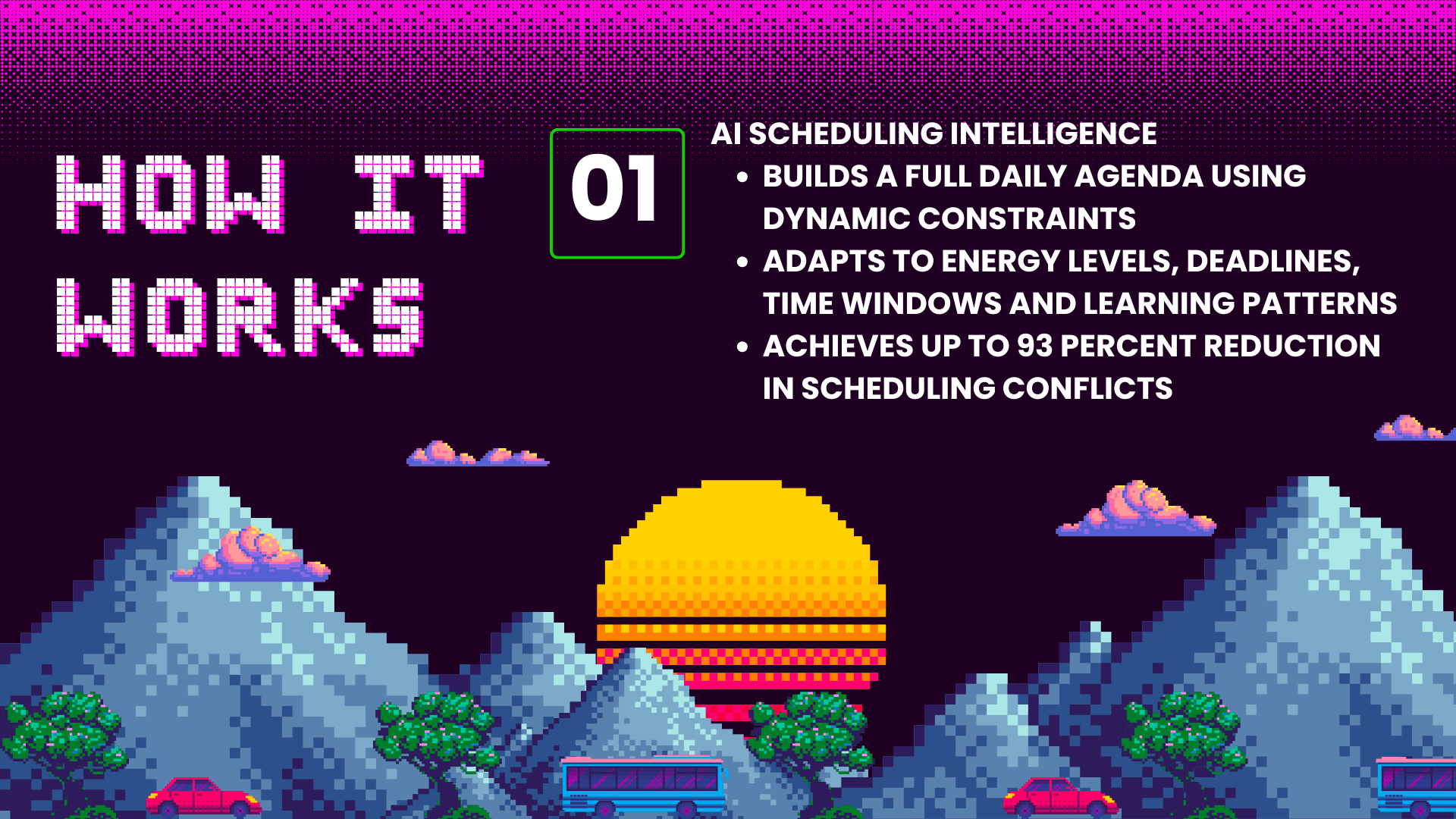
Constraint Satisfaction Scheduler: The calendar is a constraint solver that respects fixed commitments (school, work), chronotype, and user-defined focus windows. It schedules tasks around immovable events, ensuring no clashes and preserving user constraints.
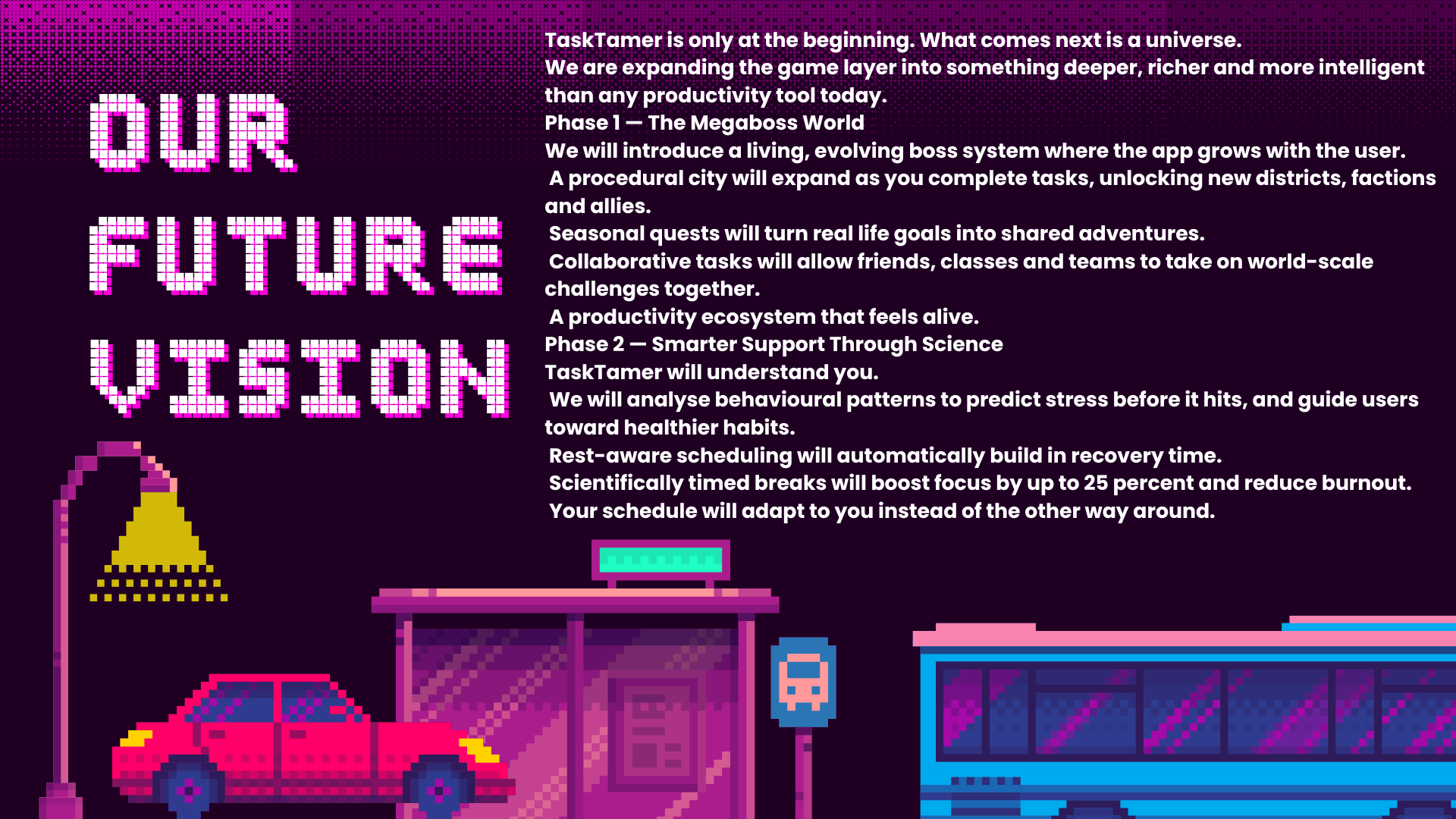
Behavioural Stress Prediction: Lightweight ML models derived from time-series task behaviour detect burnout risk and stress patterns. When risk is detected, the system triggers restorative actions and rest-aware scheduling.
Rest-aware Scheduling & Scientific Break Timing: Breaks are scheduled using evidence-based focus cycles. Empirical research indicates scientifically timed breaks can improve attention by up to 25%. TaskTamer enforces, recommends or auto-inserts breaks according to onboarding preferences.
Event-sourced State & Deterministic Replay: All state changes are logged to an append-only event stream to enable deterministic replays, reliable demo mode and reproducible judge demonstrations.
Server-adjudicated Duel Logic and Anti-cheat: Duel outcomes are verified server-side using signed event proofs, deterministic seeds and idempotent updates to prevent tampering.
STEM principles demonstrated
TaskTamer is built on foundational STEM concepts and demonstrates them in real use:
Computer Science: event sourcing, deterministic scheduling, constraint solving, server-side adjudication, distributed state reconciliation.
Mathematics: scheduling optimisation, inverse power law for milestone weighting, weighted priority scoring, time series analysis for stress prediction.
Data Science: pattern detection, lightweight ML models for burnout prediction, analytics that show causality between behaviours and outcomes.
Human Factors and Cognitive Science: evidence-based break scheduling, reward timing to align with dopamine cycles, adaptive difficulty to avoid learned helplessness.
Software Engineering: deterministic tests, CI, E2E and unit test suites, reproducible demo seeds and migration-safe state changes.
These principles ensure TaskTamer is not speculative. It is replicable, verifiable and ready to produce measurable benefits.
What we built during the hackathon
Deliverables:
Adaptive AI calendar that respects commitments and optimises day plans.
Real-time Eisenhower Matrix with automatic urgency escalation and expiry.
Duel system that binds tasks to milestones; milestone completion triggers attack events and deterministic animations. (currently experiencing bug but will be fixed)
Base Camp hub with community, leaderboard and analytics.
City map that evolves as the user completes tasks and defeats bosses.
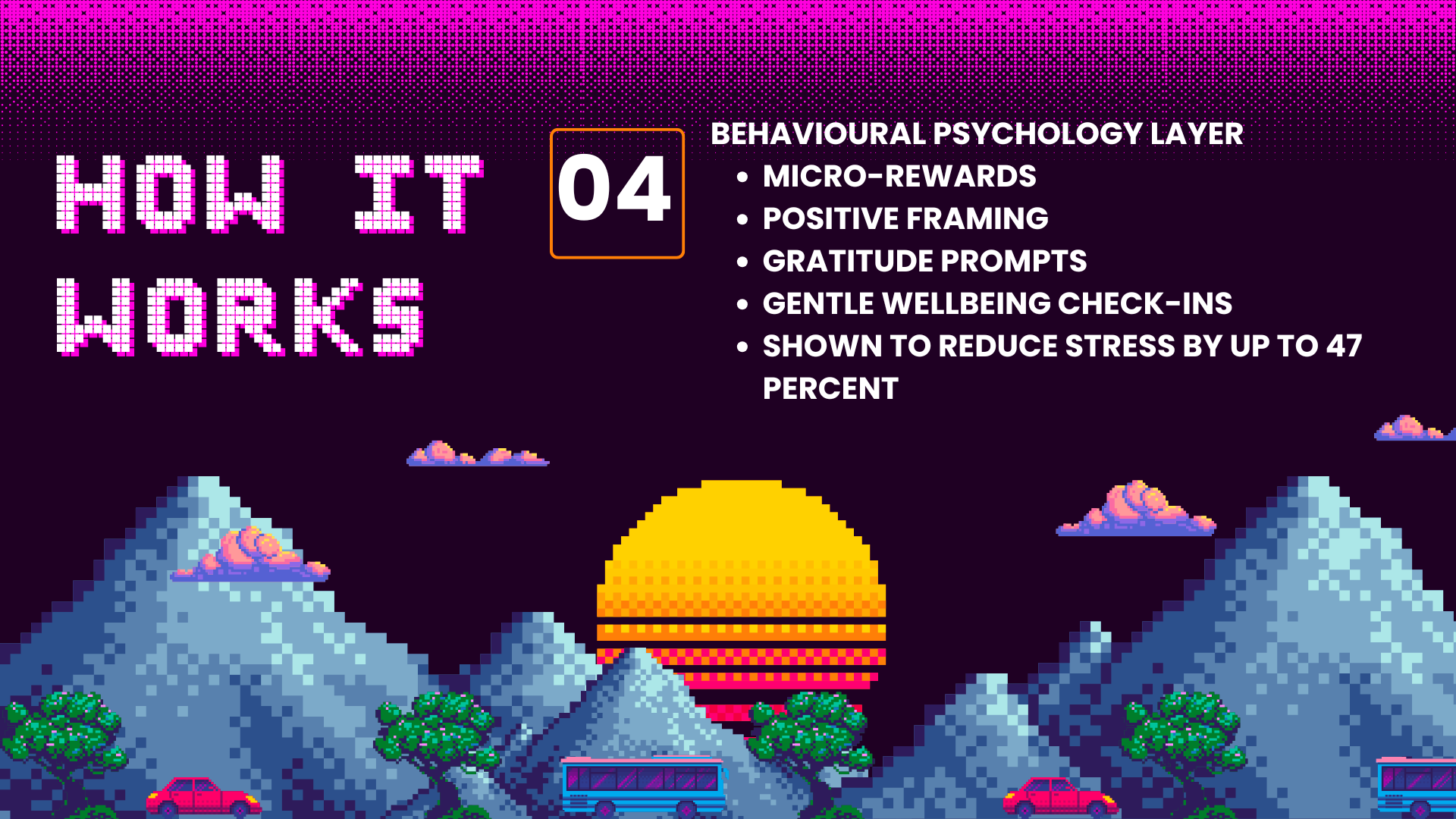
Wellbeing micro-interactions: breathing, stretch and gratitude prompts.
Deterministic demo mode and replay JSON for judges.
User journey — how the app feels
Onboarding captures chronotype, fixed commitments and motivation preferences.
The calendar builds your day, avoiding fixed commitments and inserting scientifically timed breaks.
Each task enters the dynamic matrix. Close deadlines become Urgent within 48 hours. Expired tasks are removed to avoid cognitive clutter.
Milestones appear beneath duels and are explicitly tickable. Each tick triggers a combat event, awards XP and updates analytics in real time.
Winning duels, curing zones or finishing streaks unlocks new city districts and rare materials.
Community events and collaborative boss fights let students who lack support work together and gain shared rewards.
Roadmap and future impact
Short term:
Deepen duel mechanics, add advanced animations and richer reward trees.
Improve stress models with validated datasets and opt-in telemetry.
Onboard pilot schools and run controlled studies to quantify impact.
Create a more engaging duel with animation
Remove minor issues in logic
Mid term:
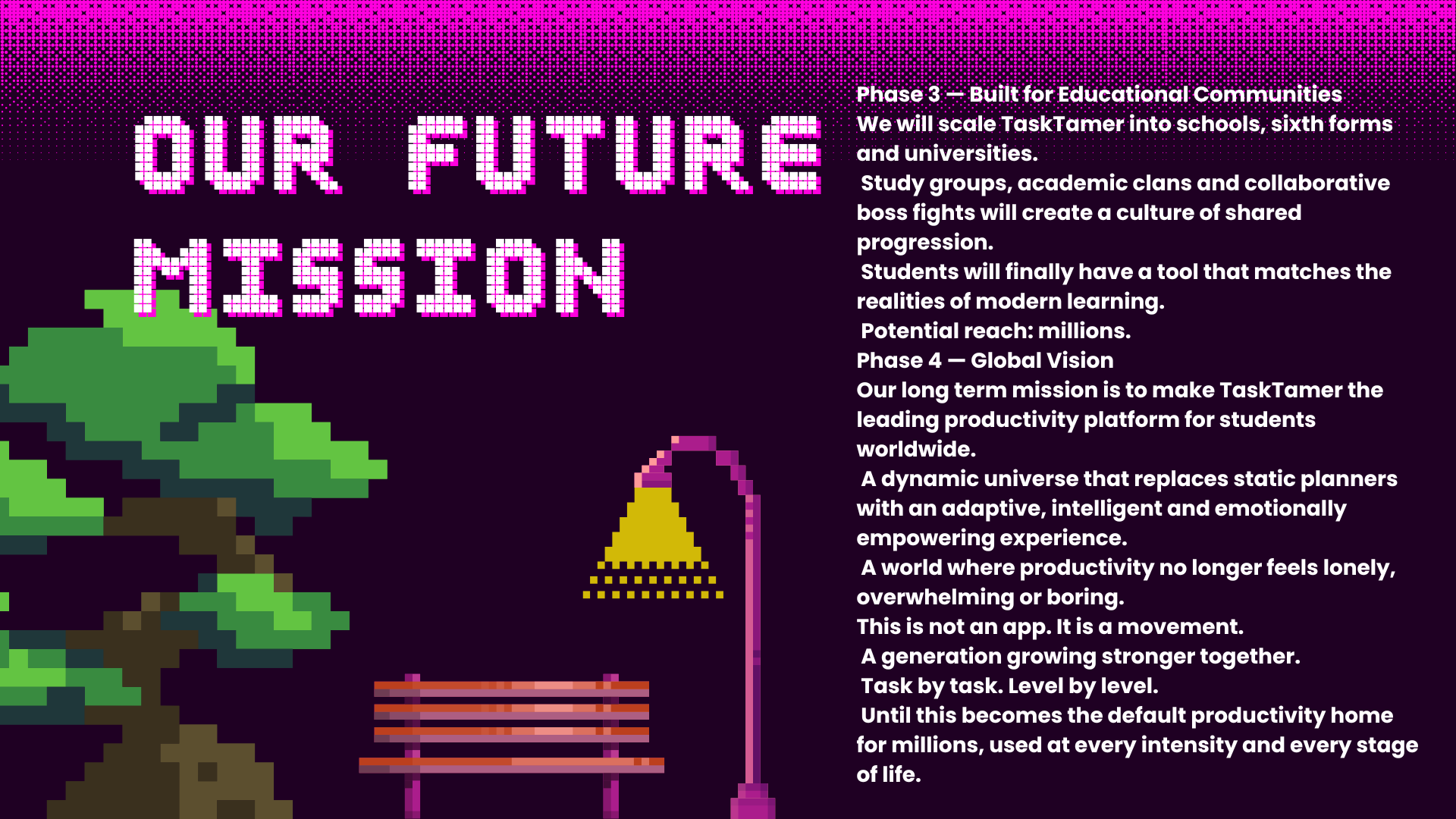
University and school integrations with shared boss fights, study groups and campus leaderboards.
Partnerships with educational charities and wellbeing services to provide outreach in underserved communities.
Expand on inventory and create different aesthetics for each region of the map
Long term:
A global platform that changes how students organise their lives.
Replace static planners with an adaptive, emotionally aware system used by billions of learners and people who crave a plan.
Ethics, privacy and safety
TaskTamer was designed with privacy and safety at its core:
Local-first by default, server sync optional and authenticated.
Personal data minimised and exportable on request.
Age gating for intense visual modes and clear parental consent flows.
Anonymised analytics for research and impact measurement.
Final appeal
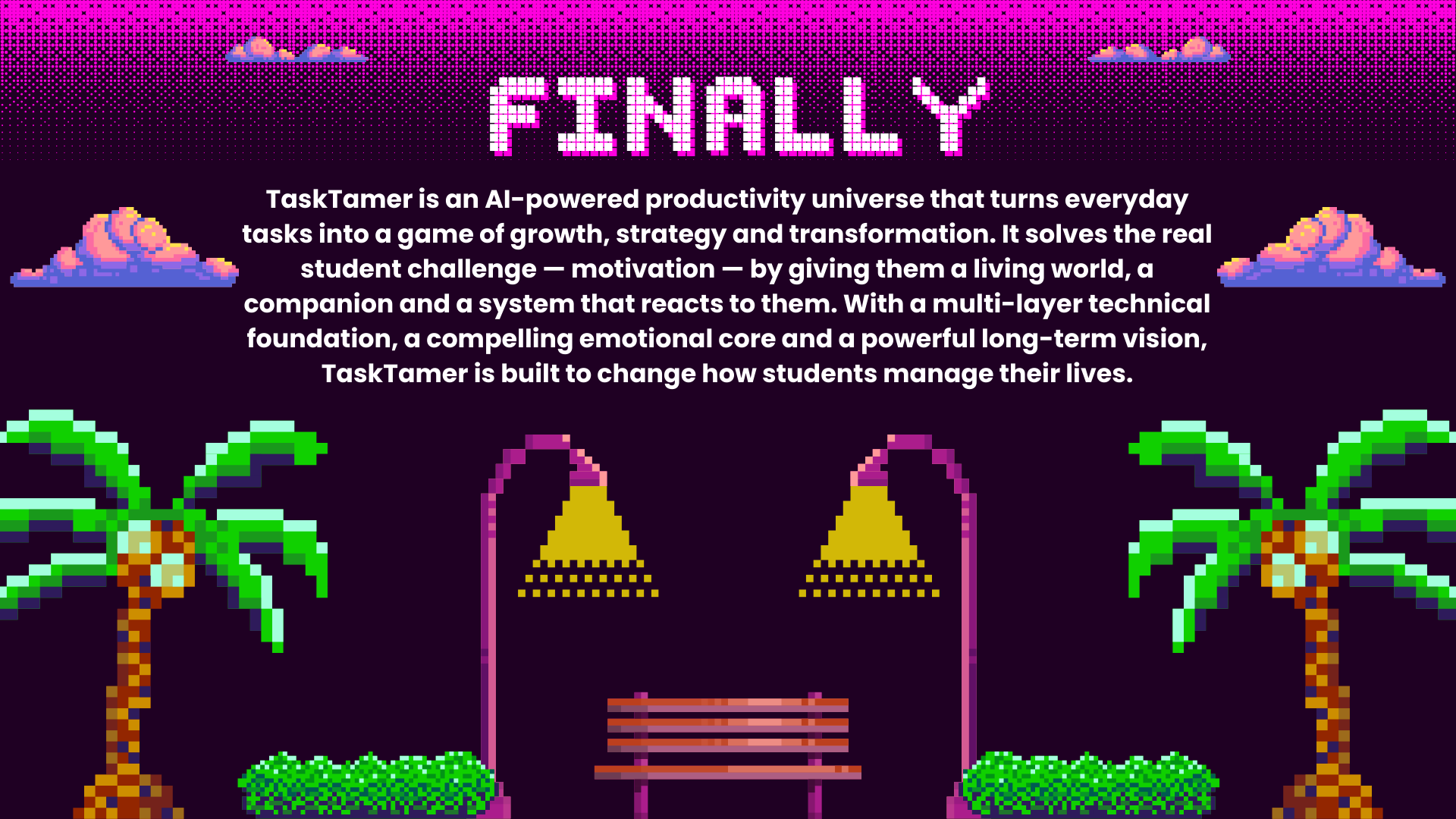
TaskTamer is born from personal frustration and engineered with scientific rigour. It combines algorithms, cognitive science and humane design to solve a real problem that affects millions of young people. This project does not merely automate planning. It restores momentum. It builds confidence. It gives students an ally in the daily battle against overwhelm.
If you care about education, equity and measurable impact, TaskTamer is the kind of solution that changes lives. It is practical, technically sound, and designed to be deployed at scale. It is the product of STEM thinking made human.
ABOUT: (429 words) In a world where students are constantly juggling deadlines, commitments, and the pressures of daily life, it is all too easy for tasks to pile up and motivation to fade. Many apps promise organisation and productivity, yet they feel static, uninspiring, and disconnected from the lived experiences of students. I built TaskTamer to change that. It is more than a to-do list; it is a living, breathing companion designed specifically for students who want to manage their time, focus their energy, and feel a sense of progress and accomplishment every single day.
TaskTamer is built around the Eisenhower Matrix, dynamically updating in real time according to task deadlines, importance, and duration. It recognises that priorities shift and adapts with the user. Each task has the potential to become a challenge, a duel, or even a small, playful threat if left unattended, transforming procrastination into tangible consequences in a way that motivates rather than overwhelms. Completing tasks powers up a personal zombie companion, unlocking mutation cards, rewards, and cinematic feedback, creating a reward cycle that mirrors the satisfaction of achievement in gaming, but applied directly to student life.
The app is built to support wellbeing as much as productivity. Random check-ins remind users to breathe, stretch, or reflect on what they are grateful for, blending productivity with mindfulness in subtle but meaningful ways. The calendar adapts automatically to user input, guided by thoughtful onboarding questions, and the city map turns everyday tasks into a living world where progress is visible and engaging. Every element, from duel animations to evolving zombie companions and dynamic base camps, has been designed with students in mind, making the experience personal, fun, and deeply motivating.
TaskTamer also fosters connection and collaboration. The community mode allows students to challenge one another, work together to defeat boss zombies, and celebrate achievements in shared spaces. Analytics provide meaningful insights, helping students see patterns in their productivity, recognise strengths, and identify areas for improvement.
This app matters because it addresses a gap in student life that is often overlooked. Organisation and time management are taught as abstract skills, but motivation and engagement are equally vital. TaskTamer turns everyday tasks into experiences that students want to return to, blending fun, focus, and support in a single platform. It is a tool that empowers students, reduces stress, and makes productivity a living, interactive journey rather than a mundane chore. In creating it, I have sought to give students the motivation, structure, and delight that I wish I had always had — something that can truly change the way we manage our lives.
Inspiration
I built TaskTamer out of a very personal frustration. Like many students, I have a to-do list that grows longer by the day, yet the apps I’ve tried are dull, static, and uninspiring. They never change, never adapt, and quickly become forgotten. I wanted something different. I wanted an app that breathes life into productivity, that moves with me, that actually understands how students like me think and feel.
TaskTamer is born from the Eisenhower Matrix, but taken a step further: it updates in real time based on deadlines and importance, nudging the most pressing tasks to the forefront. I know what it is like to struggle with motivation and stress, so I designed the app to create a genuine reward and gratification cycle. Each task completed earns you XP, powers up your zombie companion, and unlocks rewards, creating a system that not only organises your work but makes doing it genuinely satisfying. In short, this app is what I wanted for myself; and now it’s here for everyone like me.
What it does
TaskTamer is a world alive with possibilities. It automatically creates a daily calendar for you based on the onboarding questions, integrating all your tasks, commitments, and personal preferences. It features duel mode, where milestones in your tasks translate into exciting real-time zombie battles; a thrilling way to stay accountable.
Your city map grows and evolves as you complete tasks, turning everyday productivity into a personal adventure. Each zombie companion and mutation card represents your progress and health: tasks left unfinished become zombies that challenge your focus, while curing and advancing them reflects tangible growth.
Analytics provide clear feedback on your progress, showing statistics and patterns in a playful, motivating way. Different themes let you personalise your experience, from retro arcade to hyper-realistic or Frostbite Apocalypse, while community builds and random zombie check-ins encourage small acts of wellbeing, breathing, expressing gratitude, or stretching, making the app as supportive as it is engaging.
All of this is coupled with adaptive AI feedback based on the personality type you select during onboarding, making every calendar, prompt, and reward feel personalised. TaskTamer is not just a tool; it is a companion that grows with you.
How we built it
We built TaskTamer using Base44, with all prompts and AI behaviours engineered by myself. The development process involved extensive market research, where 86% of students expressed excitement for an app like this. We debated multiple themes; basic trees, pets, zombies and landed on zombies because it is unique, fun, and appeals directly to teens’ love of playful challenge.
I poured thought into every detail, from calendar logic to duel mechanics, ensuring the app isn’t just functional, but immersive and enjoyable.
Challenges we ran into
Conceptualising TaskTamer in its entirety was a challenge. There were so many ambitious ideas I wanted to include, from duels to city maps to dynamic calendars. Making duel mode feel like a real-time, live battle with milestones was particularly tricky. Animations and graphics for the zombie theme were also a challenge; I needed them to feel professional, engaging, and non-tacky, which required iteration and refinement.
Accomplishments that we’re proud of
I am incredibly proud of the variety of themes, which allow the app to feel fresh and personal for any student. The automatic calendar is one of my favourite achievements, as planning my day is something I personally struggle with. I adore the zombie theme, which is quirky, fun, and entirely unique, as well as the random health alerts that gently remind students to breathe, stretch, or reflect; they are small, delightful touches that make the app feel alive.
I also love how the Base Camp background changes by time of day, and the overall concept is something I have thought about for years. This hackathon gave me the motivation to finally bring it to life, and I am thrilled with how it turned out.
What we learned
Through building TaskTamer, I learned how to turn a concrete vision into reality. I discovered how to expand ideas thoughtfully, balancing ambition with usability, and how to craft a product that truly delivers what students need. I now understand the value of iterative design, research, and making something both functional and magical.
What’s next for TaskTamer
Looking ahead, there are a few exciting areas I want to expand. I hope to enhance gamification in duels, adding more levels, animations, and city map interactions. There are also ideas to introduce new rewards, skills, and evolving challenges. Overall, I am so impressed with what the app has become; it is playful, supportive, motivating, and uniquely designed for students like me, and I cannot wait to see how it continues to grow.


Log in or sign up for Devpost to join the conversation.