-
-
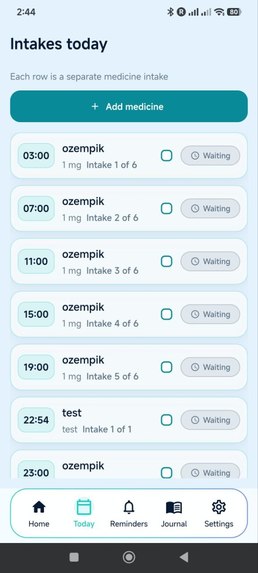
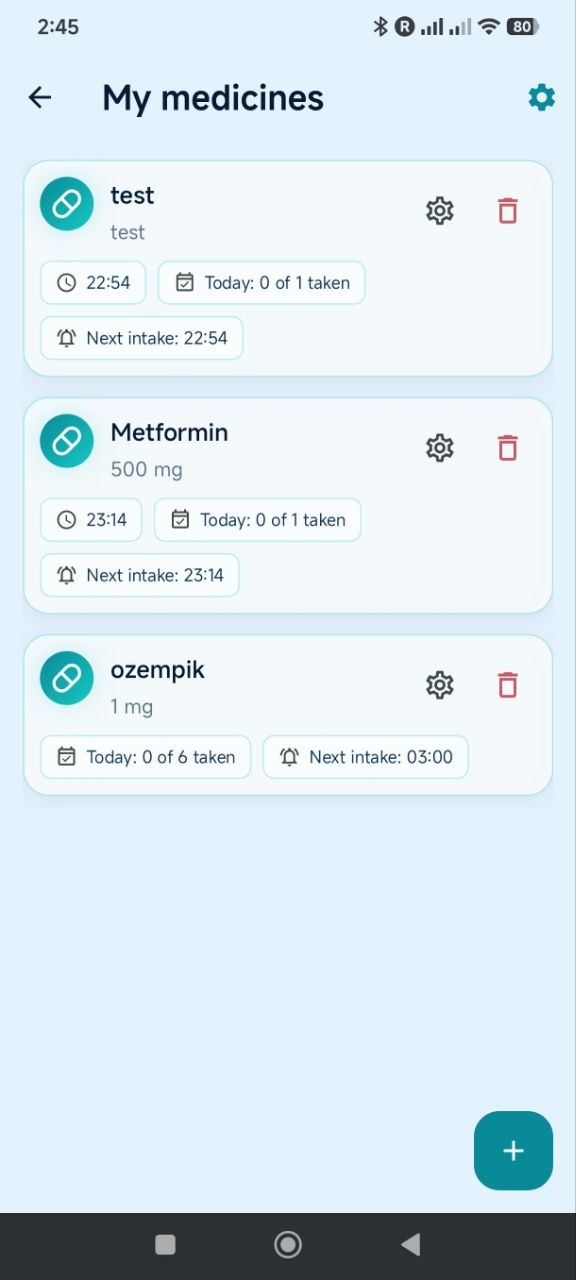
My Medications
-
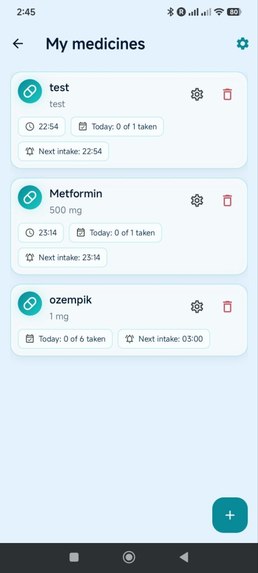
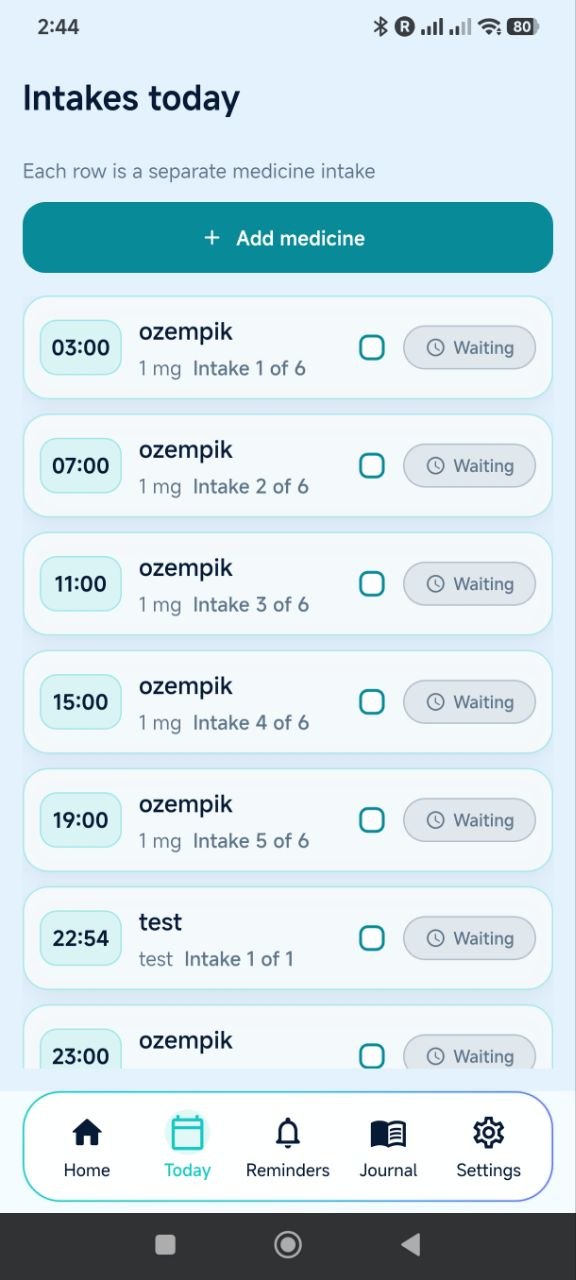
Today’s Doses
-
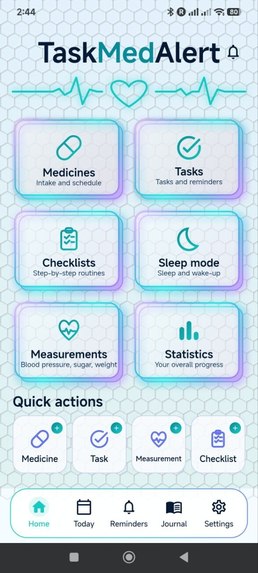
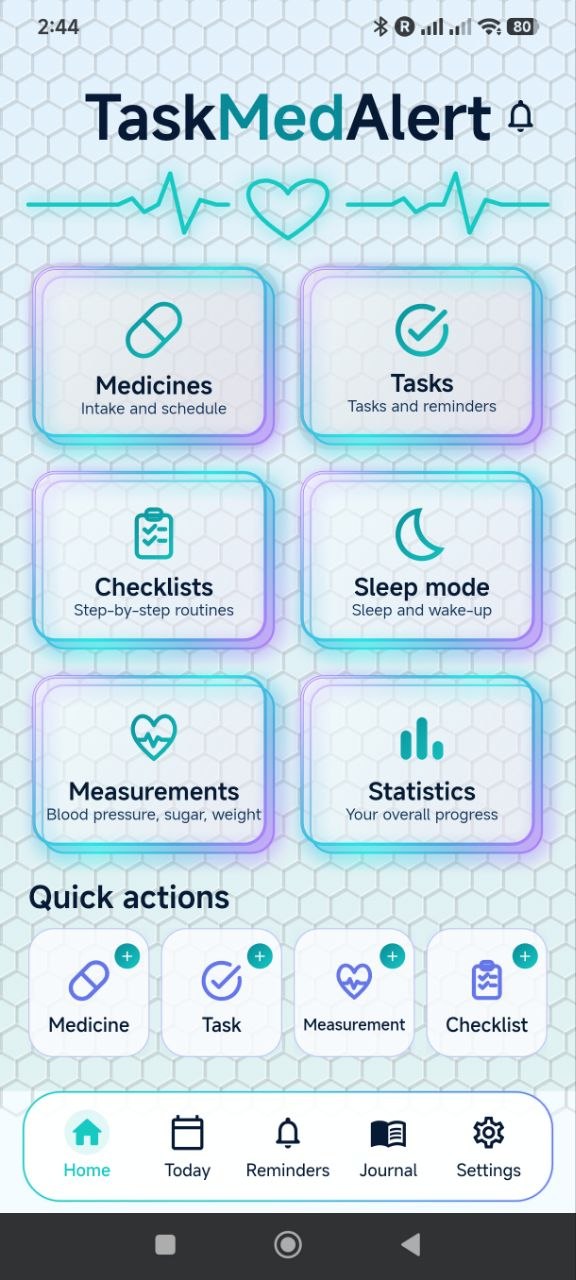
Home Screen
-
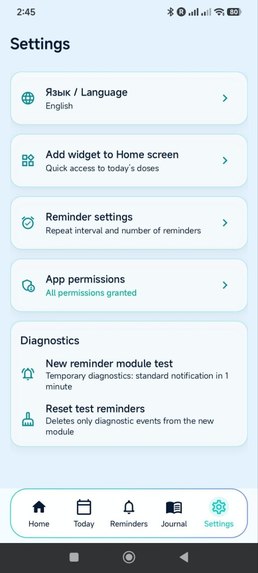
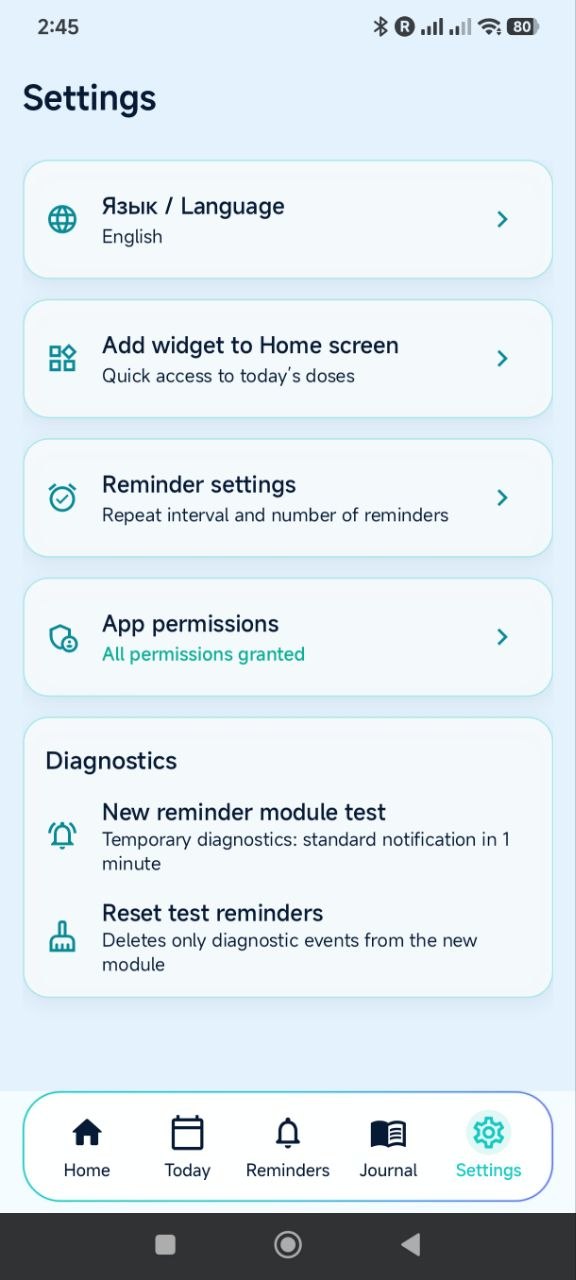
Settings
Inspiration
TaskMedAlert was created from a simple personal problem: sometimes I could not remember whether I had already taken my daily medication. A reminder alone is not enough — the user also needs a clear record of what was taken, postponed, or missed.
What it does
TaskMedAlert is an Android medication reminder and intake-tracking application. Users can:
- add a medicine name, dosage, and optional comment;
- configure daily, weekly, every-N-days, or every-N-hours schedules;
- add multiple intake times during the same day;
- receive Android notifications with Taken and Snooze actions;
- repeat reminders after snoozing or dismissing them;
- automatically mark an intake as missed after the configured repeat limit;
- review each scheduled intake separately on the Today screen;
- see pending, taken, snoozed, and missed statuses;
- correct a status manually when necessary;
- view remaining intakes and the nearest unfinished time in an Android Home Screen Widget without displaying medicine names or dosages;
- configure reminder interval, maximum repeat count, system notification sound, and required Android permissions;
- use the application in Russian or English.
The core medication reminder and intake-tracking features are intended to remain free and without advertising.
How it was built
TaskMedAlert was built with Flutter and Dart, with native Android functionality implemented in Kotlin. The project uses local persistence, Android notifications, exact alarms, notification actions, background receivers, and an Android Home Screen Widget.
GPT-5.6 was used for architecture planning, interface and interaction design, application logic, task decomposition, test planning, and interpretation of test results.
Codex accelerated the implementation by analyzing the existing Flutter and Android codebase, making targeted Flutter and Kotlin changes, adding and updating automated tests, diagnosing notification and state-management issues, and maintaining the project documentation.
I defined the requirements, made the product decisions, reviewed the changes, ran the validation commands, and tested the application on a physical Android device.
Challenges
The most difficult part was making reminder state reliable across different Android states and user actions. Taken, Snooze, notification dismissal, repeated reminders, automatic missed status, application restarts, and the Home Screen Widget all needed to remain synchronized.
Another challenge was keeping the workflow testable while changing both Flutter and native Android code. The project therefore uses focused automated tests together with repeated validation on a physical Xiaomi Android device.
Accomplishments
During Build Week, TaskMedAlert became a working end-to-end medication workflow rather than only a visual prototype. The completed submission includes configurable schedules, actionable notifications, repeat logic, intake-state tracking, manual corrections, bilingual UI, Android permission checks, selectable notification sound, and a privacy-conscious Home Screen Widget.
What I learned
The project showed how GPT-5.6 and Codex can support different parts of the same development process. GPT-5.6 was most useful for planning, reasoning, UX decisions, and translating test results into precise implementation tasks. Codex was most useful for repository-level implementation, code analysis, tests, and documentation updates.
What's next
Future development may include cloud synchronization, additional languages, adherence statistics, medication history improvements, health measurements, checklists, and broader daily health tools.


Log in or sign up for Devpost to join the conversation.