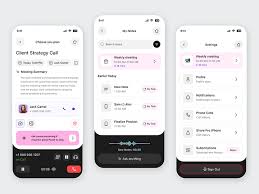
Ideas and responsibilities do not always arrive as neat to-do lists. They come as scattered thoughts: “Message the client tomorrow,” “Submit the assignment by evening,” or “Remember the meeting at six.” Recording a voice note is easy. Turning that recording into an organized plan takes more effort. We envisioned Taskline to bridge that gap: a simple way to turn spoken thoughts into clear, editable tasks. What it does Taskline is a proposed AI-powered voice task organizer designed for everyday planning. The intended experience is simple: Record a voice note or type a note. Review and correct the transcript. Use Gemini to extract individual tasks, deadlines, and relevant people. Review and edit the suggested task cards. Copy a message draft or mark a task complete. We aim to support Hindi, English, and Hinglish input. When a deadline is missing or ambiguous, Taskline should ask for clarification rather than invent a date. For example, the note “Tomorrow, message my client at 9 AM and submit my assignment by 6 PM” would become two separate tasks with their respective deadlines. How we are building it We plan to build Taskline as a mobile-first web application using Google AI Studio and Gemini. The proposed workflow sends a user-reviewed transcript to Gemini and requests structured output containing task titles, deadlines, related people, and suggested message drafts. The interface will turn that output into editable task cards. For the initial prototype, we plan to store tasks locally in the browser. Recording, transcription, AI analysis, and task persistence will each need to be tested before being described as working features. Our current Canva presentation illustrates the intended experience. It is a concept presentation, not a recording of a completed application. Challenges we aim to solve Natural speech is often incomplete and ambiguous. A single note may contain several tasks, unclear deadlines, or changes of mind. Our main design challenges include: Separating multiple tasks without losing important details. Interpreting relative dates such as “tomorrow” using the user’s local time. Distinguishing explicit instructions from AI suggestions. Handling microphone permissions and AI errors clearly. Keeping users in control of every generated task. Displaying a due date is also different from delivering a reminder notification. We will keep that distinction clear in the interface. Accomplishments so far We have defined the core problem, outlined the user journey, and prepared the project story and presentation content. We have also narrowed the first version to one focused workflow: capture a note, review the transcript, analyze it, and edit the resulting tasks. A completed application, public deployment, and end-to-end testing are not yet confirmed. What we have learned Planning Taskline has highlighted the importance of designing around uncertainty. The goal is not just to generate a polished answer, but to create something users can inspect, correct, and trust. It has also reinforced the distinction between a convincing concept presentation and a working product. Our next milestone is to demonstrate the proposed workflow with real input and verifiable results. What’s next for Taskline Build and test the first working prototype. Evaluate Hindi, English, and Hinglish transcription. Add editable task cards and local task storage. Test ambiguous dates and incomplete instructions. Add notifications only when reliable delivery is implemented. Record a real application demo and publish a testable version.
Built With
- css
- gemini-api
- google-ai-studio
- html
- javascript
- localstorage
- web-speech-api

Log in or sign up for Devpost to join the conversation.