-
-
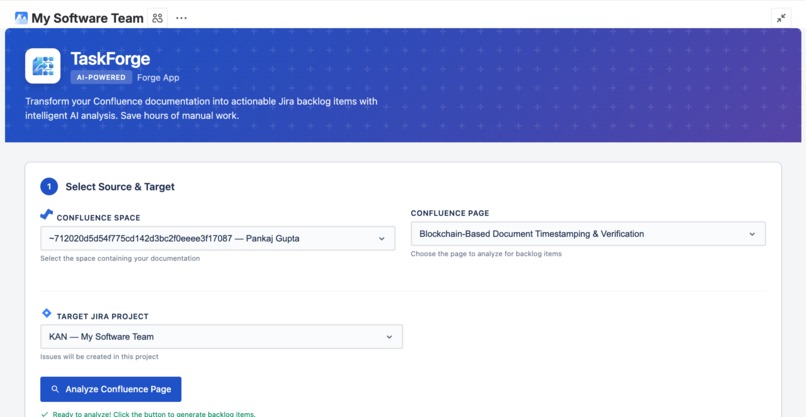
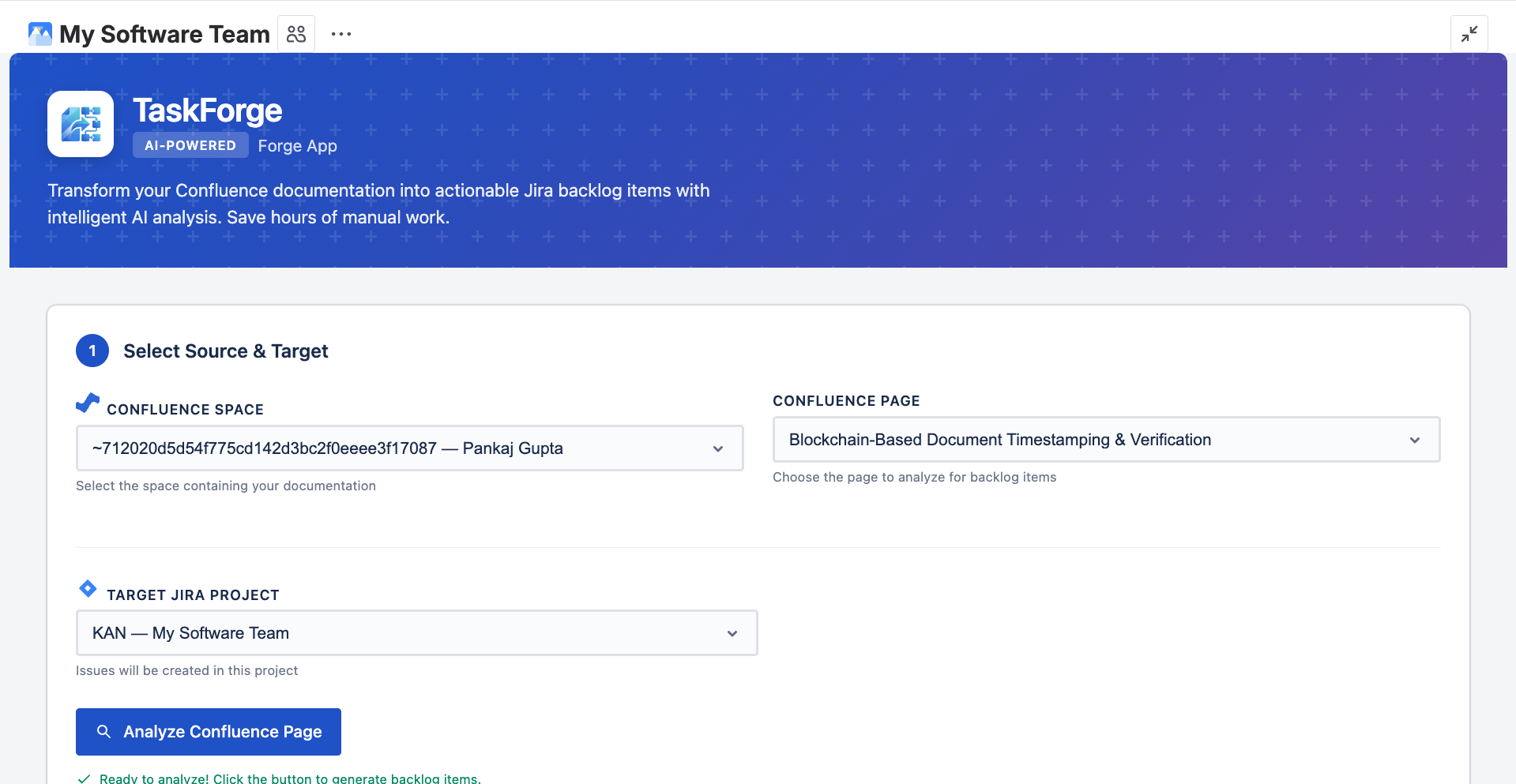
Select source and target - TaskForge
-
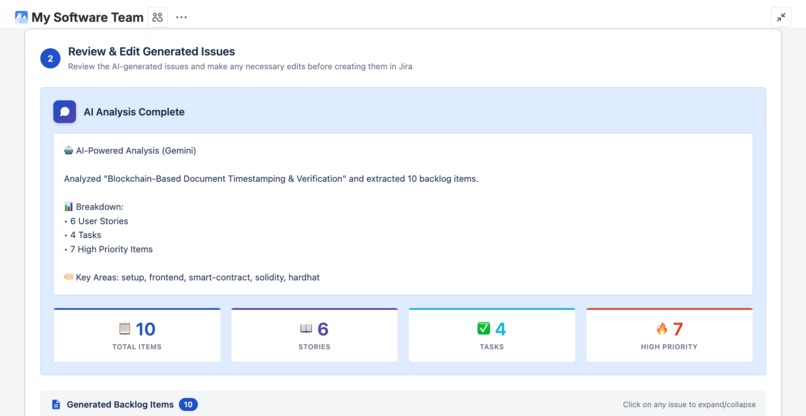
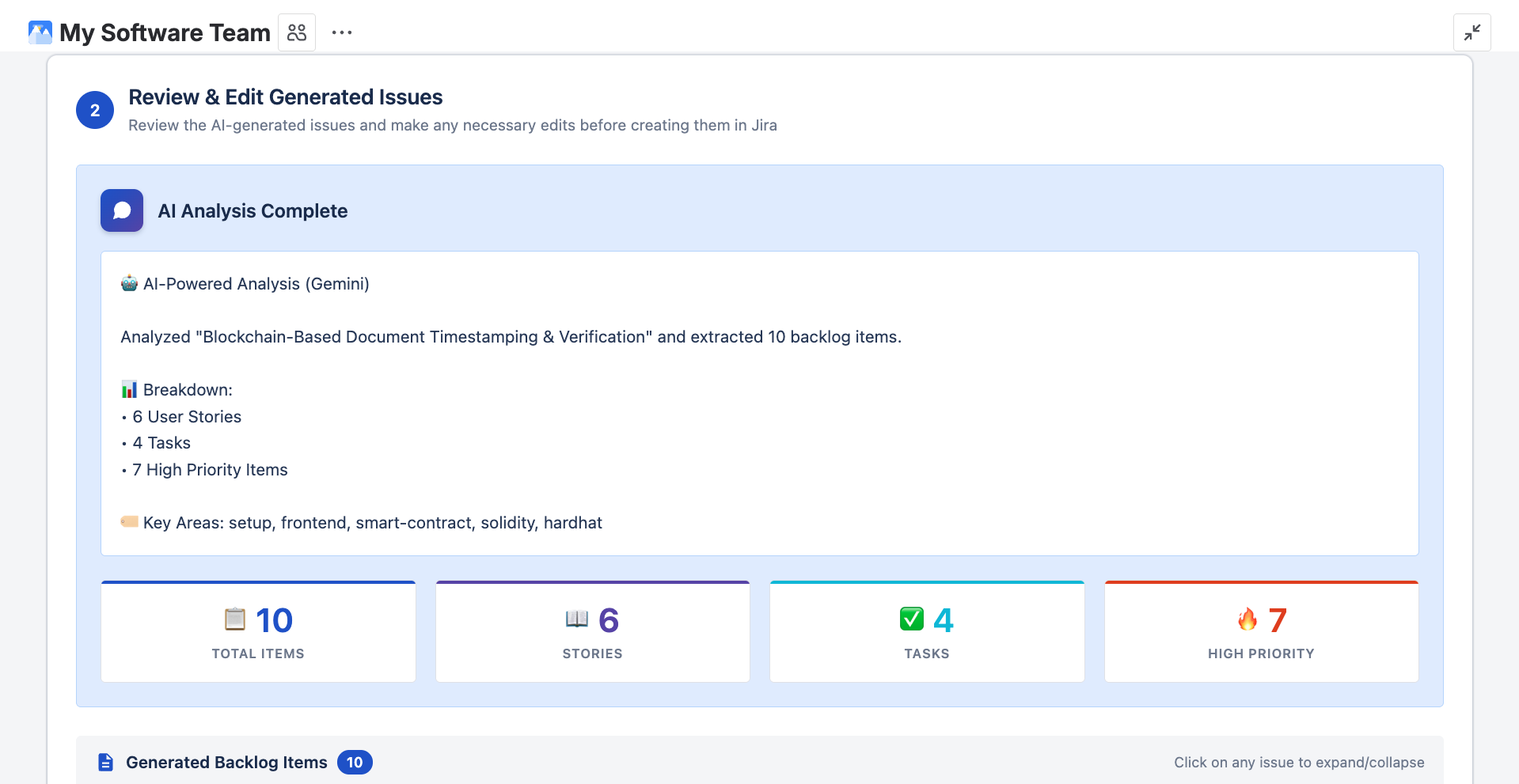
Review Issues - TaskForge
-
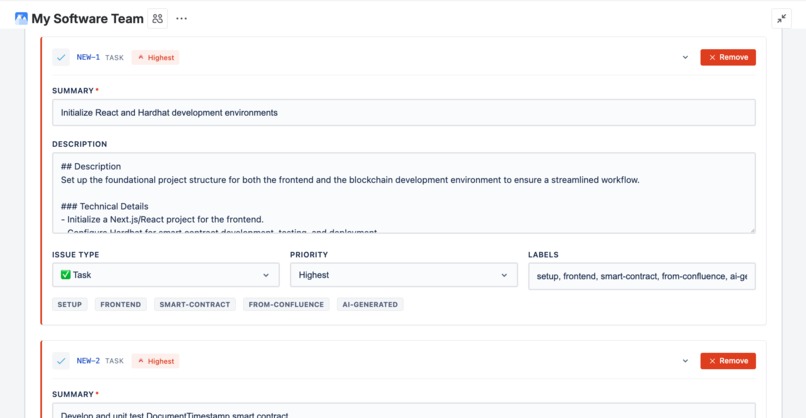
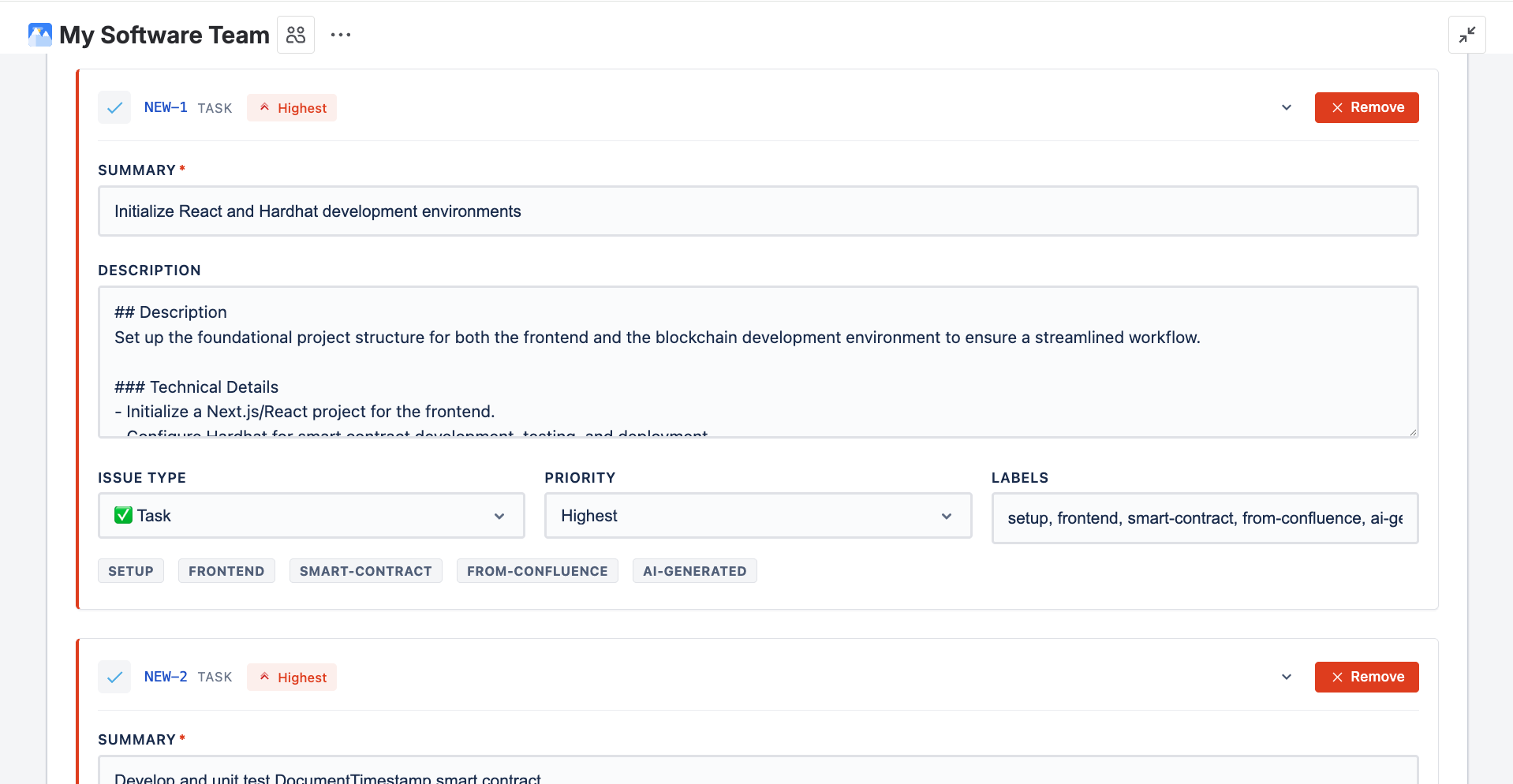
Edit Issue - TaskForge
-
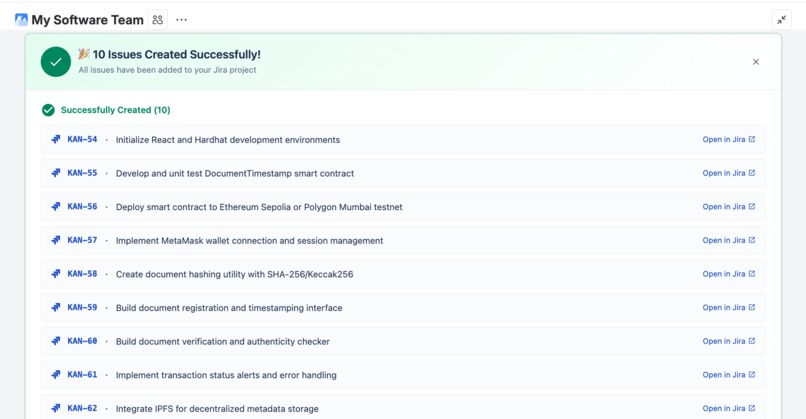
Create Issues - TaskForge
-
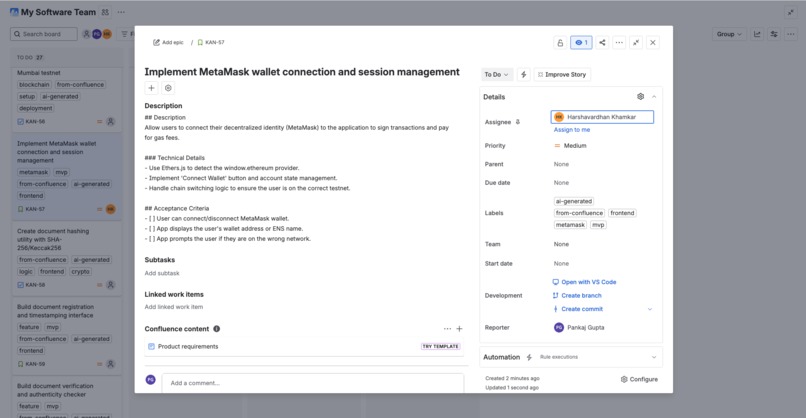
See Issue - TaskForge
Inspiration
Most software teams capture ideas, requirements, and technical decisions in Confluence, but execution still happens in Jira. We noticed that translating Confluence documents into Jira backlogs is a repetitive, manual and error-prone process. Important edge cases are often missed, acceptance criteria vary by person, and teams lose valuable time rewriting what already exists. TaskForge was inspired by the need to close this gap and turn documentation directly into execution-ready work.
What it does
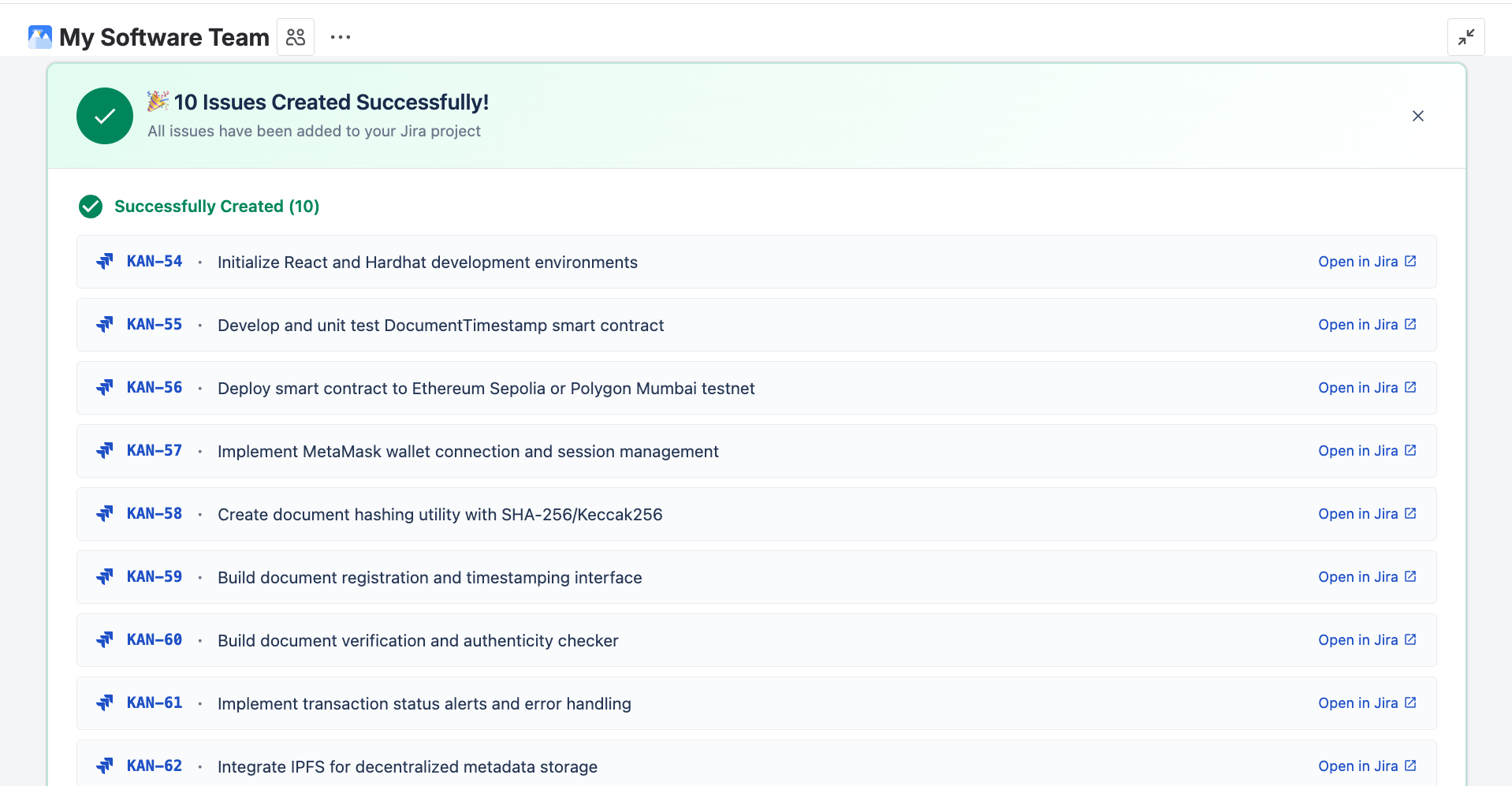
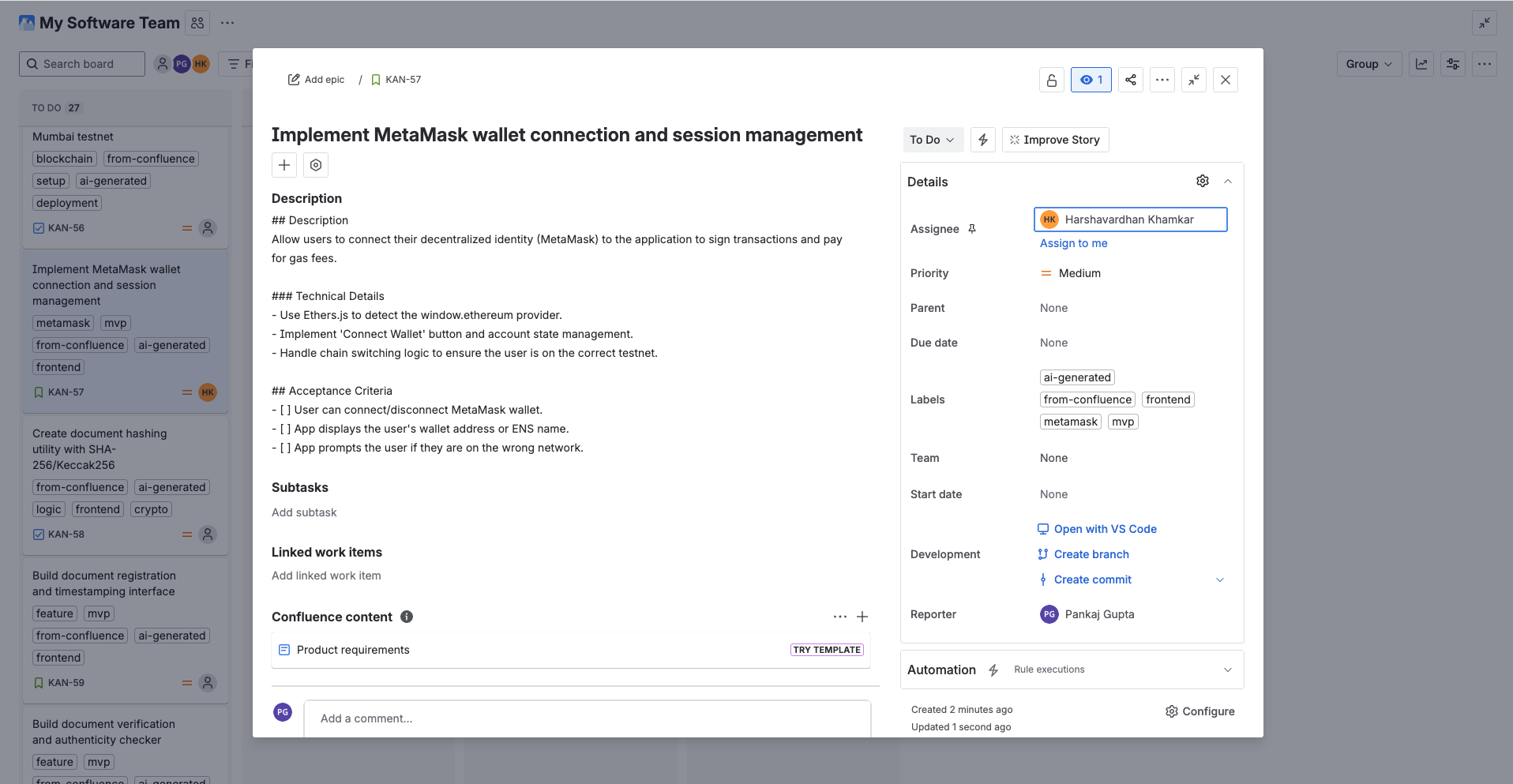
TaskForge analyzes Confluence pages containing PRDs, POCs, or project specifications and automatically generates a clean, structured Jira backlog. It creates Stories, Tasks and Bugs with clear titles, detailed descriptions, acceptance criteria, labels and priorities. Users can review and edit everything before creating issues, ensuring accuracy while keeping humans in control.
How we built it
TaskForge is built as a Jira Project Page app using Atlassian Forge. The frontend uses React with Forge Custom UI, while the backend uses Forge resolvers to securely interact with Jira and Confluence REST APIs. For intelligent analysis, we integrated Google Gemini AI, and we also implemented an alternative workflow using Atlassian Rovo Agents and Actions to generate and store backlog items. Forge Storage is used for caching and temporary persistence to improve performance and consistency.
Challenges we ran into
One major challenge was reliably extracting structured requirements from varied Confluence content such as headings, lists and mixed technical text. Prompt design and consistency of AI output required careful iteration. Another challenge was balancing automation with control-ensuring users could review and refine generated issues before creation. Integrating multiple Atlassian APIs while maintaining predictable behaviour inside Forge was also non-trivial.
Accomplishments that we're proud of
We successfully built a fully functional Forge app that bridges Confluence and Jira end-to-end. TaskForge generates high-quality, structured backlog items in minutes and supports both direct AI analysis and Rovo agent-driven workflows. We’re especially proud of maintaining human-in-the-loop control while still delivering meaningful automation.
What we learned
We learned how to design AI-assisted workflows that feel trustworthy and usable for real software teams. We gained hands-on experience with Atlassian Forge, Jira and Confluence APIs, and Rovo agent/action architecture. Most importantly, we learned that AI delivers the most value when paired with clear structure, constraints and user review.
What's next for TaskForge
Next, we plan to extend TaskForge beyond backlog generation into assisted implementation. For selected Jira issues, TaskForge will analyze the requirements, generate an initial code solution, and automatically commit the changes directly to Bitbucket. This would enable TaskForge to function as an in-context coding assistant, but tightly integrated with Confluence requirements and Jira workflows. By closing the loop from documentation to backlog to code, TaskForge aims to accelerate delivery while maintaining traceability between requirements, implementation, and version control.
Built With
- atlassianforge
- atlassianforgefunctions
- atlassianrovoagent
- confluencecloud
- confluencerestapi
- forgestorageapi
- googlegemini3
- javascript
- jiracloud
- jirarestapi
- react

Log in or sign up for Devpost to join the conversation.