-
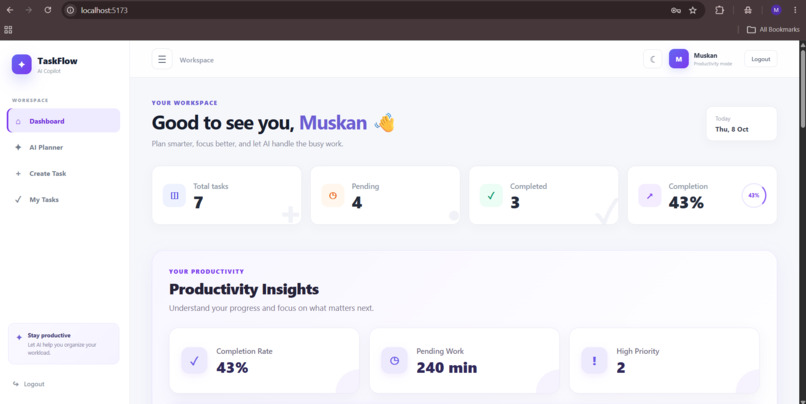
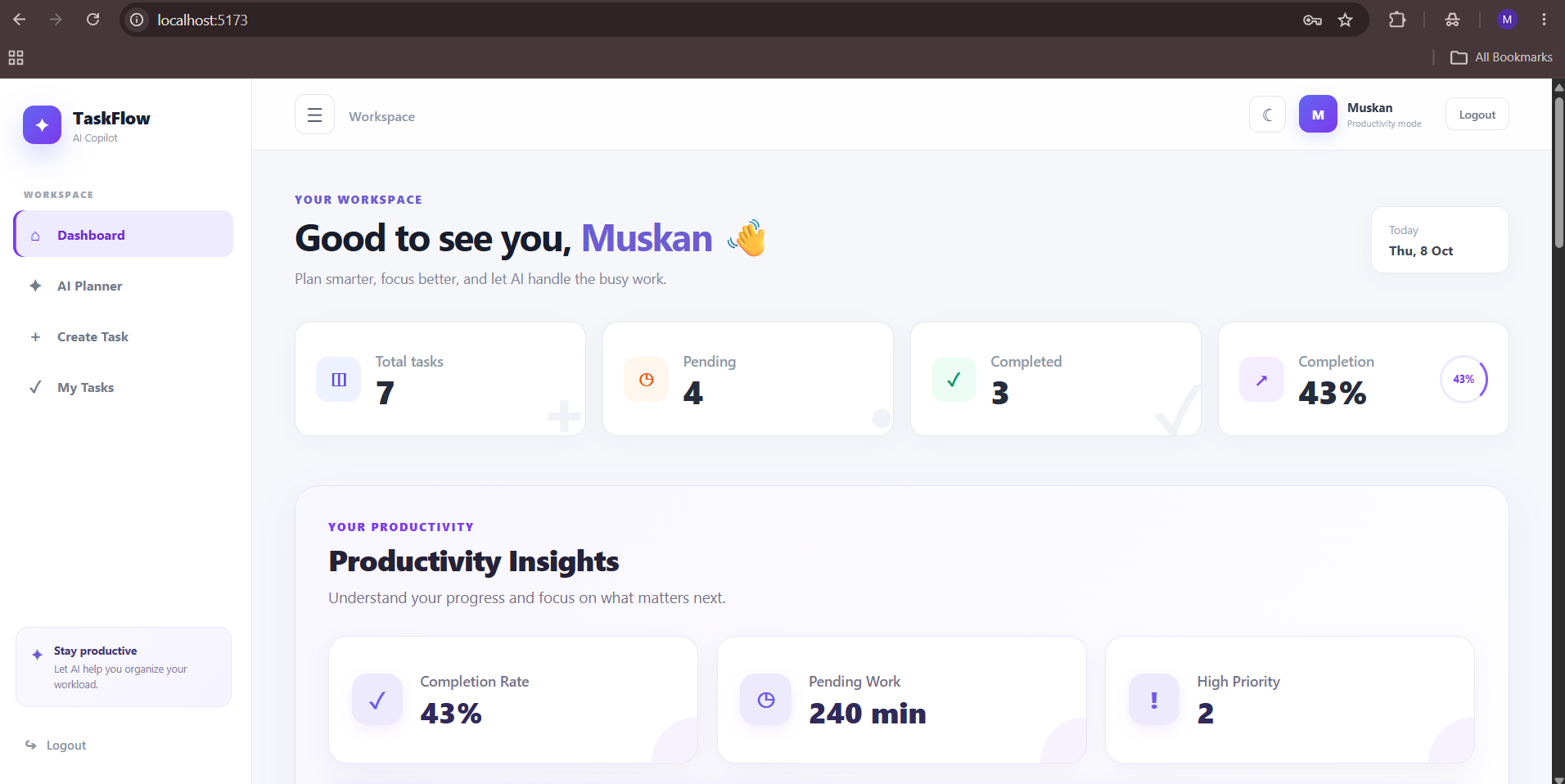
TaskFlow dashboard for managing tasks, tracking progress, and getting a clear overview of daily productivity.
-
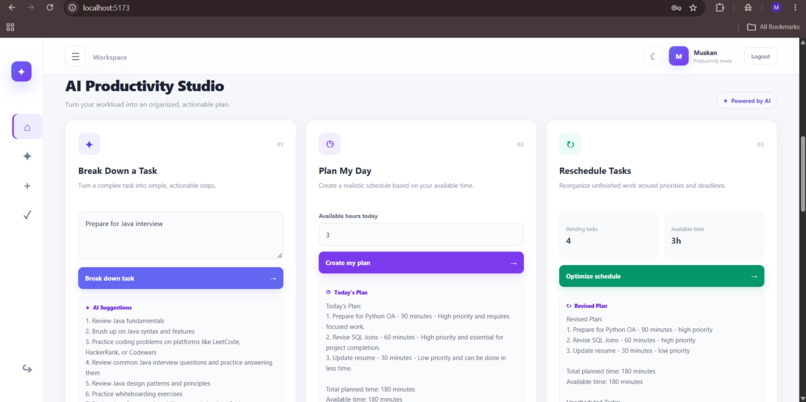
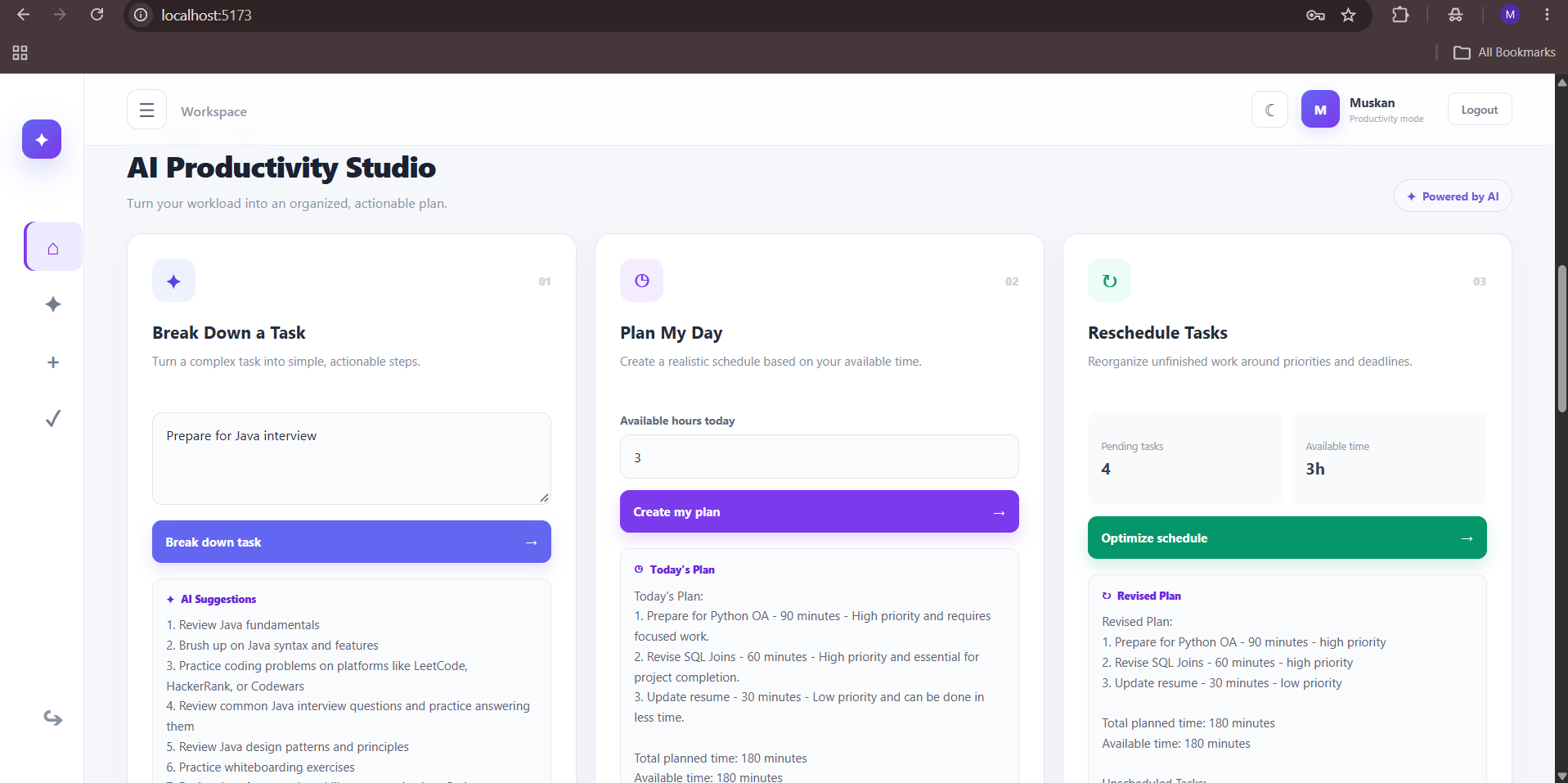
AI-powered tools for breaking down tasks, creating daily plans, and intelligently rescheduling pending work.
-
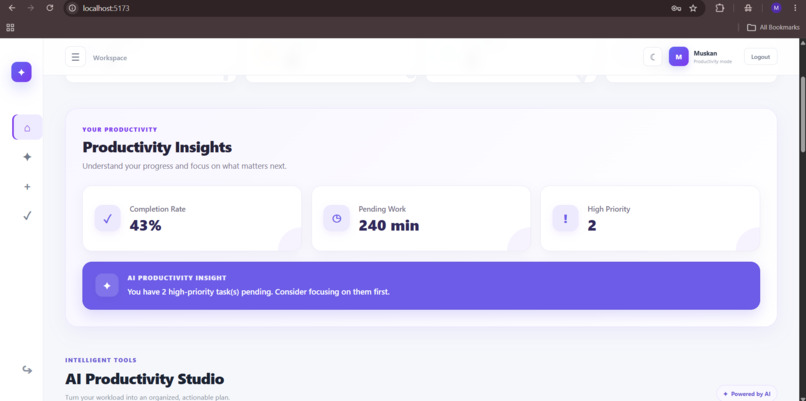
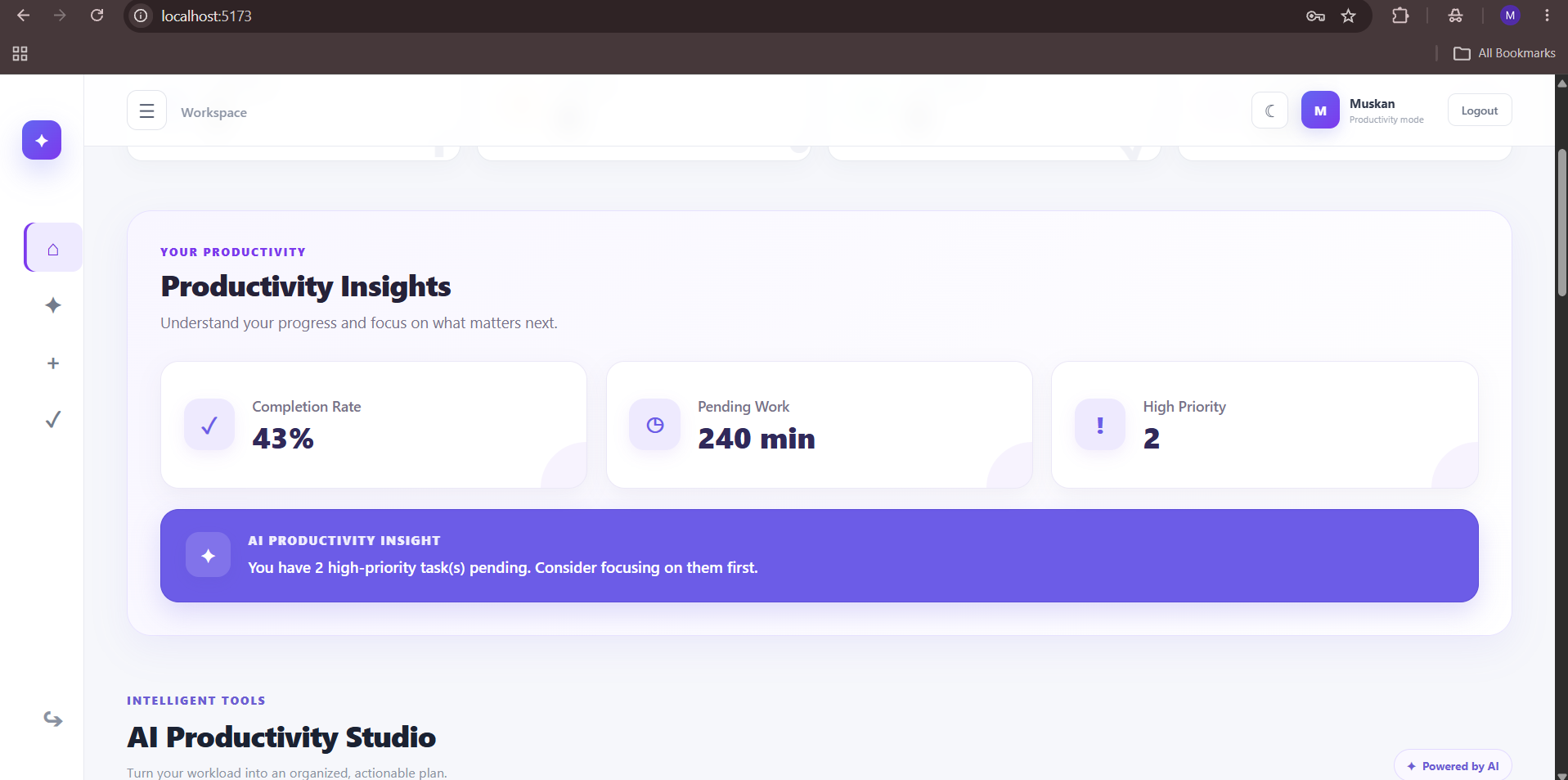
Track completion rate, pending workload, and high-priority tasks with actionable productivity insights.
-
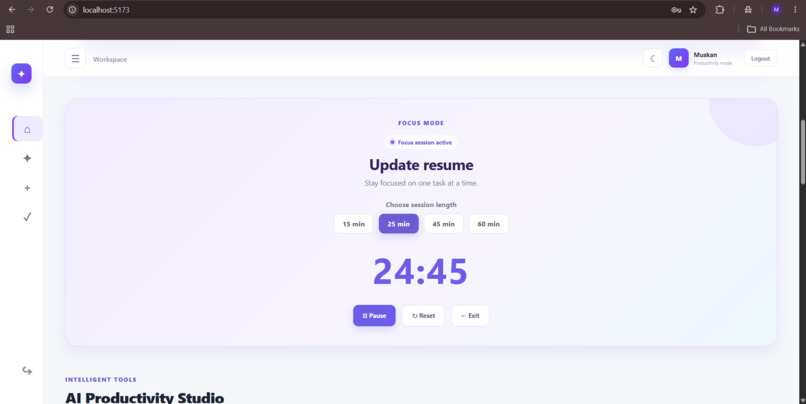
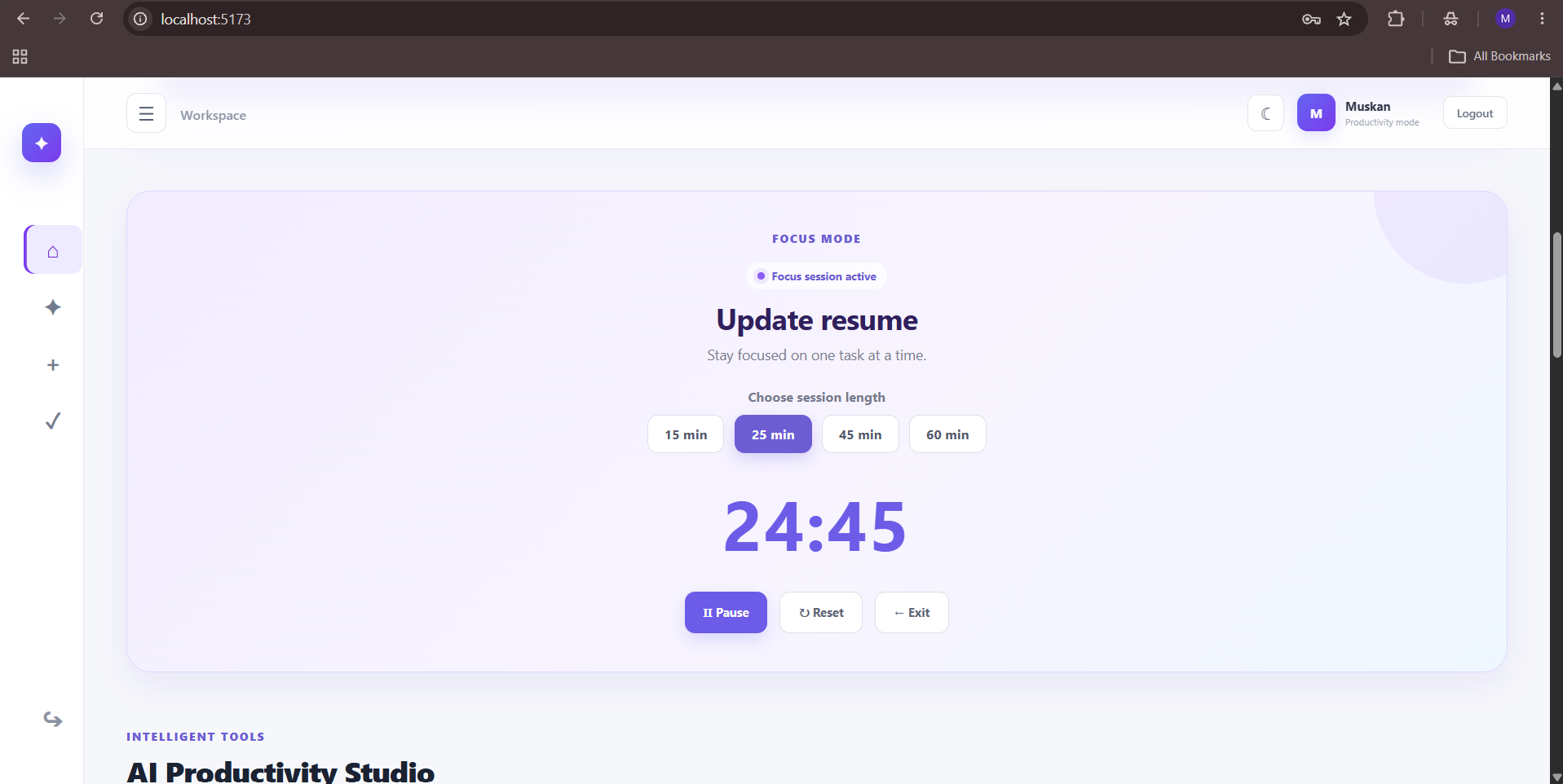
A dedicated focus timer that helps users concentrate on one task at a time and stay productive.
Inspiration
Managing multiple tasks can become difficult when there are different priorities, deadlines, and limited time available. A normal to-do list can store tasks, but it does not always help users decide what to work on first or how to adjust their plans when things change.
We wanted to build something that could go beyond a basic task manager by using AI to assist with planning and prioritization. This led us to build TaskFlow - AI Productivity Copilot.
What it does:-
TaskFlow combines task management with AI-powered productivity assistance.
Users can create tasks with details such as priority, deadline, and estimated time. TaskFlow provides:
- AI Task Breakdown to break larger tasks into manageable steps.
- AI Daily Planning to create a plan based on task priorities and available time.
- AI Rescheduling to help reorganize pending work when schedules change.
- Productivity Insights showing completion rate, pending workload, and high-priority pending tasks.
- Focus Mode with a customizable timer for focused work sessions.
- User Authentication for individual accounts and protected task data.
- Persistent Storage using PostgreSQL.
- Light and Dark Mode with a responsive interface.
How we built it:-
TaskFlow was developed as a full-stack web application.
Frontend: React, Vite, JavaScript, CSS
Backend: Python, FastAPI, SQLAlchemy
Database: PostgreSQL
AI : Ollama with Llama 3.2
Authentication: JWT and bcrypt/Passlib
The React frontend communicates with the FastAPI backend through REST APIs. User and task information is stored in PostgreSQL, while the AI features use a locally running Llama 3.2 model through Ollama.
Challenges we ran into:-
One of the main challenges was integrating AI into an actual productivity workflow instead of making it a separate chatbot-like feature.
We needed to connect task information such as priority, estimated time, and available time with the AI-powered planning features. We also had to handle authentication, database operations, API communication, and frontend state management while keeping the application simple to use.
Another challenge was testing and debugging the different parts of the full-stack application together.
Accomplishments that we're proud of-
We are proud of building a complete working productivity application rather than only an AI prototype.
TaskFlow brings together task management, AI task breakdown, daily planning, rescheduling, productivity insights, and Focus Mode in one application. We also implemented user authentication, persistent database storage, responsive design, and light/dark mode.
Most importantly, we were able to take the idea from development to a functional application that can be used to manage real tasks.
What we learned
Building TaskFlow helped us understand how AI can be integrated into a complete software application.
We gained practical experience with:
Building REST APIs using FastAPI, Connecting React with a Python backend, Working with PostgreSQL and SQLAlchemy, Implementing JWT authentication, Integrating a local LLM using Ollama, Designing AI-assisted workflows, Managing frontend and backend integration, Testing and debugging a full-stack application
We also learned that useful AI features depend not only on the model, but also on how the application provides context and presents the results to the user.
What's next for TaskFlow - AI Productivity Copilot
Future improvements could include smarter scheduling based on longer-term work patterns, calendar integration, improved task prioritization, and more personalized productivity recommendations.
The goal is to make TaskFlow increasingly useful as a personal productivity assistant while keeping the experience simple and practical.
Built With
- css
- fastapi
- javascript
- jwt
- llama-3.2
- ollama
- postgresql
- python
- react
- restapi
- sqlalchemy
- vite

Log in or sign up for Devpost to join the conversation.