-
-
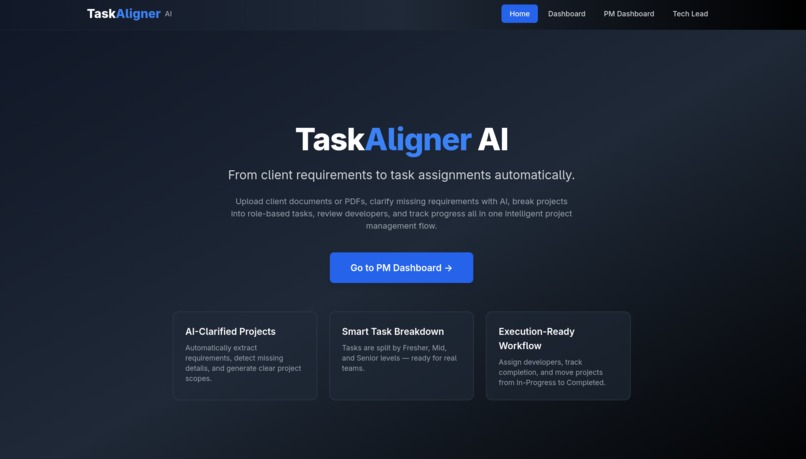
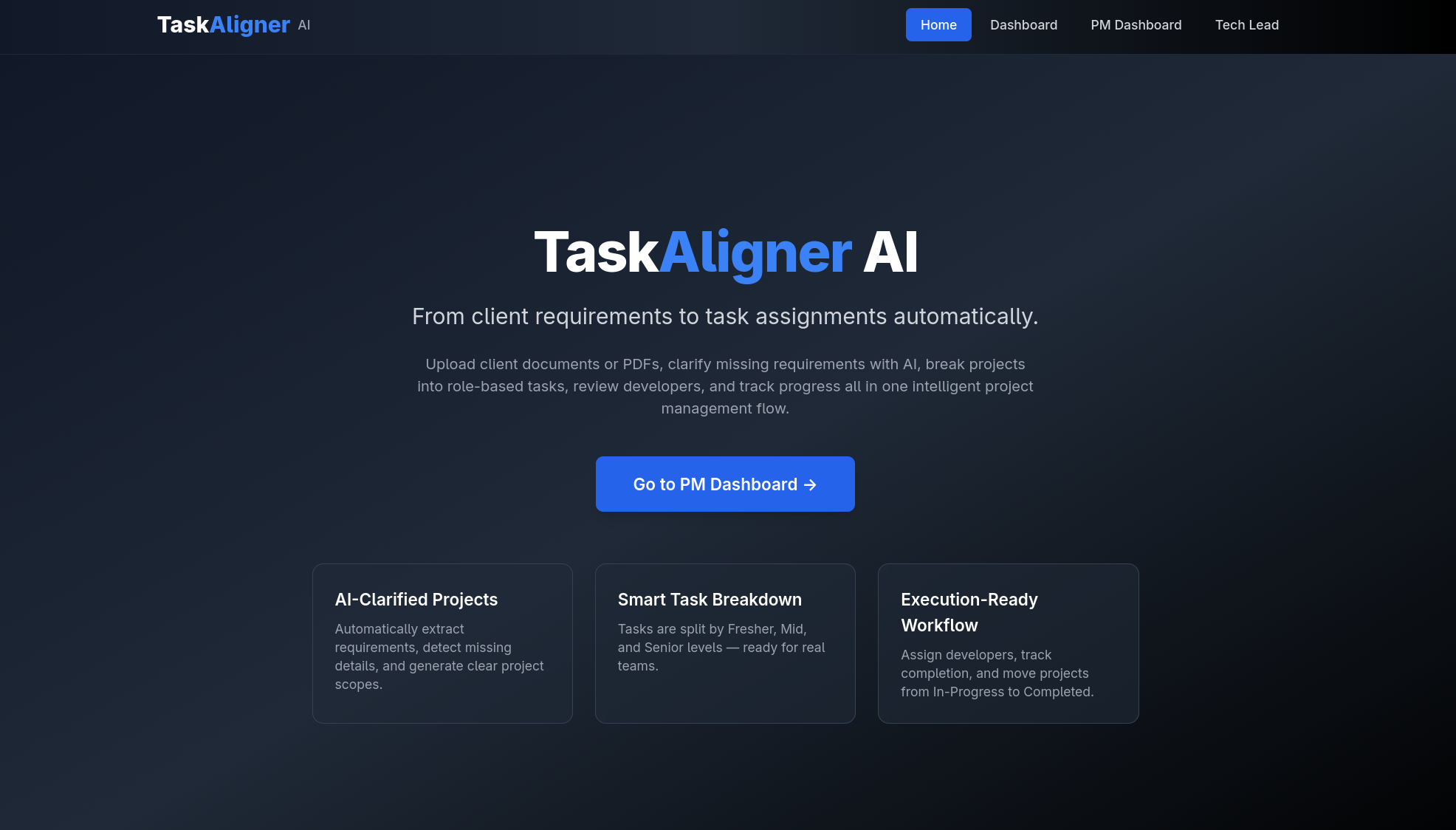
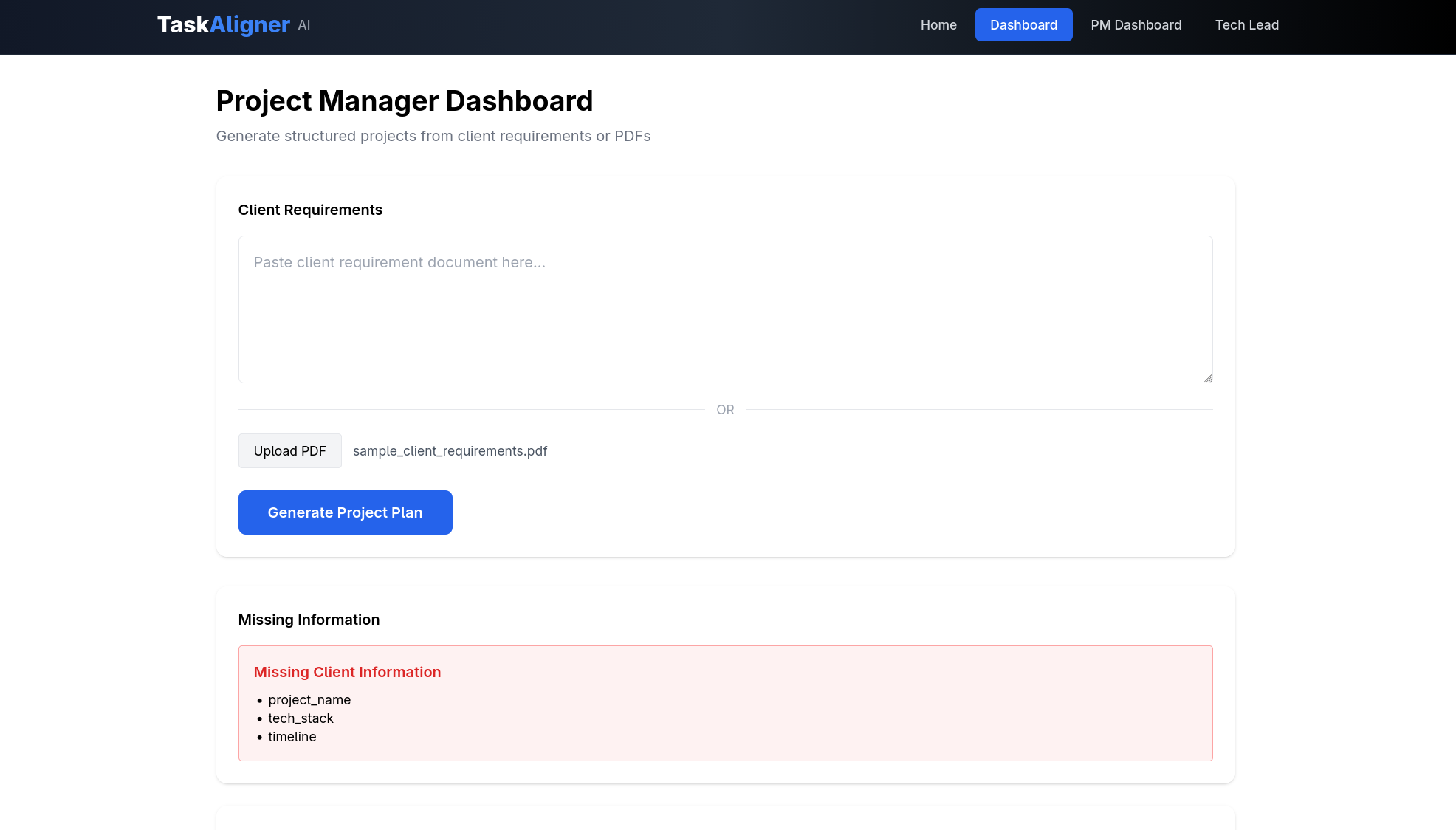
home page
-
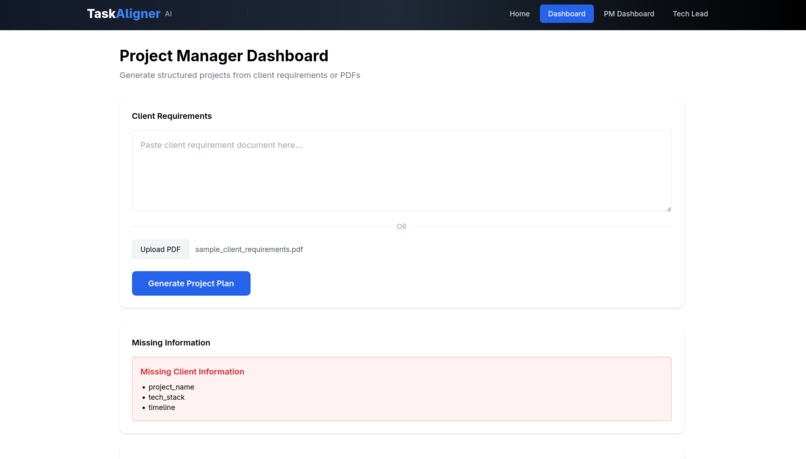
client pdf classification
-
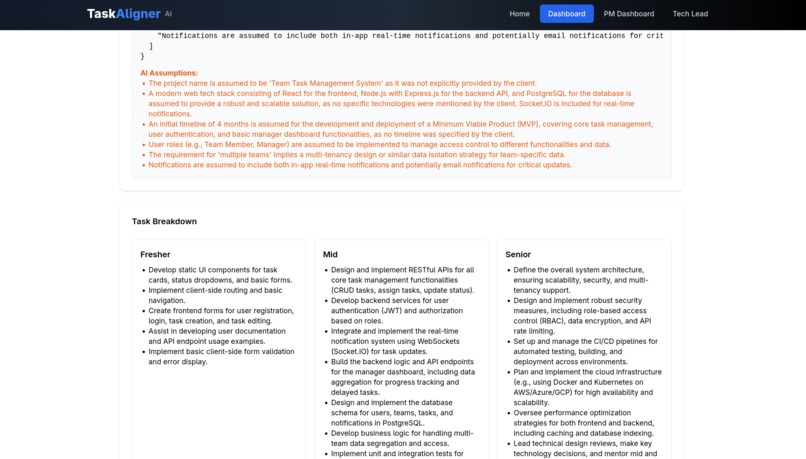
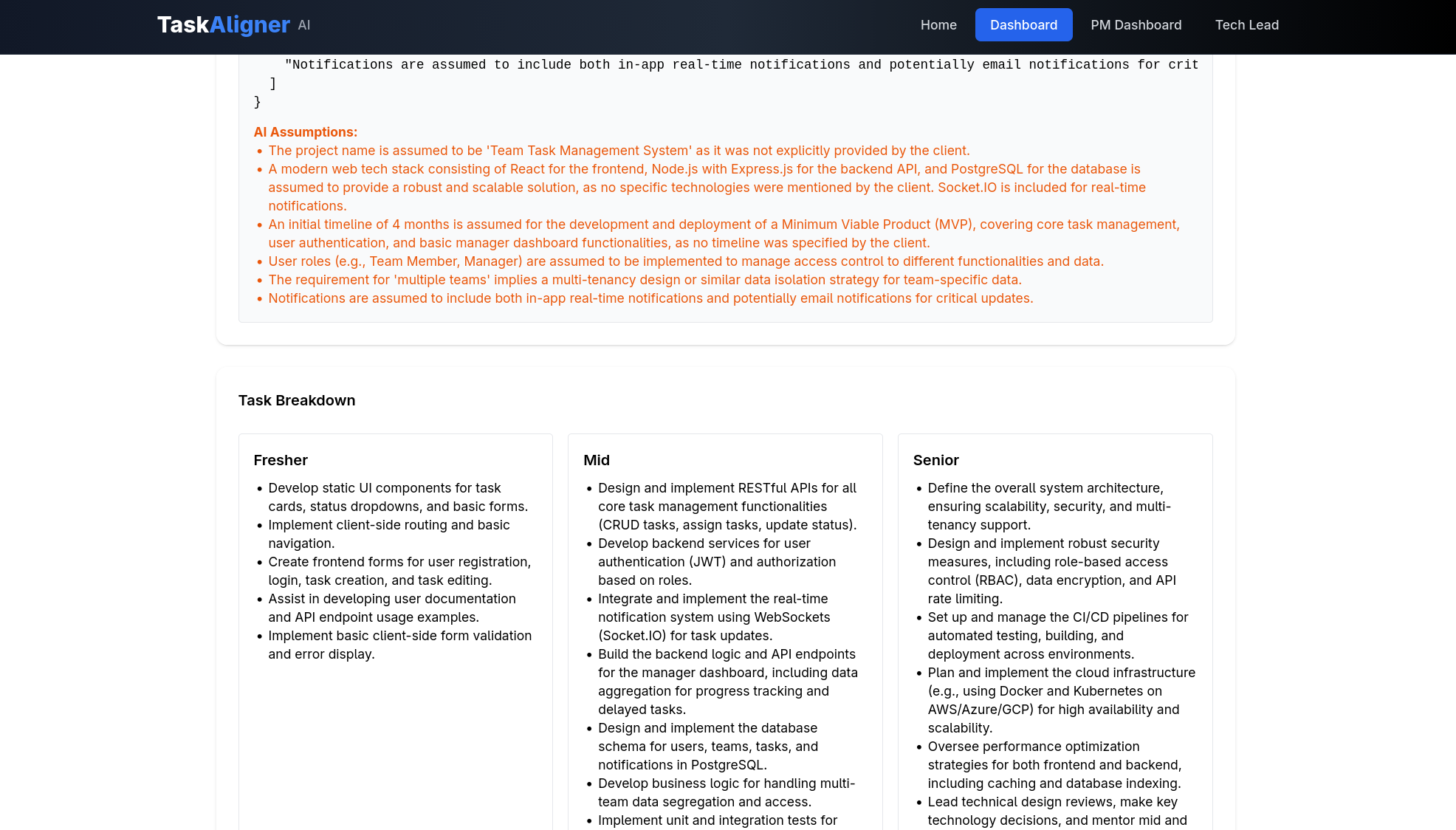
client task breakdown
-
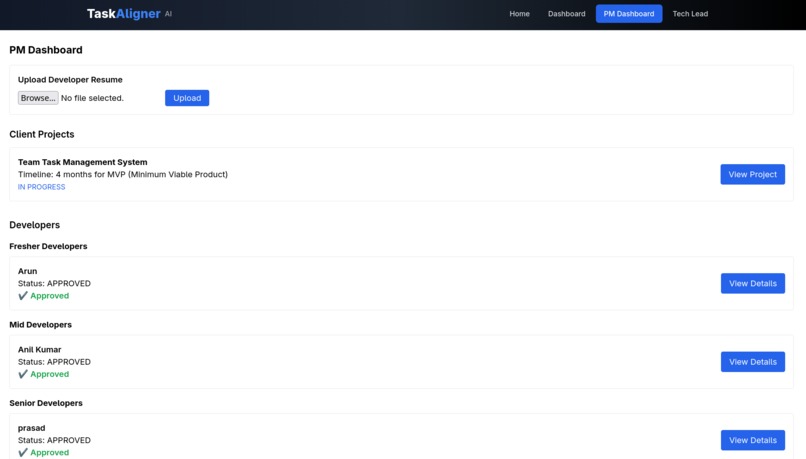
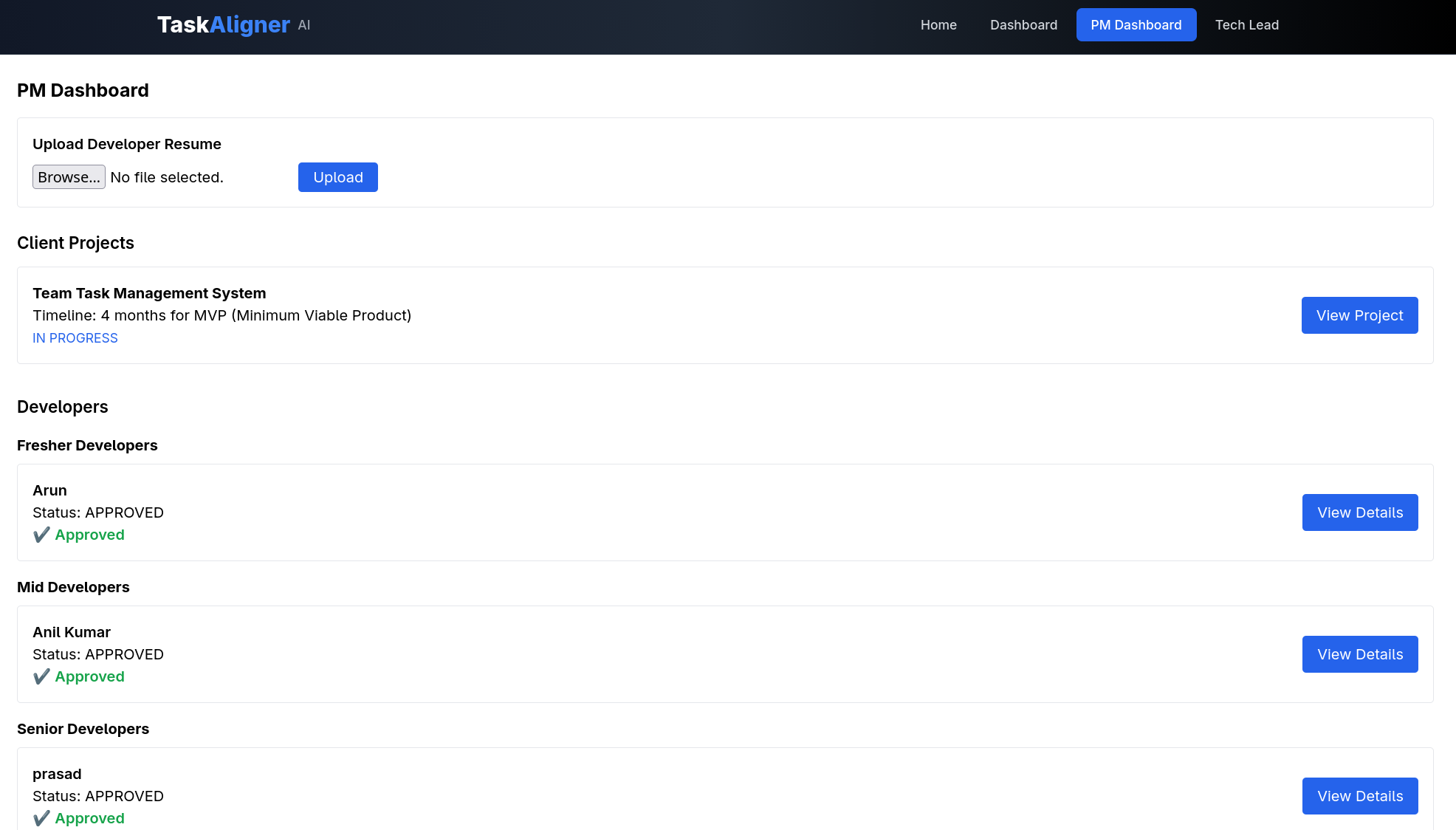
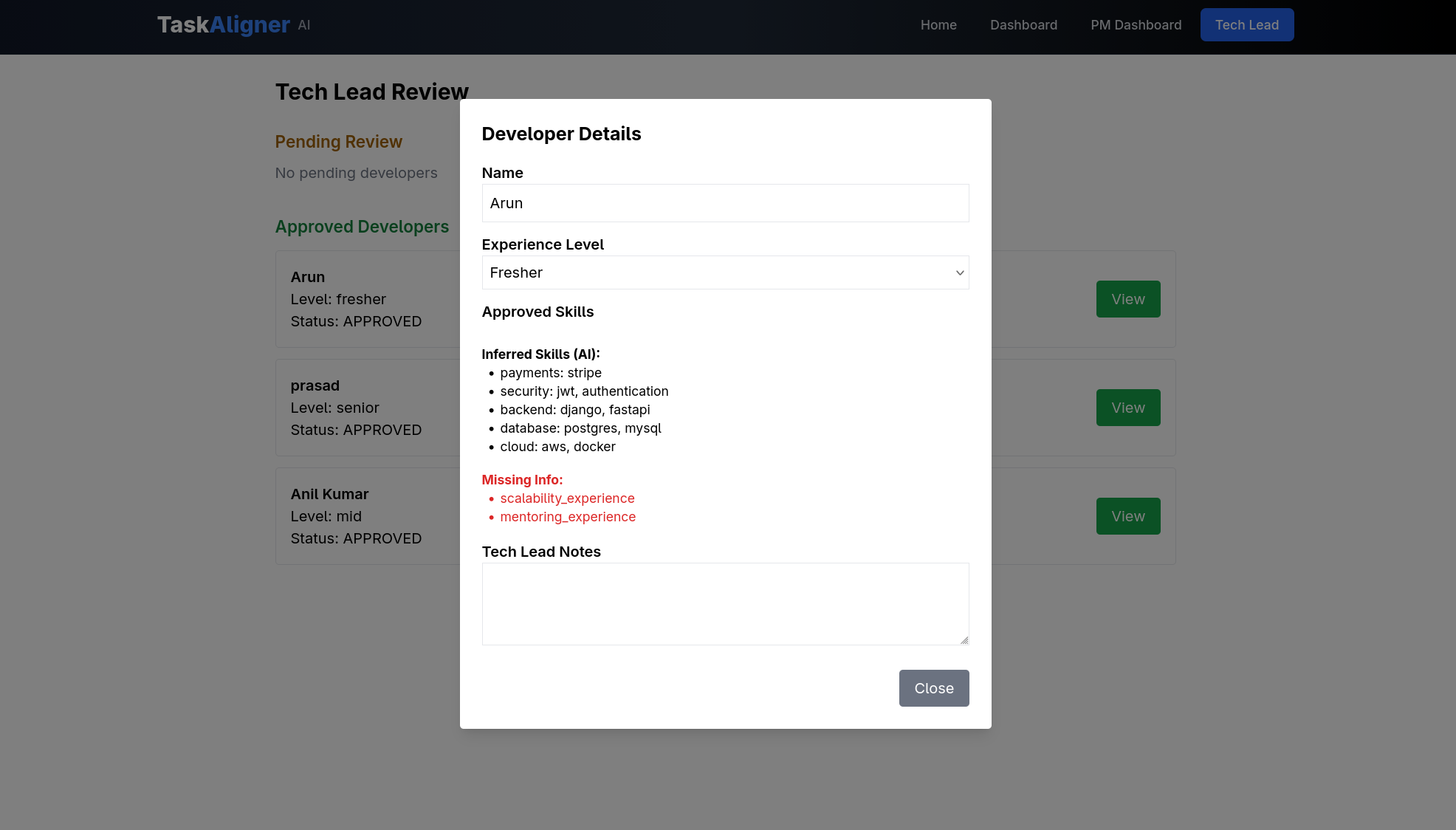
developer resume upload,project listing,developer details
-
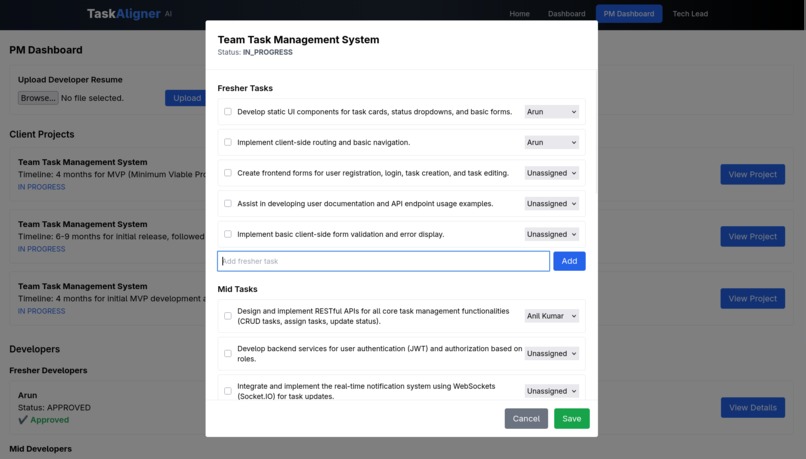
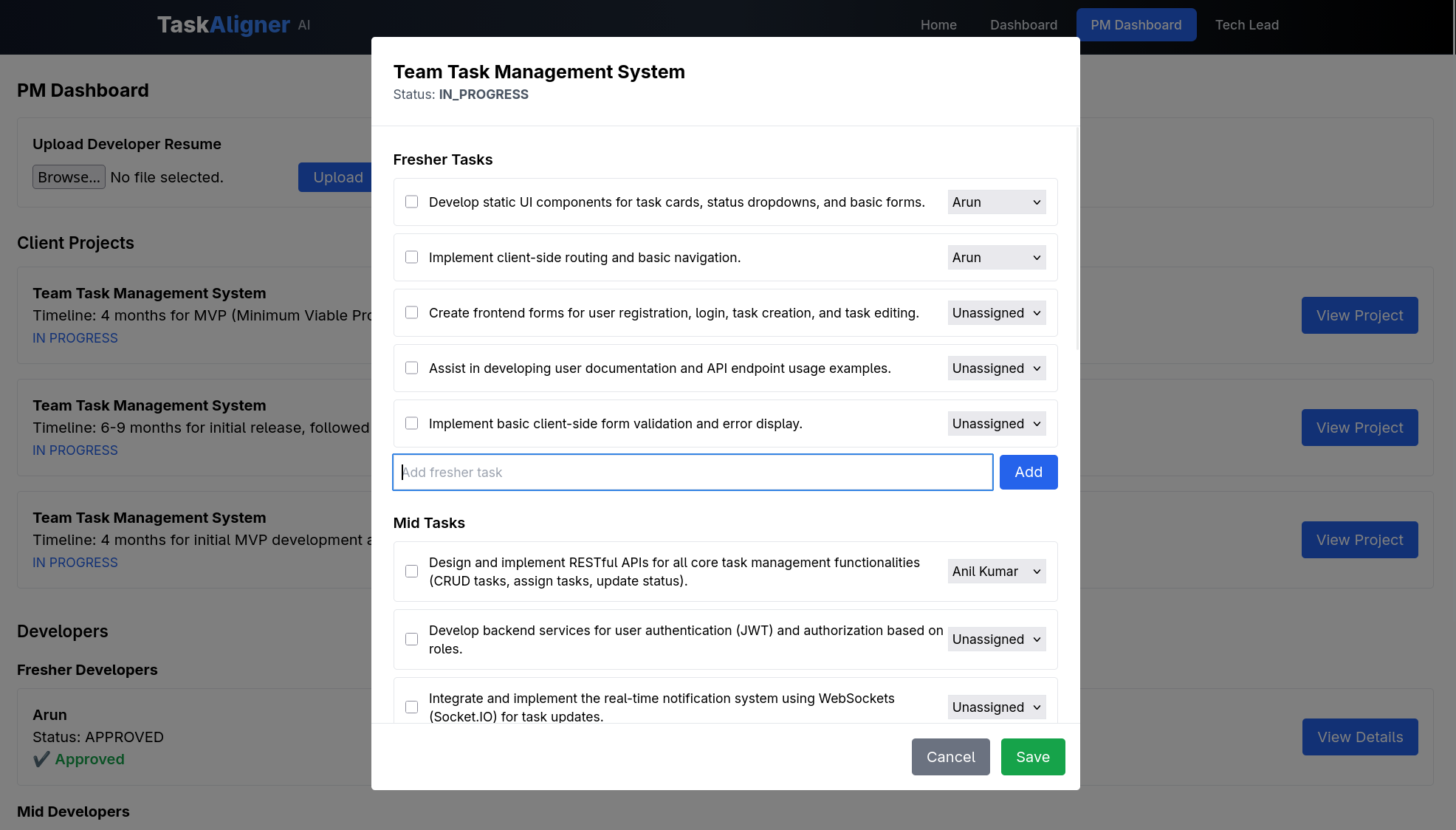
project task assignment
-
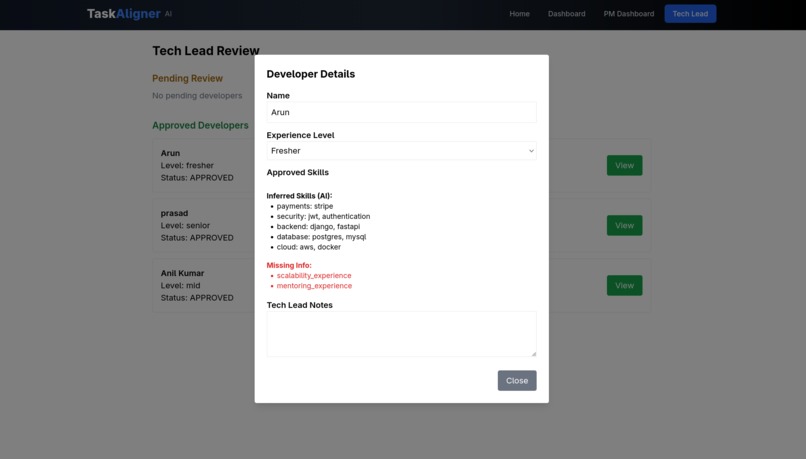
developer details
-
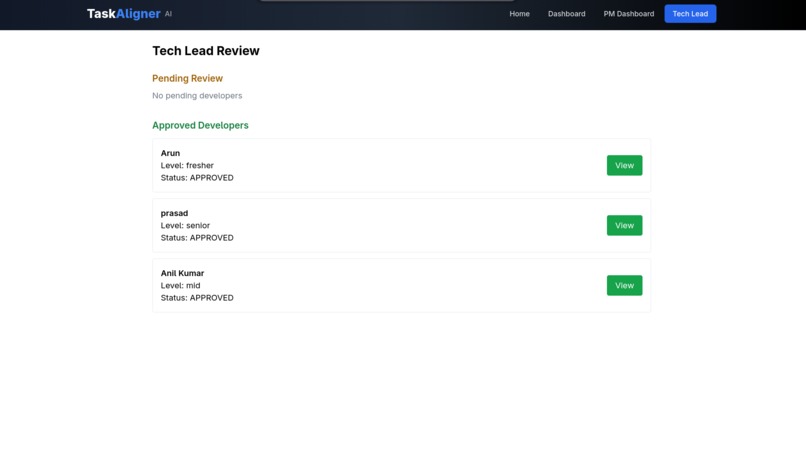
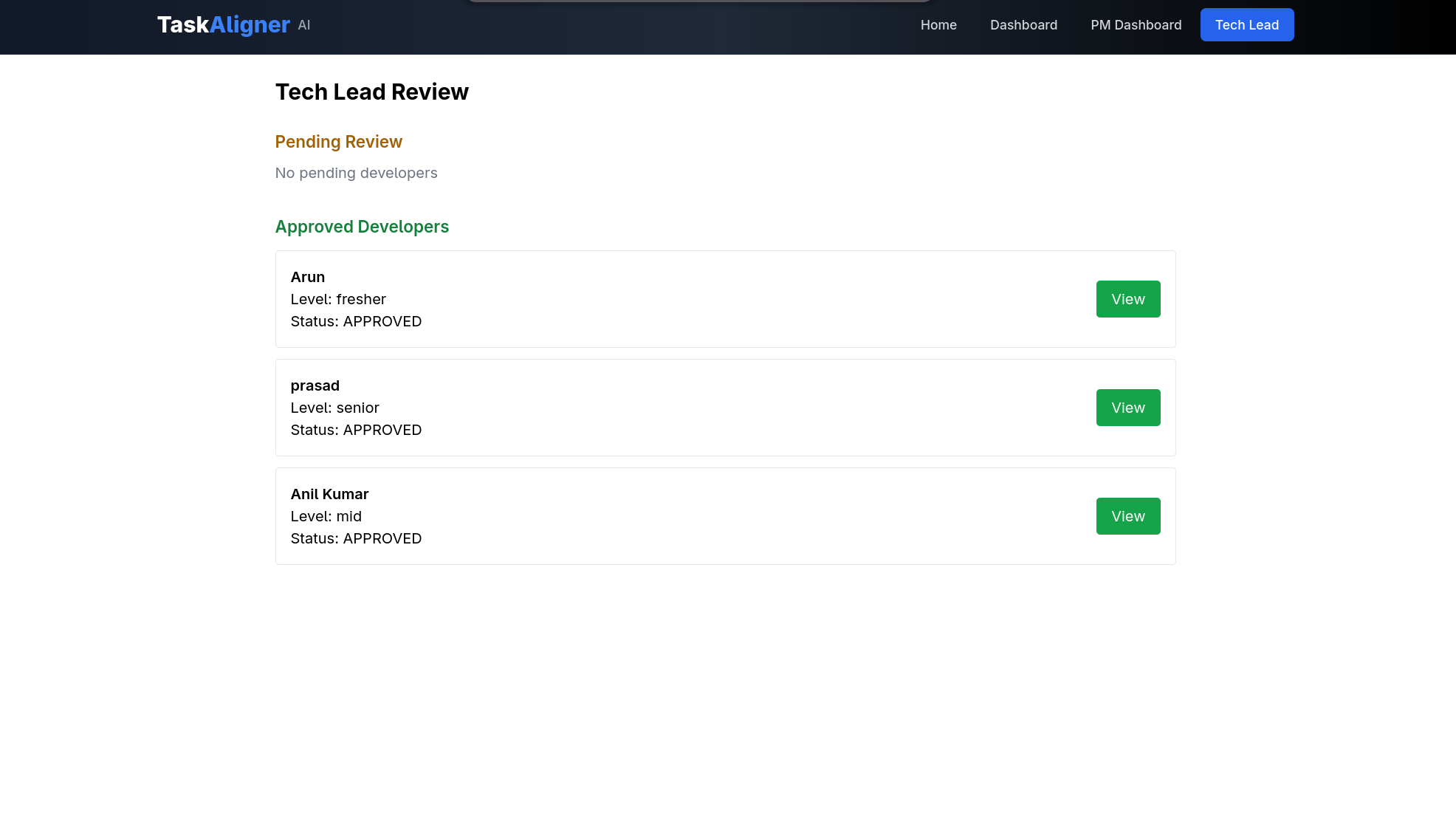
tech lead review dsahboard
Inspiration
In real projects, one of the biggest bottlenecks happens before coding even starts. Client requirements are often messy spread across documents, PDFs, chats, and emails. Project Managers spend hours clarifying missing details, breaking work into tasks, and deciding who should do what. At the same time, developers get tasks without proper context, and Tech Leads must manually verify skills from resumes.
-> We were inspired to build TaskAligner AI to answer a simple question: What if client documents could directly become structured, assignable project plans? Our goal was to reduce friction between clients, PMs, Tech Leads, and developers by automating the most error-prone early stages of project planning.
What it does
TaskAligner AI converts unstructured client input into execution-ready projects.
-> It allows users to:
- Upload text or PDF client requirements
- Automatically extract requirements and detect missing information
- Generate a clear project summary with assumptions
- Split work into Fresher, Mid, and Senior-level tasks
- Create persistent projects with progress tracking
- Upload developer resumes and extract skills without using LLMs
- Allow Tech Leads to review, edit, and approve developers
- Assign approved developers to tasks
- Track task completion, automatically updating project status The result is a complete workflow from raw client documents to finished projects.
How we built it
Frontend
- React with Tailwind CSS
-> Modular dashboards:
- AI Generation Dashboard
- PM Dashboard
- Tech Lead Review Dashboard
- Modal-based task assignment and editing -Real-time UI state updates
Backend
- FastAPI (Python)
-> REST APIs for:
- Document processing
- Project creation and updates
- Developer parsing and approval
- In-memory storage for MVP simplicity
AI & Parsing
-> Gemini API for:
- Requirement extraction
- Missing field detection
- Project summarization
- Role-based task breakdown -> Non-LLM resume parsing using rule-based techniques for:
- Name
- Experience level
- Skill inference from project history This hybrid approach reduces API cost and improves reliability.
Challenges we ran into
- LLM rate limits on free tiers forced us to redesign prompts and merge multiple steps into a single AI call.
- Handling React StrictMode caused duplicate UI updates during development.
- Normalizing mixed data structures (string vs object tasks) while maintaining backward compatibility.
- Designing task completion logic where project status must be derived, not manually set.
- Balancing automation with human oversight, especially for skill validation.
Accomplishments that we're proud of
- Built a complete PM → Tech Lead → Execution workflow
- Reduced AI calls while preserving output quality
- Designed a system where AI assists but humans control final decisions
- Implemented automatic project completion logic based on task state
- Delivered a product that feels usable in real teams, not just a demo
What we learned
- AI is most effective when paired with clear constraints and human review
- Derived state (like project status) must have one source of truth
- UX matters as much as models clarity builds trust
- Not every problem needs an LLM (resume parsing was a great example)
What's next for TaskAligner AI
-> Planned next steps include:
- Persistent database storage (PostgreSQL)
- Skill-based auto-assignment recommendations
- Project progress analytics and timelines
- Notifications for task completion
- Role-based access control
- Organization-level dashboards
- Export to tools like Jira or GitHub Issues


Log in or sign up for Devpost to join the conversation.