-
-
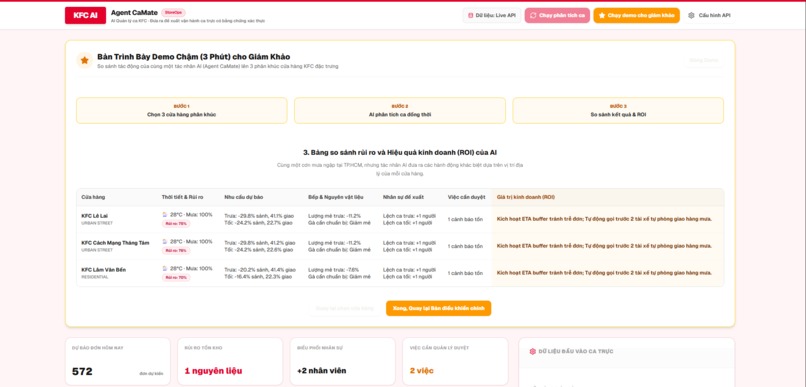
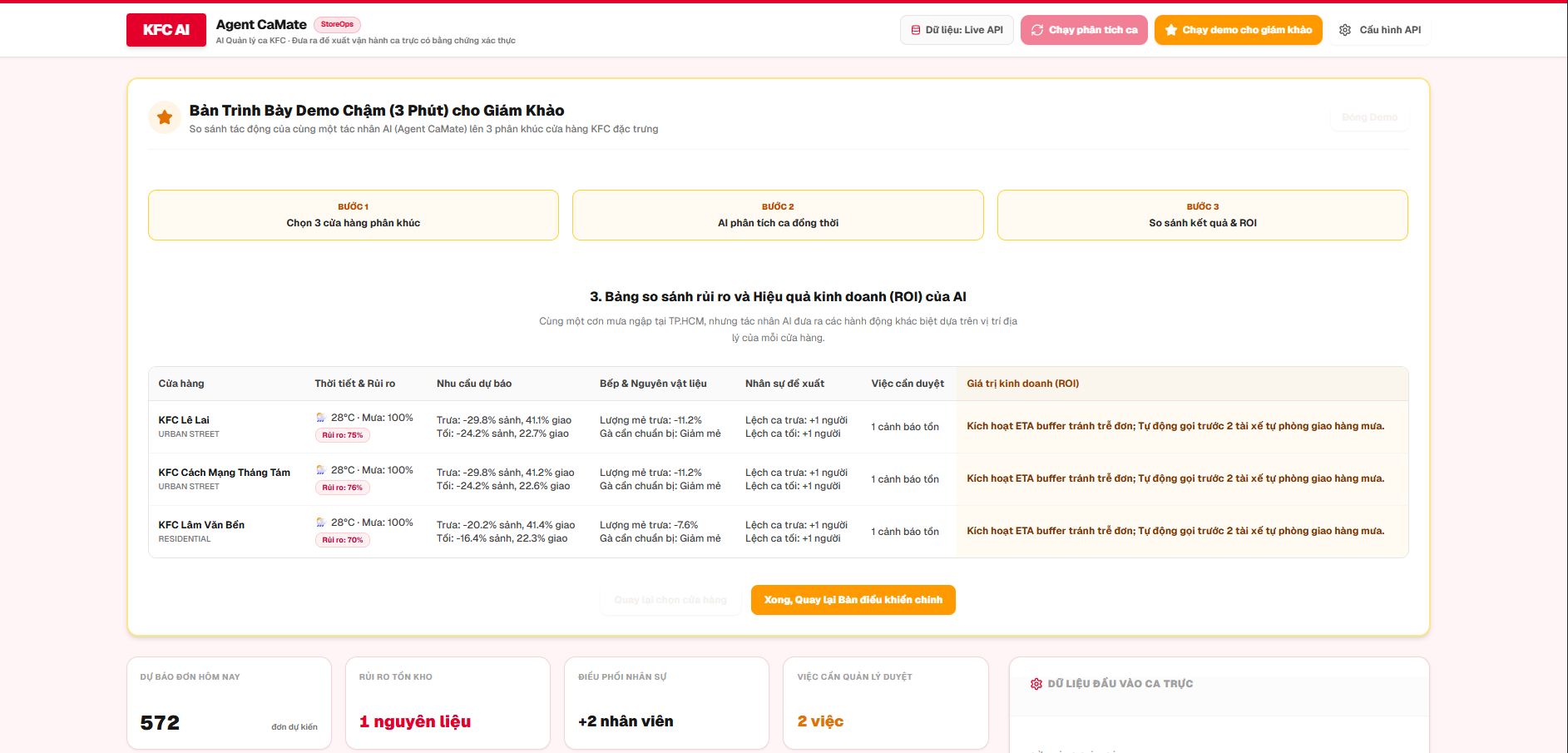
so sánh các chi nhánh (quản lý tổng thể)
-
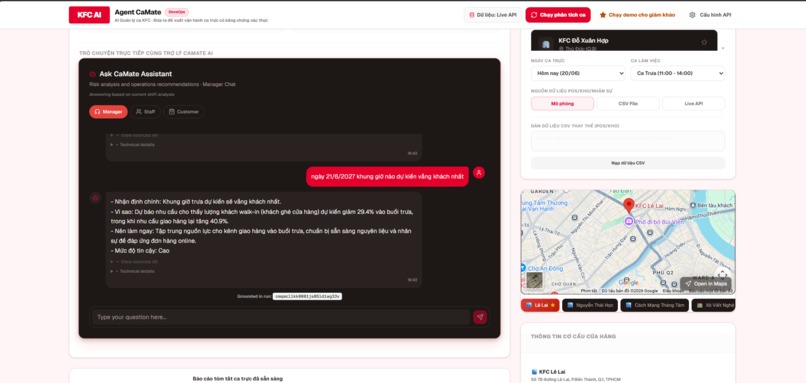
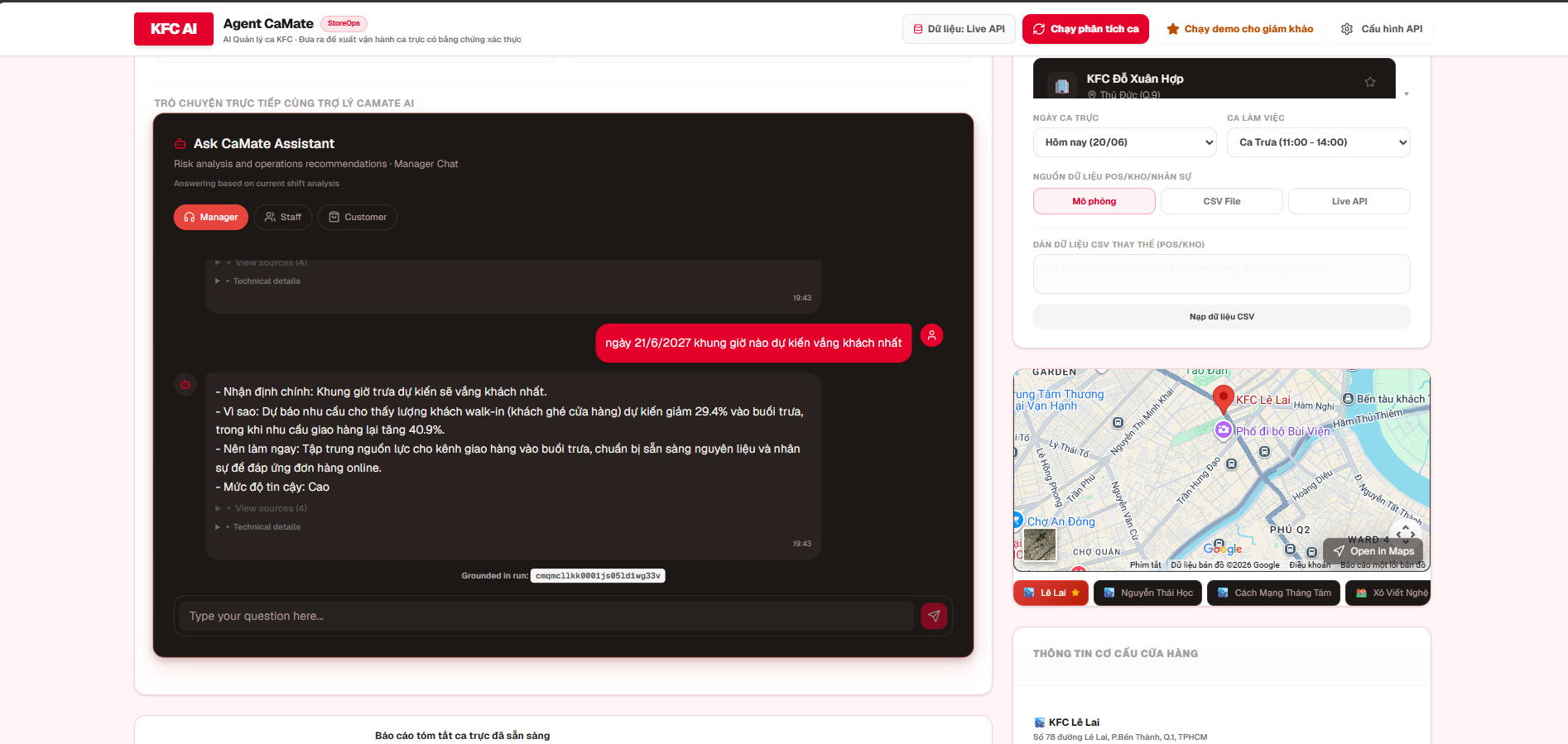
chat Agent hỗ trợ quản lý
Inspiration
Fast-food store managers make many small decisions before every busy shift: how much food to prepare, whether delivery demand will rise, whether staffing is enough, and which actions need approval. A simple weather change, especially rain, can quickly shift customer behavior from dine-in to delivery or takeaway.
Agent CaMate was inspired by this daily store operations problem. Instead of building another chatbot, we wanted to build an AI agent that helps KFC shift managers answer one practical question:
What should my store do today, and why?
What it does
Agent CaMate is a StoreOps Decision Agent for KFC shift managers. It turns weather, demand, inventory, and staffing signals into clear, evidence-backed action plans for each store shift.
The agent can recommend:
- Preparation changes before rush hour
- Inventory and packaging readiness actions
- Staffing adjustments that require manager approval
- Delivery-focused actions when rain increases delivery pressure
- Campaign focus, such as prioritizing delivery bundles over dine-in promotions
- A manager briefing that can be exported and shared
High-impact actions are not executed automatically. They are shown as draft actions that require manager approval.
How we built it
We built Agent CaMate as a Next.js and TypeScript web app with a structured AI agent workflow.
The core agent loop is:
Observe → Reason → Plan → Act → Verify → Report → Learn
The system observes store context, live weather signals, and operations baseline data. It then reasons about demand shifts, plans inventory, staffing, delivery, and campaign actions, verifies risk and approval requirements, and reports the final plan with evidence.
The project includes:
- Next.js and React for the web app
- TypeScript for typed agent state and workflow logic
- Prisma and SQLite for local run history
- Open-Meteo API for live weather signals
- Sponsor API-ready adapter for future hackathon data
- CSV fallback and demo fallback modes
- A runId-based “Ask this plan” assistant grounded in the current agent run
- An admin integration page for configuring data sources
Challenges we ran into
One challenge was making the product feel like a real agent instead of a dashboard with a chatbot. We solved this by centering the experience around the store manager’s daily decision flow: select store, run plan, review actions, check evidence, approve sensitive actions, and export a briefing.
Another challenge was avoiding overclaiming. Since sponsor APIs may not be connected during local testing, Agent CaMate clearly labels whether data is live, CSV, demo, or fallback. The agent does not pretend demo data is real KFC POS data.
We also had to design a human-in-the-loop approval flow. Staffing changes, supplier orders, campaign actions, and customer-facing replies should not be executed automatically without manager review.
Accomplishments that we're proud of
We are proud that Agent CaMate goes beyond simple chat. It has a typed StoreOps workflow, tool-based data loading, fallback handling, evidence trace, run history, and manager approval states.
The app also supports a clearer non-technical interface. The main screen focuses on:
- Today’s signals
- Today’s action plan
- Manager approval required
- Why the agent recommends this
- Ask this plan
- Export briefing
This makes the product easier for store managers and judges to understand quickly.
What we learned
We learned that a useful AI agent for store operations needs more than a good model response. It needs reliable inputs, source labels, confidence, workflow state, tool usage, and human approval.
We also learned that UI matters a lot. If the interface shows too many technical details, the user may not understand what action to take. For store managers, the best agent is not the one that explains the most, but the one that helps them make the right decision quickly and safely.
What's next for Agent CaMate
Next, we would connect Agent CaMate to official sponsor APIs for real POS, inventory, staffing, and order data. We would also add post-shift outcome tracking so the agent can compare recommendations with actual results such as orders, waste, stockout, delivery delay, and manager feedback.
Future improvements include:
- Real sponsor API integration
- Role-based access control
- Stronger approval logs
- Actual KPI feedback loop
- Better mobile/tablet layout for store managers
- More store operation scenarios beyond rainy-day demand shifts
Built With
- agent
- ai
- csv-fallback
- next.js
- open-meteo-api
- prisma
- react
- sponsor-api-ready-adapter
- sqlite
- storeops-workflow
- tailwind-css
- typescript
