-
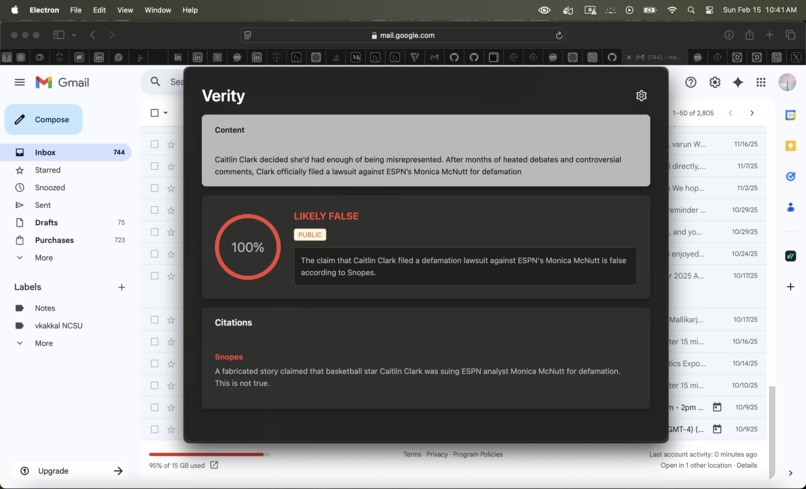
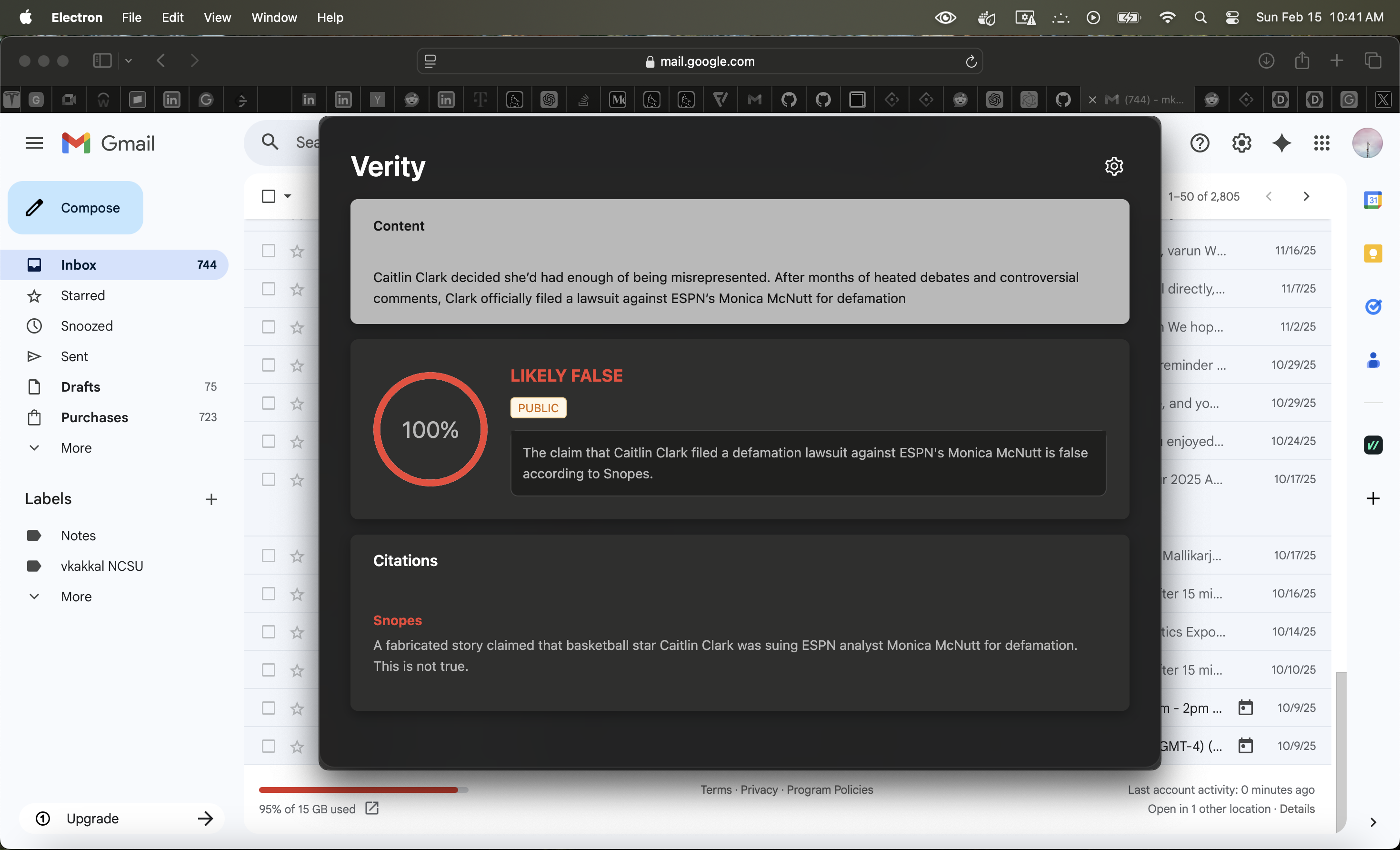
A false claim that was factchecked.
-
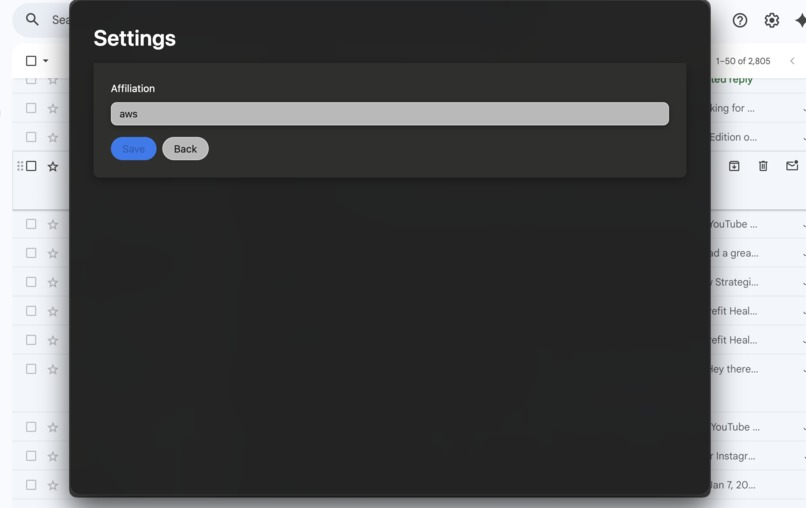
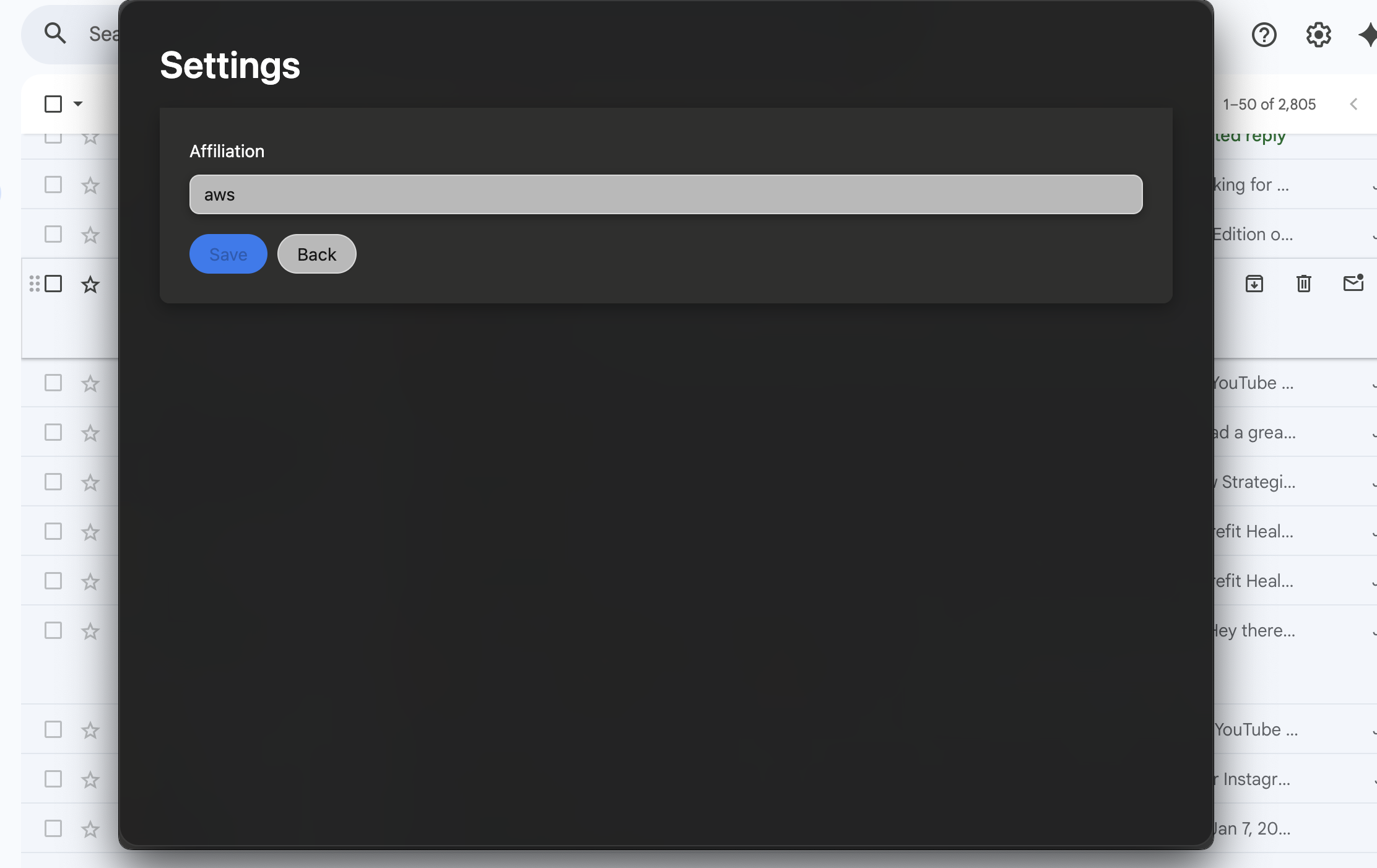
The settings page to mention posix groups and RAG configuration.
-
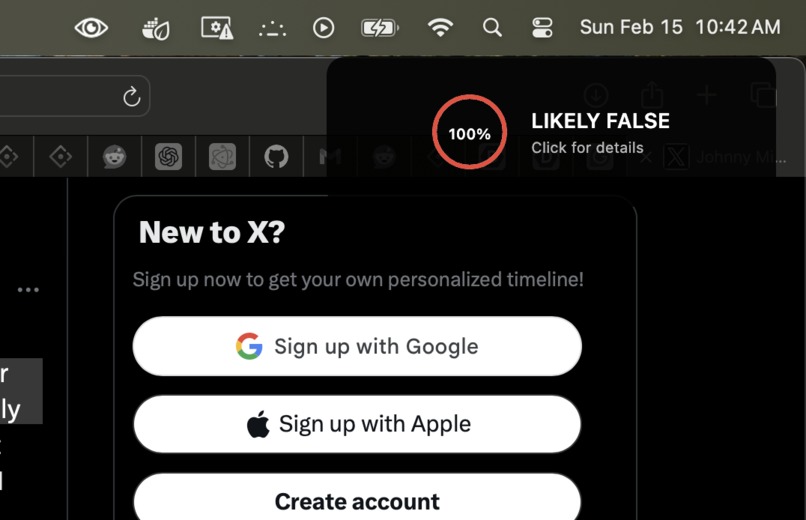
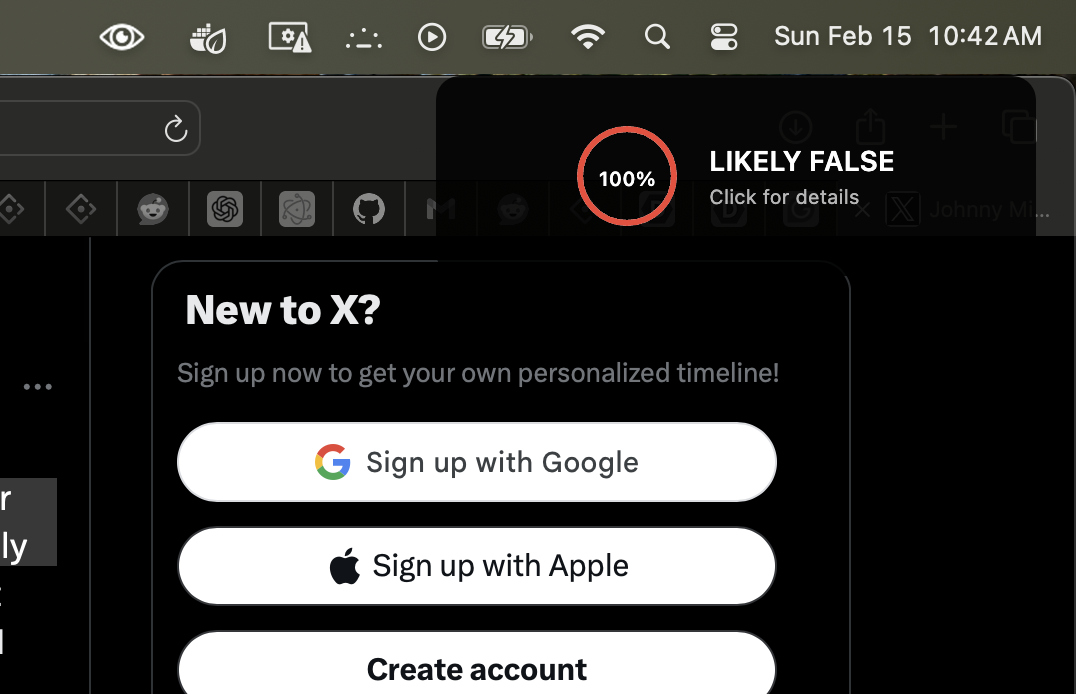
Mini Popup that opens to the main dashboard.
-
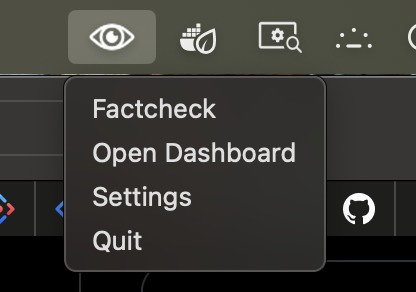
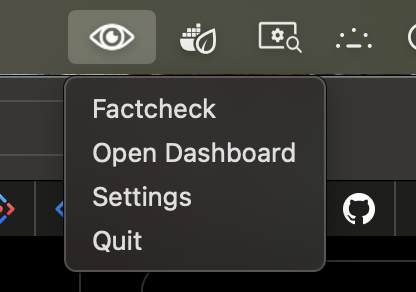
Runs constantly in the background and can be triggered with keyboard shortcuts.
Inspiration
We live in a copy paste world where people share tweets, forward WhatsApp messages, paste statistics, use AI generated content, and write claims in emails or sales pitches without verifying them. Fact checking is slow , we have to search manually, read multiple sources, and compare interpretations , so most people skip it. Meanwhile, inside companies, employees quote outdated specs, sales teams claim unapproved certifications, marketing uses old numbers, and compliance rules get misunderstood. We realized the public needs fast, frictionless fact checking and companies need internal truth enforcement. so we built a tool that verifies copied text instantly, like spell-check but for truth.
What it does
Our platform agnostic fact checker uses clipboard monitoring to automatically read any text you copy whether it’s from a browser, gmail, notion, twitter, or any other app, without requiring any platform specific integration. It performs dual layer fact checking through two independent verification systems:
- A Public RAG layer that searches trusted online sources using embeddings and retrieval to validate factual accuracy and flag misinformation 2.Internal Company RAG layer that checks the company knowledge base, policies, product specs, and compliance rules to flag contradictions.
- So if someone writes, “Our platform is SOC2 certified,” it verifies whether that claim is publicly accurate and internally approved.
How we built it
Our main challenge was building a platform-agnostic application that could run locally. To accomplish this, we used ElectronJS for the frontend and osascripts to execute and simulate OS-level commands for capturing and fetching clipboard data. On the backend, we opted for a serverless architecture to maximize scalability, utilizing AWS Lambda functions running Flask servers to fact-check and cite our sources. We've integrated backboard.io's AI to assist with citation and summarization. Additionally, we leveraged AWS Bedrock to implement a Retrieval-Augmented Generation (RAG) pipeline, enabling fact-checking against organization-specific data by grounding responses in a curated internal knowledge base.
Challenges we ran into
One of our primary challenges was designing a truly platform-agnostic solution that could operate seamlessly across different operating systems and work with any application on a user’s system, without being tightly coupled to a specific app. A key technical hurdle was ensuring reliable text clipping and retrieval across environments. On the backend however we were trying to architect services capable of handling high levels of concurrency while efficiently supporting multiple RAG-based knowledge bases and testing cases where they fall back to public knowledge bases.
Accomplishments that we're proud of
One of the biggest wins was making fact checking feel natural instead of disruptive. Getting Verity to work at the clipboard level across different apps and environments meant users didn’t have to change how they work just to verify something. On the enterprise side, enabling organizations to reuse their existing knowledge bases made onboarding significantly easier and avoided the need to recreate documentation or retrain models. Building a single system that can handle both public claims and internal verification, while cleanly switching between them, was harder than expected but added a lot of flexibility. Most importantly we, as a team, are proud of delivering a practical, end-to-end solution under tight hackathon constraints, not just a proof of concept.
What we learned
Concurrency is Key for UX: We learned that "waiting" is the enemy of truth. Initially, our sequential verification (checking internal first, then public) was too slow for a real-time "spell-check" experience. By implementing simultaneous Lambda orchestration, we learned how to manage asynchronous race conditions to deliver answers in half the time.
The Complexity of "Truth Context": We realized that truth is often contextual. A claim can be "False" according to the public web but "True" according to a specific company’s internal policy. This taught us how to build a hierarchical data triage system that prioritizes "Circle of Trust" data (RAG) over general public knowledge.
Invisible UX is the Hardest UX: Making fact-checking feel natural meant making it invisible. Users shouldn't have to think about when or how to verify something, it should just happen. This required rethinking every notification, delay, and visual indicator. We learned that the best tools are the ones that disappear into your workflow, providing the answer exactly when you need it without demanding a click or a context switch.
What's next for Verity by Heart_Overflow
The next phase for Verity is to become an integral part of the developer experience. We plan to introduce continuous monitoring capabilities to proactively prevent situations where users may enter sensitive information, click on malicious links, or interact with suspicious content. Beyond security, Verity will also function as a personal developer agent helping engineers track their repositories and workflows, and providing on-demand insights into their codebase. Developers will be able to query it for context about specific files, understand unfamiliar code snippets, or retrieve workflows tied to particular variables and systems. Ultimately, Verity aims to enhance productivity by serving as an intelligent, always-available assistant tailored to each developer’s environment.


Log in or sign up for Devpost to join the conversation.