Inspiration
One of our teammates is an out of state student at UNC and shared the challenges they face struggling to coordinate rides home during breaks. Airports and train stations can be chaotic, and traveling alone adds stress and uncertainty. I wanted to create a solution for out of state and internal students - a platform that helps them connect and travel together safely and conveniently. That’s how TarTrip was born.
What it does
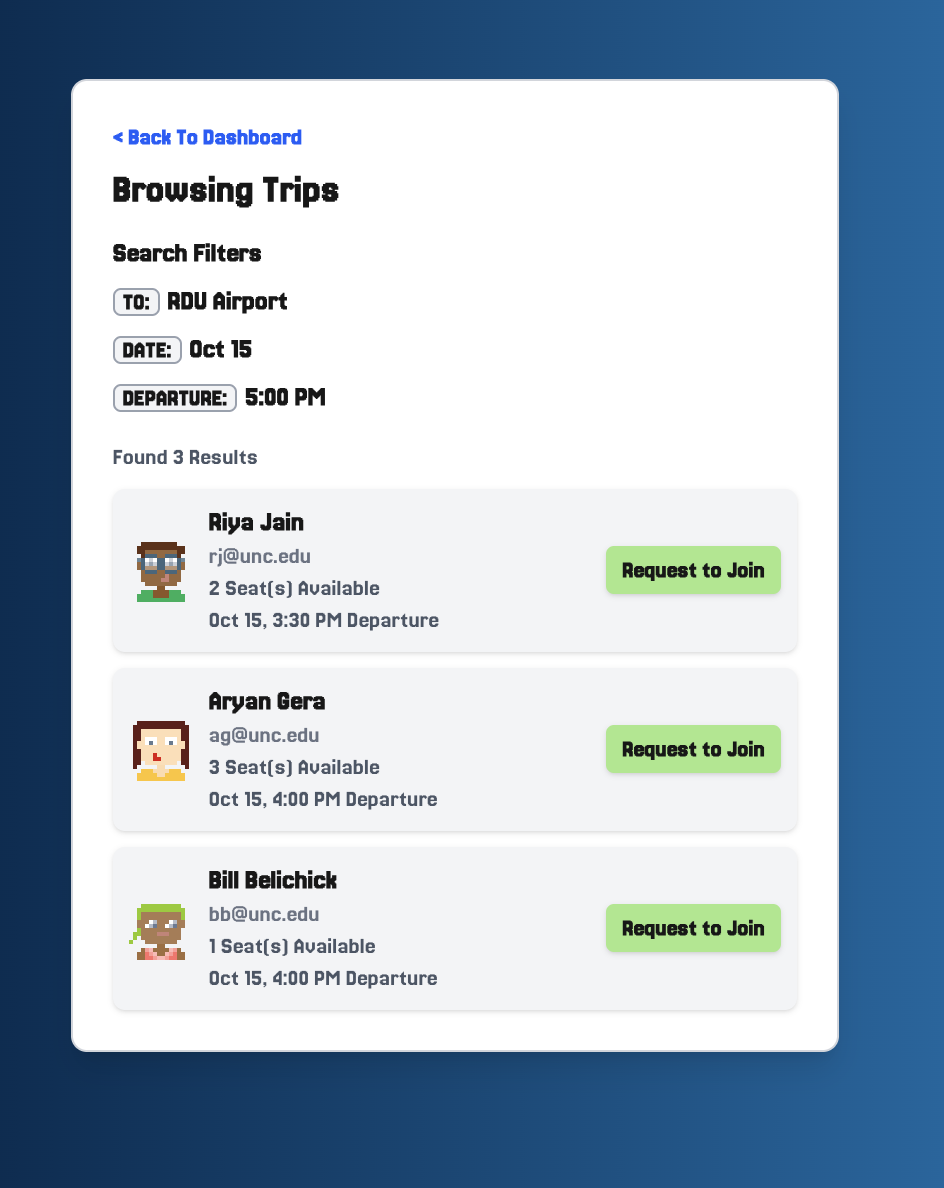
TarTrip is a web app that helps UNC students find others traveling to the same destination - like the airport or train station - so they can share rides home during school breaks. Students can create a trip by entering their date, destination, and time, or browse existing trips to find a match. Once a match is found, they can connect securely through the platform to coordinate details.
How we built it
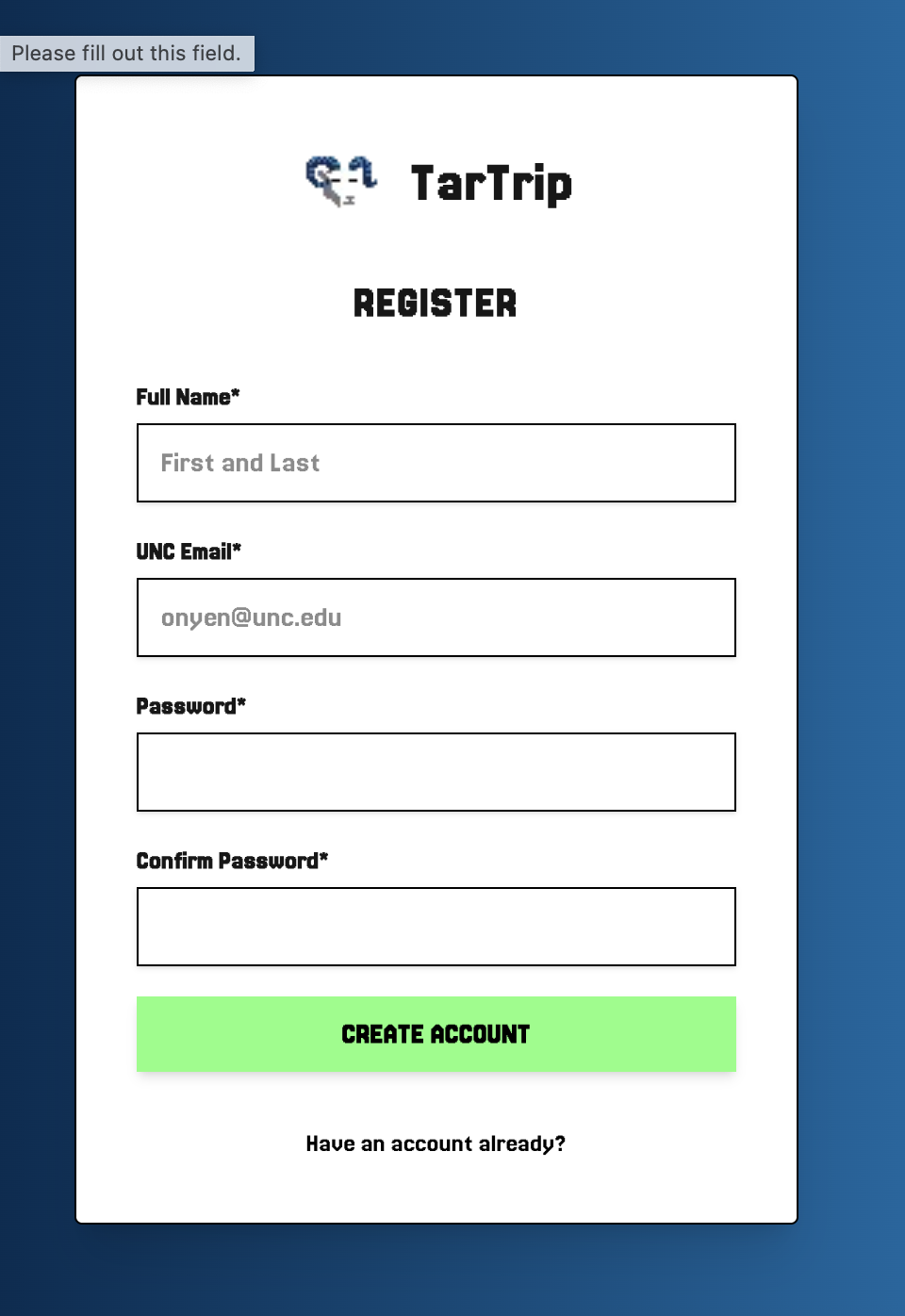
We built TarTrip using Next.js, React.js, and Tailwind CSS to create a seamless, responsive, and accessible user experience. Our design process began in Figma, where we mapped out user flows and ensured that every screen followed Web Content Accessibility Guidelines (WCAG) for inclusive design. On the backend, we used MongoDB because of its flexibility - each trip request is stored as a document containing user, date, and destination, making it simple to query for matching trips. We also added a TTL (time-to-live) index so that expired trips automatically clear from the database, keeping our data organized and up to date. For authentication, we implemented a custom session-based system using JSON Web Tokens (JWT) and cookies to secure user logins and maintain sessions. To enhance the user experience beyond the interface, we integrated ElevenLabs, a text-to-speech AI, to create a customer service voice assistant. This feature allows users to receive real-time, conversational support for common questions or issues related to trip coordination. It not only improves accessibility for users who prefer or require audio assistance but also adds a personal, human-like touch to the app. Every component - from the UI and database to the AI-powered assistant - was built collaboratively by our team, blending technical precision with a focus on user safety and convenience.
Key Features
- Trip Matching System: Automatically connects users based on destination and date for quick, accurate matches.
- Female Only Ride Option: Allows users who prefer to travel with other female students to do so safely and comfortably.
- User Friendly Interface: A clean, responsive design built with Next.js, React.js, and Tailwind CSS, designed in Figma following Web Content Accessibility.
Challenges we ran into
One of our biggest challenges was integrating multiple moving parts - from authentication and database design to AI integration - while ensuring a smooth user experience. Implementing JWT authentication securely took trial and error, as we had to maintain persistent sessions without compromising safety. We also ran into challenges connecting the ElevenLabs API to our platform, especially managing asynchronous requests without disrupting the UI flow. Another major challenge was team collaboration; working on the same files led to merge conflicts, forcing us to improve our Git workflow and communication. We also spent time debugging MongoDB queries to ensure trip matching worked instantly and accurately. Despite these hurdles, every challenge pushed us to refine our codebase and sharpen our problem-solving skills.
Accomplishments that we're proud of
We’re incredibly proud of creating a working prototype that solves a real problem for out-of-state UNC students. Building a trip-matching system that automatically connects users based on destination and date was a huge milestone, as was implementing the female-only ride option - a feature designed to promote safety and inclusivity. We’re also proud of our AI-powered voice assistant using ElevenLabs, which adds a personal and accessible layer to the platform, transforming it from a simple web app into an interactive service. Our team takes pride in our clean and professional design, our attention to accessibility, and our ability to turn an idea into a functional, user-friendly product in such a short timeframe.
What we learned
Throughout the project, we learned how to build and scale a full-stack web app using modern technologies while keeping the user at the center of every decision. We gained hands-on experience with Next.js routing, MongoDB schema design, secure JWT authentication, and integrating third-party APIs like ElevenLabs for real-time voice interactivity. Beyond the technical skills, we learned the importance of accessibility, inclusivity, and thoughtful user experience design. We also developed stronger teamwork and project management skills - from handling Git merge conflicts to dividing tasks effectively. The process taught us that even small design or technical decisions can have a huge impact on usability and overall trust in a platform.
What's next for TarTrip
Looking ahead, we plan to continue expanding TarTrip’s capabilities. Our next step is to fully implement the ElevenLabs voice assistant as a responsive help desk, capable of handling user questions, feedback, and trip management through conversational AI. We also aim to add real-time messaging and in-app notifications to improve coordination between matched travelers. In the future, we hope to partner with local transportation services and expand TarTrip beyond UNC to other universities nationwide, creating a reliable, community-driven travel network for students everywhere. Ultimately, our goal is to make going home - or anywhere - simpler, safer, and more connected.


Log in or sign up for Devpost to join the conversation.