
Inspiration
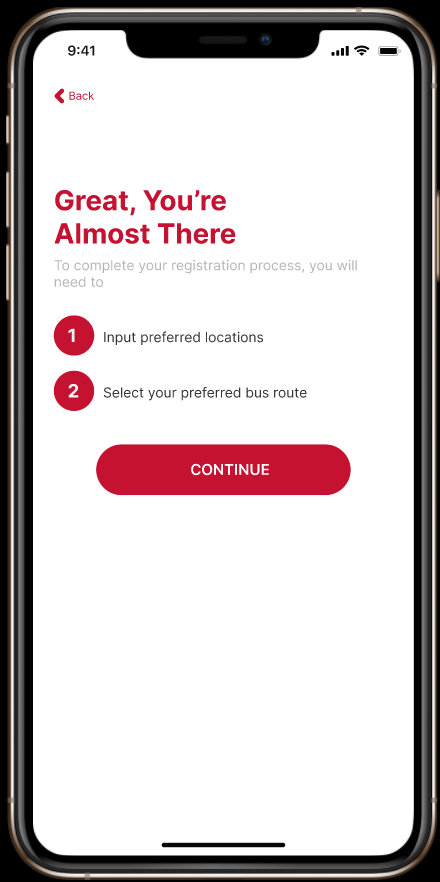
From Day 1 during the Orientation at CMU Africa, this idea has been in the picture. We wanted to provide a seamless solution to refine the shuttle services process. We wanted a way whereby the Students, Drivers, and CMU-Africa Admin can seamlessly manage the service of daily commuting Tartans to school. With our pain points and those obtained from our survey of students, drivers, and the administration of CMU-Africa we were propelled to work on this.
What it does
For Tartans:
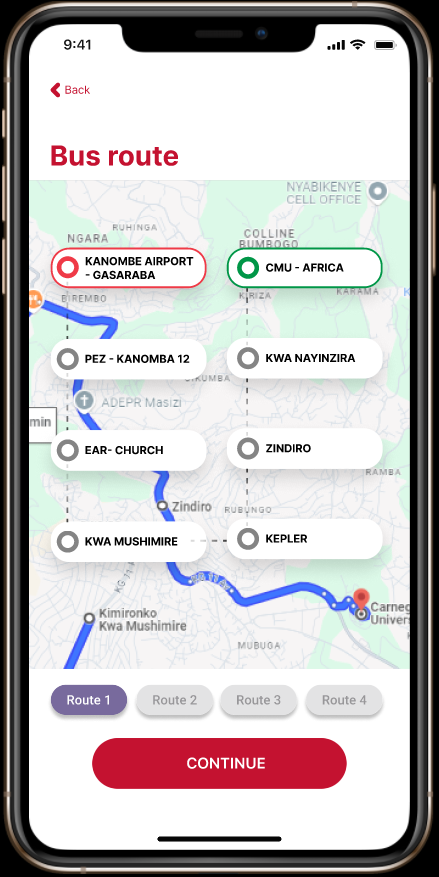
- Live Location of Buses: This user can see the real-time location of all buses along the route on a map.
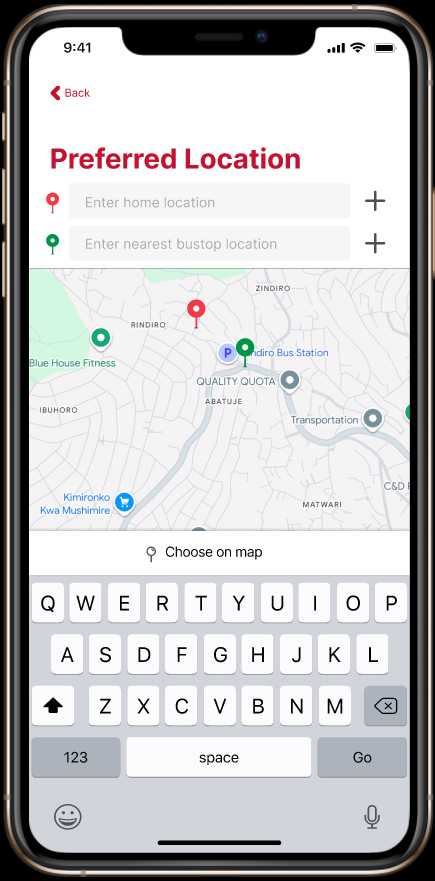
- Estimated Times: Using a combination of GPS data and a routing algorithm, the app will calculate the time for the bus to arrive at the nearest (set) bus stop and the estimated time it will take for the user to get to the bus stop.
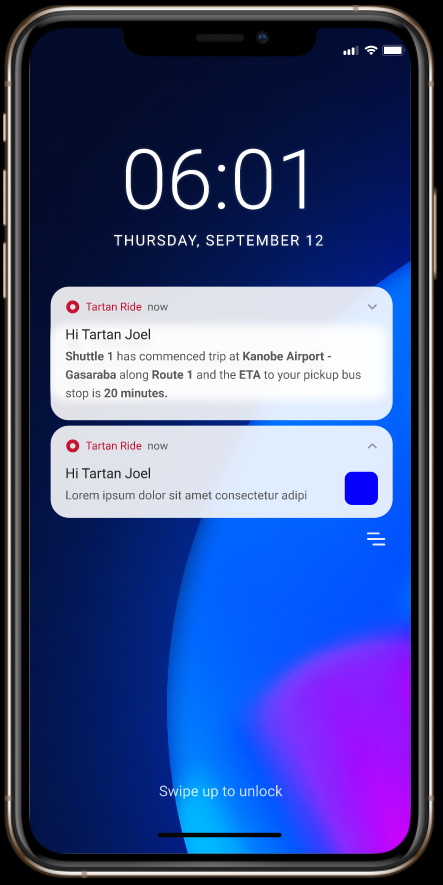
- Notifications: Users will get notified when each bus comes online (the very first node of the route), and when the estimated arrival time of the bus to reach the selected bus stop is approaching the time it will take for the user to get to the bus stop. Tartans can also plan their weekly schedule to get notifications about the services available for the set day and time.
For Admin: This user will oversee the features and management of the Application.
- Bus and Driver Management: Admins can register new buses and drivers, associate them, and monitor trip data (number of trips, trip duration, etc.).
- Bus Stop Management: The admin will add, remove, or modify bus stops on the routes.
- Trip Monitoring: See live data of all buses, the number of completed trips, and their routes.
- Reports: Generate reports on trips made, driving activity, and statistics of student pickups and drop-offs.
For Drivers:
- Secured Clock In/Out: The IoT device or a companion mobile app will allow the driver to clock in and out of the system.
- Driver Authentication: OTP authentication or a secure pin or unique ID would ensure that only registered drivers can operate a bus.
How we built it
IoT Device in Buses:
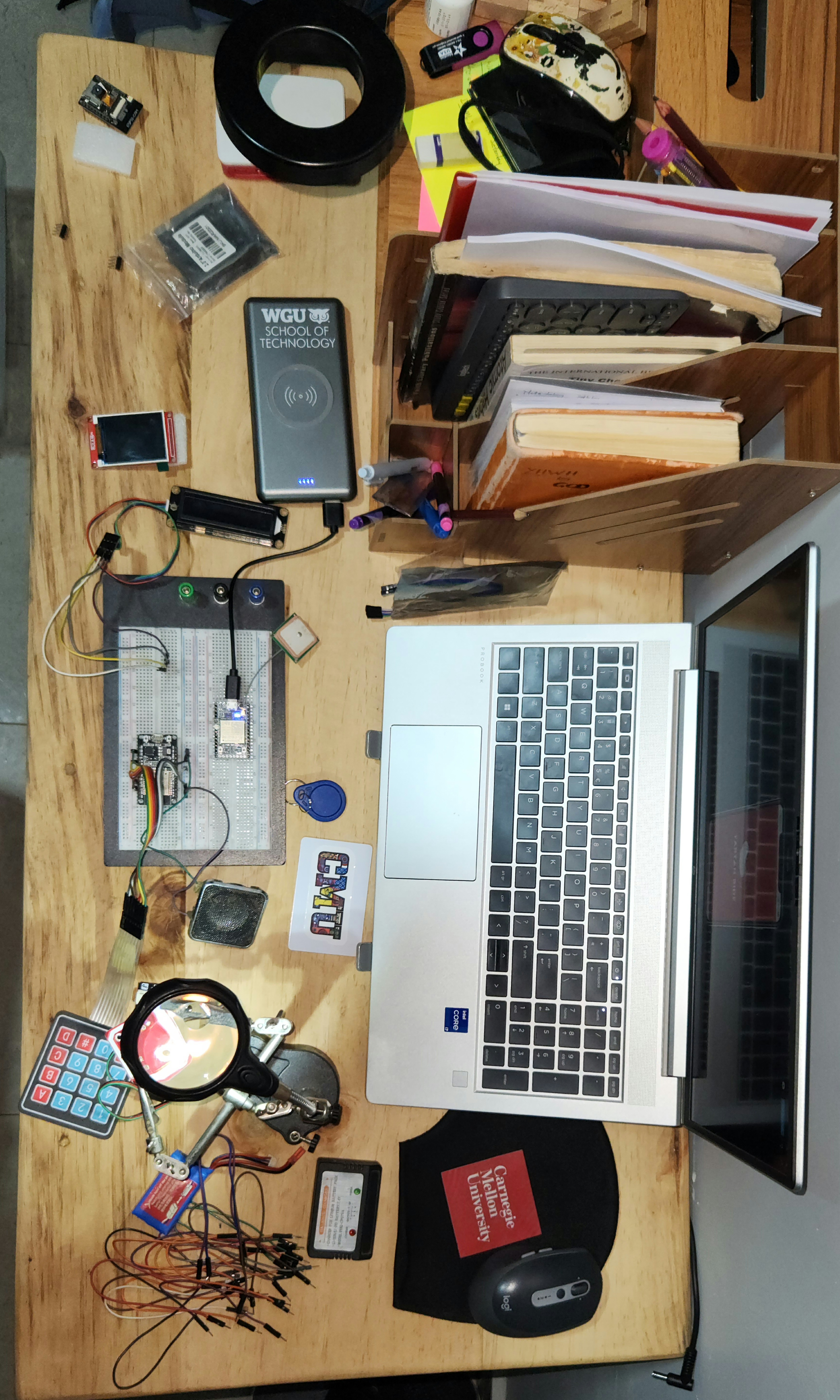
- GPS Module: Each bus would have an IoT device equipped with a GPS module to share its location constantly.
- Network Module: A SIM800L module will transmit the location to a cloud service.
- Driver Authentication: RFID or NFC reader to allow the driver to log in with their unique ID, which will be validated via OTP sent to their mobile phone.
- Power Management: The device would need to be powered by the bus battery and be robust enough for daily use.
- Microcontroller/Embedded System: Arduino, Raspberry Pi, or ESP32 to interface with sensors and transmit data to the cloud.
- Student Count tracking: The IoT device on the bus would have an RFID/NFC reader or QR code scanner at the entrance. When a student boards the bus, their RFID/NFC Card is scanned and registered or the App is used to scan the QR code to record the entry. The device will log which stop the student was picked up from by syncing GPS data with bus stop locations.
Back-end System:
- Cloud Server: A cloud service like AWS, Azure, or Google Cloud would collect and manage data from the IoT devices in real-time.
- Routing and Traffic API: Using Google Maps or OpenStreetMap APIs, the system will calculate the estimated arrival times at the bus stops by factoring in traffic conditions.
- Database: A relational database like MySQL or PostgreSQL to store user, bus, route, and stop data.
Admin Dashboard: Frontend:
- HTML5/CSS3/JavaScript (ES6): Core technologies for building the UI. CSS frameworks like Bootstrap will be used for responsive design.
- JavaScript: Use Vanilla JS or React.js for a more dynamic, responsive interface.
- Maps Integration: Use Leaflet.js or the Google Maps JavaScript API to visualize bus routes and live locations.
Backend: - Python: Flask will be used as the backend web framework to handle HTTP requests, and database operations, and serve real-time data to the frontend. - Real-Time Updates: Use Flask-SocketIO for real-time communication to update the admin dashboard with live bus locations and student data.
Database:
- SQLite/PostgreSQL: Store bus, driver, student, and trip data.
- Redis: For real-time caching of location and trip data.
Authentication:
- JWT (JSON Web Token): Admins will use JWT authentication to securely log in to the system.
Reports:
- Pandas: Use Pandas for report generation on student counts, trip performance, etc., which will be exported as CSV or PDF.
Challenges we ran into
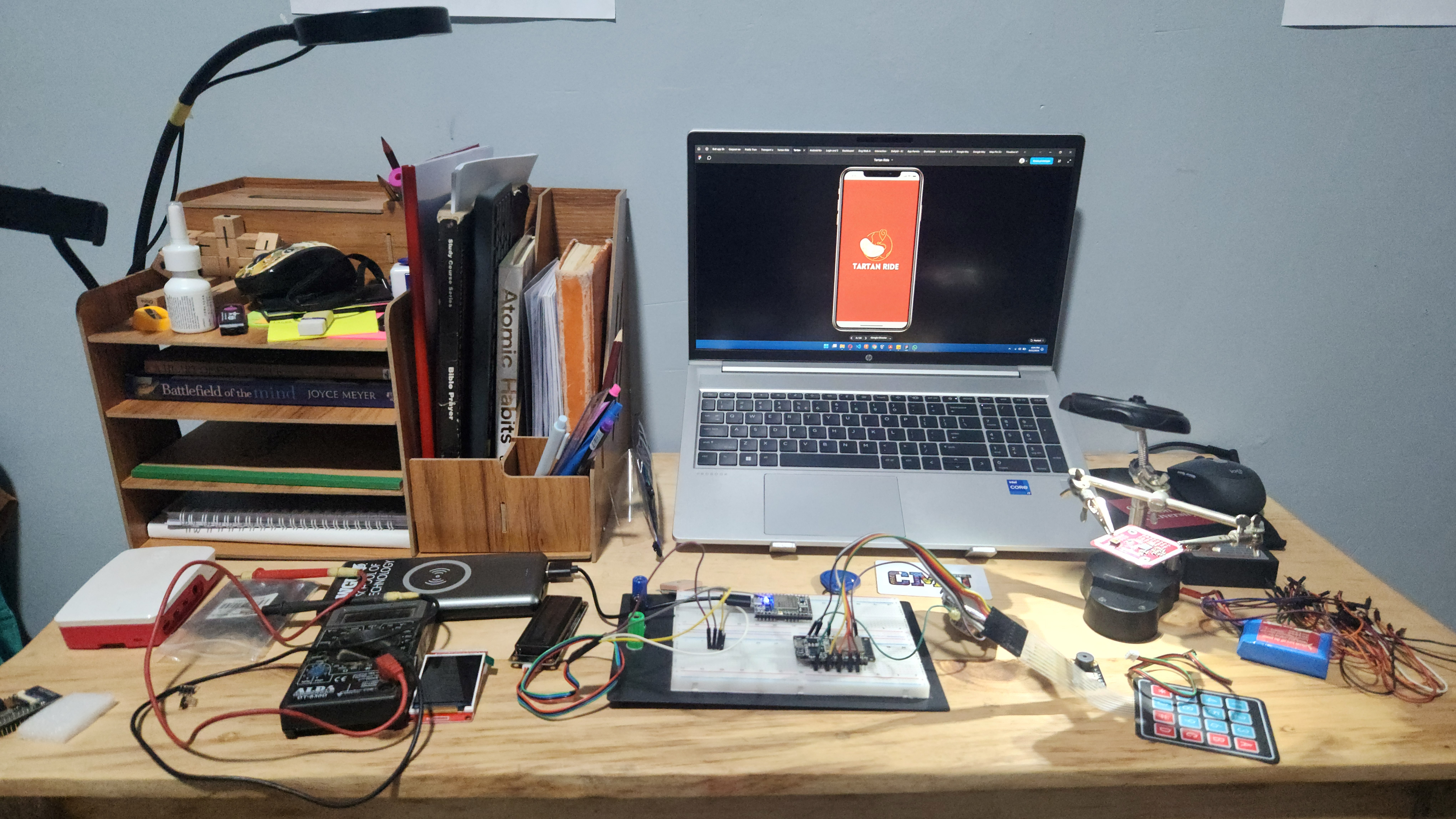
Currently, we are working on the prototyping of the user interfaces of the applications alongside the development of the IoT system. We have purchased some of the components and necessary programming and testing have commenced.
Accomplishments that we're proud of
Firstly, we are proud of the survey we carried out from all its end users and factored in their feedback in the design process. The development of the user interfaces and acquisition of 80% of the hardware prototype is another milestone for the team.
What we learned
We learned how critical it is to align the design process with real-world user feedback. Our interviews with students, drivers, and CMU-Africa administrators gave us invaluable insight into their pain points, allowing us to design features that directly address their needs.
What's next for TartanRide
The next steps include completing the hardware prototype, integrating all software components, and conducting end-to-end testing of the entire system. We'll also work on refining the routing algorithm for more accurate bus arrival estimates and optimizing the mobile and web interfaces for both students and administrators. Lastly, we plan to launch a pilot test on selected routes to collect real-world usage data, make necessary adjustments, and prepare the system for full deployment. Beyond CMU-Africa, we intend on expanding this project.


