-
-

TARS - The Proactive Agent for Founders with ADHD
-
-
-

Inspiration
Quick question. Have you ever opened your laptop to do one thing, and twenty minutes later you're doing something else, and the first thing still isn't done?
That's me, pretty much every day. I'm Muhammad Usman Siddiqui, a student at Penn State, and I built TARS solo this weekend for a user I know really well, because it's me.
I'm a bit of a scattered-brain kind of guy. I'm not diagnosed with ADHD, but I might as well be. I juggle Penn State AI Guides, the Advanced Vehicle Team, my own projects and classes, and I'm context switching constantly.
I keep all my tasks in my brain, with no systems or processes in place. Something new and loud shows up, I follow it, and the thing that was due tonight quietly falls off. So I finally decided to tackle it, and I built TARS.
The problem
- In one study of 242 entrepreneurs, 29% reported having ADHD. In the comparison group it was 5%. (Self-reported, small sample.)
- The CDC says 15.5 million U.S. adults had a current ADHD diagnosis in 2023.
- A World Health Organization study found that inattention on the job adds up to about 22 days of work not done a year.
- Gloria Mark's research at UC Irvine found it takes people more than 20 minutes to get back to a task after an interruption. That matches me. It takes me 15 to 20 minutes just to rebuild where I was.
For a founder, nobody catches what slips. 22 days is a month of the company not moving.
What it does
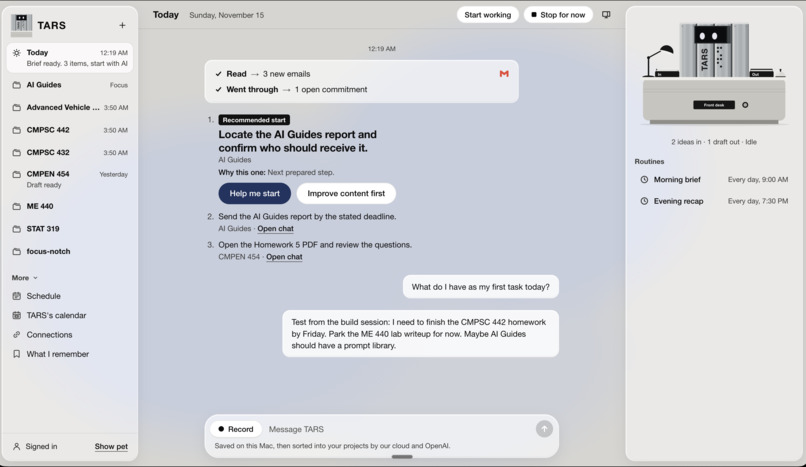
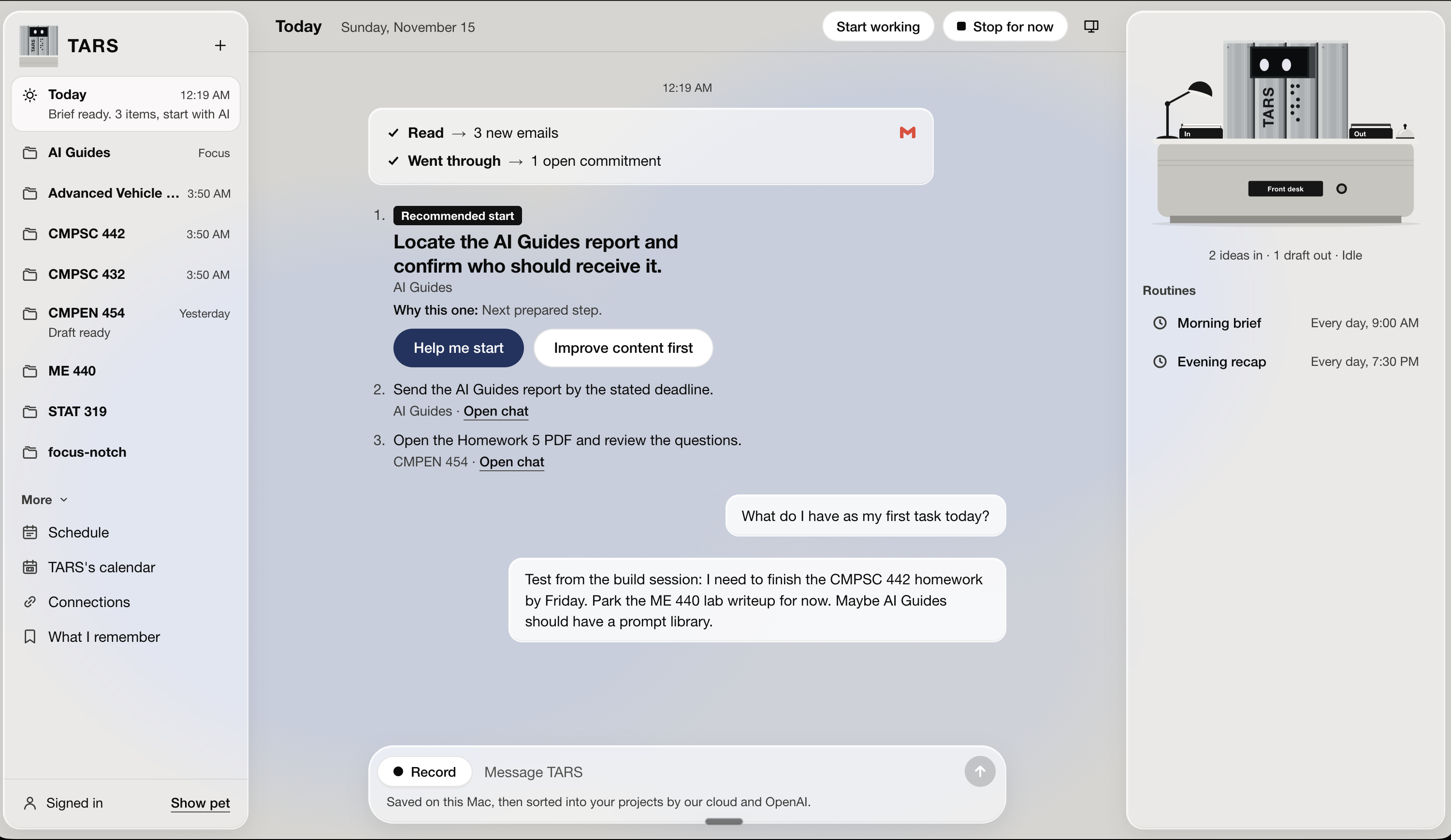
TARS is a proactive agent that lives on your Mac. With other AI tools, you go to them: you brain dump, you give the context, you do everything yourself to start the work. TARS already has the context, and it comes to you.
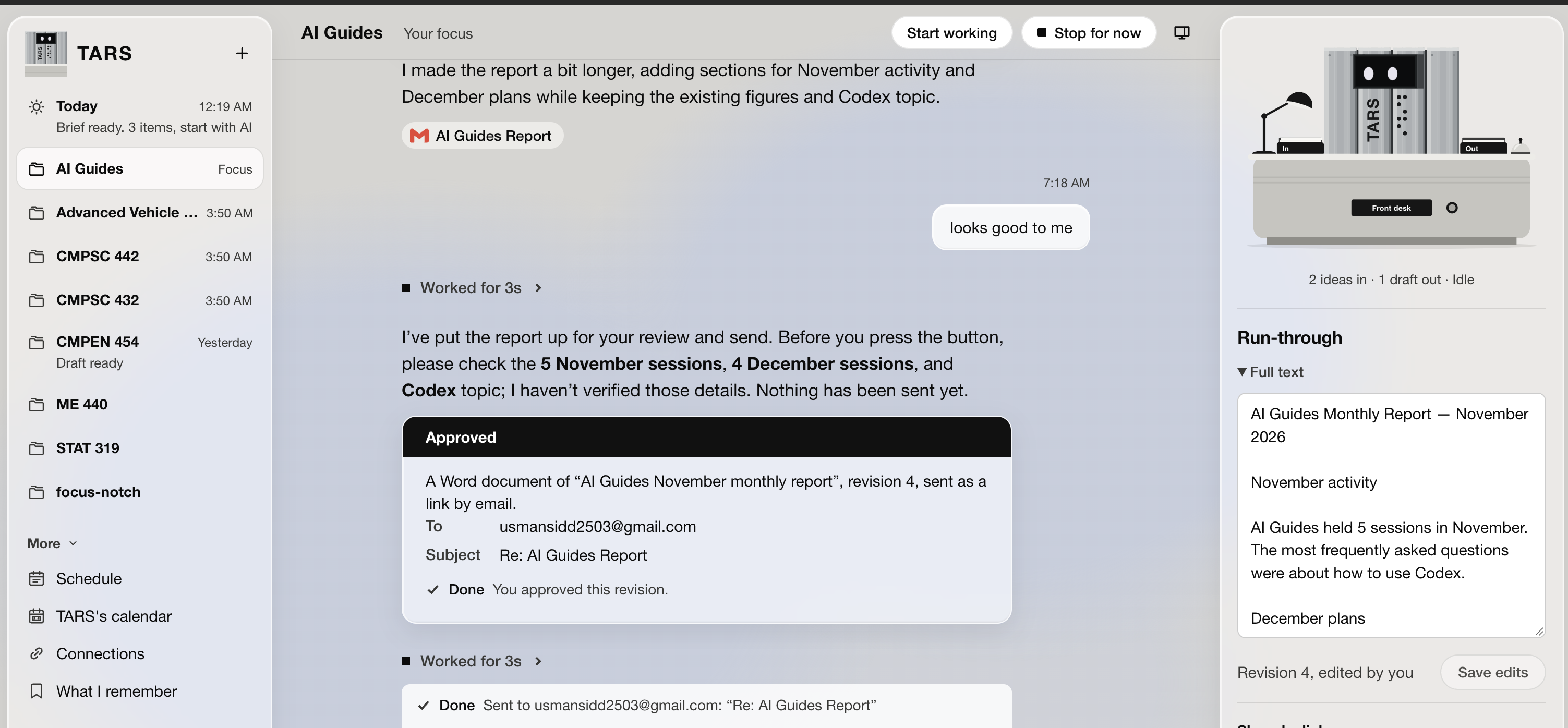
Let's say I'm working on something else and an email comes in asking me for a report. TARS notices it, looks at the context it has, and starts the report without me doing anything. Then it leaves me one message: here's what I started for you.
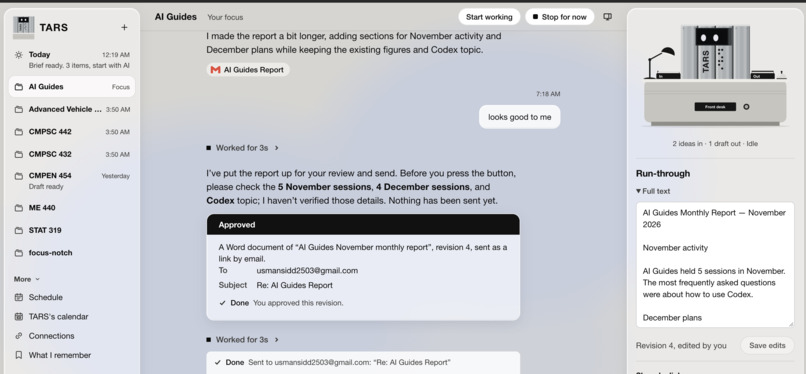
When I come back, I'm not staring at a blank page. I fix it by chatting, like "make it a bit longer", or I just type in the details myself. When it looks good, I say so.
Nothing gets sent until I press Send. Then TARS emails it from my own Gmail and checks that it actually arrived.
And when I'm done, I press "Stop for now". There are no streaks, no scores and no guilt.
The demo
TARS is a working prototype, and the video shows the one loop I've proven end to end. The app footage is one take on my real Gmail, in the packaged app, on Sunday morning. The email in step 1 is drawn, because my inbox is private.
- An email asks me for a report.
- 30 seconds later, TARS has started the draft.
- It tells me what it still needs from me.
- I ask for a change in plain words.
- Or I fill in the details myself.
- When it looks good, I say so.
- Nothing leaves until I press Send.
- TARS emails it as a Word document from my Gmail and checks it arrived.
- I ask what my week looks like.
- I stop for now.
The 30 seconds is measured on the recording, from pressing Send in Gmail to the draft appearing in TARS.
Also working live: a request with no deadline still gets started, a small question gets a short reply instead of a document, a brain dump box sorts one messy thought into the right projects, and a morning brief from TARS showed up on my phone through Telegram.
How I built it
In plain words: a Mac app, a backend that pushes updates to the app the moment something changes, and an AI model that prepares the work.
- Desktop app: Electron, React, TypeScript
- Backend: Convex. Each person's data is kept separate, and nothing checks on a timer.
- Sign-in: Auth0
- Drafting: OpenAI
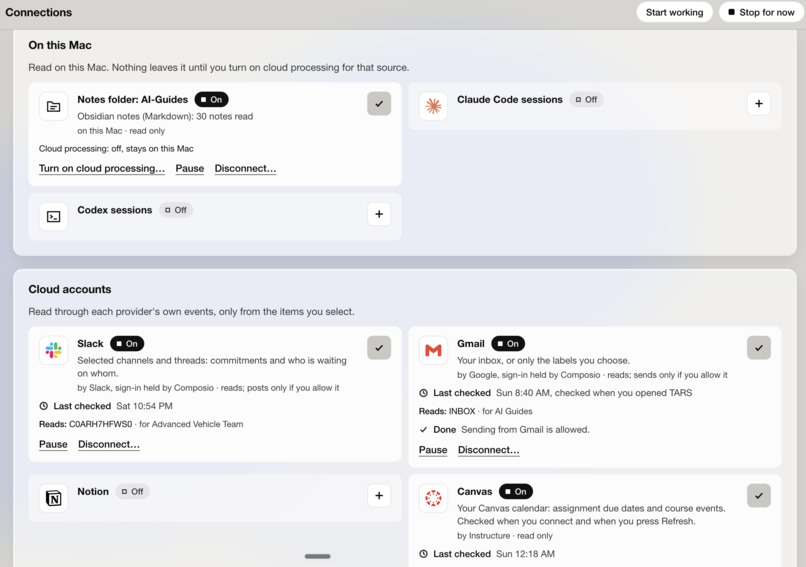
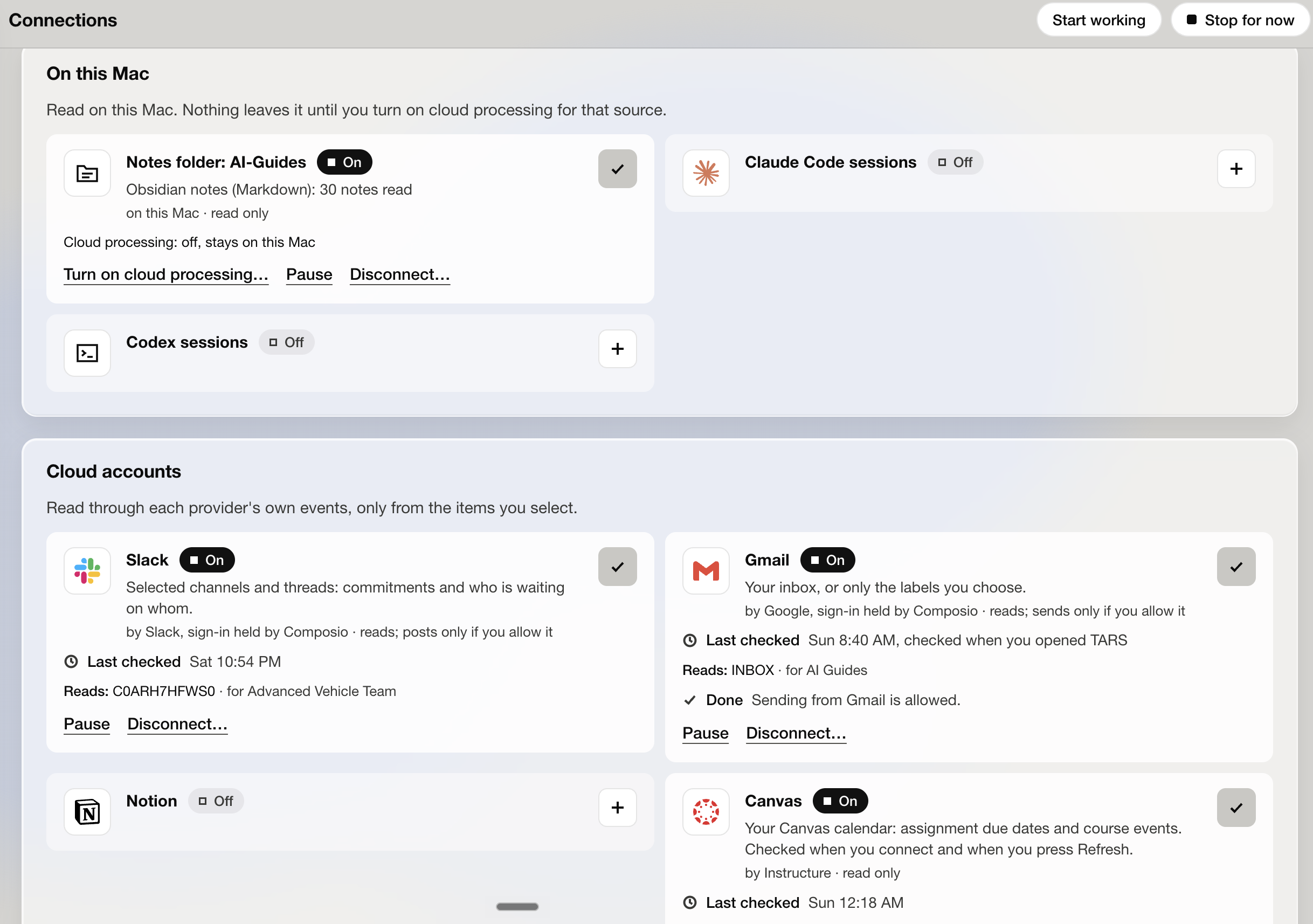
- Gmail and Slack connections: Composio
- Phone messages: a Telegram bot
- 395 unit tests and 333 integration tests
Challenges I ran into
- Tests passing on fake data is a long way from working on a real account. Most of Saturday night went into closing that gap.
- My university blocks Outlook and Canvas tokens, so the demo runs on my own Gmail and Slack.
- I went through five different looks for the interface in one day before landing on this one.
What I learned
- "Built" and "proven" are two different words. I labelled every feature with which one it was, and that's what kept this page honest.
- For a brain like mine, starting matters more than reminding. Work that's already begun is way easier to say yes to than a notification.
What's next for TARS
- Fuller drafts, drawn from my own notes.
- On Telegram: the "sent and checked" message, the recap, and telling TARS what to do from my phone. These are built and tested, and I haven't seen them on my phone yet.
- Gentle repeat nudges until something is due.
- The desktop pet in the new layout, GitHub, sharing by link, and the iPhone app. All built, not yet run live.
- A signed build, and a new name before anything commercial, since TARS belongs to a film.
Built With
- auth0
- composio
- convex
- electron
- openai
- react
- sqlite
- typescript
