-
-
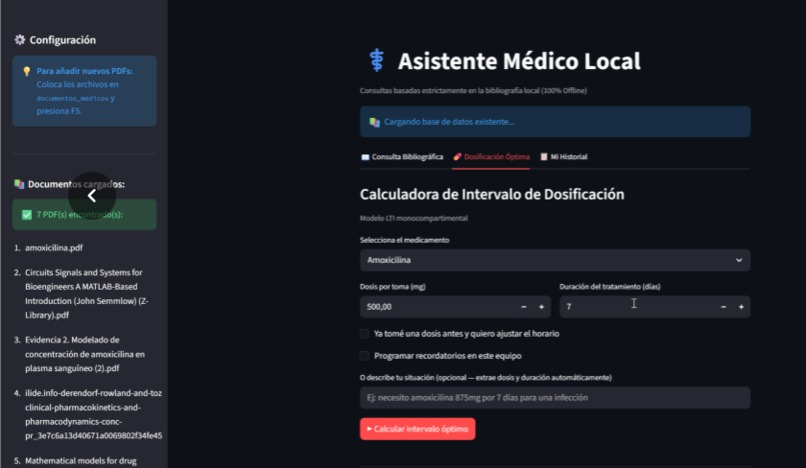
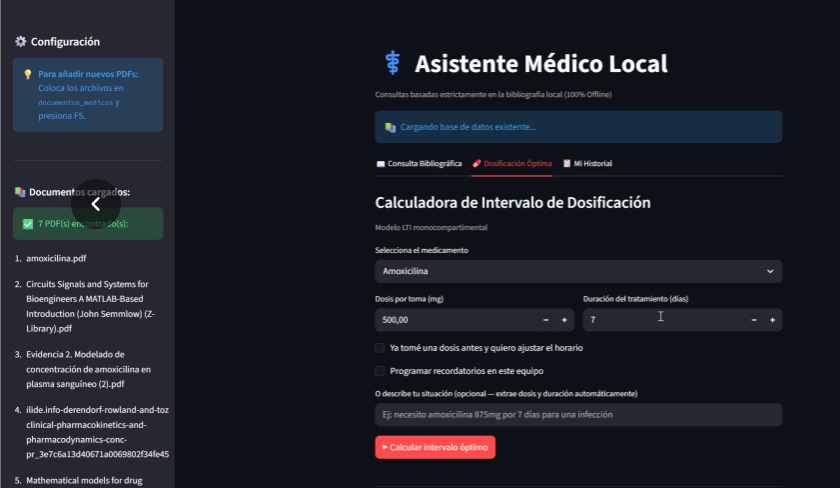
Image from initial interface
-
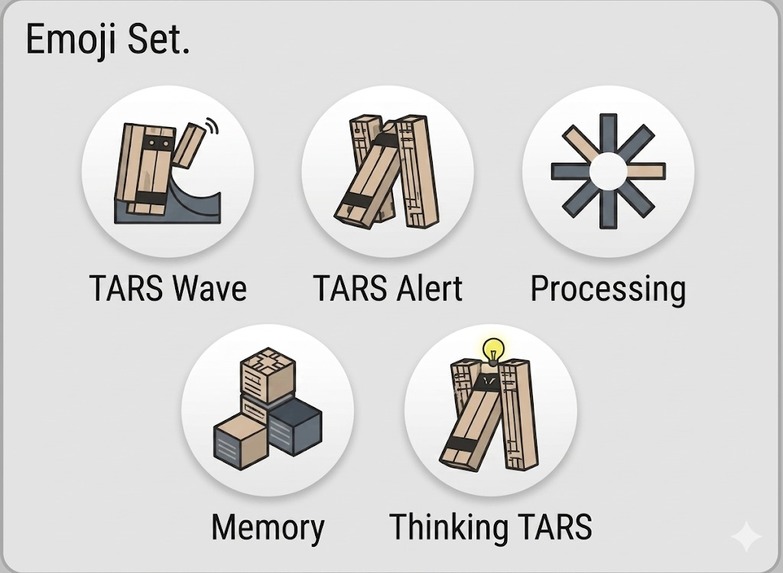
Emojis example from TARS assistan AI
Project Story
Inspiration
TARS was inspired by the recent and growing dependence on AI assistants for health-related questions, as well as the risks associated with misinformation, inaccurate responses, and the lack of user privacy. We wanted to create a system capable of providing trustworthy, research-based guidance while operating entirely locally and offline. The idea emerged from the combination of interests in artificial intelligence, biomedical engineering, pharmacology, and privacy-focused technologies to design an assistant that users could trust for sensitive healthcare-related interactions.
What it does
TARS is a fully local AI-powered healthcare assistant designed to help users identify symptoms and receive guidance on the responsible use of over-the-counter (OTC) medications. Unlike traditional AI assistants, TARS does not rely on internet data or external APIs. Instead, it uses a specialized knowledge base composed of academic textbooks, pharmacological references, and biomedical literature from recognized universities and scientific sources. This allows the system to generate grounded responses with fewer hallucinations while maintaining complete user privacy.
How we built it
We developed TARS using locally deployed large language models combined with a retrieval-based architecture that references curated medical documentation. The project integrates structured medical literature, local embeddings, and semantic search techniques to retrieve relevant information before generating responses. We organized biomedical references into a searchable knowledge base and designed the assistant to operate entirely offline.
Challenges we ran into
One of the biggest challenges was ensuring the assistant’s accuracy while avoiding incorrect medical recommendations. Collecting reliable medical references and structuring them into a format suitable for retrieval and reasoning required significant effort. Another challenge involved balancing performance and efficiency when running AI models locally without depending on cloud infrastructure. Additionally, designing a system capable of understanding symptom context while maintaining medical responsibility introduced both technical and ethical considerations throughout development.
Accomplishments that we're proud of
We are proud of creating a healthcare assistant capable of operating without internet access while still delivering academically grounded and research-supported responses. TARS successfully combines artificial intelligence with biomedical knowledge in an environment that prioritizes privacy. Another major accomplishment was designing a scalable architecture that can later evolve into more advanced healthcare support systems while maintaining transparency and user trust.
What we learned
Throughout the project, we gained experience in Retrieval-Augmented Generation (RAG), local AI deployment, biomedical knowledge organization, and the challenges associated with trustworthy AI systems in healthcare environments. We also learned the importance of explainability, data curation, and responsible system design when working with sensitive medical information. This reinforced the critical role of privacy and transparency when developing AI-powered healthcare tools.
What's next for TARS
The next step for TARS is expanding its medical knowledge base with additional peer-reviewed sources and improving contextual reasoning for symptom analysis. We also plan to integrate multimodal capabilities such as voice interaction, medical document interpretation, and wearable sensors for real-time vital sign monitoring. Future versions may include personalized healthcare tracking supported by these technologies, as well as stronger safety mechanisms to ensure responsible medical assistance while preserving privacy and local operation.
Built With
- claude
- copylot
- github
- ollama
- python
- streamlit
- visual-studio


Log in or sign up for Devpost to join the conversation.