-
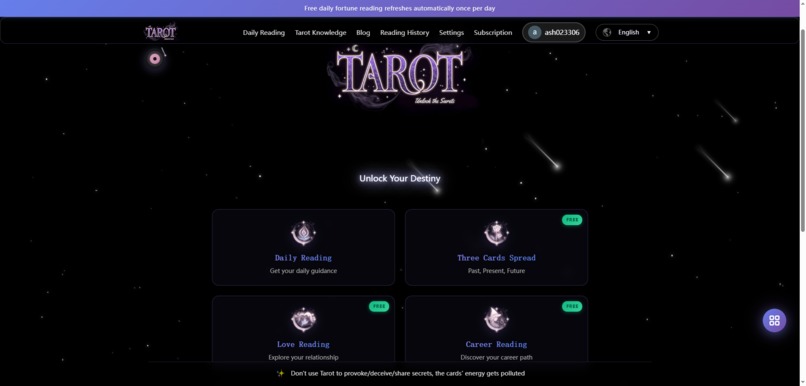
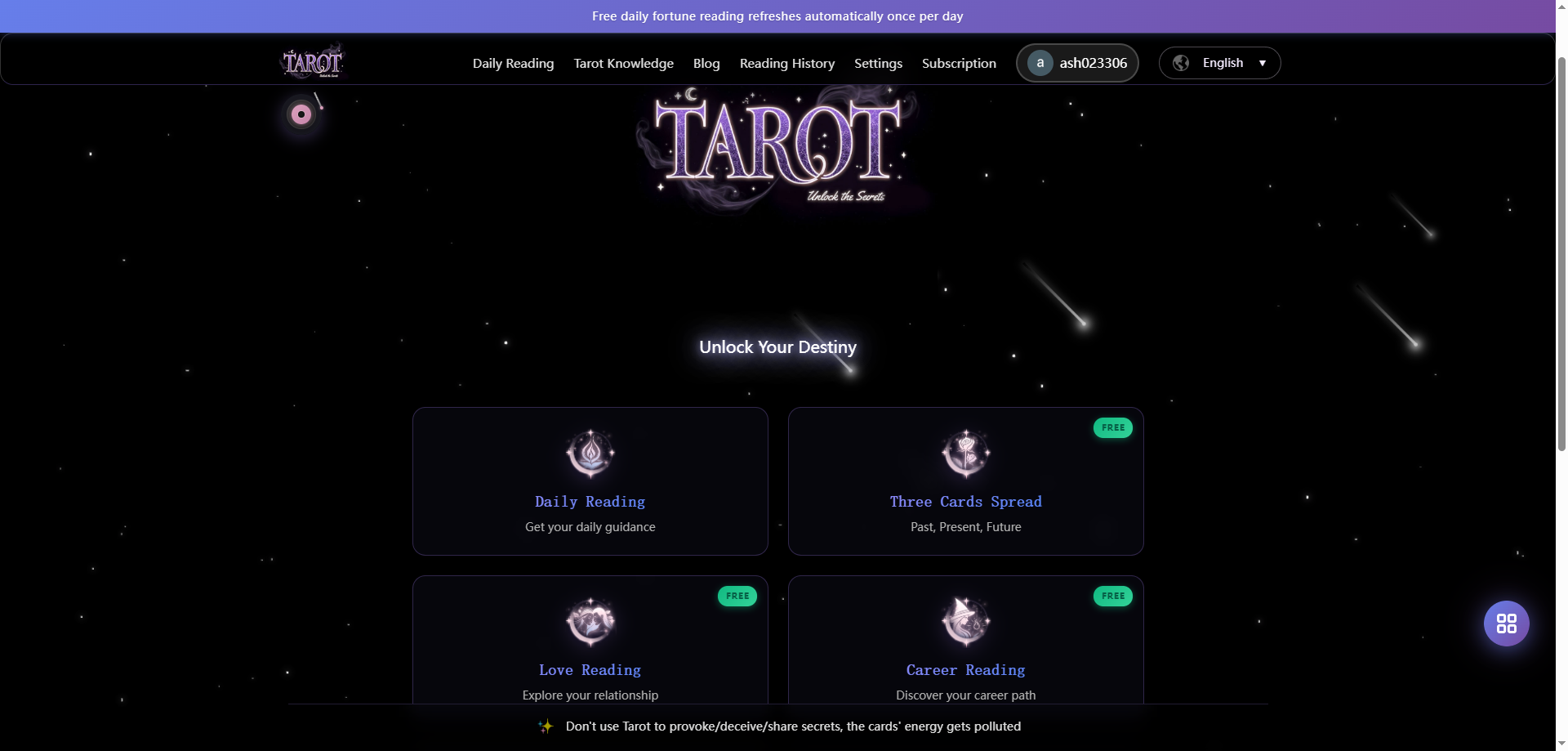
The main dashboard of Tarot Card Pro.
-
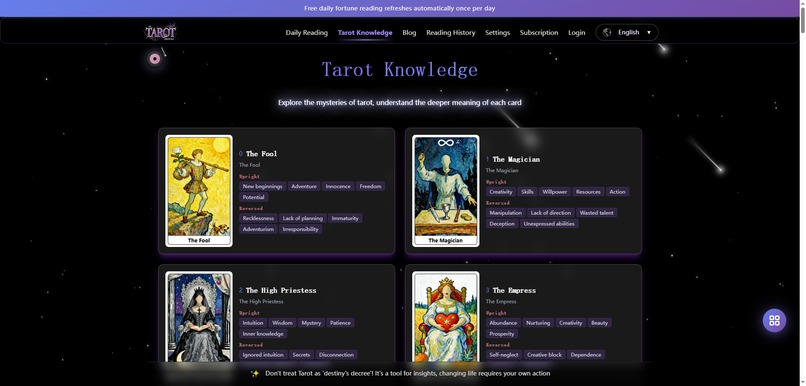
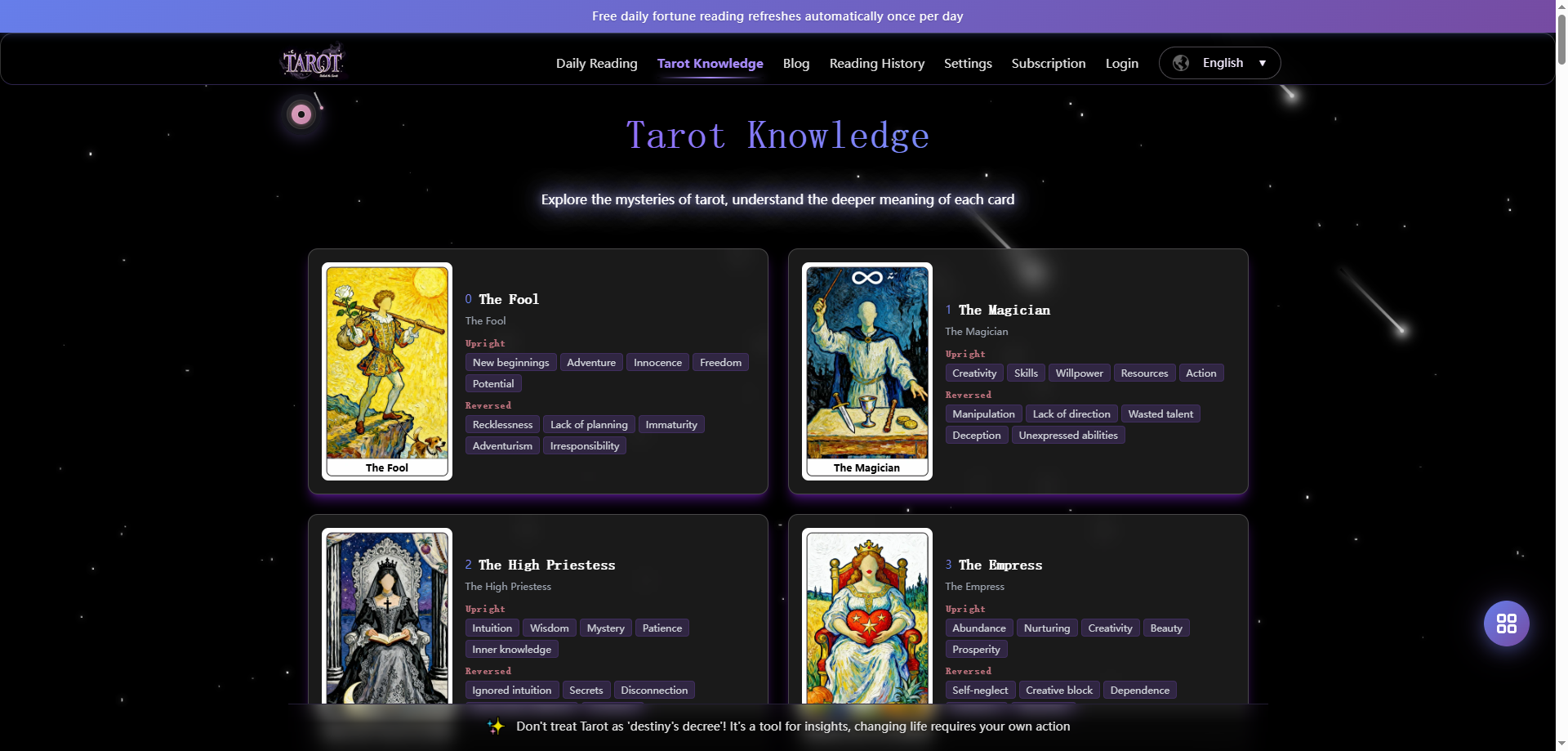
Quick-reference database for all 78 Tarot cards with tag-based meanings.
-
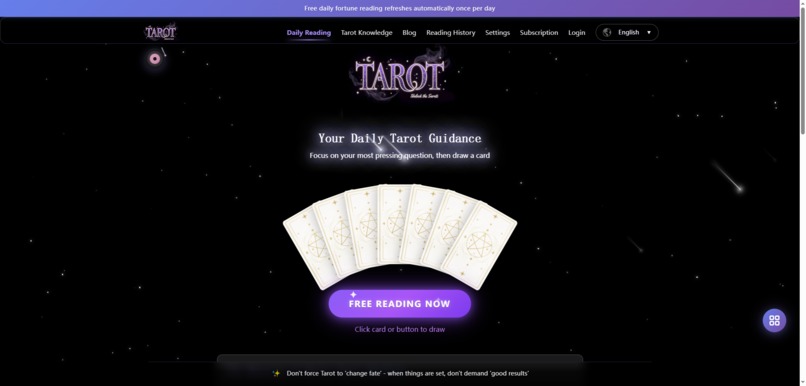
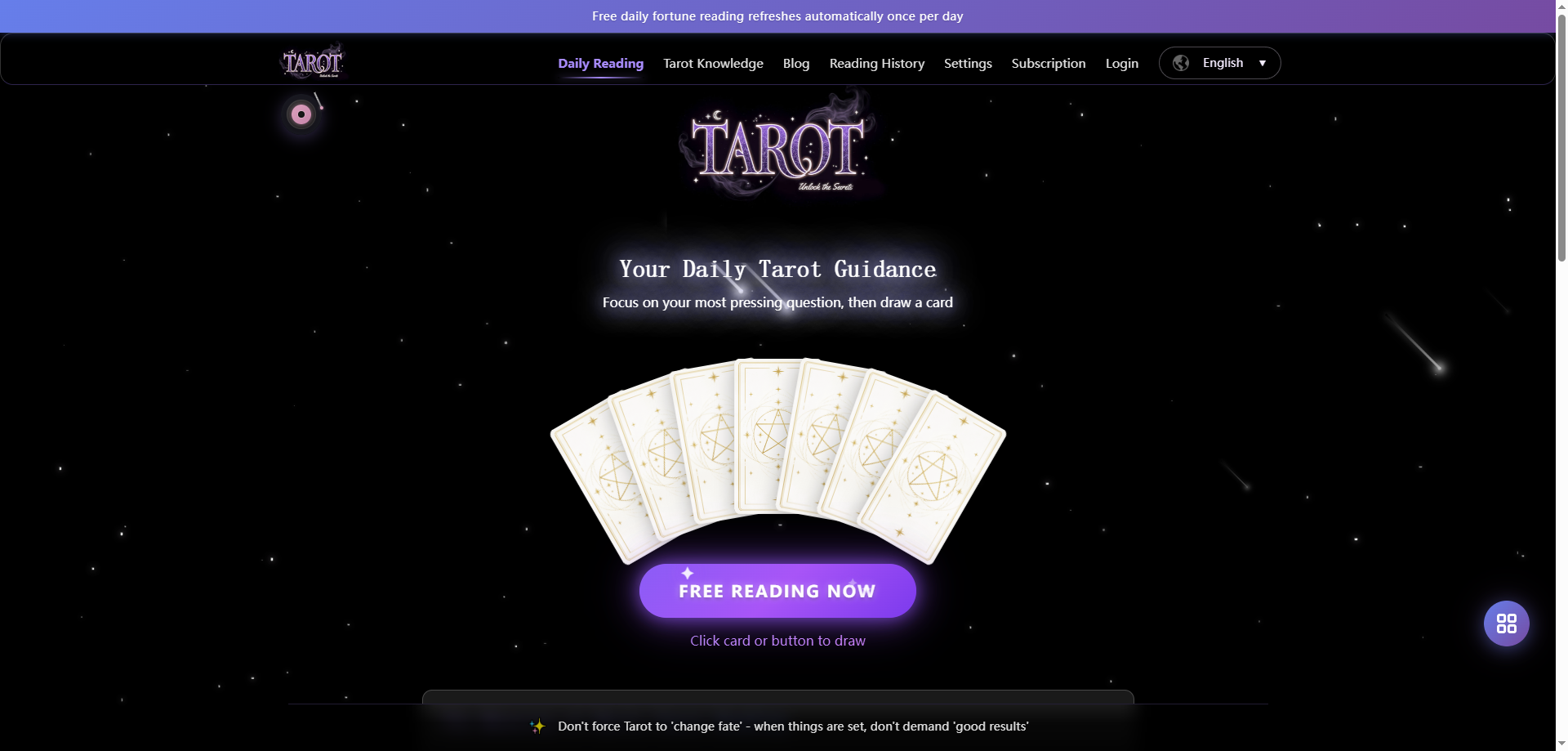
The Daily Reading feature: pick a card and unlock your personalized daily tarot forecast instantly.
-
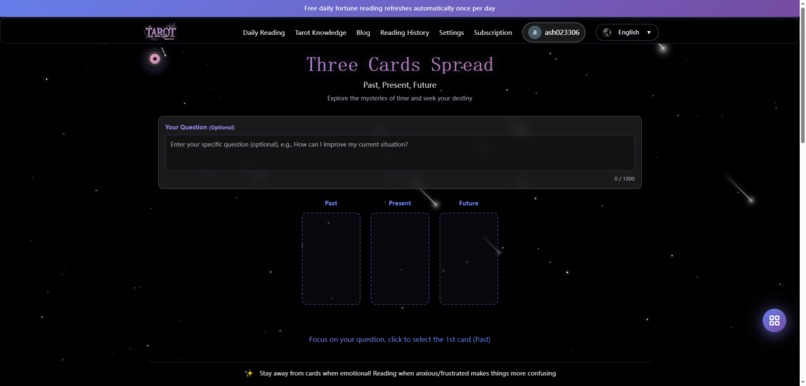
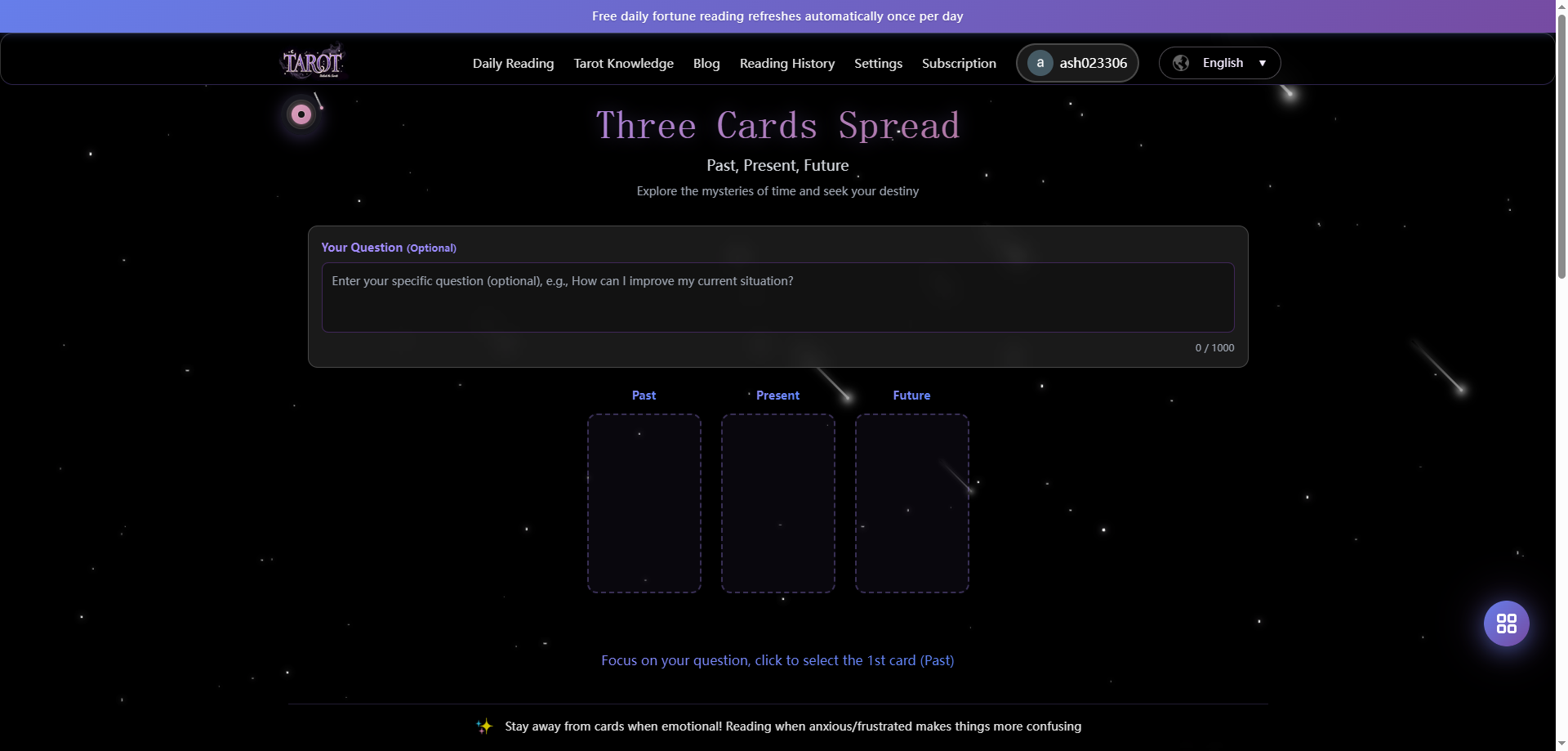
The classic 3-Card Spread. Pick three cards representing the Past, Present, and Future to interpret your specific questions.
-
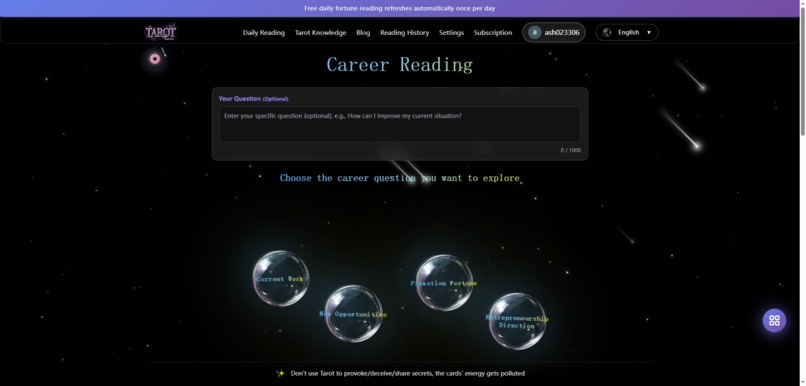
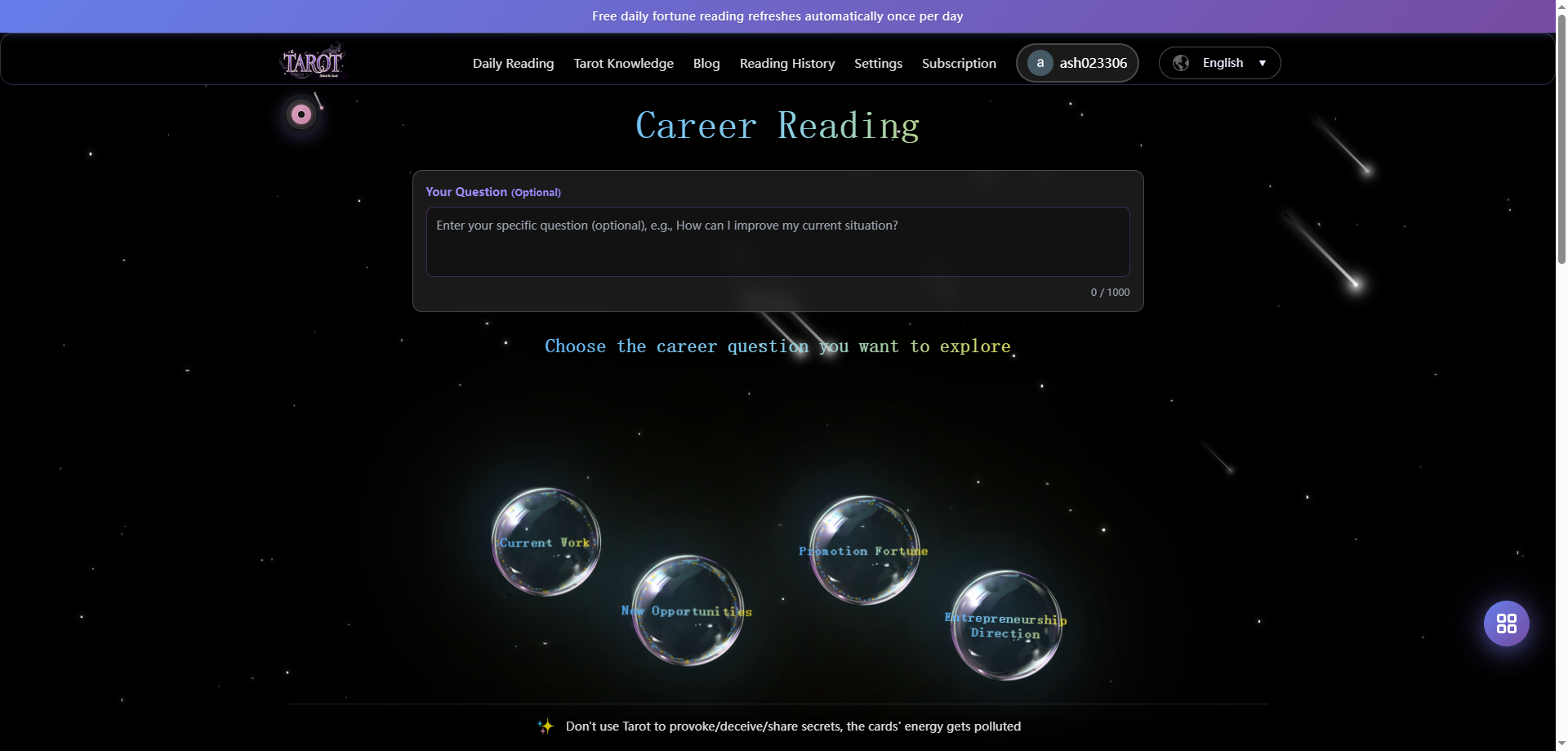
Specifically designed to interpret issues related to one's career
-
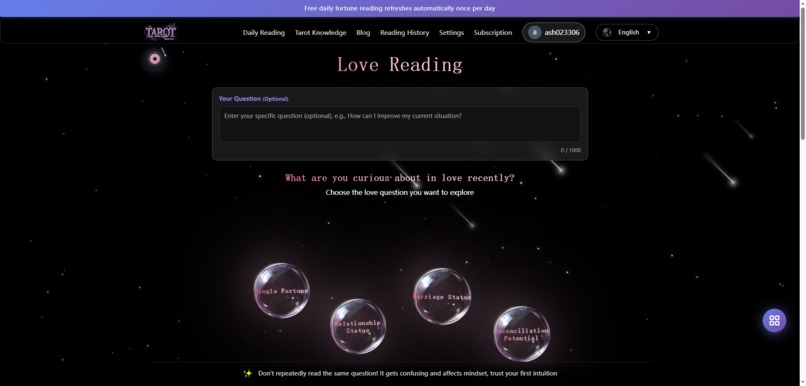
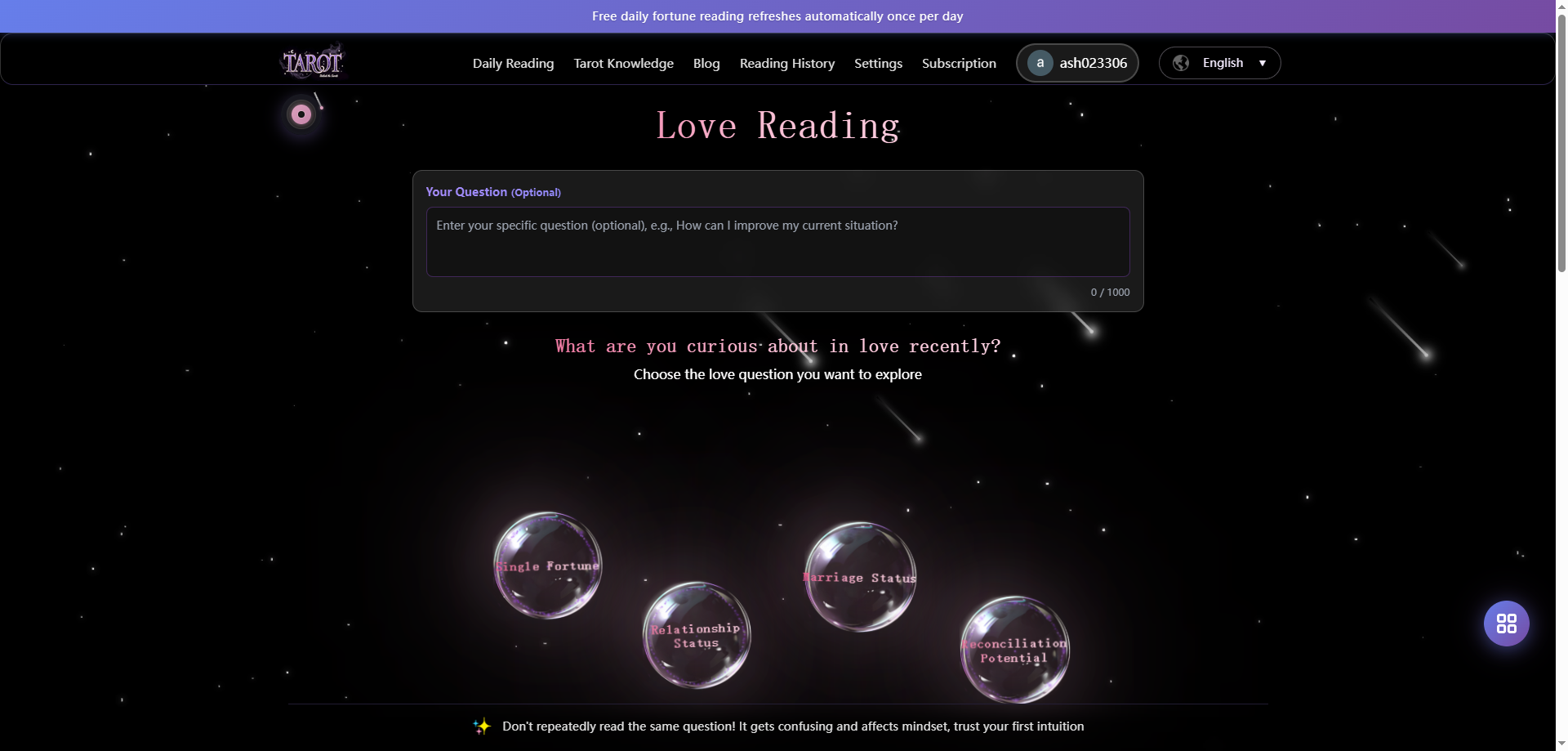
Specifically designed to interpret issues related to love
Inspiration
Many people seek a moment of reflection or spiritual guidance to start their day. However, getting a quick daily tarot reading usually involves shuffling a physical deck, downloading bulky mobile apps, or navigating ad-heavy, text-dense websites. I wanted to create a frictionless, modern web app that brings the ancient wisdom of tarot into a clean, accessible daily routine.
What it does
Tarot Card Pro is an instant, browser-based tarot reading tool. Its core feature is the "Daily Fortune", which allows users to draw a card of the day and receive an instant, easily digestible interpretation. We also feature a quick-reference database for all 78 cards, using concise, tag-based meanings for both upright and reversed positions.
How we built it
This project was a fascinating exercise in combining different AI models to leverage their specific strengths:
- Frontend & Core: Built with a responsive mix of HTML5, CSS3, and JavaScript to ensure a lightweight, fast-loading experience across all devices without the need for heavy frameworks.
- Text & Logic (ChatGPT): We utilized ChatGPT to engineer the massive database of card meanings. It helped us parse and structure complex esoteric knowledge into concise, tag-based data formats that power the daily readings.
- Visuals & Aesthetics (Gemini): To capture the mystical and elegant vibe of tarot, we used Google's Gemini for image generation. Gemini's ability to understand nuanced, stylistic prompts allowed us to create stunning, cohesive visual assets for the site.
Challenges we ran into
One of the biggest hurdles was prompt engineering for visual consistency. Getting an AI to generate UI assets and illustrations that felt like they belonged to the same "deck" or universe required dozens of iterations and fine-tuning prompts in Gemini. On the text side, ensuring ChatGPT didn't output overly verbose text required strict constraint prompting to keep the readings concise and human-centric.
Accomplishments that we're proud of
I am incredibly proud of the frictionless user interface. It feels magical and responsive. Successfully orchestrating two different top-tier AI models (ChatGPT for the "brain"/text, Gemini for the "soul"/art) to create one cohesive, ready-to-use product is a huge win.
What's next for Tarot Card Pro
We plan to introduce more complex interactive spreads (like the classic Past-Present-Future) and user accounts so people can log their daily draws to track their journey. We are also exploring Progressive Web App (PWA) features to make it installable directly from the browser.


Log in or sign up for Devpost to join the conversation.