-
-
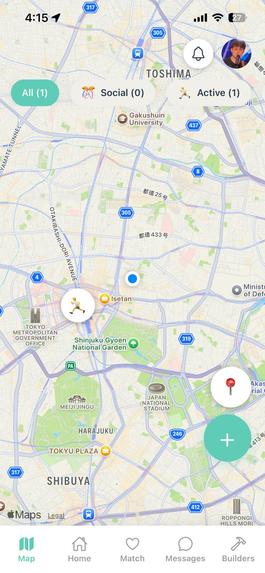
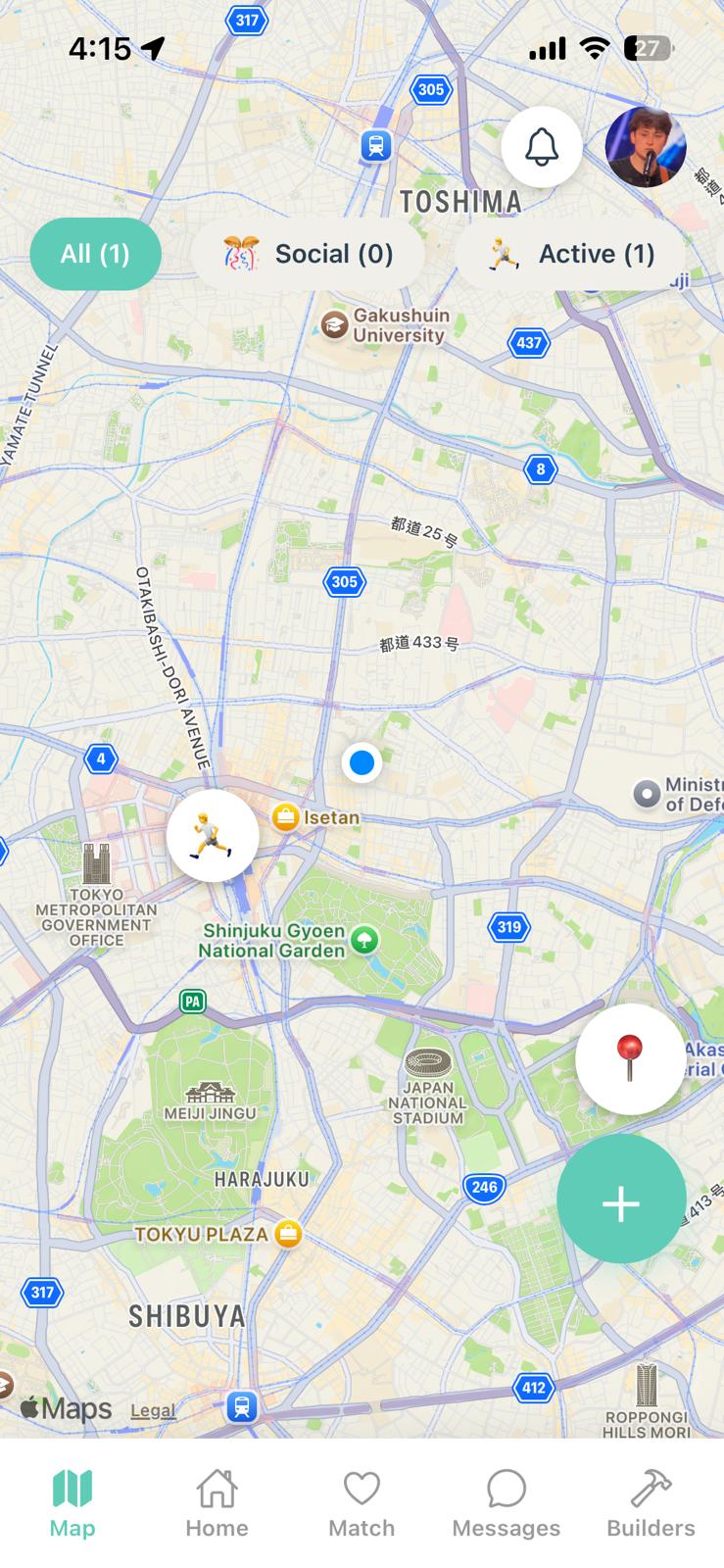
map screen to view and add activities
-
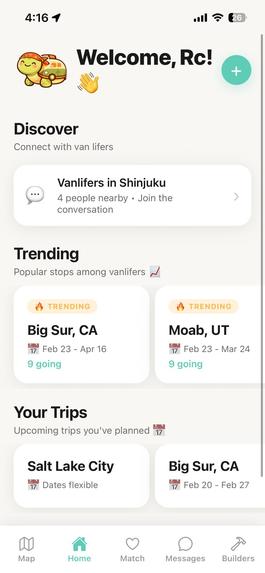
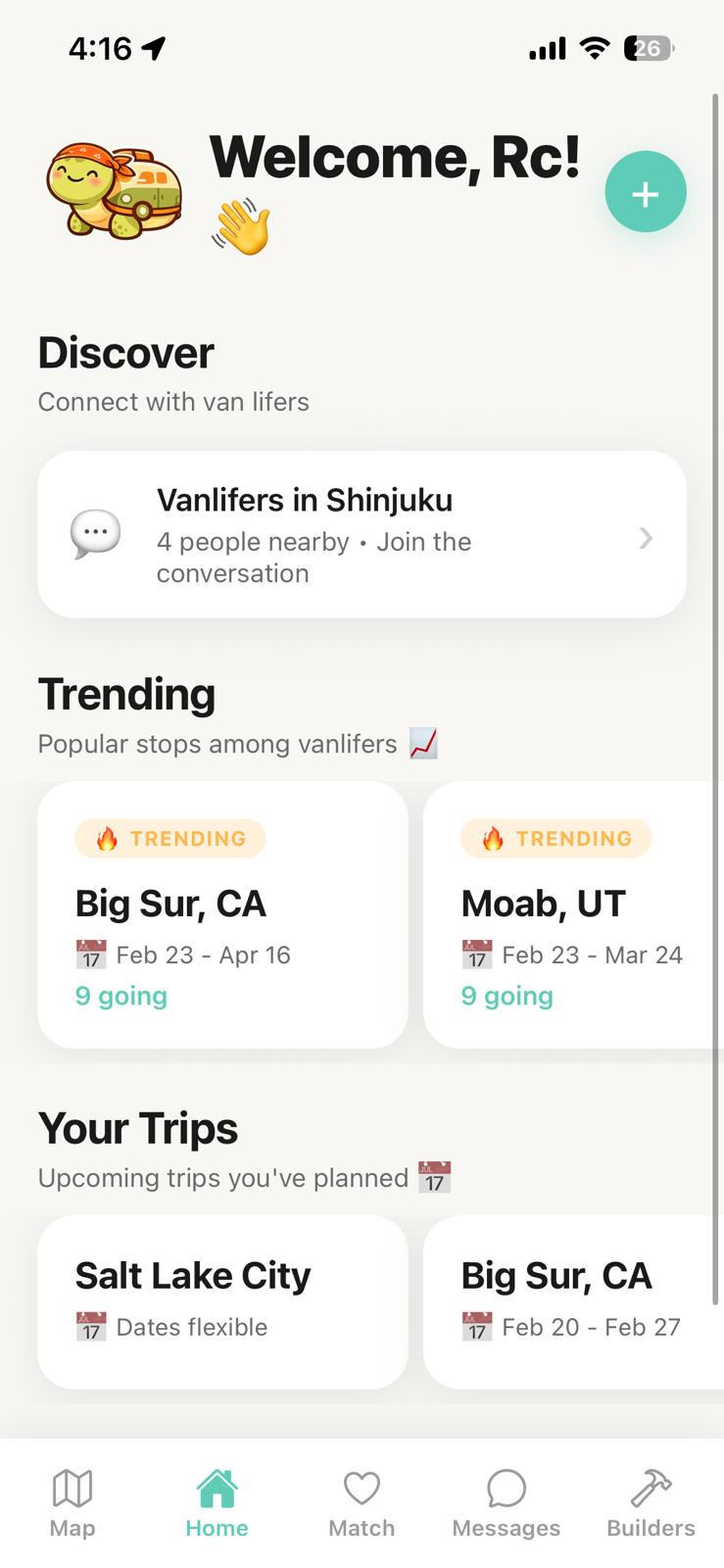
home screen for setting up trips
-

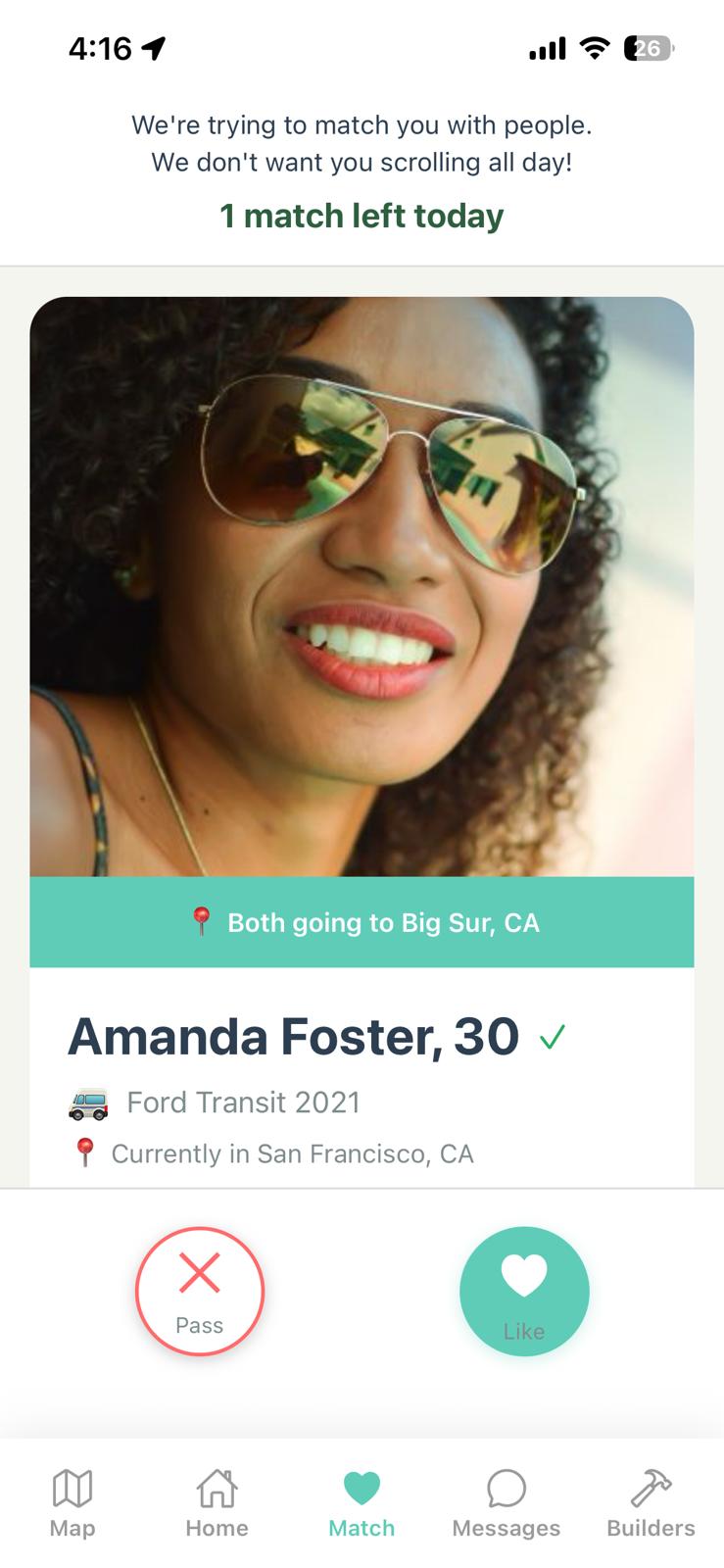
match with other van lifers!
-
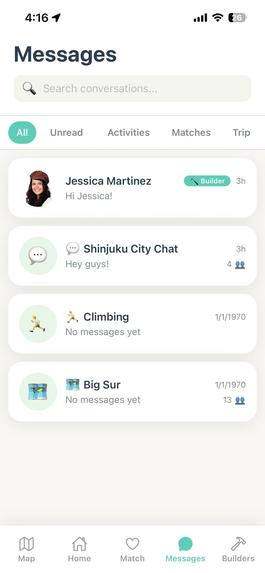
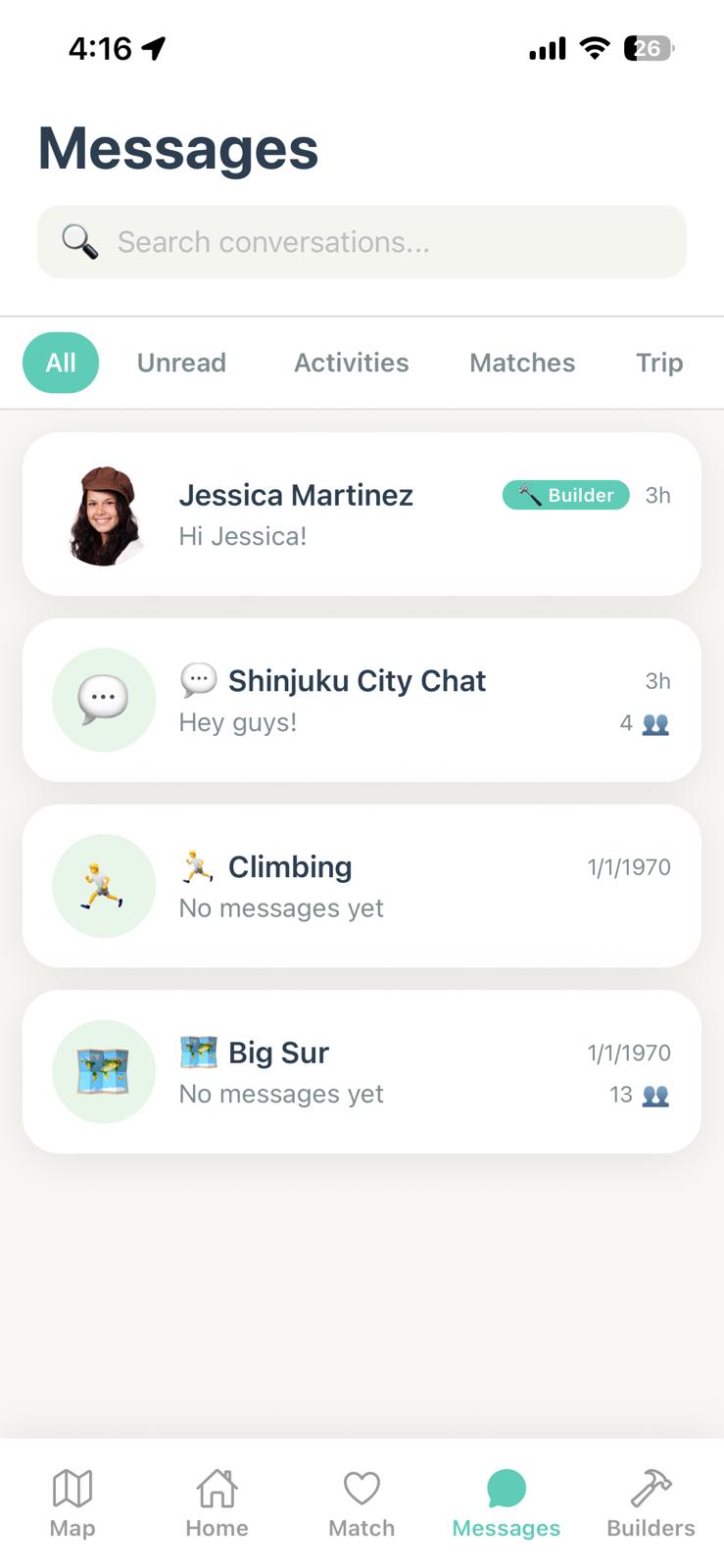
message screen
-
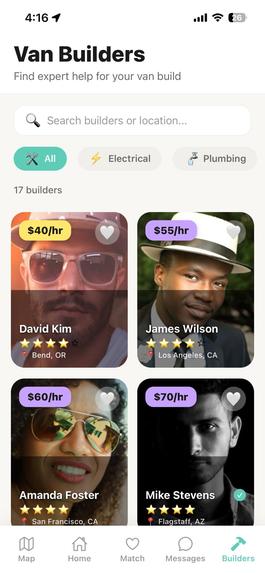
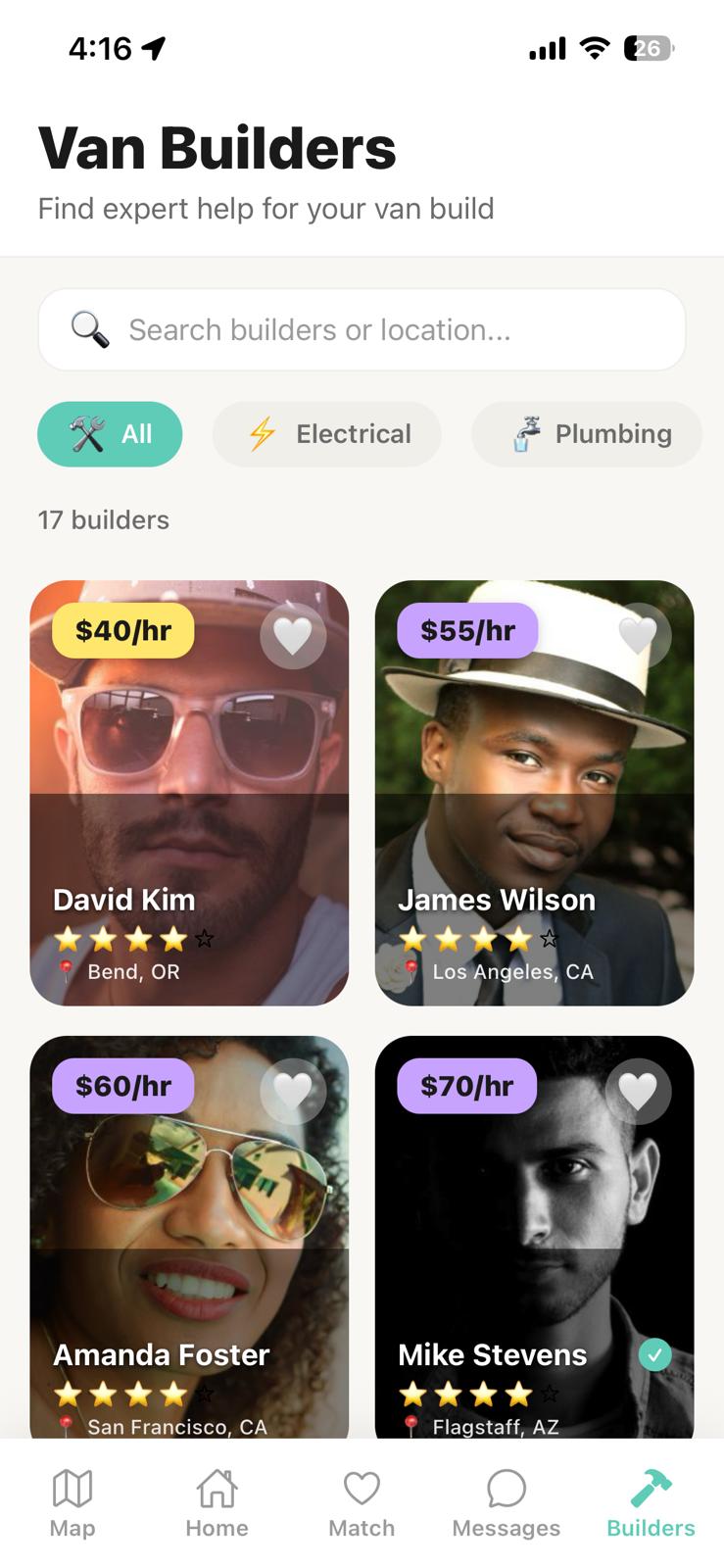
builder marketplace
Inspiration
I took a gap semester from Duke to train climbing in Japan (trying to make the Hong Kong National team — long story). Nobody warned me about what the loneliness actually feels like.
I'd walk back to my room after a long day at the gym and just... sit there. Beautiful country, cool experience, and somehow still weirdly isolated.
So when I saw Quin's brief about building something for van lifers, I didn't need to do much research. I already knew the feeling she was describing. The only difference is van lifers feel it every single day (new city, new spot, same problem).
And the thing that bugged me about every app I tried? They're all built for people who stay in one place. They show you who's nearby right now — which is kind of useless if you're leaving tomorrow. Nobody had built something that actually understood that these people are always moving.
Before I built the app
I downloaded 5 travels apps that help nomads find community. Timeleft, Nomad Table, TripBFF, and a few others. And I actually paid for the subscription. (my first time ever paying for any app purchase) I wanted to see if a person paying for it will actually be satisfied with the features.
The thing that surprised me the most is the paywall. Justin (one of the participants I met at the Timeleft dinner), speculated that having a paywall upfront, actually made the experience better. He said that people who paid and showed up were much more committed. Conversations felt more real, and people were properly engaged. It almost functioned like some sort of sunk cost of fallacy.
I then took screenshot of every screen from these apps that made me feel some kind of emotions.
What it does
One thing from testing all these apps is most social apps treat location as a static thing. You are here, other people are here, you match. That doesn't work for van lifers. They're never just "here." They're heading to Moab in two weeks, Big Sur in April, Portland after that.
So I built Taro around that reality, every core feature starts with movement.
🔨Builder Marketplace A verified section where experienced van builders list their specialties, hourly rates, years of experience, and ratings.
💬Layered Messaging Took inspiration from Nomad Table (another travelling app)Three types of chat: direct message, city chats , and destination chats (everyone heading to Moab next month). This mirrors how van lifers actually communicate. sometimes personally, sometimes as a traveling group.
✅ Verified + Safe Onboarding collects gender identity and match preference, van types. Builder profiles are verified. The app is also invite only, so starts with trusted Vanlifers. The community stays intentional by design.
How I built it
I'm not really a technical builder. I came into this hackathon not knowing how to write a single line of code in react native.
I taught myself using youtube tutorials, watched a JavaScript Course on how to use react native for building mobile apps. Expo Go for simulation. Supabase for backend. RevenueCat for subscriptions. Mobbin for UI.
Challenges we ran into
Supabase was harder than I expected
The backend took up more time than the actual UI. I had to learn RLS (Row Level Security) policies basically from scratch, because getting them wrong meant either users could see each other's private data, or nothing would load at all. I also had to read up on articles about security (one of which I really enjoyed was about the TeaApp Scandal)
The matching algorithm had an empty screen problem
The trip-based matching was designed to be smart. To match people heading to the same destinations. But when a new judge signing up would have no trips, so they'd see nothing. So I had to make sure I made the add new trip flow smooth. In that way, I kept the smart algorithm but made sure judges always saw something.
RevenueCat timing bugs
The SDK would sometimes initialize after the app already tried to call it, causing silent crashes. For example, the app just didn't work in cases like not using the app for several hours (causes stale data). I eventually fixed with an async check at the root level but I won't pretend I understood exactly why it worked :D)
Accomplishments that we're proud of
One specific thing I'm proud of:
The onboarding. I studied real onboarding flows, paid for apps, screenshot every screen that made me feel something, and rebuilt something that felt considered. 14 screens that actually collect useful data without feeling like a form.
The fact that there's a working app on my phone right now that I built from scratch in a few weeks still doesn't feel real.
What I learned
I learned that going through the full product market fit process yourself, from being the user, doing the research, feeling the friction, noticing what makes you stay and what makes you leave is something that is incredibly important when building new apps. I downloaded apps that weren't even in the same category just to understand what good onboarding felt like. I paid for Timeleft to see if the paywall actually changed my behavior (it did).
What's next for Taro - Van Life Community
Constellation —a live map showing all van lifers as moving dots across the US — is partially designed but not fully shipped. That's the first thing. It's the feature I think has the most viral potential, the kind of thing someone screenshots and sends to their van life group chat.
Deeper builder verification — right now builders self-report. The next version has reviews, verified job completions, and a reputation system. That's what makes the marketplace trustworthy enough for someone to actually hand over their van.
Monetization expansion — the subscription model is live but not fully optimized. The next step is A/B testing the paywall timing, adding a premium builder tier, and exploring whether a one-time van build consultation fee makes sense as a separate product.
Grateful for this experience and thank you RevenueCat for hosting this!
Built With
- expo-go
- expo-image-picker
- expo-location
- expo-router
- google-maps
- pgcrypto
- react
- react-native-stylesheet
- revenuecat
- sql
- supabase
- typescript


Log in or sign up for Devpost to join the conversation.