Inspiration
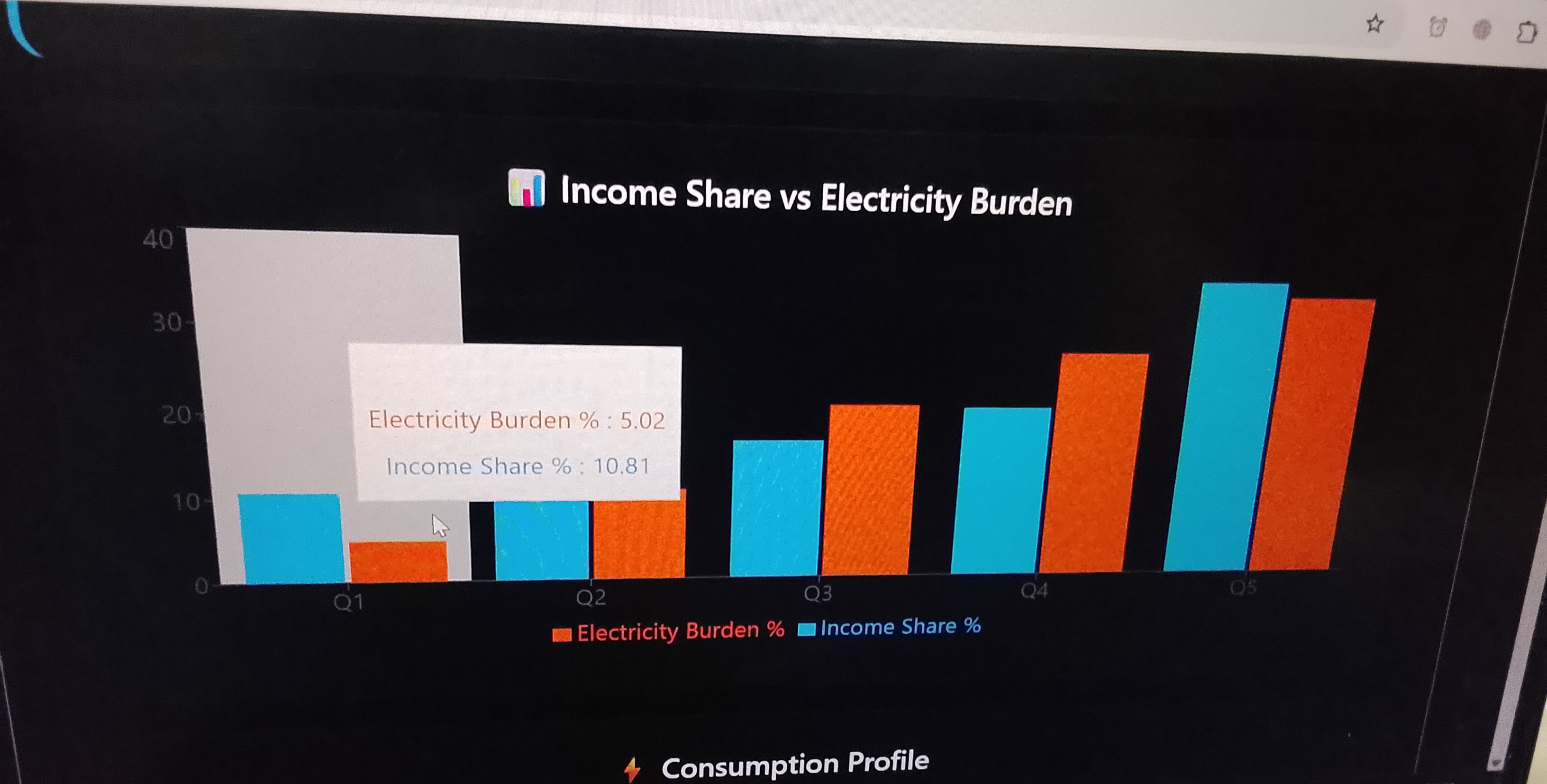
I read an economic research paper that asked a deceptively simple question: who actually pays the cost of imposed tariffs? That led me to explore the same question in electricity pricing—who really carries the burden when tariffs change?
What it does
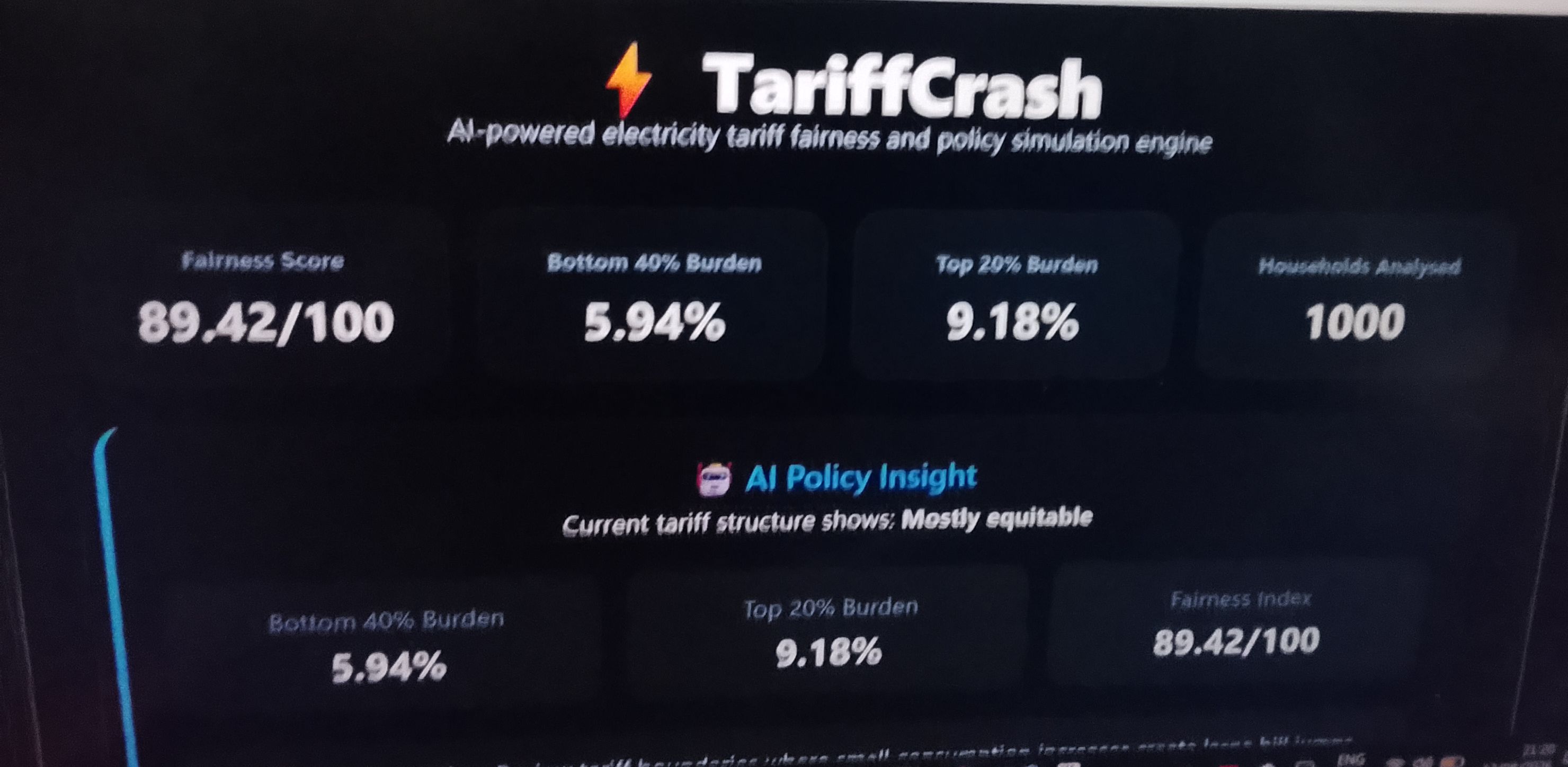
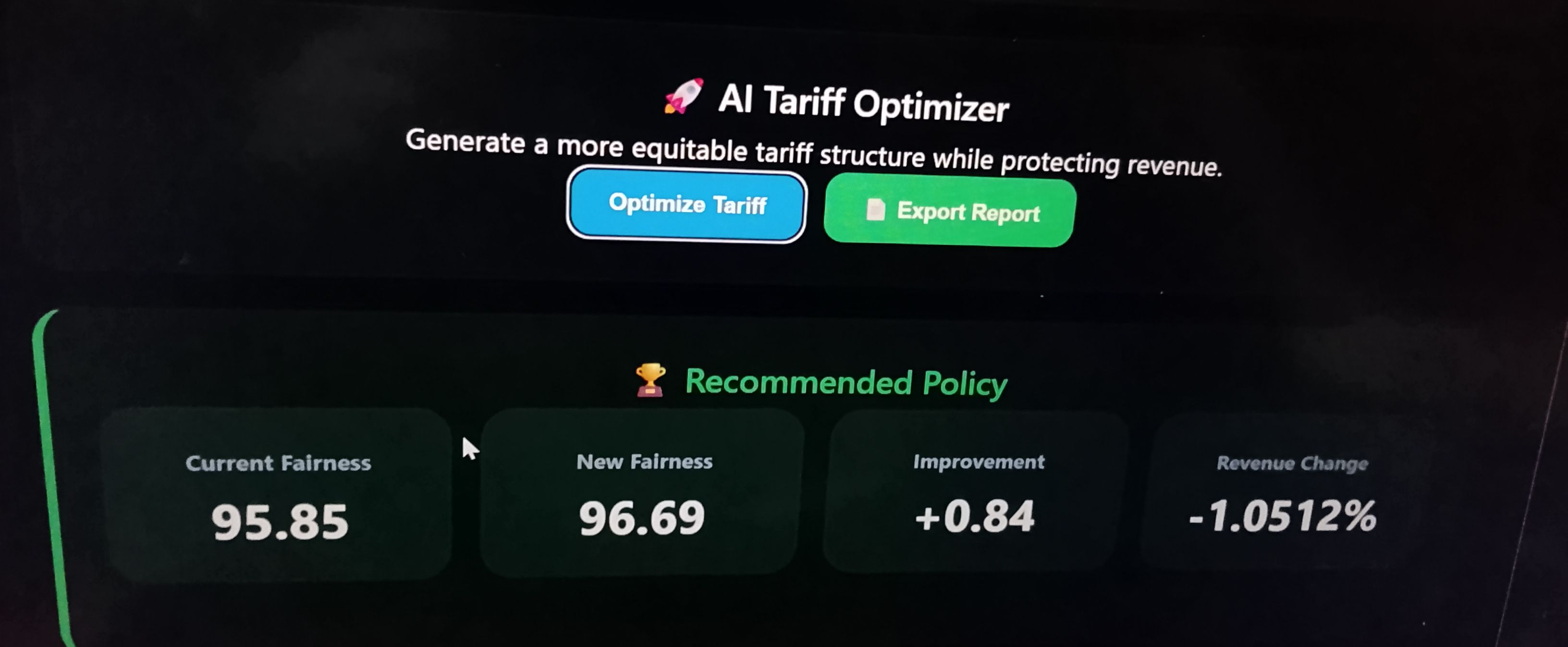
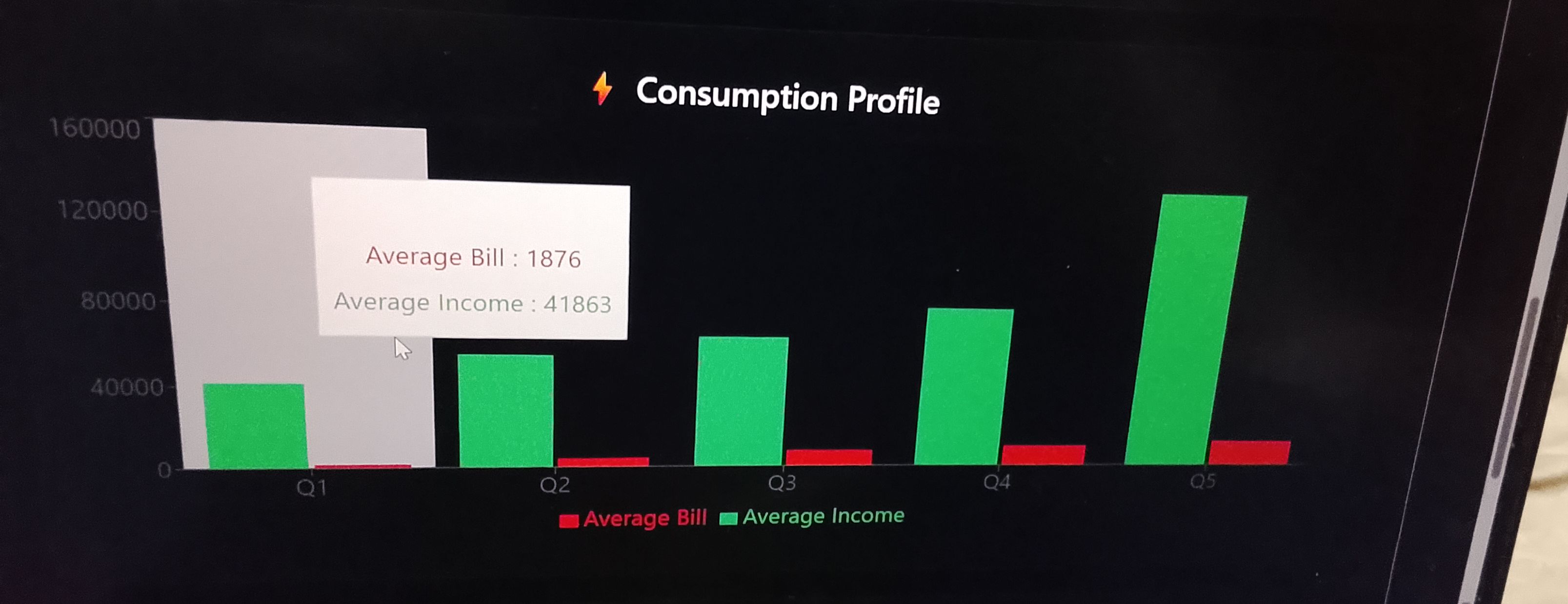
TariffCrash analyzes electricity tariffs across income groups, detects tariff cliffs, measures fairness, and suggests better tariff structures while considering revenue stability.
How I built it
I built it using Python, FastAPI, Pandas, NumPy, React, Vite, and Recharts, with a simulated household dataset, fairness model, tariff-cliff detection, and optimization engine.
Challenges I ran into
The hardest part was defining “fairness” mathematically. A cheaper bill doesn't necessarily mean a fairer bill if it consumes a much larger share of someone's income.
Accomplishments that I'm proud of
I turned an economic research question into a working interactive tool that doesn't just identify unfairness—it tests and recommends alternative tariff structures.
What I learned
I learned that averages can hide a lot. A tariff can look perfectly reasonable overall while placing a disproportionate burden on certain households.
What's next for TariffCrash
I want to move from simulated data to real-world utility and household data, add more policy constraints, and make TariffCrash useful for testing tariff reforms before they affect millions of consumers.
Built With
- fastapi
- javascript
- numpy
- pandas
- python
- react
- recharts
- vite
