-
-
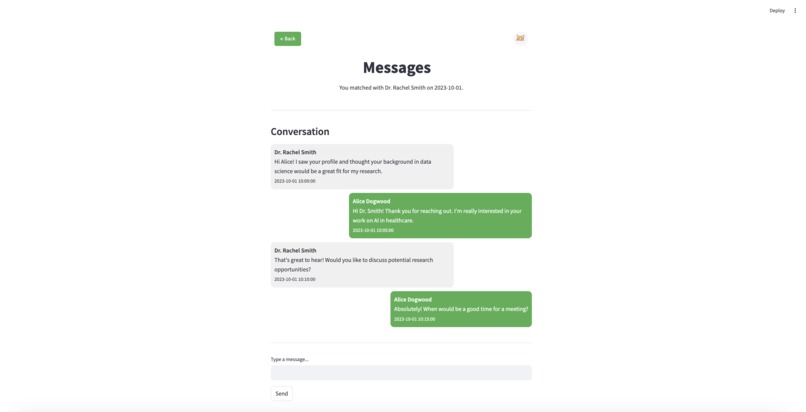
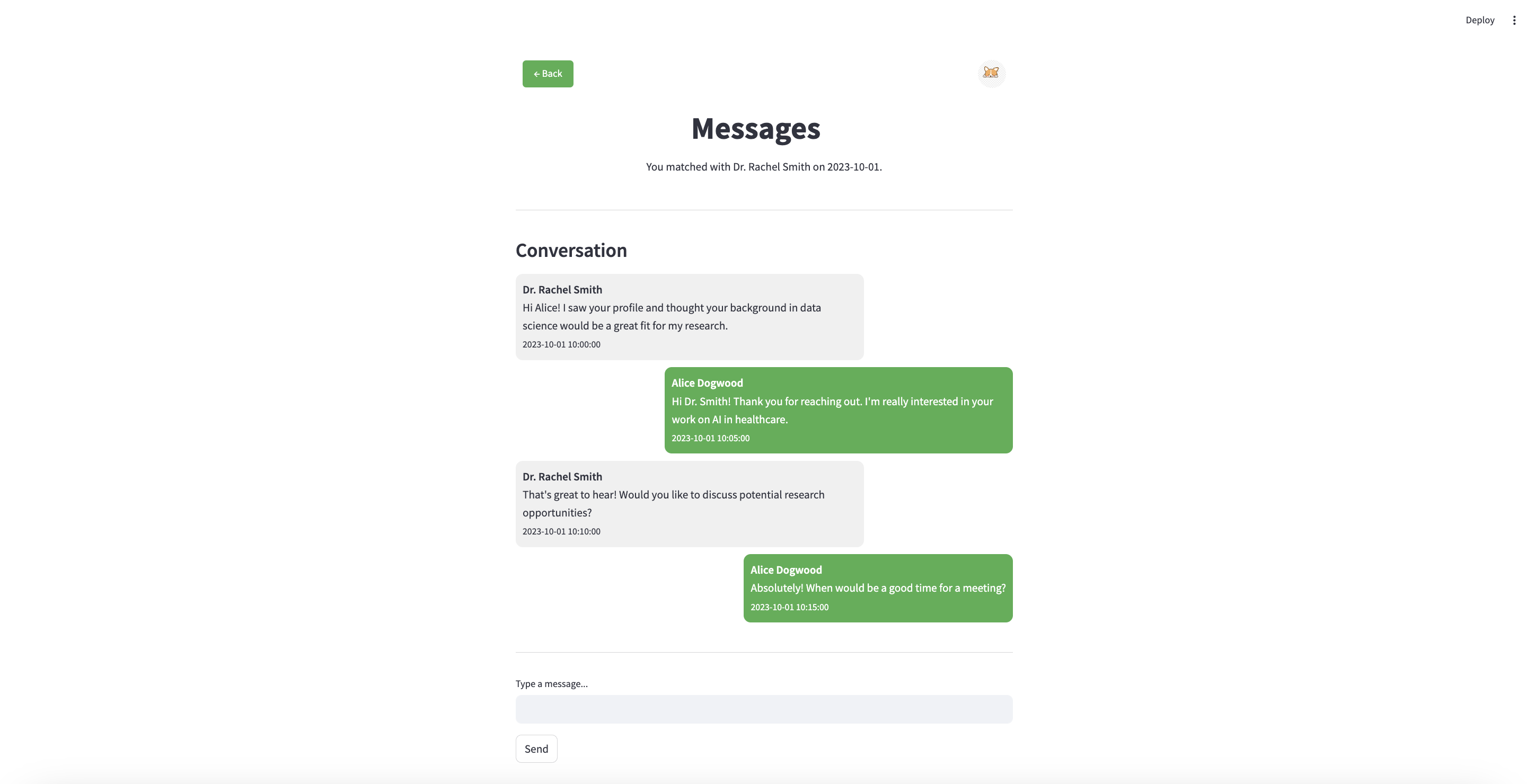
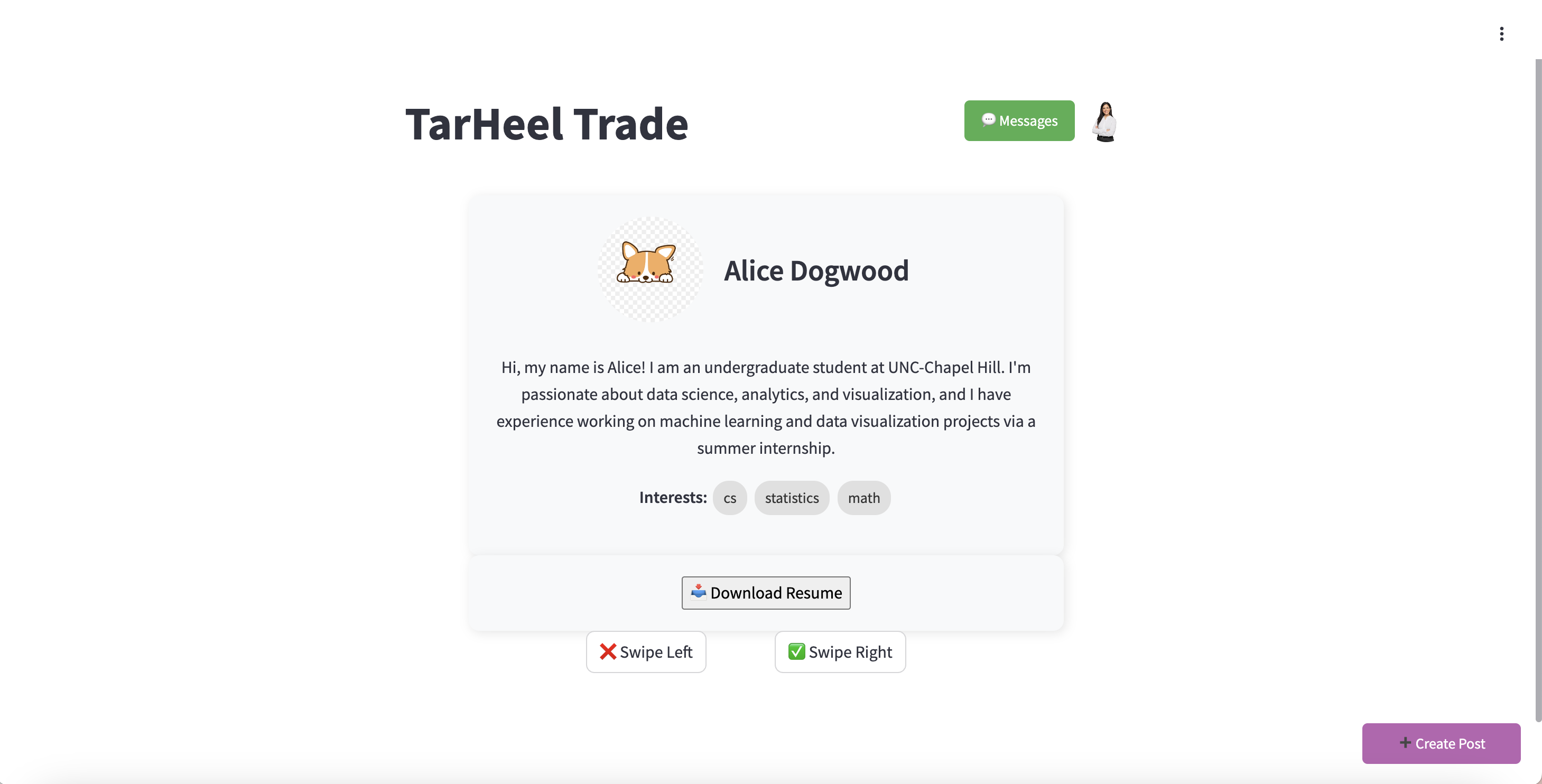
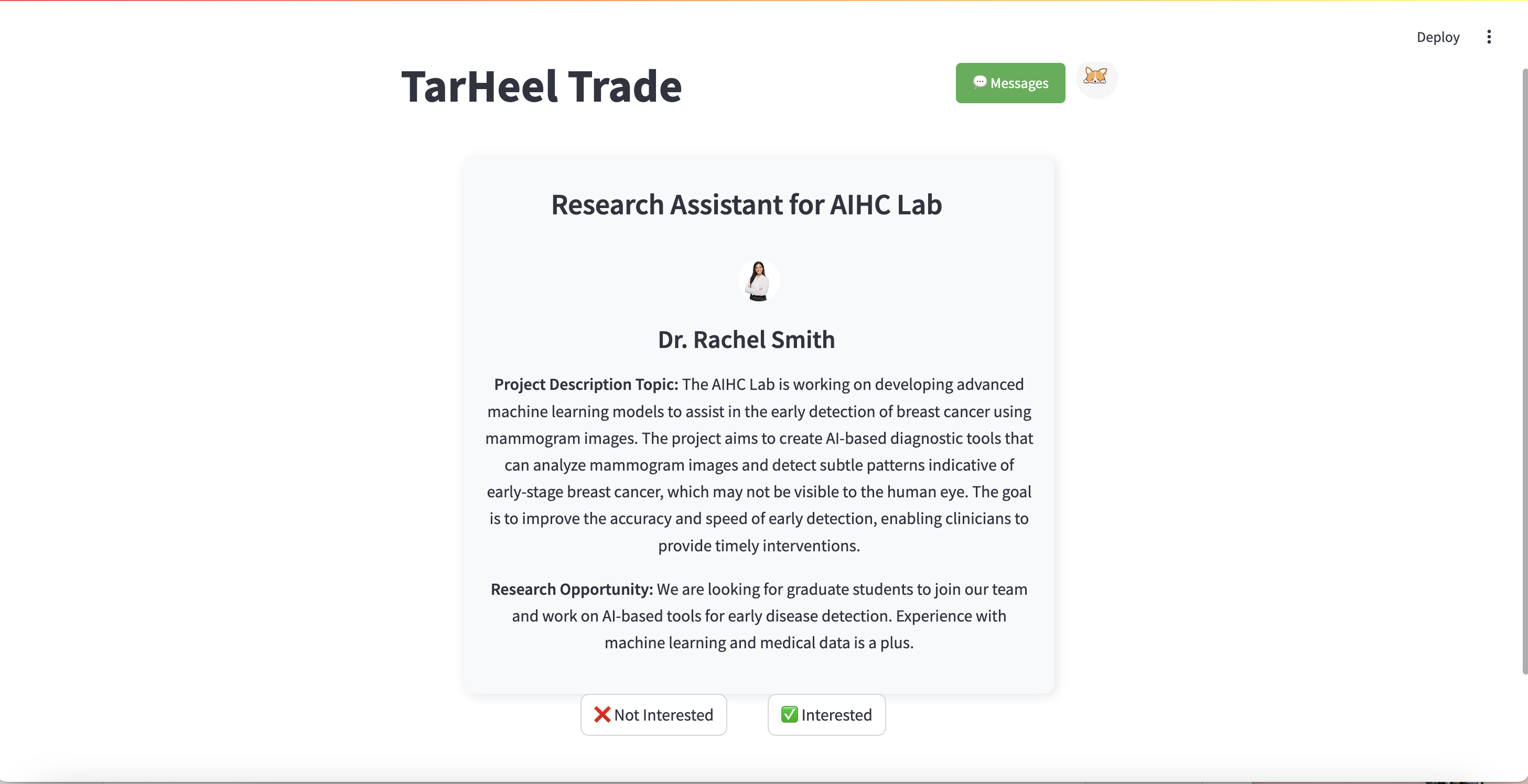
Messaging screen from the student's view.
-
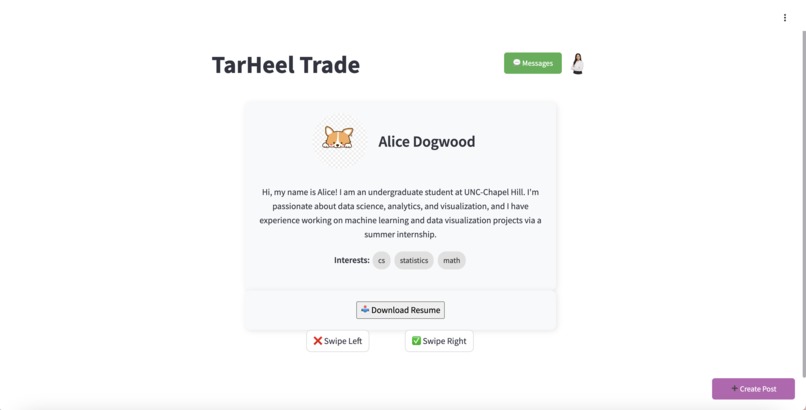
Professor view of students' applications to their research postings. They can also use the "Create Post" button to post a new opportunity.
-
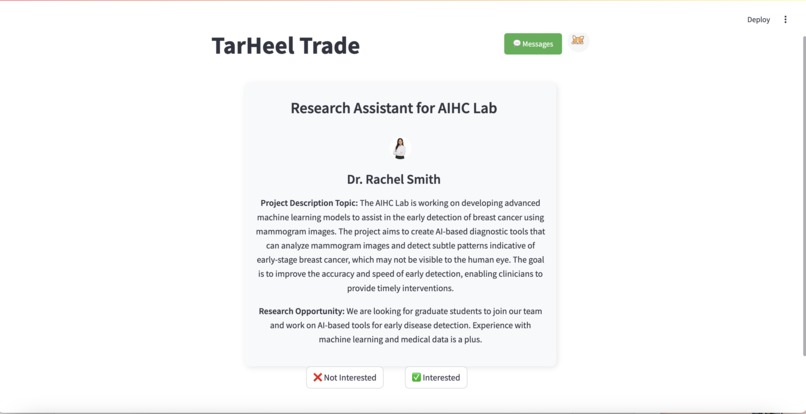
Student view of various research opportunity postings made by professors.
Inspiration
Tarheel Trade was inspired by the need to foster real-time collaboration and networking within academic communities. The goal was to create a platform that connects students, professors, and peers with complementary skills to enhance research opportunities and facilitate skill sharing.
What it does
Tarheel Trade is a platform that connects students with professors for research opportunities. Professors can post specific research projects, while students create profiles to find potential mentors or collaborators. It includes features like research matchmaking and a gamified karma system that incentivizes meaningful interactions and collaboration.
How we built it
We built Tarheel Trade using Streamlit, which allowed us to quickly prototype and deploy a web app that’s both user-friendly and interactive. We incorporated features like research matchmaking, a swipe mechanism for skill-based collaboration, and the ability for students and professors to create posts detailing their research needs or skills they’re looking to collaborate on. Additionally, we implemented a messaging feature, enabling users to easily communicate once a match is made.
Challenges we ran into
We ran into a ton of issues with the login page, particularly with ensuring it correctly differentiated between the student and professor views. This was crucial for tailoring the user experience based on their role. Additionally, we struggled with understanding how Streamlit works and how to align it with the database, especially since all the different points of the application—profiles, posts, messaging, and matchmaking—needed to interact seamlessly with the database.
Accomplishments that we're proud of
We’re proud of how quickly we were able to build a rough prototype using Streamlit, and how we managed to integrate research matchmaking into one cohesive platform. We also came up with an innovative idea for a gamified karma system that adds a unique touch and encourages ongoing interaction and collaboration.
What we learned
Through this project, we learned the importance of creating a clear and intuitive user flow, especially when building features that require different views for students and professors. We also discovered the complexity of integrating a dynamic platform like Streamlit with a real-time database like Supabase, as syncing data across multiple features (profile creation, matchmaking, messaging) proved to be trickier than anticipated. Additionally, we gained valuable insights into how crucial it is to thoroughly test the interaction between different components of the app to ensure smooth functionality and seamless user experience. Overall, the project highlighted the significance of planning out both the technical architecture and user experience before diving into development.
What's next for TarHeel Trade
We didn’t end up successfully implementing the backend during this phase, so one of our next steps is to focus on building out the backend functionality. A key priority is creating the matching algorithm to improve how students and professors are paired based on shared interests and expertise. Additionally, we want to flesh out the karma system to make it more engaging and rewarding, encouraging users to interact and collaborate more actively. With these improvements, we aim to make the platform more dynamic and fully functional.

Log in or sign up for Devpost to join the conversation.