-
-
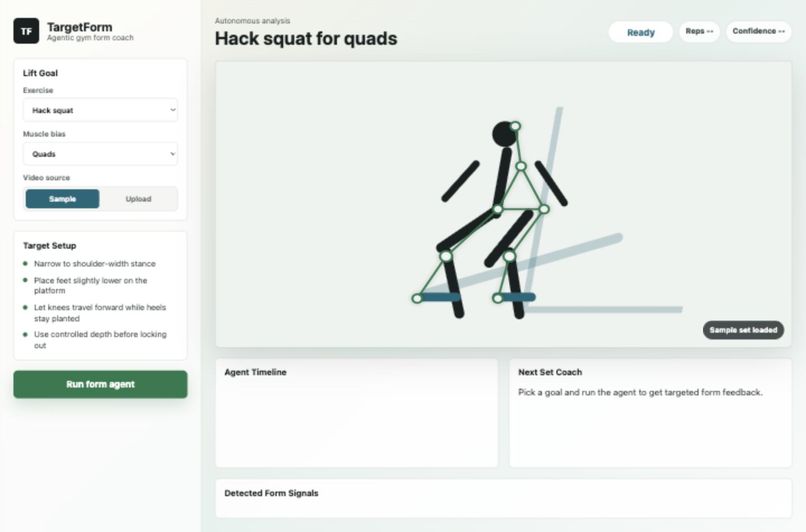
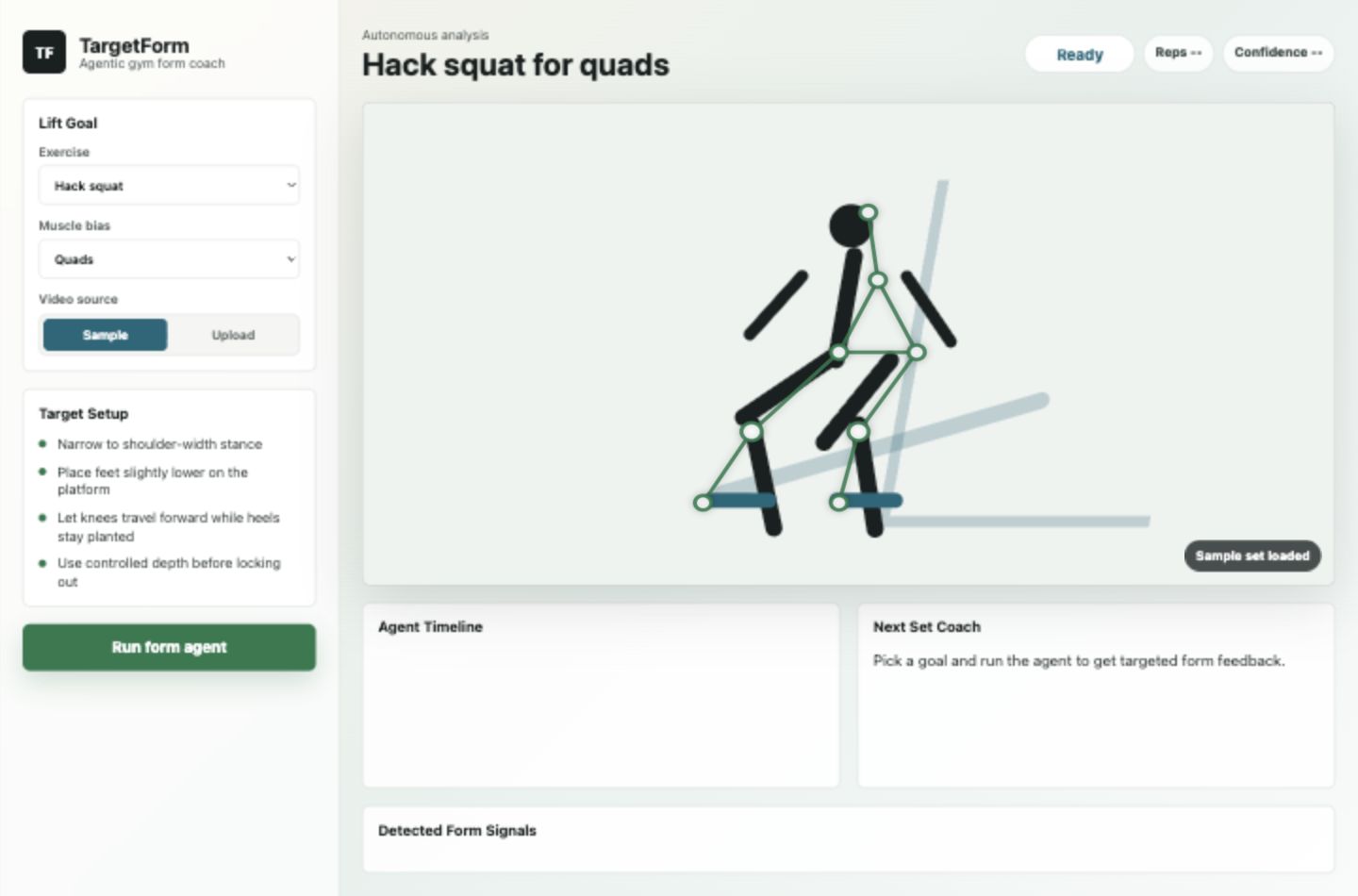
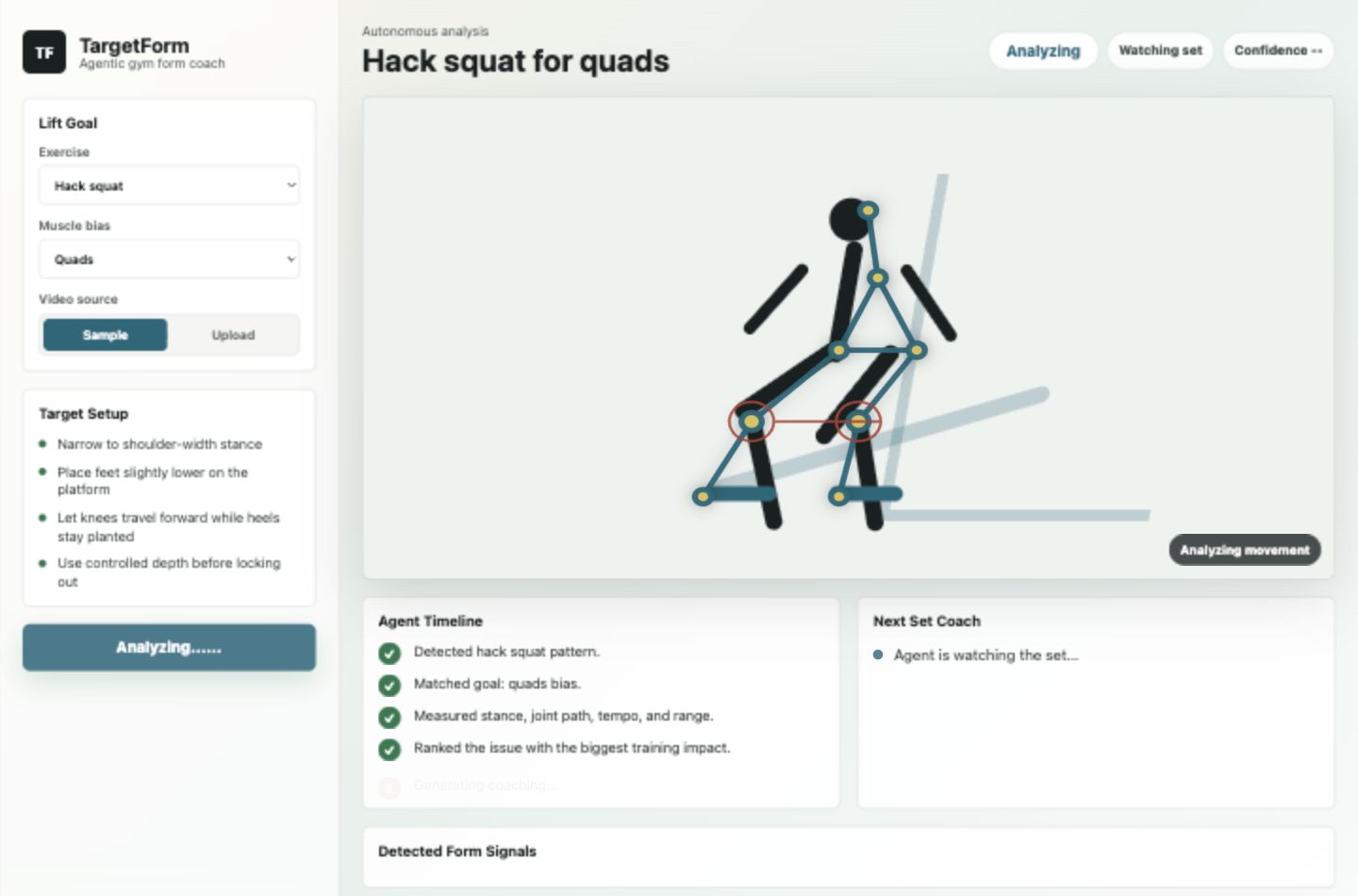
User selects the exercise and target muscle.
-
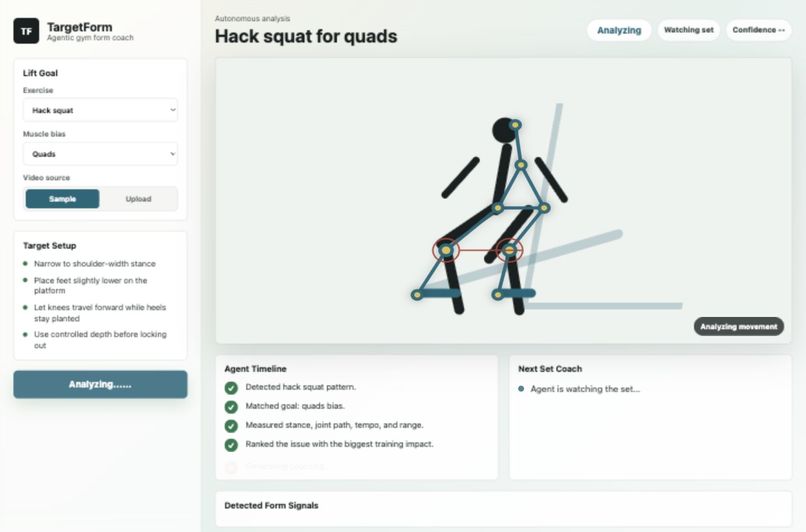
Agent runs through detection, goal matching, form evaluation, and coaching generation.
-
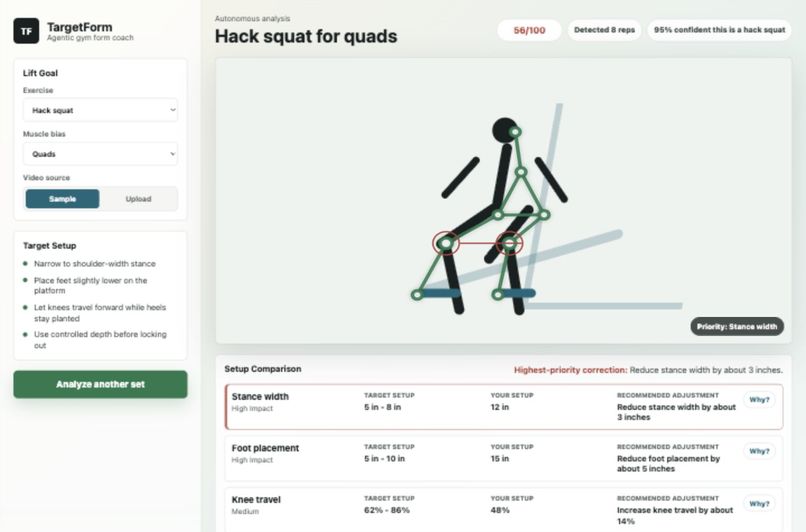
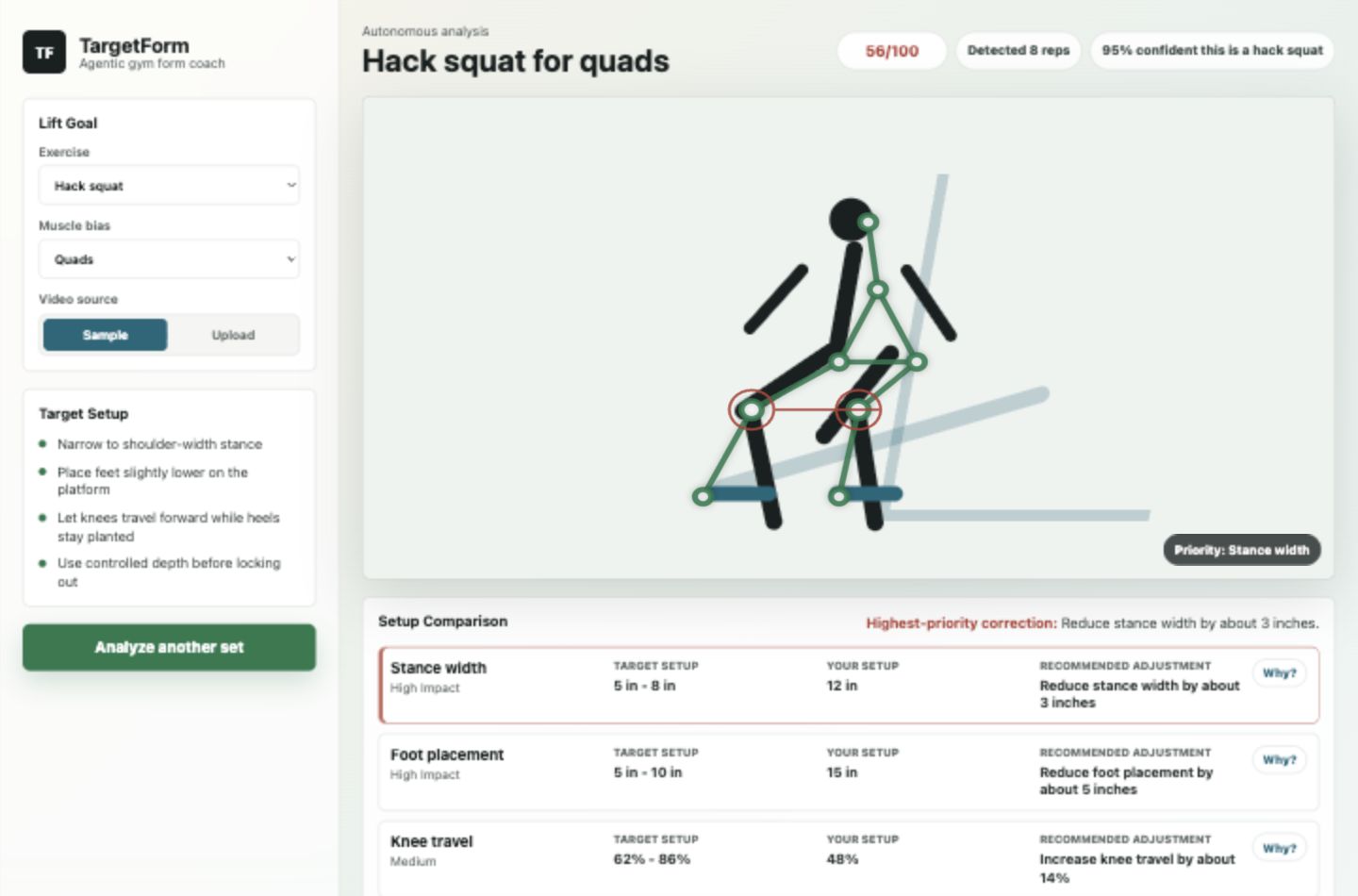
Agent shows form score, reps, confidence, priority correction, and severity-labeled feedback.
Inspiration
As people who spend time lifting, we noticed that most fitness apps give the same generic form advice to everyone. In reality, proper technique depends on your goal. Someone training hack squats for quads should use a different setup than someone trying to emphasize glutes. We wanted to build an AI agent that acts more like a personal coach by first understanding what the user wants to achieve, then analyzing their lift and deciding on the most impactful correction.
What it does
TargetForm is an AI gym coaching agent that helps lifters improve their technique based on their training goals.
The user selects an exercise, chooses the muscle they want to emphasize, and uploads a workout video or uses a sample demonstration. The agent determines the ideal movement pattern for that goal, evaluates the lift, identifies the highest-priority form issue, and generates personalized coaching for the next set. Instead of overwhelming users with multiple corrections, it focuses on the single adjustment that will have the greatest impact on their performance.
How we built it
We built TargetForm using HTML, CSS, and JavaScript with a rule-based AI decision engine.
The agent contains exercise-specific movement models for multiple lifts and different muscle biases. Based on the selected exercise and goal, it determines the ideal technique, compares it against detected form signals, ranks the largest mismatch, and generates personalized coaching. The interface also visualizes the agent's reasoning through an analysis timeline, confidence score, detected form signals, and next-set coaching recommendations.
Challenges we ran into
One of the biggest challenges was translating coaching advice into measurable rules. Fitness cues like "use a narrower stance" or "drive your knees forward" are subjective, so we had to convert them into objective movement criteria the agent could evaluate consistently.
Another challenge was deciding how much feedback to provide. Rather than pointing out every possible mistake, we designed the agent to prioritize the most important correction so users have one clear focus for their next set.
Accomplishments that we're proud of
We're proud of building an AI agent that goes beyond simply pointing out form mistakes. It reasons about the user's training objective, determines the ideal movement pattern for that goal, evaluates the lift, and generates personalized coaching.
We're also proud of creating an intuitive interface that clearly communicates the agent's reasoning through analysis timelines, confidence scores, detected form signals, and actionable next-set recommendations.
What we learned
This project taught us how to build an AI agent that makes decisions instead of simply responding to prompts. We learned how to model exercise technique using structured rules, prioritize competing form issues, and design an interface that makes the agent's reasoning easy to understand.
It also gave us experience building an end-to-end decision pipeline that observes, evaluates, prioritizes, and coaches based on each user's individual fitness goals.
Built With
- fastapi
- html/css
- javascript
- mediapipe-pose
- openai-api
- opencv
- python
- react

Log in or sign up for Devpost to join the conversation.