-
-
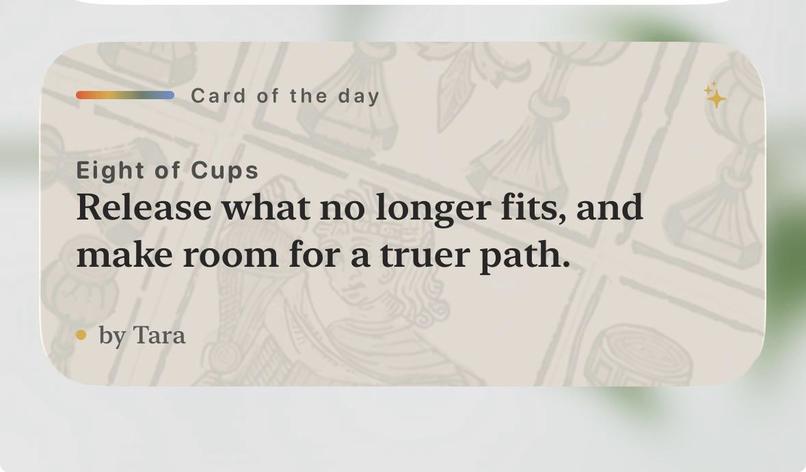
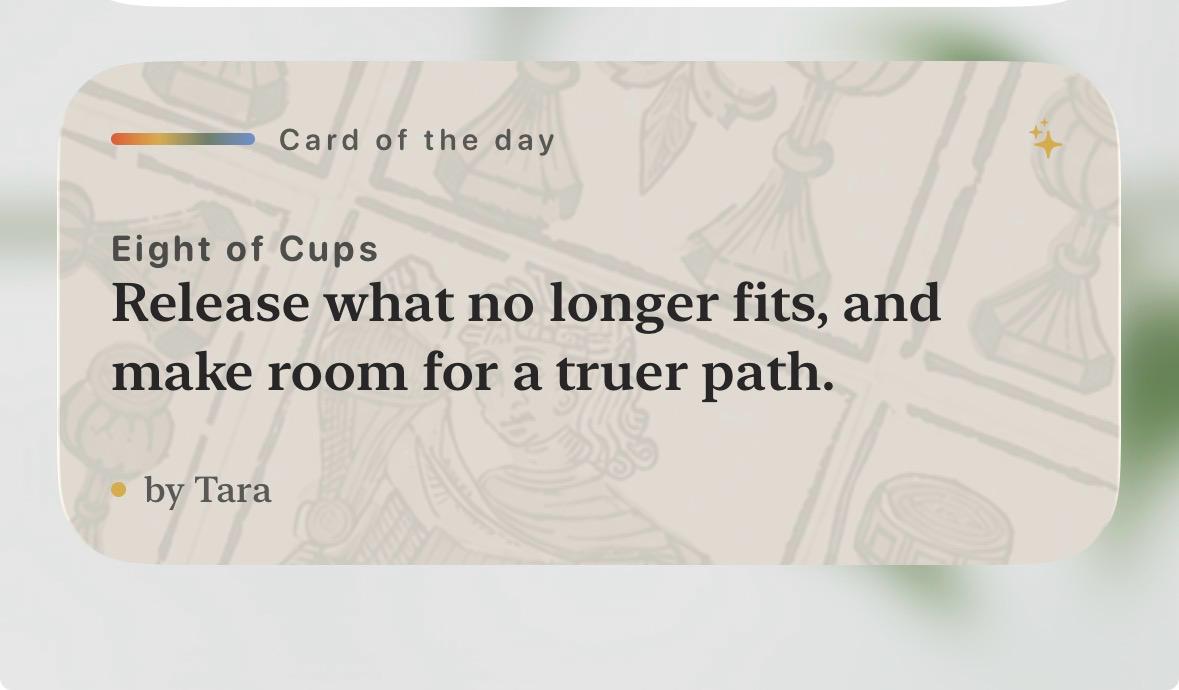
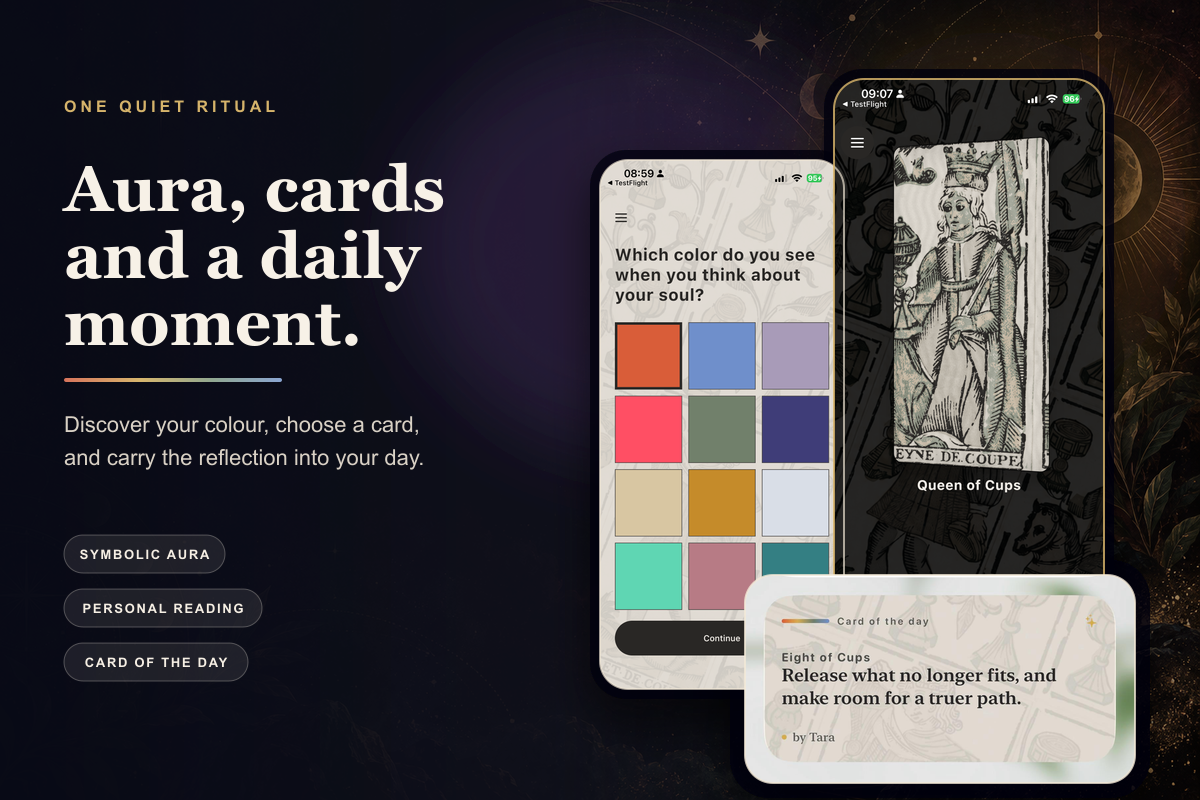
Card of the Day widget - reflection beyond the app
-

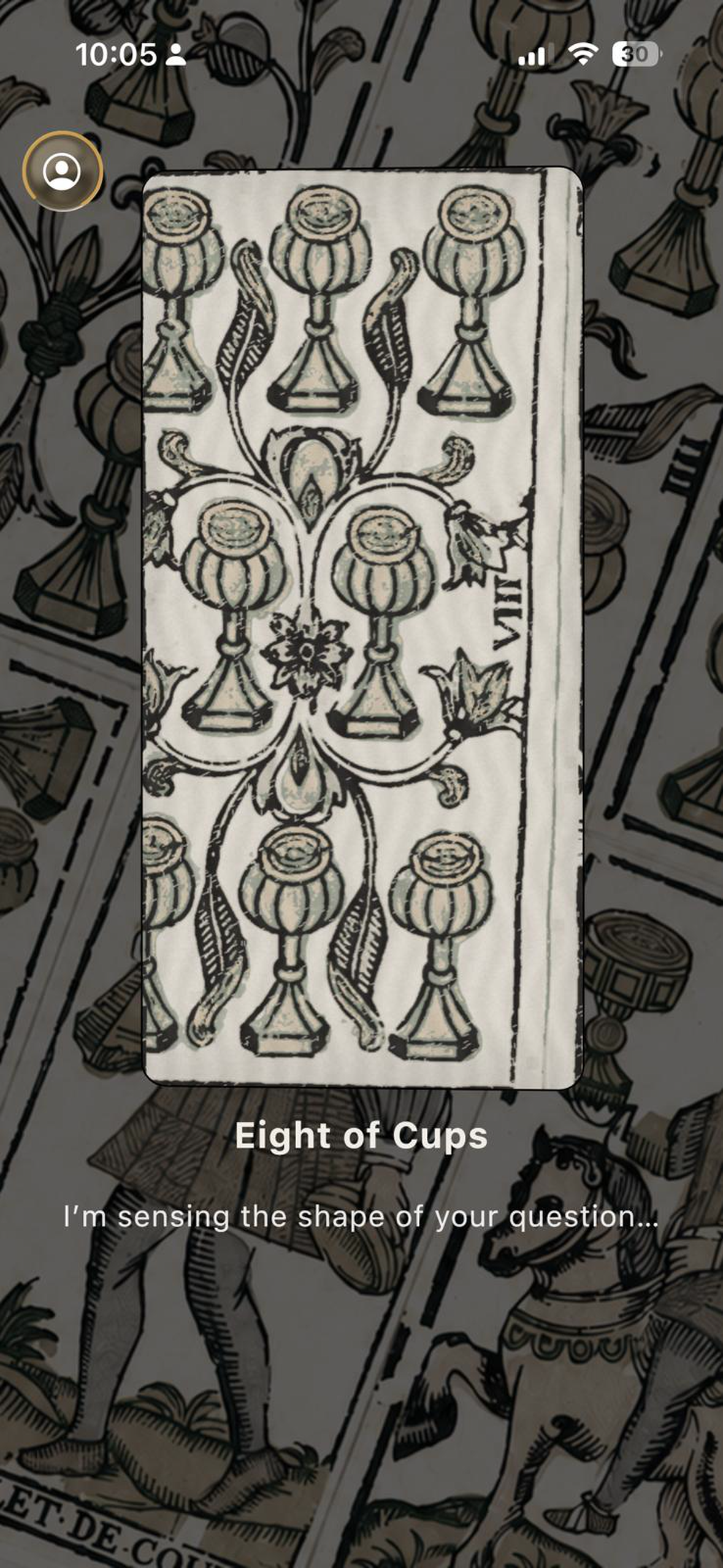
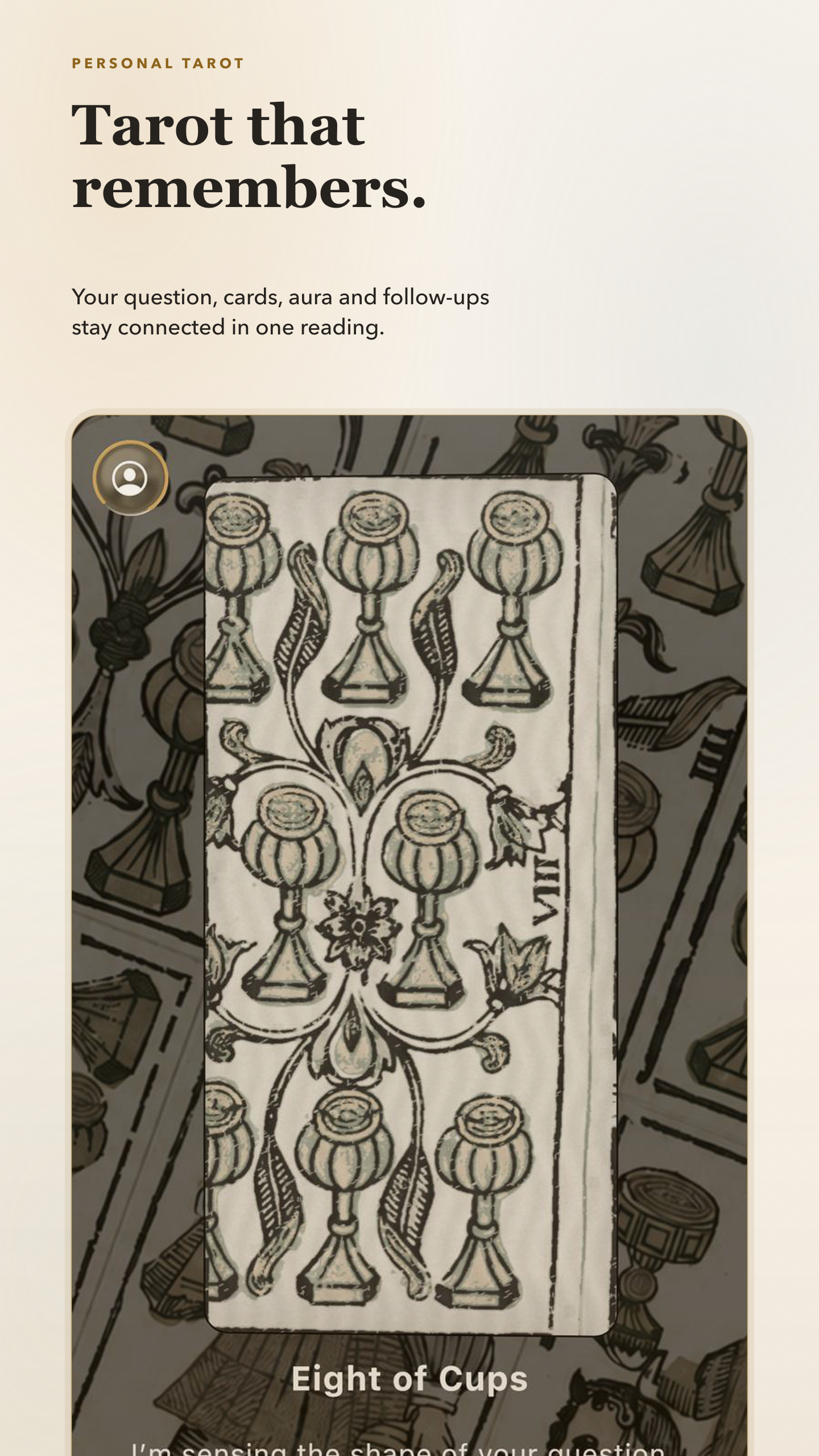
A card appears while the personalized reading is prepared
-
 GIF
GIF
Tactile card selection, shuffle, and reveal - motion designed as part of the reading ritual.
-
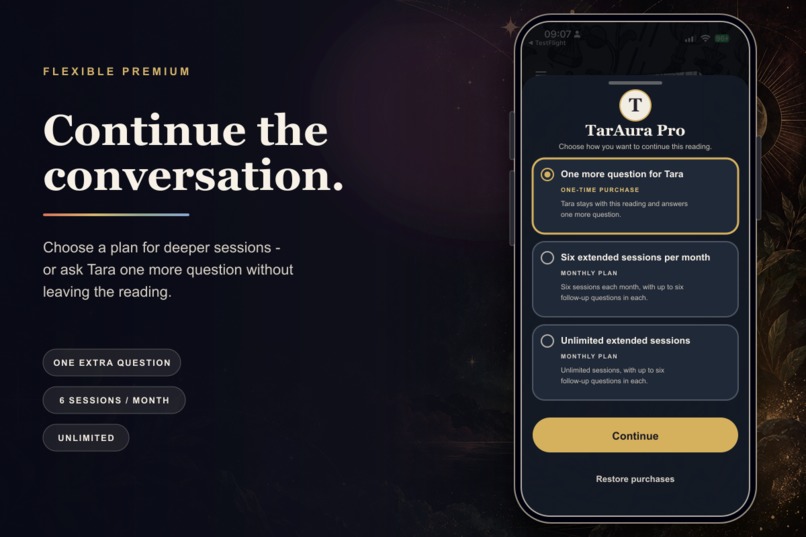
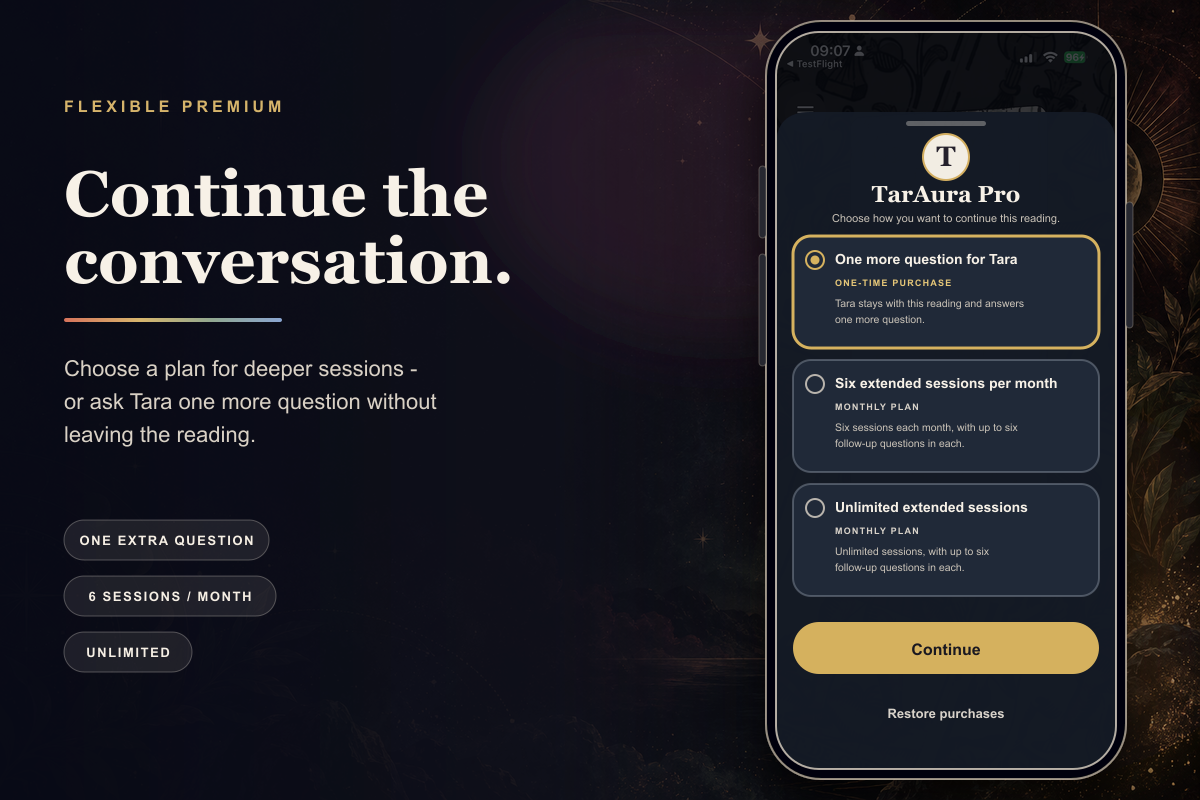
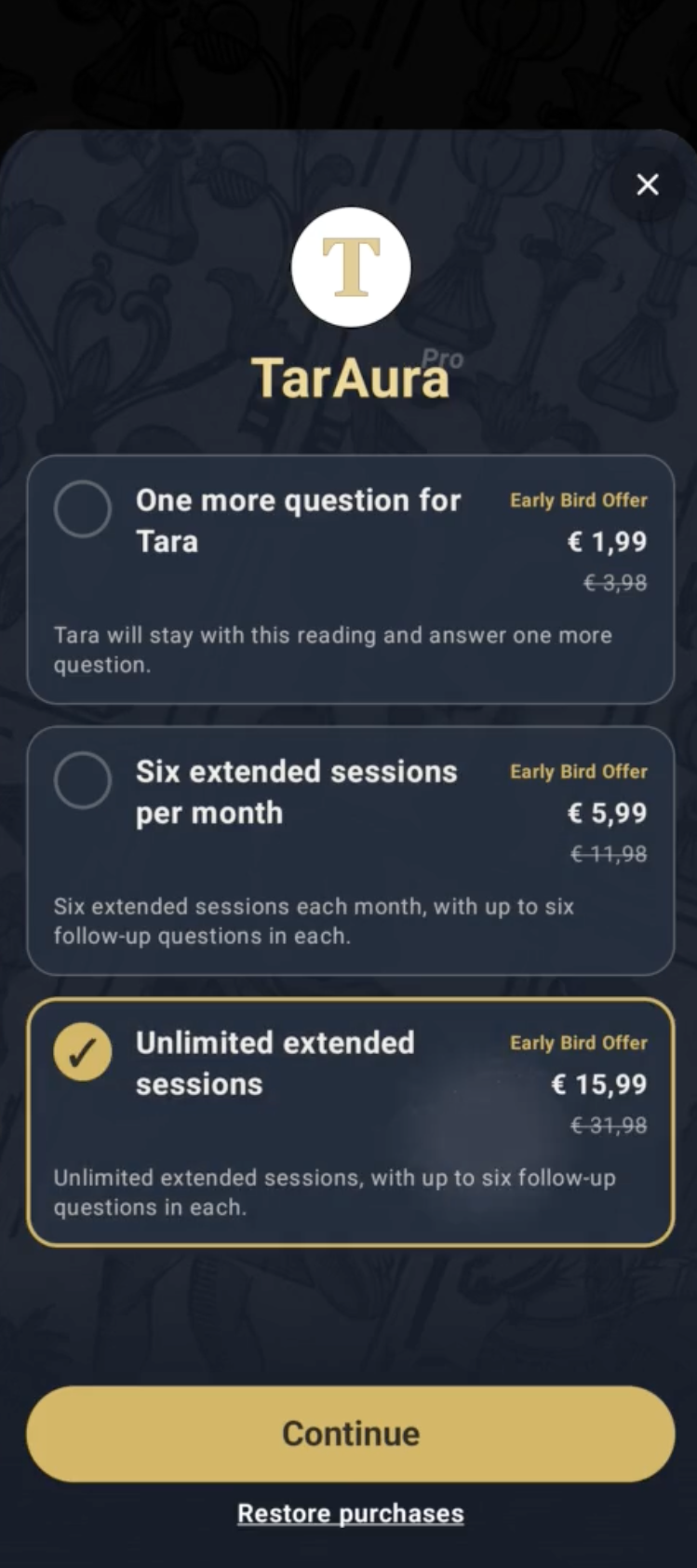
Flexible premium access: one extra question, six monthly sessions, or unlimited sessions.
-
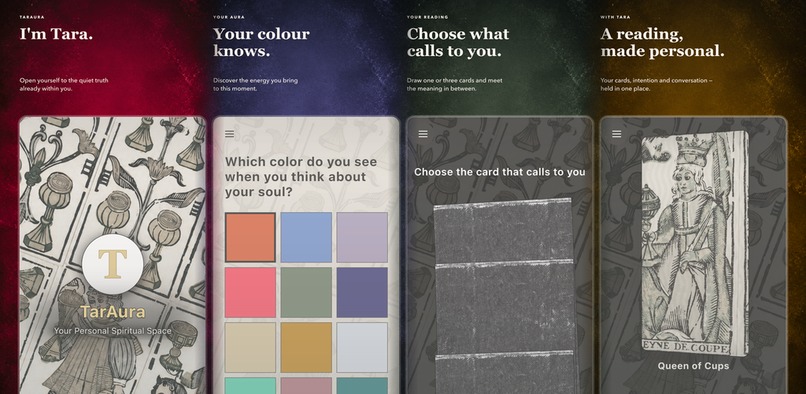
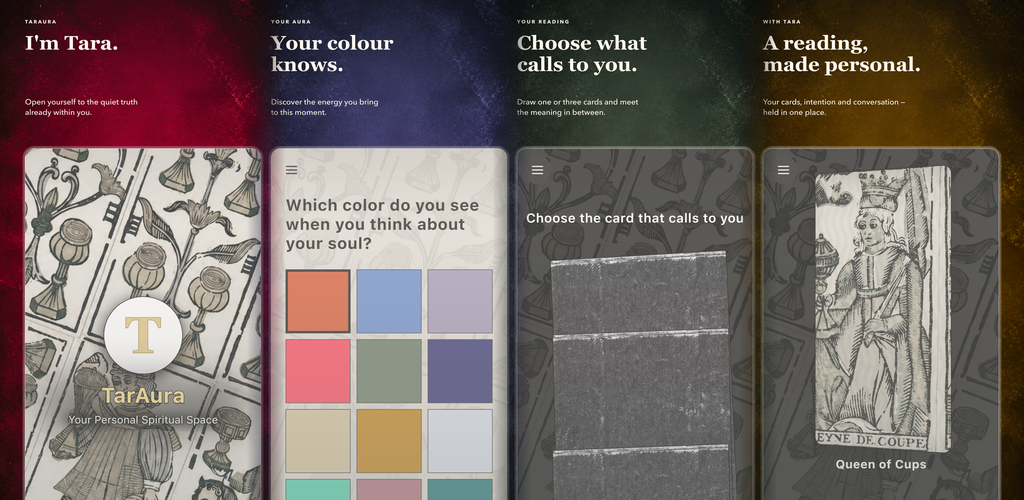
One visual system across onboarding, aura, card choice, and reading
-
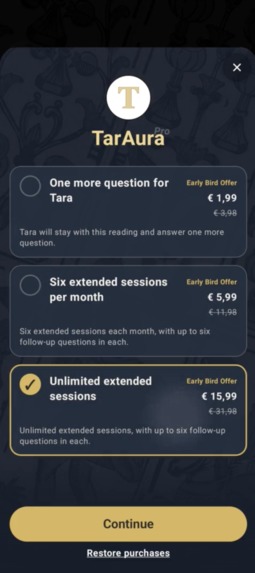
Paywall
-

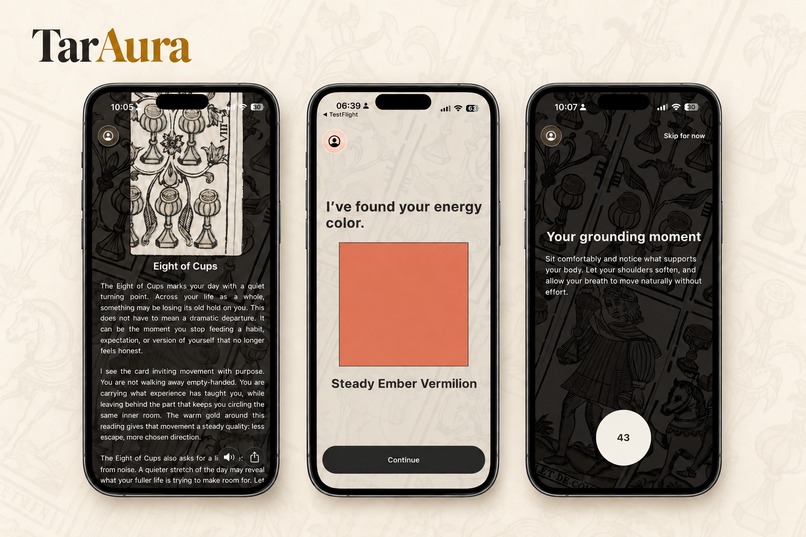
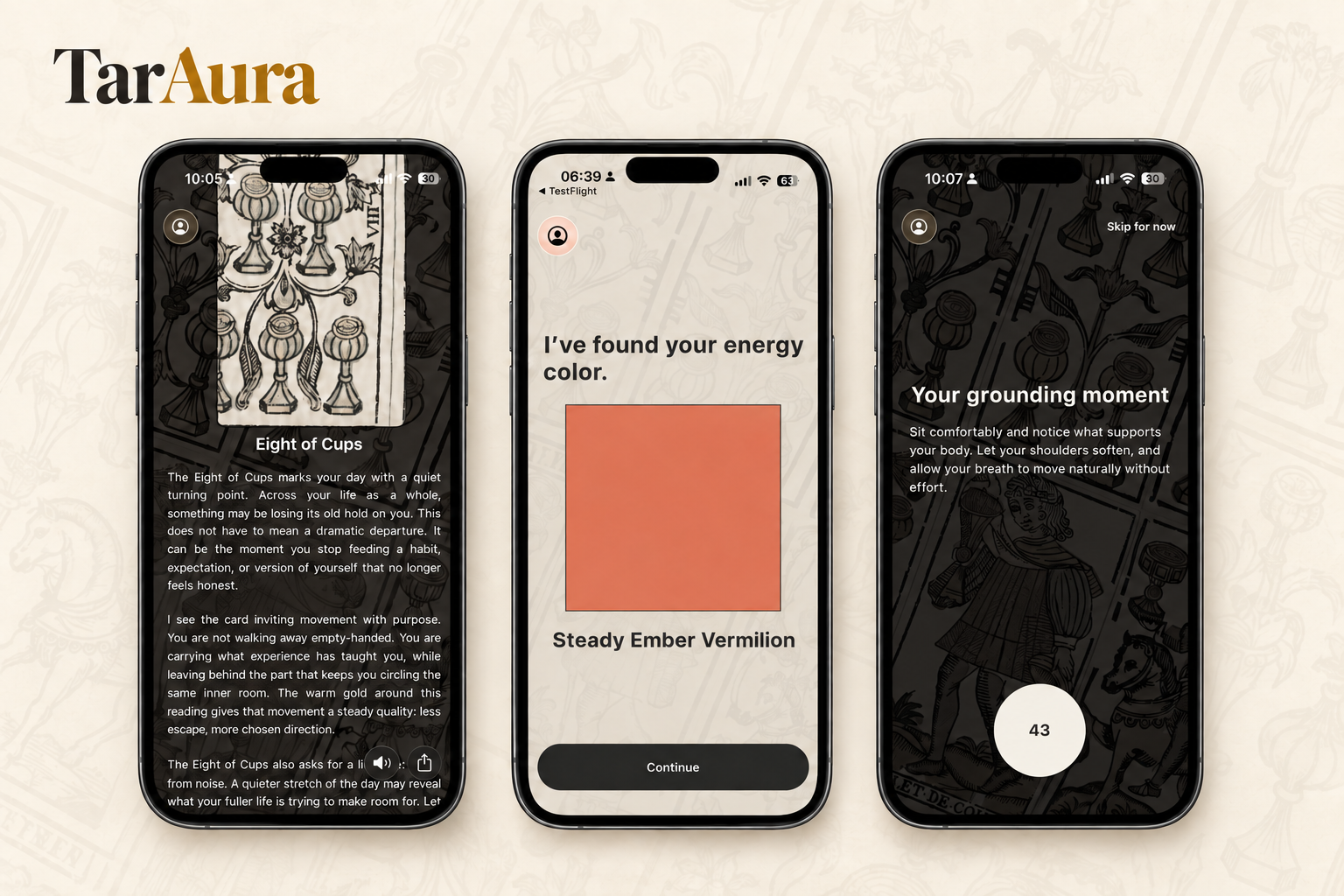
A grounding moment that follows insight with a calm physical pause
-
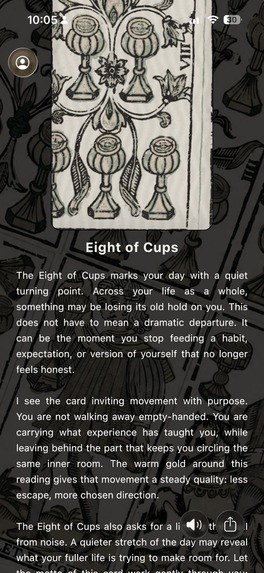
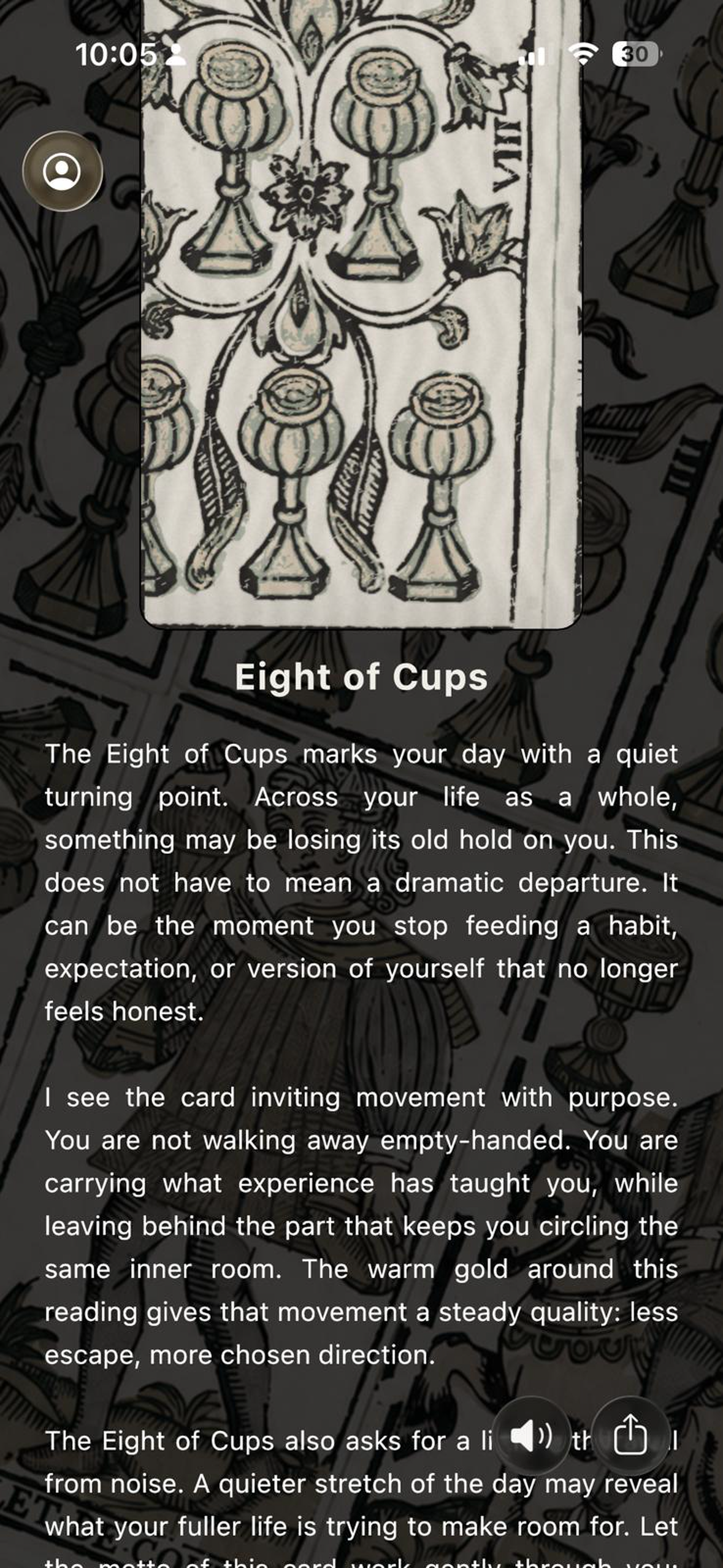
A complete reading with text, voice, and sharing controls
-
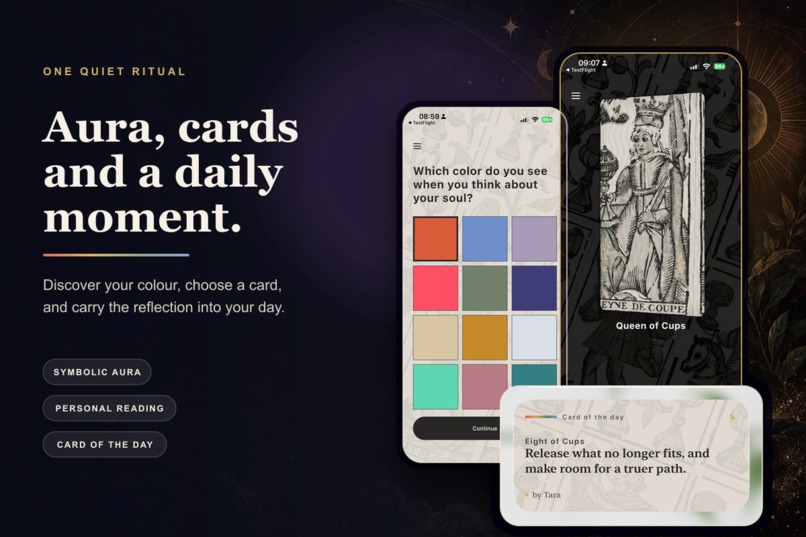
Aura, card reading, and the Card of the Day widget in one continuous ritual.
-

TarAura
-
-

-
-

Icon 1024x1024




Inspiration
When we are faced with life’s challenges, so many of us seek answers externally - we seek advice, guidance, and anything that points us in a direction. However, this constant search for external validation separates us from our own sense of self-trust. Everyone has intuition, but not everyone knows how to listen to it. TarAura was inspired by the moments of reflection and insight that practices like tarot can create. The TarAura team sees tarot as a tool for looking inward, asking better questions, and gaining a little more perspective on what’s happening in one’s life. We wanted to bring that experience into a more modern format—one that could offer the depth and intention of a one-on-one tarot reading, but be available whenever someone is looking for a moment of reflection.
The goal was to create an AI-guided experience that makes personalized tarot more accessible without losing sight of the traditions, practices, and humanity that have shaped it. To do that, we joined with an experienced tarot reader and National Board-Certified Health and Wellness Coach who takes a unique approach to bridge energy work, tarot reading, and positive psychology. That work helped us understand how things like intention, symbolism, personal context, and emotional state can come together to make a reading feel meaningful and impactful. Those ideas became part of how we approached building TarAura.
What it does
TarAura gives people a personalized tarot reading whenever and wherever they want a moment of reflection or insight. The experience is designed to meet people where they are—whether they see tarot as a spiritual practice, a tool for personal growth, or simply a way to explore a question or situation in their life. TarAura starts by offering simple, evidence-based grounding exercises and asking a few questions to understand the user and help them set an intention for the reading. It then uses their responses, environment, and chosen reading format to shape the experience, including a personalized energy color profile. As the reading begins, users can watch the cards being shuffled and choose the cards that catch their attention. Rather than taking the human element out of tarot, TarAura keeps the user's own attention, intuition, and choices at the center of the experience. The result is a reading that feels personal and gives users space to reflect, explore, and draw their own meaning from the cards.
TarAura allows users to:
- draw one-card and three-card readings with upright and reversed cards;
- choose cards from an animated deck instead of receiving an opaque random result;
- hear readings from two unique AI assistants Tara or Luna while the text remains available on screen;
- ask follow-up questions and move naturally from insight into a short grounding exercise;
- revisit past readings stored locally on the device;
- see a shared Card of the Day directly in an Android or iOS widget;
- use the experience in any of 41 supported languages.
TarAura does not require an account. Reading history remains local, the aura reflection archive is encrypted, and the app sends only the context needed to generate a response.
How we built it
The app uses Kotlin Multiplatform and Compose Multiplatform so the core product, navigation, visual system, reading flows, localization, and purchase experience can evolve together across Android and iOS. Native integrations are used where they matter. We’ve included widgets, HealthKit mindful-session logging, haptics, platform-specific shapes, audio behavior, and store purchases.
RevenueCat is the monetization backbone. It presents launch and regular offerings, restores purchases, checks the taraura_premium entitlement, and gives the app one source of truth for purchase state across platforms. The optional human-reader email request is also verified against RevenueCat purchase state before the request is accepted.
AI requests pass through a Cloudflare Worker. Generated text uses OpenAI, Tara voice uses Google Gemini with an availability fallback, and Resend delivers the optional human-reader request. The worker has no application database for private reading histories.
Challenges we ran into
Our biggest challenge in building TarAura was finding the right balance between technology and the authenticity of a real tarot reading. We wanted AI to enhance the experience without taking away from the human element or making each reading feel impersonal or predictable.
Other technical challenges we faced included combining streaming text, voice downloads, animated card selection, local history, widgets, 41 languages, two stores, and several purchase types.
Purchase UX required special care. TarAura supports both occasional and frequent use, so a single subscription-only paywall would have been the wrong fit. Our expert app developer Konrad designed a ladder of one-time and recurring options, then separated dismissible light paywalls from hard paywalls that appear only when someone requests a genuinely paid action.
Finally, another challenge was preserving the same identity without flattening Android and iOS into identical UI. The app shares a design system, but still uses platform-appropriate shapes, controls, widgets, and accessibility behavior.
Accomplishments that we are proud of
We’re proud of translating the human elements that make tarot meaningful into a digital format. TarAura’s tarot reading experience feels thoughtful and immersive from beginning to end; Each step is designed with intention, guiding users to slow down, focus their energy and attention, watch the deck come to life as it shuffles, and ultimately trust their instincts when choosing their cards. Not only is our app for entertainment, but it is continuous encouragement for users to listen to their own sense of “inner knowing”, which supports self-confidence and self-trust over time.
We are also proud of other recent technical additions we’ve made to our app:
- Shipped a new public Android app during the Shipaton window.
- Built a polished cross-platform experience from one Kotlin Multiplatform codebase.
- Integrated RevenueCat for offerings, purchase restoration, entitlement state, consumable and recurring products, and server-side purchase verification.
- Localized the complete experience across 41 languages with safe fallbacks.
- Added accessible card descriptions, haptics, voice guidance, daily widgets, and grounding exercises.
- Kept private reading history out of a central application database.
What we learned
We learned that personalization is not only about what is revealed in the final interpretation. It begins with the user’s context, wording, choices, pace, energy, and emotional state. Through rigorous rounds of testing, we continue to uncover new ways to expand the app and create more meaningful experiences for a diverse range of users. Energy may be universal, but each person’s experiences are unique. Our goal is to make every reading feel personal, relevant, and meaningful to the individual. We also learned that transparency and authenticity matters. When an animation represents a real underlying process, the experience feels more trustworthy and meaningful for the user.
On the technical side, monetization works best when it follows the user's intent. A person asking one additional question should not be forced into a subscription, while a frequent user should not have to think about individual purchases every session. RevenueCat made it practical to express that model without scattering purchase logic throughout the product.
We also learned that building a polished user experience is cumulative. A loading ring that follows voice download state, a widget that refreshes reliably, a card that keeps its physical proportions, and a localized fallback that never crashes are small details individually. Together they determine whether the app feels trustworthy.
What's next for TarAura
Next our expert App Developer Konrad will complete the public iOS release, test pricing and paywall presentation through RevenueCat offerings, improve the onboarding-to-first-reading funnel, and measure which free moments lead to healthy long-term use. We also plan to expand the Card of the Day, add more opt-in reflection tools, connect users to our Coach and Tarot Expert Madi for human-lead readings, and keep refining accessibility and localization.
Built With
- accessibility
- android
- cloudflare
- compose
- ios
- kotlin
- localization
- openai
- revenuecat

Log in or sign up for Devpost to join the conversation.