-
-
The Monthly paywall
-
The Annual Paywall
-
Revenuecats Paywall
Inspiration
What it does
How we built it
Challenges we ran into
Accomplishments that we're proud of
What we learned
Inspiration
Since I don’t often have the time to go to the gym, I usually work out at home. However, I noticed that many fitness-related subscription packages are either too long-term or don’t meet essential user needs. That’s why I wanted to design a simple yet flexible paywall that clearly presents package features and allows users to choose what works best for them.
For example, during exercises like yoga, stretching, or bodyweight training, users often need real-time guidance or expert advice to perform the moves correctly and safely at home. This inspired me to build a paywall concept that can support such use cases by offering tailored subscription options.
What it does
This project is a conceptual and design prototype focused on improving how users interact with subscription options in wellness or fitness apps.
- Created a RevenueCat project with real products and pricing packages
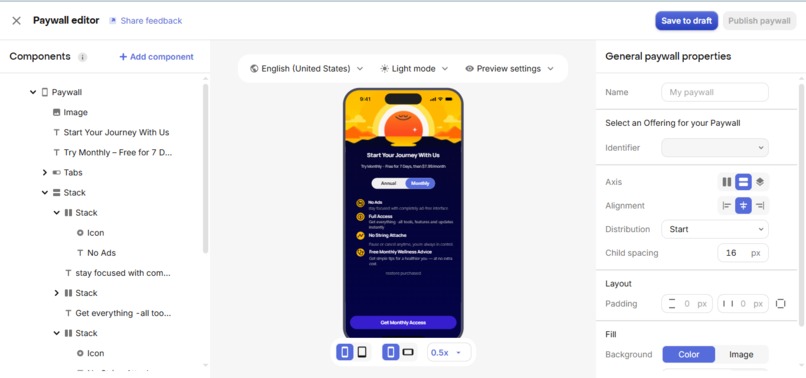
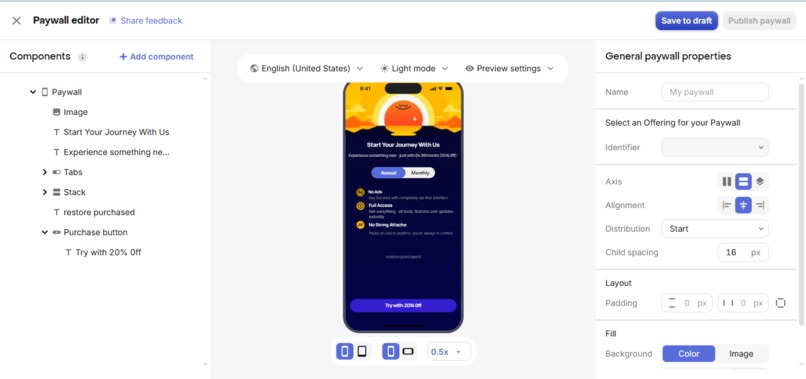
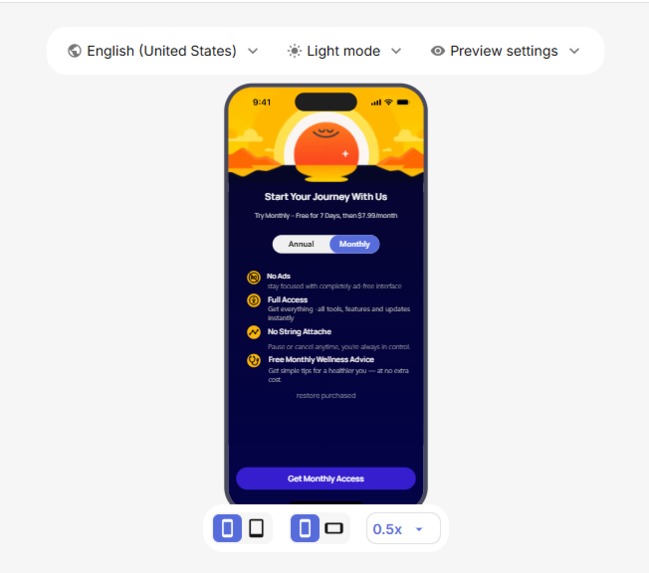
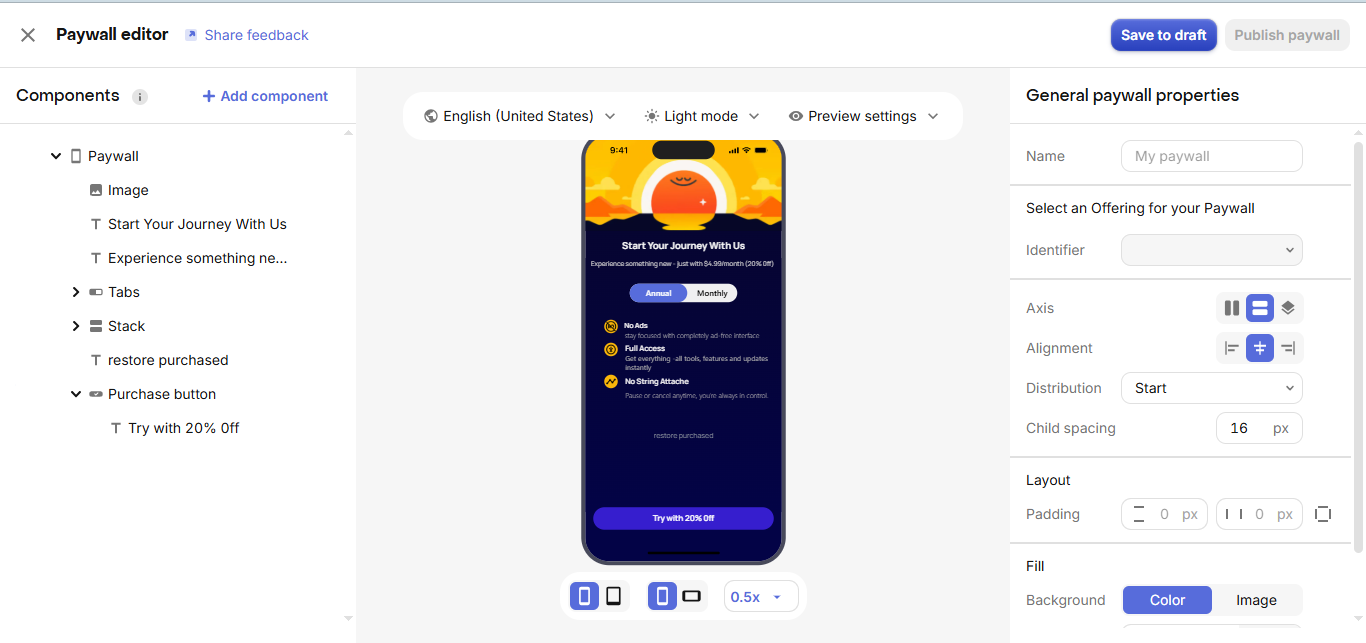
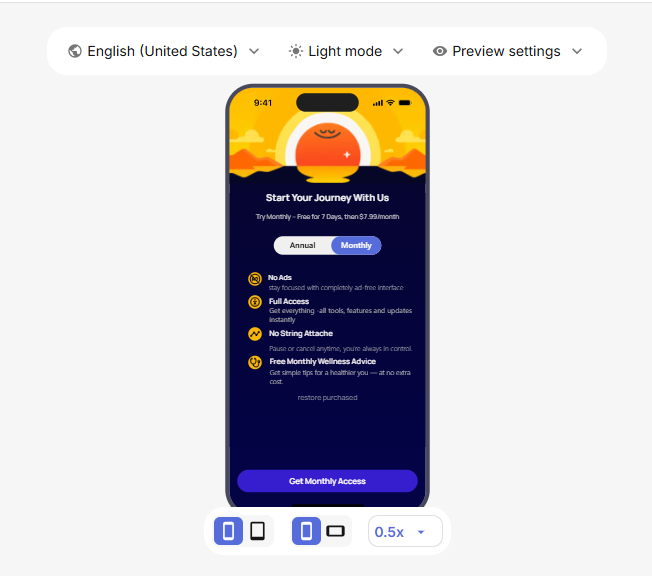
- Designed a clean UI layout for annual and monthly plans
- Clearly highlighted plan features using modern UX principles
- Built a demo video to showcase how the paywall UI works
Although I didn’t implement the SDK or backend due to limited time, this project represents a real product idea that could be fully developed in the future.
How we built it
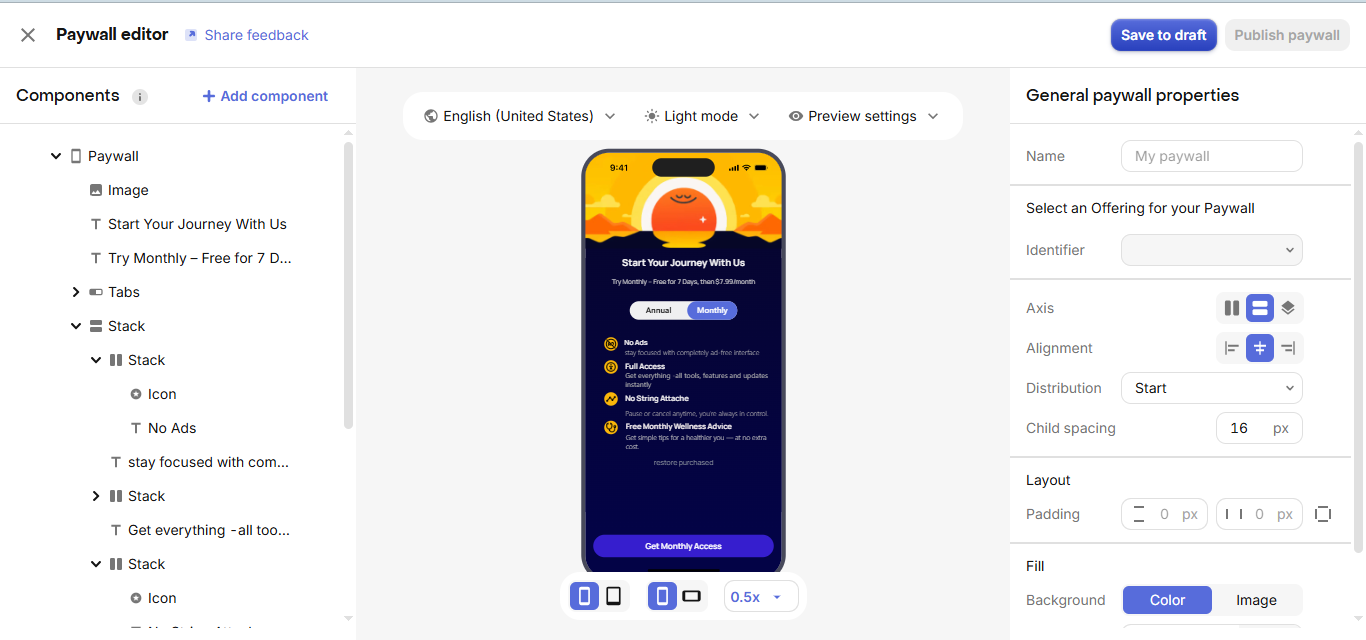
The initial design and testing were done using Figma, then the actual UI structure was created using the RevenueCat Paywall Editor. We used the RevenueCat dashboard to define both monthly and annual subscription plans.
- Designed a modern, responsive layout with three flexible pricing plans
- The layout is minimal and intuitive—components are well-structured and easy to understand even for non-tech-savvy users
- The focus was on a clean, real-world layout that avoids complexity while maintaining clarity
Challenges we ran into
Although we focused on the design side of the project, we still encountered a few challenges:
- Understanding how RevenueCat organizes products, entitlements, and offerings took time
- Finding the best way to present plan benefits without cluttering the interface
- I joined the hackathon late, and due to the time constraints, I wasn’t able to implement SDK integration
- Despite the limitations, I focused deeply on creating a functional demo and clean UI in a short time
Accomplishments that we're proud of
- Successfully designed a modern and user-friendly paywall interface with annual/monthly plan toggles
- Fully set up a project in RevenueCat with working products and metadata
- Built a clear and effective demo video to present the idea visually
- Validated the core idea of flexible, understandable pricing structures
And I’m especially proud that: Even though this was my first time designing a paywall UI, and I had limited prior experience, I was able to complete the whole project in just 4 days. That means a lot to me, and I see this as a huge personal achievement.
What we learned
- How to build a clean and modern paywall UI
- Introduction to the RevenueCat dashboard and paywall system
- How to present a product idea effectively, even without full development
- The importance of clarity in communicating value to the user
What's next for TapToAccess
Next steps include:
- Connect the UI with RevenueCat SDK to enable real in-app purchases
- Add usage-based billing logic
- Launch a test version of the app on mobile/web to validate the idea with real users
What's next for TapToAccess
Built With
- dashboard
- figma
- revenuecat
- revenuecatpaywalledtior


Log in or sign up for Devpost to join the conversation.