
Inspiration
Everyday travel conversations often happen at busy restaurants, hotel counters, shops, or stations, where people need to communicate quickly.
Speaking into a translator can be inconvenient in a noisy environment. Typing takes time, especially when someone has to compose a sentence, correct mistakes, or find a keyboard that is not configured on the traveler's phone.
Tapreter began with a simple idea: prepare useful travel messages and replies in advance so people can reach them when they need them. We wanted to reduce the effort required from both sides during a brief, face-to-face exchange.
What it does
Tapreter is a tap-first, two-way travel conversation app.
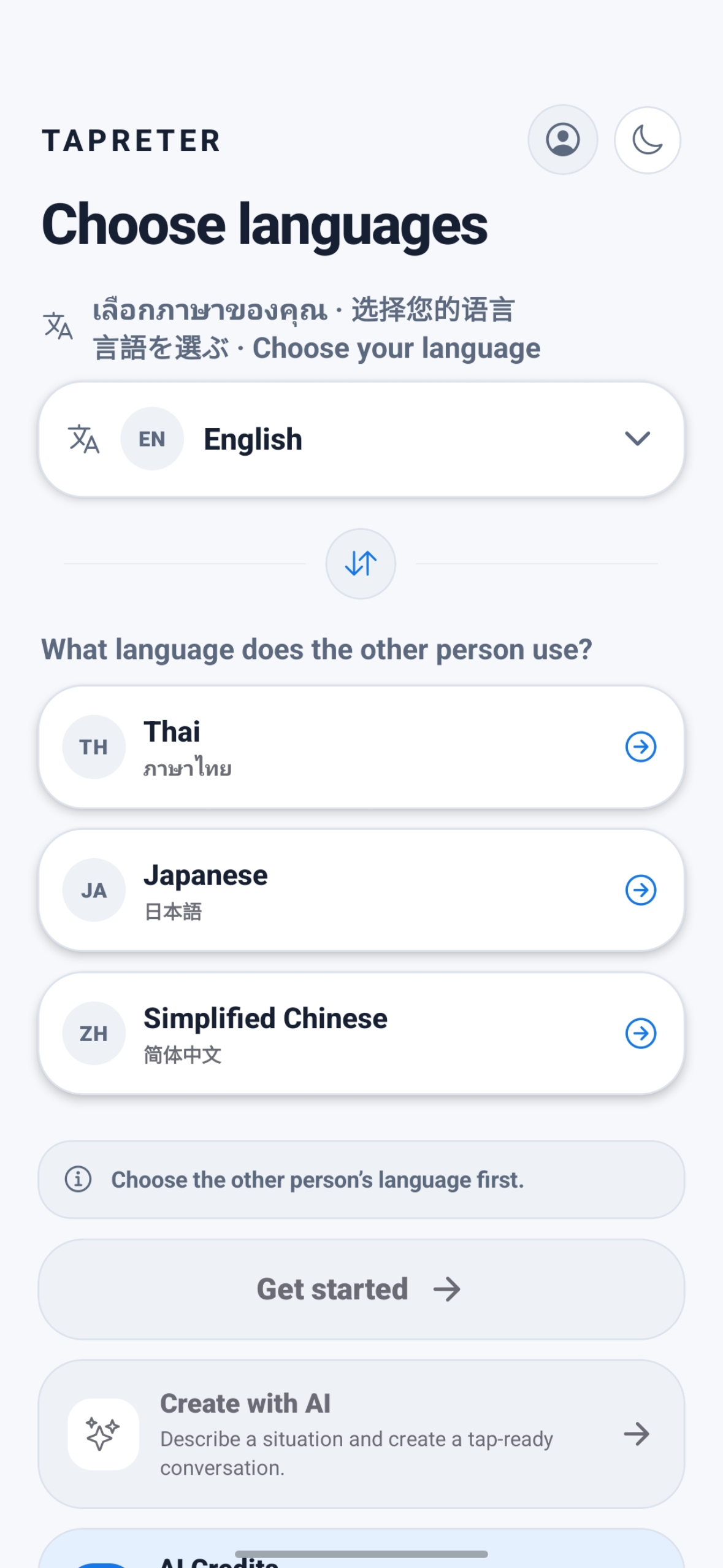
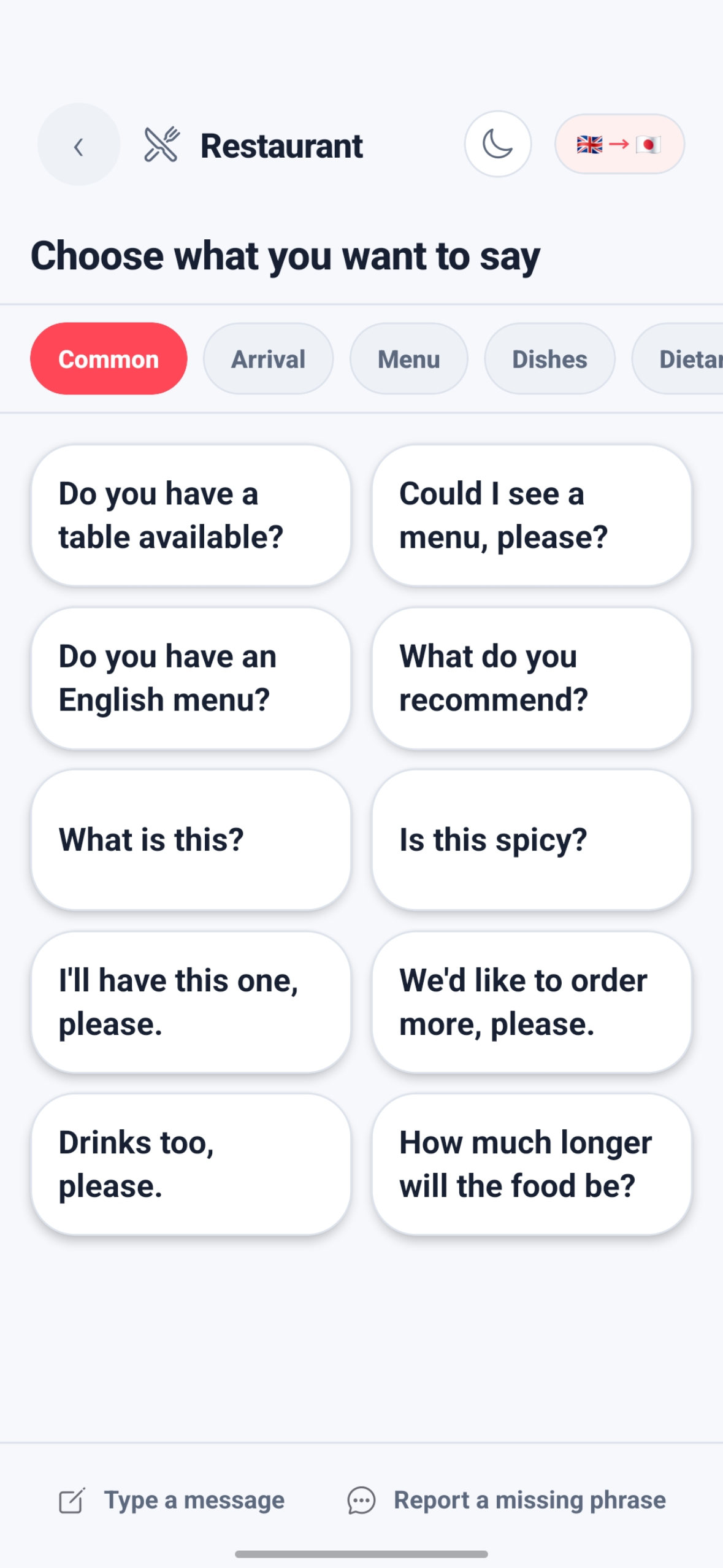
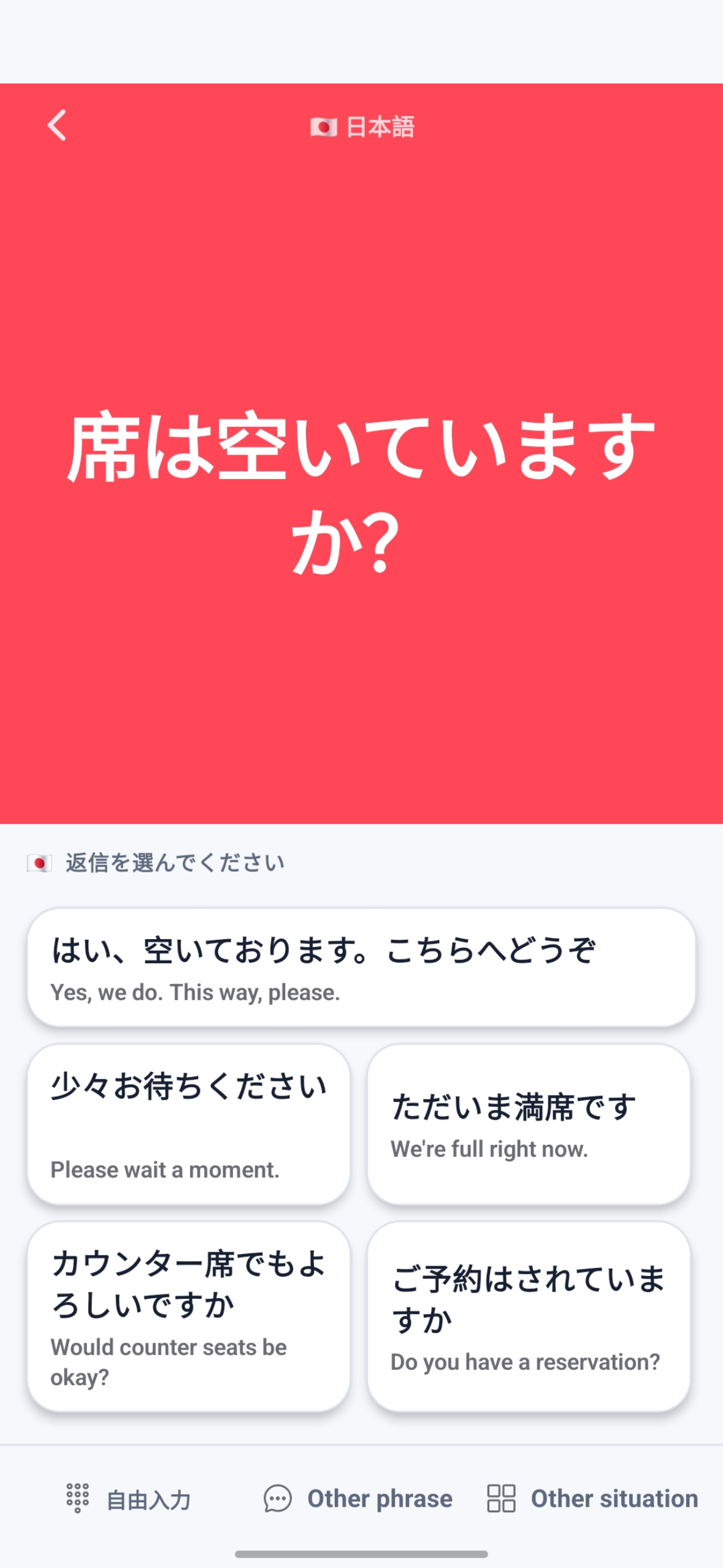
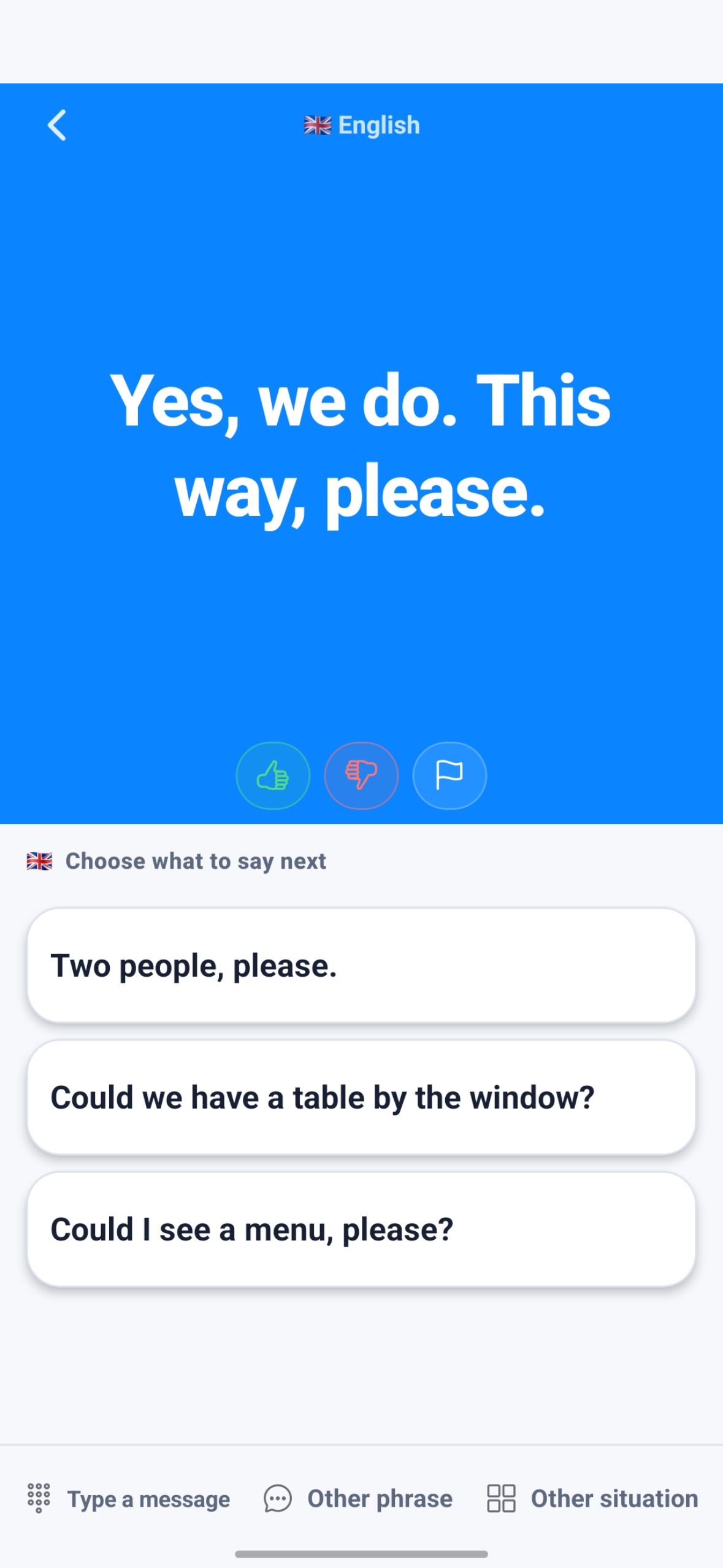
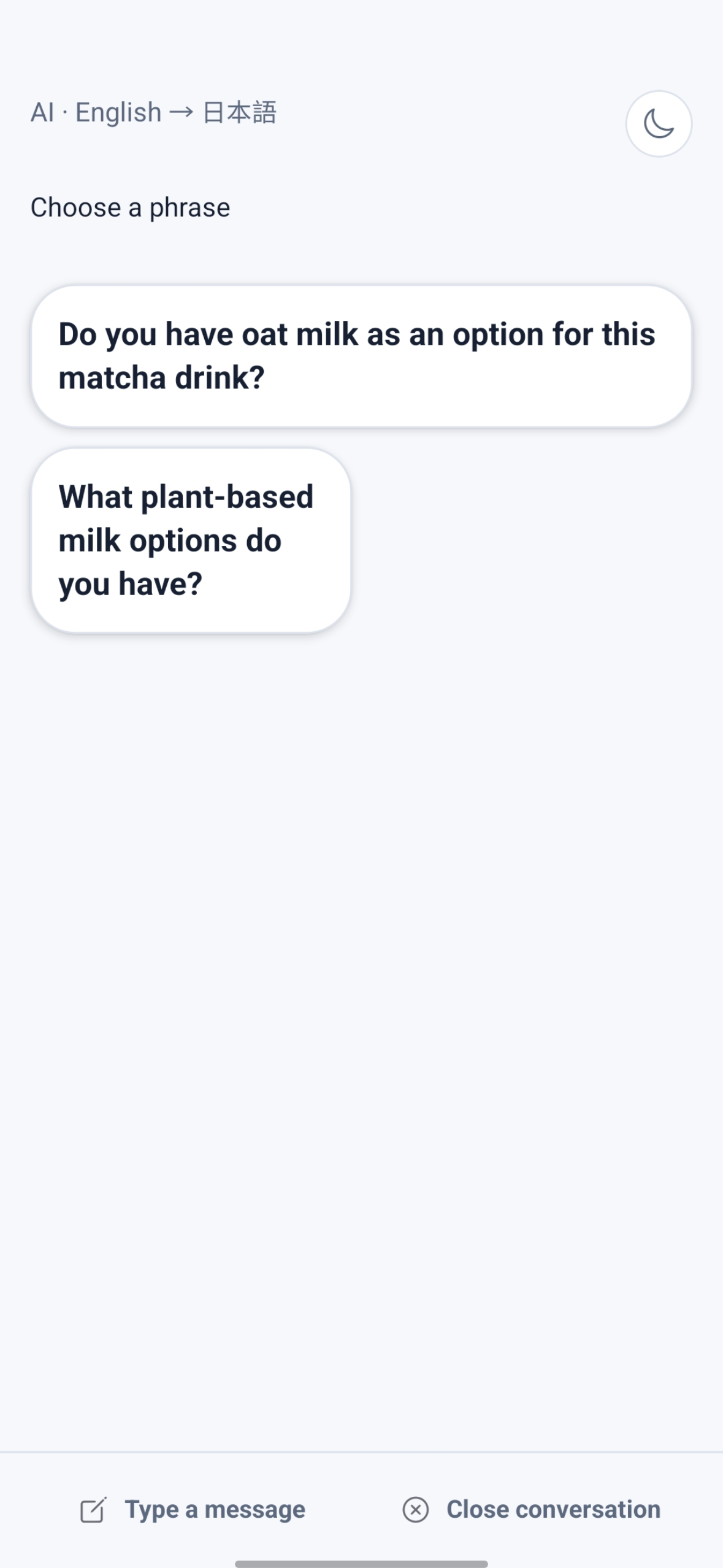
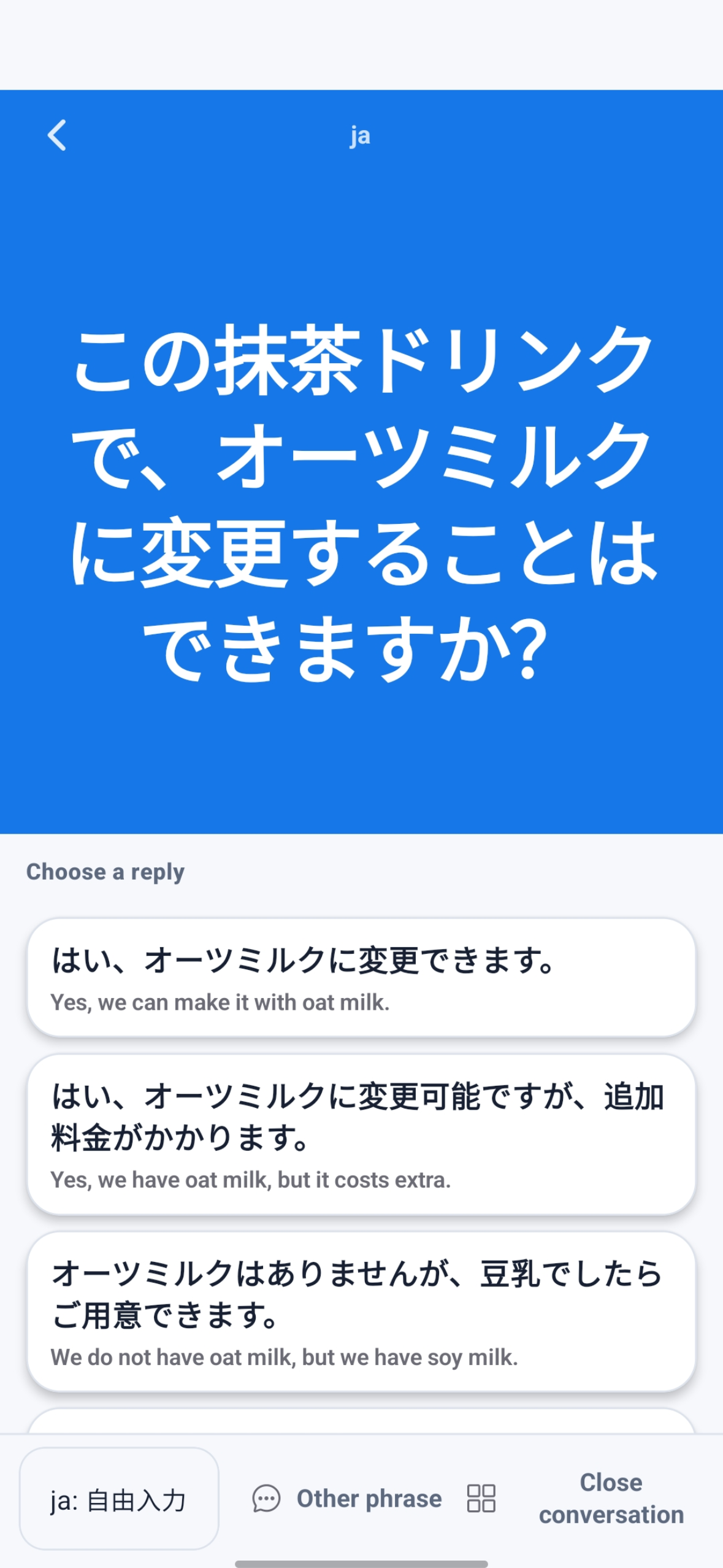
Choose a destination, language, and situation, tap a message, and show it to the other person on your phone. When another translated turn is useful, they can select a prepared reply. Tapreter shows you what the reply means and offers relevant choices to continue.
The prepared library is free in the current release, works offline, and requires no account. Common questions and replies are ready to use without composing a sentence or waiting for generation.
Prepared conversations currently cover Thailand, Japan, and Mainland China. Recipient-facing messages use Thai, Japanese, or Simplified Chinese, depending on the destination. Within the prepared library, English is supported as a traveler language only, allowing English-speaking users to select messages and understand replies in English.
Available situations vary by language and destination and may include restaurants, accommodation, transportation, shopping, and attractions. Conversation content takes local context into account, including the questions and service options that may be relevant in a particular setting.
Tapreter works alongside communication outside the phone. Someone may point to a menu, show a price, hand over an item, or nod in agreement. Users can stop using the app whenever the communication goal has been reached.
When the suggested replies do not fit, an in-app language keyboard lets the recipient type a custom response without changing system keyboard settings. Quantity controls also help communicate numbers without typing another sentence.
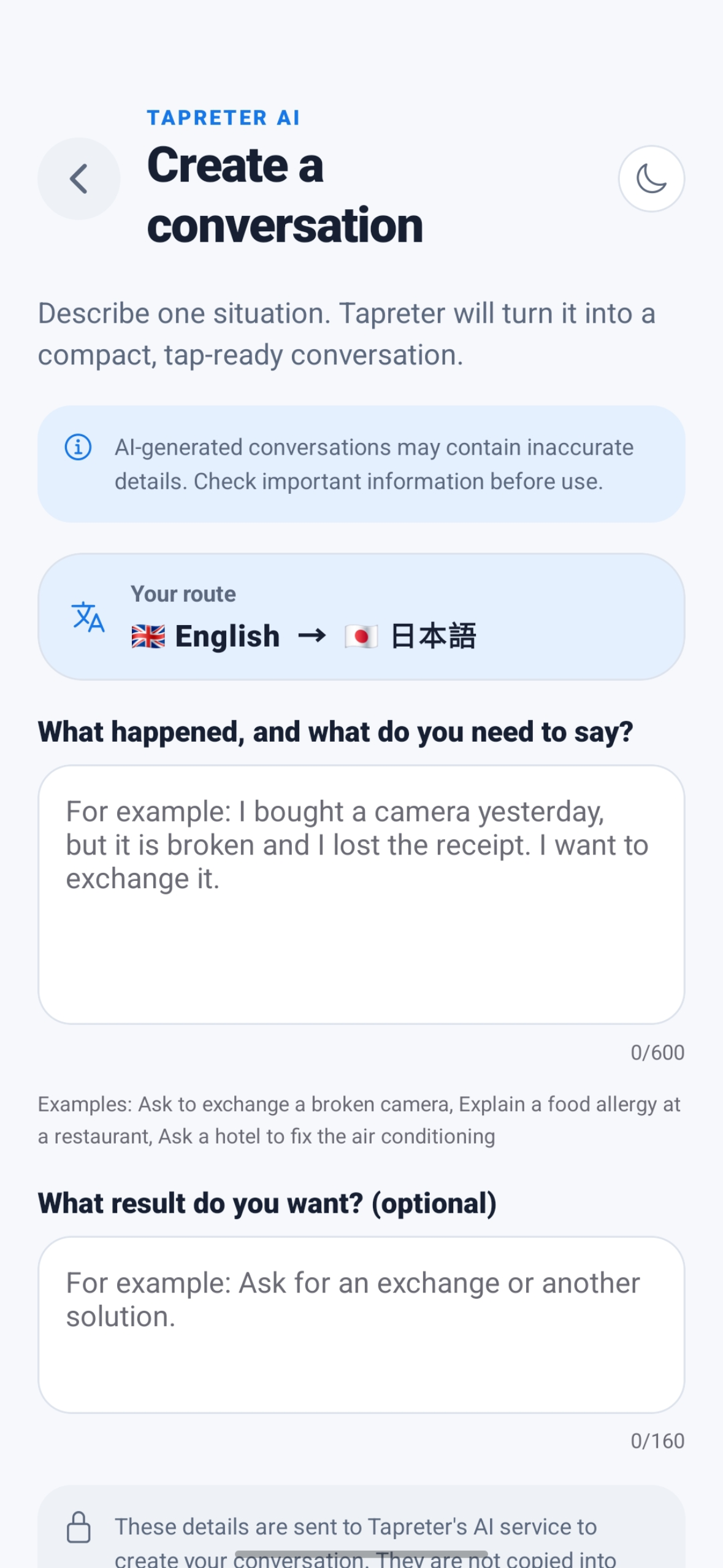
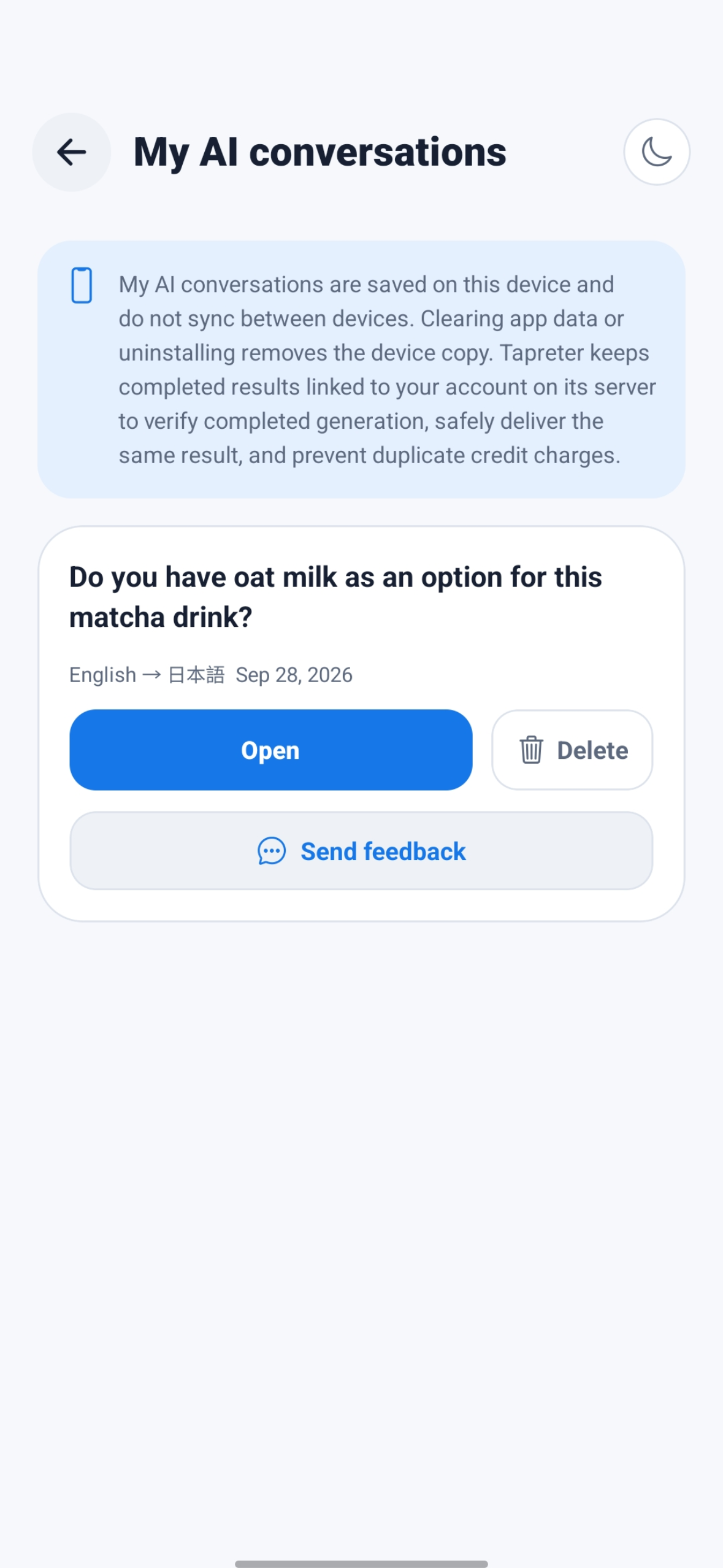
Optional AI Custom Conversation Packs support more specific needs, such as explaining a particular product problem or requesting a detailed ingredient substitution. These conversations use the same tap-first interface and can be saved in My Conversations.
AI generation requires Google sign-in, an internet connection, and AI Credits. Prepared conversations remain the primary experience for common travel situations.
Tapreter supports everyday travel communication and does not replace professional interpretation, medical or legal advice, immigration guidance, or emergency services.
How we built it
Tapreter was built for Android using React Native and Expo.
We organized prepared messages and replies into situation-based conversation flows. The interface combines readable message views, relevant reply choices, quantity controls, and an accessible custom-input option for use by two people sharing one phone.
The optional AI feature generates bilingual conversations for the same interface, with compatibility checks before the results are displayed.
Google Play and RevenueCat support consumable AI Credit purchases, with credit spending and reconciliation managed by the backend. Prepared conversations remain available independently of those account-based features.
Challenges we ran into
The main product challenge was preparing conversations that are quick to find and useful enough to help someone accomplish a real task.
Each situation needs relevant questions, realistic replies, and useful follow-ups. Missing an important response can leave a traveler stuck, while unnecessary choices can slow the interaction down. Preparing and reviewing this content takes time.
Maintaining quality across destinations adds another difficulty. Similar situations can involve different service conventions and expectations, so each conversation set needs attention to the context in which it will be used.
We also needed to leave room for unexpected replies and communication outside the app. Custom input had to remain easy to reach, and users needed to be able to stop when a gesture or action had already resolved the exchange.
AI Custom Conversation Packs required substantial refinement. Generated content needed to make sense for the traveler's request and work within Tapreter's interaction model. We spent significant time evaluating usefulness and consistency alongside technical compatibility.
Reliable credit handling was another priority, particularly when generation failed, timed out, or needed to be retried.
Accomplishments that we're proud of
- Published Tapreter on Google Play with prepared conversations for Thailand, Japan, and Mainland China, including support for English-speaking travelers
- Made the prepared library available offline without sign-in
- Built a two-way, same-device experience with quantity controls and an in-app language keyboard
- Added optional AI Custom Conversation Packs and My Conversations for saving generated exchanges
- Integrated consumable AI Credit purchases through Google Play and RevenueCat
What we learned
We learned to evaluate conversation quality by whether users can find a useful message and move toward their communication goal.
Expanding coverage requires attention to local context, realistic replies, and ease of navigation. Every new situation needs to remain useful in practice.
We also learned to leave space for gestures and actions that naturally carry part of the exchange. The phone only needs to support the parts where language remains a barrier.
Prepared conversations provide immediate access for common needs, while AI adds flexibility for specific requests. That distinction continues to guide the product.
What's next for Tapreter
Our immediate priority is reaching real travelers and learning from their feedback.
We want to understand where prepared conversations help, where useful replies are missing, and when people need custom input. Those findings will guide improvements to both content and navigation.
The next major focus is expanding the prepared library across more destinations, languages, and everyday situations. Human review and user feedback will help maintain quality as coverage grows.
AI Custom Conversation Packs will continue to support specific needs beyond the prepared library. Our broader goal is to make useful travel communication ready to access whenever people need it.
Built With
- expo.io
- javascript
- react-native
- revenuecat
- supabase

Log in or sign up for Devpost to join the conversation.