Inspiration
In every classroom, there’s a voice that goes unheard — not because it has nothing to say, but because it simply can’t speak.
That voice was the inspiration behind TapNTalk AI.
Built with the belief that communication is a right, not a privilege, TapNTalk was created to help students with speech impairments express themselves through gestures, typing, or emergency cues — and be understood instantly, clearly, and respectfully.
What it does
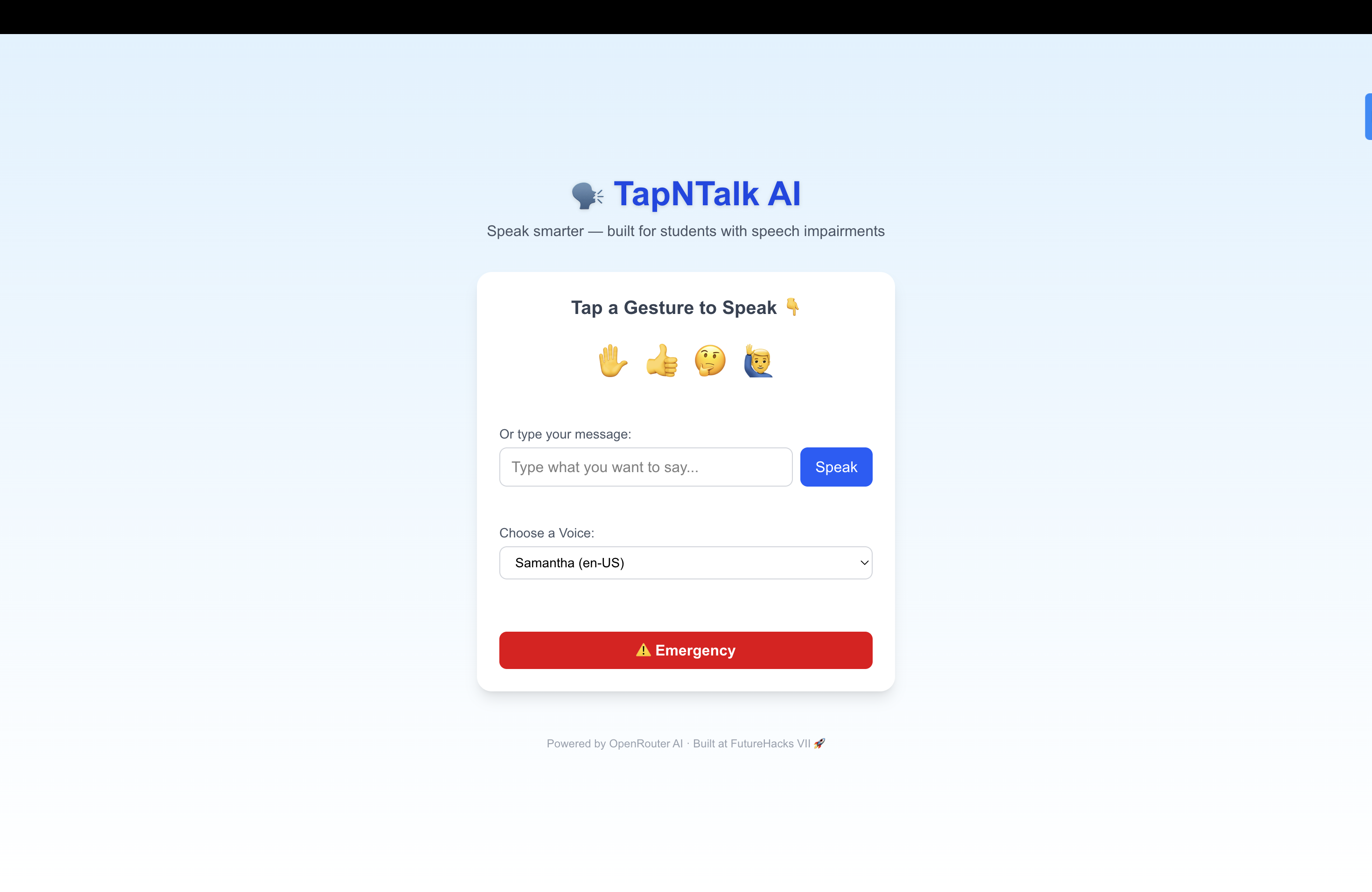
TapNTalk AI is a web-based communication tool that allows non-verbal or speech-impaired students to:
- ✋ Tap gestures that trigger AI-enhanced spoken responses
- 📝 Type custom phrases that get rephrased into polite, expressive speech
- 🚨 Instantly speak out emergency phrases like “I feel sick” with one tap
- 🔊 Choose from available voices for personalized expression It bridges the gap between thought and voice — enabling real-time, AI-powered classroom communication.
How we built it
- Frontend: Built using Next.js (App Router) and styled with Tailwind CSS for a clean, responsive interface.
- AI Integration: Powered by OpenRouter.ai API (e.g. Lepton) to convert simple intent into polite, emotionally intelligent speech.
- Speech Output: Utilizes native Web Speech API for real-time audio feedback.
- Deployment: Hosted on Vercel for smooth, global accessibility.
Challenges we ran into
- Voice Consistency: Different browsers and systems offer different speech synthesis voices, limiting consistency across devices.
- AI Prompt Tuning: Rephrasing simple intent into polite speech without sounding robotic or overcomplicated required careful AI prompt engineering.
- Keeping It Ethical: We had to ensure that AI was used responsibly — no unnecessary data capture, no user profiling, just raw utility.
Accomplishments that we're proud of
- Creating a working prototype that could genuinely help students be heard.
- Designing a clean, welcoming interface that’s easy for any age to use.
- Making the AI do "just enough" — not too flashy, not too technical, just effective communication support.
What we learned
- Sometimes, the most powerful projects solve small, human problems.
- Designing for accessibility changes your entire approach — in the best way.
- Working solo doesn’t mean working small. With the right tools and vision, meaningful impact is still possible.
What's next for TapNtalk AI
- User Authentication & Personal Logs: Let users log in and track their own message history.
- Multilingual Support: Allow students to choose their native language or dialect.
- Visual Gesture Mode: Enable drag-and-drop gesture sequencing for kids who rely more on icons than text.
- Teacher Feedback Portal: Give educators an easy way to understand patterns in student communication.
Built With
- api
- css
- next.js
- openrouter
- tailwind
- vercel
- webspeech


Log in or sign up for Devpost to join the conversation.