-
-
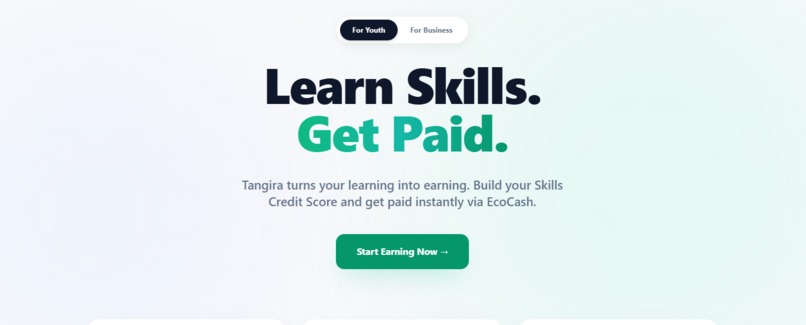
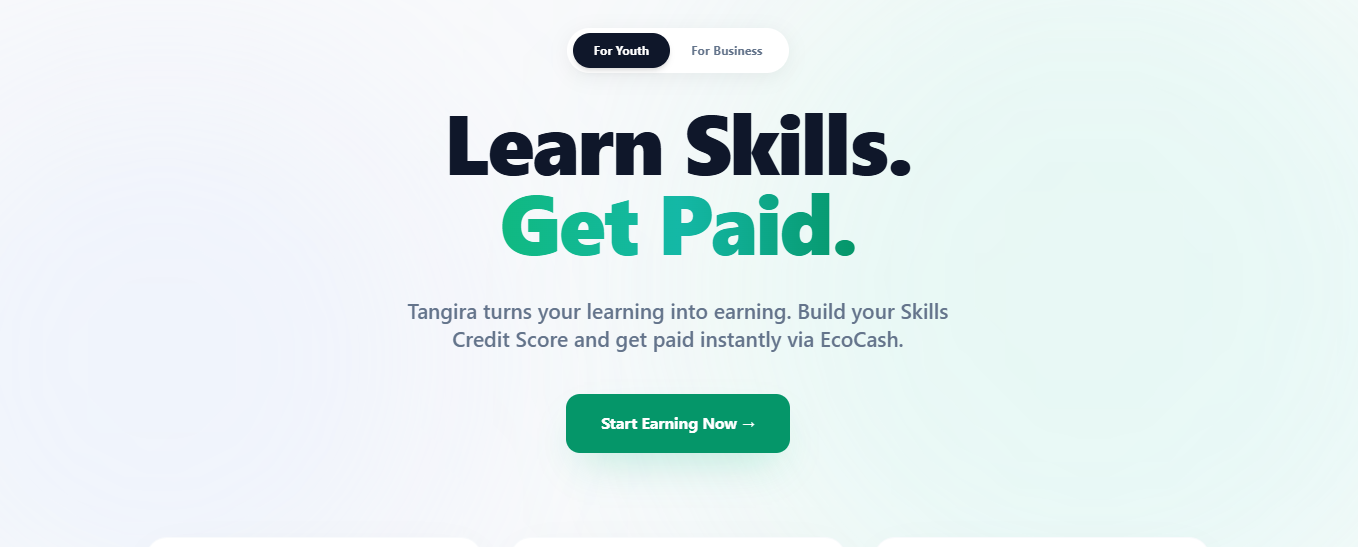
Tangira is an AI-powered skills-to-income platform that connects youth, SMEs, and sponsors through an end-to-end pipeline
Inspiration
Tangira was inspired by a gap we kept seeing: young people were learning digital skills but had no clear way to turn those skills into real income. At the same time, SMEs needed digital help but struggled to define tasks, find trusted talent, and pay locally. We wanted to connect these two sides in a way that works in the Zimbabwean context.
What it does
Tangira is an AI-powered skills-to-income platform that:
- Trains youth through short, low-data digital skill modules
- Converts SME needs into clear micro-gigs using AI
- Connects youth to paid, real-world tasks
- Pays earnings via EcoCash
- Builds a Skills Credit Score that unlocks better gigs and future opportunities
In short: $$ \text{Learn} \rightarrow \text{Practice} \rightarrow \text{Earn} $$
How we built it
We designed Tangira as an end-to-end system rather than just a learning or gig platform:
- Micro-learning integrated with Akello
- An AI Task Shaper to break down SME requests into structured gigs
- A Skills Credit Score based on learning, performance, and reliability
- A simulated EcoCash-powered wallet for payouts
- Inclusive access via WhatsApp, voice, and USSD
The focus was on simplicity, local relevance, and real economic outcomes.
Challenges we ran into
- Designing for low data usage and limited devices
- Balancing AI automation with fairness and transparency
- Creating a Skills Credit Score that is meaningful but easy to understand
- Keeping the MVP realistic while addressing a complex problem
- Aligning youth needs, SME expectations, and sponsor goals in one platform
Accomplishments that we're proud of
- Designing a complete skills-to-income pipeline
- Introducing an AI Task Shaper tailored for SMEs
- Creating a local-first solution with EcoCash and WhatsApp at the core
- Building a concept that supports both youth empowerment and SME growth
- Demonstrating measurable impact beyond just “training completed”
What we learned
- Skills alone are not enough—trust and proof of work matter
- SMEs prefer small, affordable tasks over full hires
- Local context (payments, language, data costs) determines adoption
- Impact should be measured by income earned, not certificates issued
- Technology works best when it fits real-world constraints
What's next for Tangira
- Deeper EcoCash integration for live payouts
- Expanded mentorship and peer learning features
- Multi-language AI task shaping and voice support
- Partnerships with NGOs, schools, and corporates
- Piloting real SME gigs and sponsored youth pathways
Tangira’s next step is simple: move from learning potential to real livelihoods.

Log in or sign up for Devpost to join the conversation.