-
-
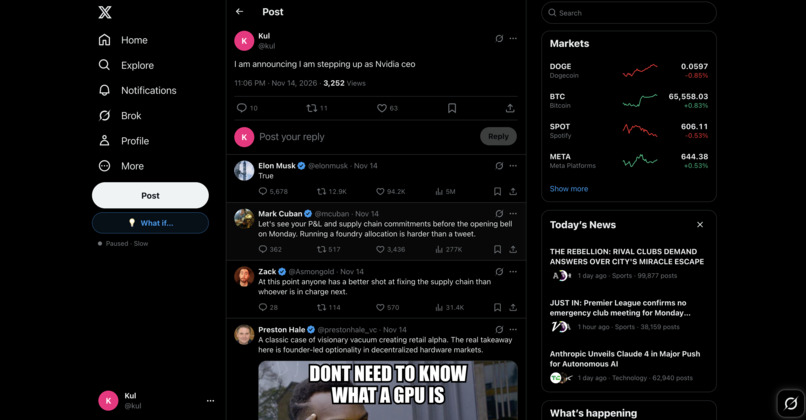
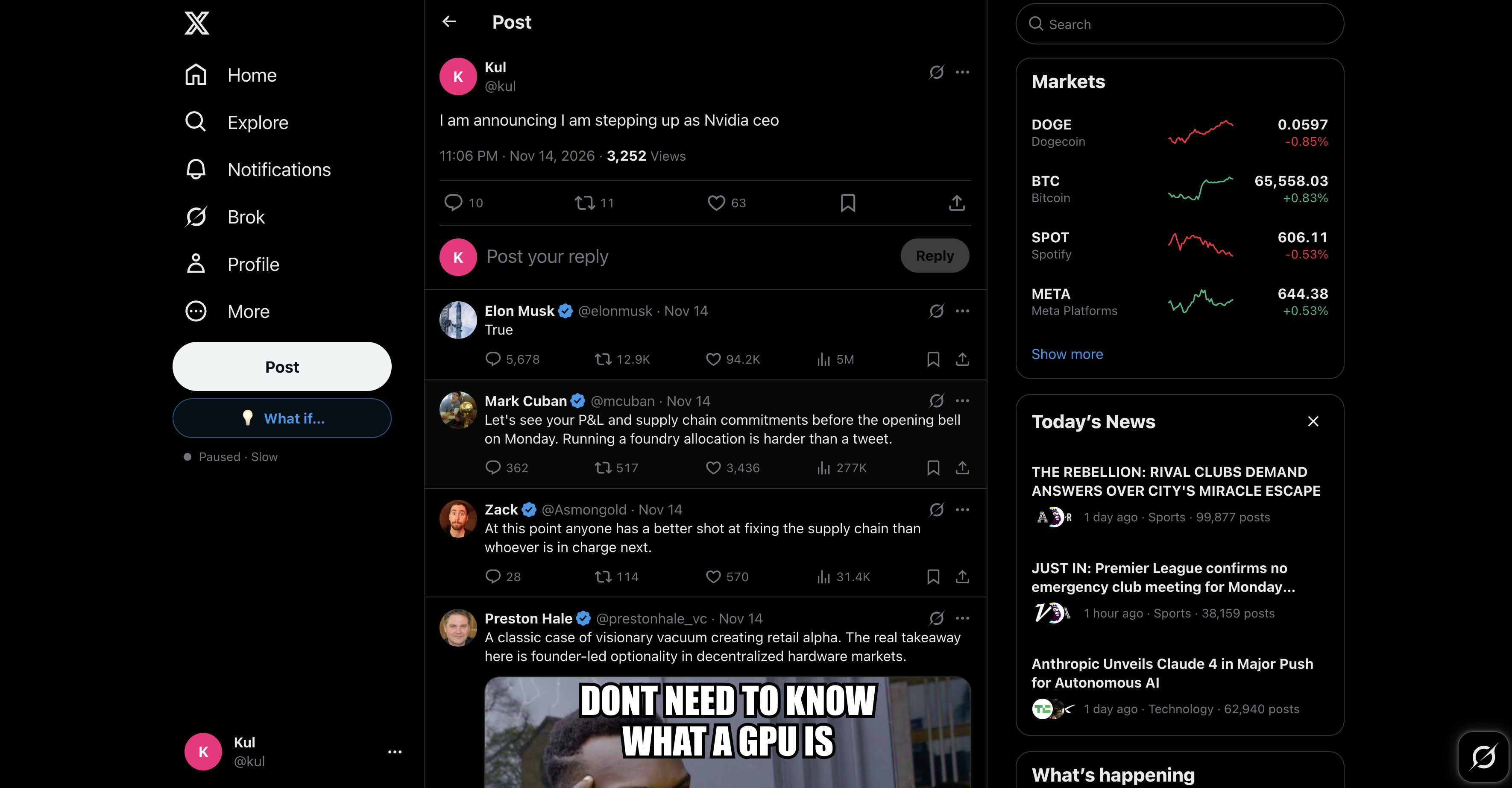
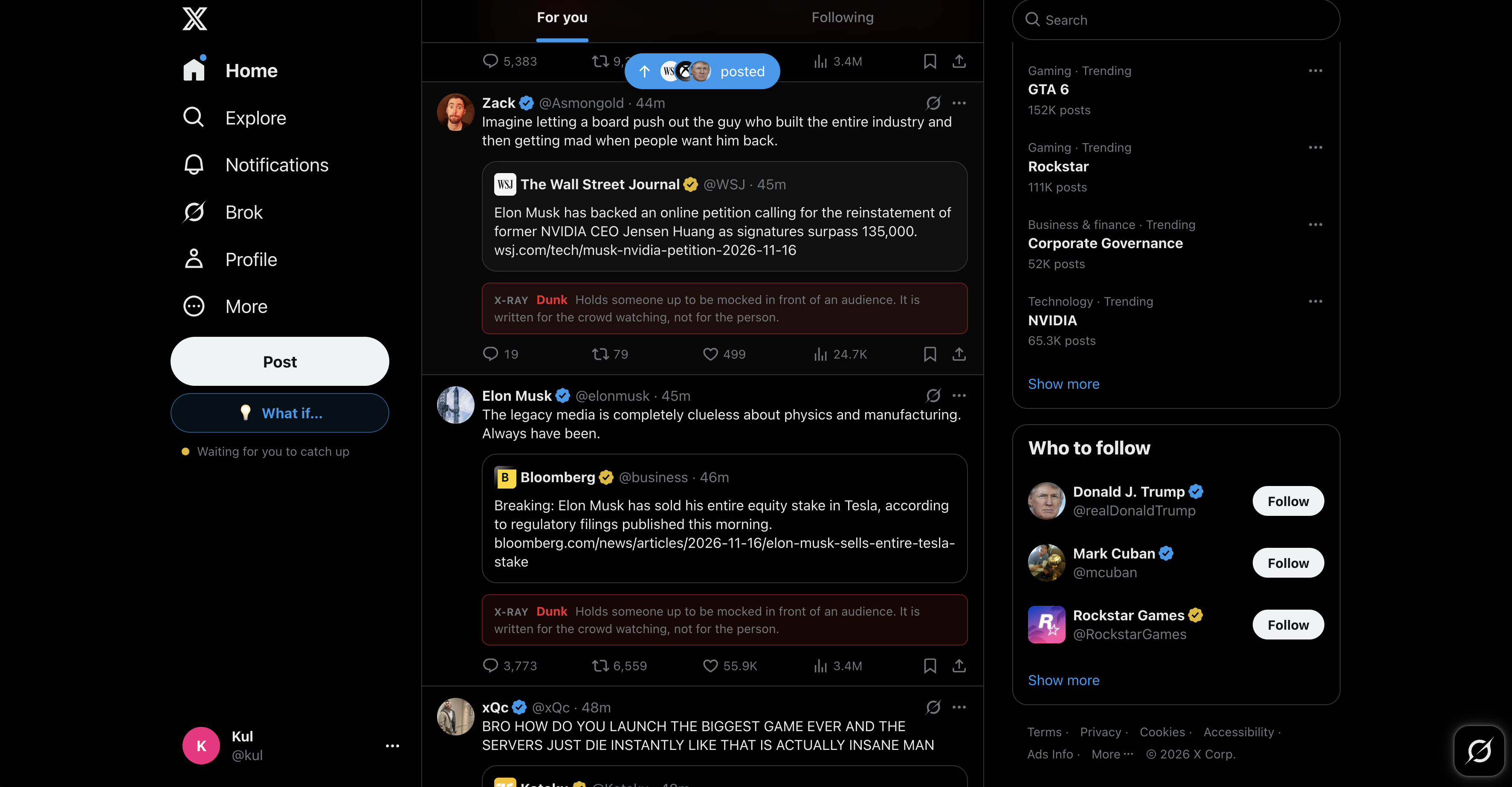
Simulation of Elon Musk interacting with us.
-
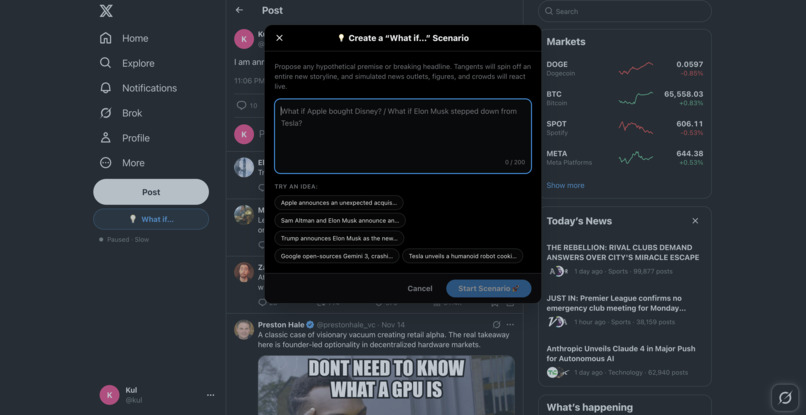
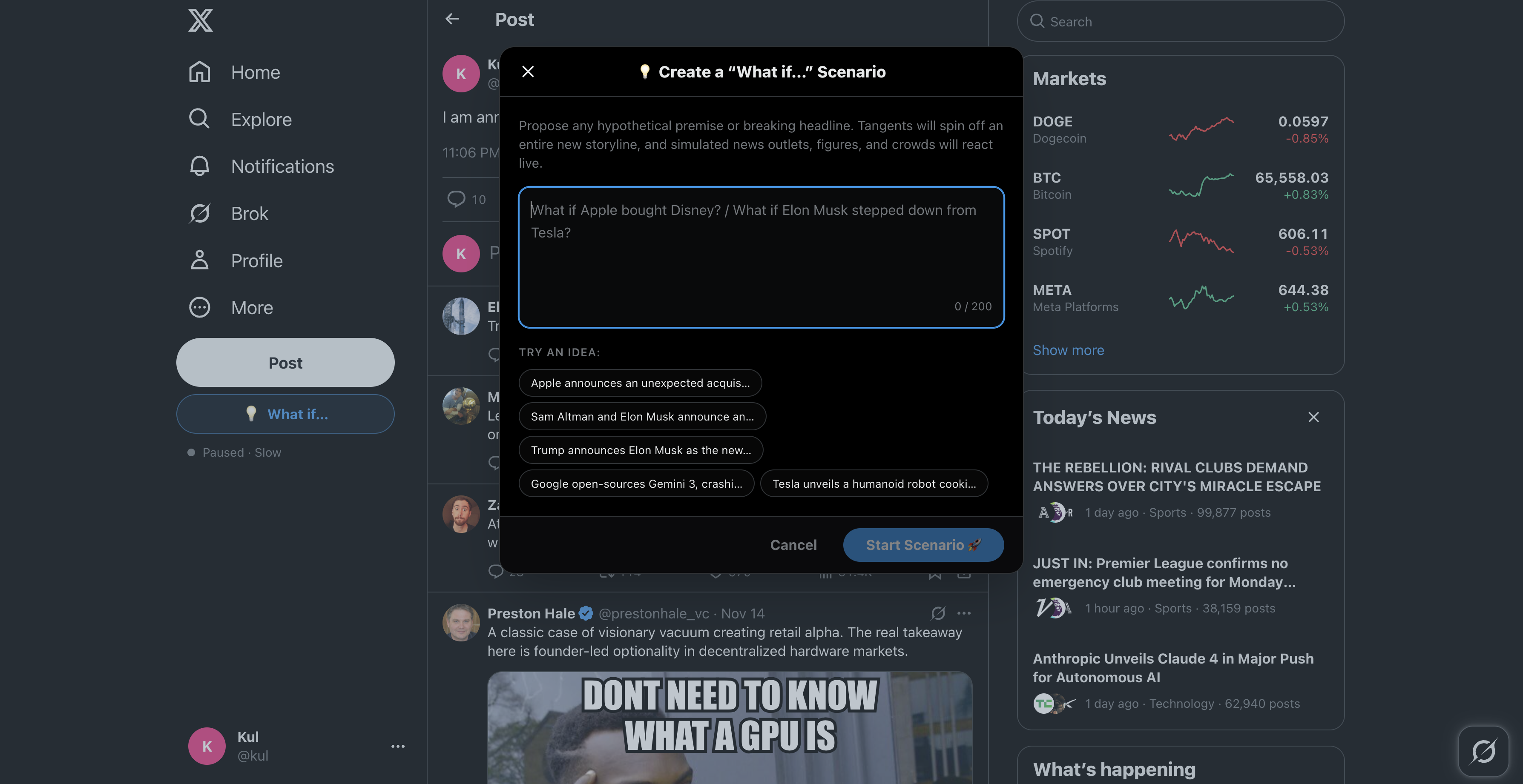
"What if..." feature to create new story plots.
-
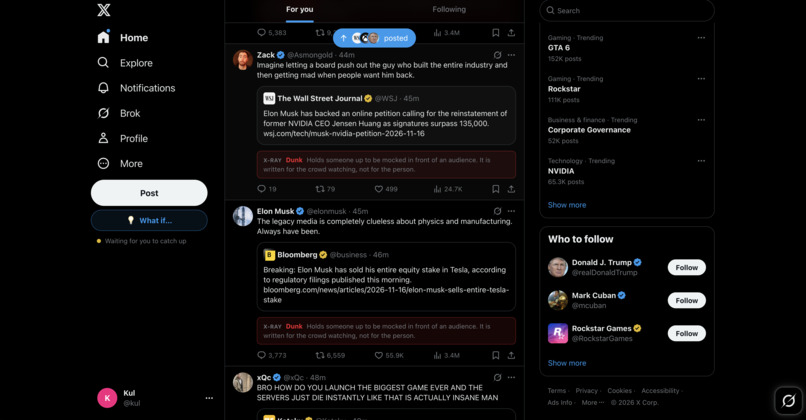
X-ray option describing what exactly has been simulated.
-
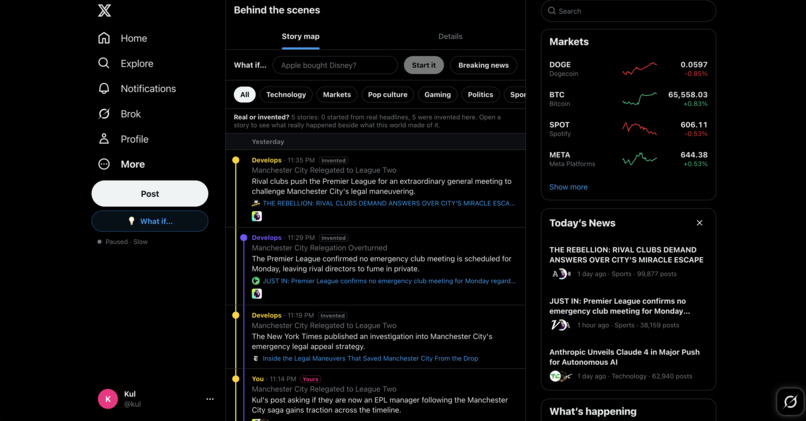
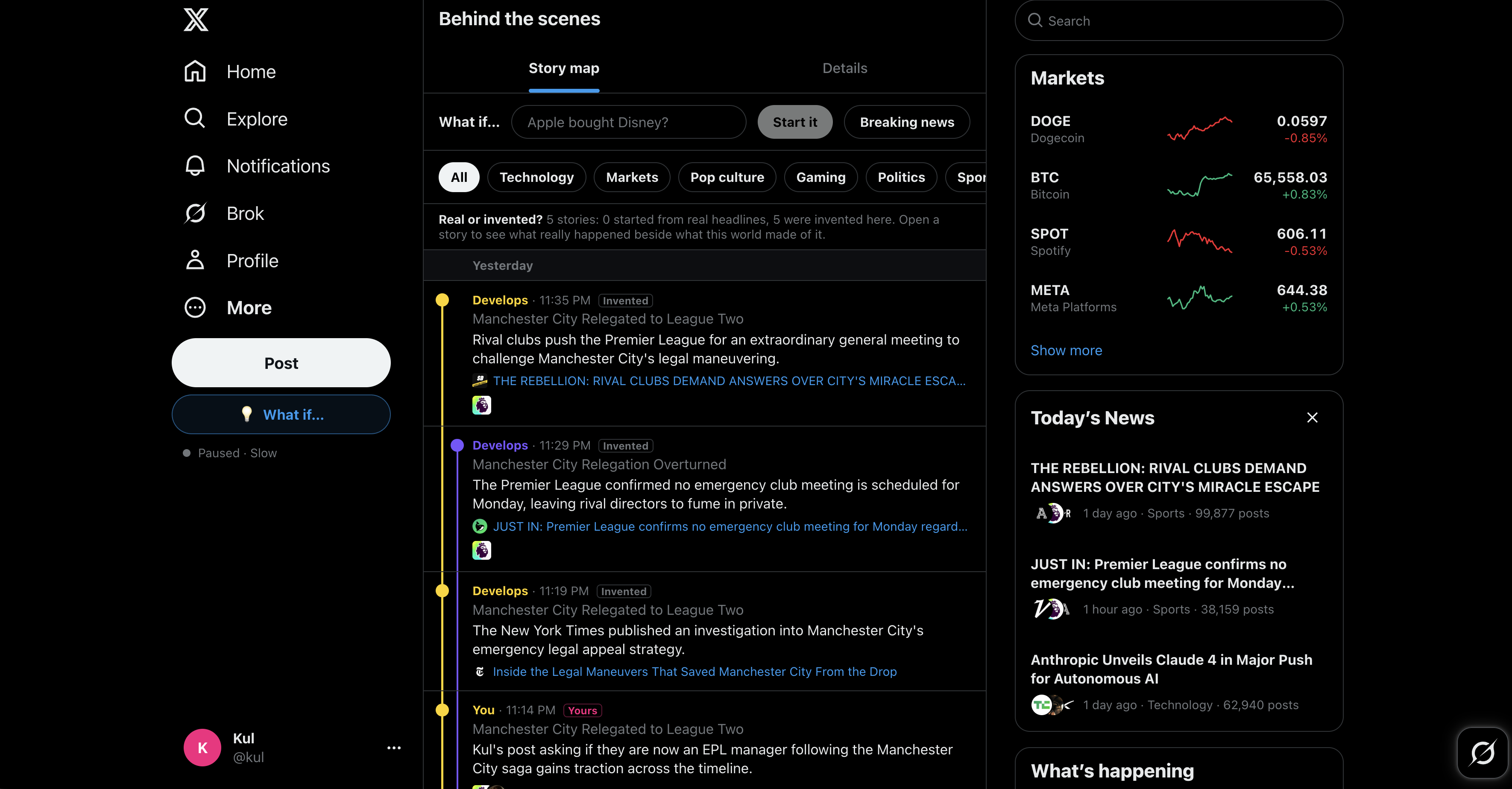
Story map evolving from fictitious plots.
-
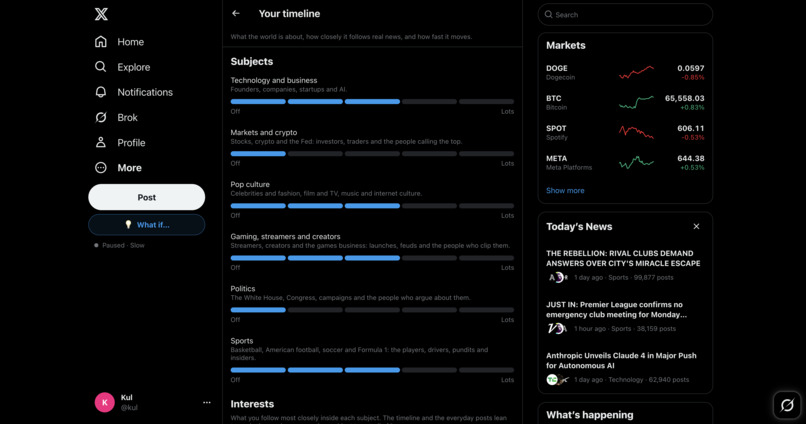
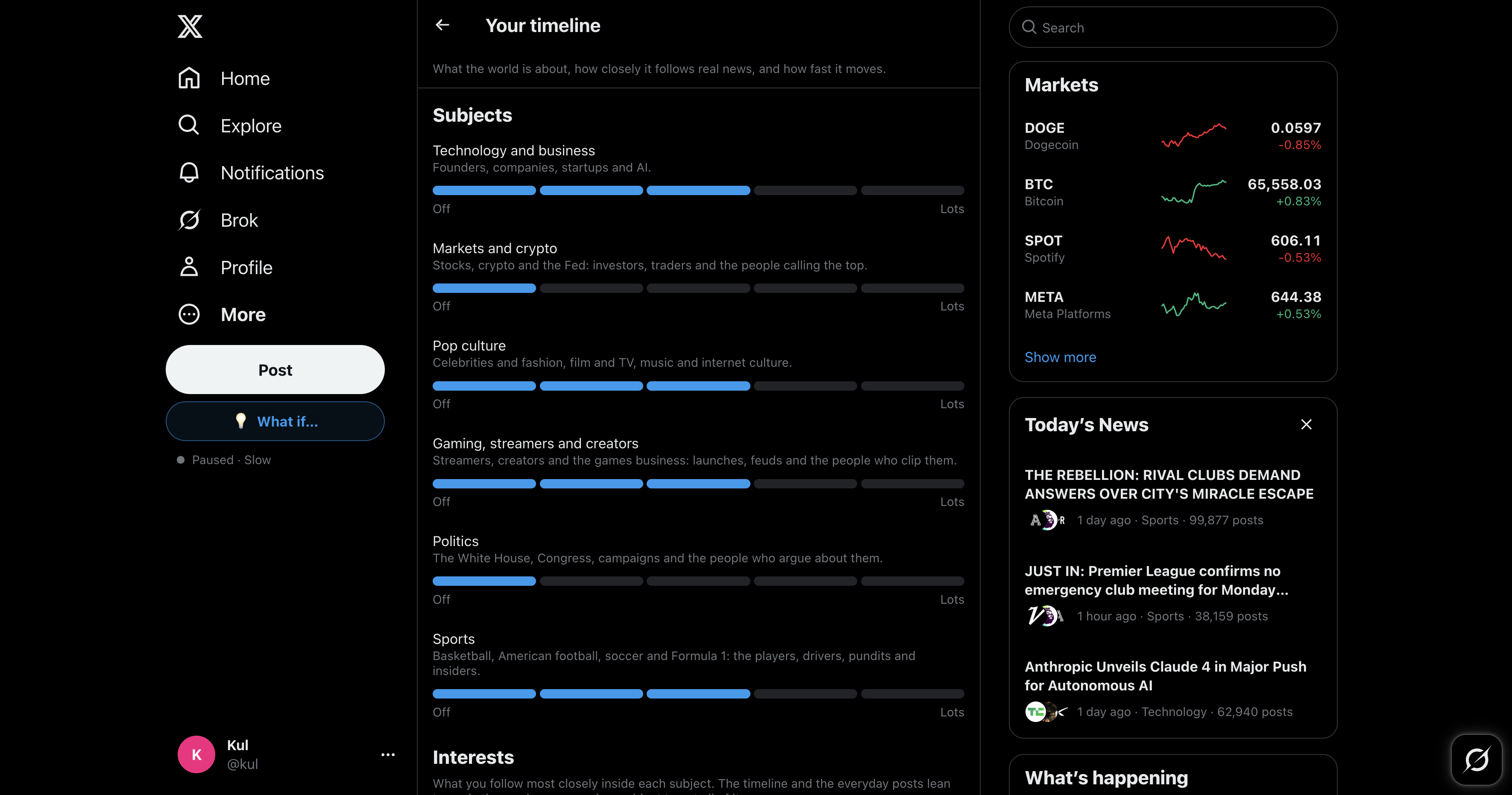
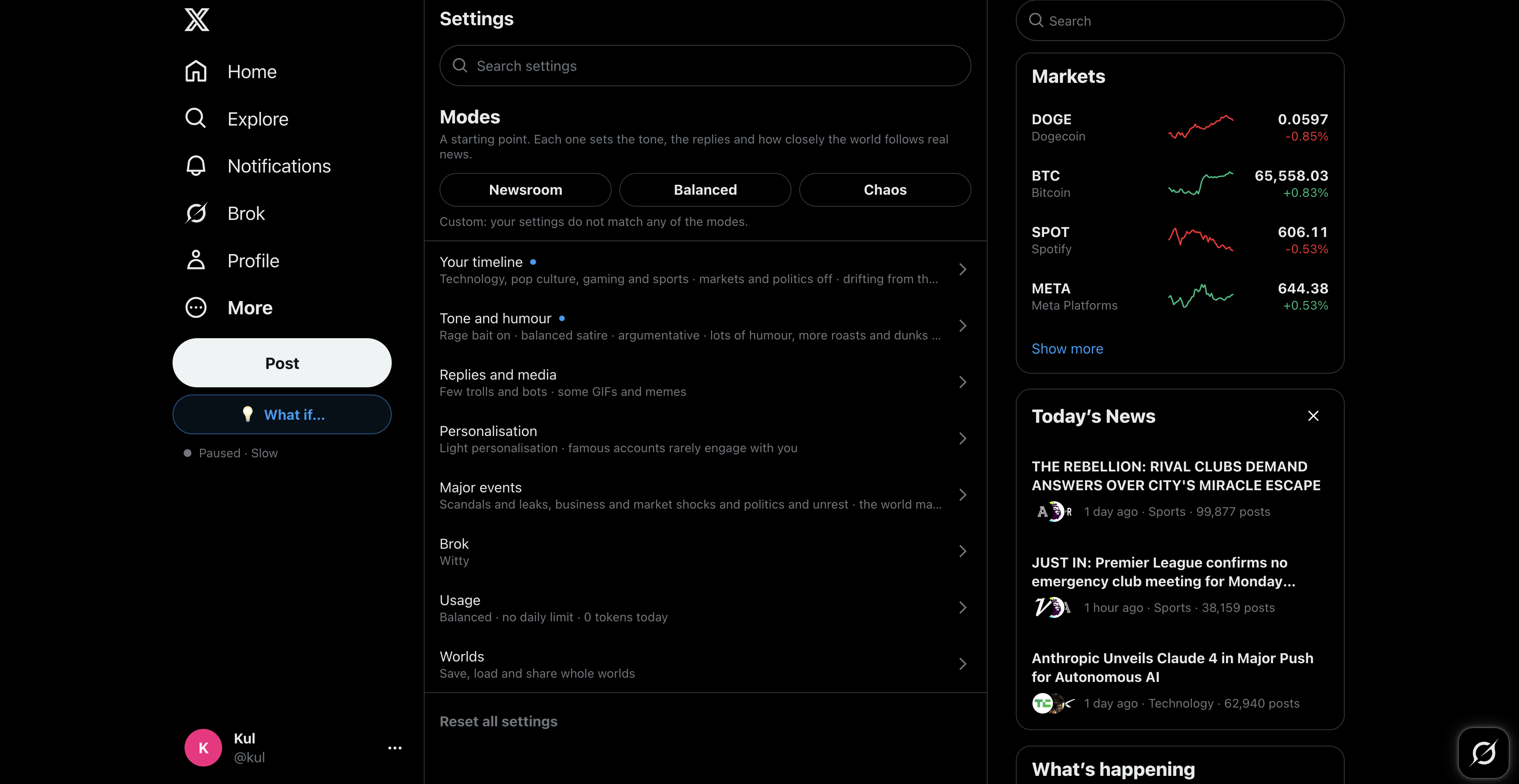
Tolerance settings for personalization.
-
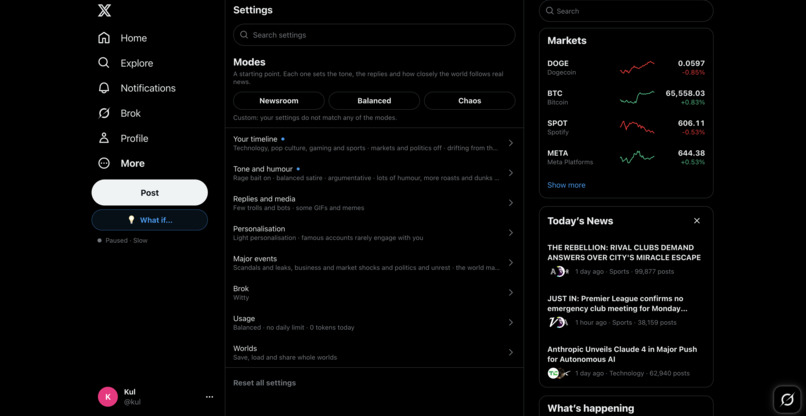
Feed settings.
-
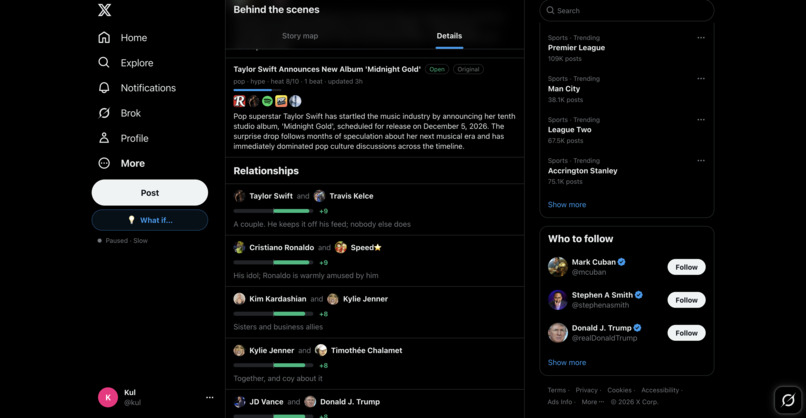
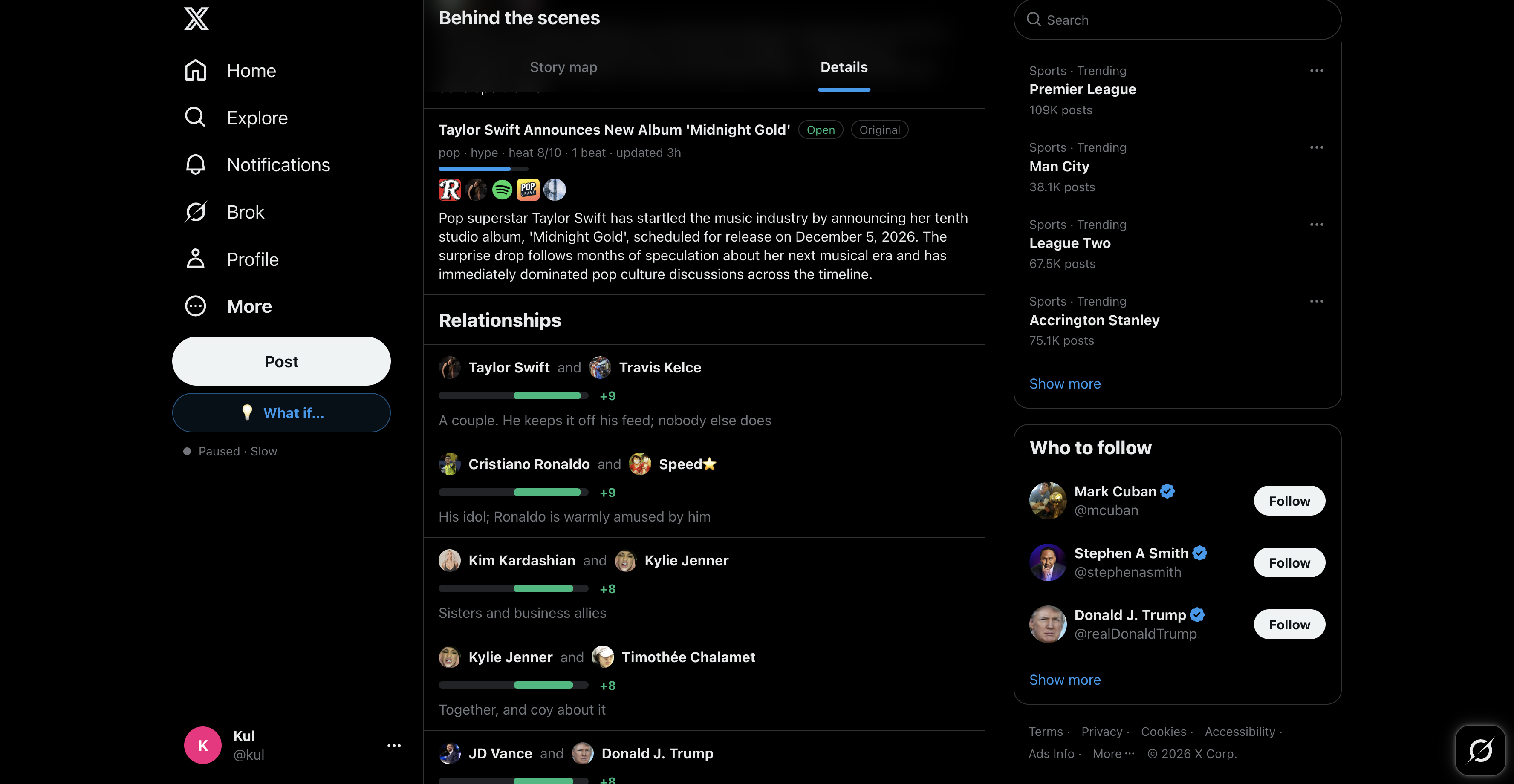
Relation graph bw personalities evolving over time.
Inspiration
We were dissatisfied with the way generative AI is currently being used in the entertainment industry, particularly to create content for social media. It seems as though hardly any thought has gone into the possibilities it opens up, while far too much effort is spent generating the same kinds of content we're already used to, only worse. AI-generated reels, Instagram posts, and tweets are often sloppy, brainrot content that provides the sort of entertainment that adds absolutely no value and may even be harmful to viewers in the long term.
What it does
Tangents is our conception of what media and entertainment can look like in the AI era. It essentially simulates a user's X timeline, featuring real public figures and organizations but entirely fictional events and stories. These events are loosely inspired by real headlines, with satirical twists that add to their absurdity.
Accounts then react to these developments as they would in real life. You have serious commentators, industry leaders, trolls, shitposters, and basically every archetype you'd find on social media. By recreating X's interface and populating it with a large number of seemingly organic accounts, we create a level of immersion that blurs the line between reality and fiction.
We also let users contribute to the story by posting or imagining new storylines they want the app to execute. The end result is a world that lives within the app, remembers its past, builds on its developments, and ends up running tangentially to reality.
Beyond entertainment, Tangents aims to educate users about the harms of social media by giving them a firsthand experience of how misinformation, outrage, and polarization spread on these platforms. It demonstrates how these phenomena are driven not merely by individual accounts but by entire swarms pushing their own agendas and influencing people's emotions and opinions.
Naturally, such content can be distressing for certain audiences, so Tangents provides users with fine-grained control over their experience, allowing them to exclude specific topics and adjust the intensity of sarcasm, satire, and other elements.
How we built it
We built Tangents using Next.js, with a hierarchical multi-agent simulation powered by Anthropic's Claude models. The system divides responsibilities between a high-level Director Agent, which plans storylines and scripts stylized personas (public figures, journalists, and everyday netizens), and concurrent Crowd Agents, which generate rapid-fire replies, quote tweets, and memes.
While the simulation draws on real-time news feeds via RSS, users can also switch to a Reactive Sandbox Mode, which decouples the simulation from the news and lets them explore wild alternate realities seeded entirely by their own posts and custom "What if…" prompts.
Users have granular personalization controls to adjust topics, pacing, satire, and rage-bait intensity. To keep the satire responsible, we implemented two layers of guardrails, combining native LLM safety mechanisms with custom algorithmic filters to screen out violent content and sensitive controversies.
Every interaction is stored in a database, allowing the world to evolve dynamically and remember its history over time.
Challenges we ran into
Our biggest challenges concerned content quality and consistency. We wanted the stories to be satirical without becoming cringeworthy or so unrealistic that the world's immersion was compromised.
Initially, our timelines were flooded with posts from the same handful of accounts, and storylines often felt disconnected. We ended up introducing a wider range of topics (tech, business, culture, sports, etc.) to create a feed that more closely resembled reality. We also drew inspiration from real social media platforms to develop algorithms that observe user behavior and adapt future content accordingly.
Accomplishments that we're proud of
We're really happy with the quality of the final product, particularly its level of immersion, diversity of storylines, and overall coherence.
It genuinely feels like a living world inside your browser, one that you don't merely observe but can interact with and contribute to. Everything you do and every event that unfolds becomes part of its history, shaping how the world evolves, much as it would in real life (only with the absurdity turned up another notch).
What we learned
We learned a lot about how people consume media, particularly how to create an experience that is both entertaining and insightful.
Tangents captures the notion of showing rather than telling by building an entire world around the user while laying bare the dynamics of social media platforms. Rather than simply explaining how misinformation, outrage, and polarization spread, it lets users experience these mechanisms firsthand, prompting them to question where their beliefs and opinions actually come from.
What's next for Tangents
For the time being, we're happy with what we've built and have managed to include pretty much everything we originally envisioned. There's certainly room to refine the experience further and iron out a few minor bugs affecting the world's consistency, which we plan to address after the competition concludes.
Built With
- agents
- claude
- multi-agent
- next.js
- prompt-engineering
- react
- simulation
- synthtetic-data
- typescript

