-
-
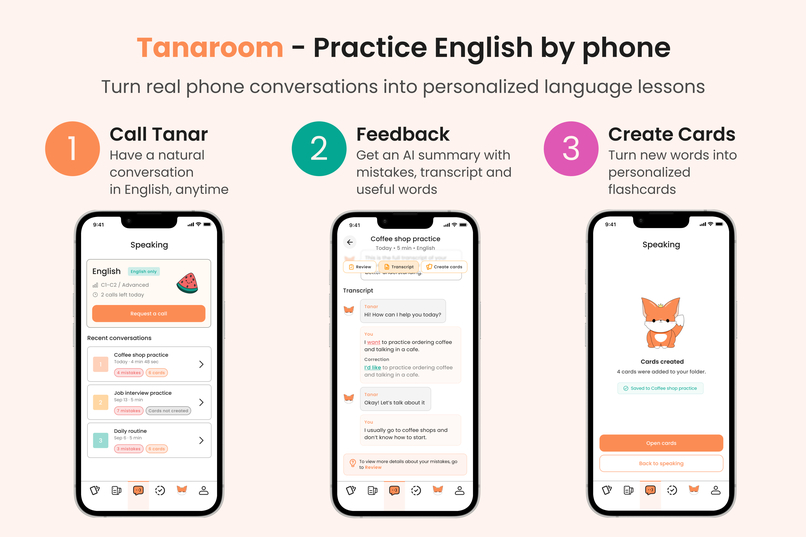
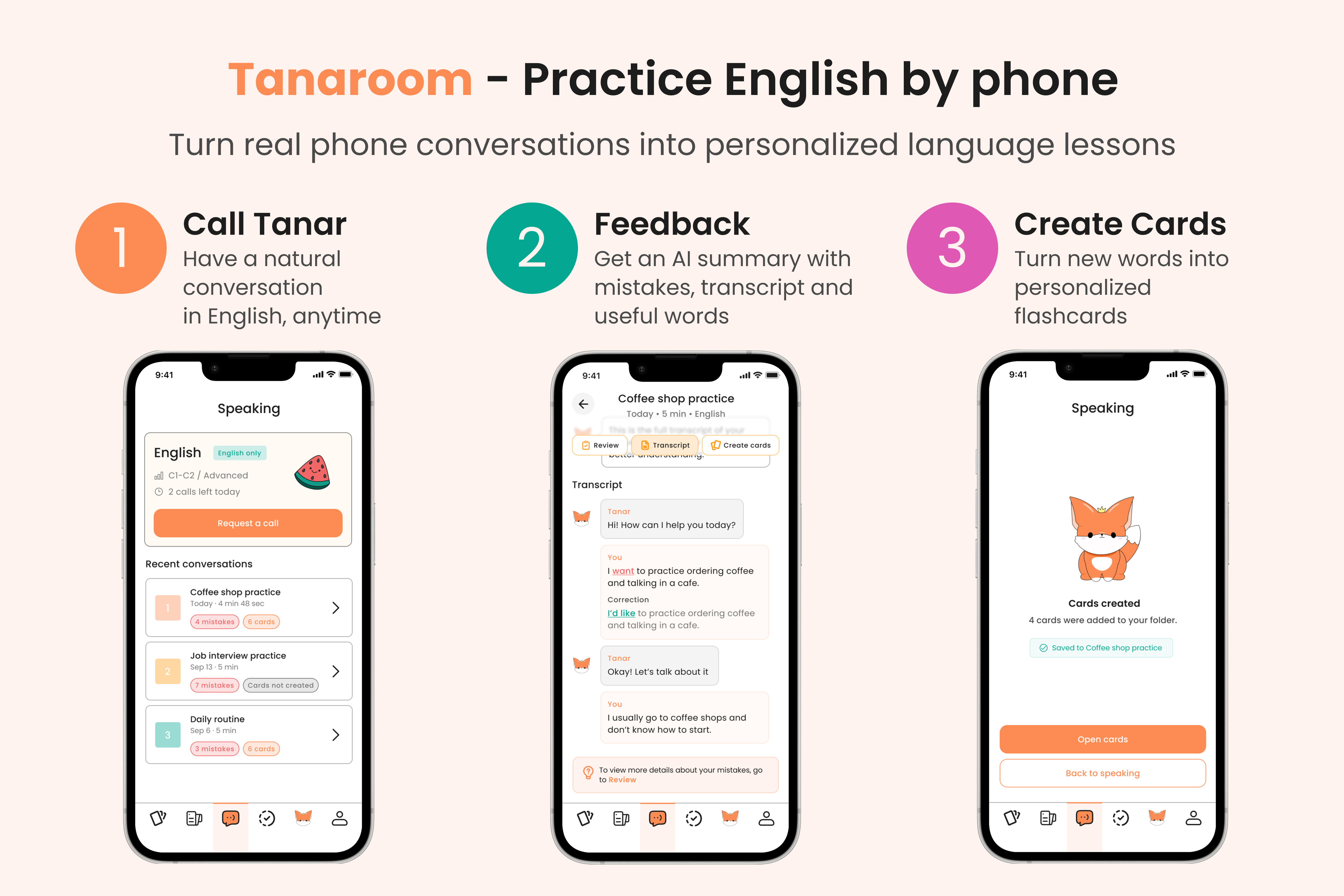
How Tanaroom Speaking works
-
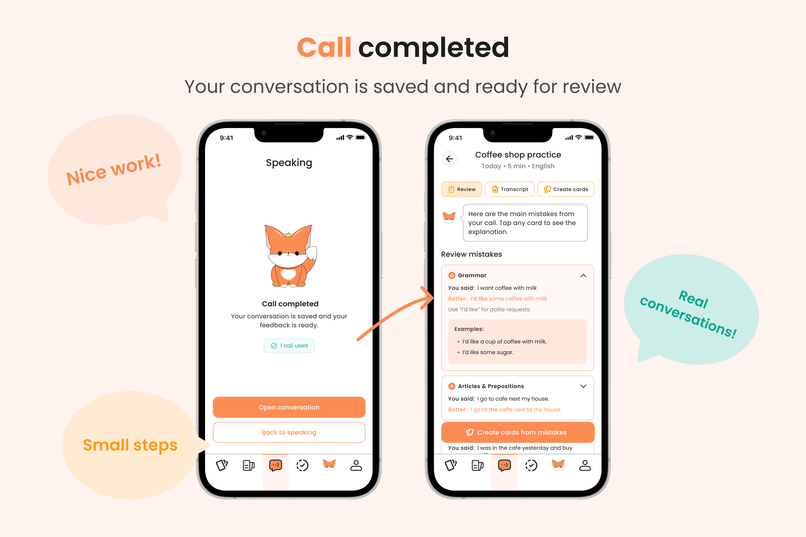
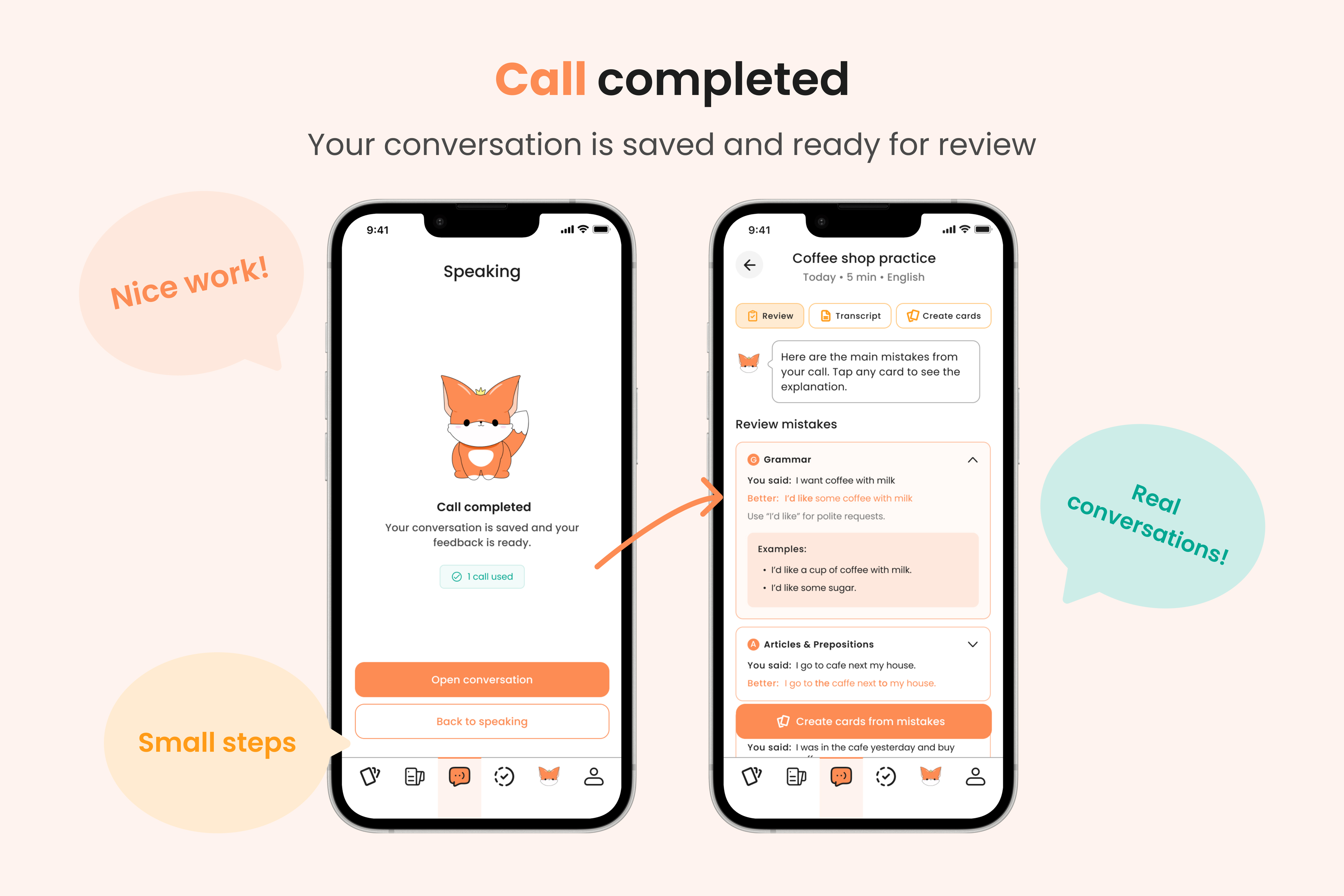
Post-call feedback & learning
-
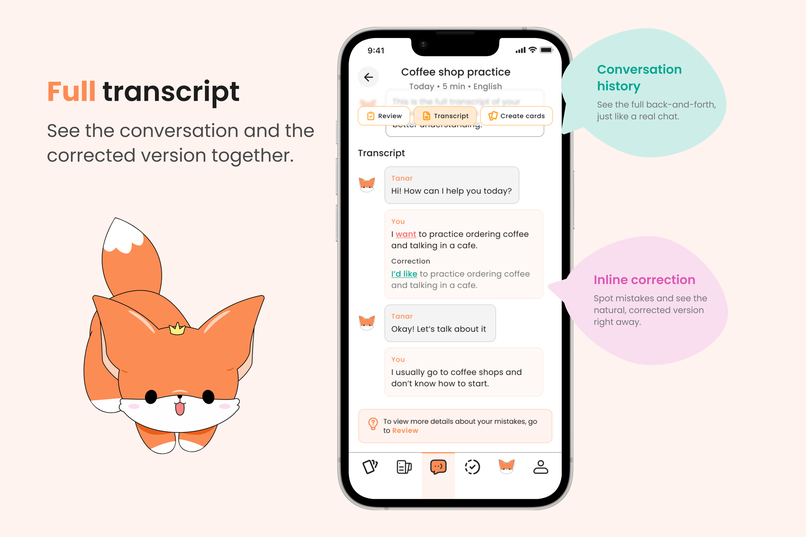
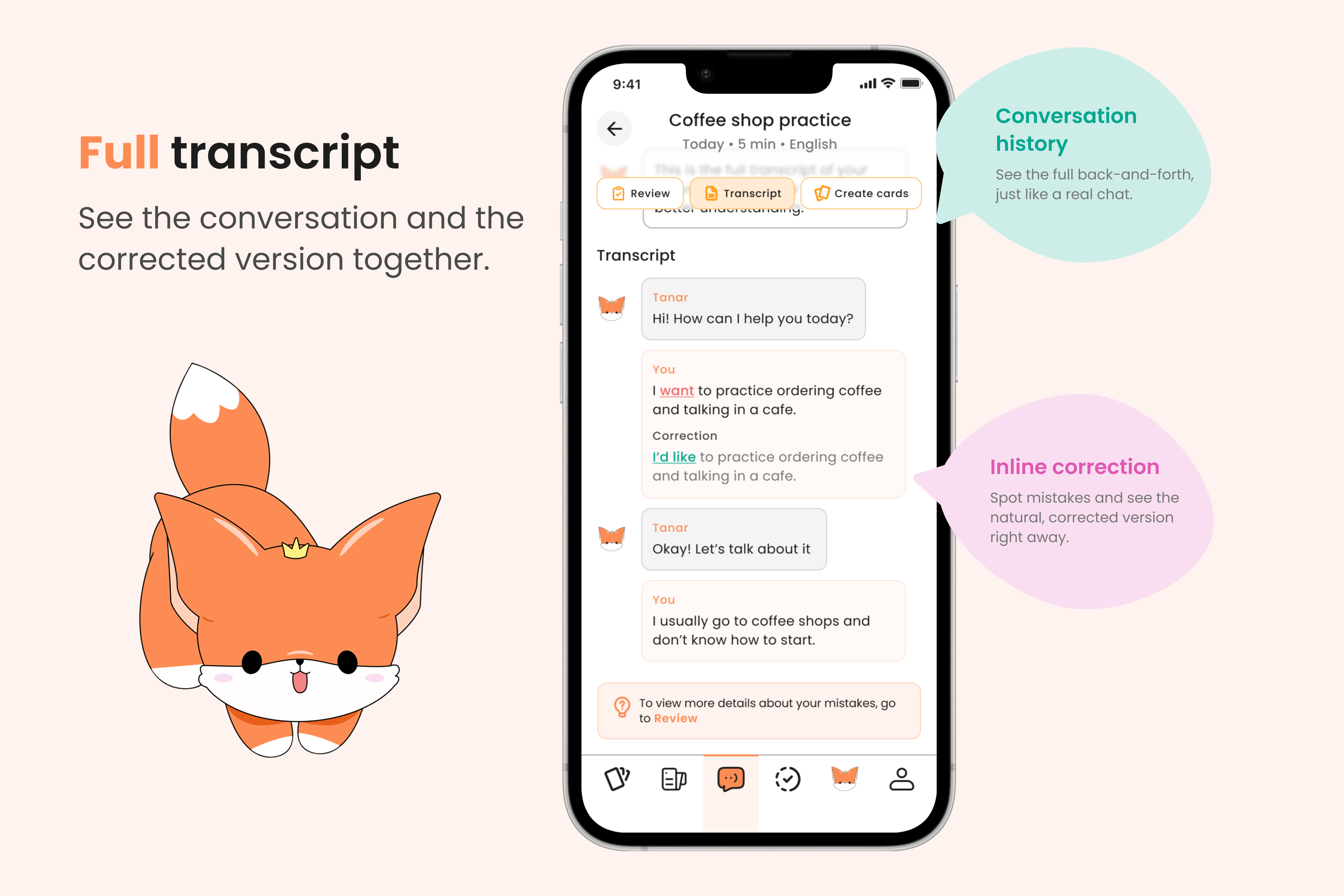
Full conversation transcript
-
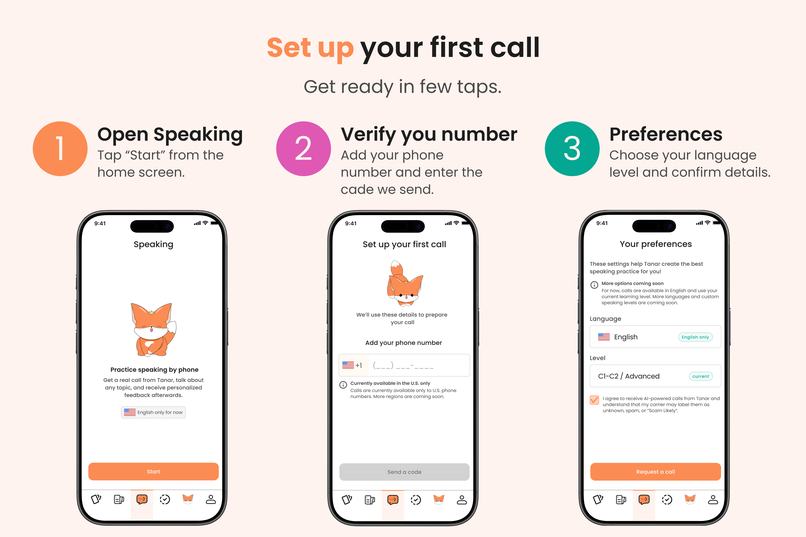
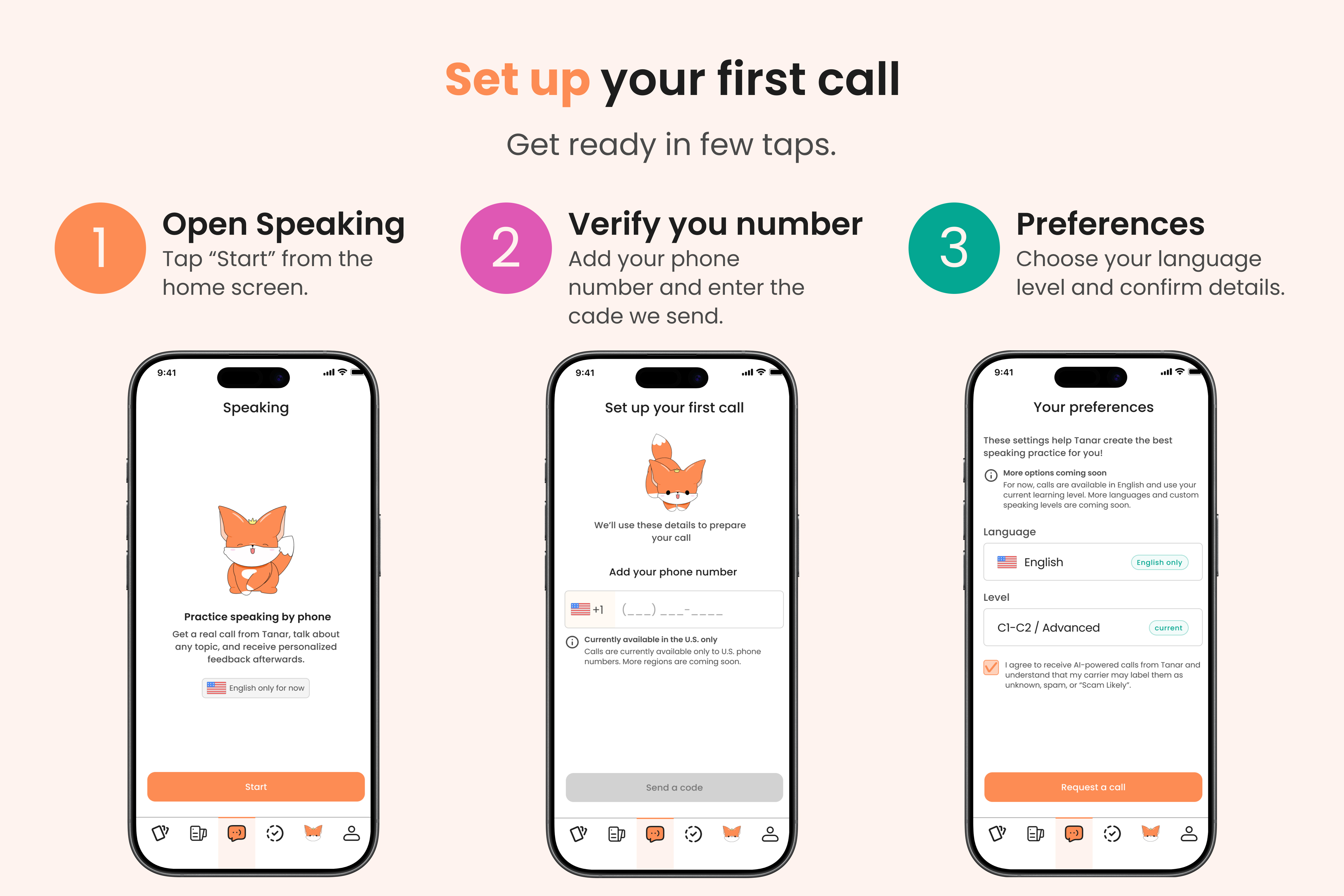
Set up your first call
-
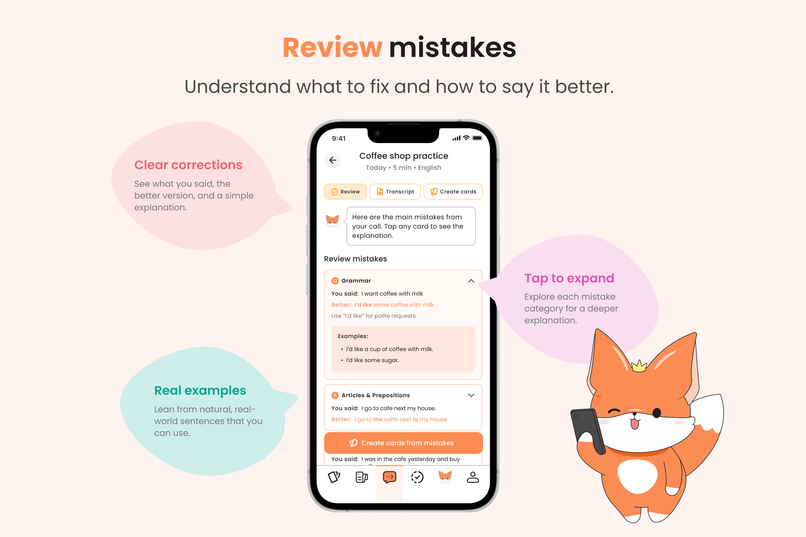
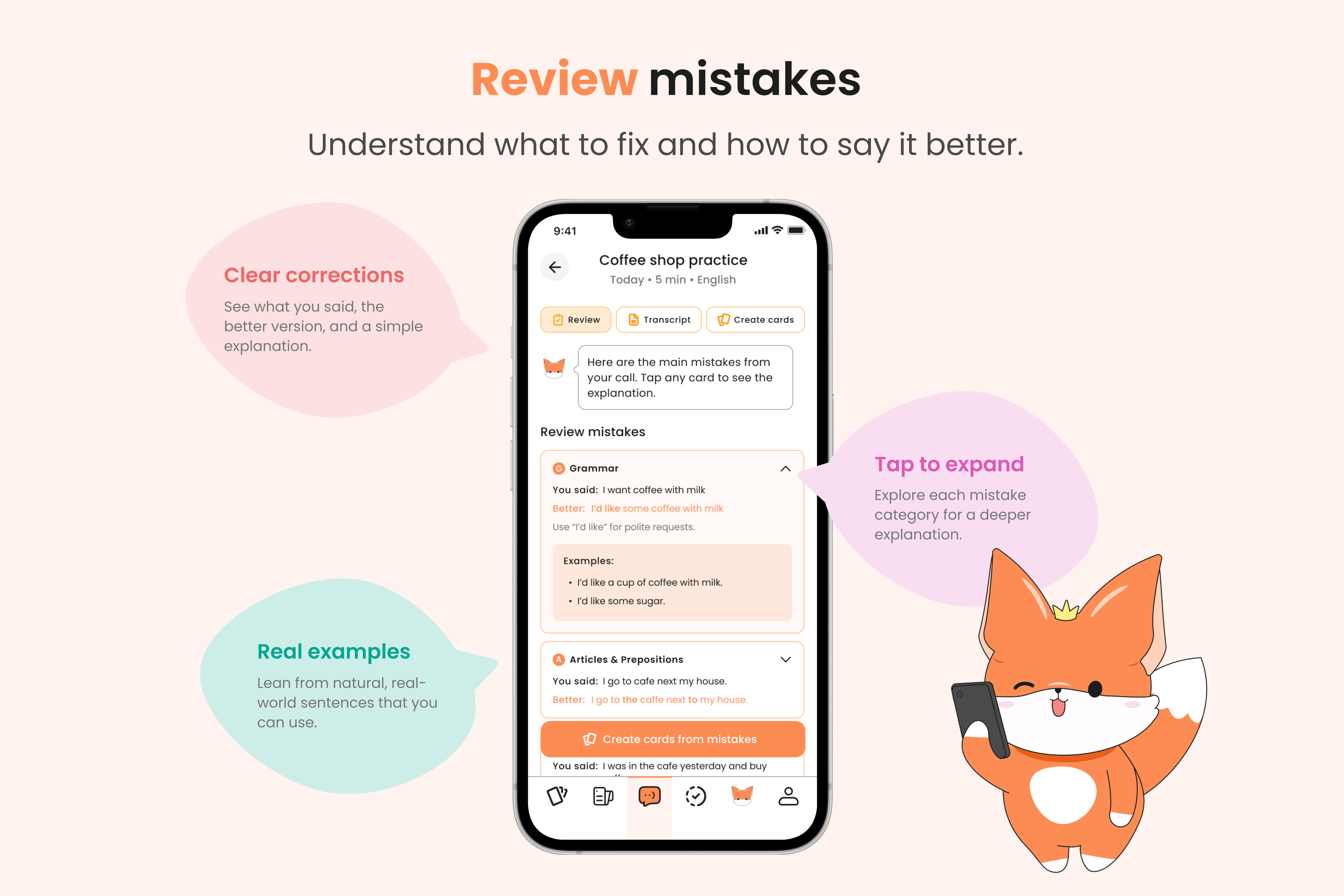
Review your speaking mistakes
-
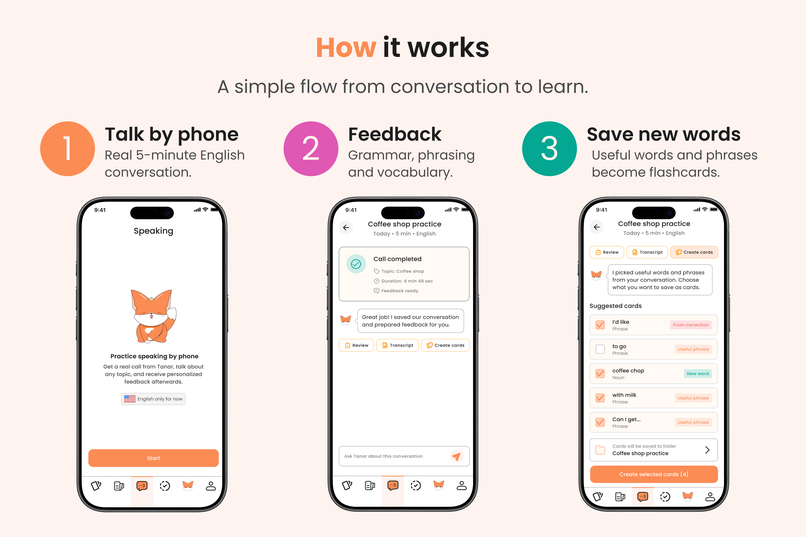
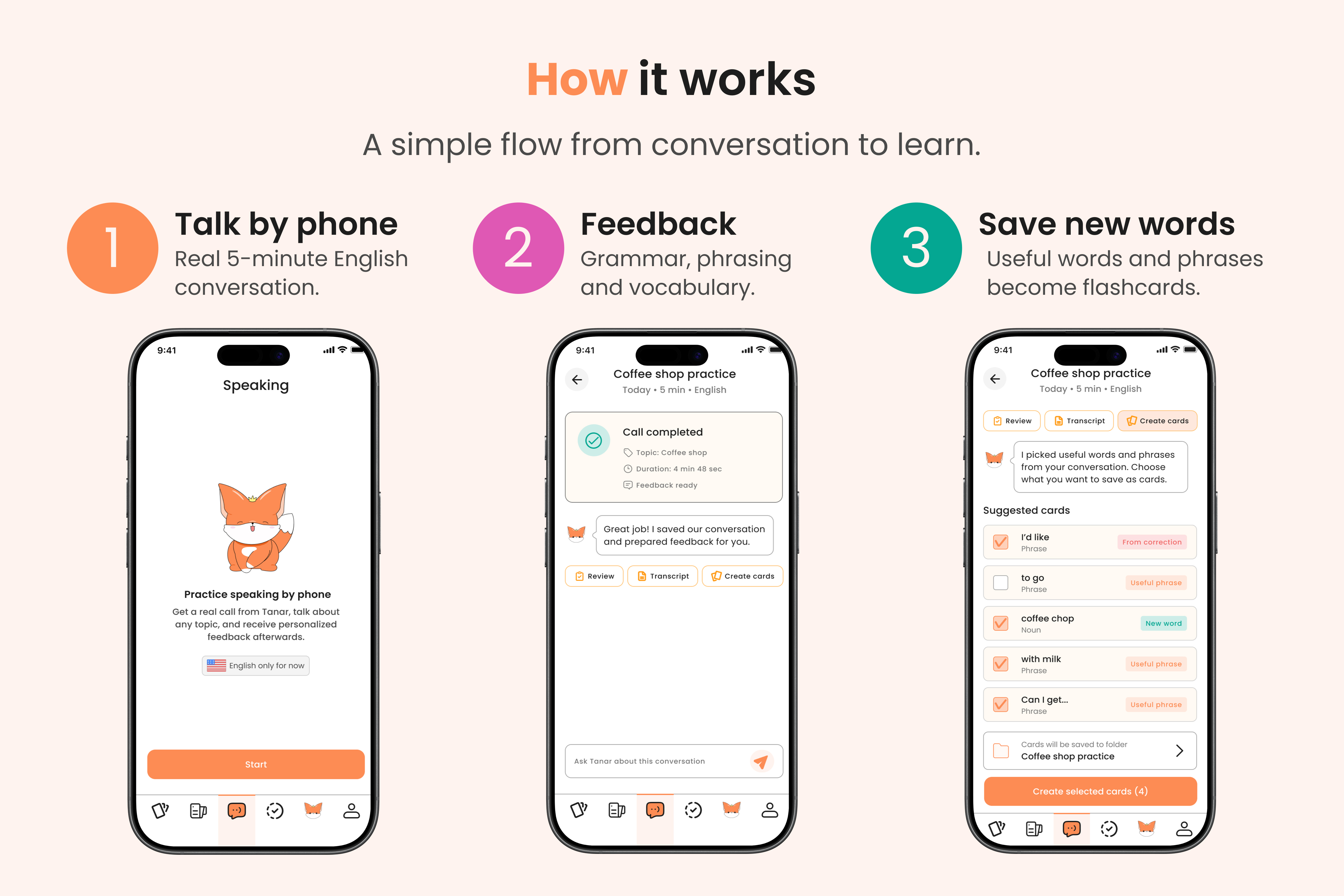
How Tanaroom Speaking works
-
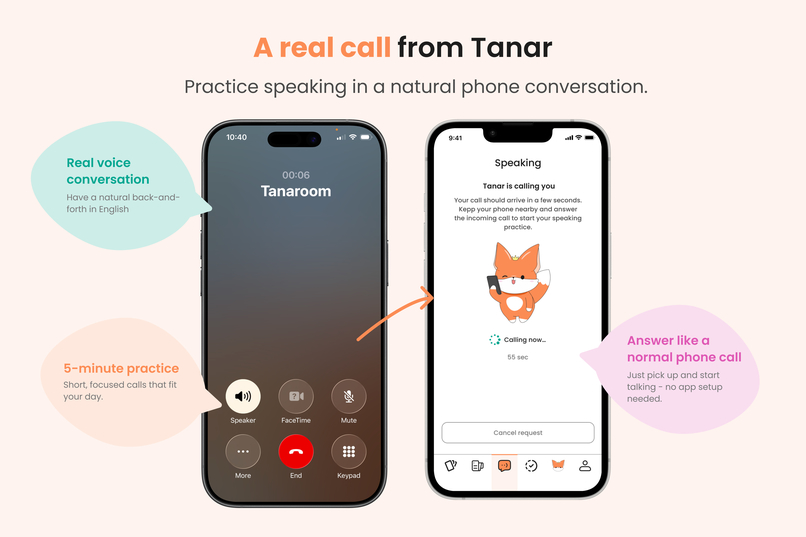
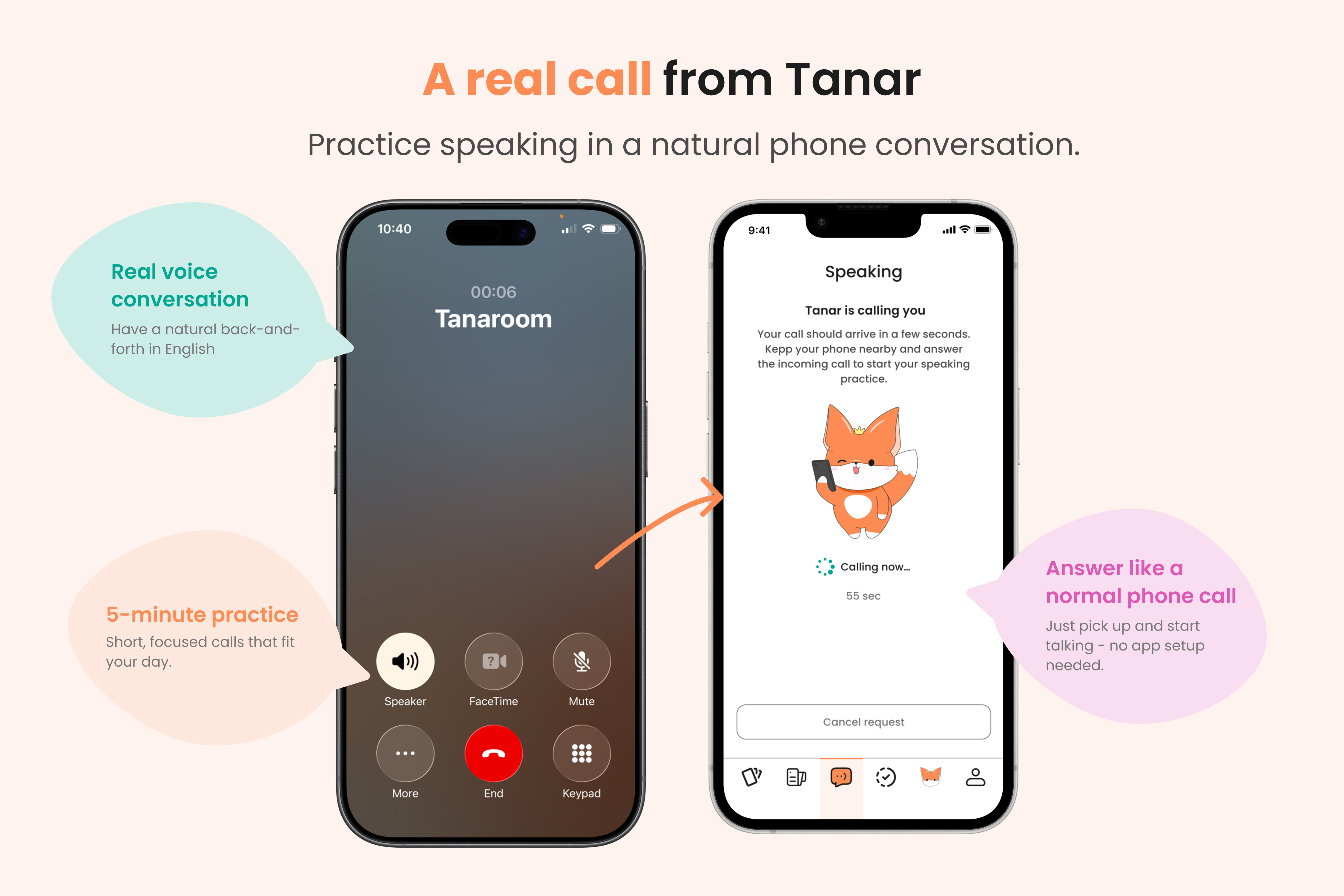
Real phone call with Tanar
-
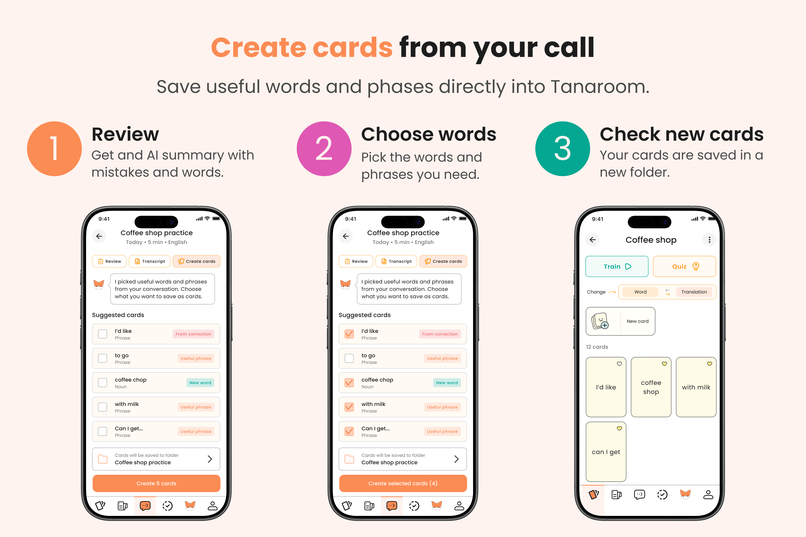
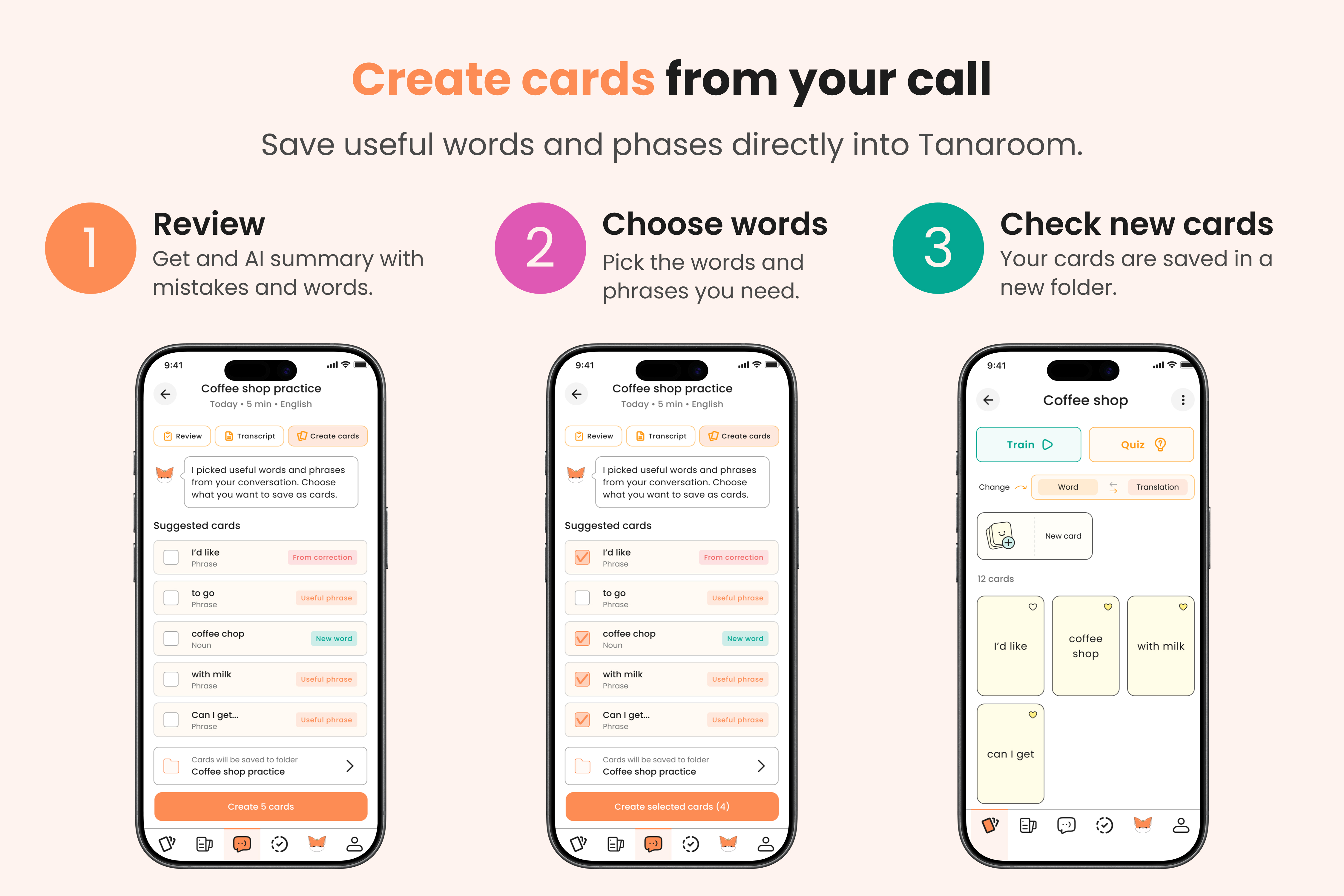
Create flashcards from your call
Inspiration
Tanaroom started from a problem we experienced ourselves.
We are non-native English speakers living in the United States. Even after learning grammar rules and understanding how English works, vocabulary was often one of the biggest barriers in everyday communication. We could know exactly what we wanted to say and understand the grammar behind it, but not having the right word or expression at the right moment could completely change a conversation.
That is why we originally decided to build Tanaroom for ourselves — a simple way to collect, organize, and actually remember the vocabulary we encountered in real life.
Over time, Tanaroom grew into a language-learning app built around flashcards, personalized practice, reading, quizzes, AI-generated learning materials, and gamification. We first released the app in February 2026 and have continued improving it based on our own experience and feedback from early users.
But while building and using Tanaroom, we noticed another problem: learning and recognizing vocabulary is not the same as being able to use it naturally in a real conversation.
A learner may know grammar, understand written English, and recognize hundreds of words in flashcards, yet still hesitate when someone asks a question unexpectedly. Speaking requires recalling vocabulary immediately, reacting in real time, and having enough confidence to continue even when you make mistakes.
For the CALL-E hackathon, we wanted to connect the vocabulary-learning experience we had already built with actual speaking practice.
Instead of creating another in-app voice chat, we asked ourselves:
- What if your language-learning companion could simply call you?
That became the idea behind Tanaroom Speaking.
What it does
Tanaroom combines vocabulary learning with flashcards, reading, quizzes, personalized AI-generated materials, challenges, and gamification. Learners also take care of Tanar through a Tamagotchi-style experience, where consistent learning and completing activities become part of the character’s progress.
For the CALL-E hackathon, we significantly expanded Tanaroom with a new AI-powered Speaking experience built around real phone calls.
A learner requests a call directly from Tanaroom. Tanar then calls the user's real phone through CALL-E.
When the learner answers, Tanar introduces himself and asks what they would like to talk about. Instead of forcing the user to select a predefined scenario, the topic can be chosen naturally during the conversation.
Tanar then continues a short English conversation adapted to the learner's current language level.
For the first version, we intentionally limited the experience to:
English speaking practice U.S. phone numbers 5-minute conversations
Premium users can request up to three calls per day, while free users can experience the feature through one full trial call.
The phone call itself is only the beginning.
After the conversation ends, Tanaroom turns it into a personalized learning session. The learner receives:
- a transcript of the conversation;
- corrections of grammar and vocabulary mistakes;
- explanations of those mistakes;
- more natural ways to express certain ideas;
- useful words and phrases discovered during the conversation;
- a chat where they can continue discussing the call with Tanar.
The learner can then ask Tanar to create flashcards from words, collocations, or short expressions they did not know or used incorrectly.
Those cards are saved into Tanaroom and become part of the learner's existing study flow.
The complete experience becomes:
Learn → Speak → Analyze → Create Flashcards → Practice → Speak Again
How we built it
Tanaroom is a mobile application built with React Native, with a TypeScript and NestJS backend.
Because Tanaroom was already an existing product, our goal for the hackathon was not to rebuild the application. Instead, we designed and implemented a new Speaking layer that connects the existing learning system with CALL-E.
The flow works like this:
- The learner opens the new Speaking section inside Tanaroom.
- First-time users see a short onboarding explaining how AI phone practice works.
- The learner adds and verifies a U.S. phone number.
- They review their language and level preferences and consent to receiving an AI-powered phone call.
- Tanaroom sends the request from the mobile app to our backend.
- Our backend integrates with CALL-E to initiate the outbound phone call.
- CALL-E handles the live phone conversation between Tanar and the learner.
- After the call ends, conversation data and the transcript are returned to Tanaroom.
- Our AI layer analyzes the learner's language and prepares corrections, explanations, and useful vocabulary.
- A new conversation appears automatically inside the Speaking section.
- The learner can continue chatting with Tanar and generate flashcards directly from the call.
We also designed the experience around the fact that the call happens outside the application through the normal phone interface.
Before the call begins, Tanaroom displays a waiting state so the user knows that Tanar is preparing the call and that an incoming phone call should arrive shortly.
After the phone call ends, the experience continues inside Tanaroom through the transcript, feedback, chat, and flashcards.
Challenges we ran into
One of the biggest challenges was connecting two very different experiences: a traditional phone call and a mobile learning application.
The user starts inside Tanaroom, leaves the app experience to answer a real phone call, and then returns to Tanaroom for analysis and continued learning.
We needed to make this transition feel like one continuous flow rather than several disconnected features.
Another challenge was caller identification.
Depending on the user's carrier, an incoming automated call may appear from an unfamiliar number or potentially receive a spam-related label. We therefore added clear communication before the call so users know exactly what to expect before requesting it.
We also had to decide how corrections should work during the conversation.
Constantly interrupting a learner every time they make a grammar or vocabulary mistake would make the conversation stressful and unnatural. We decided that the live call should focus primarily on communication.
Detailed corrections, explanations, and vocabulary work happen after the call, when the learner can review everything at their own pace.
Another important decision was scope.
Tanaroom already supports multiple languages in other parts of the application, but for the first version of Speaking we chose to support only English and U.S. phone numbers.
This allowed us to focus on building one reliable end-to-end experience instead of adding complexity before validating the core idea.
Accomplishments that we're proud of
The part we are most proud of is that the CALL-E integration is not an isolated feature.
We connected real phone conversations directly to the learning system that already exists inside Tanaroom.
A learner can start with a real conversation, discover where they struggle, receive personalized feedback, turn those problems into flashcards, practice them, and later return for another speaking session.
We are also proud that we were able to add a fundamentally different type of language practice without rebuilding the product around it.
Tanaroom originally focused heavily on vocabulary acquisition. Speaking extends that same idea into real-time communication and creates a natural connection between learning a word and actually using it.
We are proud that Speaking fits naturally into an existing product that already combines vocabulary, reading, quizzes, challenges, and a Tamagotchi-style learning companion. Instead of adding CALL-E as a standalone experiment, we designed it as another part of the learner’s ongoing relationship with Tanar.
What we learned
The biggest thing we learned is that an AI phone call becomes much more valuable when it is connected to what happens before and after the conversation.
The phone call creates the speaking experience, but the transcript, corrections, chat, and flashcards turn that conversation into something the learner can continue studying.
We also learned that speaking practice does not necessarily need to imitate a traditional lesson.
Sometimes the most useful experience is simply giving the learner a safe place to talk, make mistakes, finish the conversation without interruption, and understand those mistakes afterwards.
CALL-E gave us a way to bring that experience outside the normal boundaries of a mobile application.
Instead of asking users to open another AI chat or voice mode, Tanar can reach them through something everyone already understands: a phone call.
That small change makes the interaction feel surprisingly different.
What's next for Tanaroom — Practice English by Phone
Our first goal is to validate the complete speaking loop with English learners in the United States.
After that, we plan to expand the feature with:
- additional languages;
- support for more countries and regions;
- speaking levels that can be configured independently from the learner's main Tanaroom level;
- conversation history organized by language and topic;
- more detailed progress across multiple calls;
- adaptive follow-up calls based on previous mistakes;
- quizzes generated from conversations;
- improved vocabulary recommendations based on recurring speaking difficulties;
- personalized speaking goals and progress tracking.
We also want future conversations to become increasingly connected.
For example, if a learner repeatedly struggles with the same grammar structure or vocabulary during several calls, Tanar could remember that pattern and intentionally create opportunities to practice it during a future conversation.
Our long-term goal is for Tanar to become more than a character inside a language-learning app.
We want it to become a learning companion that helps users move from knowing a language to actually using it.
Built With
- amazon-web-services
- call-e
- docker
- jenkins
- kafka
- nestjs
- node.js
- openai-api
- postgresql
- react-native
- redis
- rest-api
- typescript
- webhooks
- websockets

Log in or sign up for Devpost to join the conversation.